Category Archives: Travel

Nazareth to Cana / Kfar Kanna, Israel

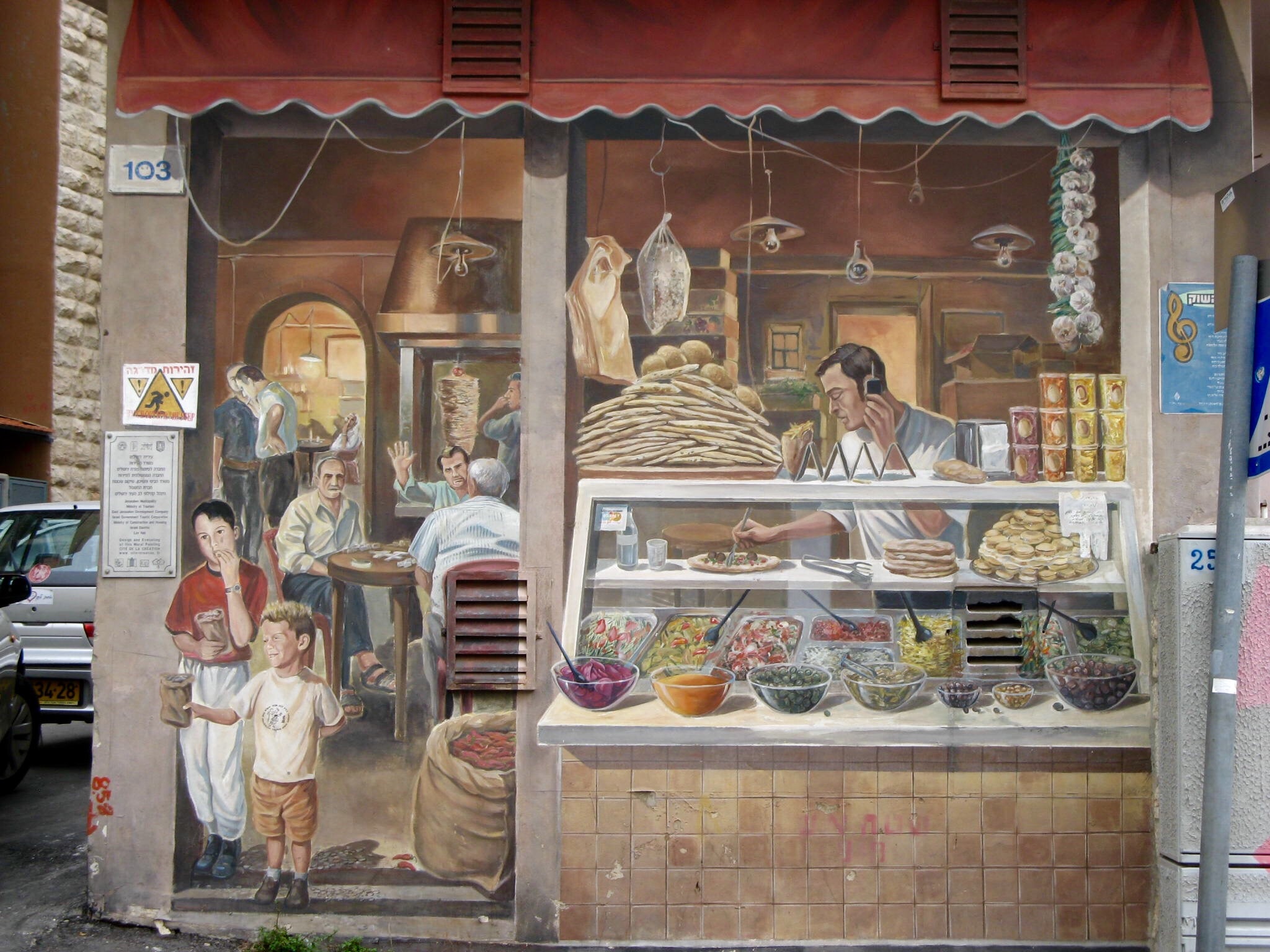
1/22 – This morning we walked out of Nazareth through the open-air market:

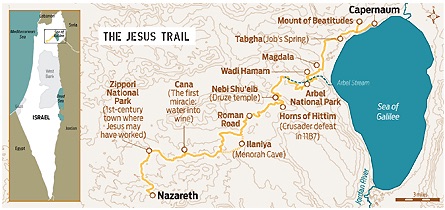
We ascended the 404 steps (felt more like 4004 steps) to leave the old city and start walking the Jesus Trail.

2015/01/img_6549.jpg

This trail was organized in 2008, to allow others to experience some of the areas that Jesus and his friends traversed during his ministry. It also provides glimpses into the different cultures that share the Holy Land today. The more I learn about the Israelis, Christians and Palestinians in this place, the more confused I become. I hope I will continue to learn this week.

Today we will walk about 9 miles to the place that may have been the historical Cana, the site of Jesus’ first miracle. Like the sites in Nazareth, there is a dispute over where this may have happened.

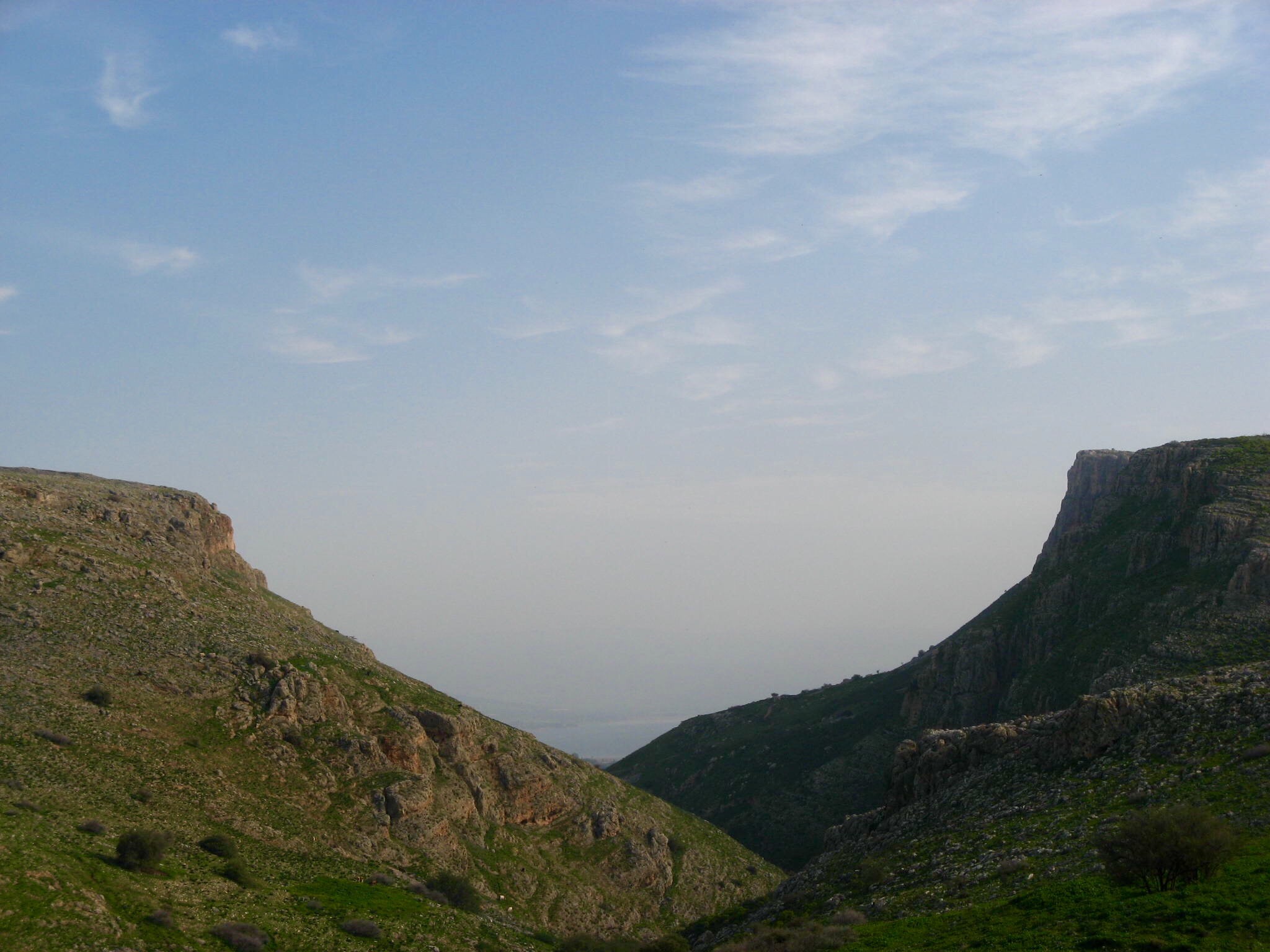
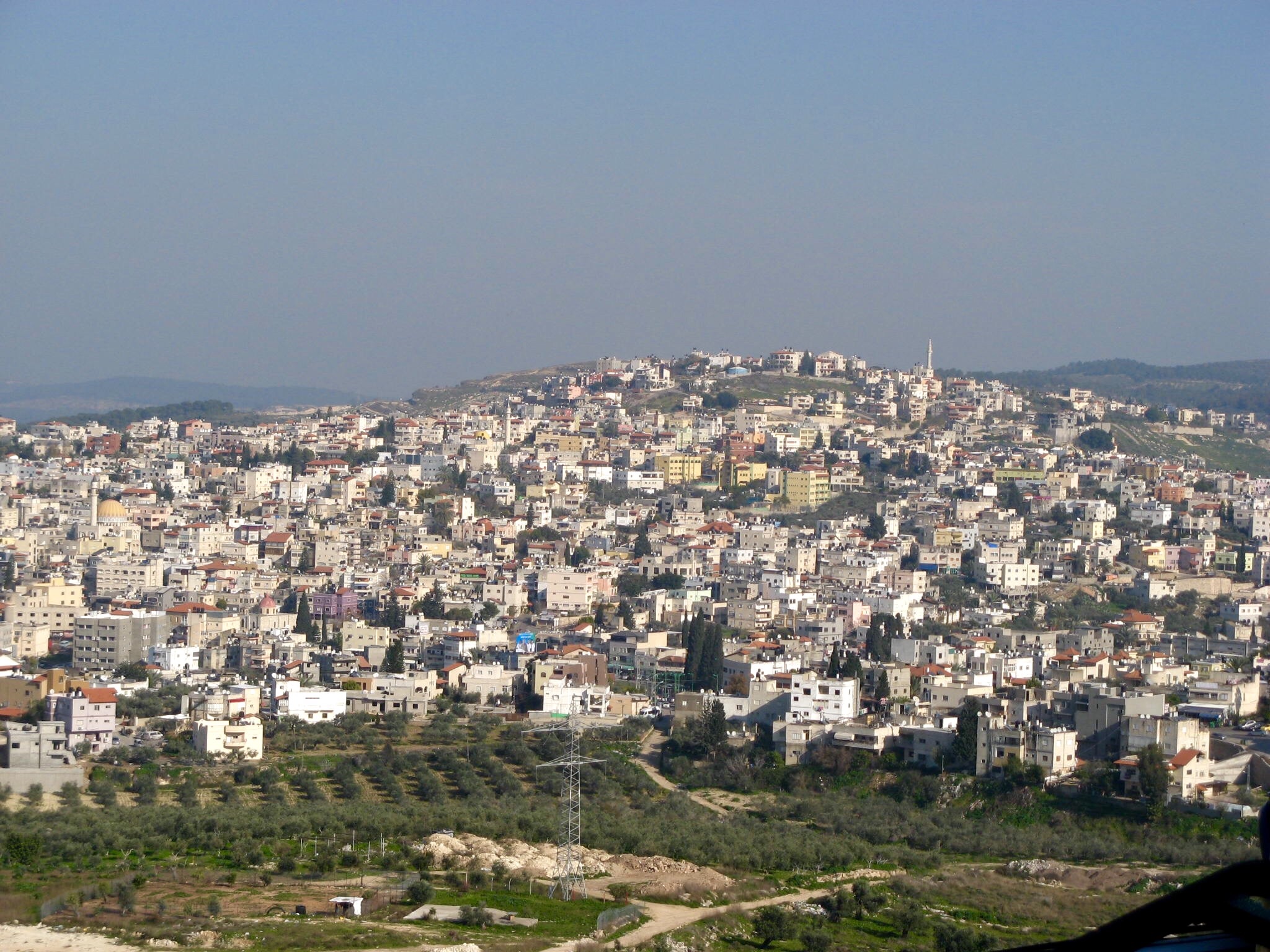
The view from the top of Nazareth was worth the climb.image

image

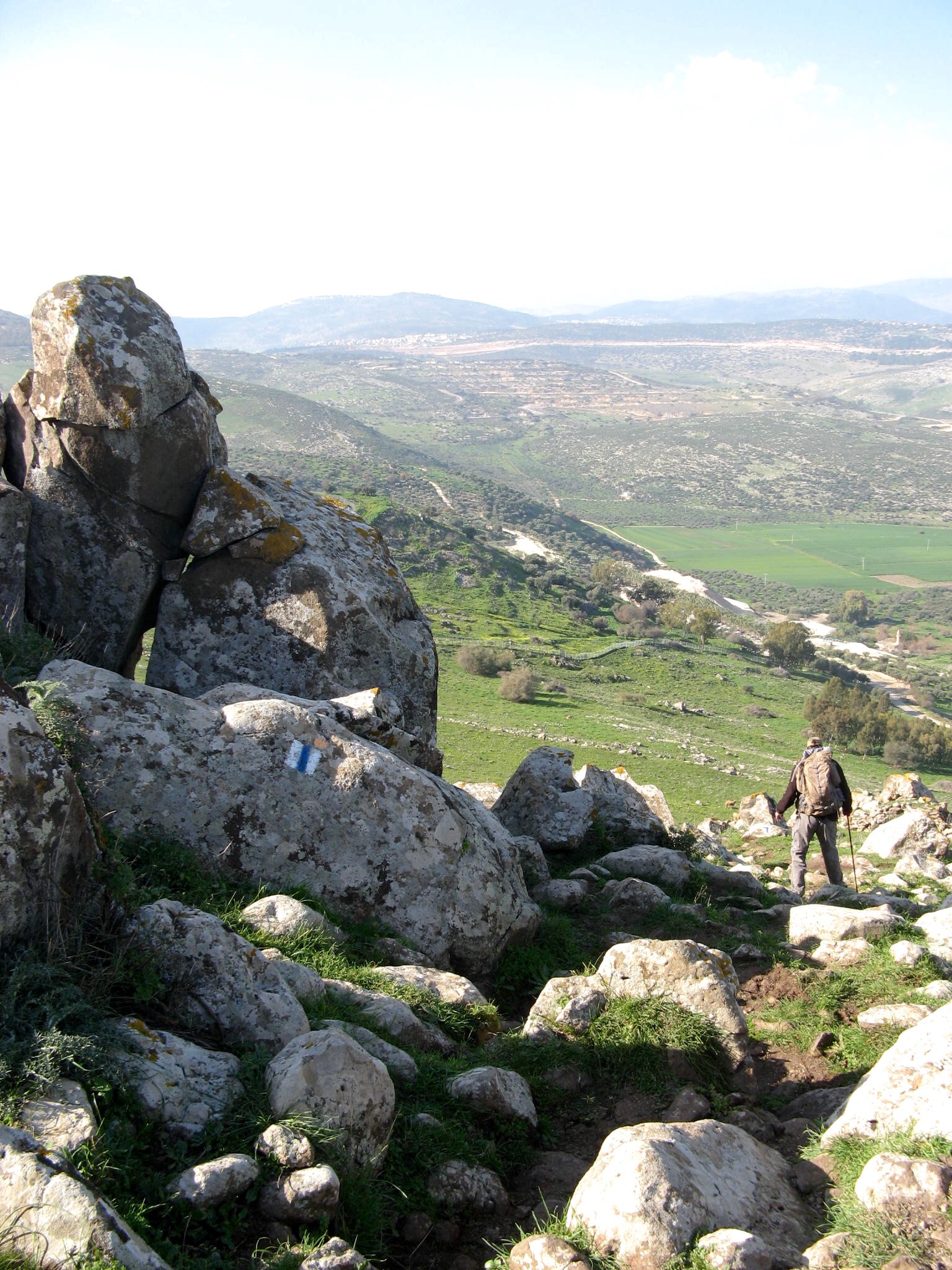
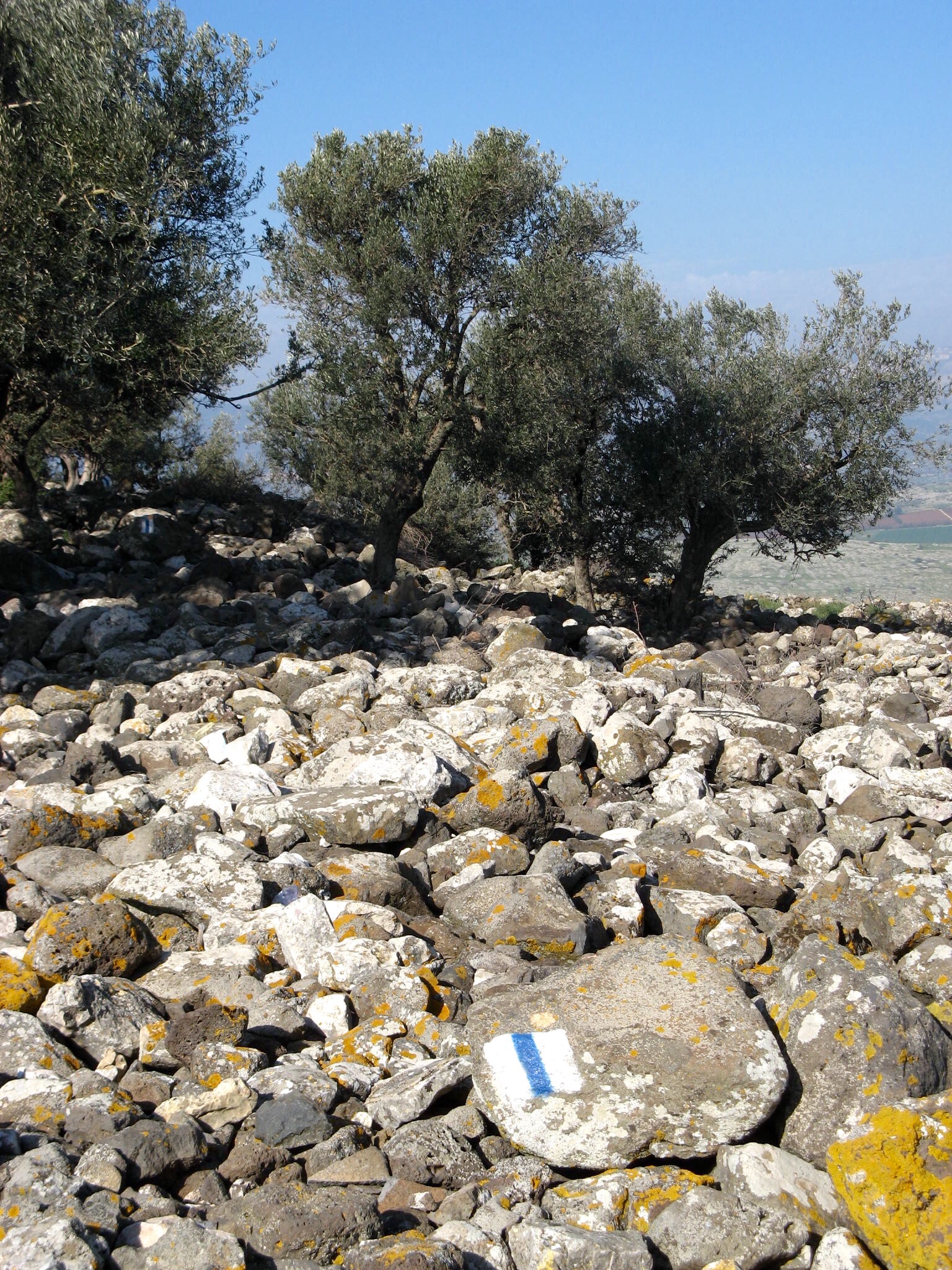
Once out of the city, we left the road for a series of farm paths, with poppies in bloom.

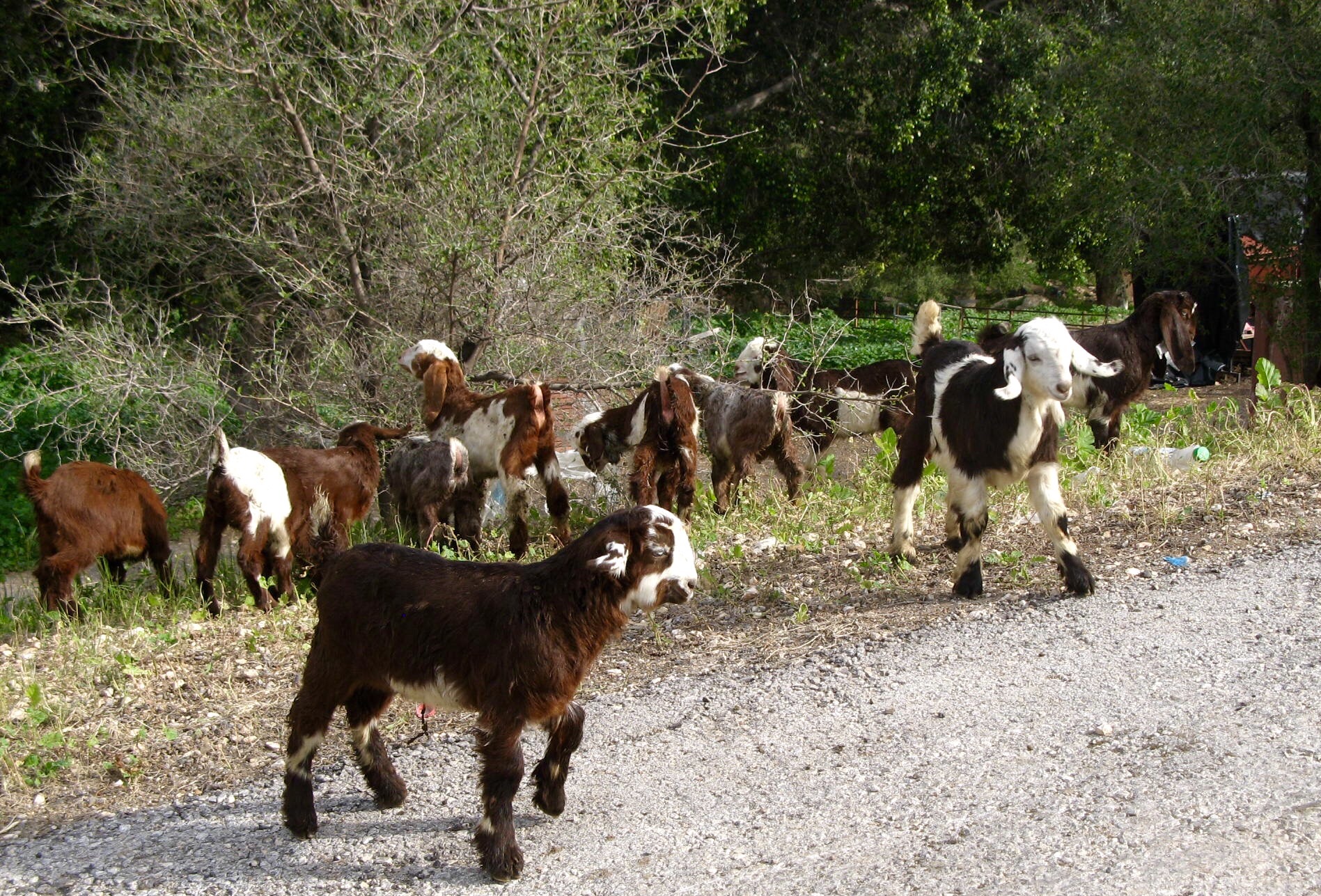
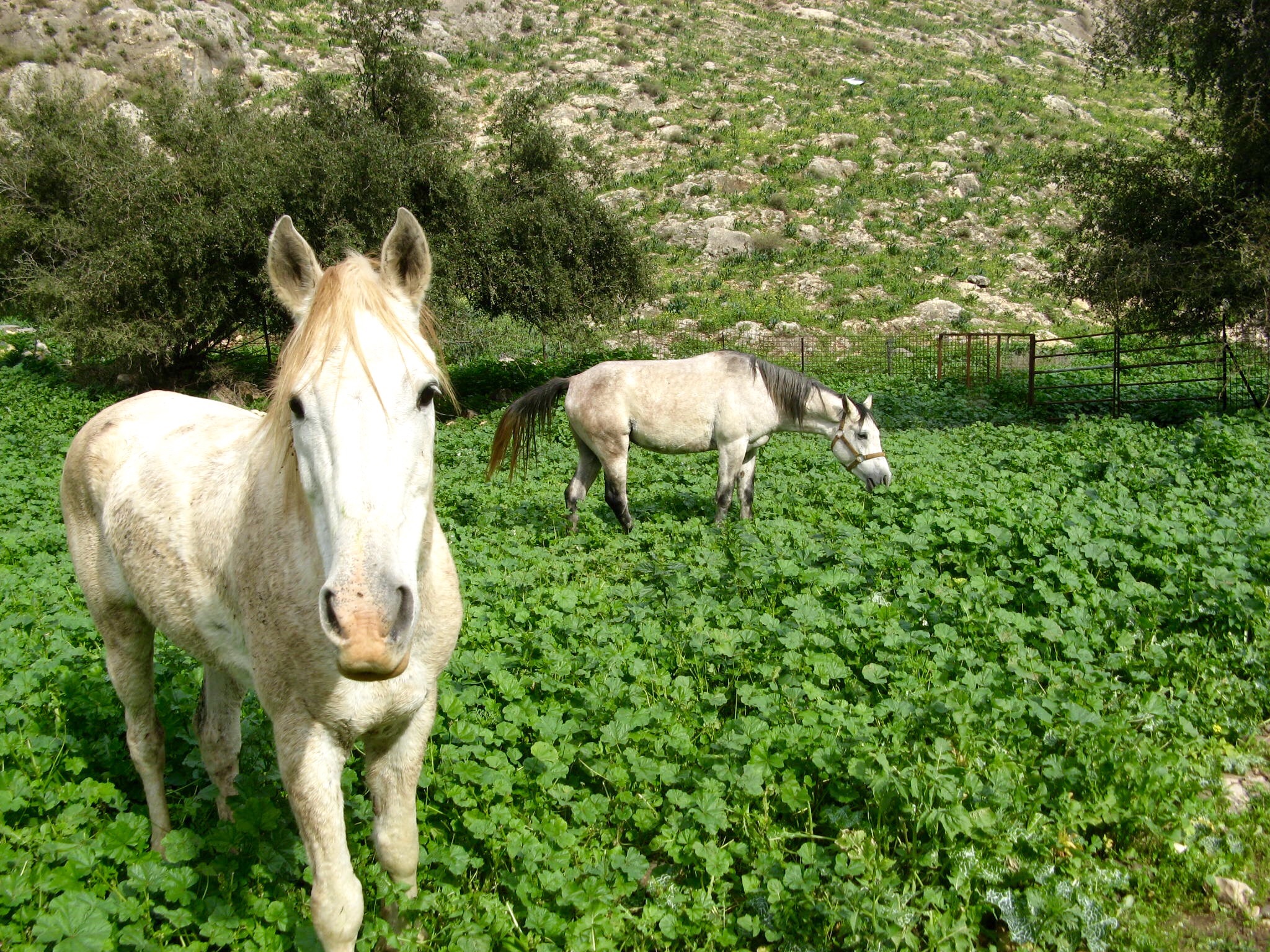
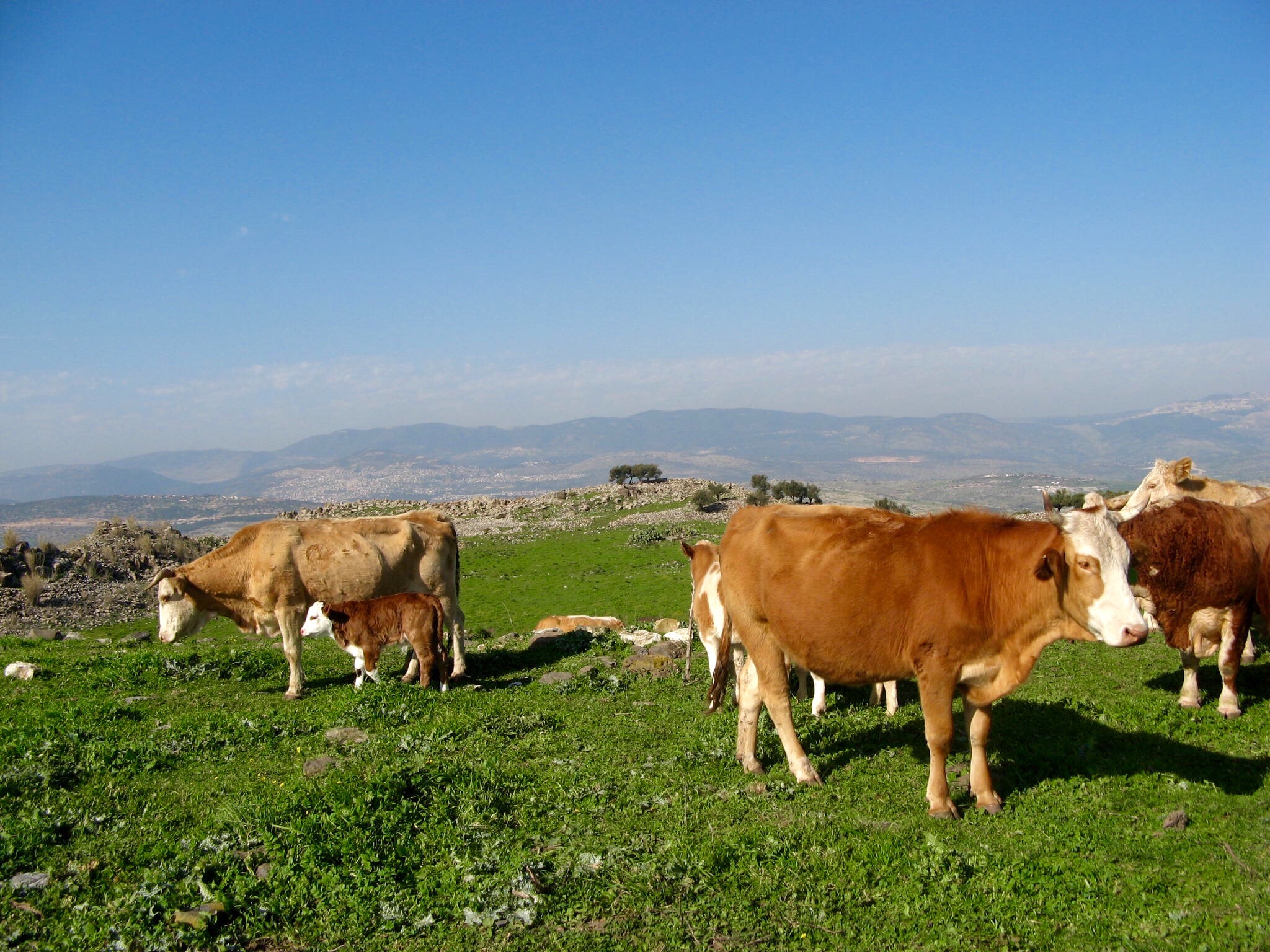
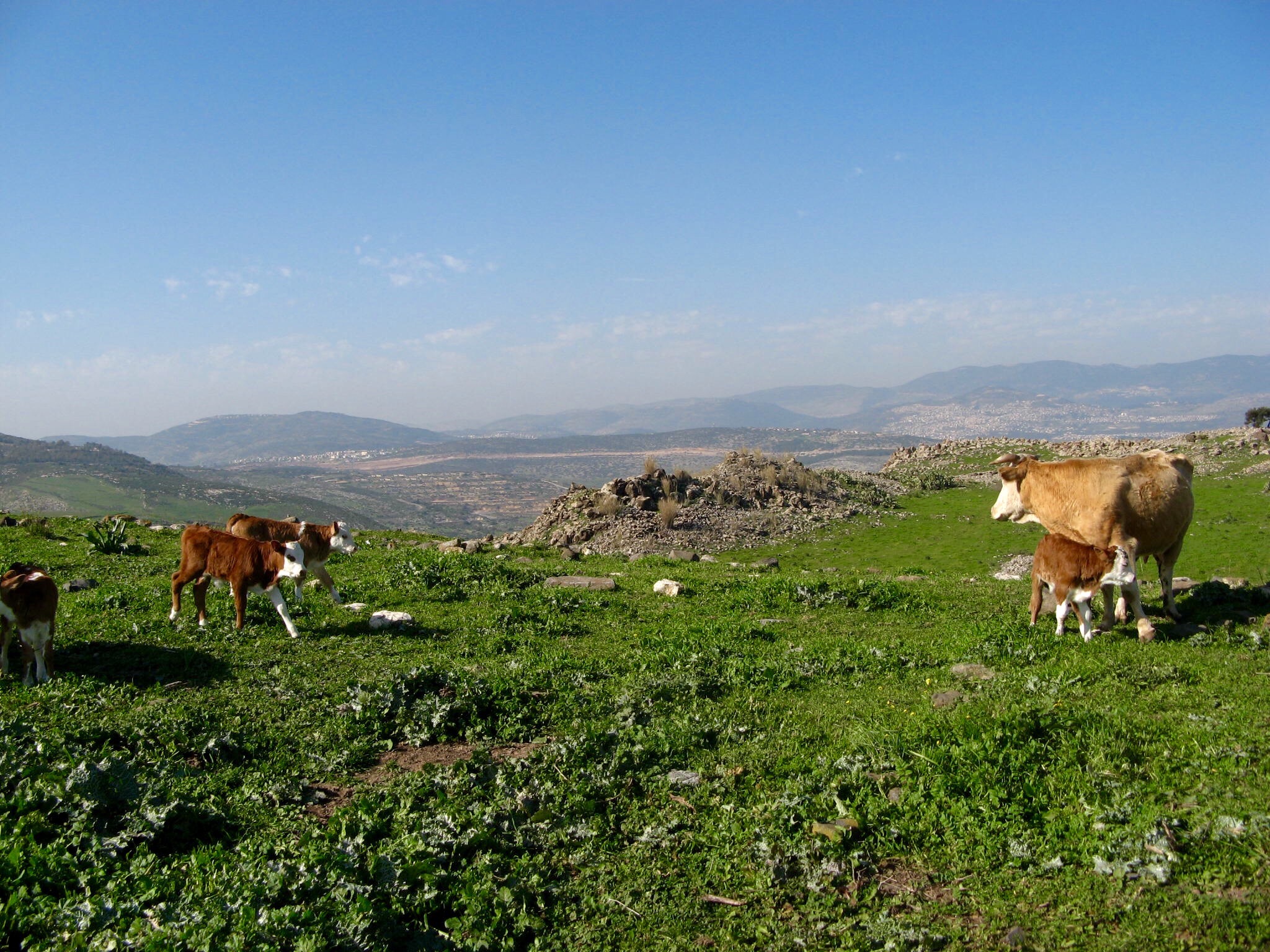
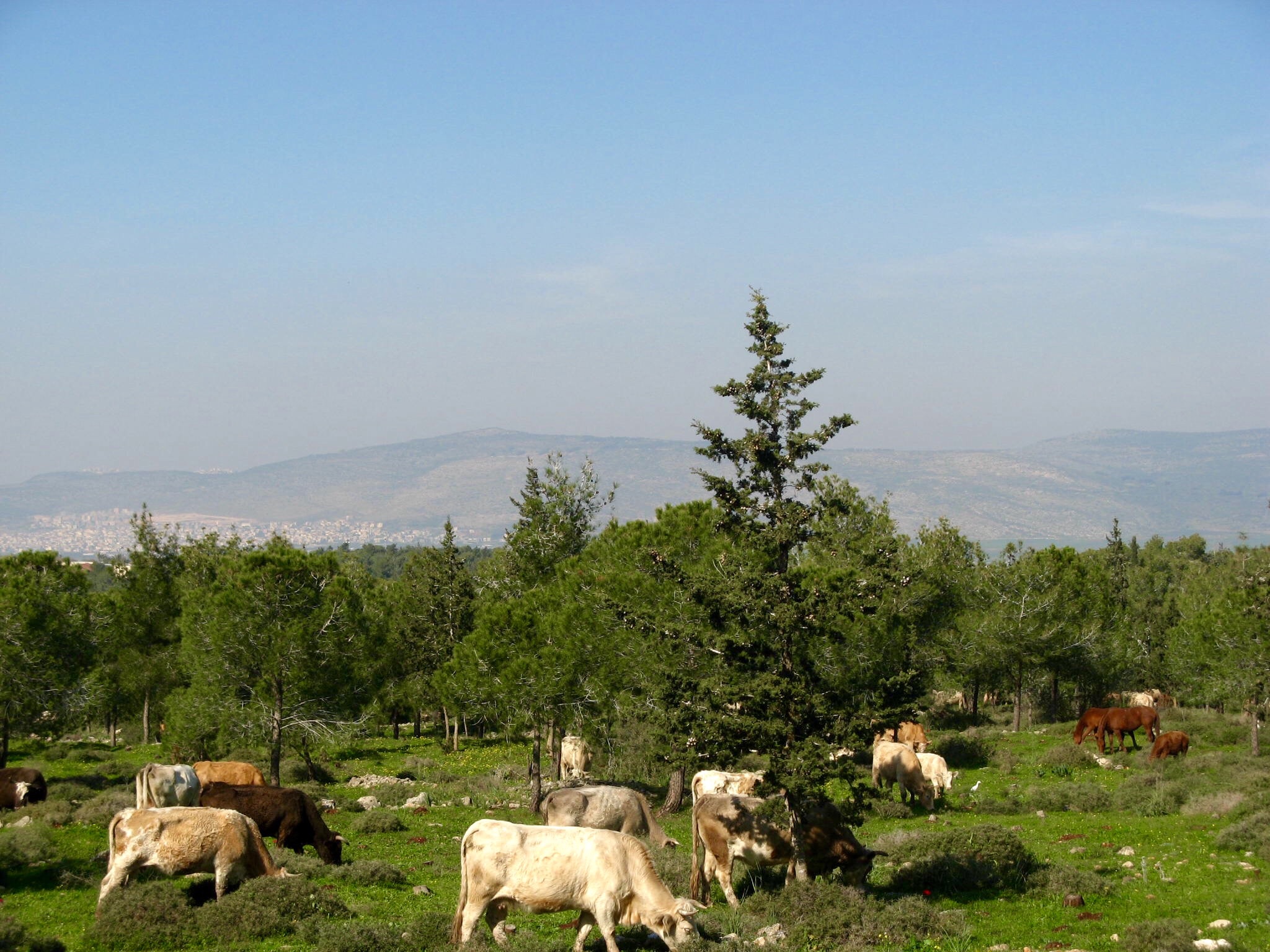
By lunchtime we reached Zippori National Park, which contains ancient ruins of what was once Sephora. In the forest, we passed cows, as tall as horses, grazing. I know they don’t look it without context, but believe me, these cows were BIG! See the two brown horses to the right? Same size as the cows!image

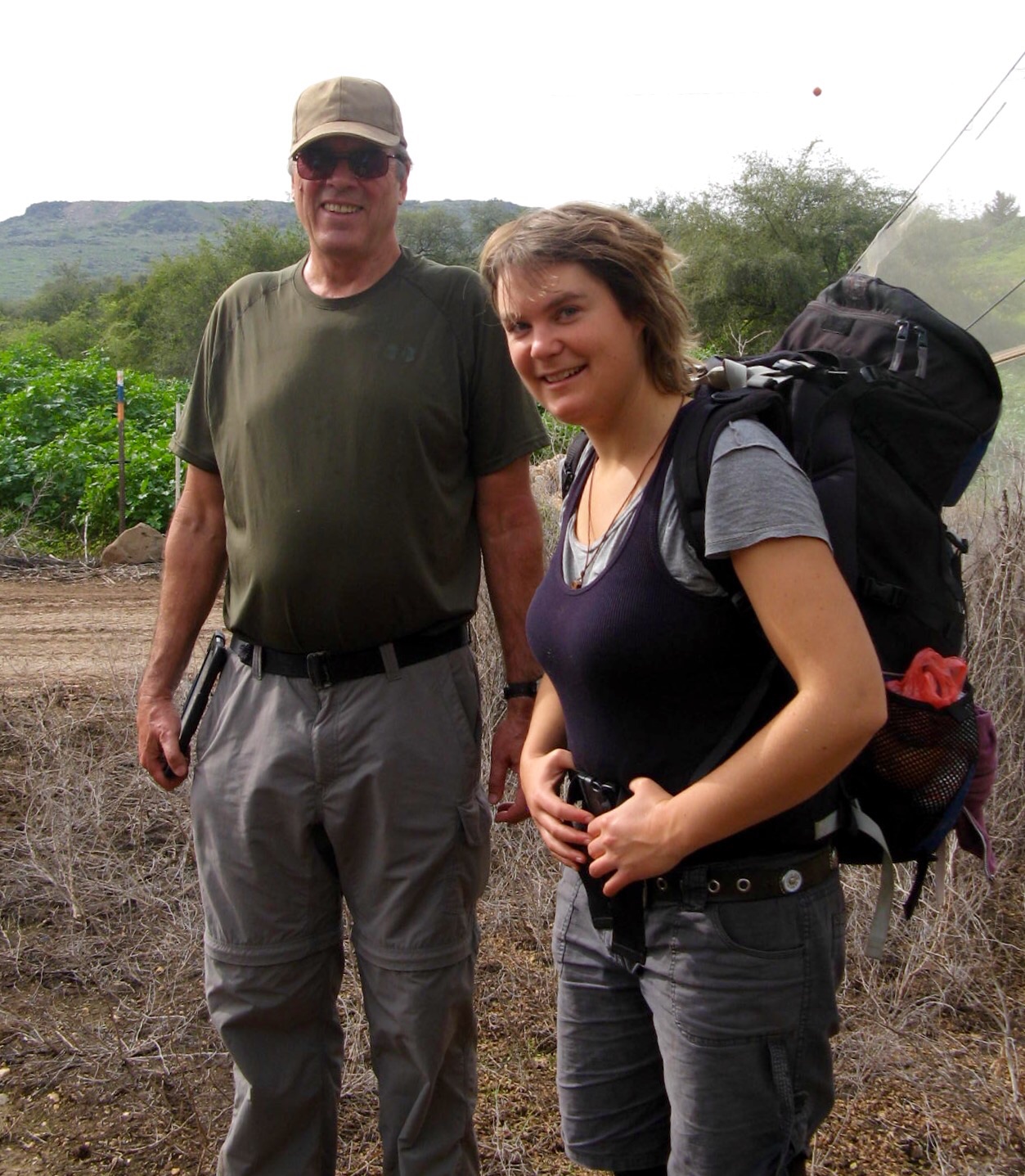
In the afternoon we came to the Arab town of Mashad, where we stopped to talk to a friendly young man. When he asked where we were from, we said, as always, America (we get blank looks when we say US or USA). Ah, he said, California? Close, I replied – Virginia! Oh no, he said, Virginia is not close to California at all. It’s on the other side of the country. Now, show of hands, folks: how many of you could tell the relative positions of any two cities in Israel? The rest of the world know much more about us than we know about the rest of the world.

While we were speaking, children were walking home from school, shouting Hello! to us. A little boy ran up and gave us high fives.

Our new friend pointed out this mosque, which may be the burial place of the prophet Jonah (Ninevah also claims Jonah’s tomb). Remember that Muslims share all the Old Testament prophets with Judaism and Christianity.image

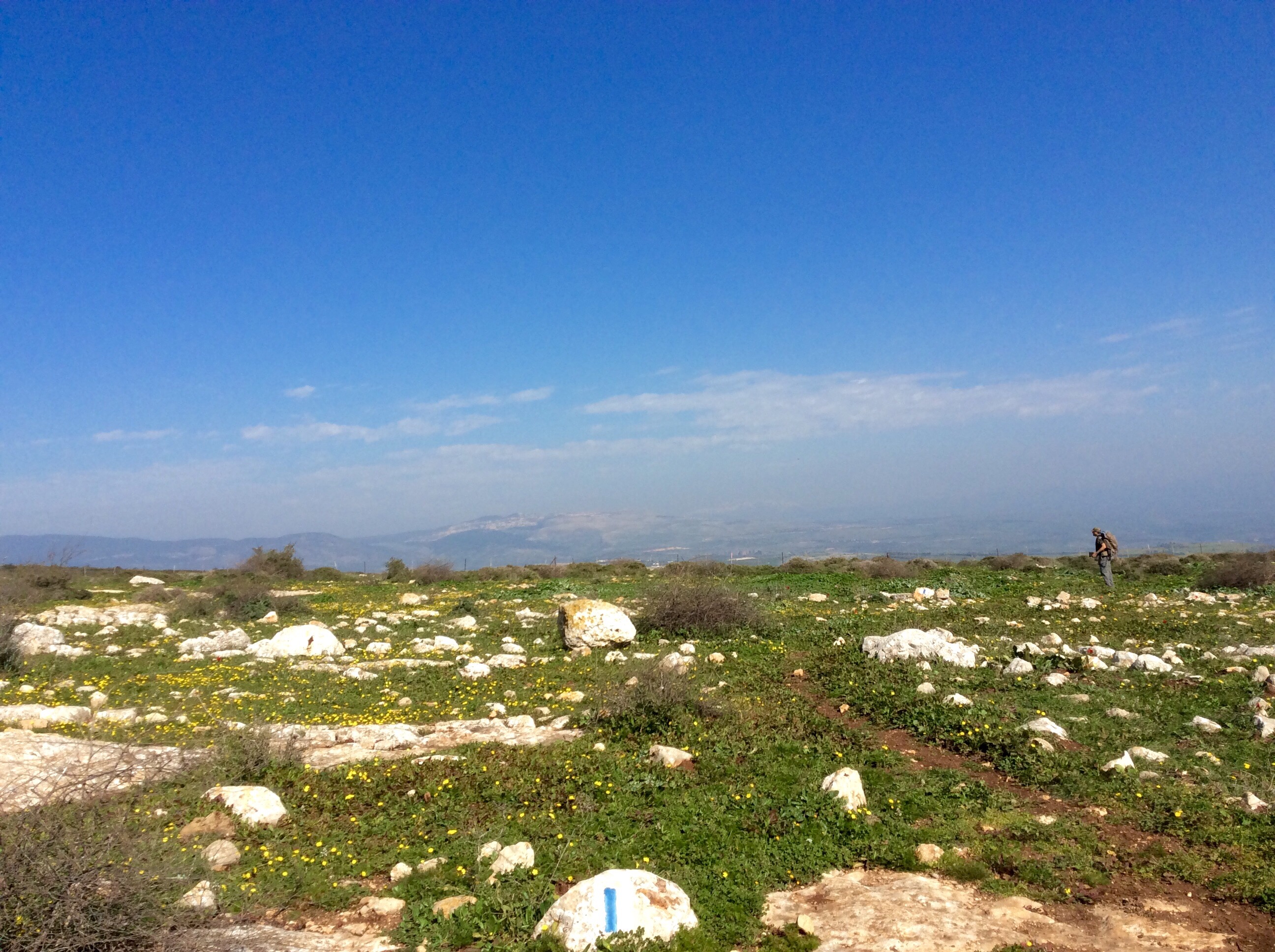
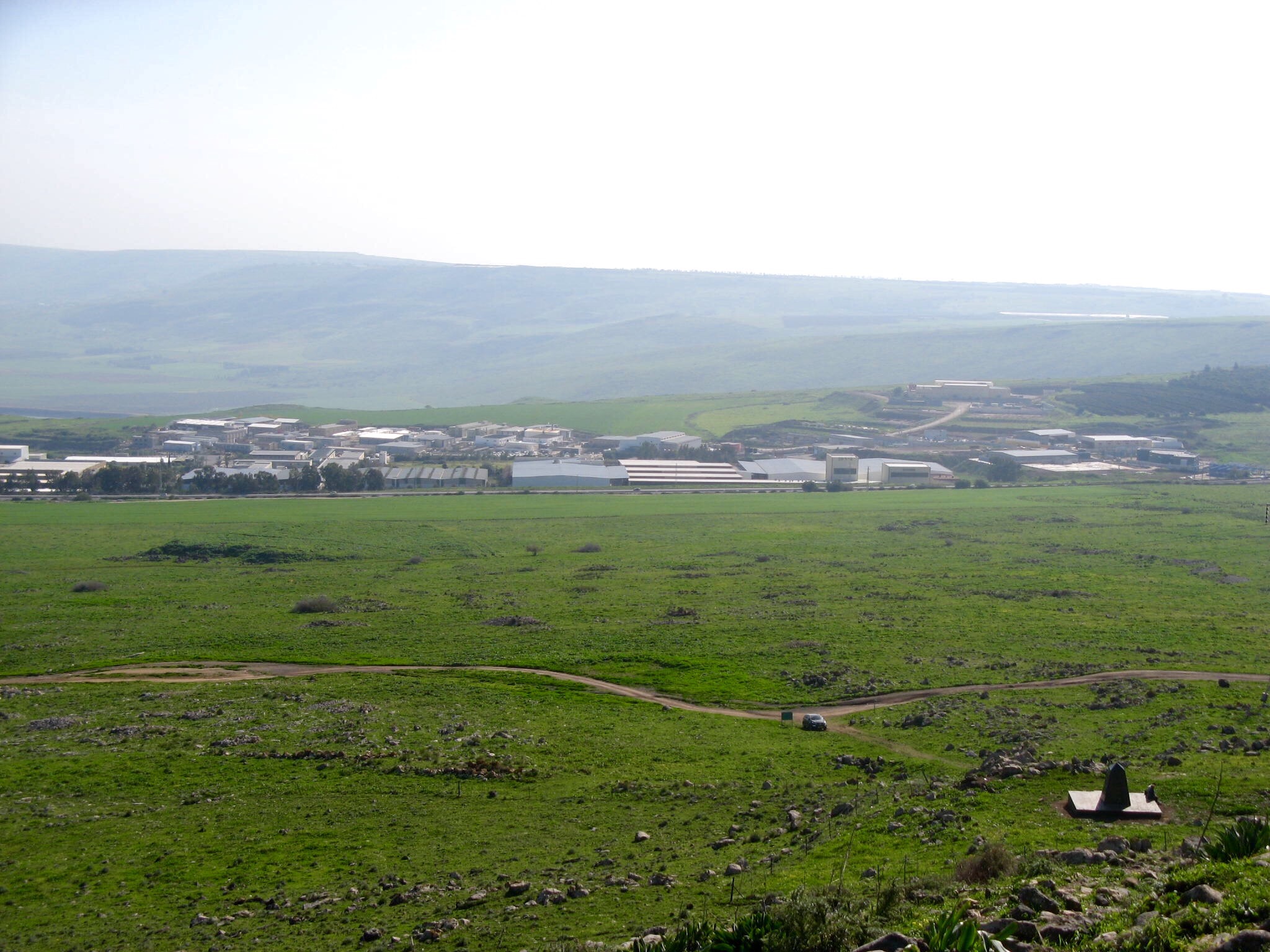
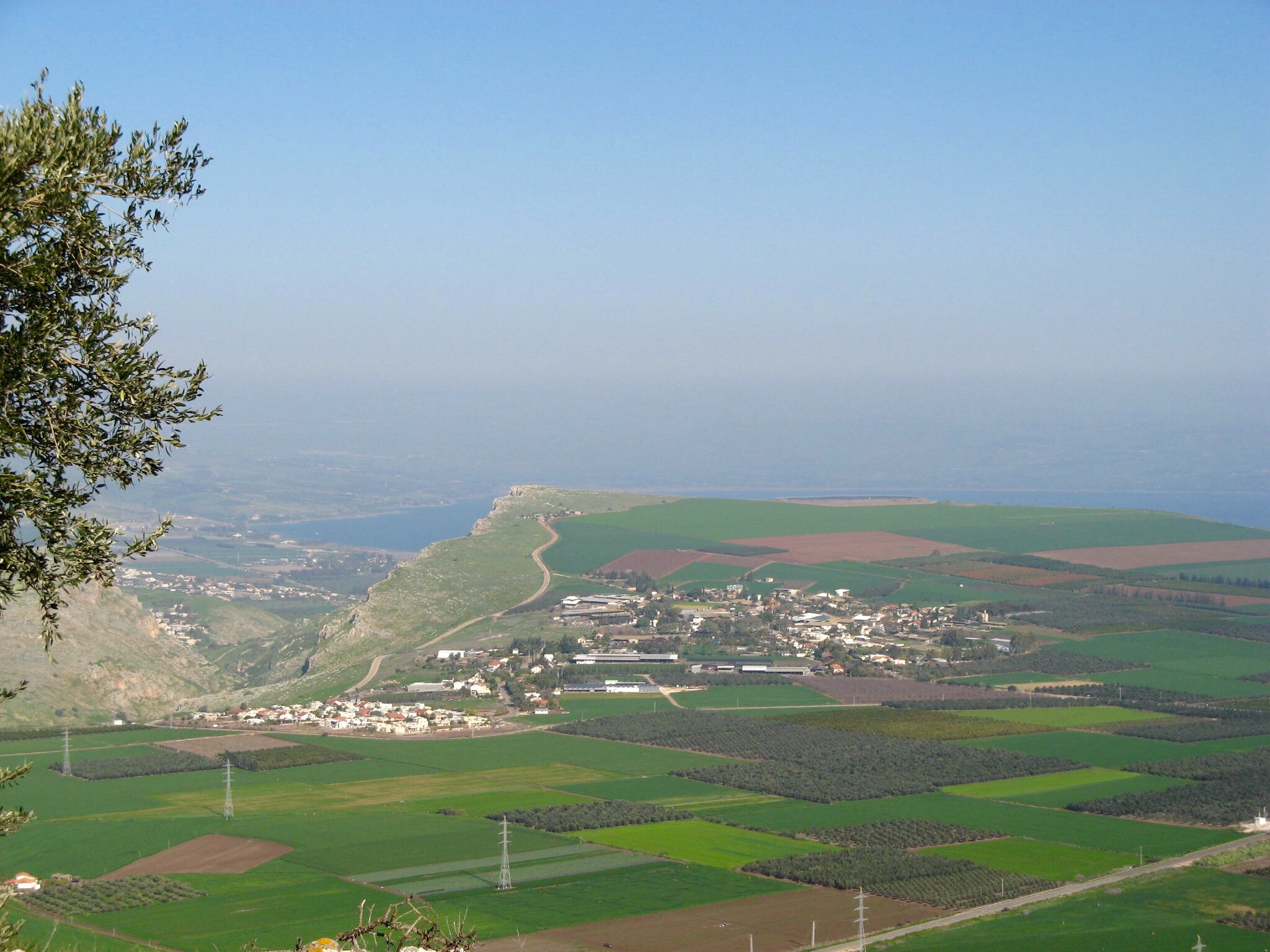
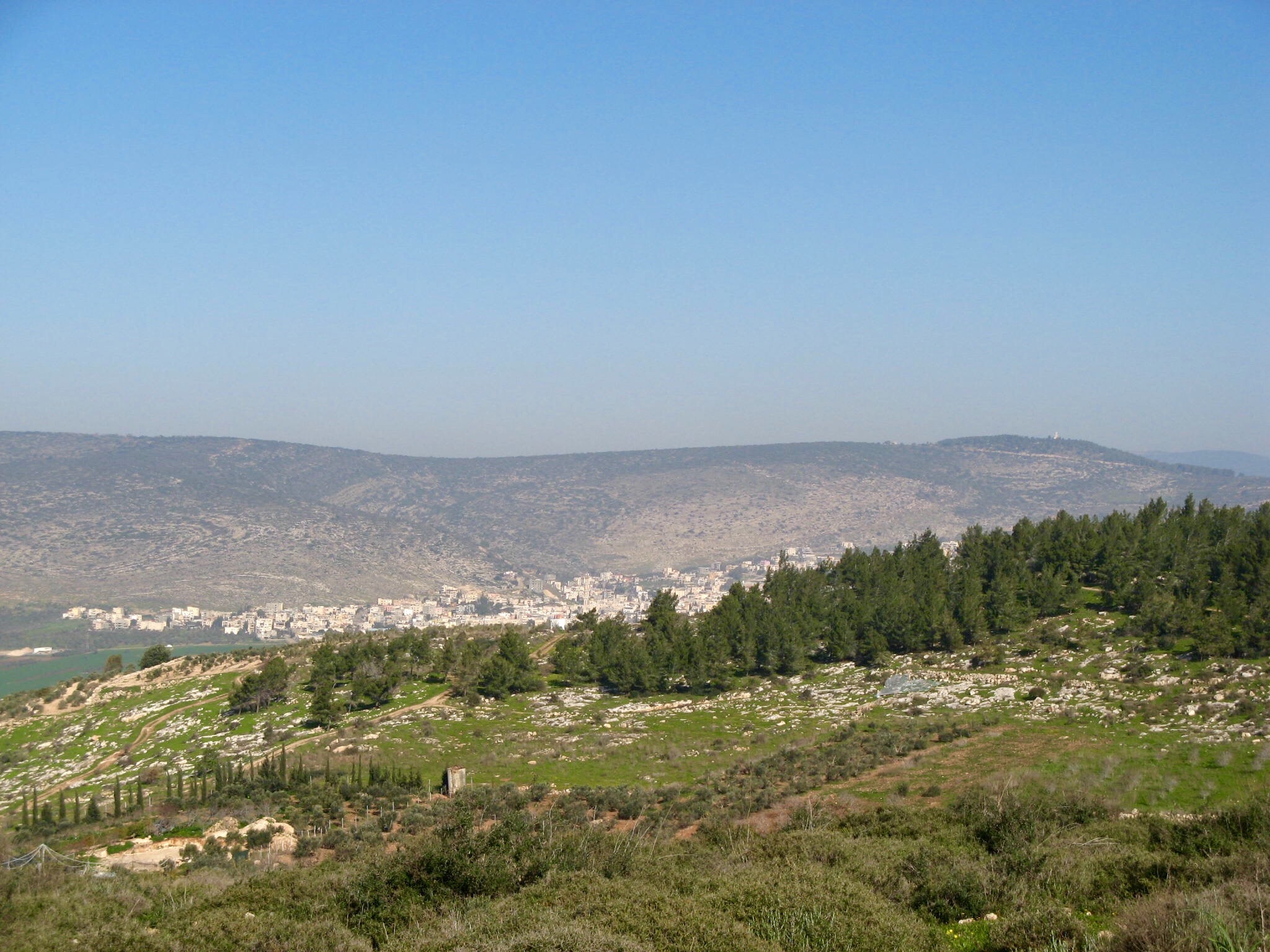
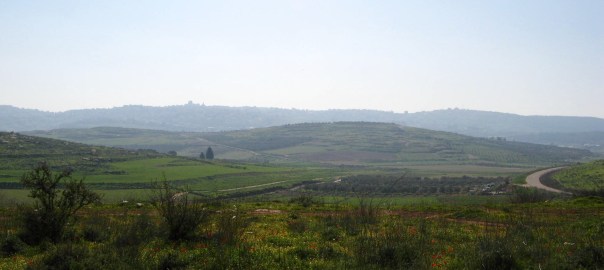
As we left Mashad, we could see Cana in the distance. Here is the picture I will show you.image

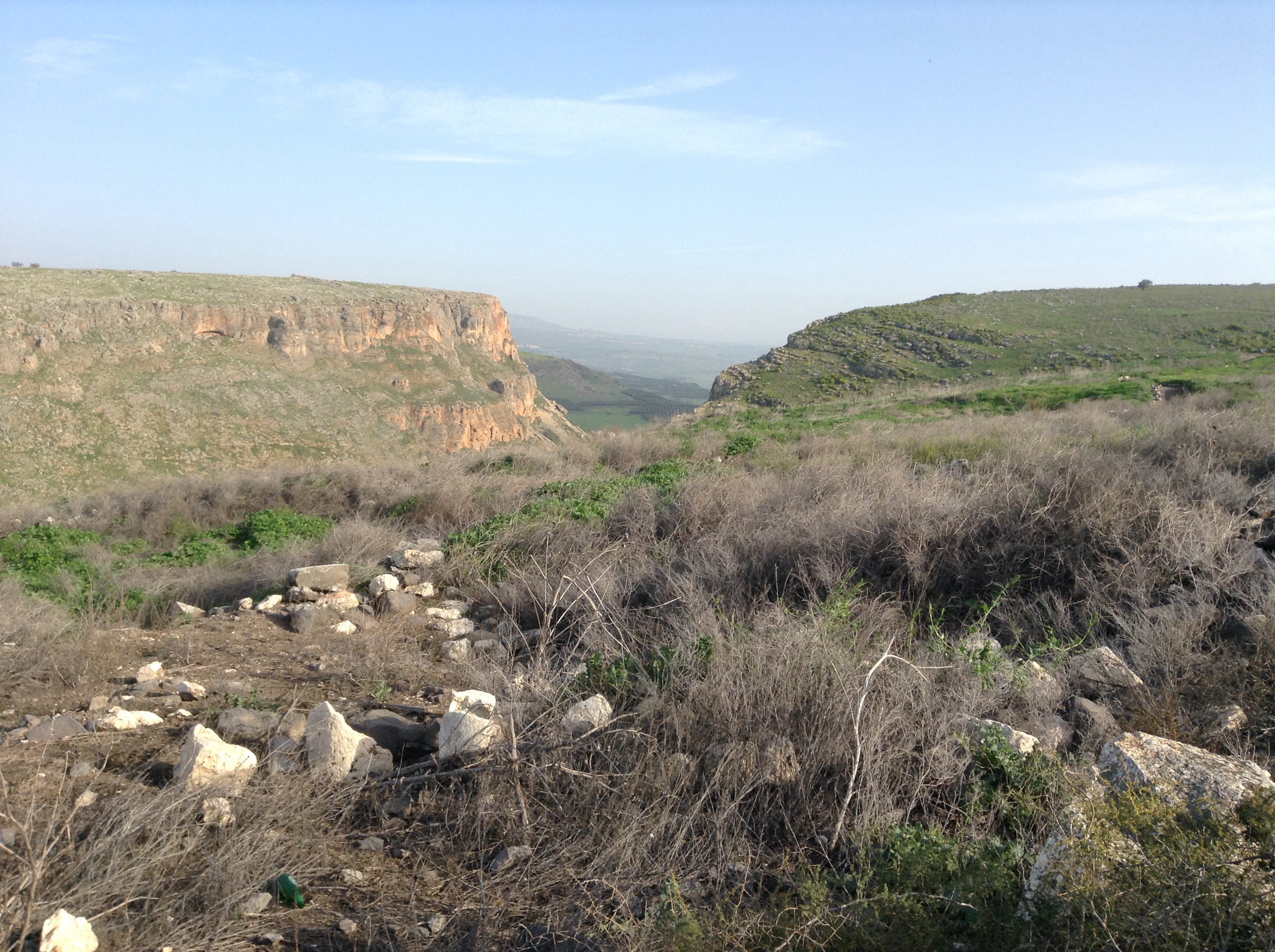
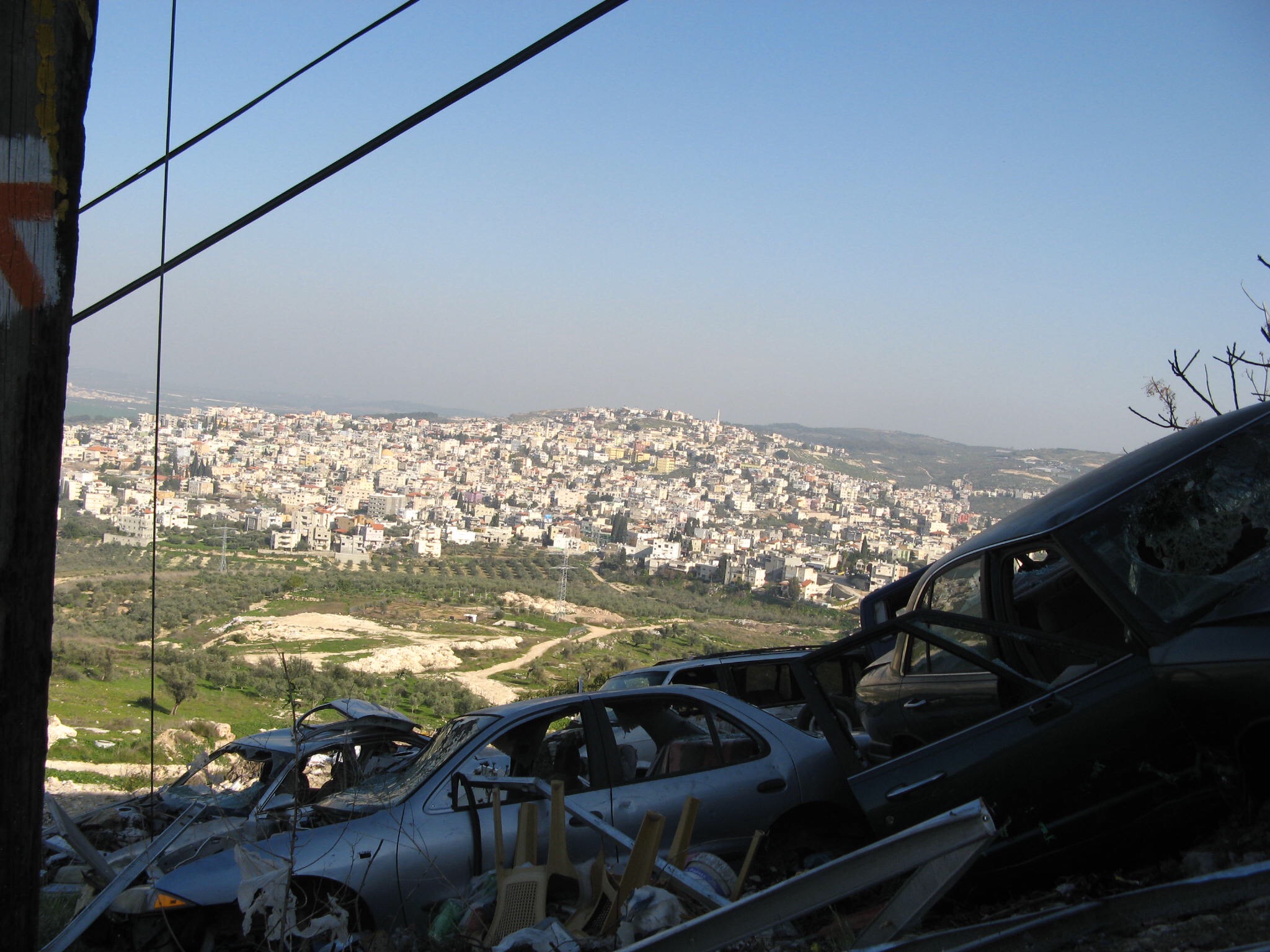
Now here is the picture that I saw:image

I realized that I’ve been shooting “up” all day to avoid taking pictures of trash. I’m not into shaming countries for their litter, but this place has more trash in the woods, in the fields, by the roadside, an especially on marked trails, than any place in recent memory. We’ve been walking by sofas, cars, washing machines, a bathtub, and tons of plastic that will never decompose. I just had to get that off my chest – I’ll continue to look for beauty whenever I can.

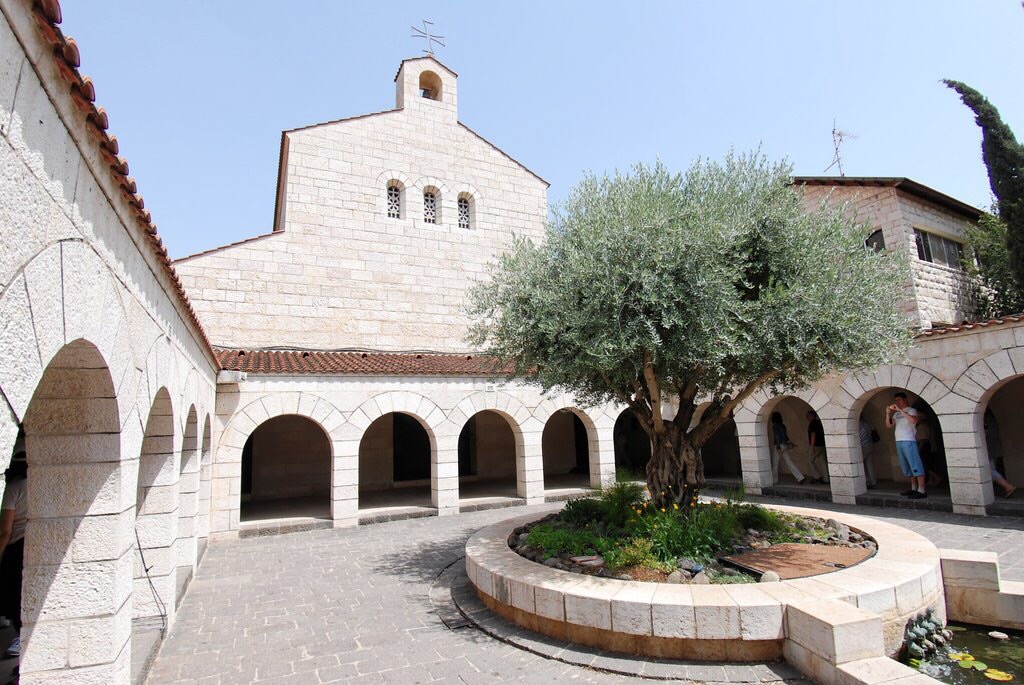
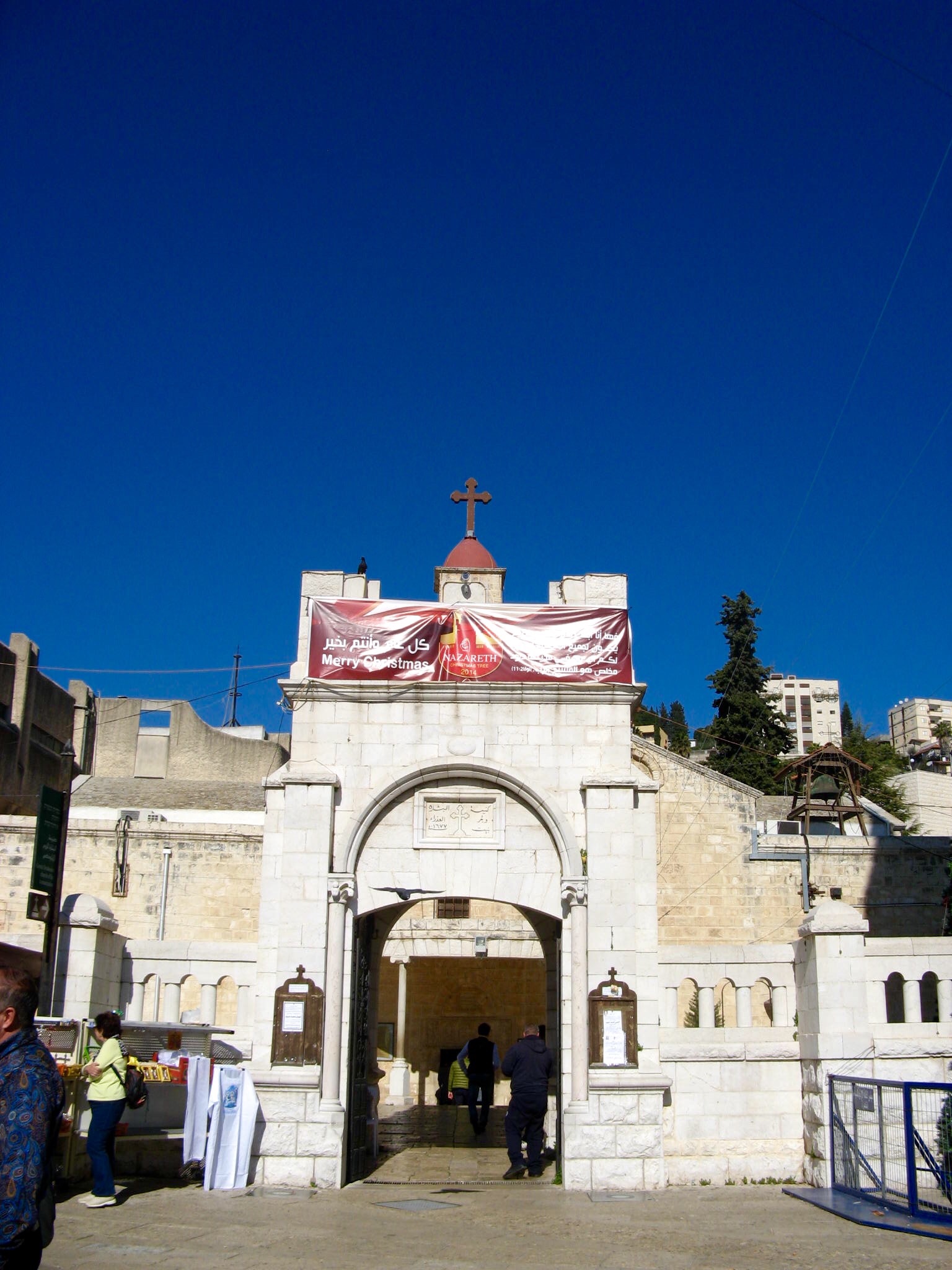
And now we are in Cana, otherwise known as Kfar Kanna. As we walk into town, we pass the Greek Orhodox Church where Jesus turned water into wine to make his mother happy. image

Two blocks away is the Franciscan version of the same church.image Remember how much Nazareth likes Christmas? So does Cana! In addition to the big tree, the streets are still lined with multi-colored Christmas lights. Very festive!

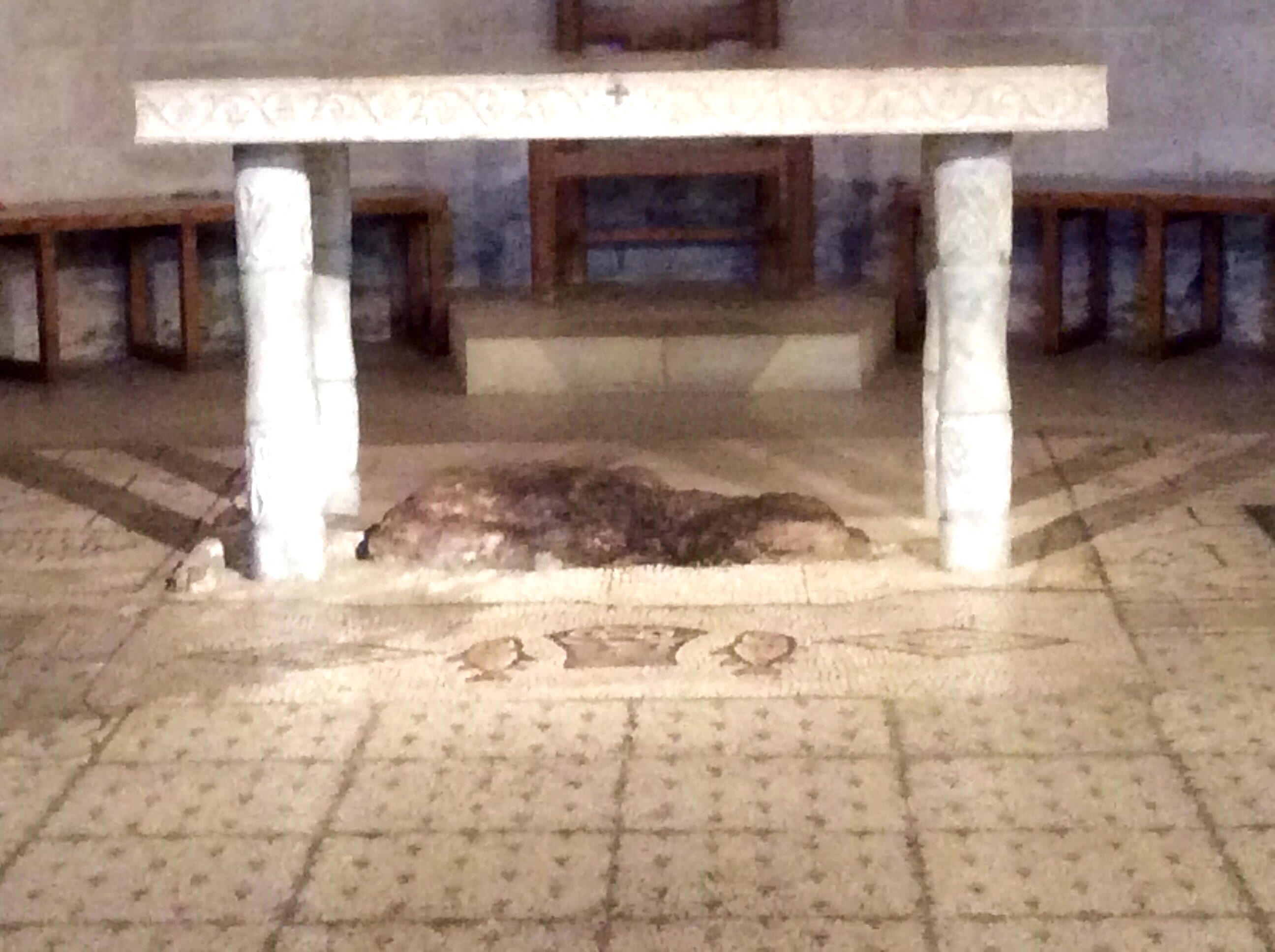
The Greek church is not open to visitors, but we check out the Catholic one. Note the grape motif on the altar.image

Below the modern church is an excavation of a previous church, and relics found there. Prayer requests and money are thrown down the excavation too.

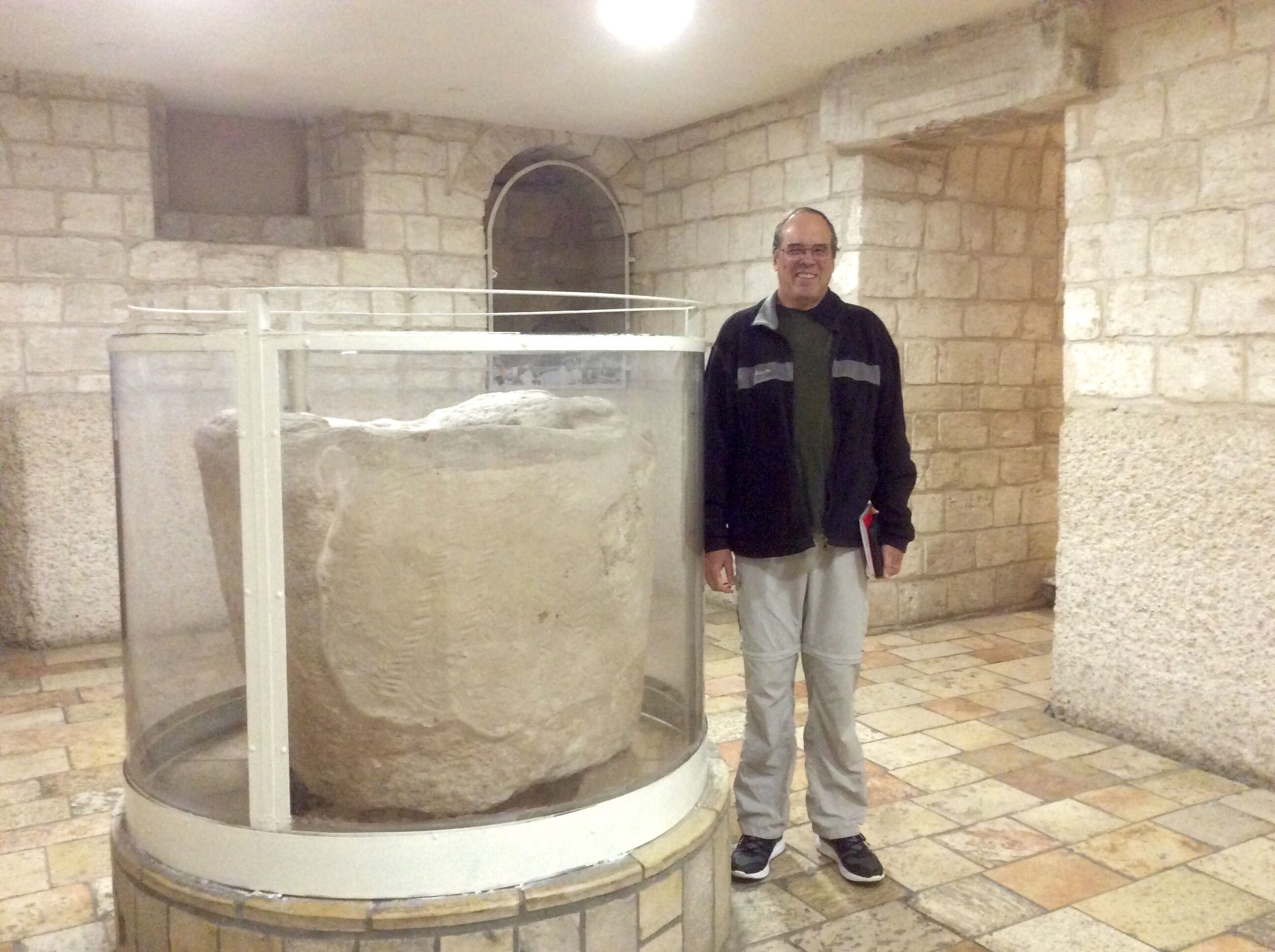
In pride of place is a huge cistern that can hold 80 gallons of water. This is one of the “jars” from the Wedding at Cana. It is huge!image

There are different jars on display at the Greek church – you decide!

We are staying at Cana Wedding Guesthouse, run by a Christian family. The mother has little English, so our conversation is limited. The mother says that in the spring, the town is filled with couples who come to renew their wedding vows at the church. We have supper at the son’s pizzeria in town (pretty good NY pizza!), and the family will feed us breakfast in the morning. We are the only guests. image

A good day!

Nazareth – the Churches

1/21 – After our morning in Nazareth Village, we spent the afternoon checking out the churches. The Basilica of the Annunciation is the largest Catholic church in the Middle East. Completed in 1969, it was built over several previous churches on the spot where Mary’s house might have been, when she and the Angel Gabriel met. image

We arrived right at noon, in time to hear all the bells pealing (drowning out the noon Call to Prayer from the White Mosque across the street), and a chorus of Ave Maria (which we haven’t heard since France). A priest came out to perform the daily blessing in the grotto that looks down into excavations from earlier churches.image

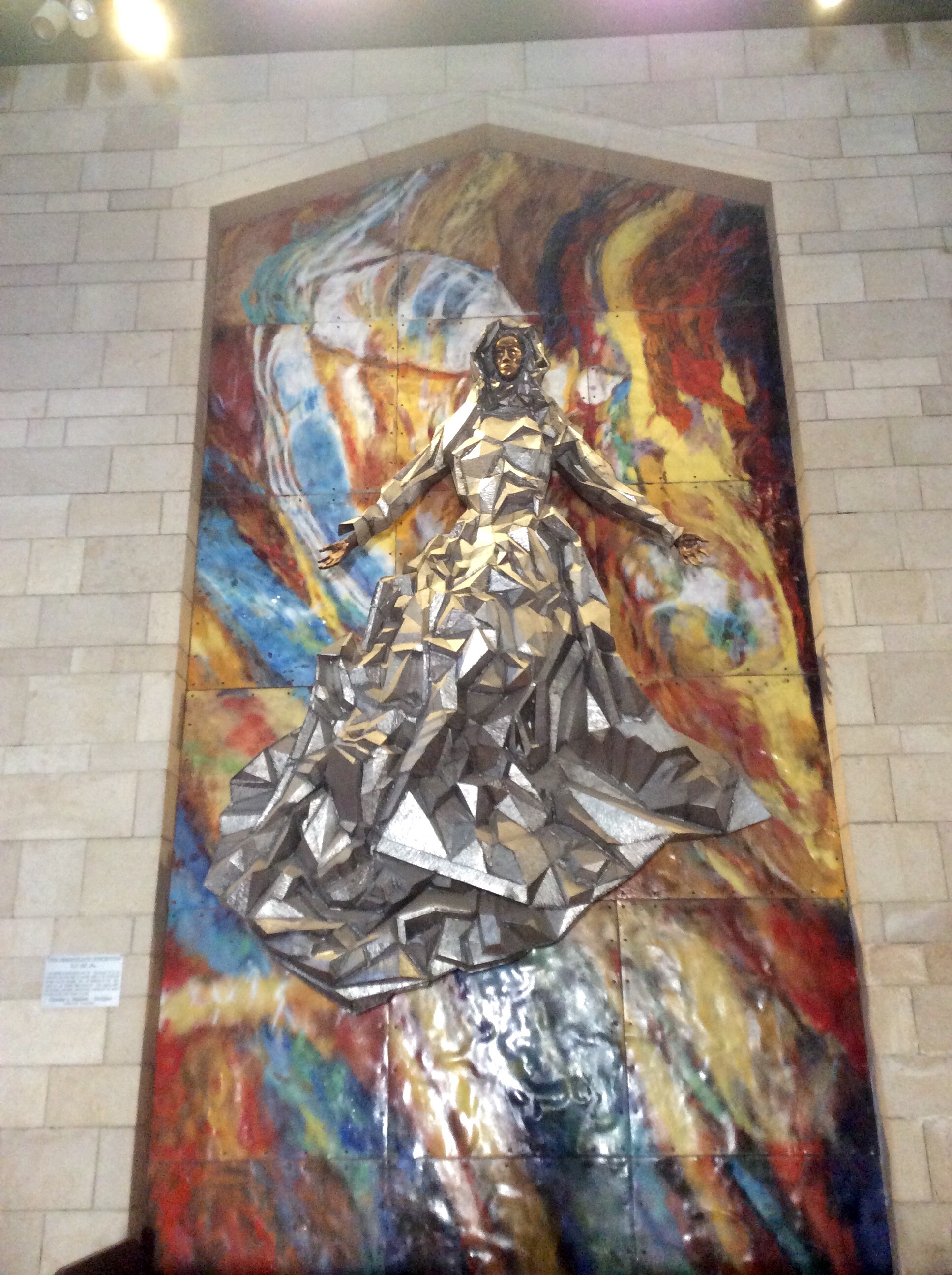
The basilica contains images of Mary provided by countries around the world. I love seeing her image reflected in every race and artistic style.

The American contribution is one of the more, shall we say, non-traditional.image

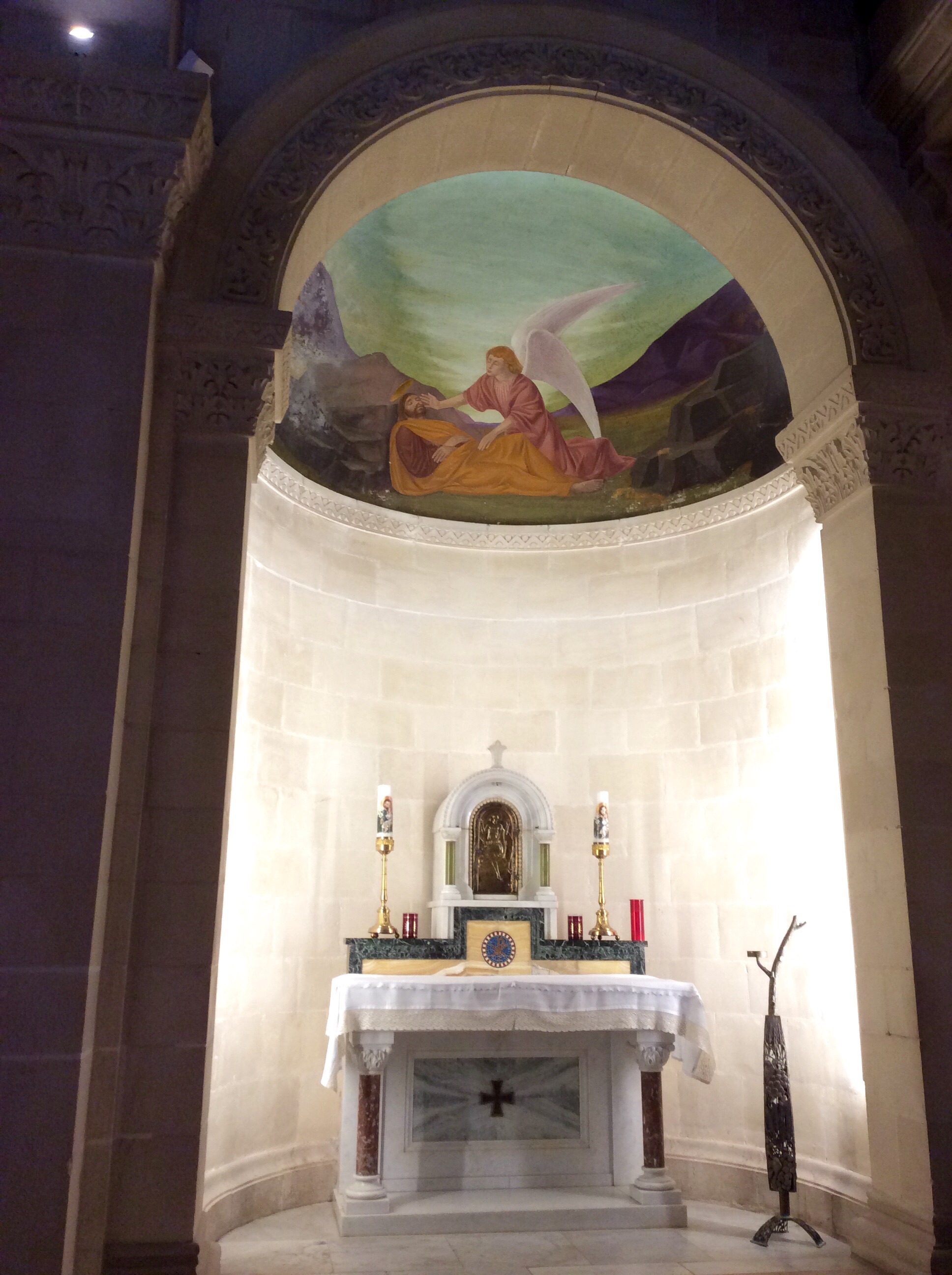
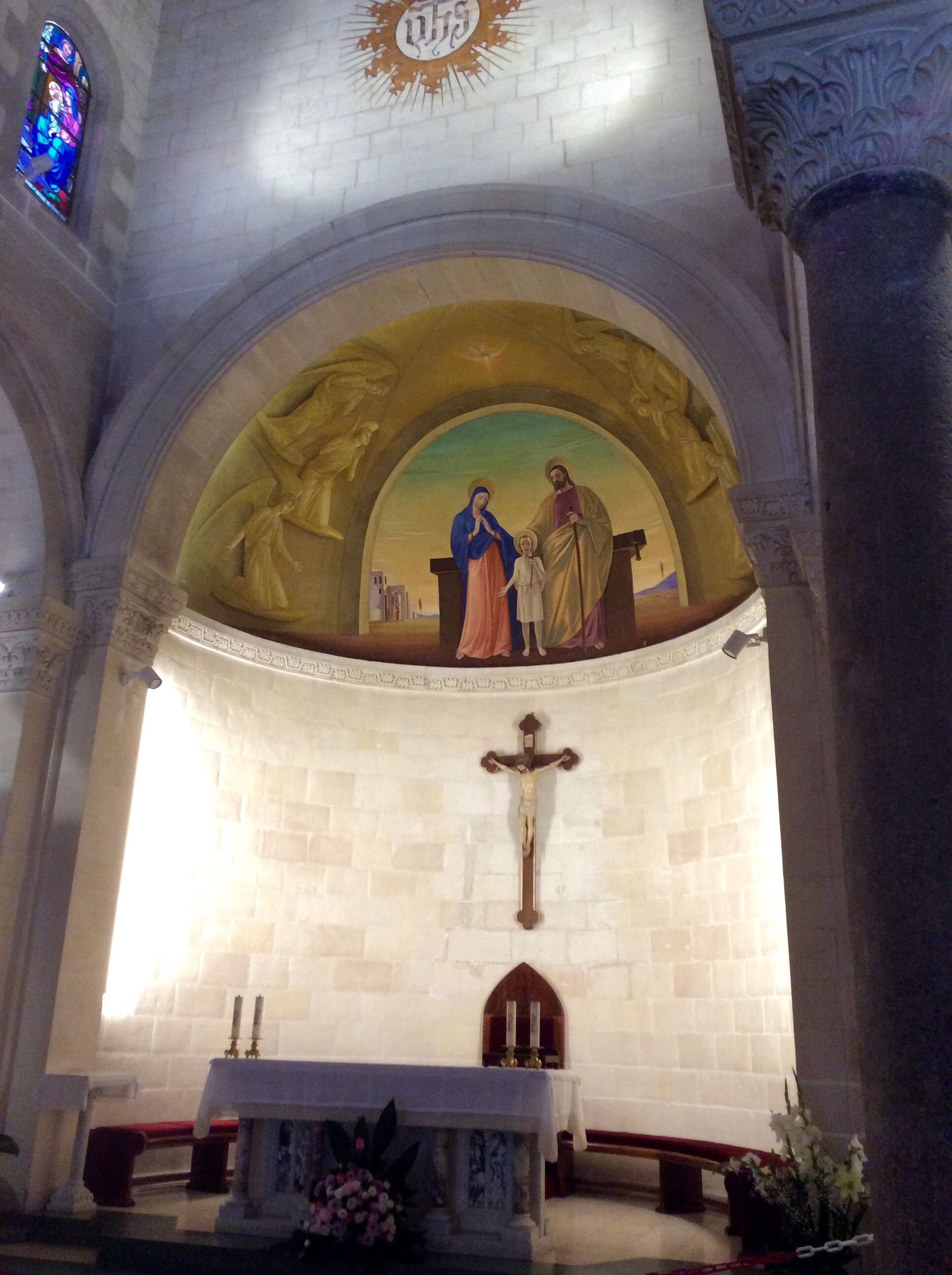
Next to the basilica stands the Church of St. Joseph, who had a big role in the raising of Jesus, but doesn’t usually get that much press. I really loved the images portrayed here.

Joseph’s visit from the Angel Gabriel.image
Joseph and Mary raising their son. image
Mary and Jesus caring for Joseph in his old age.image

Up the street is the Greek Orthodox Church of the Annunciation.image

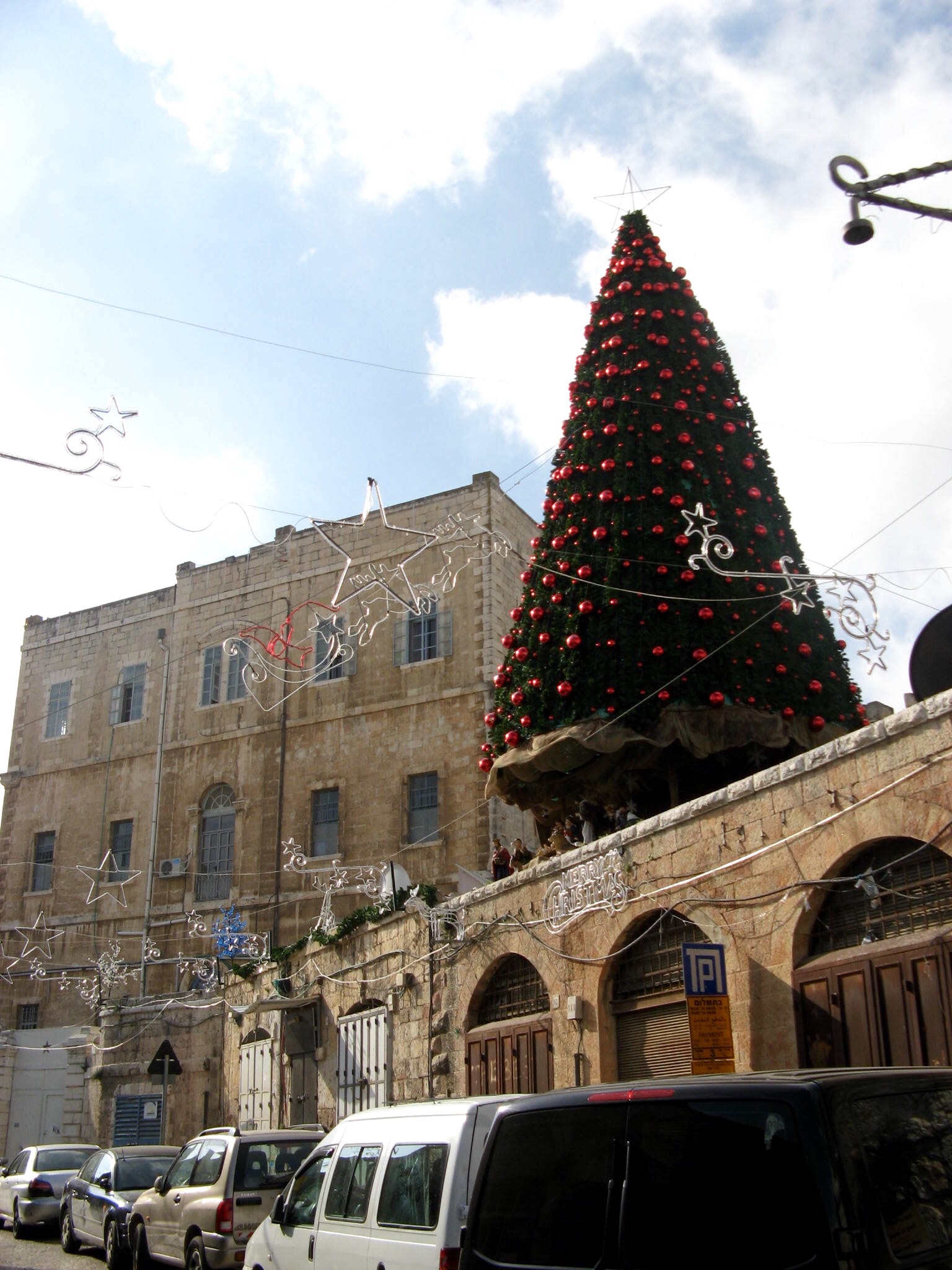
We were consulting our Google Maps for the location, when a helpful passerby told us to keep walking until we saw the big tree. When we got to the square, we did indeed see a big tree! They take Christmas very seriously here in Nazareth – although January is almost over, there is still tinsel and Santa all around the town. image

The Greek tradition has the Angel meeting Mary out at the well to give her the news, so Mary’s Well is here, and bottles of the water from the well are for sale. I loved the images here too – how often do you get to see the Disciples’ knees?

We passed the Church of Christ’s Table – not sure what this one commemorates, so I’ll let you read the sign yourself:

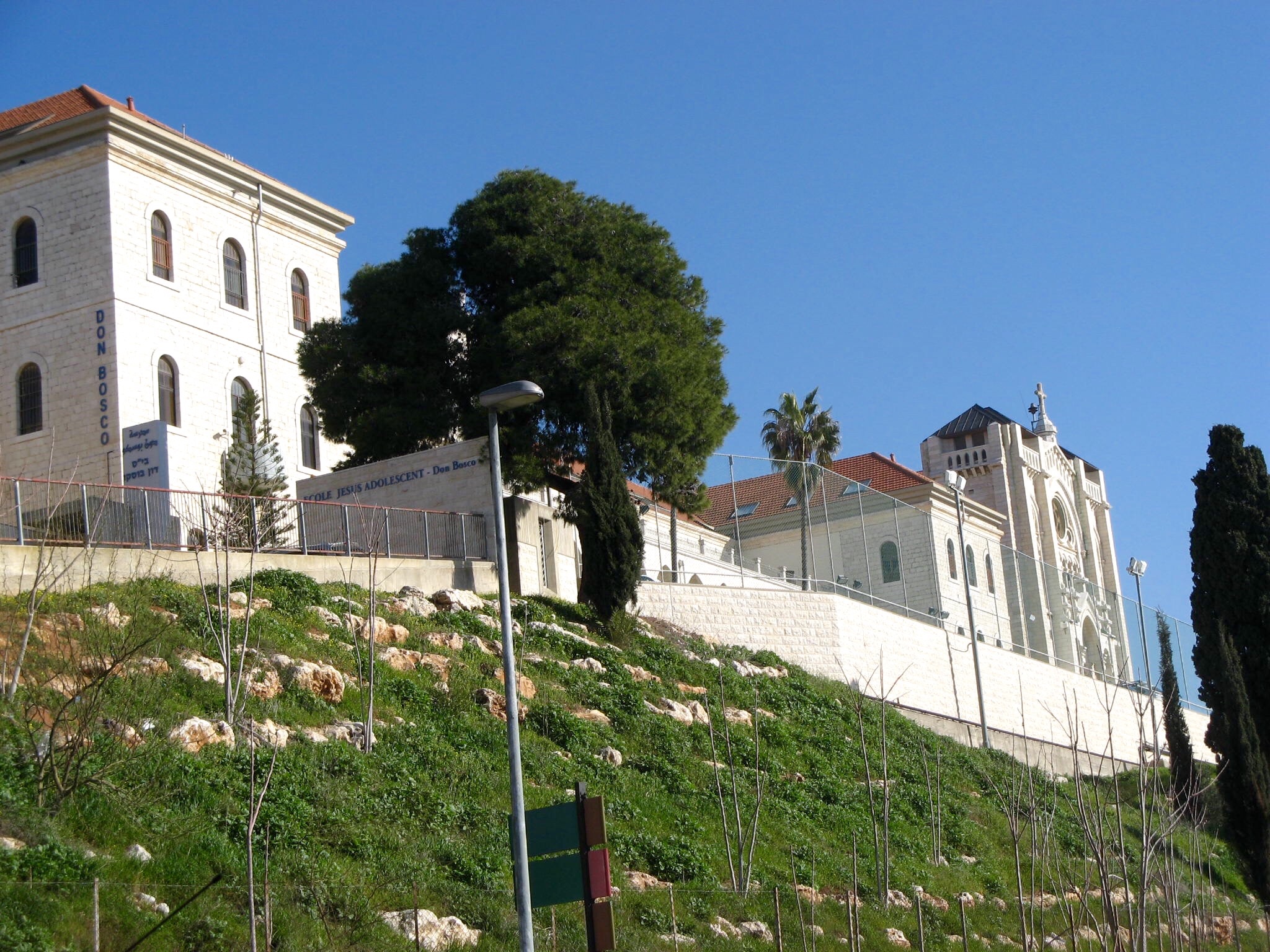
Up on a hill is the Church of Jesus the Adolescent. imageHometown Hero – all ages of his boyhood are celebrated here!

Nazareth – Nazareth Village

1/21 – This morning we walked over to Nazareth Village, a restoration of first century Nazareth, to see the town where Jesus grew up.

2015/01/img_6459.jpg

Our guide was raised in Nazareth, then educated in Arizona to become a minister. He took us through daily life in the time of Jesus, providing context to scripture. The village is populated by people dressed in period robes, demonstrating daily life. We learned that the roads of the old city of Nazareth were donkey paths, and were not paved until the Pope visited in 2000.
2015/01/img_6465.jpg
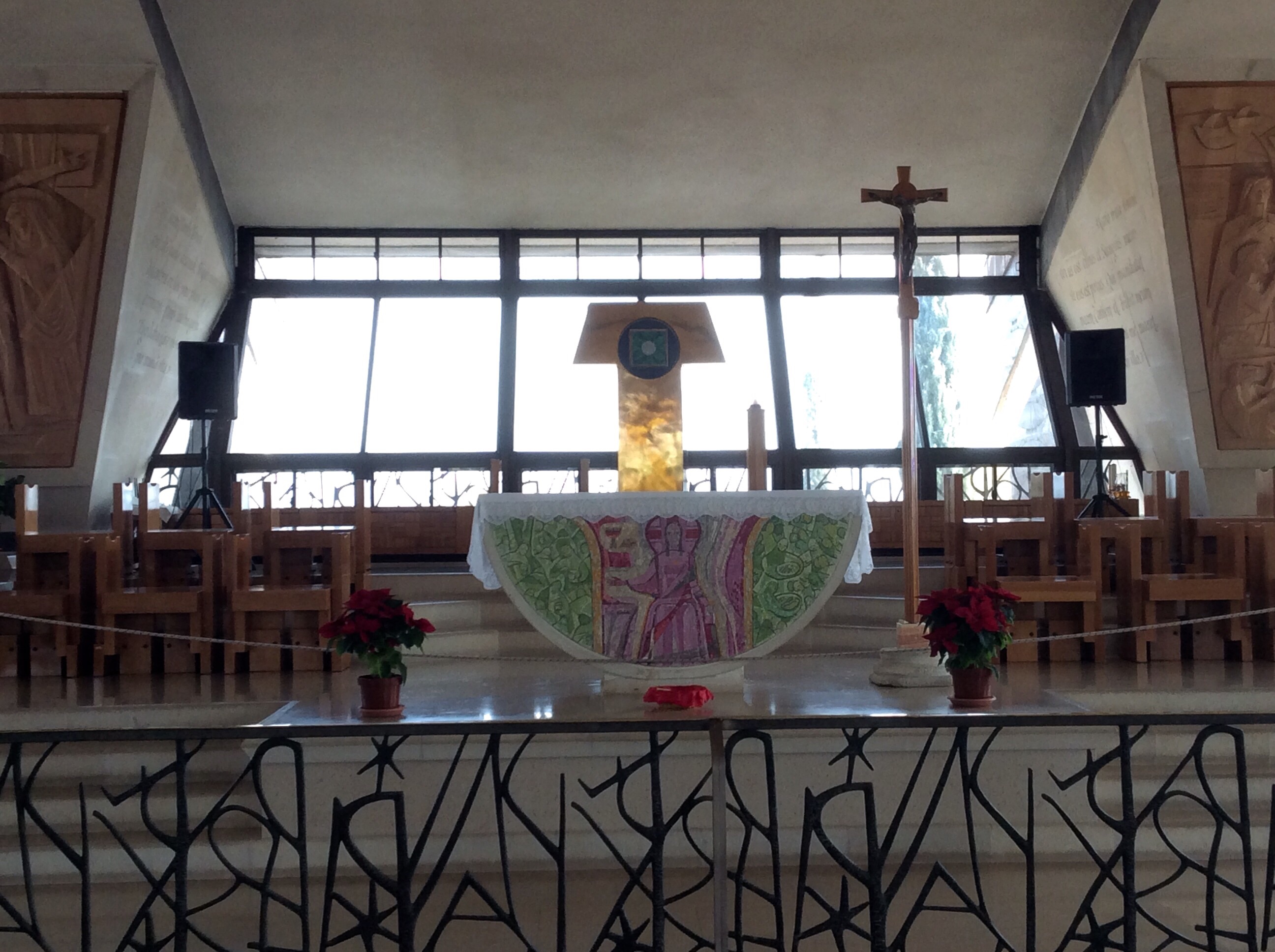
We met a shepherd abiding with his flock. Goats are independent, but sheep follow mindlessly. Goats lead the sheep astray. Our guide talked about how the nature of sheep and goats would not have to be explained to Jesus’ parable audience.

2015/01/img_6472.jpg

We saw a really old olive tree – some live for more than 1000 years. Our guide asked where in the Bible was it foretold that the Messiah would come from Nazareth. The answer is that it doesn’t – Isaiah says that the Messiah will come from the root of Jesse. Nazar translates as “branch”, which fulfills the prophesy, kind of.

2015/01/img_6468.jpg

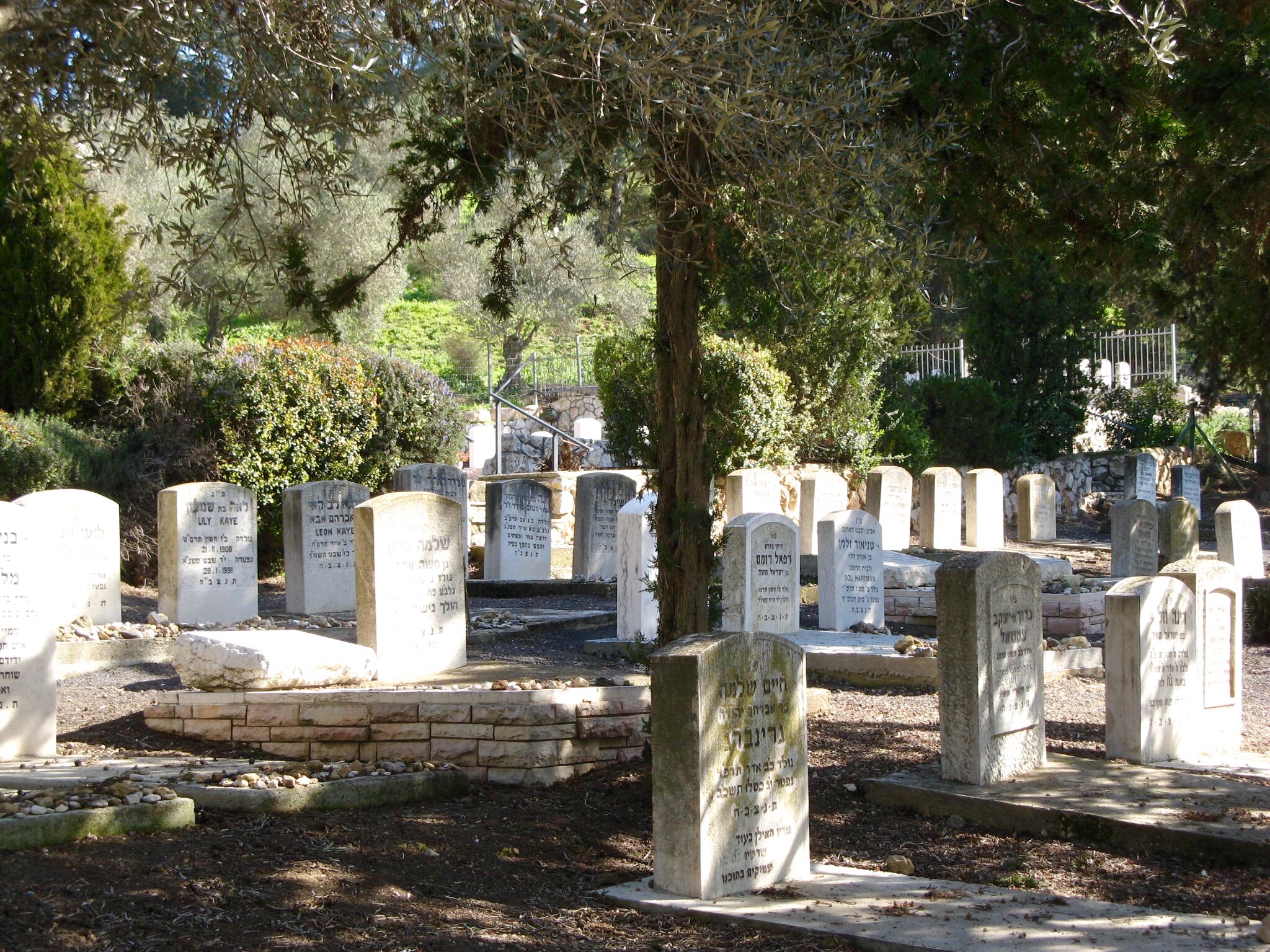
We saw a vineyard and the area where wine was pressed. This was a community activity, where families worked together. The grapes are pressed using bare feet, so that the seeds don’t crack, which would make the wine bitter. We learned the process for pressing olives, which uses heavy weights to crush the entire fruit. The first pressing is for virgin olive oil, the second pressing is for cloudy oil that can be used for lotions and creams, and the third pressing provides oil for lamps. Then the pits are used as fuel to keep the fire going throughout the night.
2015/01/img_6476.jpg

2015/01/img_6478.jpg

We watched a woman crushing herbs, and a builder making tools. Joseph was a builder (tekton), and would have worked with both wood and stone.

2015/01/img_6483.jpg

2015/01/img_6482.jpg

We watched women making yarn, and learned that wool was dyed with herbs or vegetables, and the colors set with vinegar. Purple dye came from imported snails ( very expensive), which is why purple was associated with royalty.

2015/01/img_6488.jpg

2015/01/img_6490.jpg

A typical house, with a ladder up to the roof, where it was cooler to sleep on warm nights. All the family slept in the one room, and rolled up their mats during the day to provide work space.

2015/01/img_6480.jpg

2015/01/img_6486.jpg

We saw a cross typical of crucifixion, with a footrest and a seat to rest on that would prolong suffering. A man in our group was concerned that the workmanship of the cross seemed crude. Our guide explained that, with thousands of crucifixions to perform, the Romans weren’t particularly interested in workmanship. Crosses were repaired and reused between executions.

2015/01/img_6462.jpg

Jim asked if the Mount of the Precipice, on the other side of town, was really the place where the townspeople tried to throw Jesus off the cliff (it is a very gently sloping hill). Our guide said that hill was too far from town for a Jew to travel on the Sabbath, but was a good tourist attraction. All Holy Land locations should be considered approximate.

Nazareth Village was built using only materials available in the first century. Our visit provided a great context for the rest of our day.

Konya back to Istanbul to Tel Aviv to Haifa to Nazareth, Israel

1/19 – It’s time to say farewell to Konya, and move on. We hopped on a one hour Pegasus flight to return to the Asian side of Istanbul. Istanbul is a transportation hub, and we opted to fly to Israel instead of traveling overland. We will be in Israel for 10 days. It will be good to get back where it’s warm!

1/20 – Got up at 4am to get to the airport for our dawn flight.

2015/01/img_6447.jpg

2015/01/img_6440.jpg

We landed in Tel Aviv two hours later. The Ben Gurion Airport is big and sparkling. All the signage is in Hebrew, Arabic and English.

2015/01/img_6456.jpg

We passed through Customs and requested a paper visa instead of a stamp on our passports. Some countries refuse entry if you have an Israeli stamp in your passport. We’re not planning to visit any of those countries, but got the paper visa just in case.

2015/01/img_6458.jpg

The train station is right next to the airport, and we caught the 10:05 train to Haifa. The 90 minute ride put me right to sleep, so I didn’t get any pictures – sorry! Haifa is on the Mediterranean coast, with lots of beach, and looked very pretty from what little we saw from the train.

From Haifa, we caught the bus to Nazareth, and in an hour we were in the place where Jesus grew up. The bus let us off at the Basilica of the Annunciation, the very spot where Gabriel told Mary she would become the world’s most famous teenage unwed mother.

2015/01/img_6450.jpg
We will explore in more detail tomorrow.

Our goal today was to get to the bookshop that sells the guide for the Jesus Trail, that we will walk over the next few days.

2015/01/img_6457.jpg

Jim asked the proprietor her heritage, and she explained that she is Arabic, and that Nazareth is an Arabic community, the largest in northern Israel. The Arabic name is An-Nazeera. She said they used to be Palestinians, but when their grandparents agreed in 1948 to live in the new state of Israel (so they could keep their homes), they became Arabs living in Israel. She taught us our first words in Arabic: Marhaba for hello, and Shukara for thank you. These are similar to the Turkish words! We have found that these are the words we need most often, and we’ll get a lot of practice this week.

Tomorrow, we explore!

Konya – the Archeological Museum

1/14 – Close to Konya is the archeological site of Çatalhöyük, where artifacts as old as 9000 BCE have been salvaged from underground houses that pre-date the concept of a village (buildings with differentiated uses). Excavation has been going on since the 1960s. It’s a little cold to visit the excavation, so we decided to do the next-best thing and visit some of the artifacts at Konya’s Archeological Museum.

We navigated across town thanks to the Google Maps GPS on our phone. I really can’t imagine how we could have gotten this far without it. It’s another cold, grey-slush day. A little girl says Hello! as we pass. When I reply Merhaba! (hello) her face lights up with delight.

We pay 5 lira each admission, and the security guard flips on the light switch and motions us into a dusty room. We are the only visitors.

The first room is filled with Roman sarcophagi from the 3rd century CE.

The detail and preservation here is excellent. The carving is intricate, and depicts scenes from life.

There are also pieces of mosaic floor, undated (not much signage here).

The next room has the artifacts we came to see. Pottery from 1950 to 5000 BCE. Said another way, these pots are up to 7000 years old! This blows my mind.

An incredibly old bathtub.image

Here is an Çhatalhöyük artifact with red handprints, dated 7000 BCE. 9000 years old!image

The skeleton of a one year old child, buried with bracelets on wrists and ankles. Bodies were buried in baskets, under the floors of the houses. image

Here is a lamp, shaped like a bunch of gropes. Although I smile when I see attempts at English translation that fall short of the mark, I am very grateful for all the signs we have encountered that make the attempt. We would be lost without them! image

Konya – Today’s Mystery!

1/15 – We are staying this week at the Huzur Suites, a very new and modern building with efficiency apartments. It was especially important for us to rent a place with a kitchen, as we are here for a week, Konya is not a tourist town, and there are not a lot of restaurant options here.

This morning after breakfast, the electricity went out. We’ve experienced this frequently in Turkey, so we were not alarmed. The strange thing was that the wifi continued to work as we sat in the semi-dark, which meant that there was still power down in the lobby, just not in our apartment. Curious.

After a while, we heard the shouting of many male voices in the lobby. Of course, we couldn’t understand what was being said, but there was definitely a commotion. We stayed put until it quieted down, not wanting to walk into an unknown situation. When the voices abated, Jim stuck his head out and came back with a report – there were 10 policemen in the lobby!

The manager saw Jim and came to the door to ask if everything was alright. Jim indicated that we had no power, and the manager seemed to be surprised at this. He flipped a few switches in the hall, but nothing happened. The voices rose again and he hurried off.

We were just wondering how we were going to heat up our lunch without electricity, when the manager knocked again. “Pack up 10 minutes”, he said. “New hotel.” Really! Whatever could be going on?

We did a mad scramble to pack up all our stuff, and Jim emptied out the fridge and the freezer. We were staying four more nights in this town, so we had plenty of provisions, including a frozen chicken that was going to be tonight’s supper. In 10 minutes we were ready to go.

2015/01/img_6399.jpgHuzur Suites, all locked up.

We hauled our packs and groceries to the lobby, and the manager indicated that we should go with the desk clerk. “Sorry – problem, ” was all the English he had. We walked past the policemen, got into the clerk’s car, and he drove us across town. “Very nice hotel”, he said, trying to make conversation. Jim said, “no hotel, apartment”, several times, as the young man assured us he was taking us to a very nice hotel. He stopped at the entrance to what I’m sure was a very nice old hotel,and surely not an apartment. We insisted again that we needed an apartment – after all, we had prepaid for the week, and refused to get out of the car. The poor clerk dialed on his cellphone, and then, after a hurried conversation, turned the car around. “Apartment,” he said.

So now we are at a new place, Es Güven, not too far from our old place, with a very nice kitchen and not a clue as to what happened. But we’ll have chicken for supper tonight!

2015/01/img_6400.jpgOur new home.

Konya – the Mevlana Museum

1/12 – Happy to say that the temperature rose to the 30s today, so the ice melted off the streets, and turned the sidewalks to dirty icy slush. Reminds me of growing up in New York…

2015/01/img_6334.jpg

Today we set out from our apartment in the opposite direction, and it turns out we are only a few blocks from the city. Our street is very quiet, as we are on the far side of the city cemetery.

2015/01/img_6321.jpg

2015/01/img_6320.jpg
We haven’t seen headstones like these before.

We’re on our way to see Rumi’s tomb, at the Mevlana Museum. Mevlana means Master, and refers to Rumi. You can see the green spire (tower?) of the museum in the distance. The spire is the same color green as the decoration on the headstones. I looked online, but was unable to discover any info about this.

2015/01/img_6323-0.jpg

Here’s a funny thing. At the entrance to the museum is a ticket booth and a sophisticated electronic turnstile. We stand a moment, trying to puzzle out the price of admission, which seems to be 50 lira ($22) plus some sort of museum card. We are mentally figuring what the total cost might be, and that this is the most expensive museum we’ve encountered, when the person in the ticket booth smiles and says the entrance is free. Free? Yes, and hands us two fancy tickets, which we scan to get through the turnstile. Most curious!

2015/01/img_6326.jpg

Once inside, the first thing we saw was an invitation to visit Rumi’s mom. What a nice thought!image

The museum consists of several mausoleums. We headed to the main building, where Rumi’s tomb is located.

2015/01/img_6260.jpg

Inside we found the sarcophagi of some of Rumi’s relatives and close followers from the thirteenth century. Sufi turbans decorate each one.

2015/01/img_6261.jpg

2015/01/img_6265.jpg
Some look like Sufis seated at prayer.

2015/01/img_6413.jpg

Rumi’s sarcophagus is covered in golden brocade and the area is beautifully decorated.

2015/01/img_6263.jpg

The museum contains a mosque, and a collection of illuminated Qur’ans, ranging in size from very large to a little octagonal one the size of a silver dollar.

2015/01/img_6275.jpg

2015/01/img_6276.jpg

We saw the Mevlana’s Sufi robe and turban.image

As always, I was attracted to the intricate designs on the walls and ceilings.

The rest of the museum showed us Sufi artifacts, including the instruments played during the whirling dance, and some seriously heavy prayer beads.

The cane-like thing is a chin rest, so Sufis in training could take short naps without laying down!

There were dioramas that showed how Sufis were trained for 1001 days.

As we left the museum, we were invited in for tea at a ceramic shop with gorgeous handpainted plates (my favorite!) unlike those we have seen anywhere in Turkey. The proprietor, Issa, was very knowledgeable and shared much about the Mevlana, Islam, and porcelain.

One of the down sides of backpacking is that we have to resist the urge to buy pretty things, as we can’t carry them around, and shipping cost back to the states is prohibitive. We’ll have to be satisfied with the memory of these beautiful plates…

All streams flow to the sea

From Jim – whirling looks better on video!

beinghere2014's avatarBeinghere

image

Jalāl ad-Dīn Muhammad Rūmī, known in the West as Rumi, was a 13th century, poet, Islamic scholar, and Sufi mystic. He inspired the Mevlevi, a Sufi sect known as the whirling dervishes. Sufism is practiced within the context of Islamic culture.

Rumi’s poems have attracted international attention — inspiring many to follow the inner path.

We walk to the Kulturmerkesi (Konya, Turkey), where the dervishes whirl every Saturday night. It is snowing heavily and very cold.

The dervishes file in wearing black cloaks. They bow, are seated, meditate during a vocal recitation and a flute performance.

After ritual bows, they remove their black cloaks, symbolizing casting off the ego.

The Sufi master leads a series of greeting bows, involving about ten dervishes in a circle. The dervishes cross their arms, grasping their shoulders — symbolizing the oneness of God. They then began whirling, in turn, in a ritualized manner.

Eventually…

View original post 258 more words

Konya – Rumi and the Mevlevi

1/10 – Our friends are asking why we chose to travel to this cold and snowy spot, when we have been trying so hard to avoid winter weather. The answer is Rumi.

For those who do not live with Jim, and may be forgiven for not knowing, Rumi was an Islamic theologian, Sufi mystic, saint and poet who lived in the 1200s and was the inspiration for the Mevlevi, or Order of the Whirling Dervishes. He believed that music, poetry and dance were pathways to God. He embraced all religions. His poetry has been translated into many languages, and is still read, performed and enjoyed today all over the world. His words have graced a thousand posters. His tomb is here in Konya.image

Every Saturday evening, the Konya Kultur Merkezi opens their doors to anyone who wants to experience the Sema, or ritual dance of the Mevlevi. There is no charge. We trudged through the snow and bitter cold to join a hundred others who came to share the experience.

2015/01/img_6239.jpg

We had witnessed an abbreviated Sema in Istanbul, with three dancers and three instrumentalists. Here there were a dozen instrumentalists and singers, and 25 dancers. The Mevlevi train for 1001 days. During the westernization of Turkey in the early 20th century, the Mevlevi were forbidden to practice. It’s only since the 1990s that they have been permitted to share the Sema in public again.

The Sema starts with a period of prayer and reflection, while music plays softly on flute, strings and drum.

2015/01/img_6240.jpg

The dancers start with their hands clasped tight on their shoulders, forming the numeral 1 for the One God.

2015/01/img_6242.jpg

After bowing and receiving a blessing, the dancers begin to spin, unfurling their arms slowly. Their left foot remains in contact with the earth, as they propel themselves around with their right. Their arms reach up toward the heavens. Their eyes remain open. They each whirl at their own rate, not in time with the music or with one another. No one falters. They range in age from smooth-skinned teenage boys to grey-bearded older men. They whirl for a long time, resting briefly between four passages of music. image

Everything in nature revolves, from the motions of the earth to the particles of the atom. By consciously revolving, the Mevlevi seek to ascend spiritually toward the perfect love of the divine. image

image

At the end of the dance, passages from the Qur’an are read, a prayer is recited for all the departed, and the dancers silently file out of the auditorium.

A peaceful and joyful evening.image

Antalya to Konya

1/9 – Well, Friday turned out to be our lucky day. We caught the shuttle to the otogar, and got on the bus to Konya with no problems. This time, the bus kept going north, and soon we were in the mountains.

2015/01/img_6226.jpg

2015/01/img_6229.jpg

The temperature display on the bus read -11C / 12F.

2015/01/img_6235.jpg

2015/01/img_6231.jpg

We arrived in Konya by 4pm, and took a taxi to our new apartment at the Huzur Suites. The online photos showed a new, upscale building, and we were looking forward modern conveniences like hot water on tap. What the picture didn’t show was that the hotel is on an empty street, not near downtown. We’re not near ANYTHING, and the streets are still covered with ice from the blizzard, so walking any distance will be a challenge. This is going to be interesting!image

The young desk clerk looked very nice, but had not a word of English, and no map to give us. We needed to find a market and get some provisions for our nice, modern kitchen, as supper time was fast approaching, and it was getting dark. When the words market and supermarket didn’t register with him, I tried naming Turkish supermarket chains. Carrefour? Sok? Bim? Ah yes, recognition! Bim – he pointed down the street.

We bundled up and set off in the direction indicated, taking baby steps on the ice so we wouldn’t fall. Did I mention that it was COLD? I tried to talk to Jim, but my lips were frozen. Neither of us has gloves. About a third of a mile down the road, we came to a sad little market, with no produce, meat or dairy. We bought 10 eggs in a bag (yes, a plastic bag of eggs), a liter of water, a packet of Knorr chicken soup and a loaf of bread. That will get us through supper and breakfast, and will have to do until we get better directions.

We went back to the hotel and I showed the clerk our bag. “Not Bim”, I said. He indicated that no, the Bim was farther down the road. Sigh. We’ll try again tomorrow.