Category Archives: Spain

Guillena to Castilblanco de los Arroyos

Apr 12 – Having walked 13 miles yesterday, I figured that today’s 12 mile trek would be a snap.  It is another beautiful day, cool enough in the early morning for a sweatshirt.  We walked confidently out of Guillena, following our yellow arrows.  Just out of town, we saw a pond, with trees reflected perfectly in its calm surface.

After a bit of highway walking, we found the trail, which looked like it might provide more shade than yesterday.  

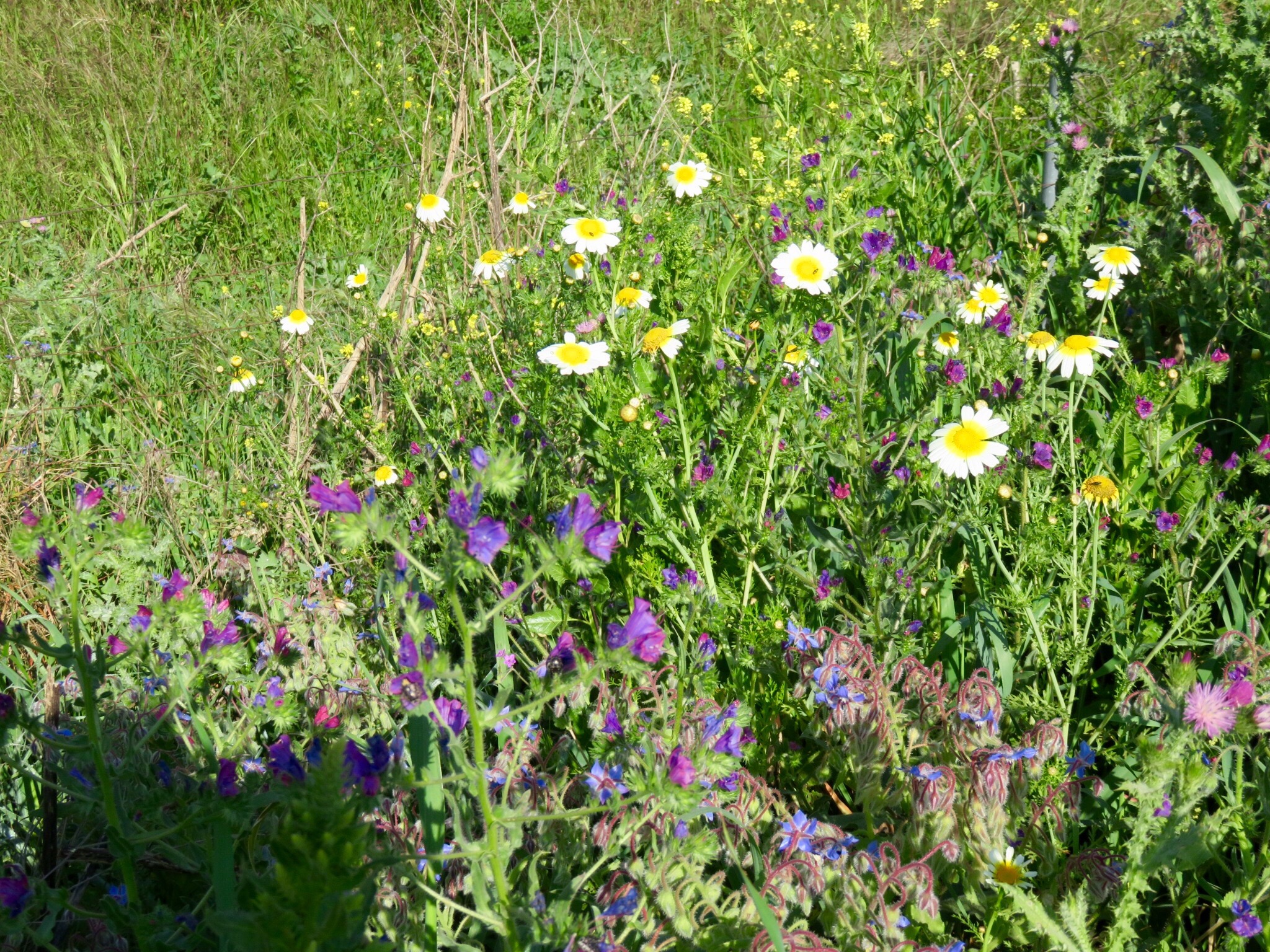
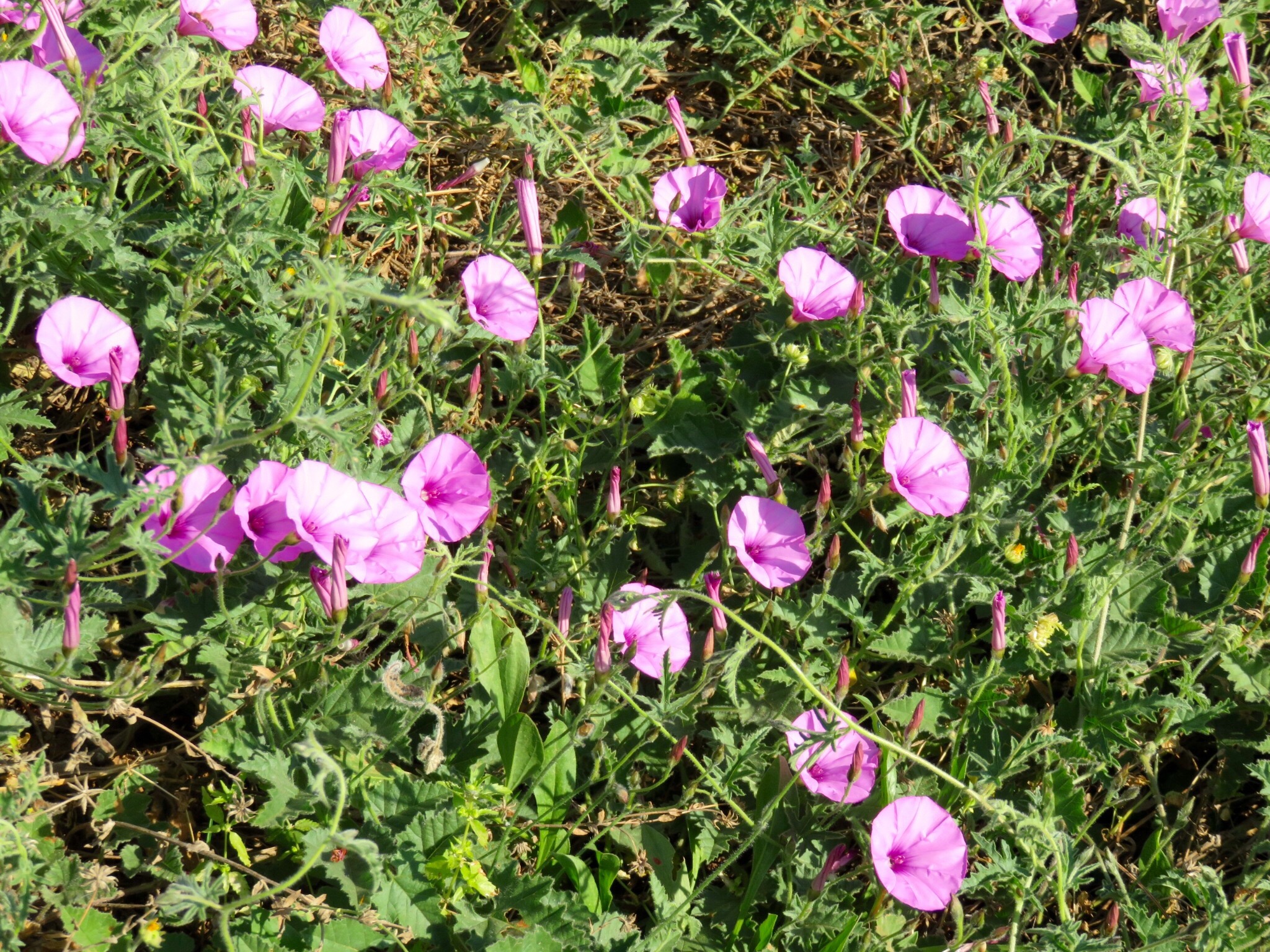
Once again, plenty of spring wildflowers in bloom.
We passed a castle in a farmer’s field.

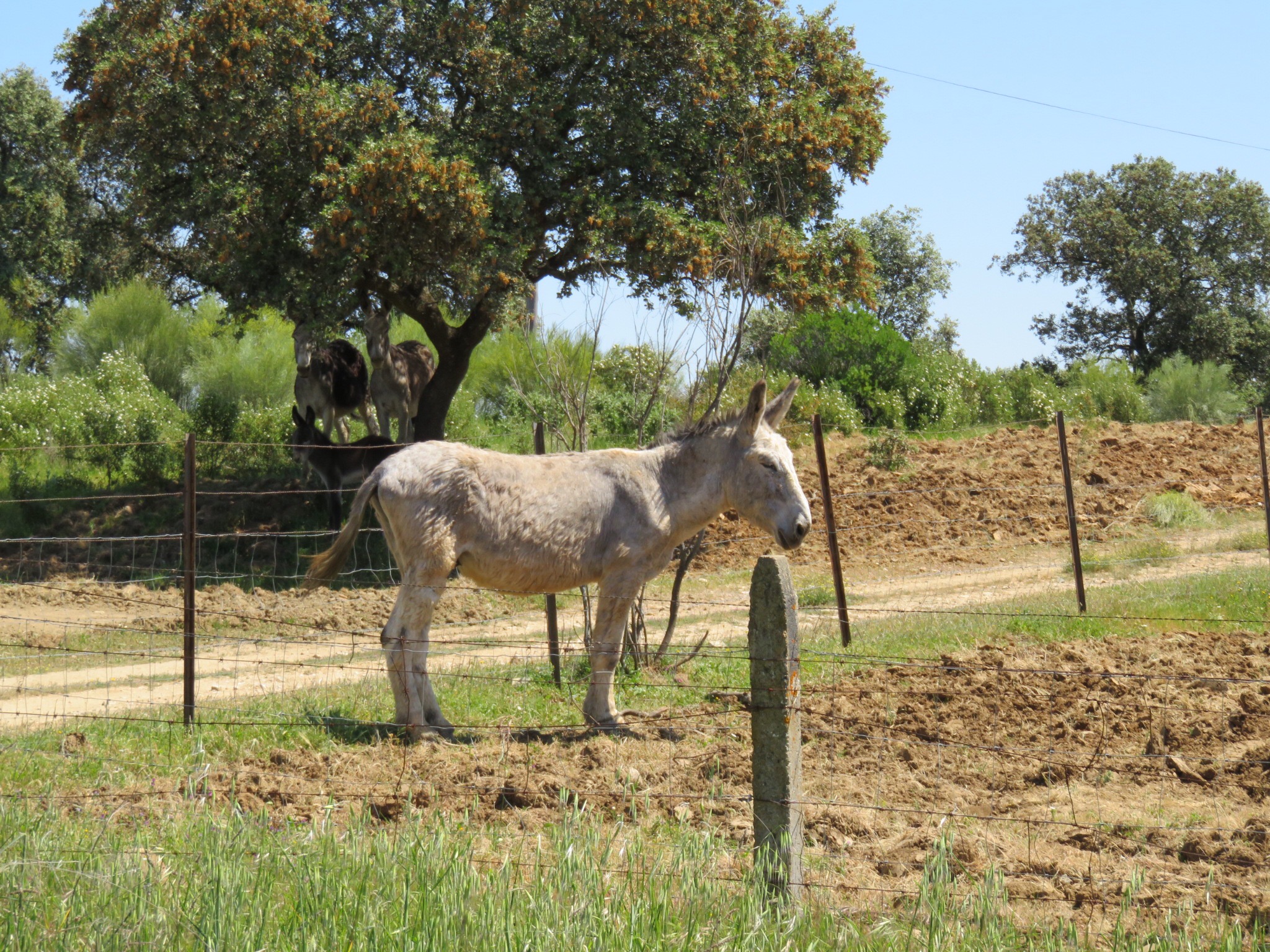
We saw a local family out for a walk, and were passed by a singing cyclist, but otherwise we had the day to ourselves.  Except for some burros.
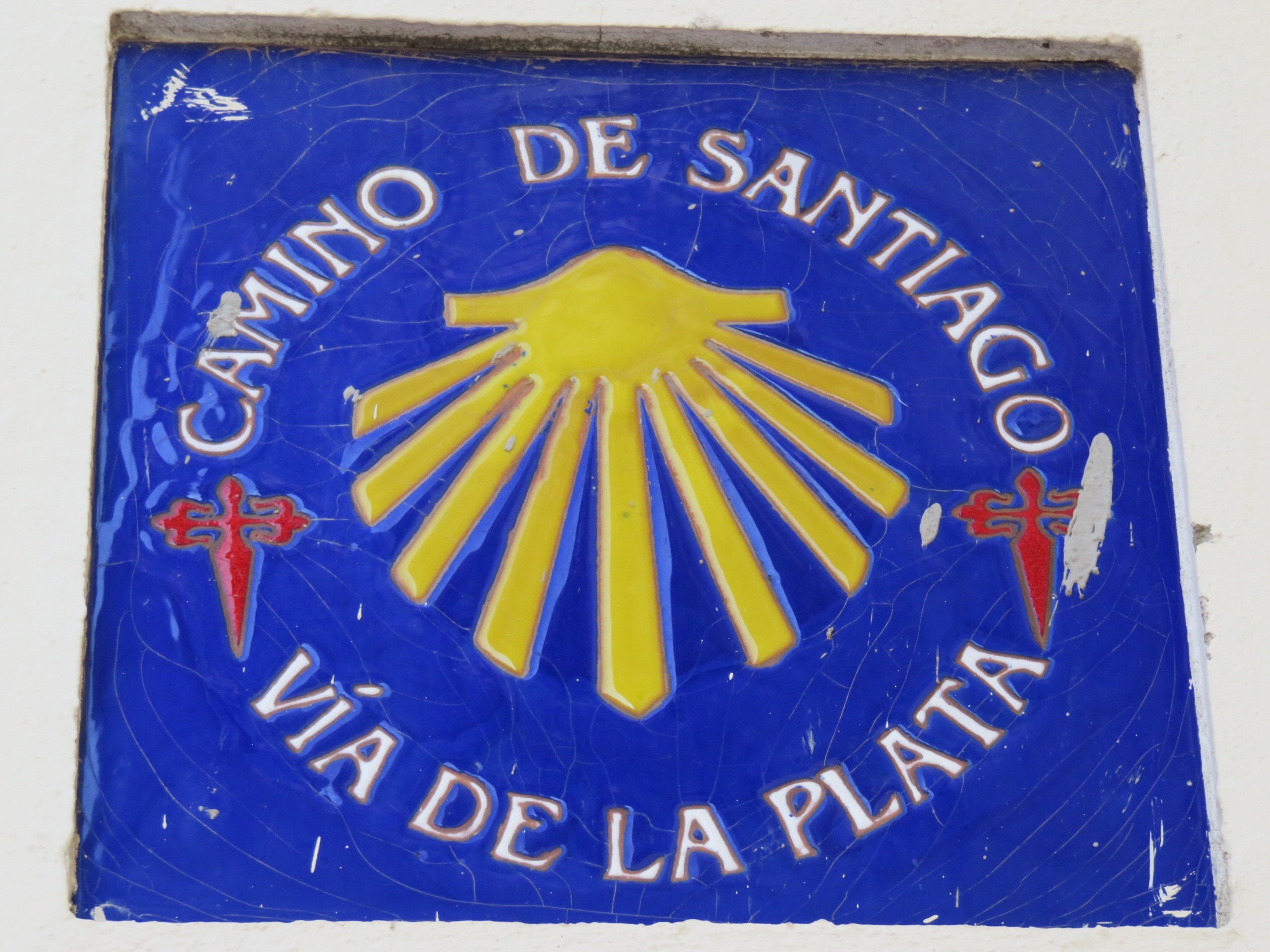
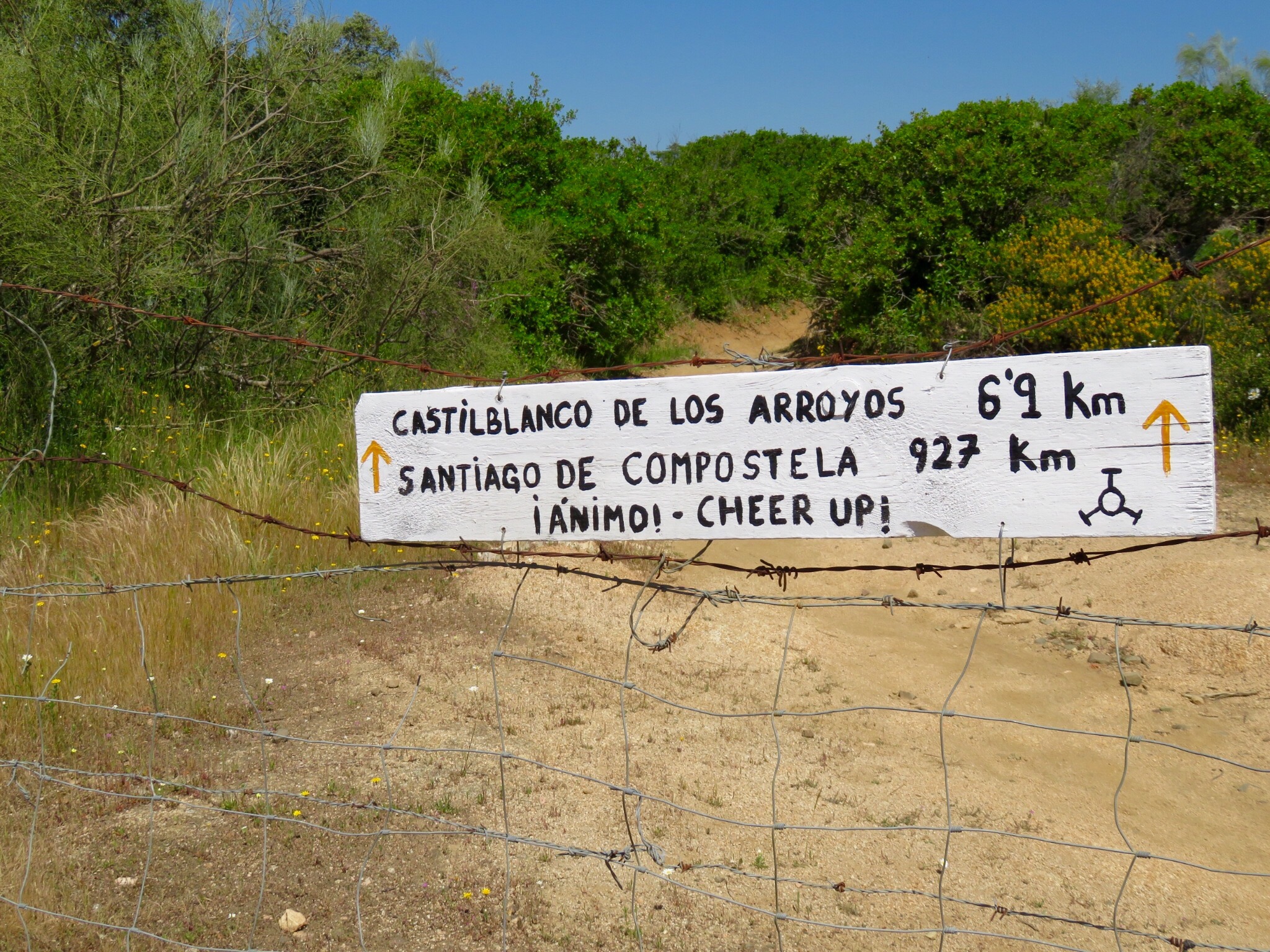
As we approached our destination, we encountered a sign meant to encourage us.  Of the original 1000 km trek, only 927 left to go!
Unfortunately, as the afternoon heated up, my pace slowed down and we made it to town about two hours later than planned.  When I removed my socks, we surveyed the bloody damage to one of the toes on my right foot.  Jim proclaimed tomorrow a rest day.  Hallelujah!

Apr 13 – I am very much enjoying my rest day.  This is a nice little town, very clean and friendly. We walked down the street to a bar for coffee, and over to a bakery for some bread and ham for breakfast.  Looking at the map of our next segment, it will require an 18 mile walk along a roadway, with no towns in between. After my poor performance yesterday, Jim doesn’t think I’m ready for that (and I agree!), so he suggested we look for a bus to take us at least part of the way.  We asked around and found the central square and a man with information about buses.  There are several buses that go back to Sevilla, but only one that goes north, and it runs only once a day in the late afternoon.  “What time tomorrow?”, we asked in blissful ignorance.  “¿Mañana!?  No! Es impossible!”  Turns out that tomorrow, Good Friday, is the biggest fiesta of the whole year.  No buses run tomorrow!  Crap.

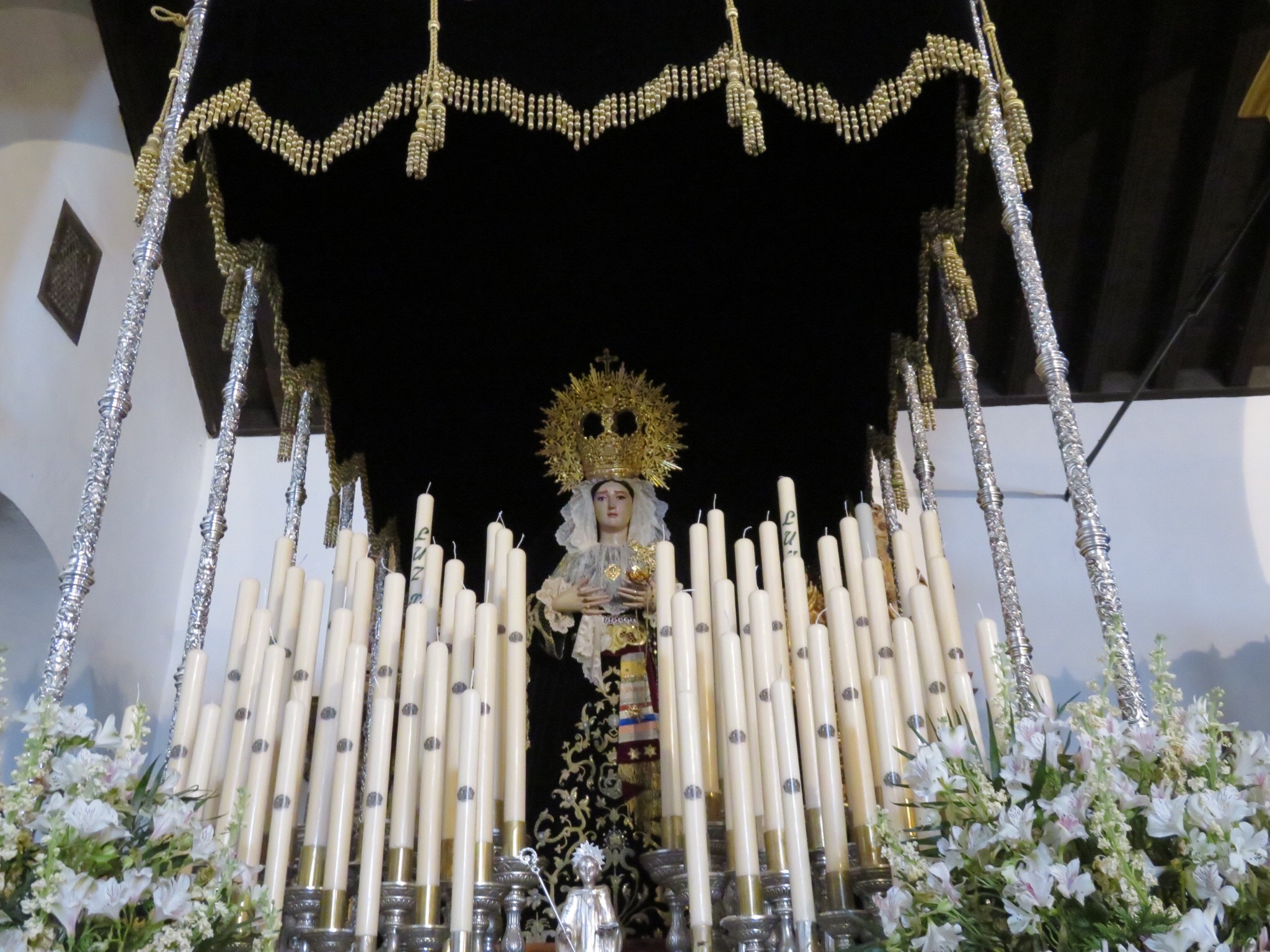
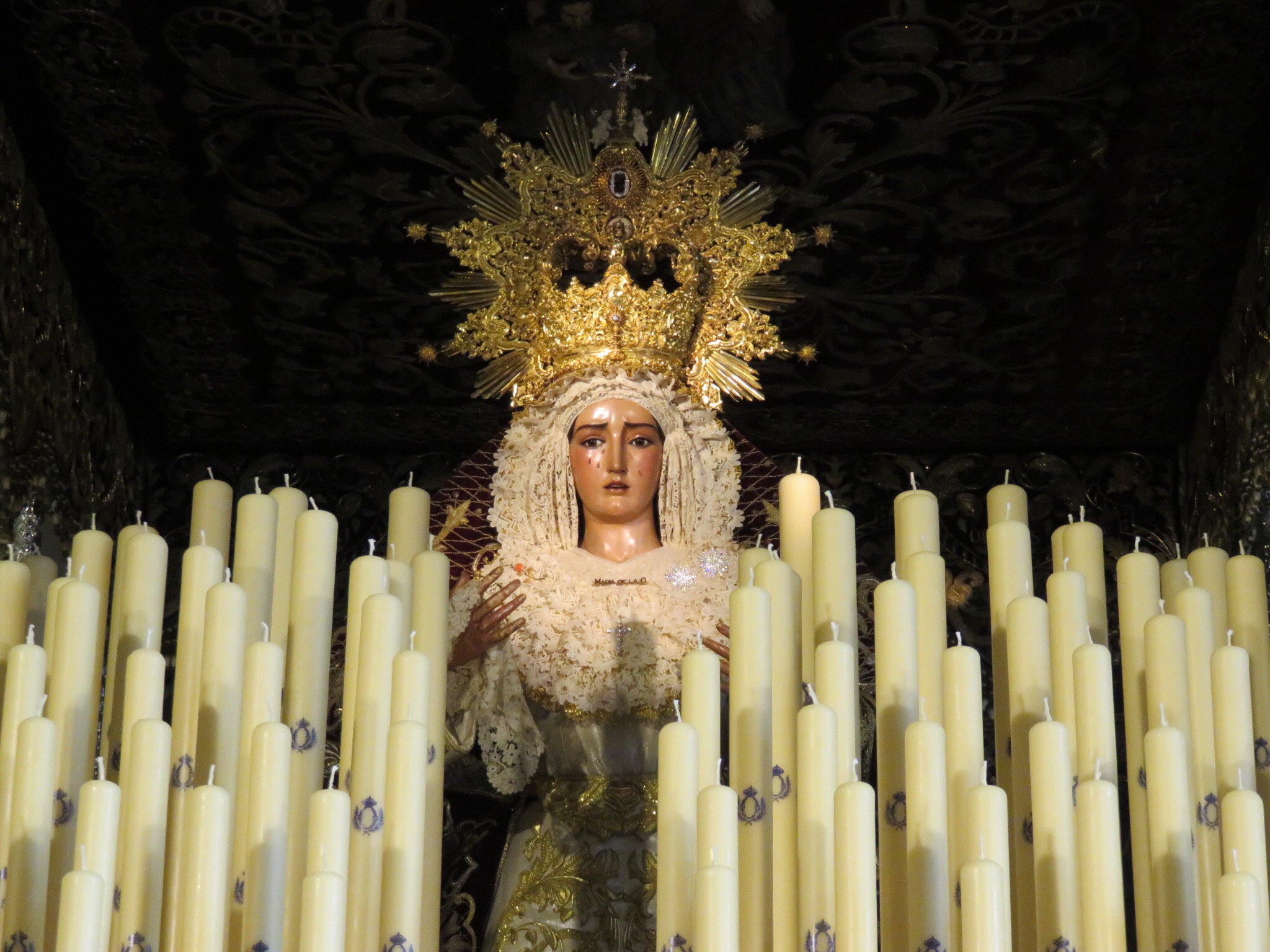
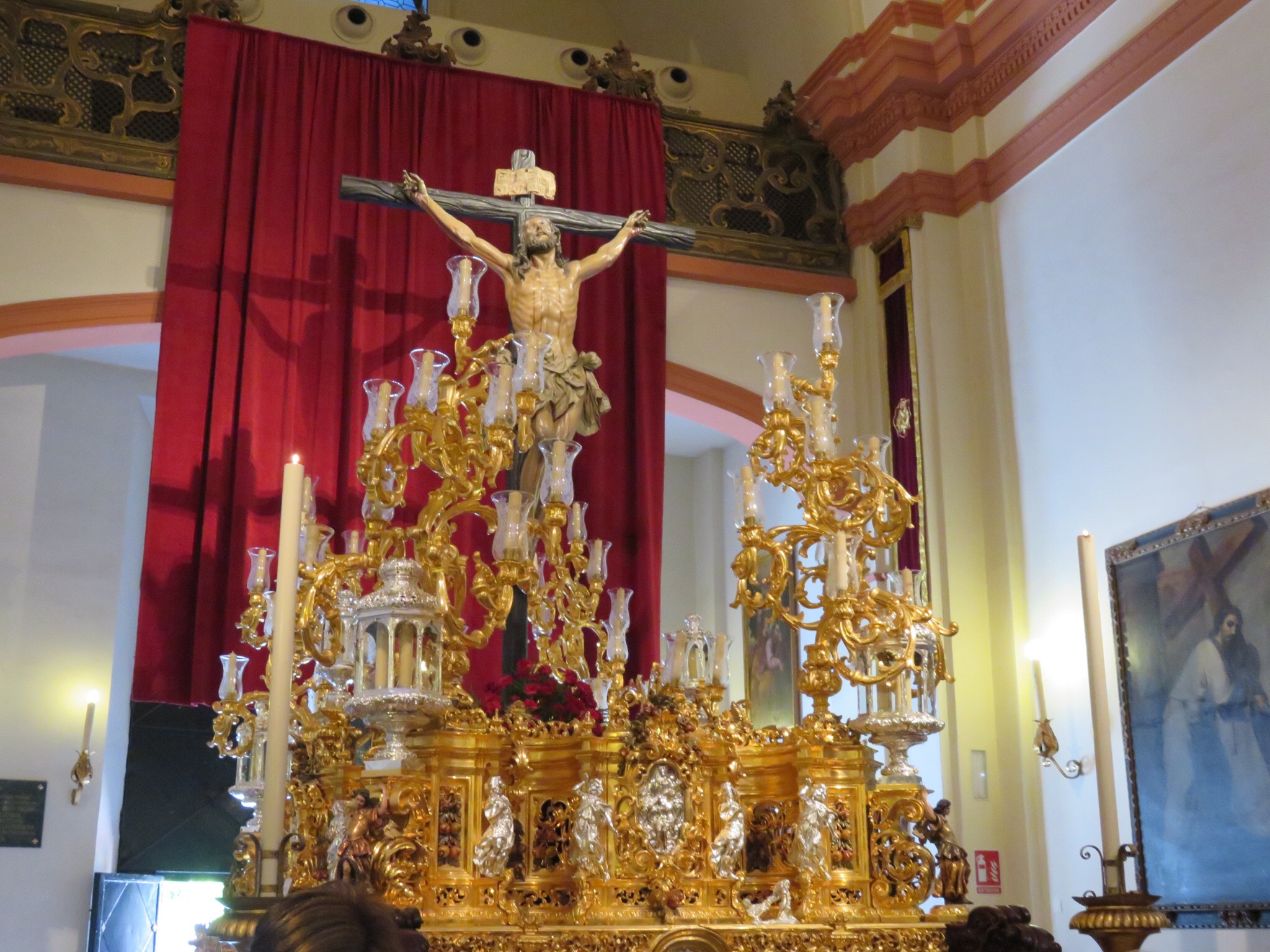
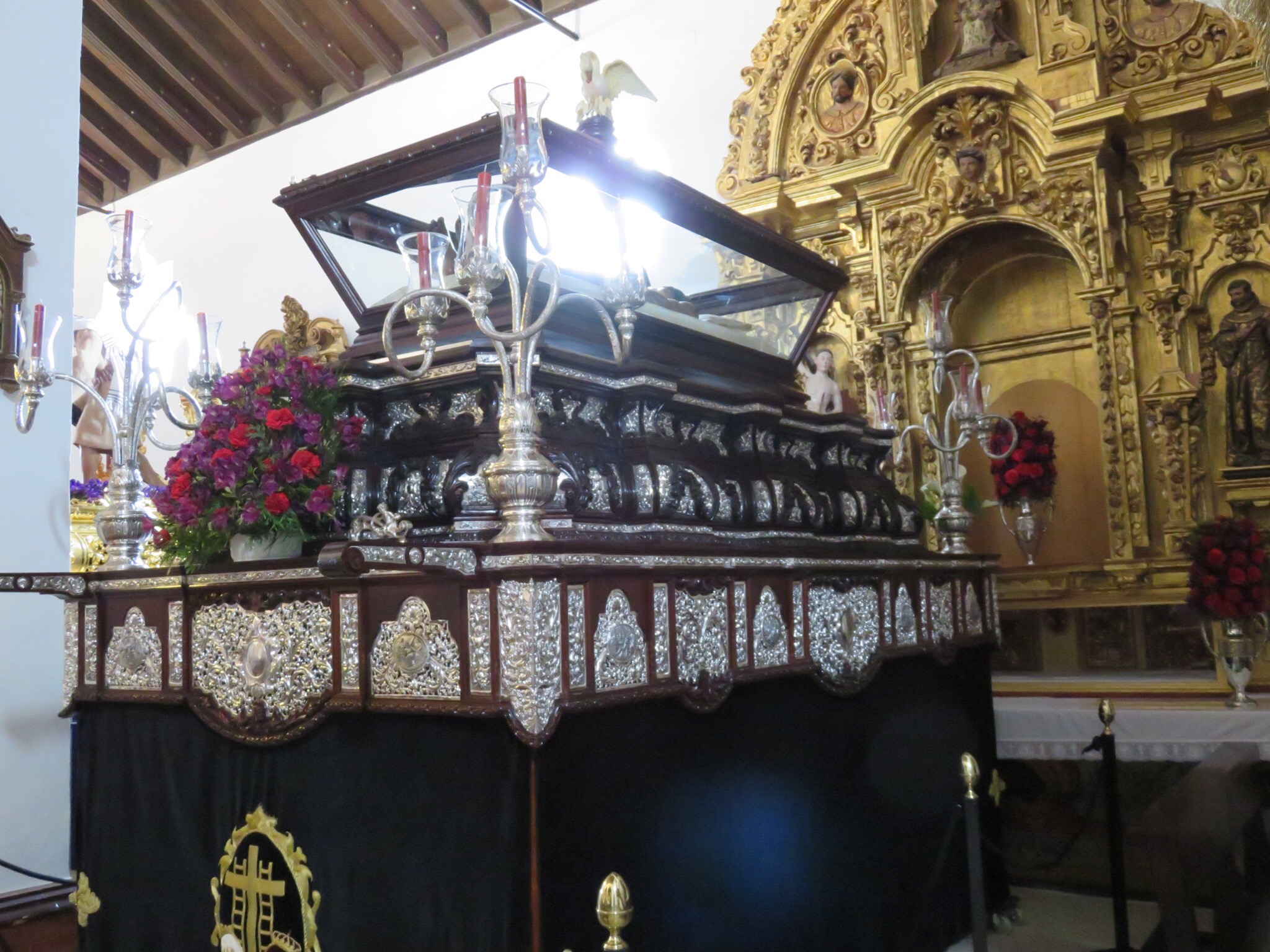
We had our main meal at lunchtime (ham soup with hard boiled eggs in it, and chicken with couscous).  We walked around in the afternoon and waited until after siesta time (2 – 6pm) for the stores to reopen so we could buy some supper, but it turns out that tonight the fiesta begins, and the supermarket and all the shops are closed.  Thanks to our experience last Sunday in Sevilla, we knew what happens next.  We walked down the block to the church, and watched the men decking out the pasos with flowers.  We saw Jesus carrying his cross, dead Jesus in a glass coffin, and two sorrowful Marys.
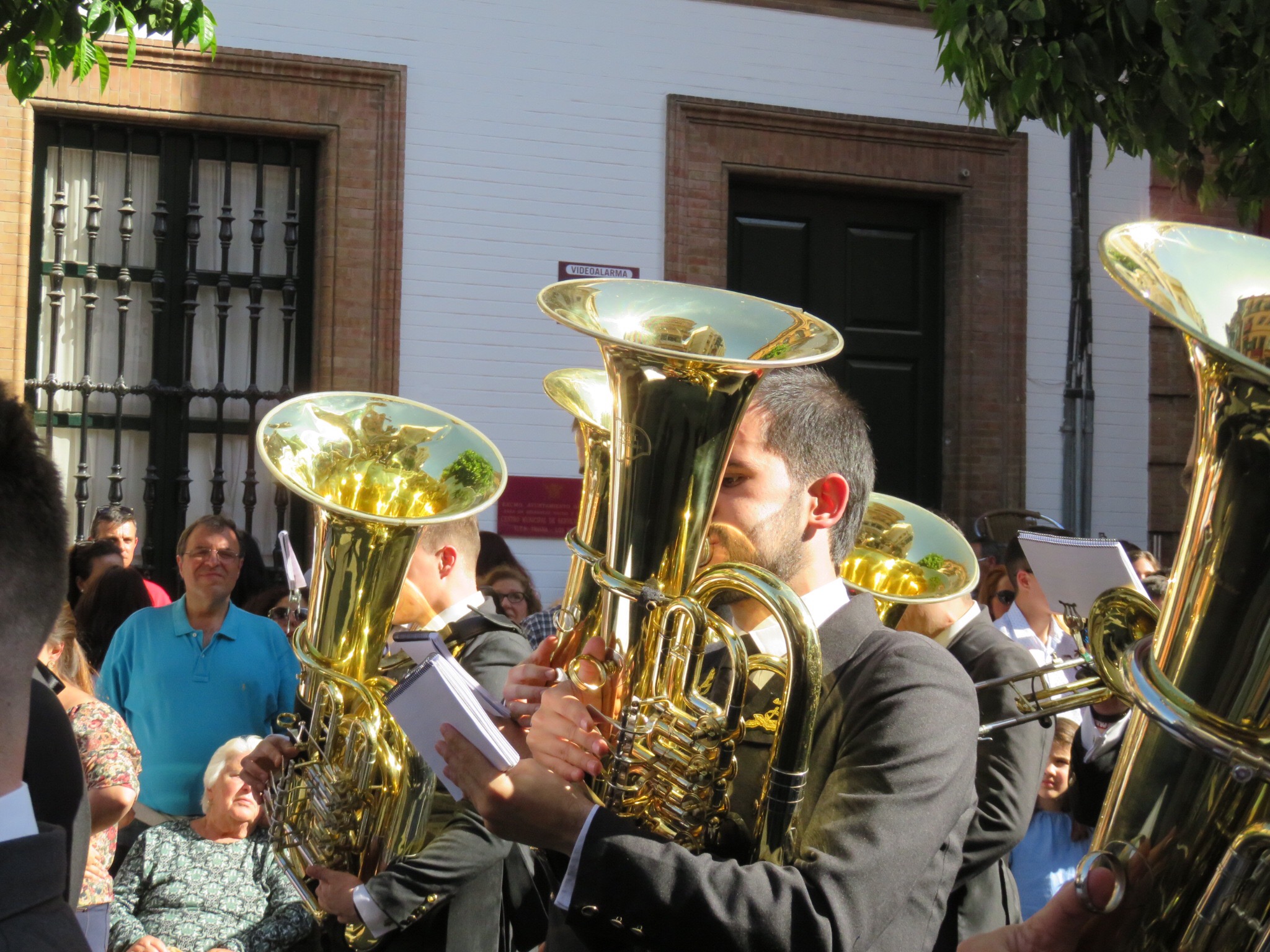
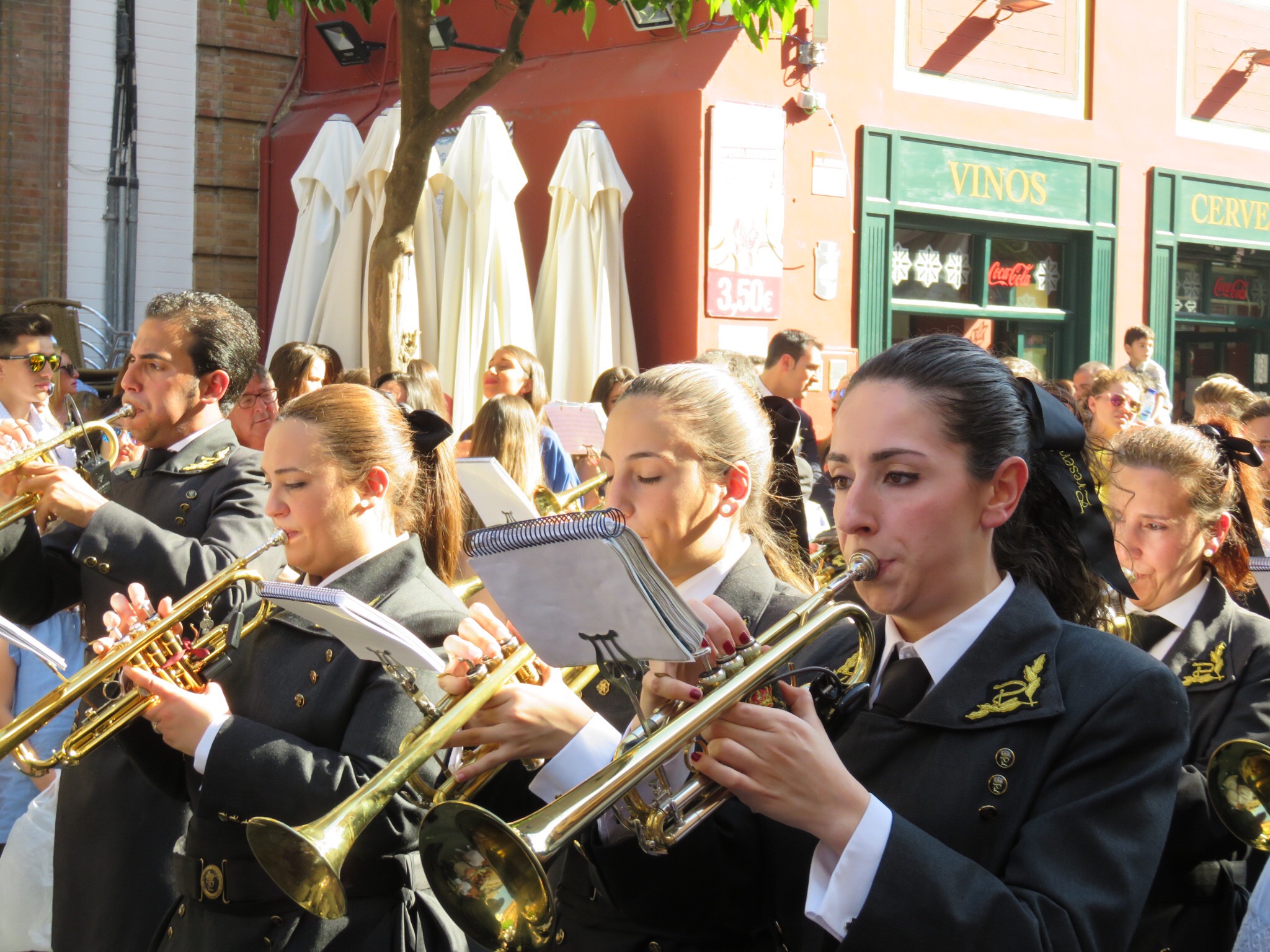
Every man, woman and bambino was out in front of the church by 7pm.  Fewer penitents in pointy capriotes, but a very credible brass band and lots of swaggering costaleros ready to do their part in lifting the heavy floats.  We are told they each weigh about a ton.
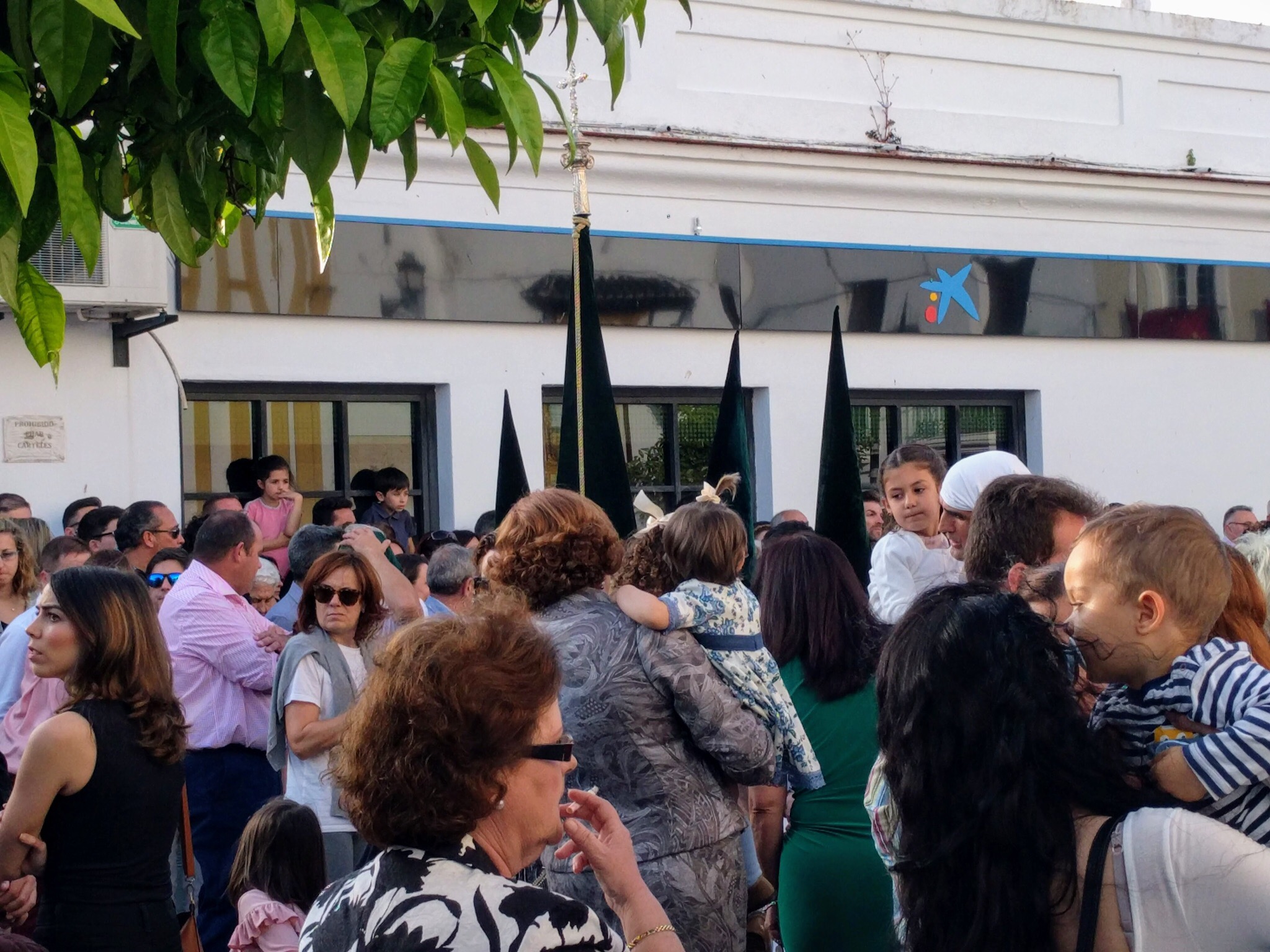
This time we were able to see the pasos leaving the church door and being negotiated down the steps.  The townsfolk applauded when the men reached the street and turned them 90 degrees for its walk down the block.
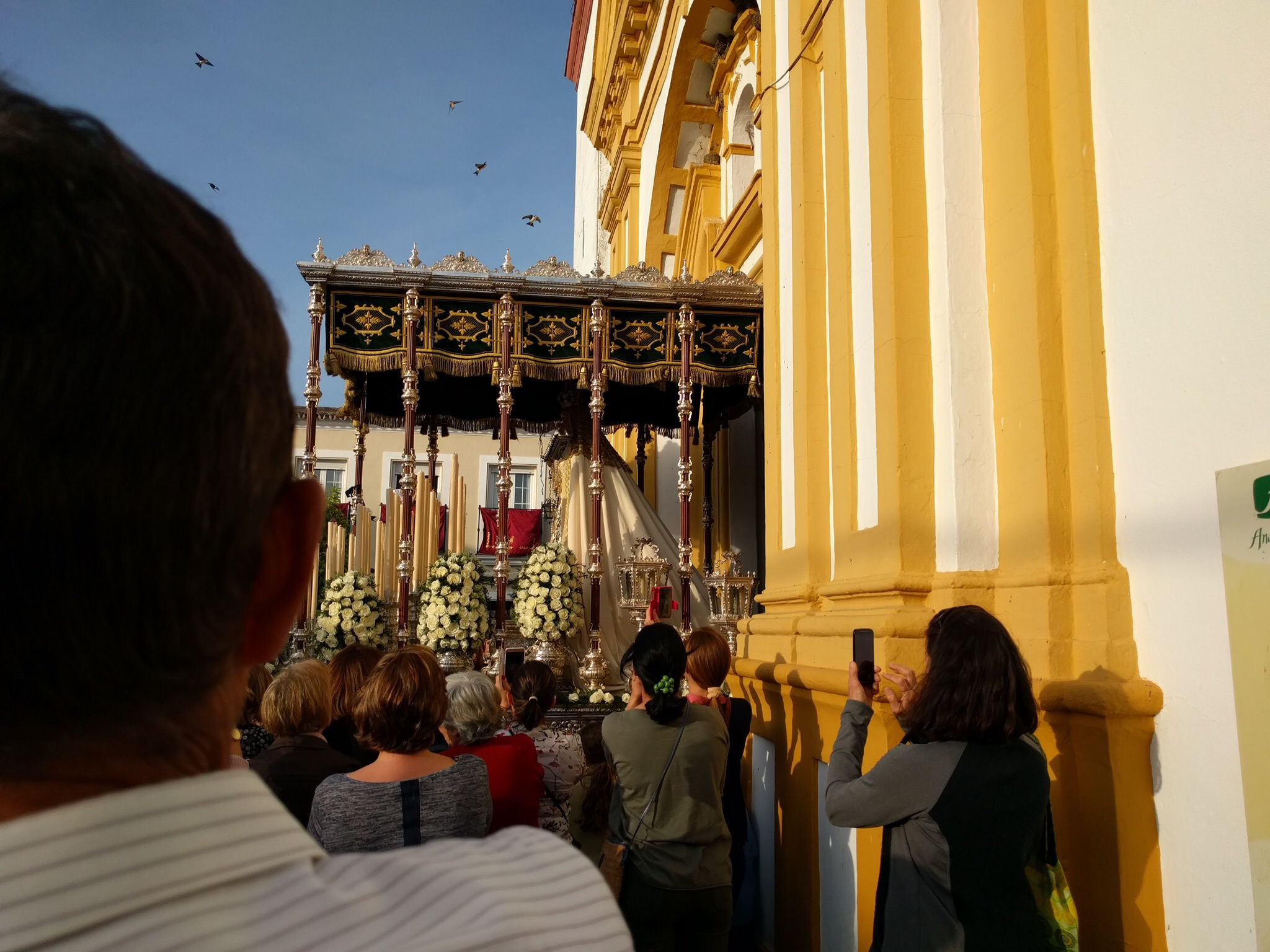
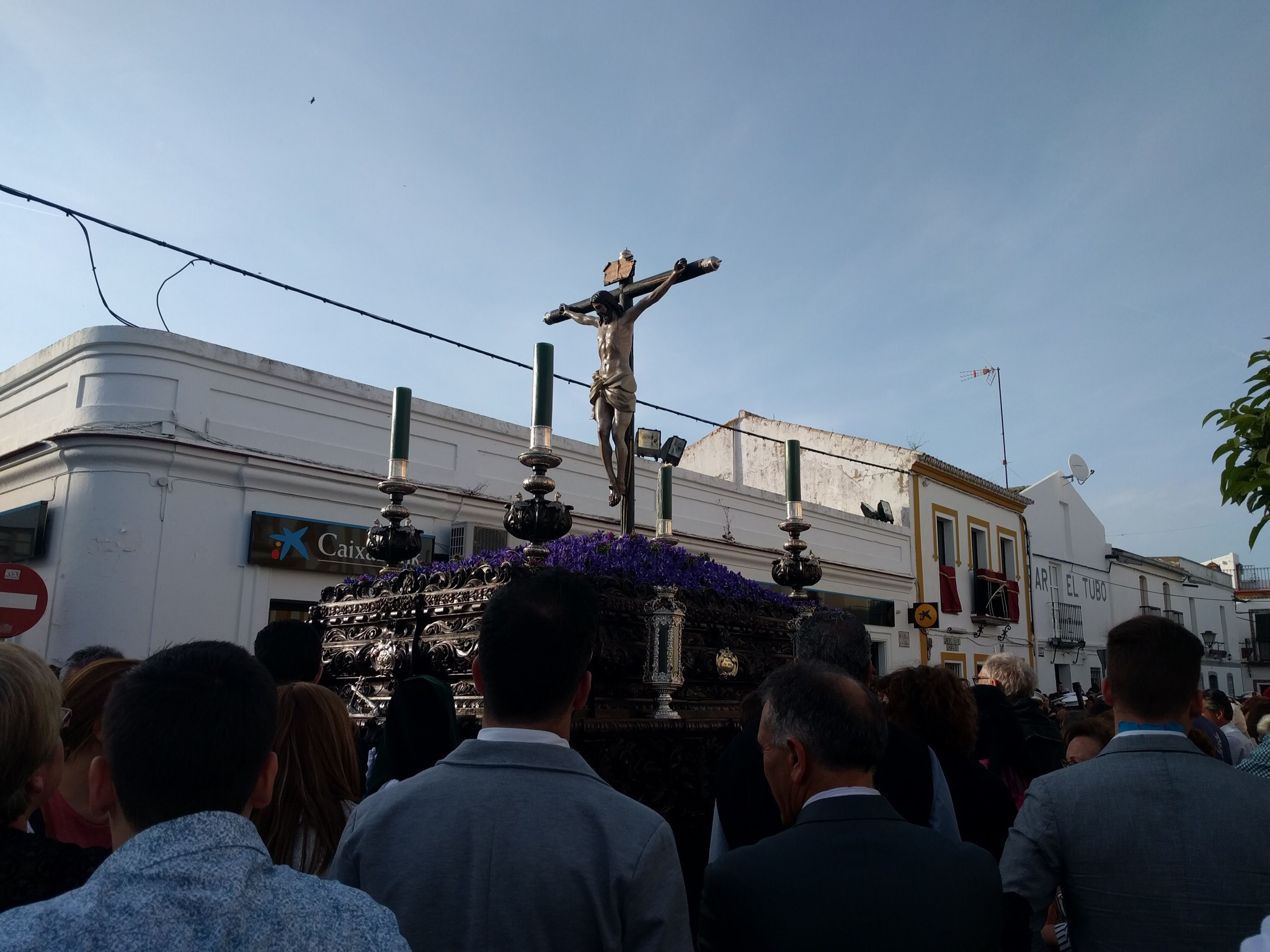
It took about half an hour to move each of the pasos down the street. We didn’t stay to the conclusion of the festivities, so I can’t tell you how it all turned out.  The music, drums and tolling of the church bells continued until well after midnight.  I wonder what tomorrow will bring?

Sevilla to Guillena

Apr 11 – This morning we left our little home in Triana, following the yellow arrows out of Sevilla, to start our 621 mile walk to Campostela de Santiago.  If we make it (operative word is IF), this will be our longest Camino so far.  Today’s segment is 13.7 miles.

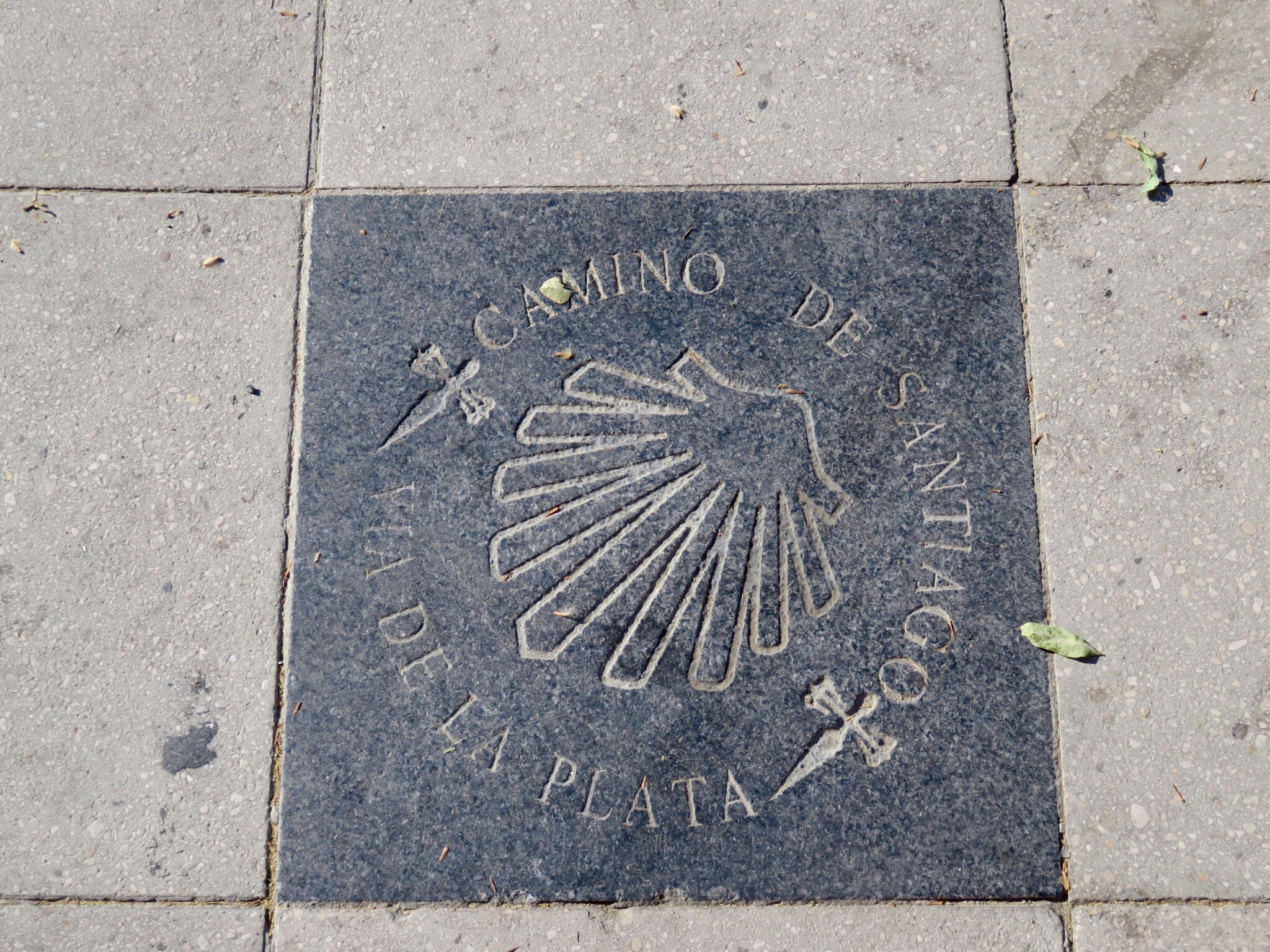
The Camino starts at the door of the Catedral, and proceeds north for a really long time. 

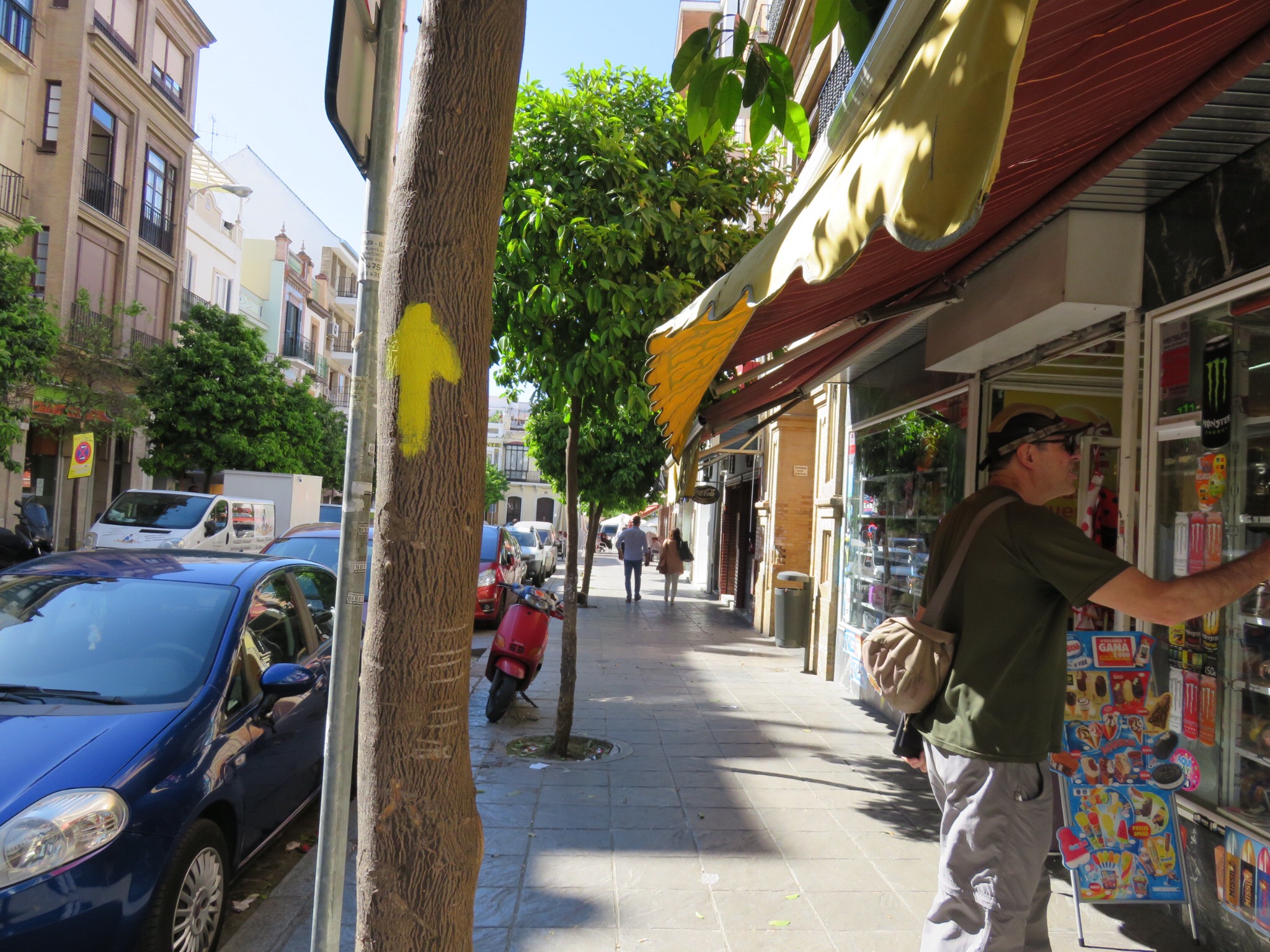
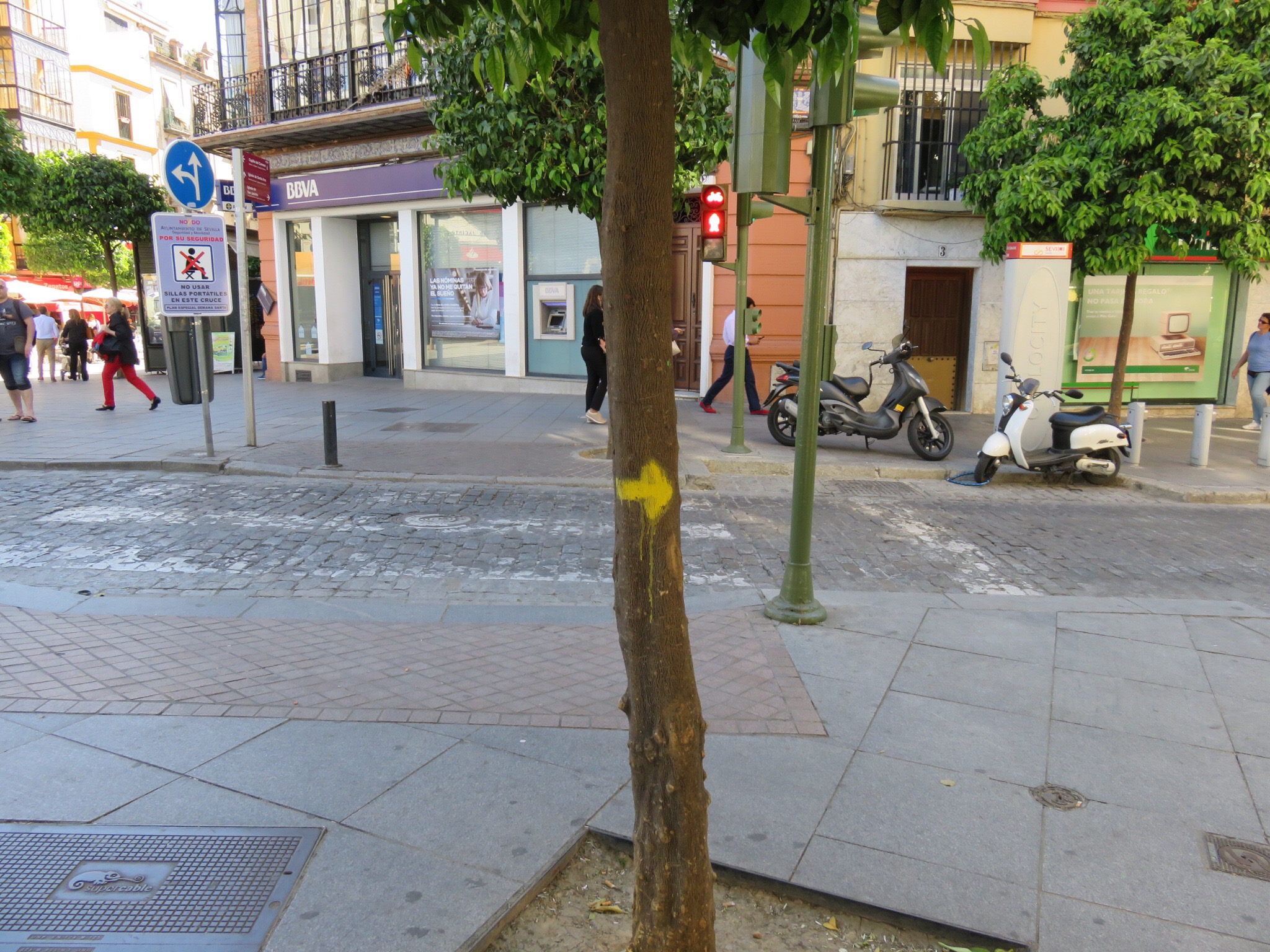
After this sign in the sidewalk, the trail is marked by yellow arrows, spray painted on utility poles and trees.

This Camino is less popular than the Camino Frances and the Camhiño Portugues, as it covers long stretches of featureless farmland, and is considered the most boring of the Caminos.  We shall see!

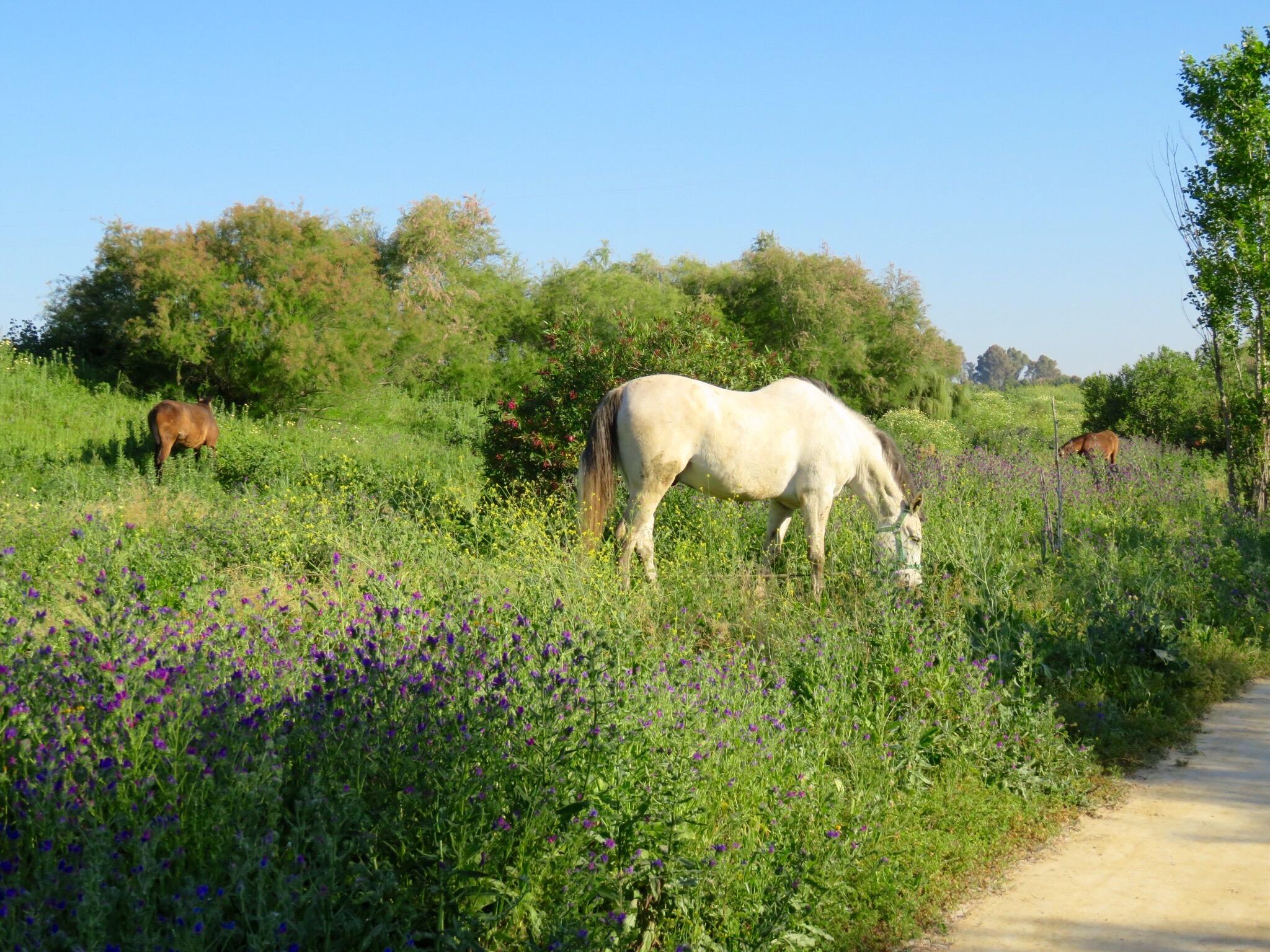
After leaving Sevilla, we found ourselves on a dirt road surrounded by wildflowers.

Horses were calmly grazing at the roadside.

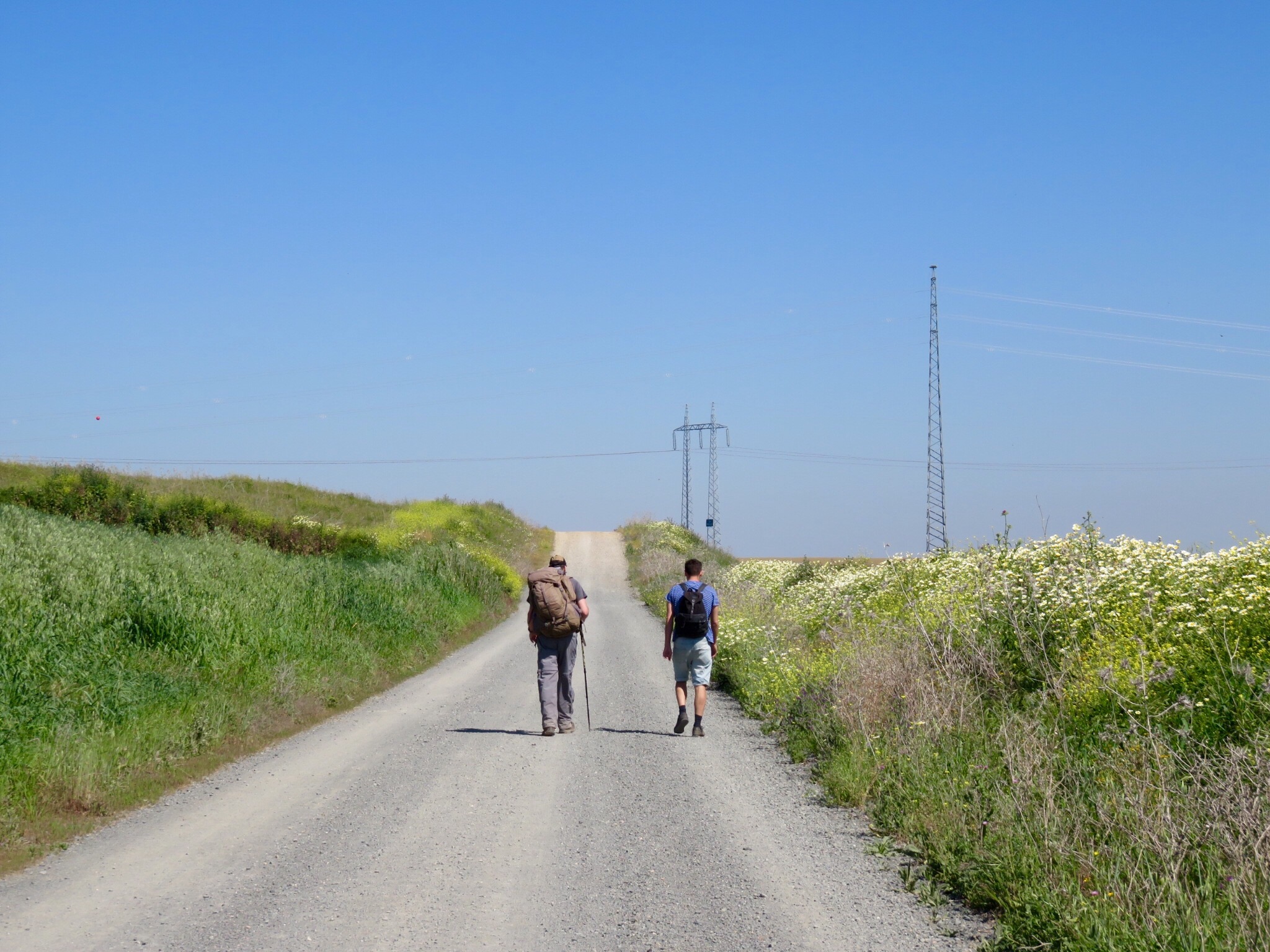
By mid morning, Jim had befriended a young Brit named Tom who was walking in the same direction to get the feel of a Camino walk.  He was only out for the day.  Together, they solved the political problems of the world as they strode along.  We also passed two old Frenchmen, and were passed by several bicycling couples.

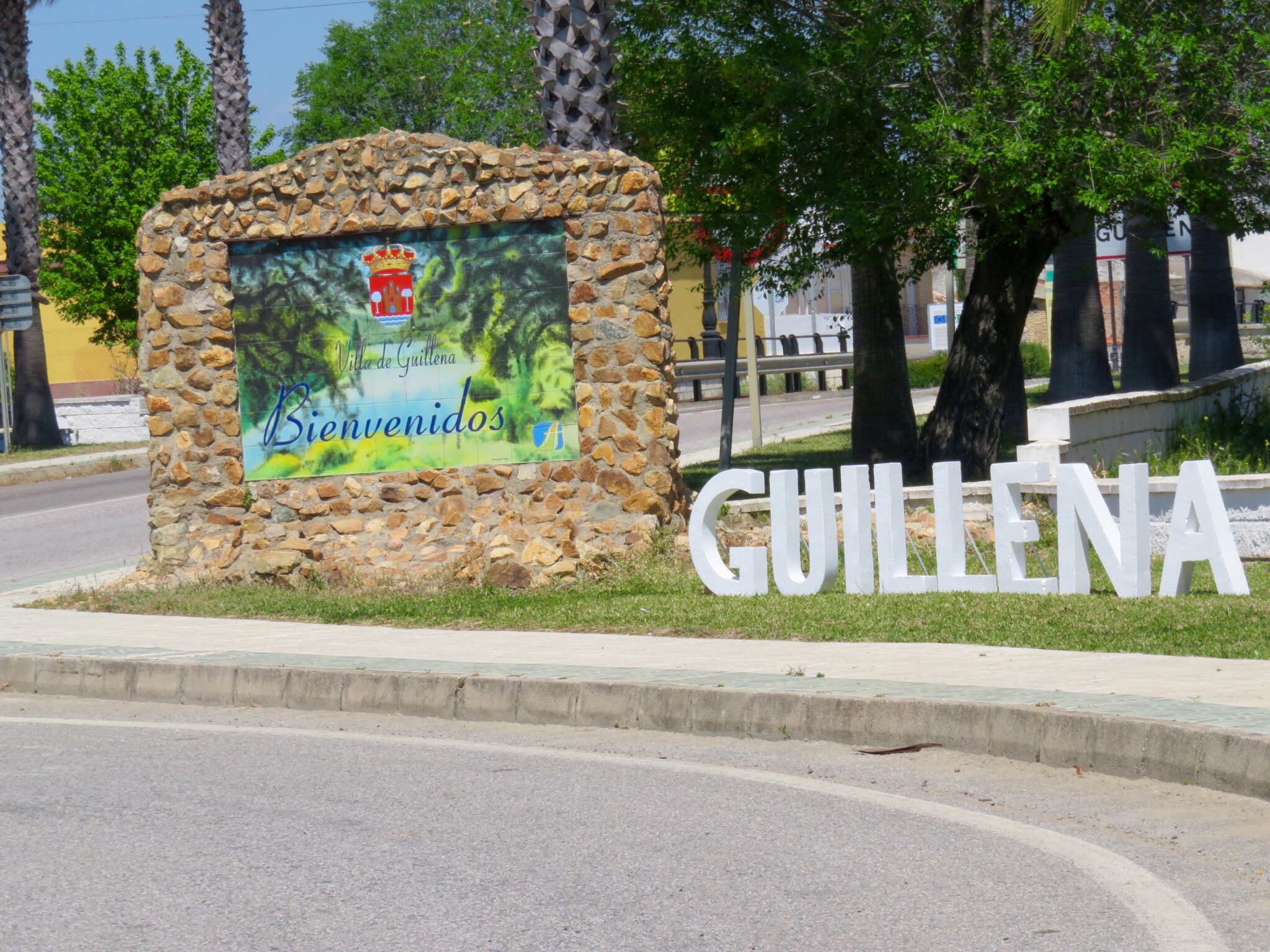
By 15:00 we arrived in the little town of Guillena, and walked down the Main Street in search of the Hostal/ Bar Frances, which we had prebooked.  

Just to confuse you, I will explain that a hostal in Spain is a small hotel or bar with rooms above.  What we would call a hostel, as in a dormitory of people sharing facilities, is called an alburgue.  We try to stay in private rooms whenever possible, but in some towns the choice is limited to alburgues only.

After a restorative shower, we went downstairs for a hikers Menu al Dia, which is a three course meal for a set price.  These are very popular on the Camino, as hikers are very hungry people!  We had seafood paella, followed by fried calimari, and rice pudding for dessert.  Feeling fine now, and only 608 miles to go!

Sevilla – the Plaza de España

Apr 10 – For our last day in the city, we decided to walk across town to the Parque Maria Teresa and the Plaza de España. On our walk, we stopped in several churches that had their doors open on a Monday morning, and got to see more of the floats (pasos) from yesterday’s Semana Santa extravaganza.

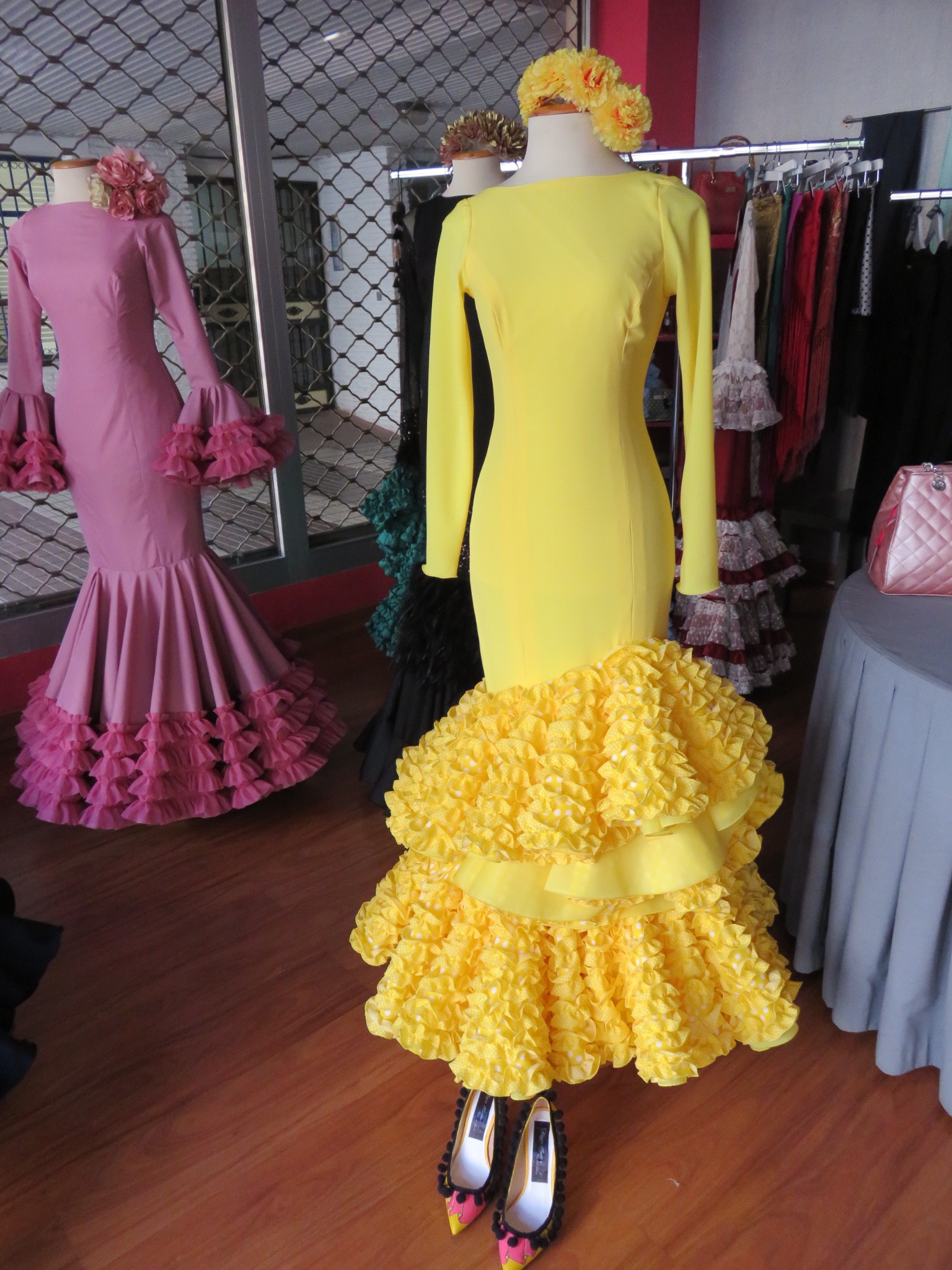
We also spied some flamenco dresses on sale, if you are in the market ( I especially love those shoes!):

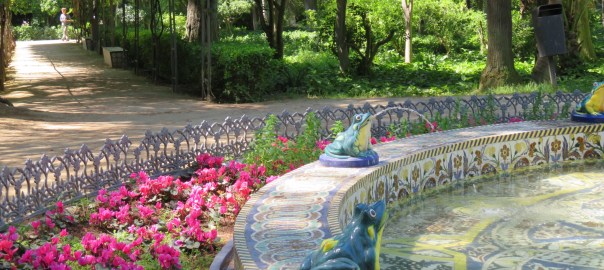
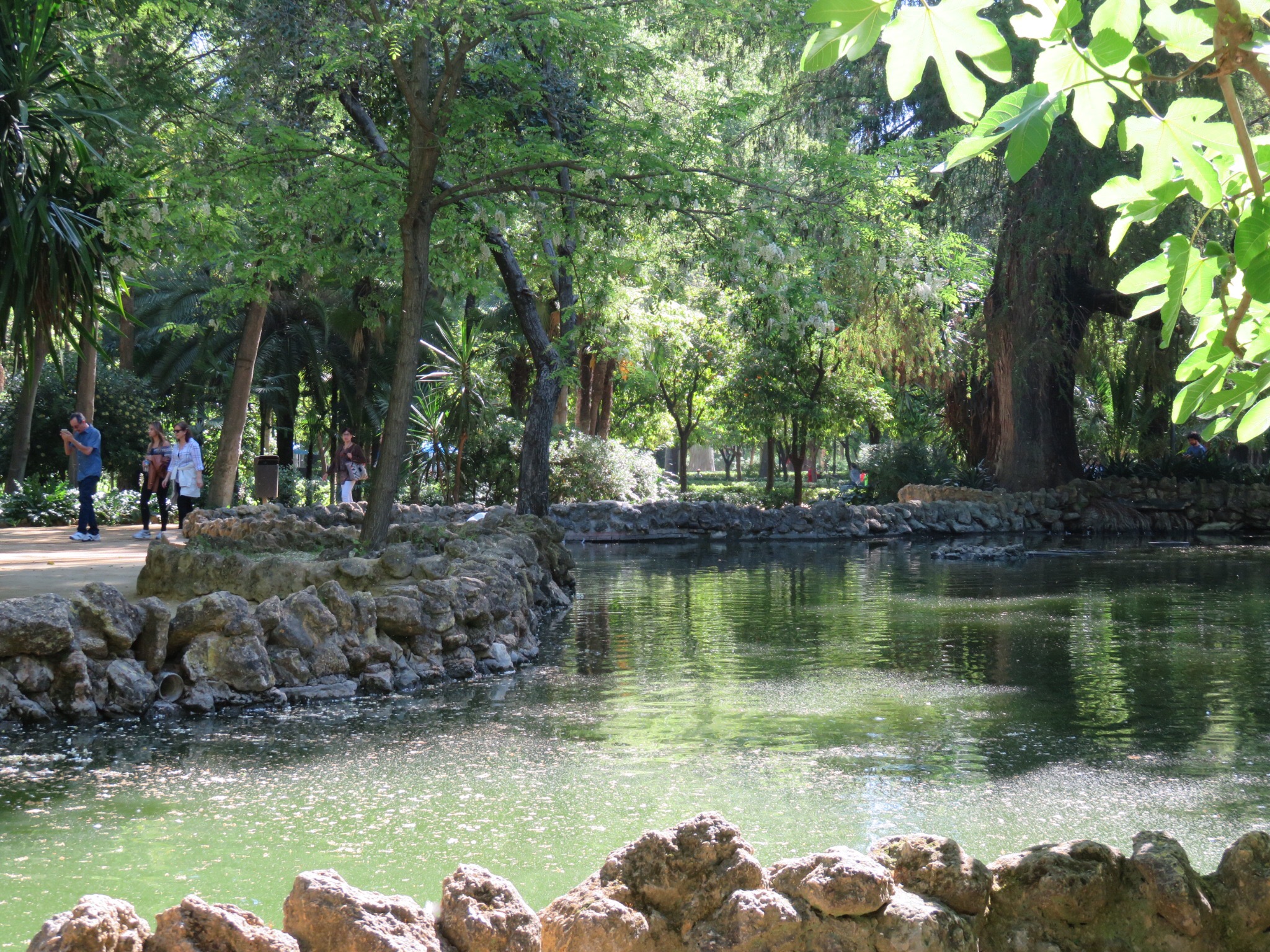
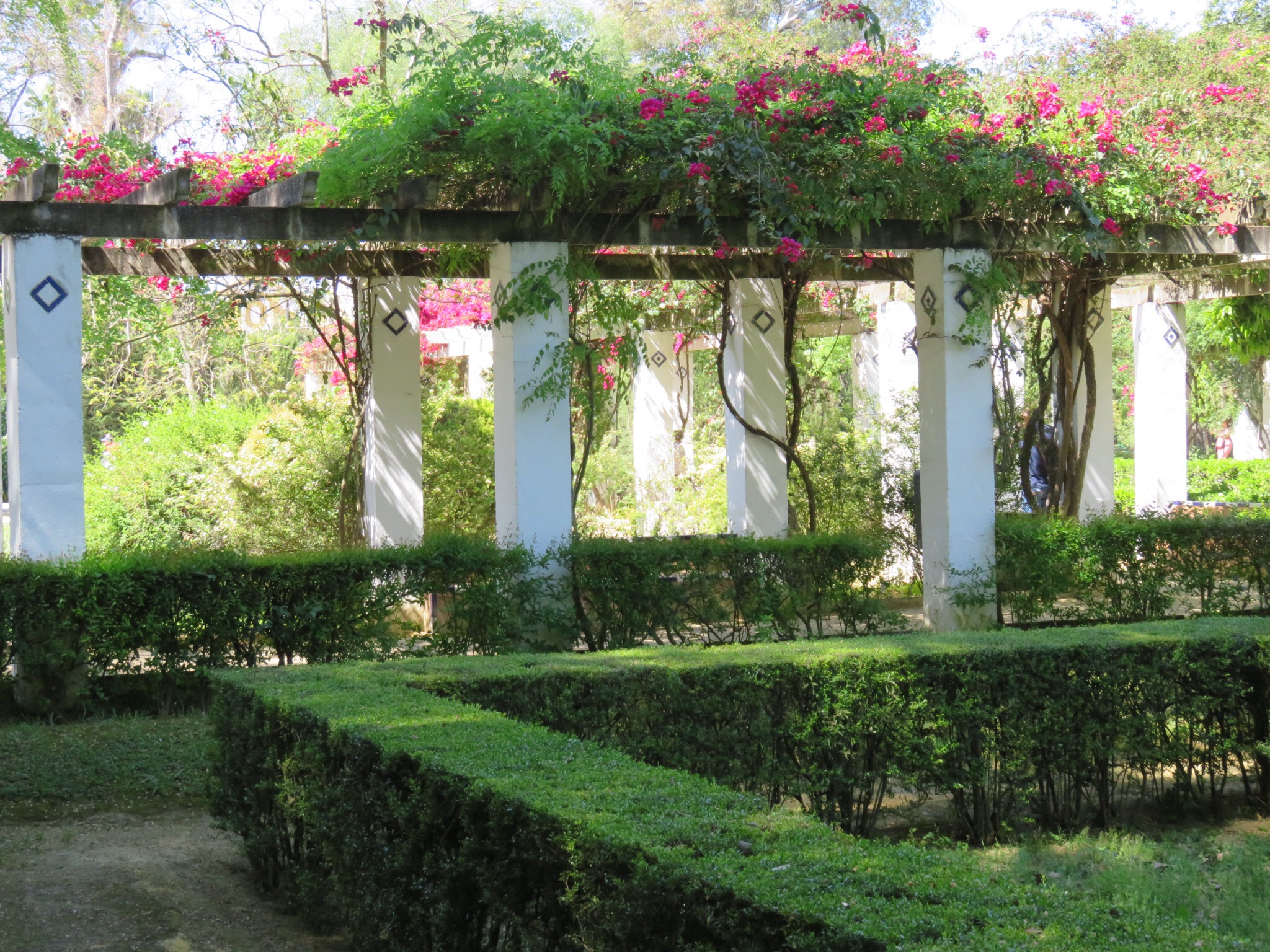
Parque Maria Teresa is the Central Park of the city, built originally for a 1929 Exposition.  It has fountains and birds, waterfalls, trellises, mosaic tiled benches and peaceful shade.

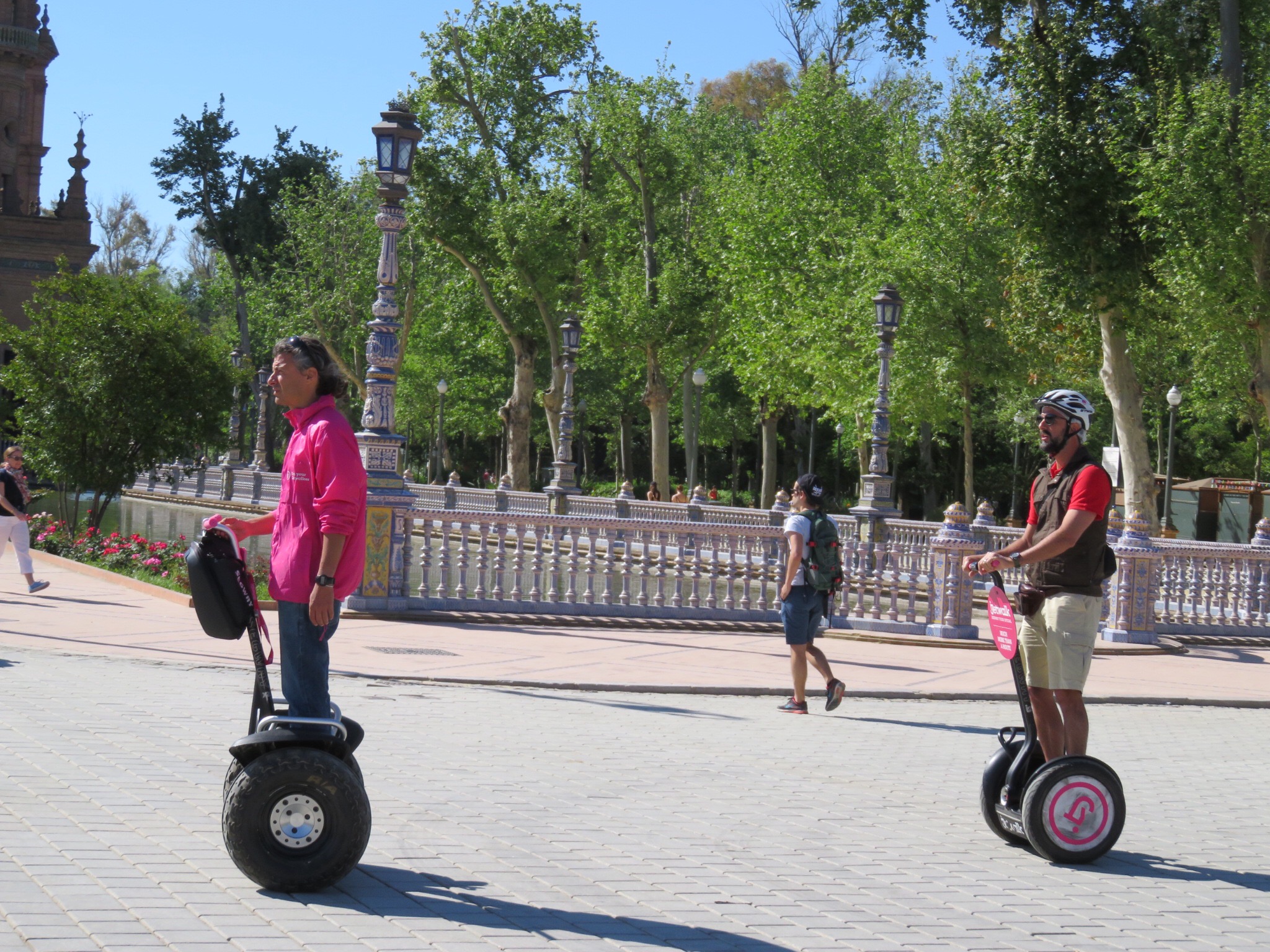
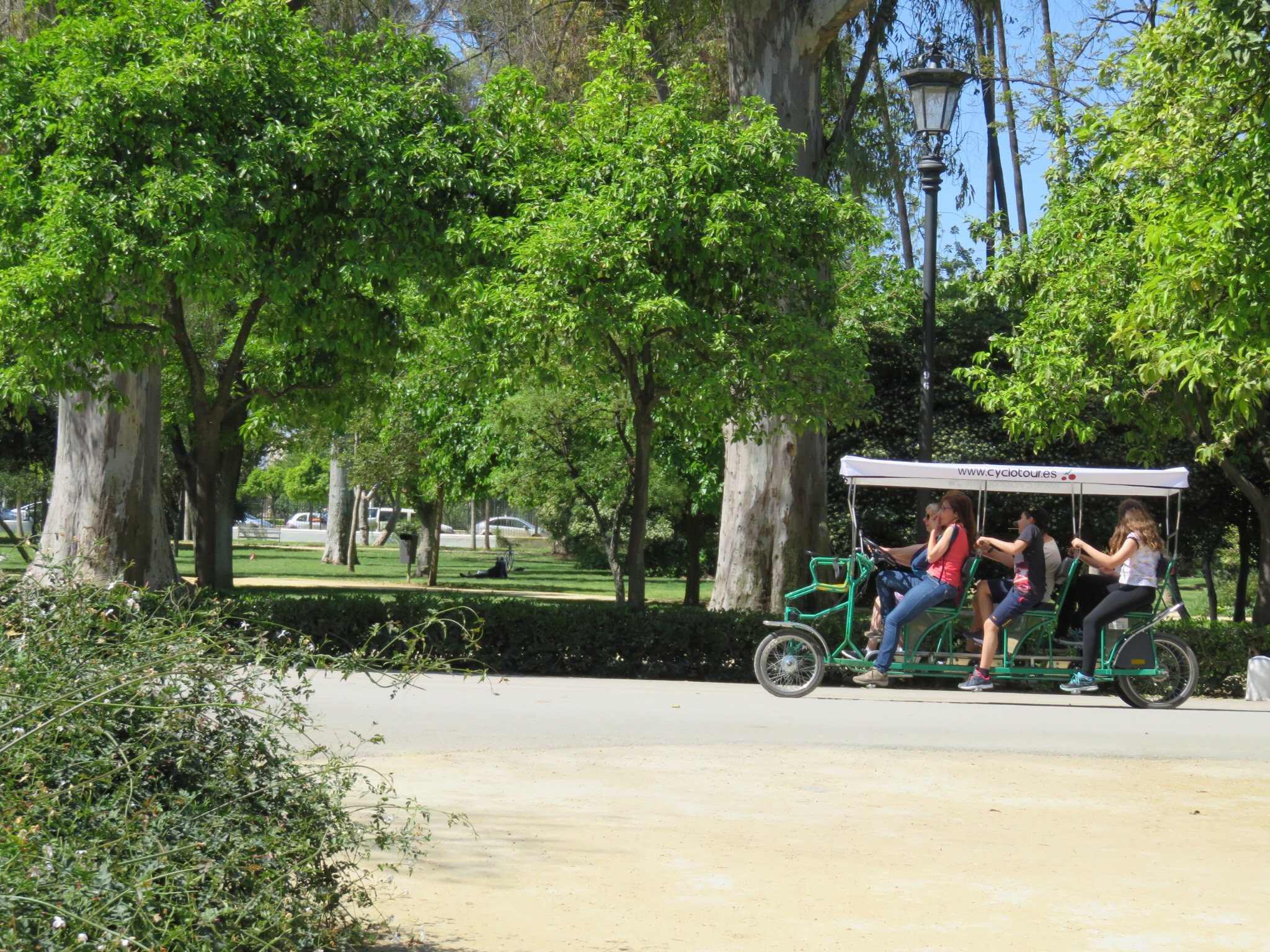
There are lots of ways to get around the park:

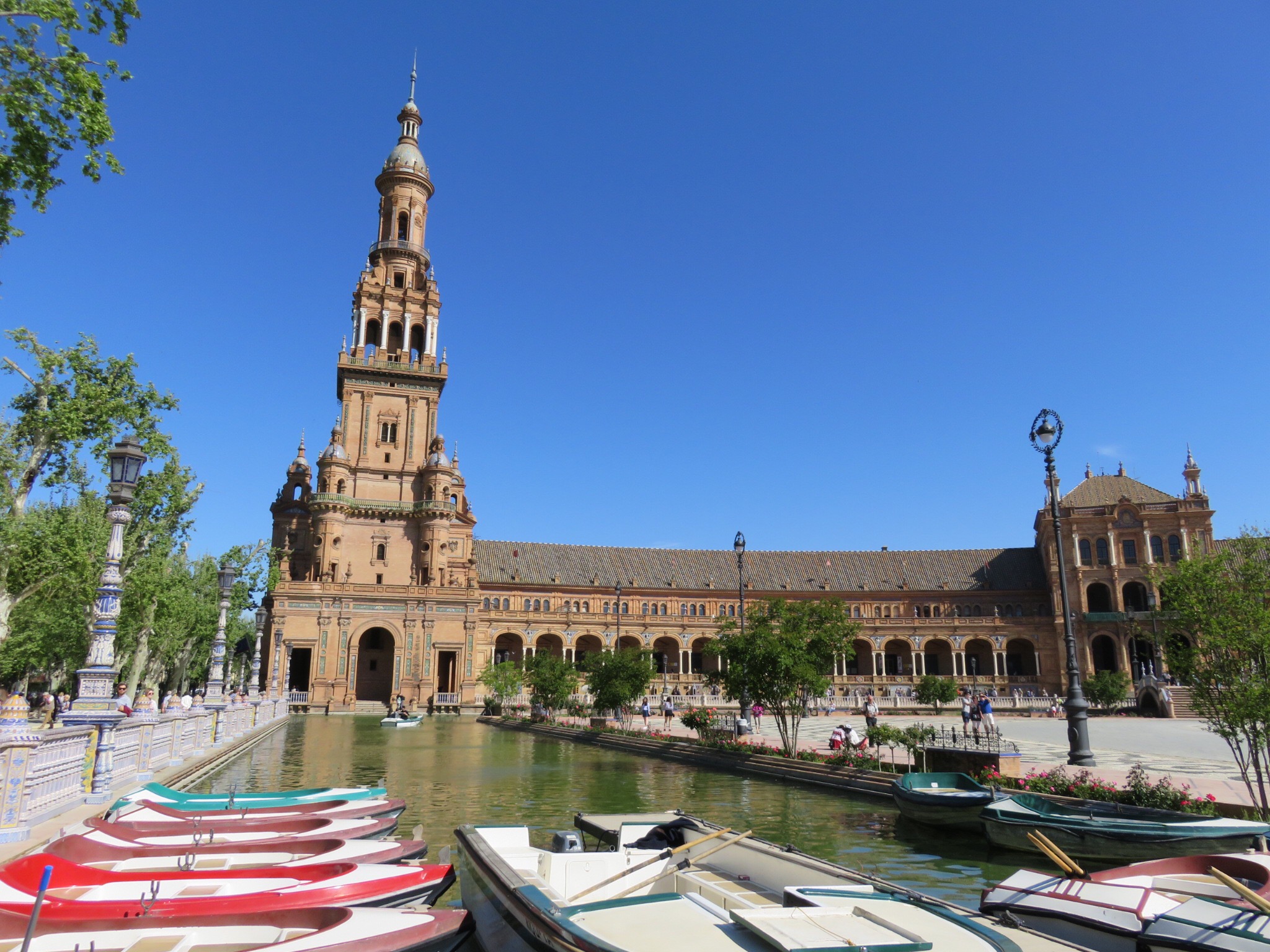
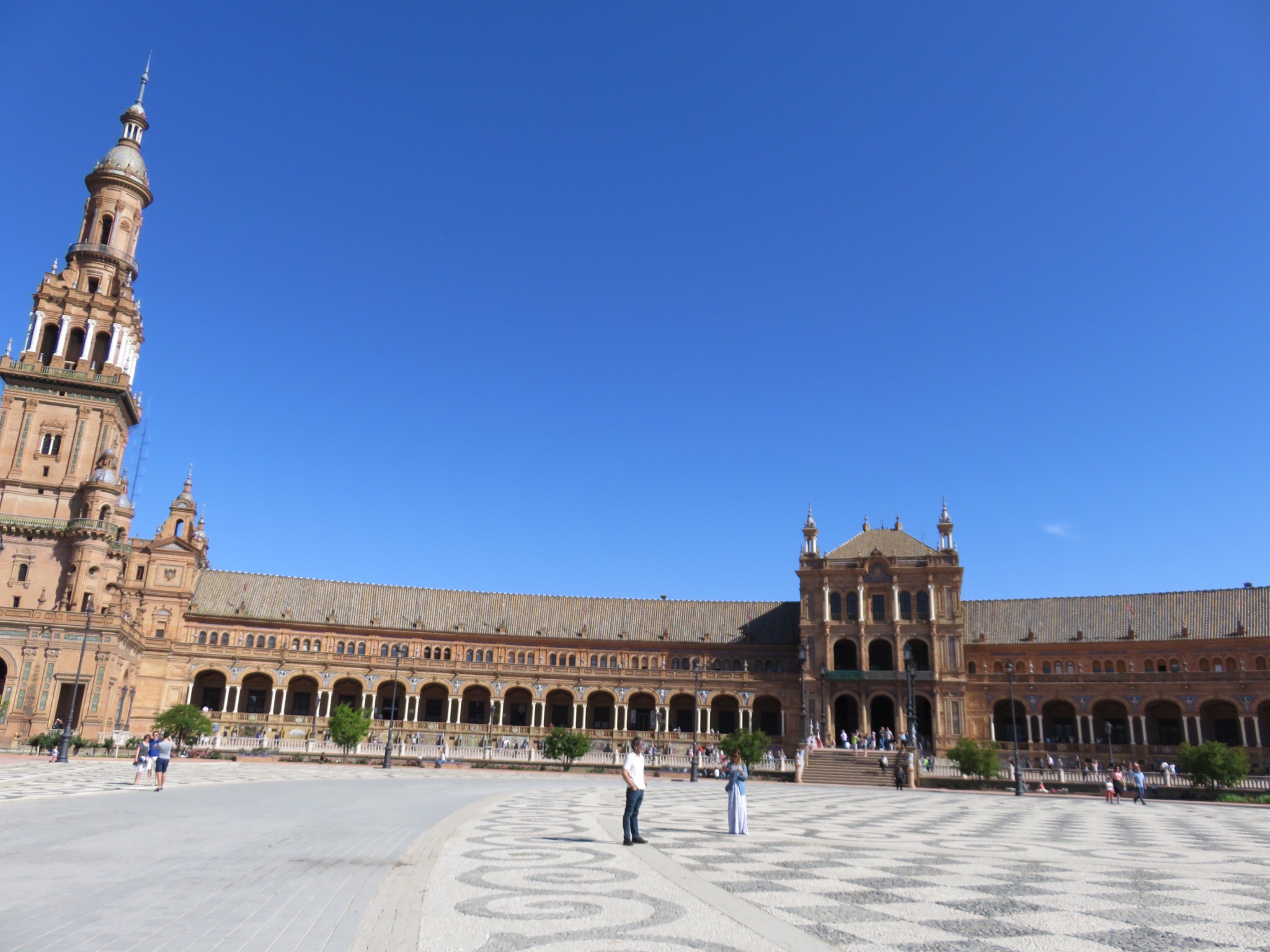
The Plaza España is a great big plaza, with lots of stuff for sale, boats to rent for a ride around the moat, and bubbles for the enjoyment of all.

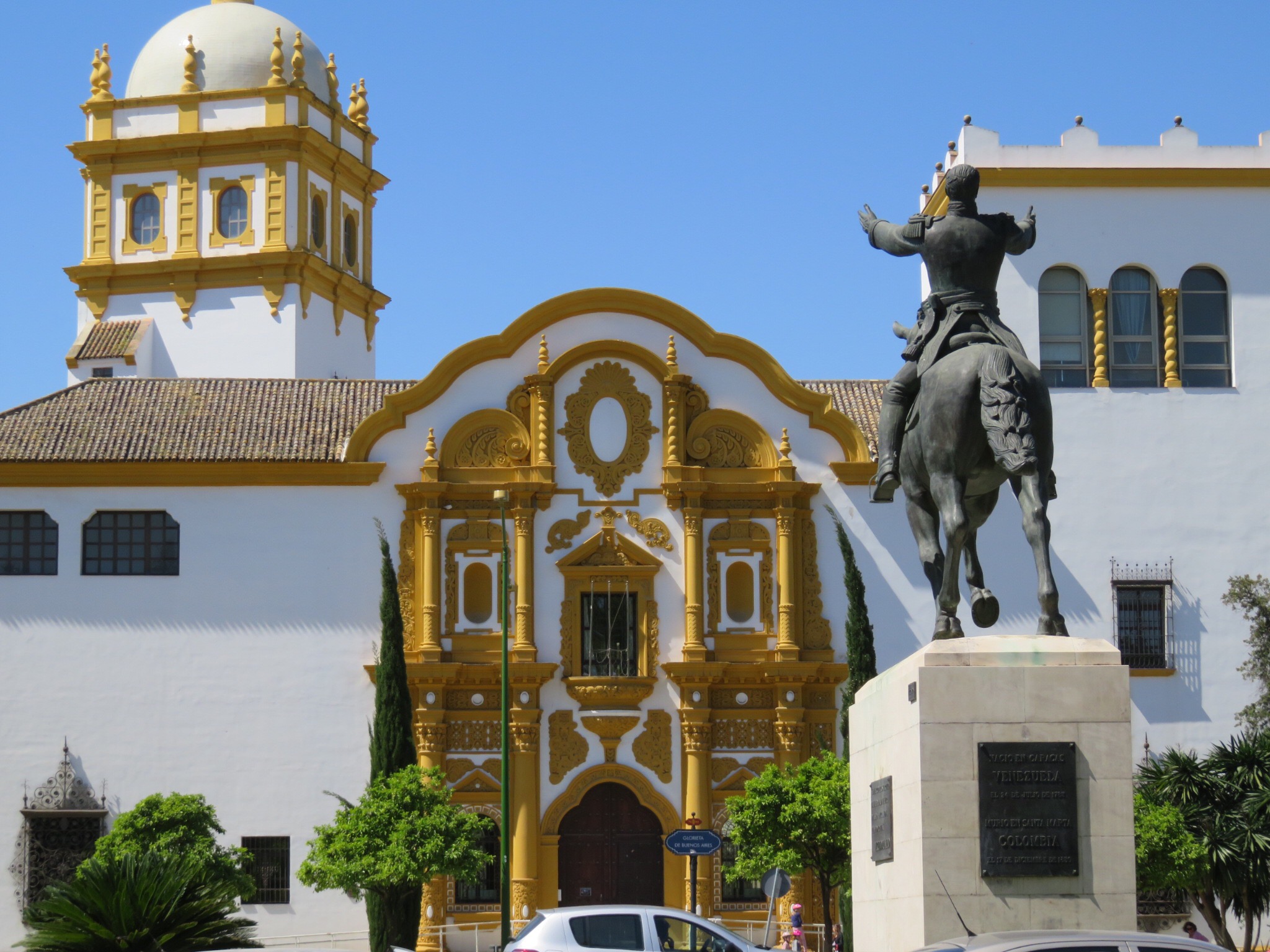
On our way home, we passed palaces, the university, and other things we won’t get to experience on this go round.  All the more reason to return to Sevilla!

Posts will probably be sparser from here on – we’ll be on the road!

The Catedral de Sevilla

Apr 8 – the center of the Old City is the Catedral, which is the the third largest church in the world, and the largest Gothic cathedral in the world.  Completed in 1506, it is said that the builders declared, “Let us build a church so beautiful and so grand that those who see it finished will think we are mad“. It is way too large to capture in one photo.

Inside are the bones of Christopher Columbus (at least some of them).

The main altar is gloriously gilded:

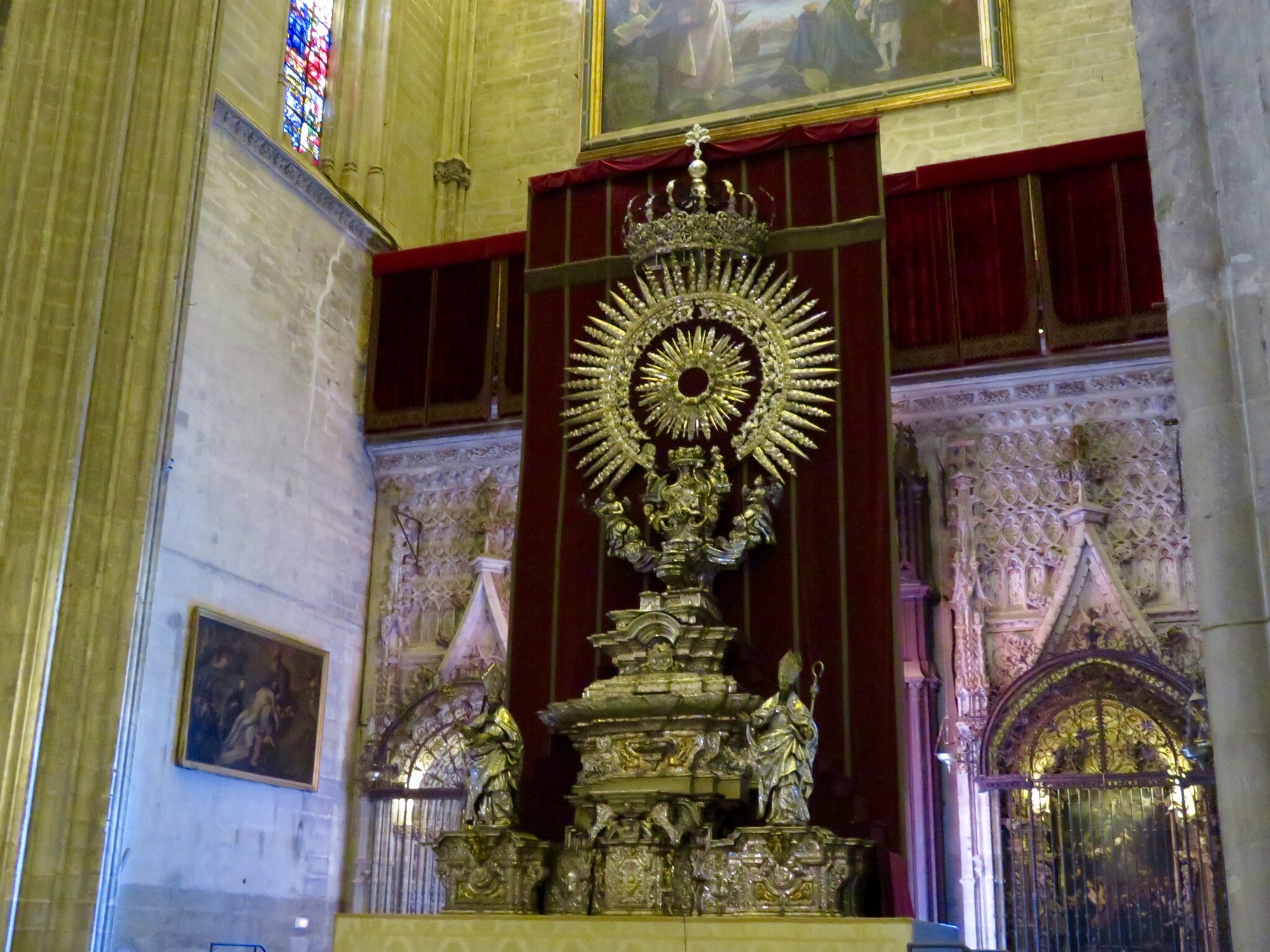
As compared to the Altar de Plata, which shimmers in silver:

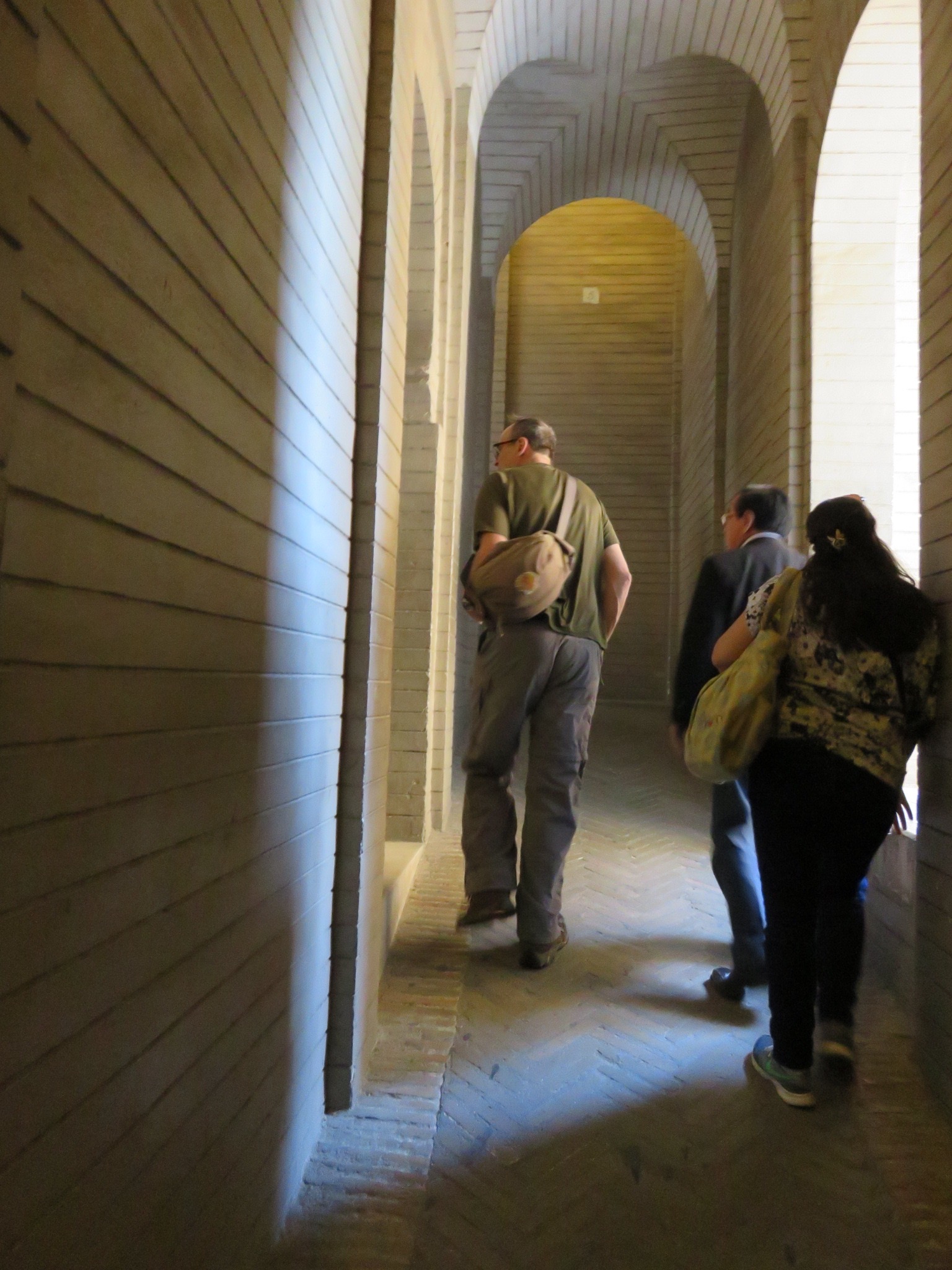
We climbed the Giraldo Tower, which predates the cathedral, as it was part of the mosque that previously stood on this site.  Instead of flights of steps, you climb the tower in a series of ramps.  It was built this way to make it easier to ascend on horseback.

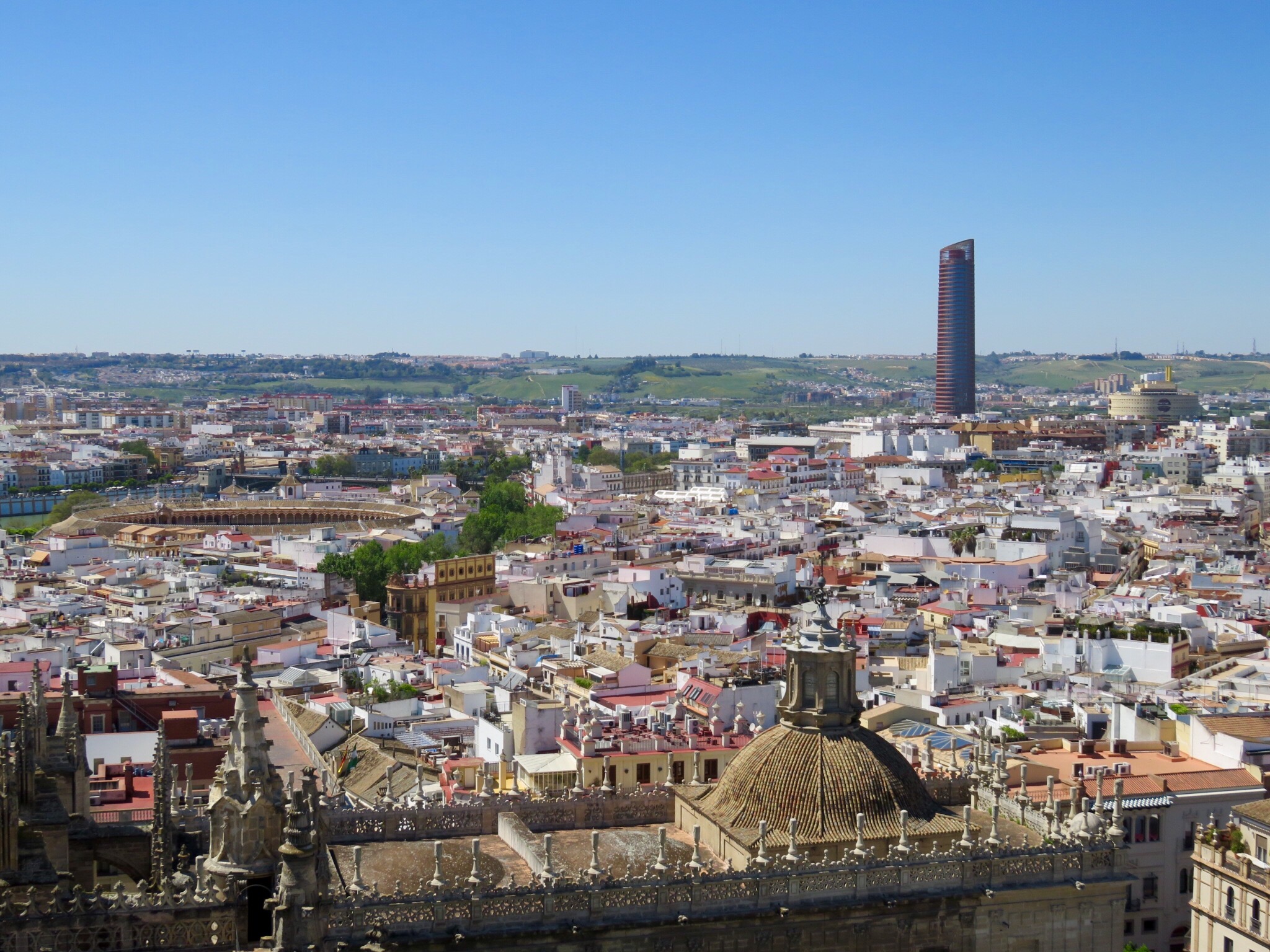
The views of the city from the top were spectacular:

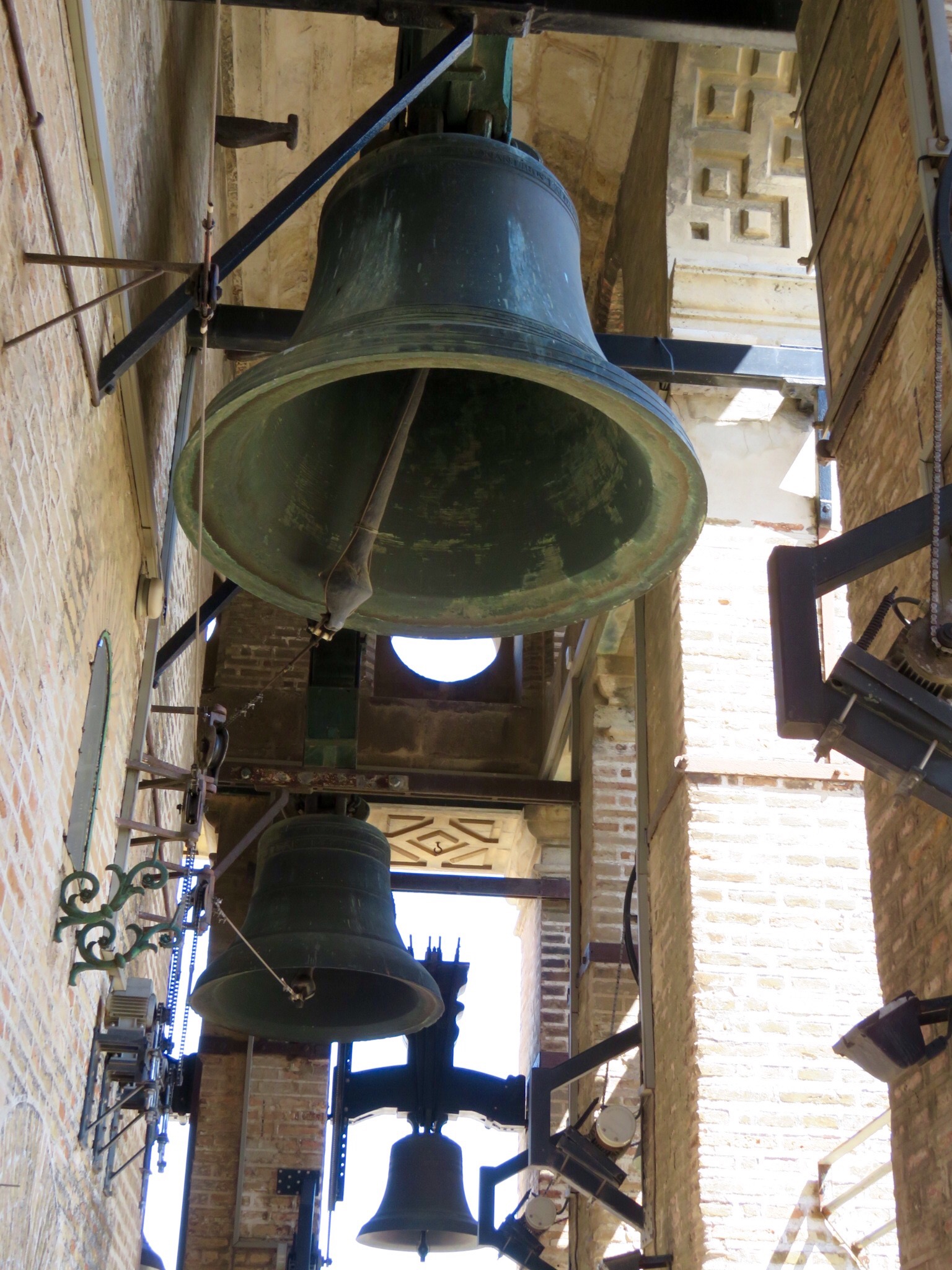
While we were up in the tower, one of the bells pealed the quarter hour.  I may recover my hearing someday!

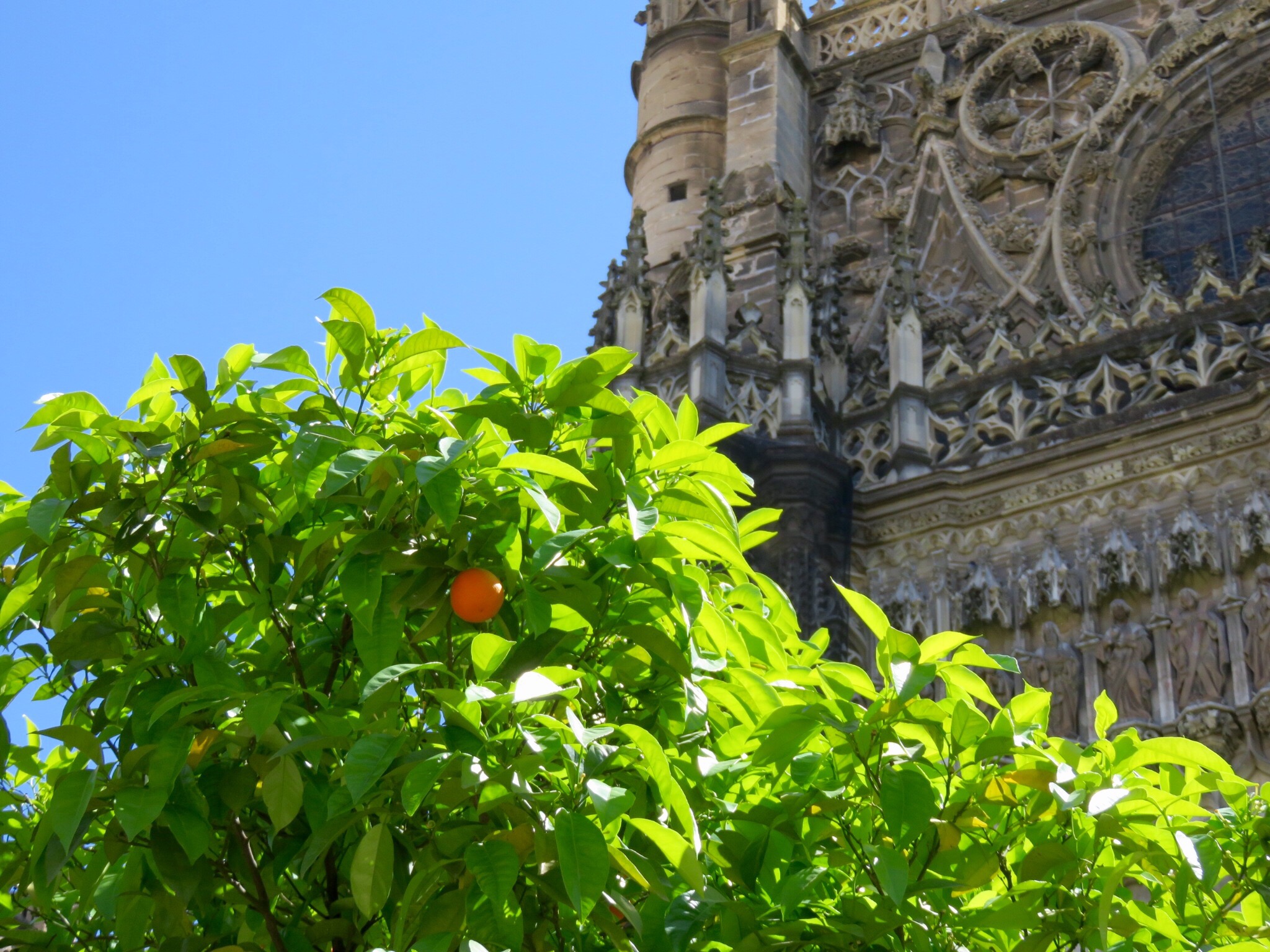
The cathedral is flanked by a garden of orange trees.  I heard a tour guide tell his group that the water used to wash people’s feet in the cathedral drains out to water the orange trees. As we didn’t see any foot washing going on, I question this assertion.

For some reason, there is a stuffed crocodile hanging outside the garden.  I believe it was a gift.

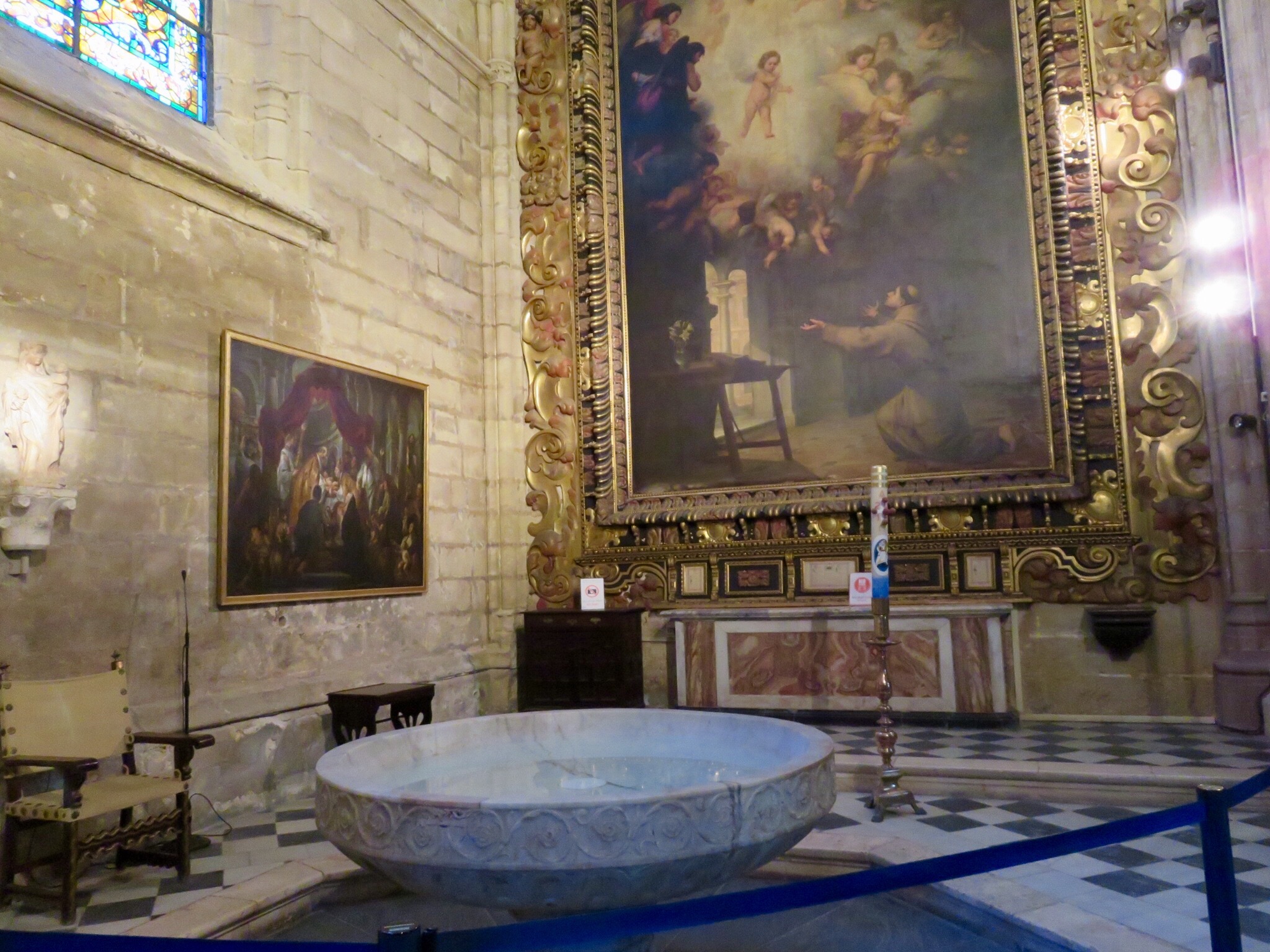
There were many little chapels around the sides of the cathedral.  The Capilla de San Antonio held a baptismal font large enough to swim in, and a famous painting of the Vision of St. Anthony.

Here is a vision of Jim and me, amid the silver and gold!

Palm Sunday in Sevilla

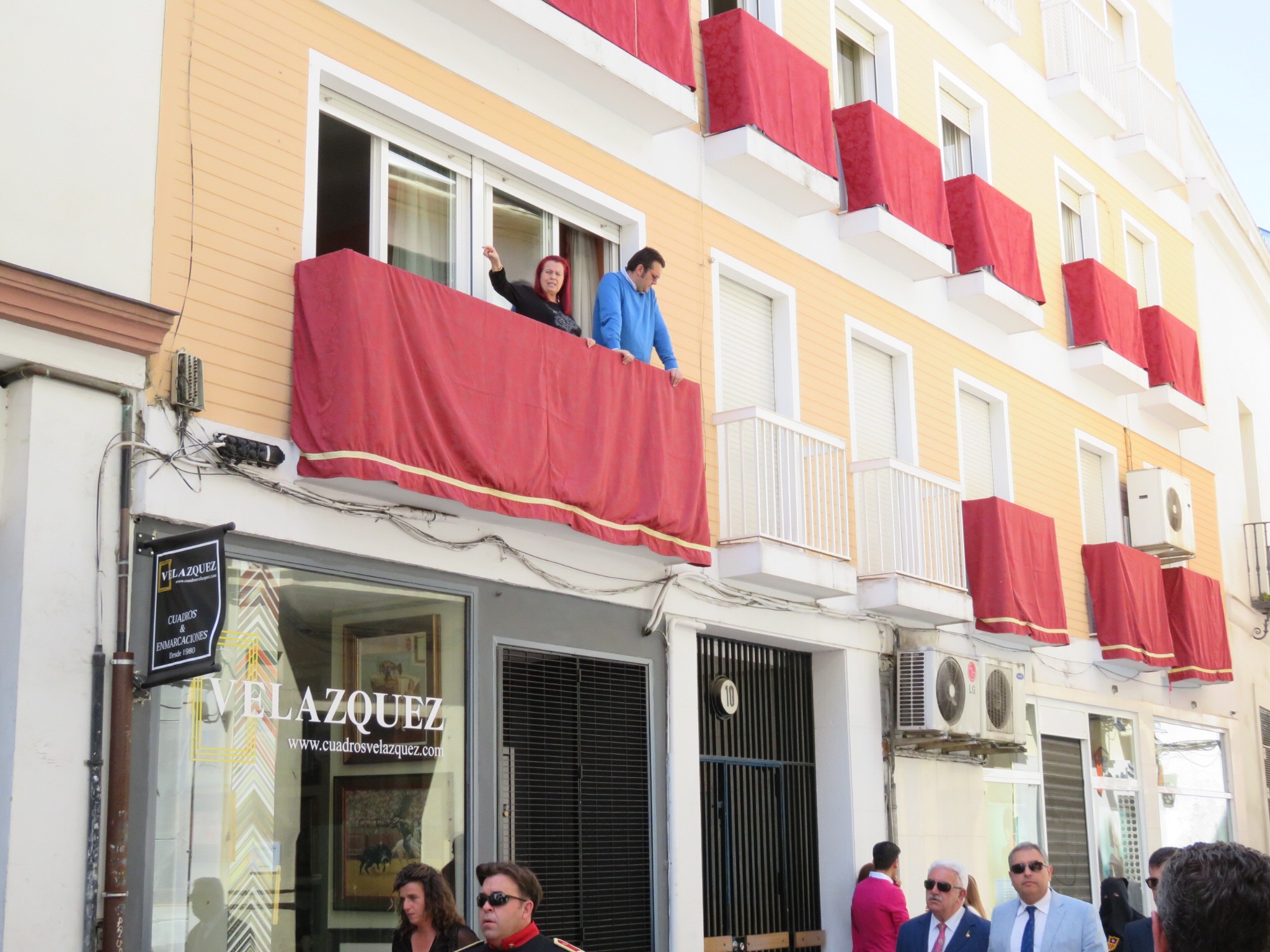
Apr 9 – Since we arrived in town ,we’ve been seeing lots of preparations for the Holy Week celebrations that Sevilla is famous for – Semena Santa de Sevilla.  They have been hanging red bunting, cordoning off roads, and setting out wooden chairs by the thousand.

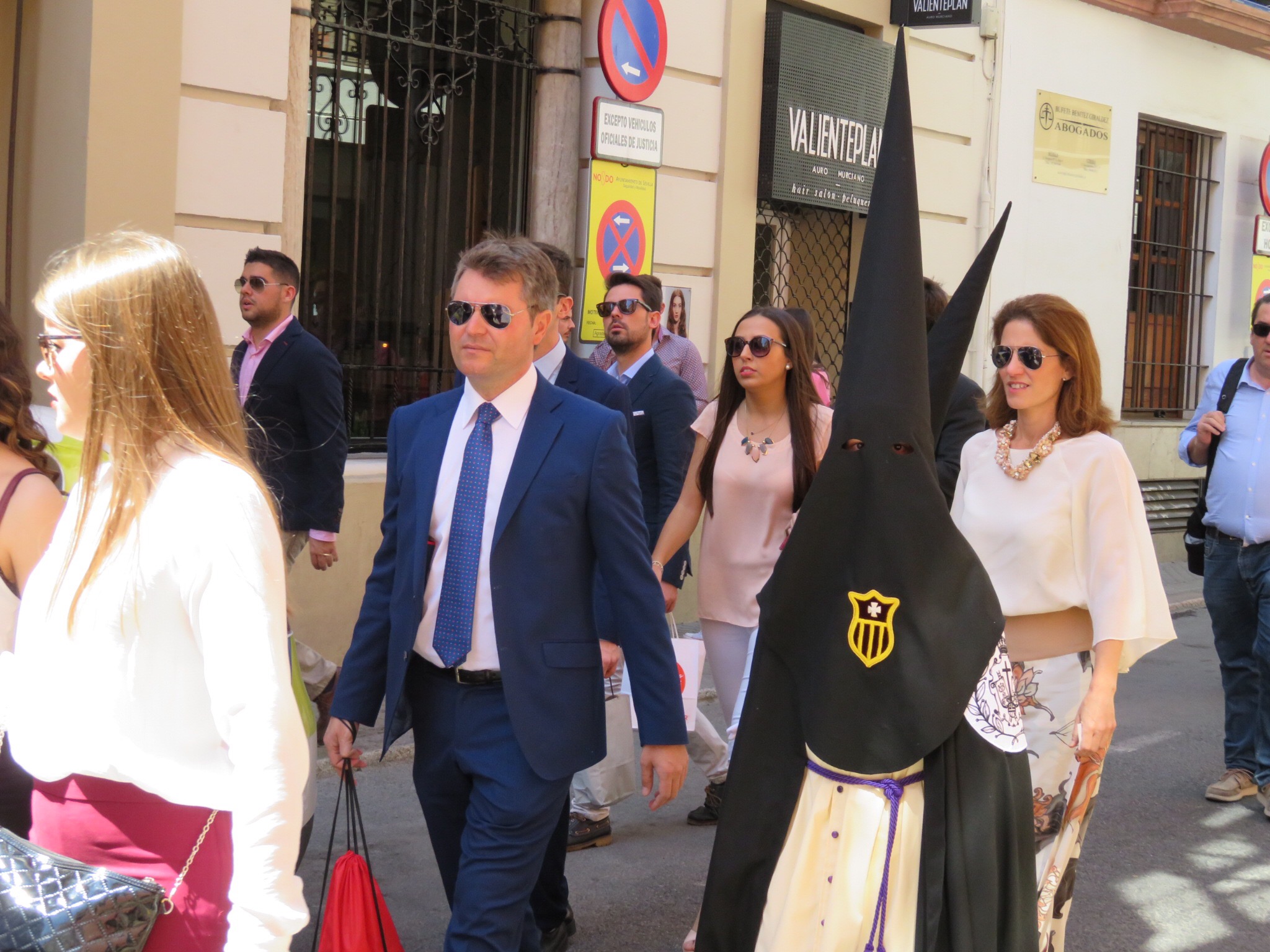
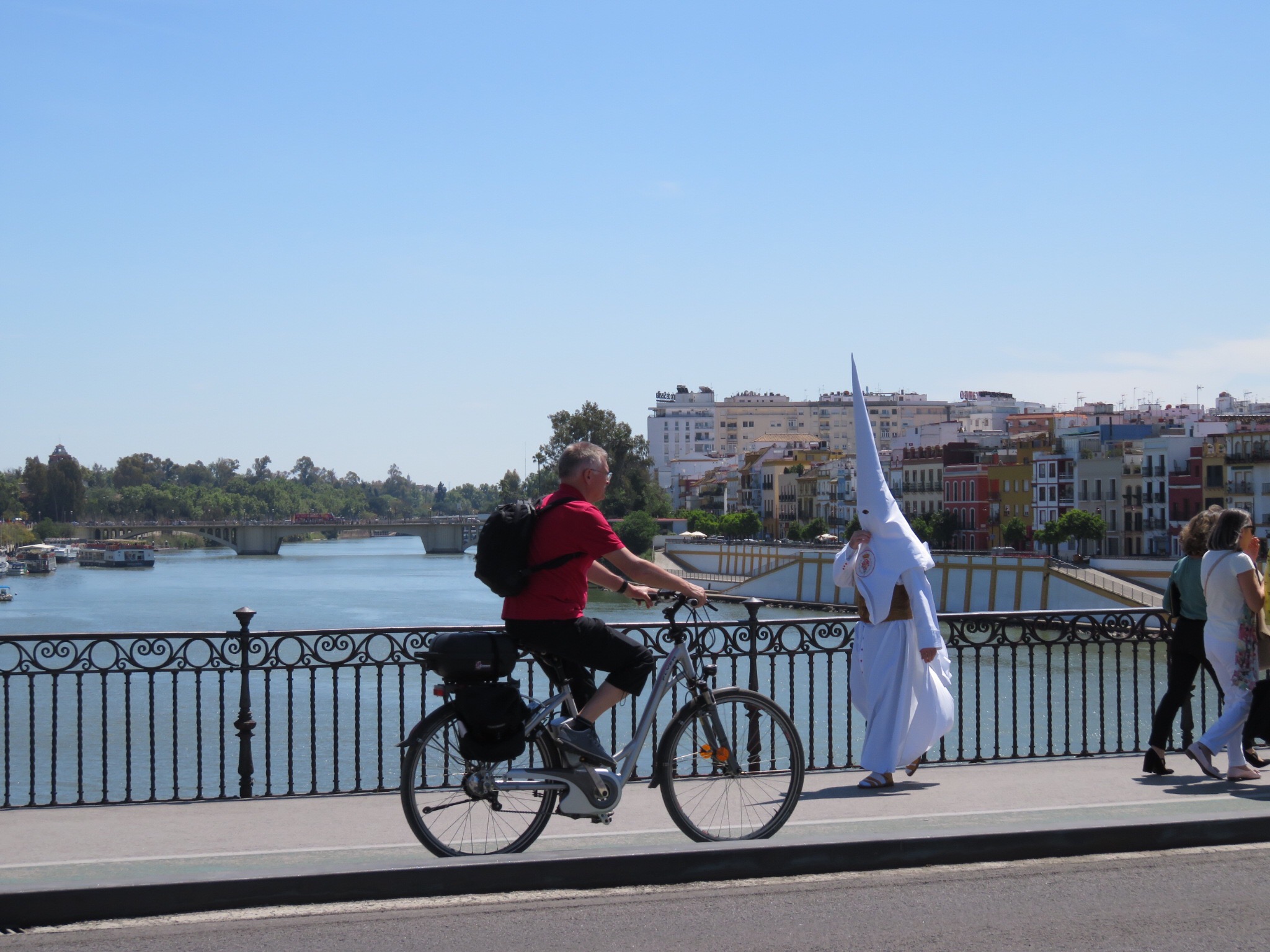
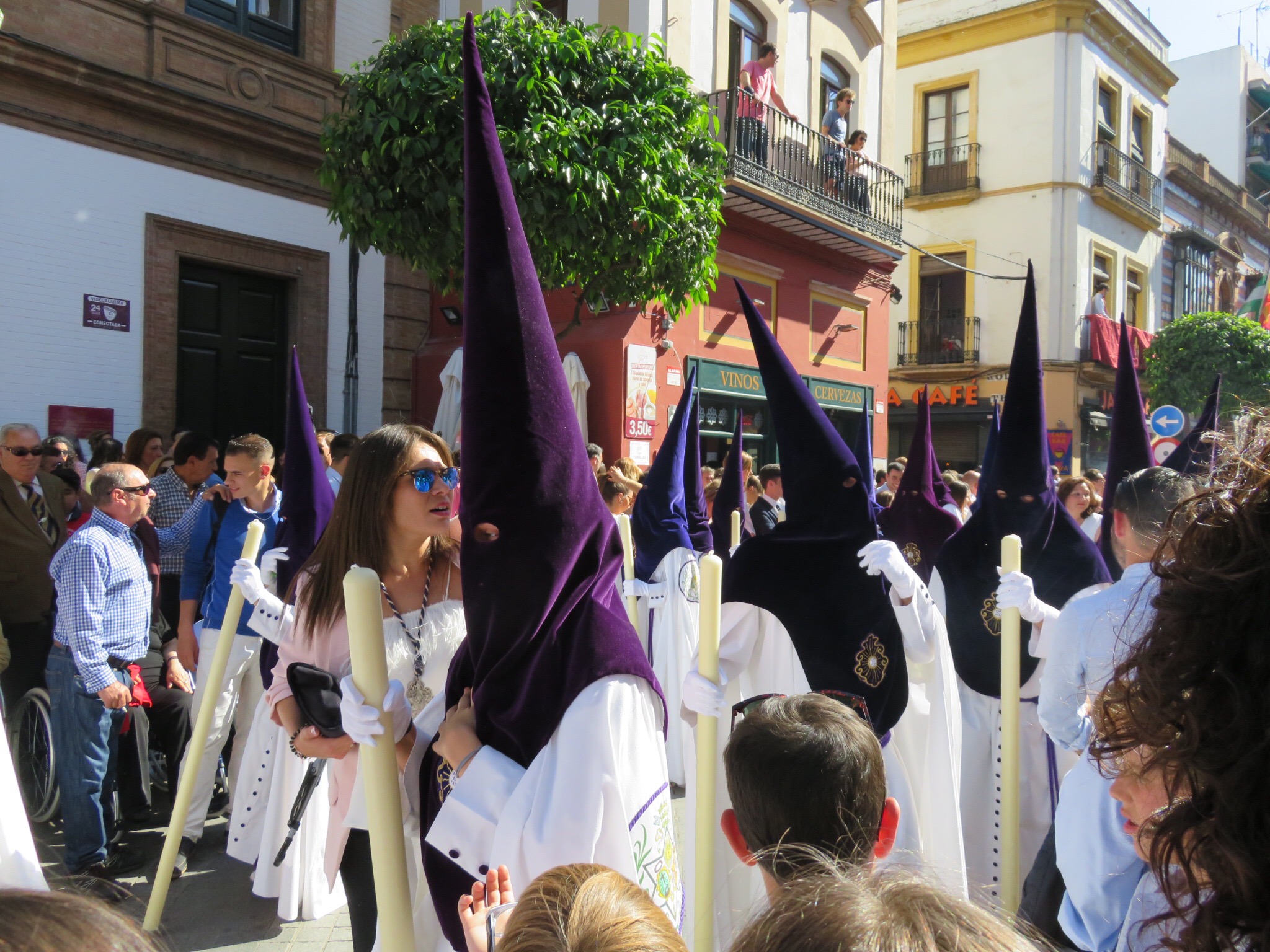
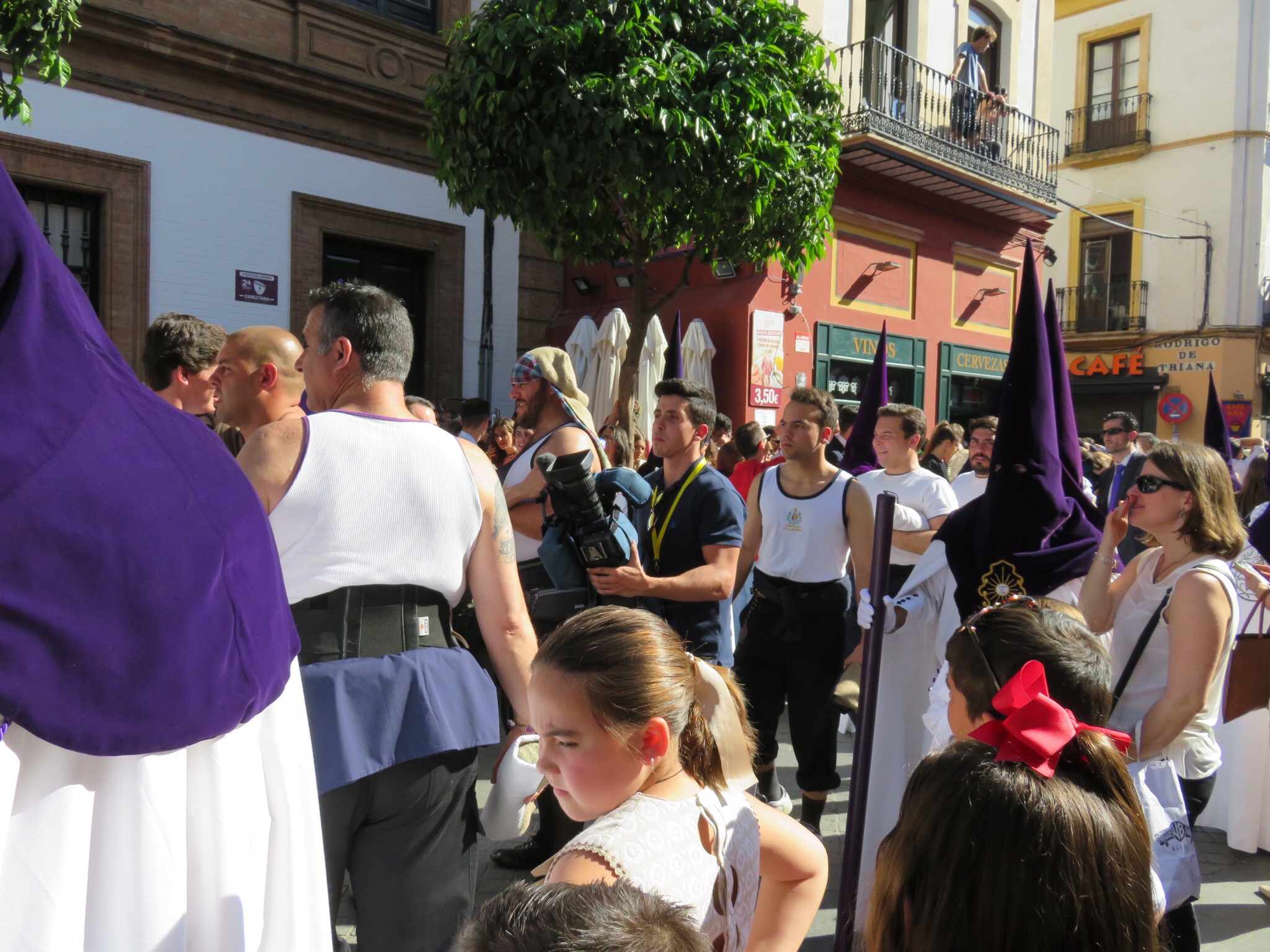
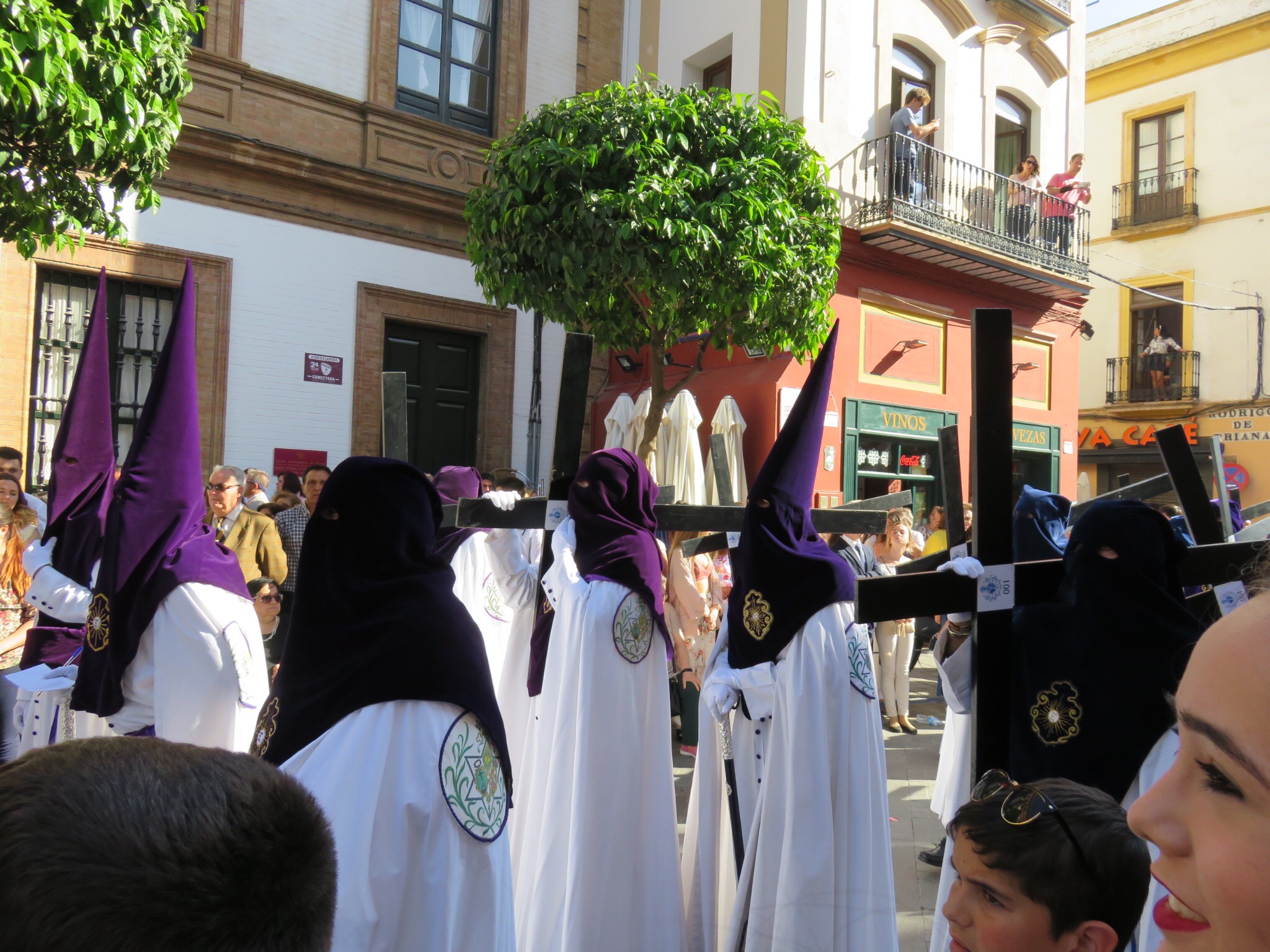
Today, Palm Sunday, the crowds are out in their Sunday best, getting ready for tonight’s processions.  By early afternoon, we saw many children and adults in long robes and tall masks with eye holes called capriotes.  Although these are chillingly reminiscent of KKK attire in the US, we are told that this is the costume of penitents (nazarenos) who are repenting of their sins in anonymity.  

Every community wears a different color.  Here in Triana, the capriotes are blue and purple velvet.  It’s a hot day, and they must be sweltering under those hoods.  By 5 pm, the penitents, holding long candles that will be lit after dark, proceeded down the Main Street to the beat of a drum.

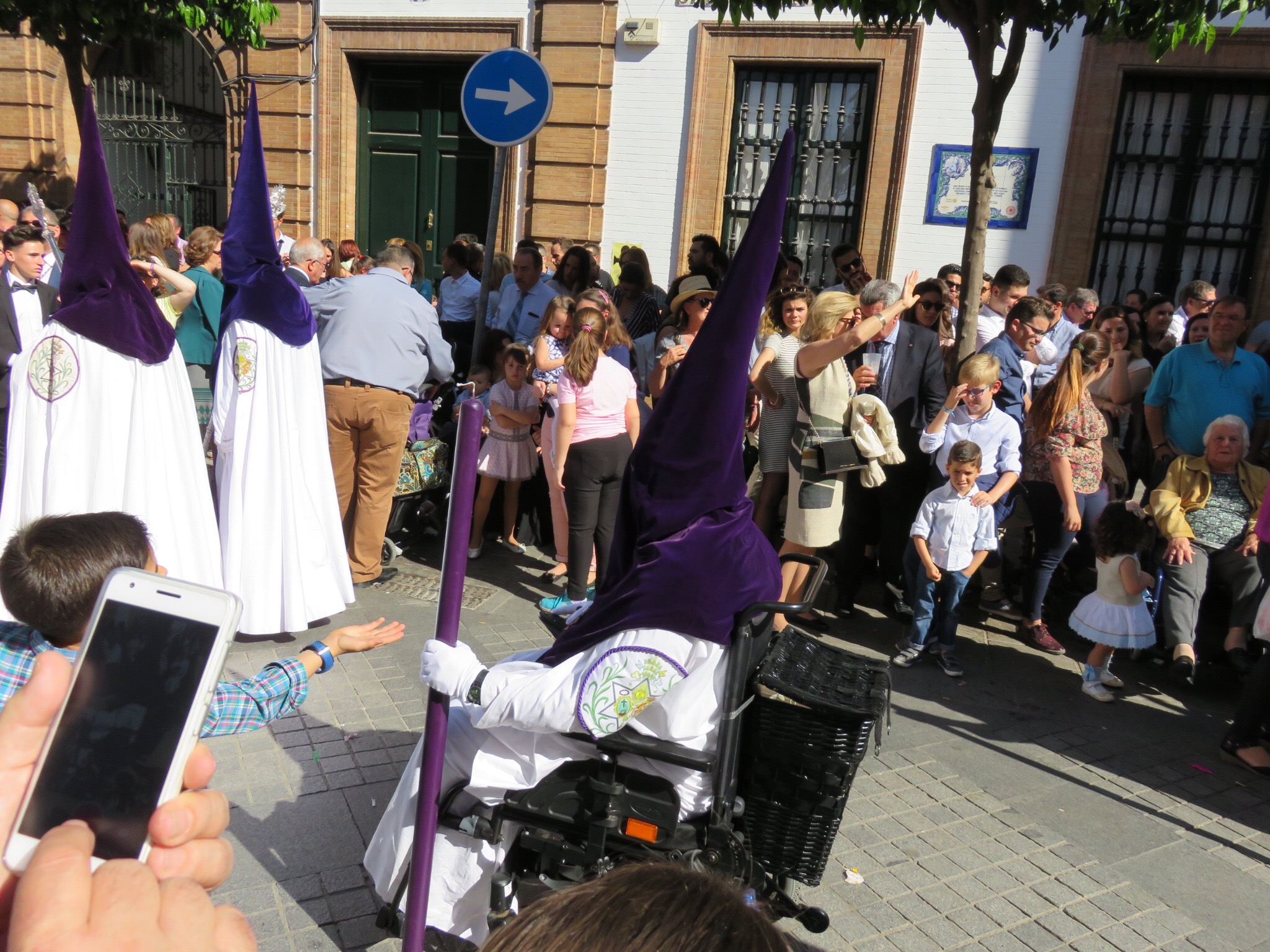
The streets were jam-packed.  Children stood on the sidelines and some penitents gave them candy or Saint cards. The youngest penitent:

Perhaps the oldest:

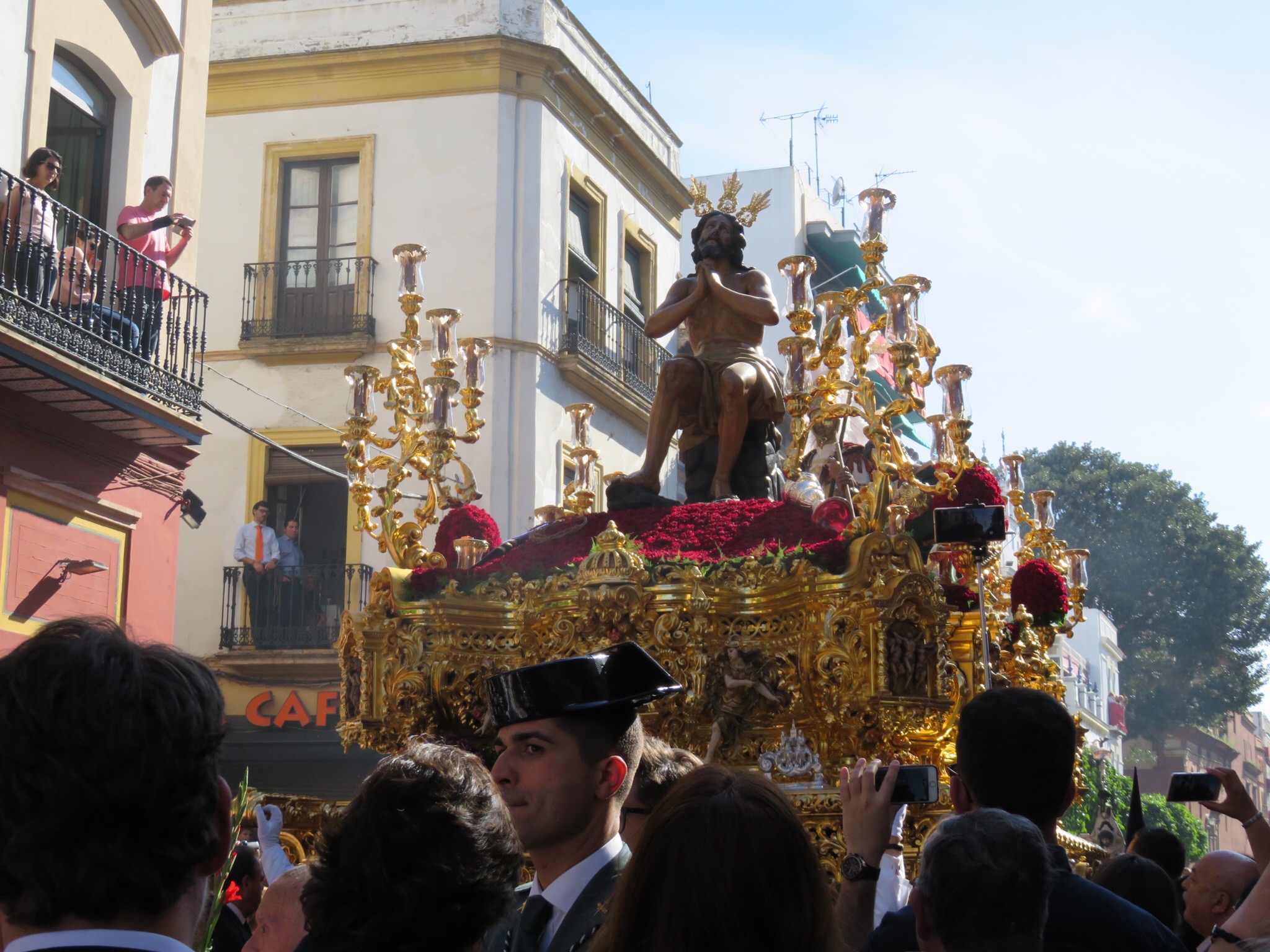
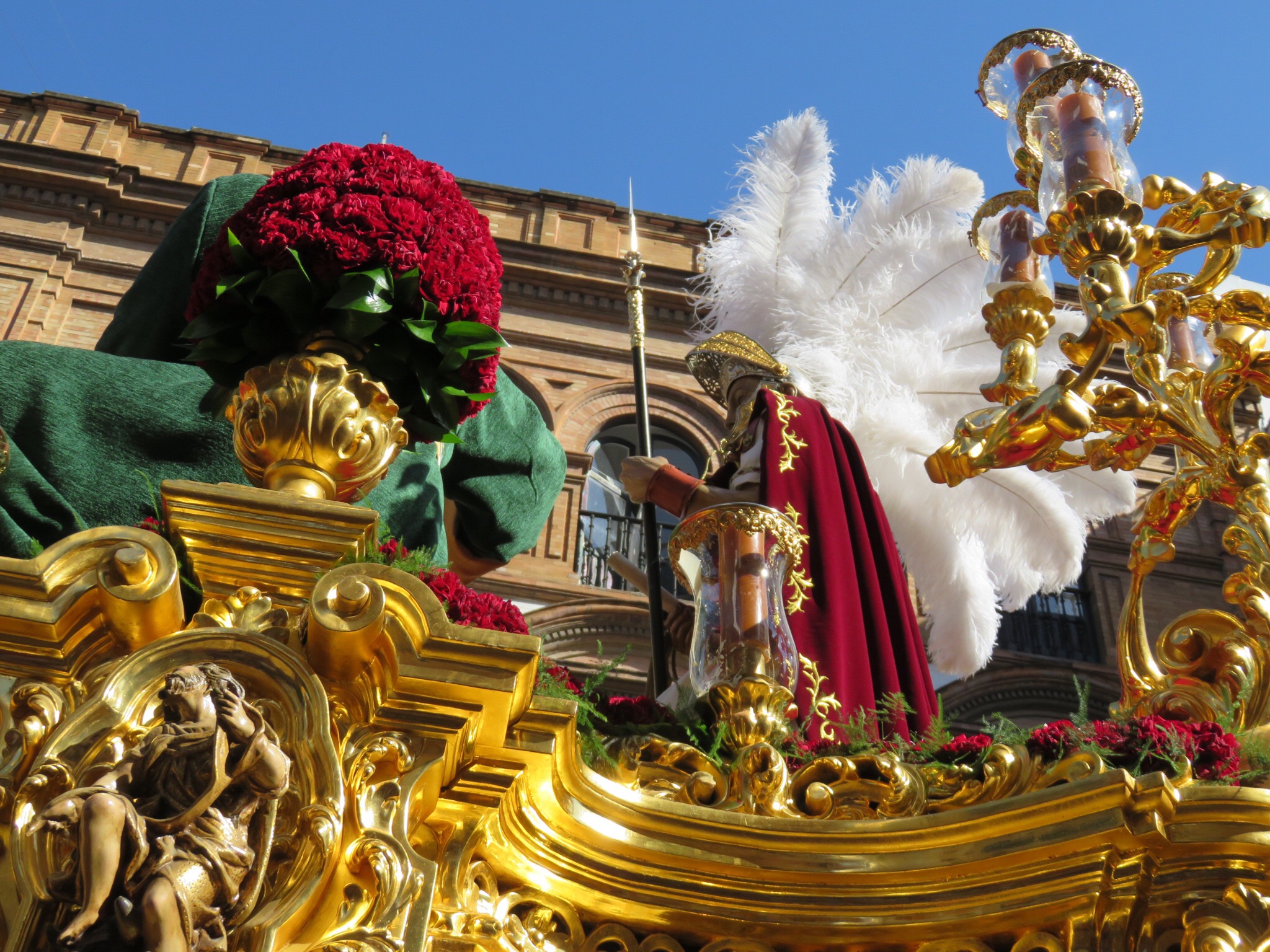
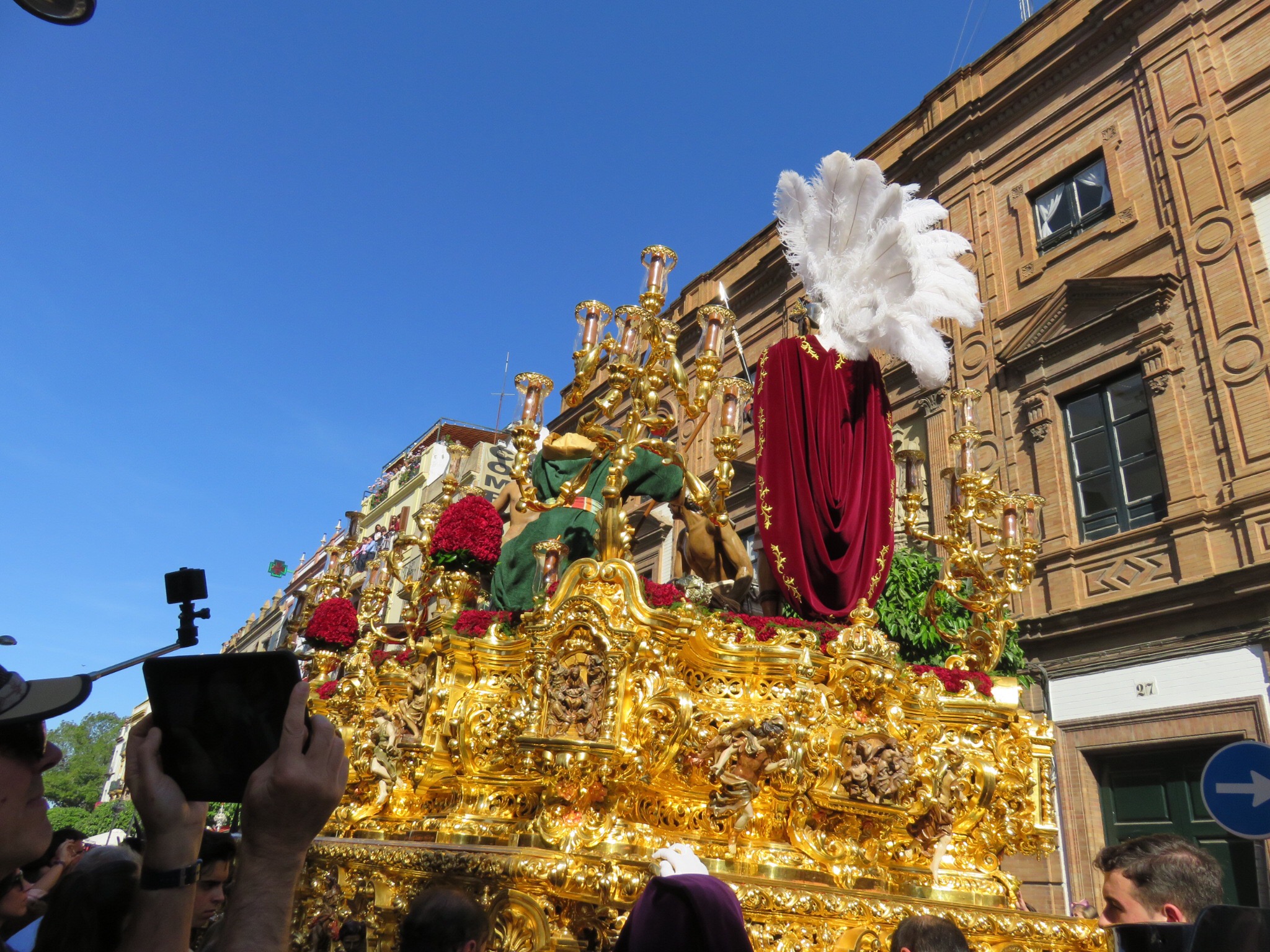
Next we could hear a brass band, and we could see our community’s float (paso) in the distance.  Each parish displays a float depicting a different part of Christ’s Passion story. The floats are kept all year in the parish church.  Our float showed Jesus, perhaps at Gethsamane, with a praying Jesus in the front and a Roman soldier in a red robe and feathered helmet, behind.  As the float approached, a thousand parents shushed a thousand children, so the float could go by in silence.

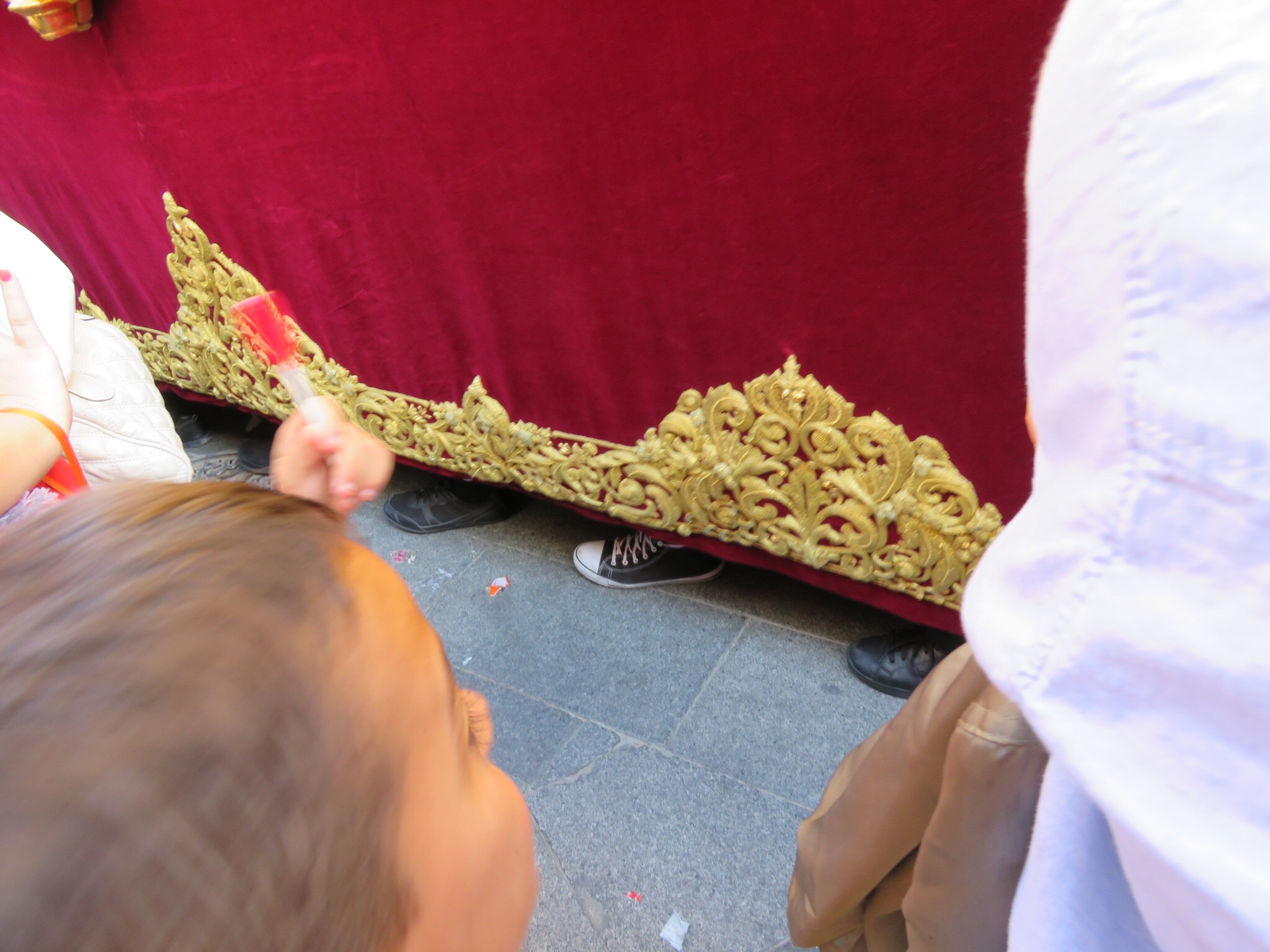
The float swayed from side to side as it moved down the street, and a closer inspection revealed that it was human powered.  This also explained the burly, sweaty guys (costaleros) in the weight belts, who walked close to the float and switched places with their peers from time to time.  We are told that the men of the parish may wait many years before getting a chance to carry the paso, and they practice together for weeks to learn to properly hoist and walk with the heavy floats.  To get to the Catedral, they also have to walk up and down curbs and steps.

Then, the brass band.  They only played one song, repeating it at each corner.

Finally, more penitents (nazarenos) carrying black crosses.

The procession continued over the Triana Bridge toward the cathedral, where it will merge with all the other floats from the other parishes later tonight.  The chairs for viewing down by the cathedral are very expensive and must be purchased months in advance.  We were happy to see our neighborhood pageant and then return home.  The streets are full of revelers and there has been lots of drinking all day.  I wonder if we’ll sleep tonight?

Sevilla – the Real Alcázar (or the water gardens of Dorne)

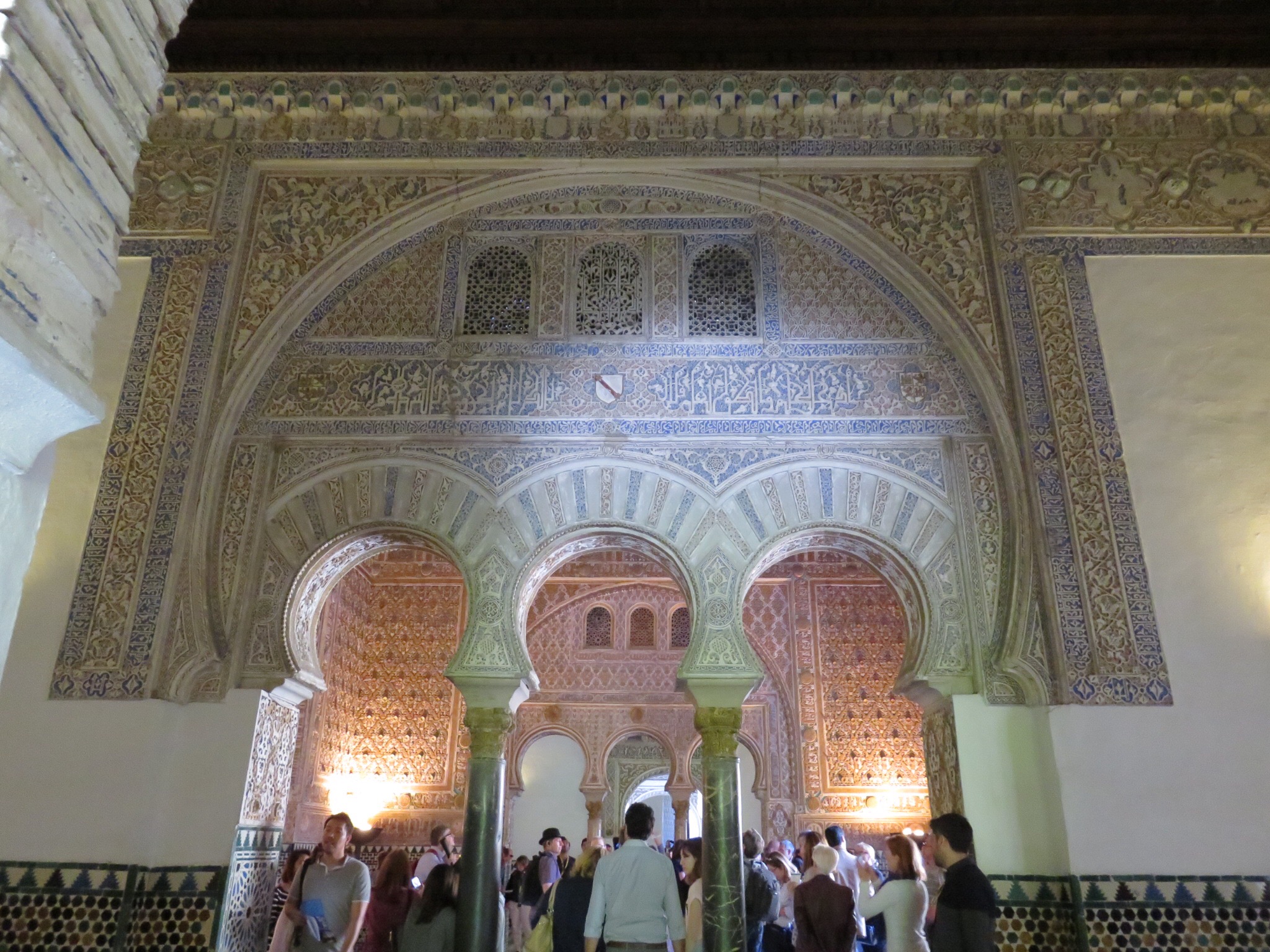
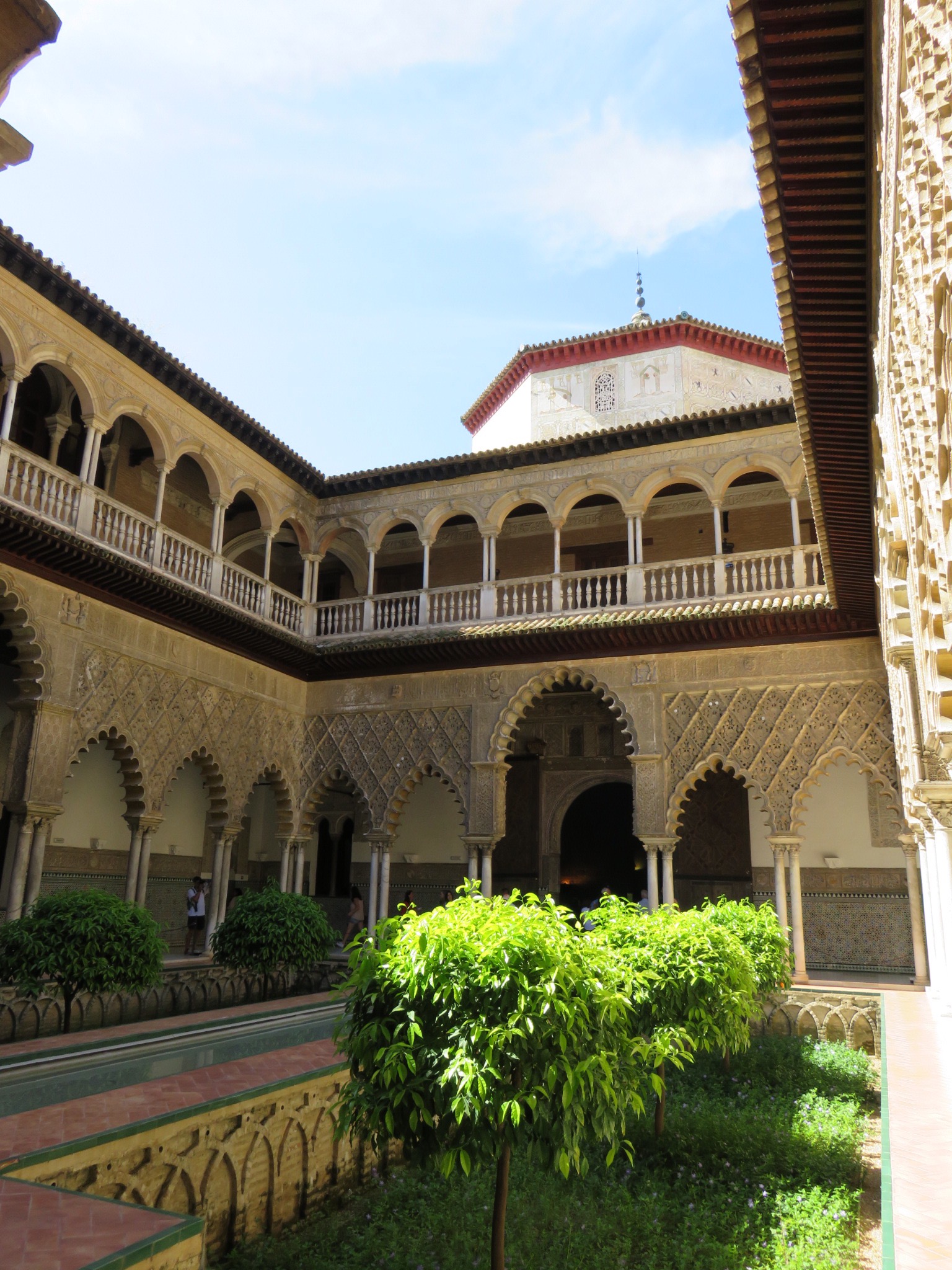
Apr 9 – Another beautiful, sunny day.  We walked half an hour across town to experience the Real Alcázar, a Moorish palace built during the period when the Muslims ruled Spain in the early 12th century.  

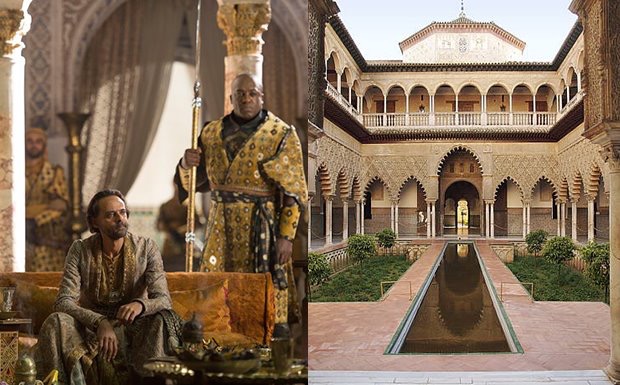
The palace is so strikingly gorgeous, it has been used as a set in many films from Lawrence of Arabia to the Game of Thrones.  (Pix courtesy of Google images)

There are so many buildings and gardens, one could wander about all day.  The palace:

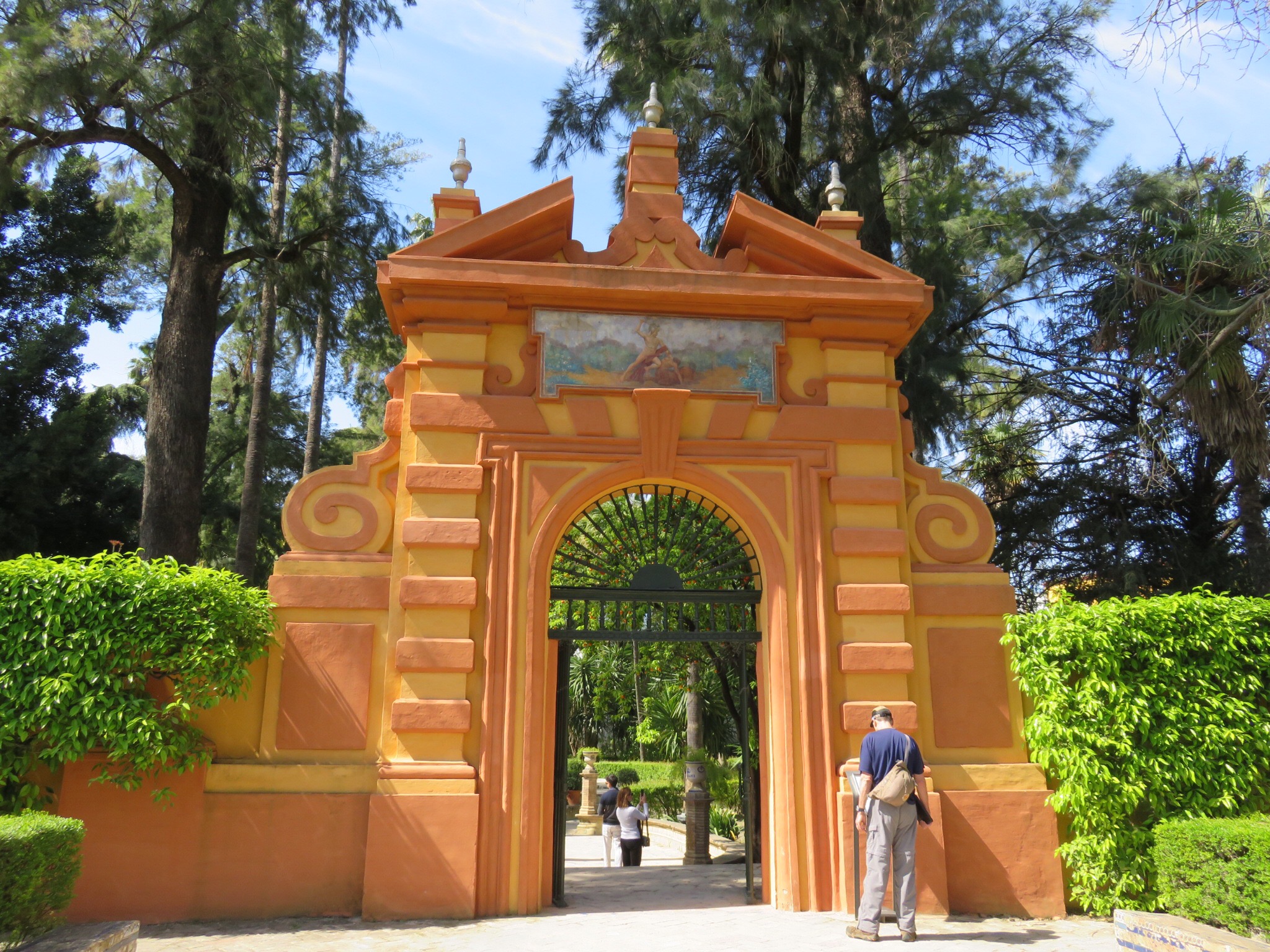
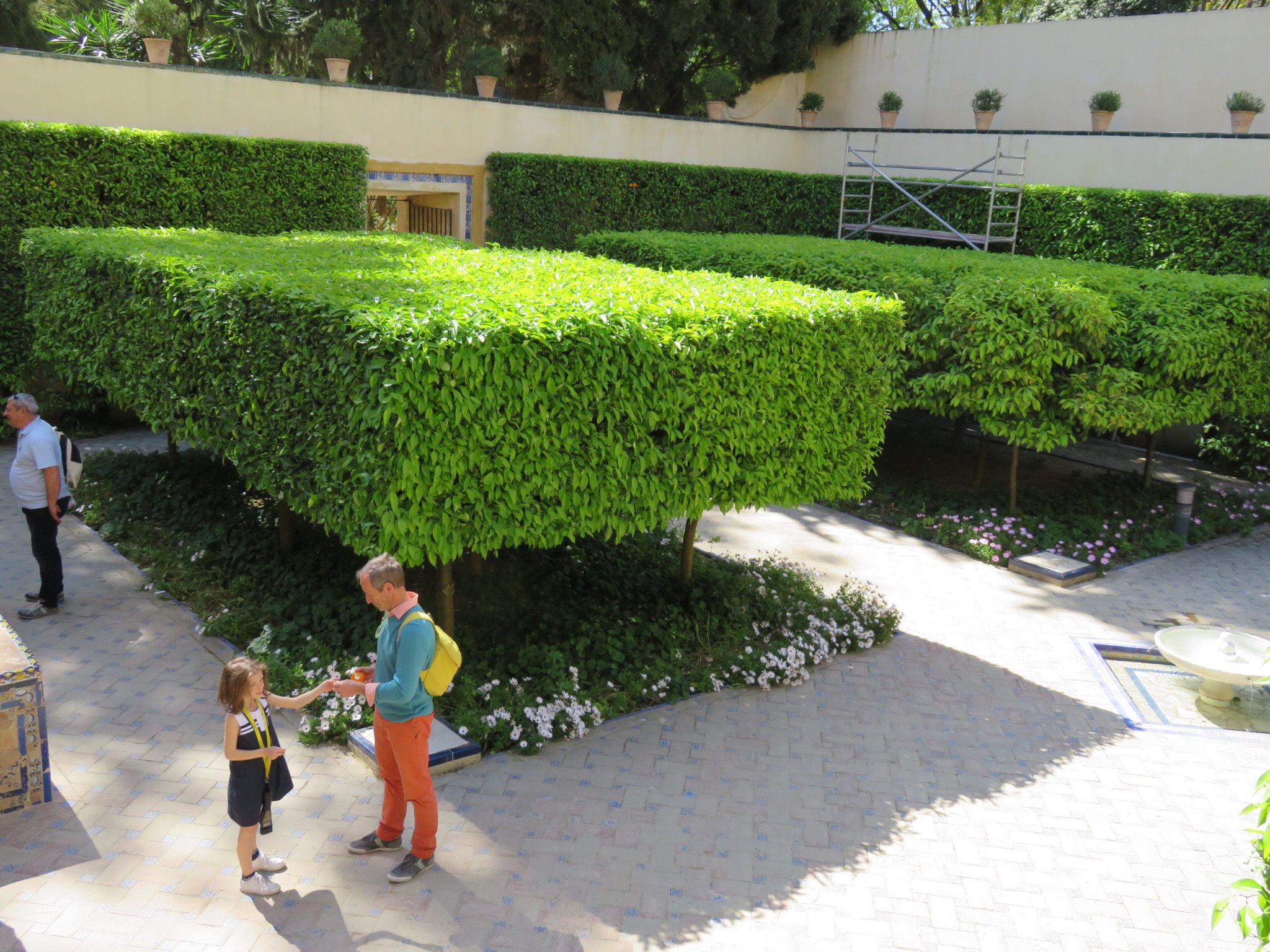
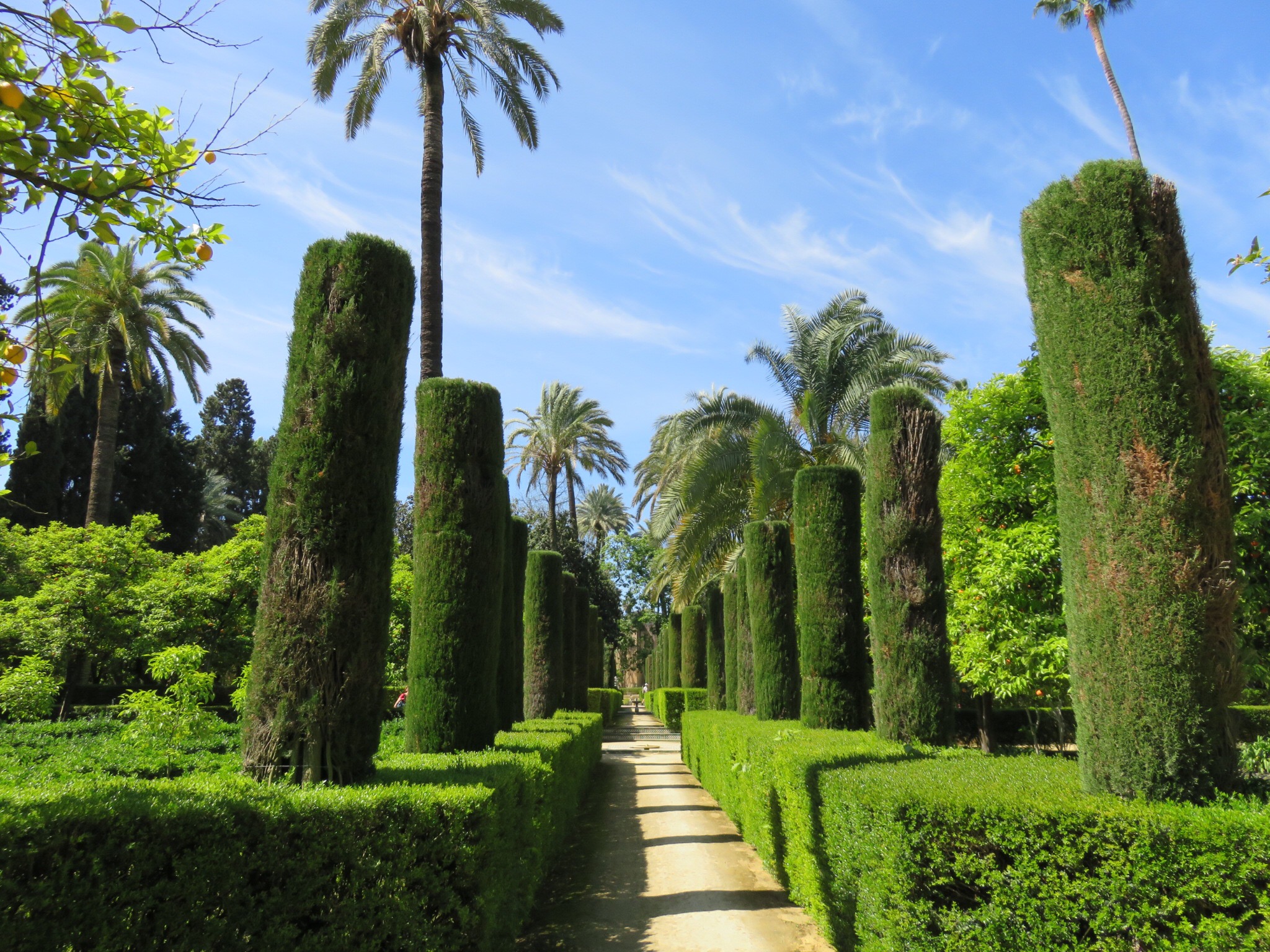
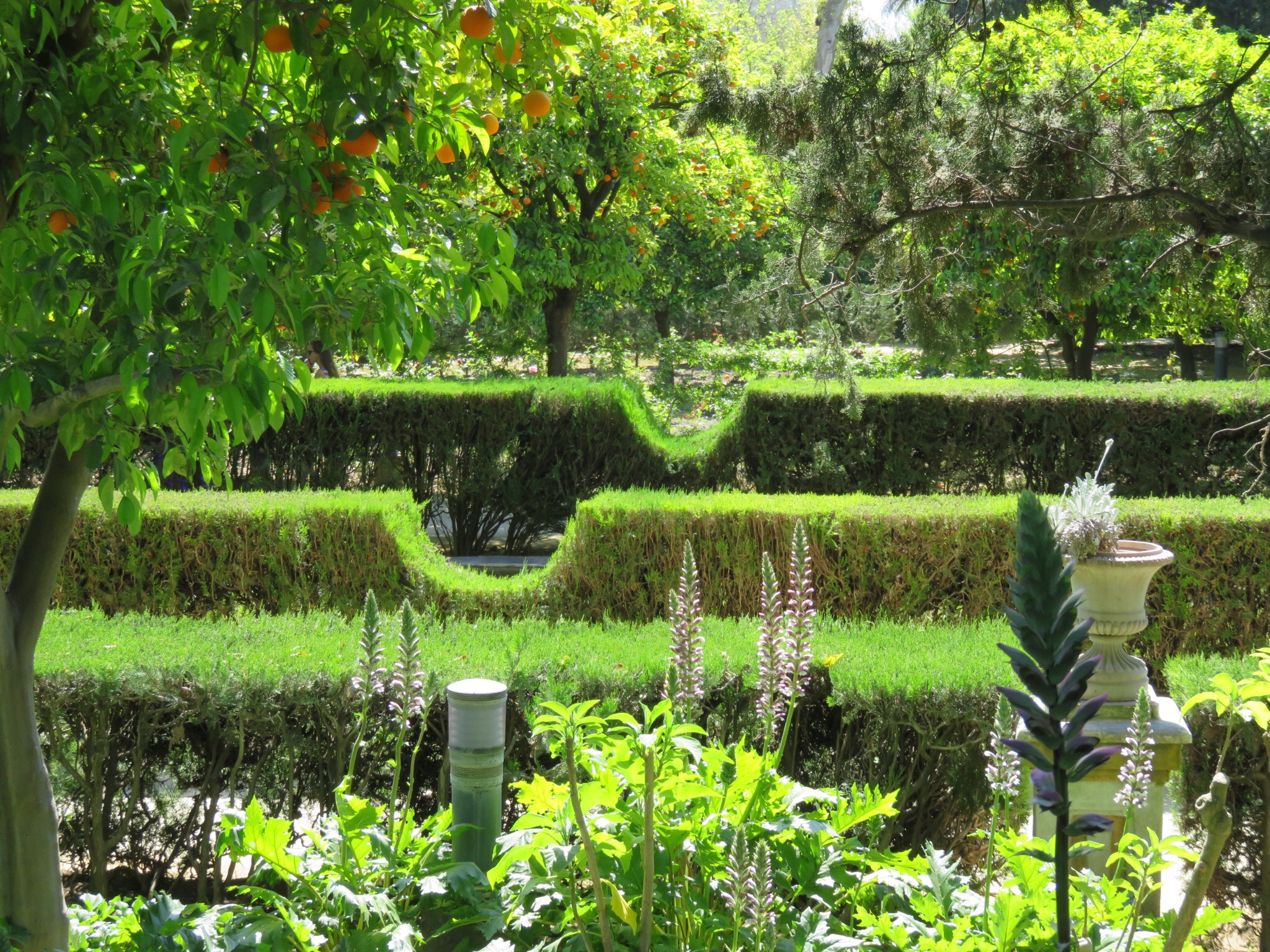
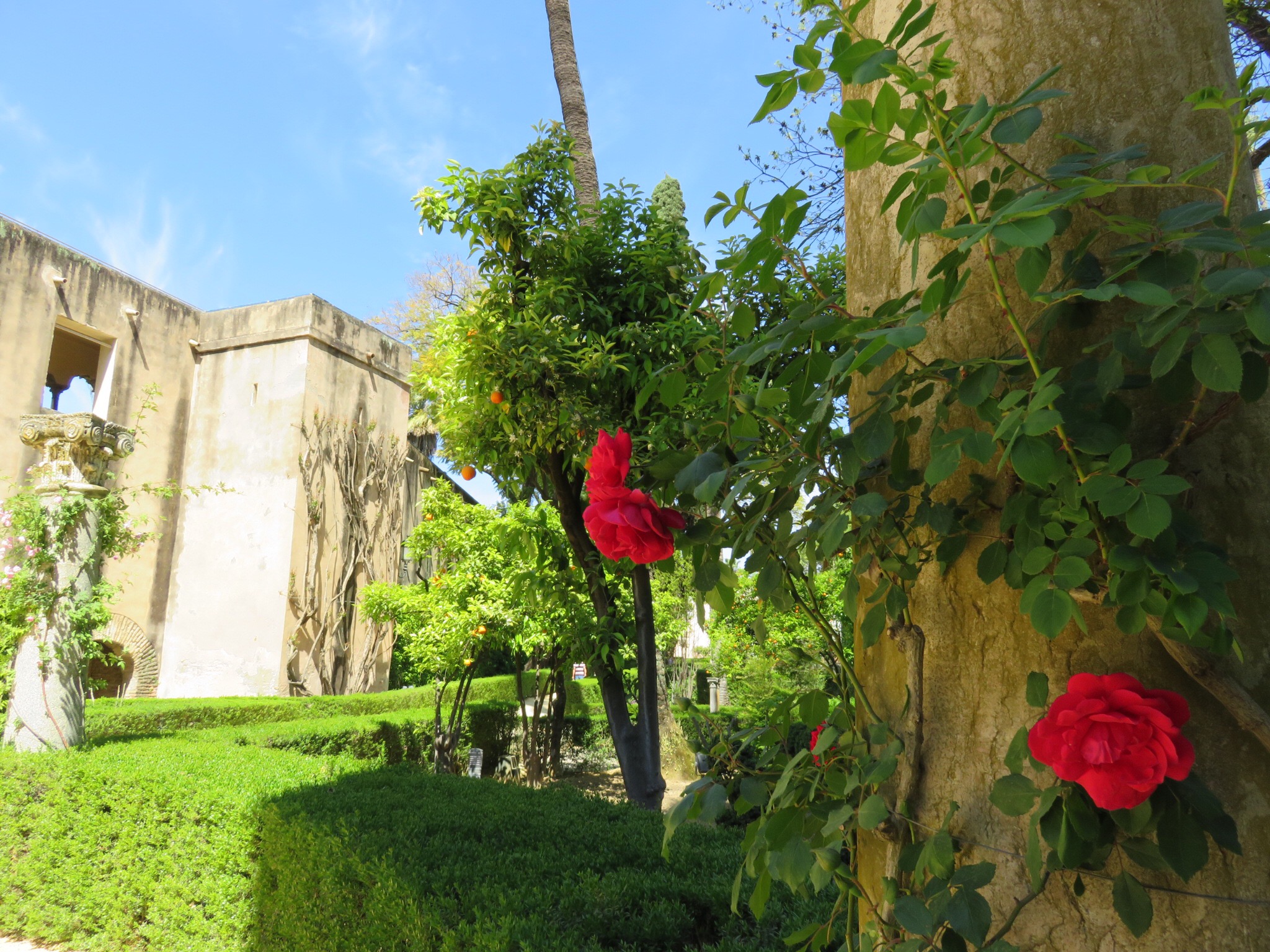
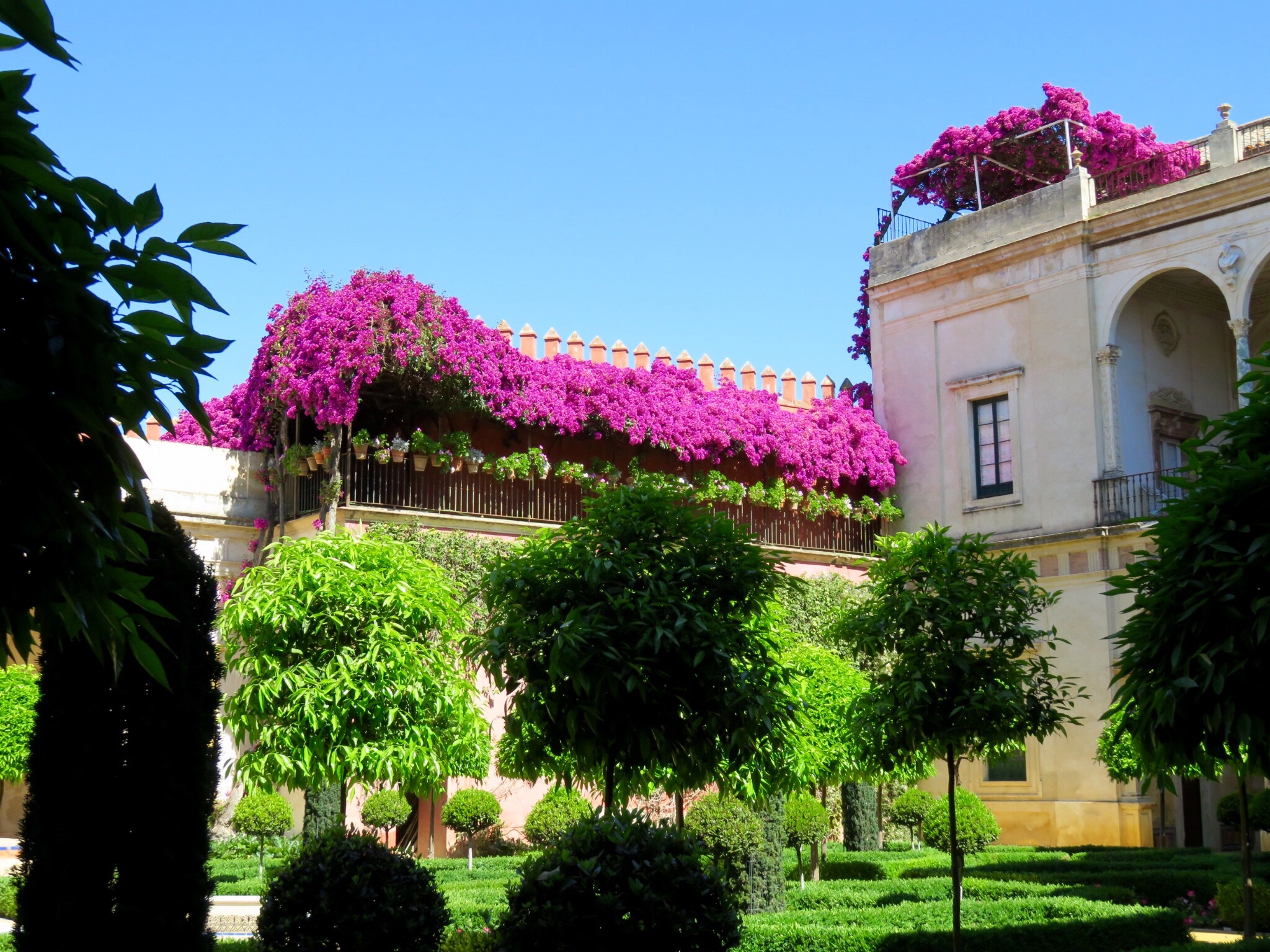
The gardens:

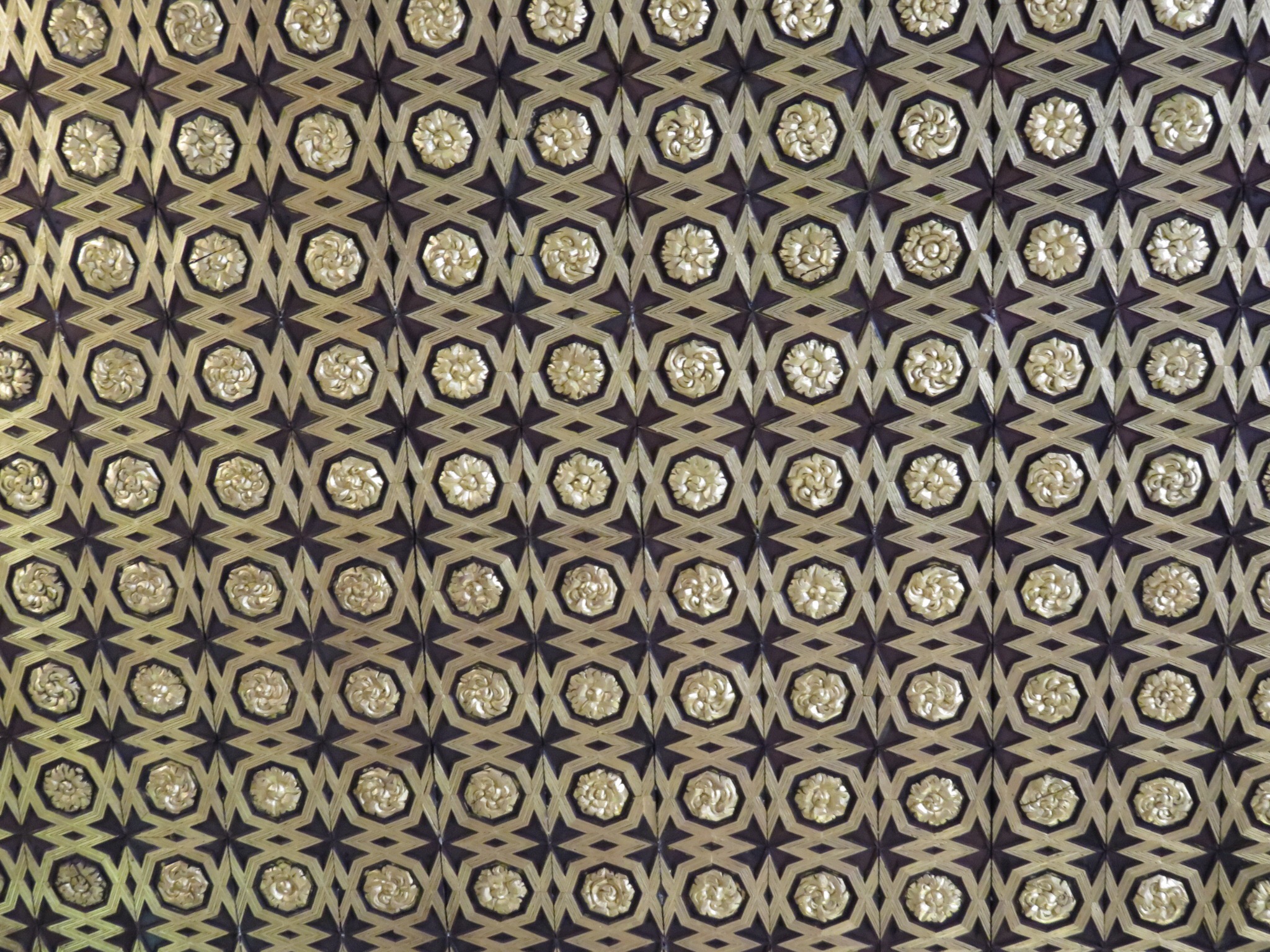
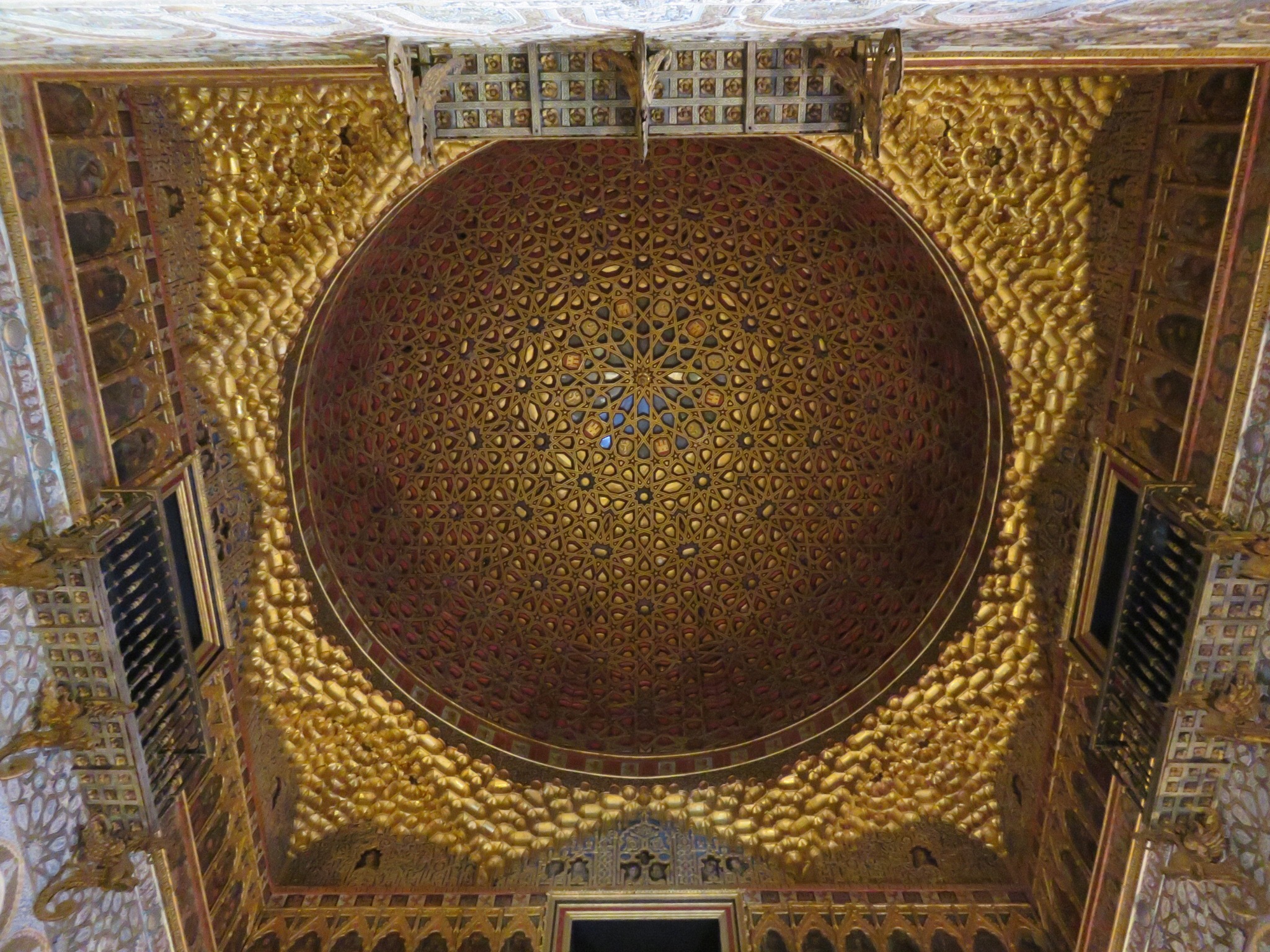
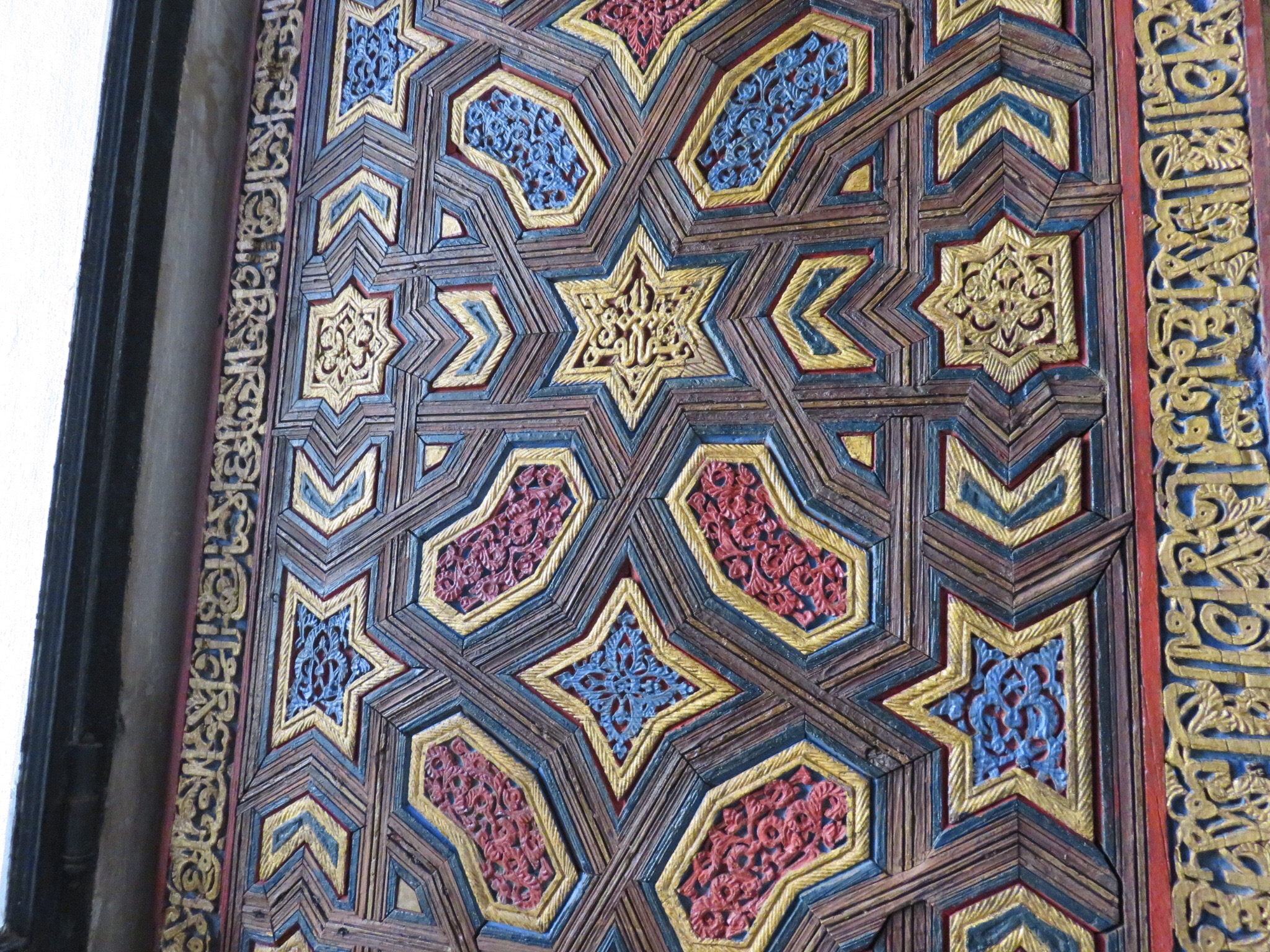
The tiles and ceilings:

So much to see!  The Lannisters got nuthin’ on us!

 Sevilla and the Casa de Pilatos 

Apr 8 – We are fairly recovered from our jet lag, and ready to do some exploring.  Did you know that there is an Andalusian palace here in Sevilla once thought to be a replica of Pontus Pilate’s house?  It is not a replica at all, but is named for Pilate nonetheless, and is a beautiful place to spend a sunny morning.  Built in the early 1500s, the duke who lived here went on pilgrimage to the holy land, and the rooms were named for events in the life of Christ.
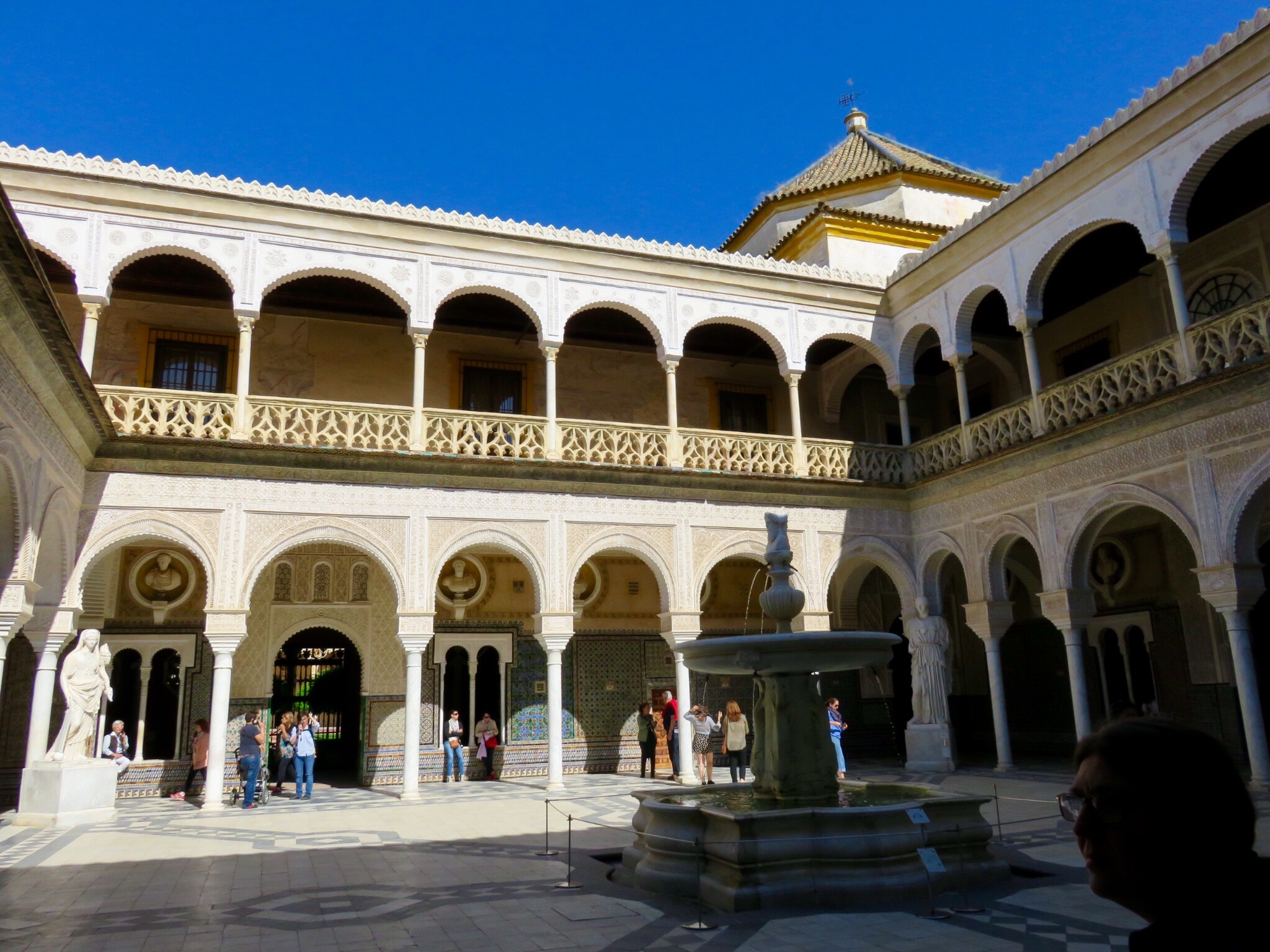
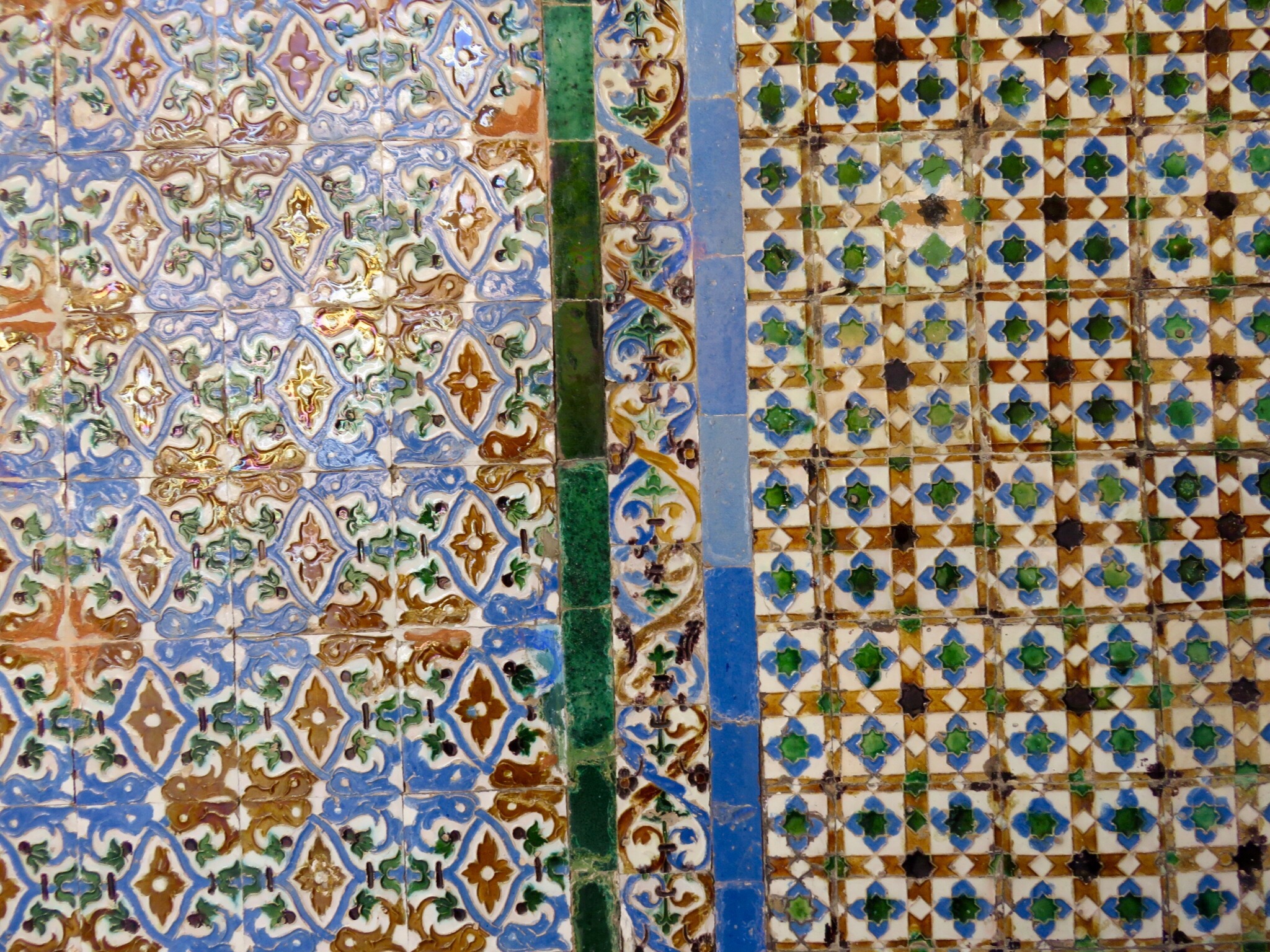
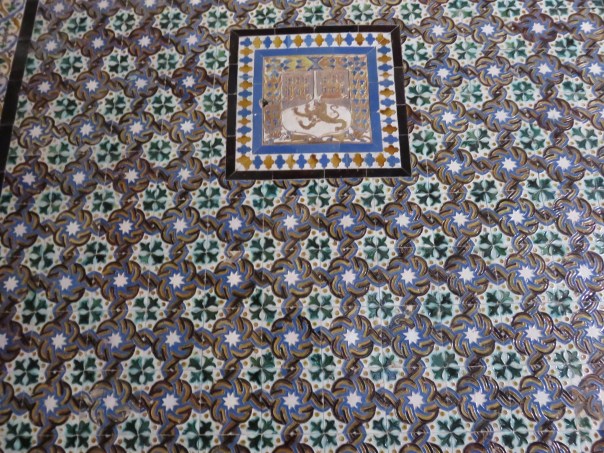
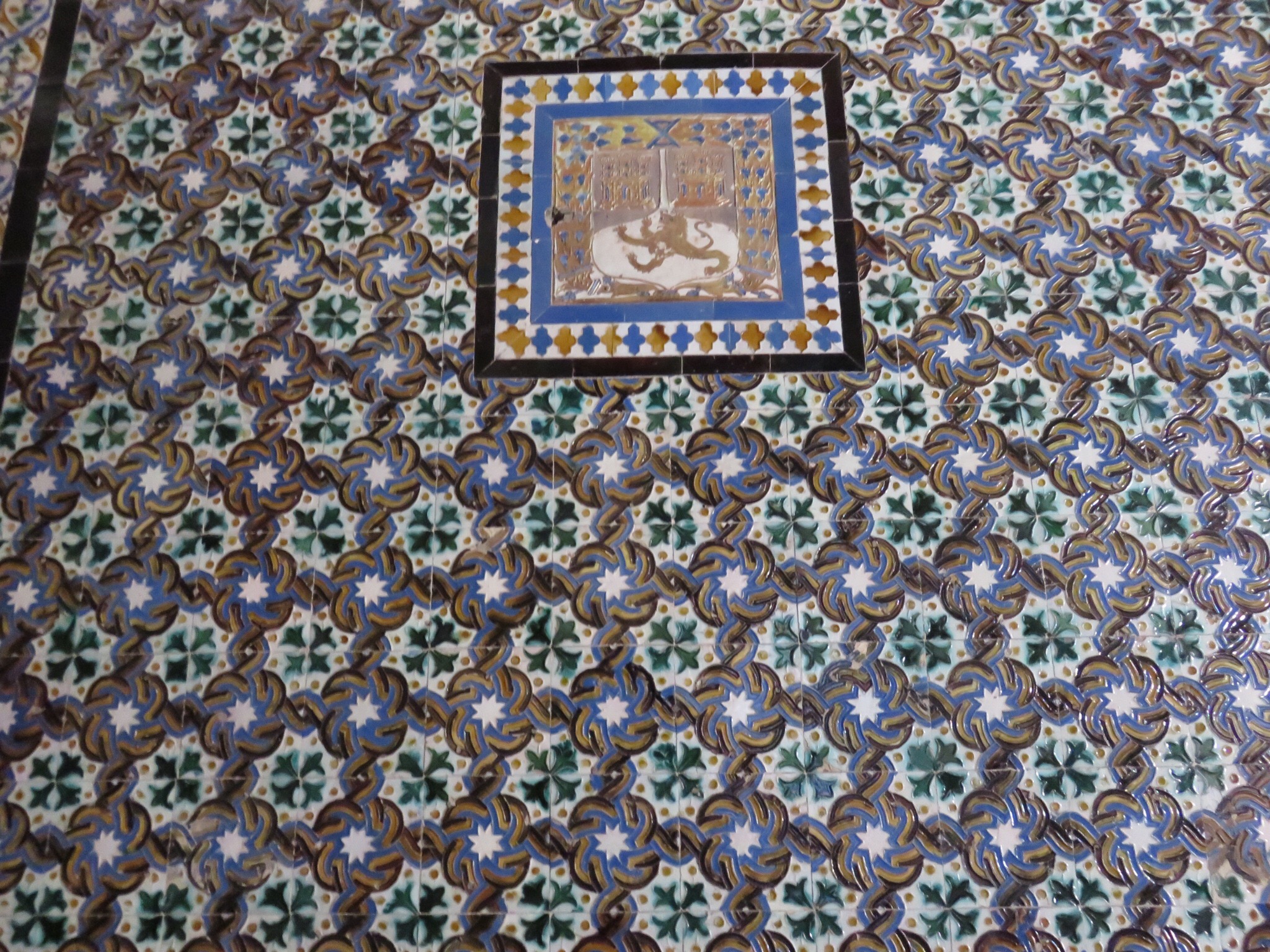
The palace walls are tiled with the gorgeous ceramics this area is famous for.

The ceilings were pretty ornate too.

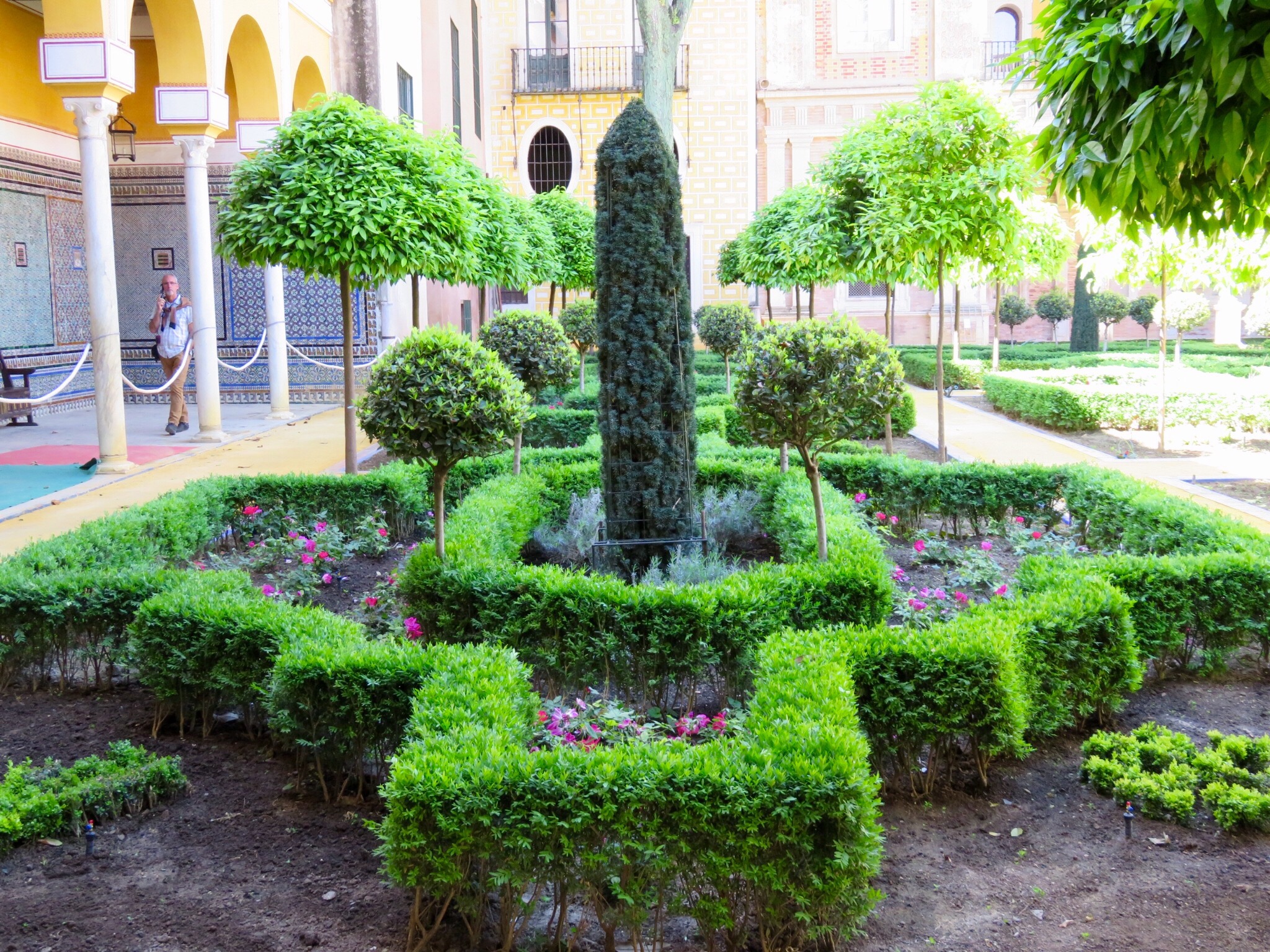
The gardens were watered by the municipal water supply; a rare thing for a private dwelling.  The pink roses were blooming today, and the aroma was delightful.


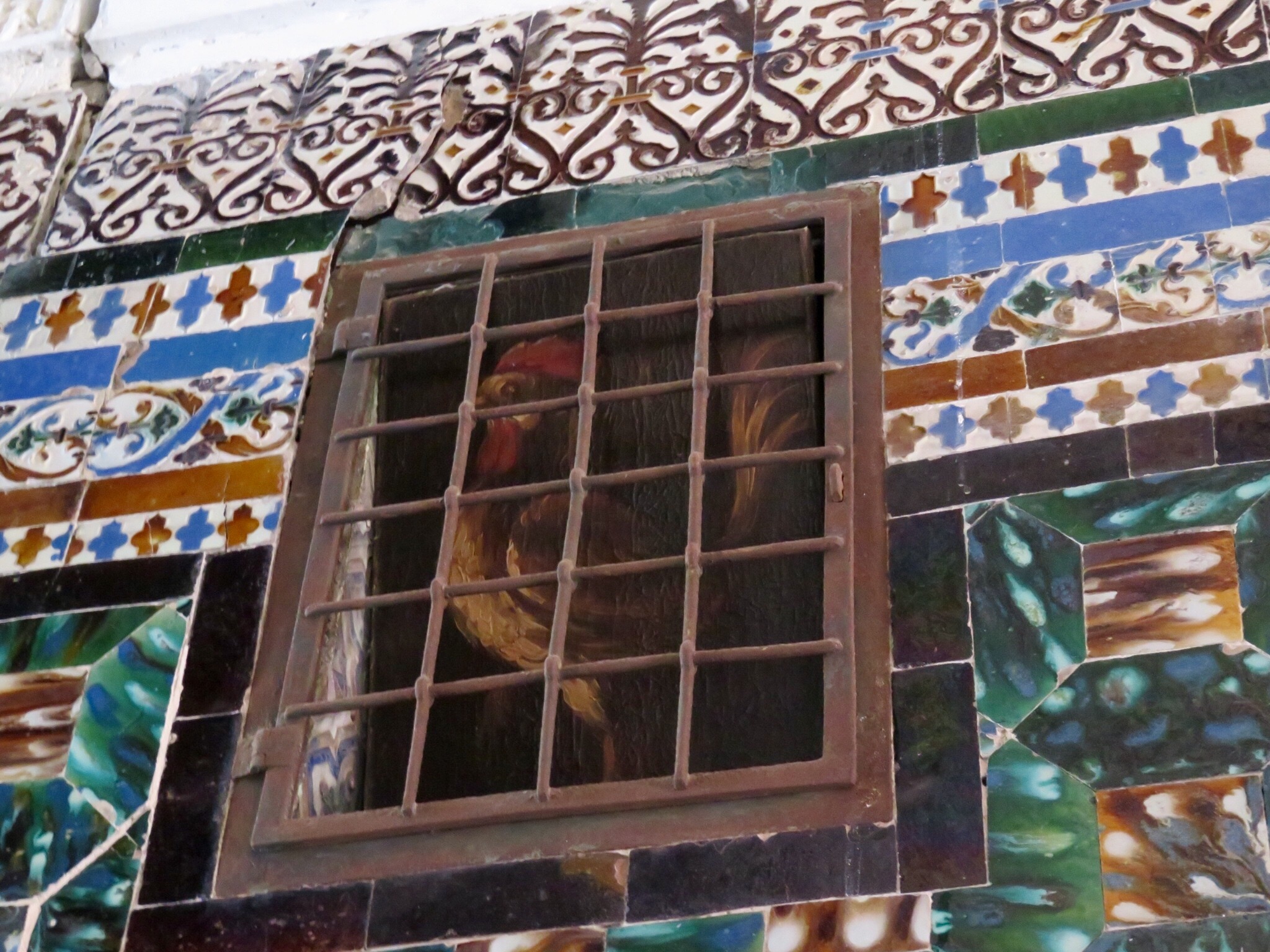
Up the stairs is a small painting of the cock that crowed while Peter denied Christ three times.

A lovely way to spend the morning!

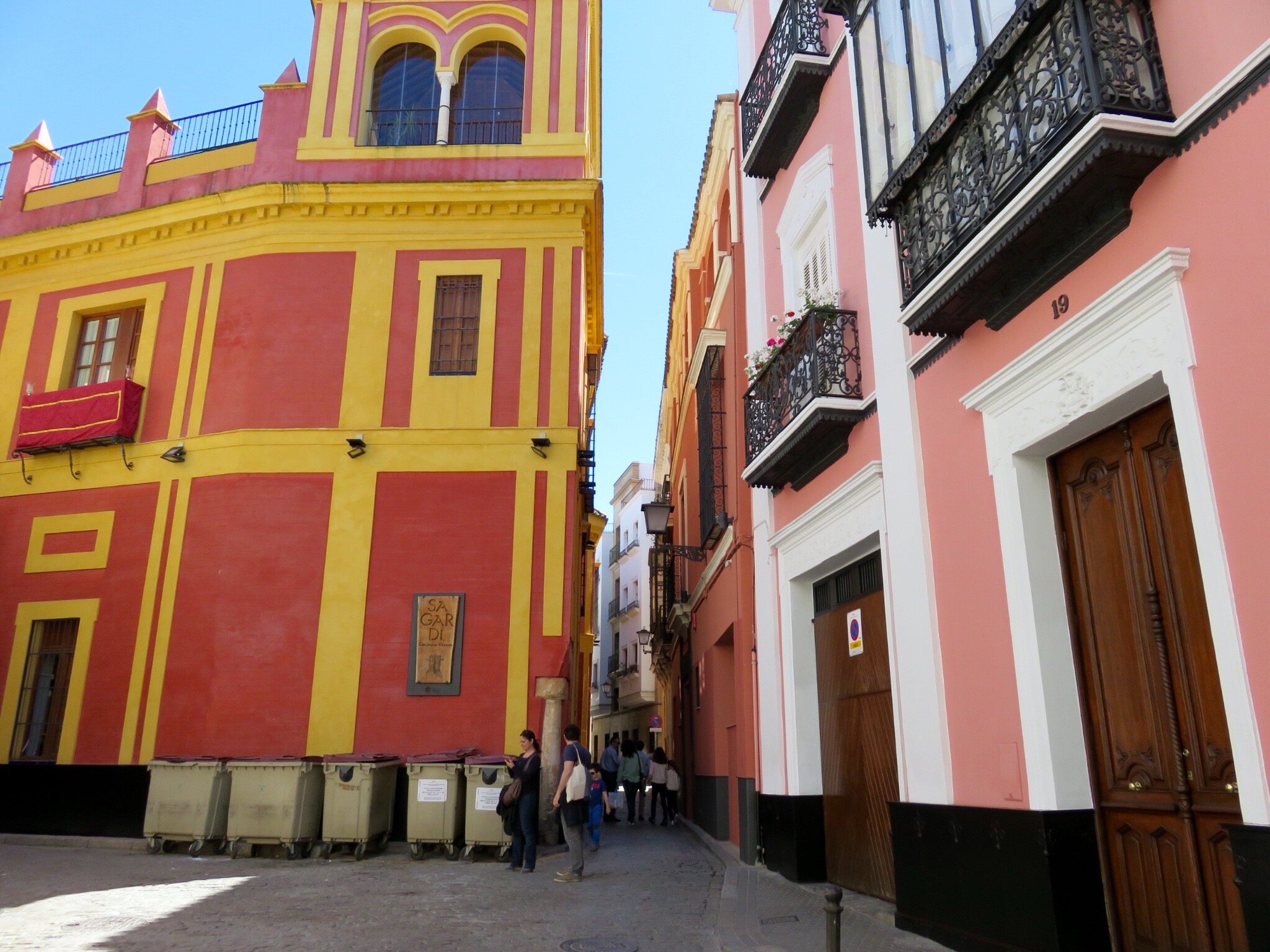
We walked around the narrow streets of the old city of Sevilla and admired the colorful buildings.

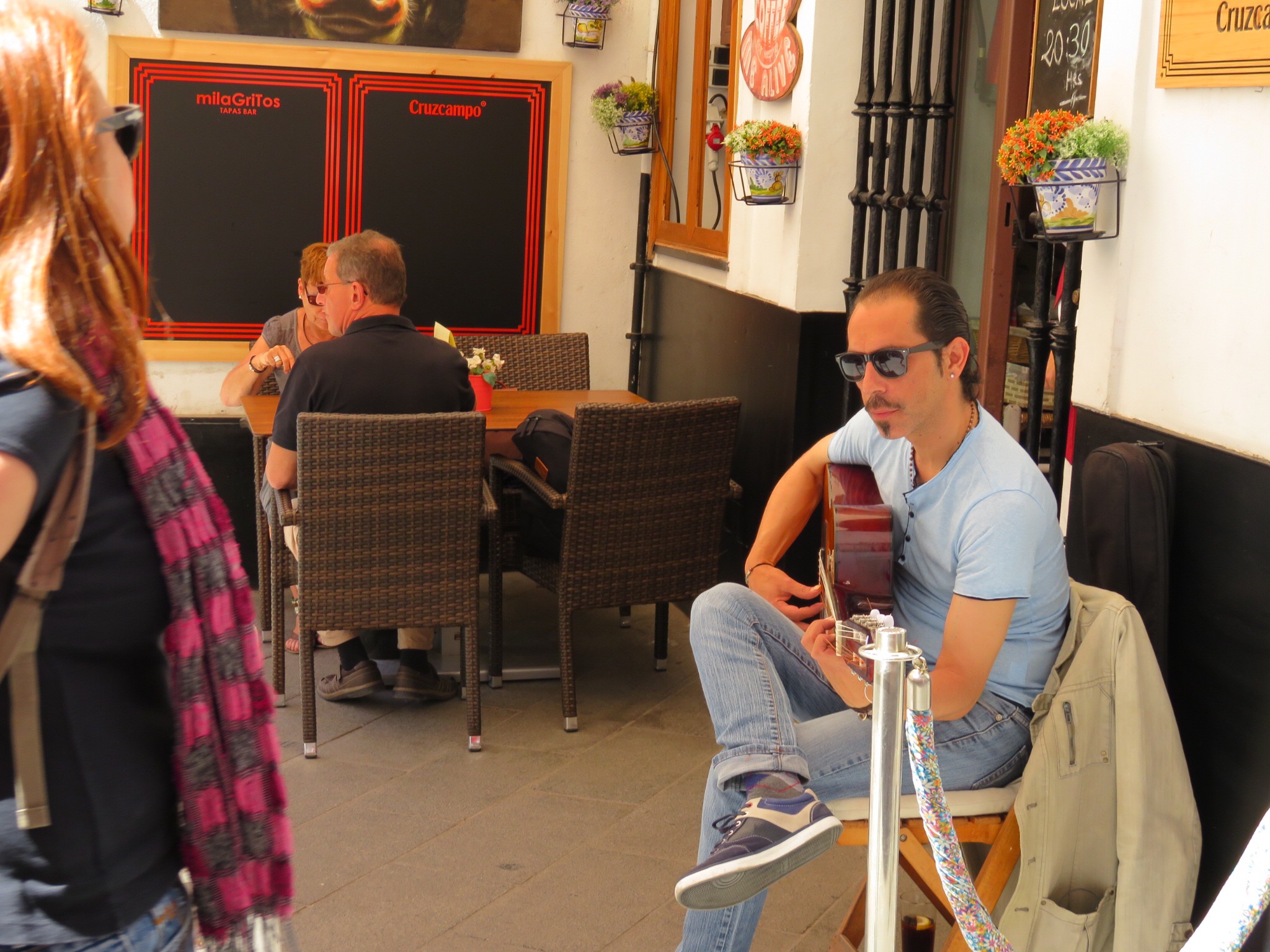
We were serenaded by Spanish guitarists.

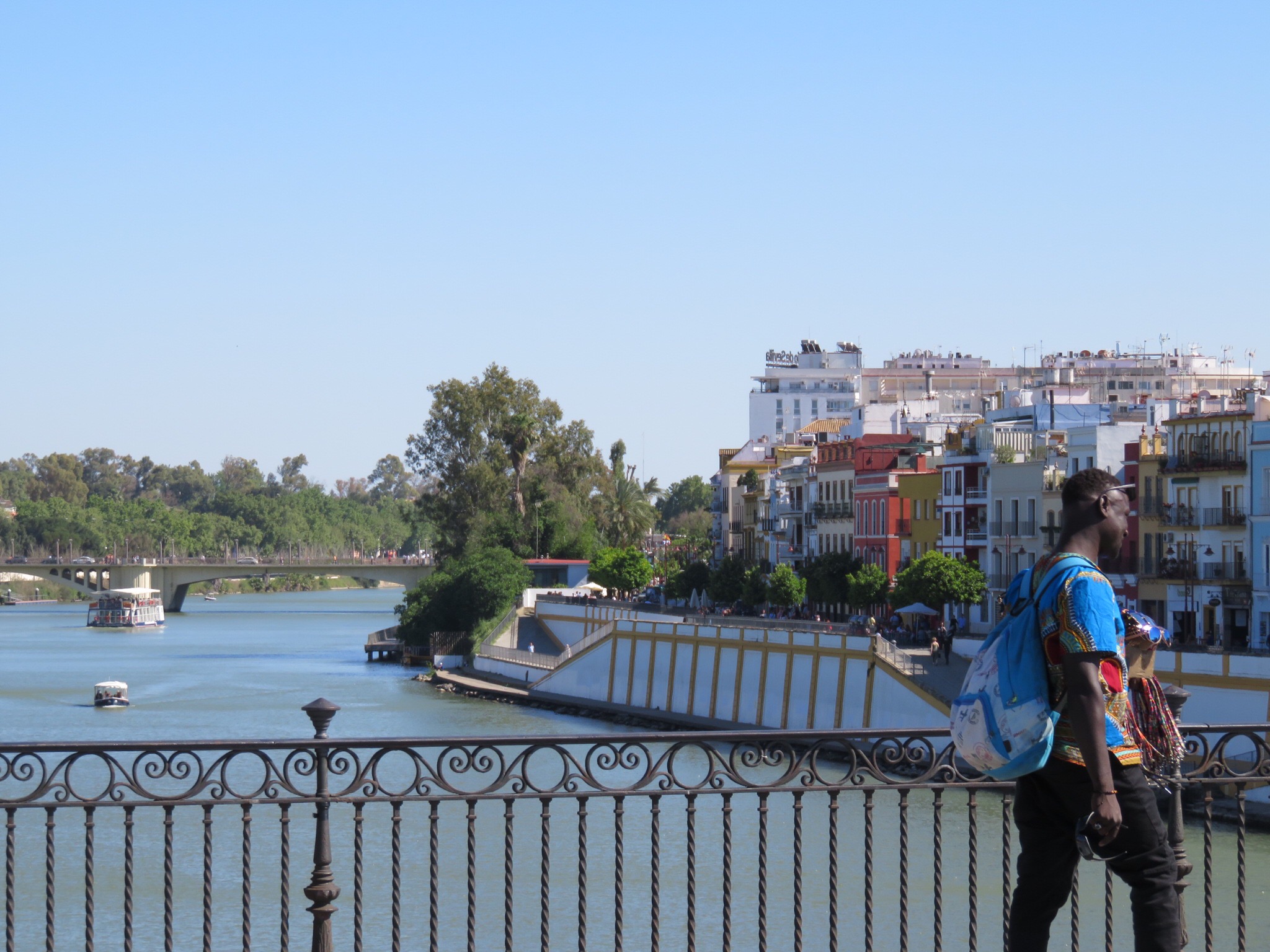
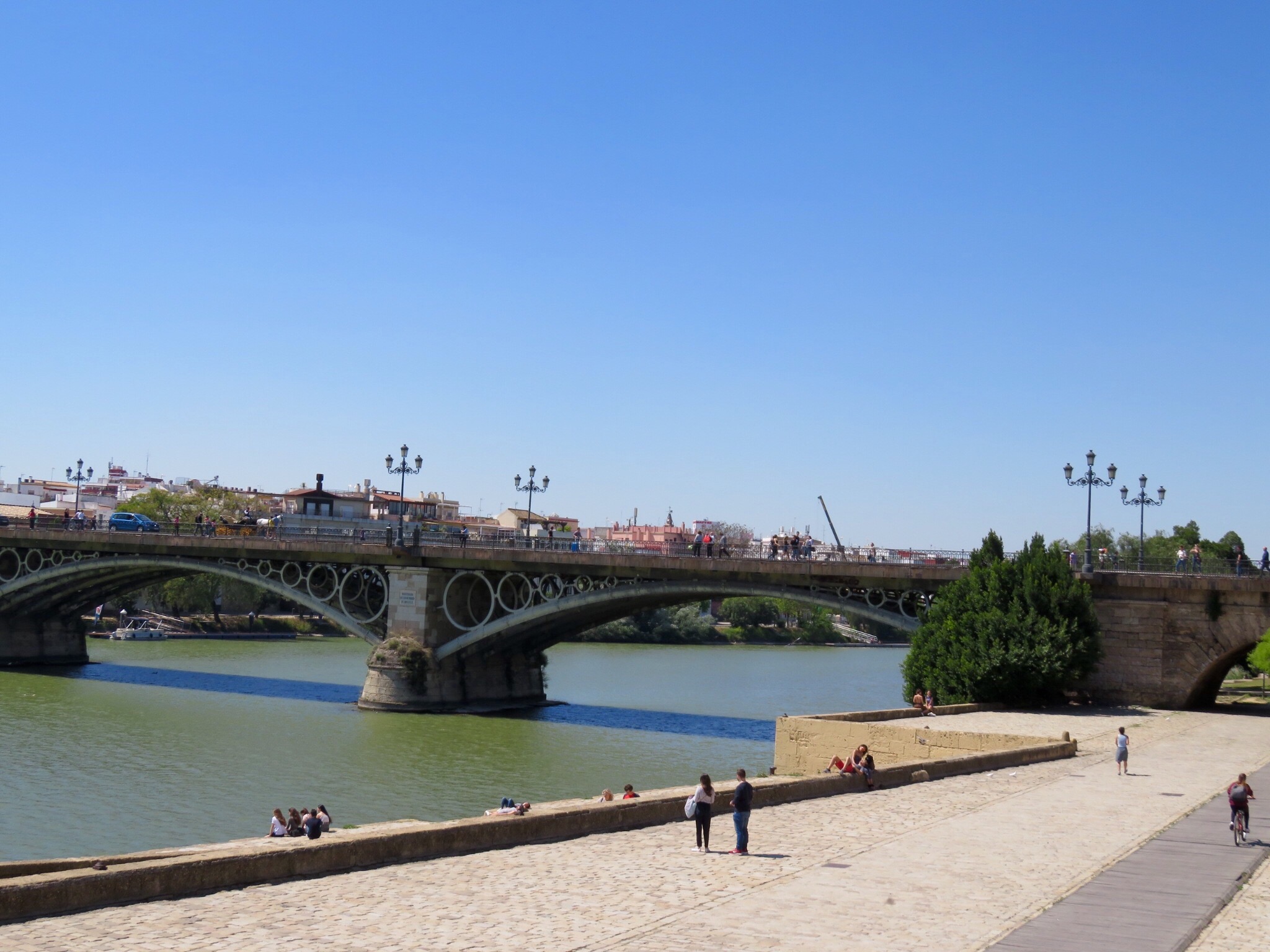
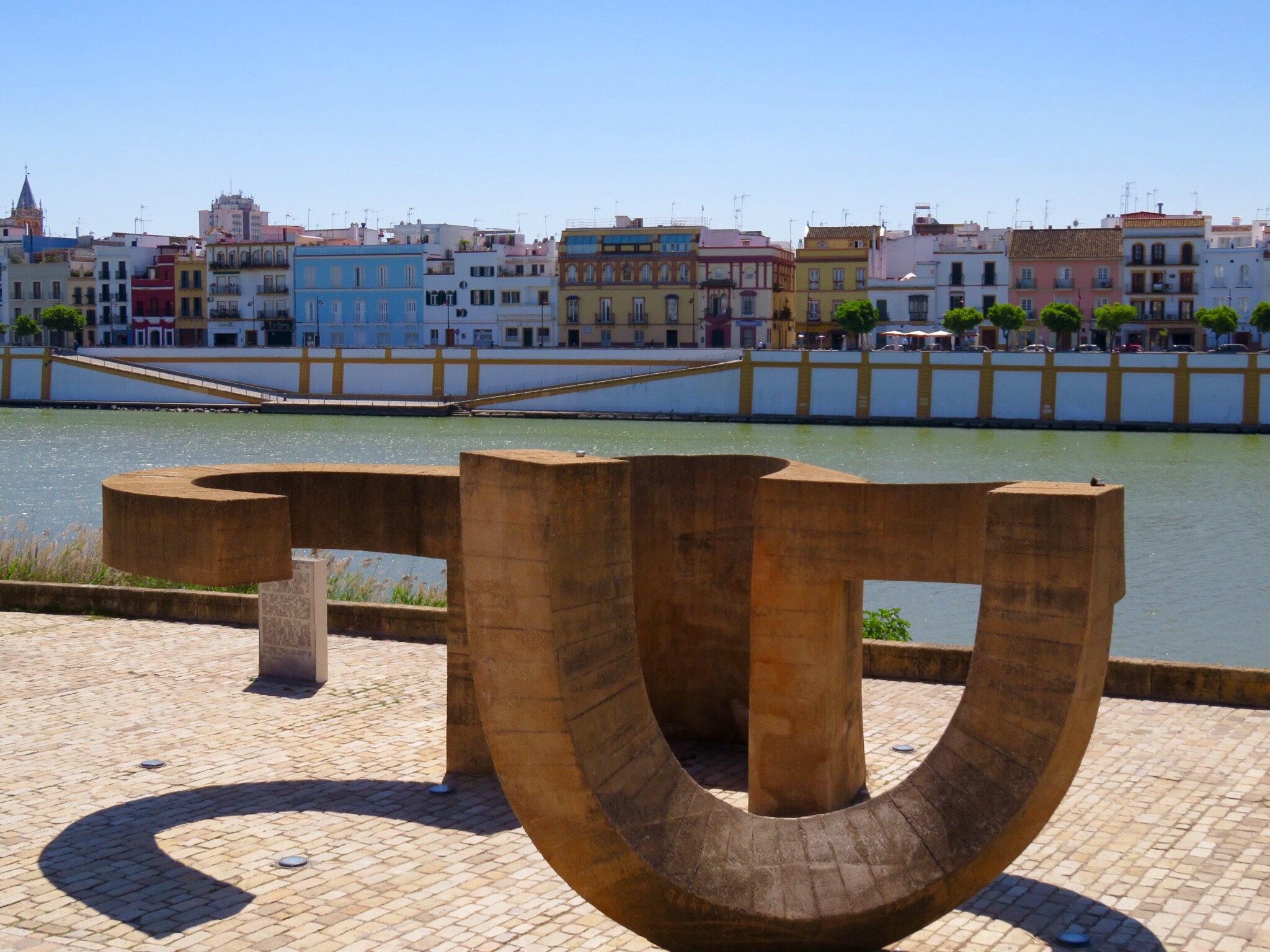
Our hotel is across the bridge in Triana, and we get to walk over the River Guadalquivir (Great Valley in Arabic) to get to the old city.

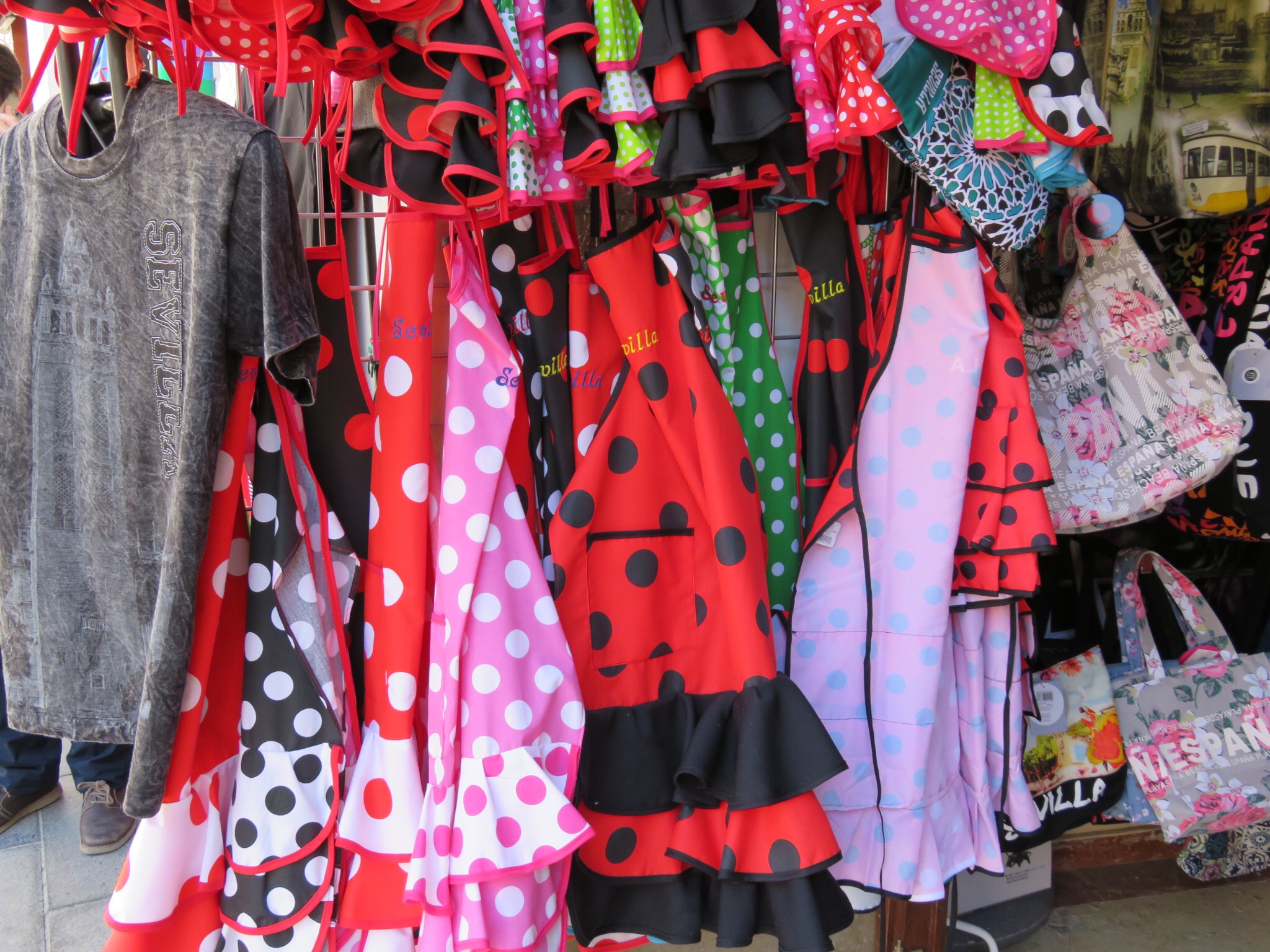
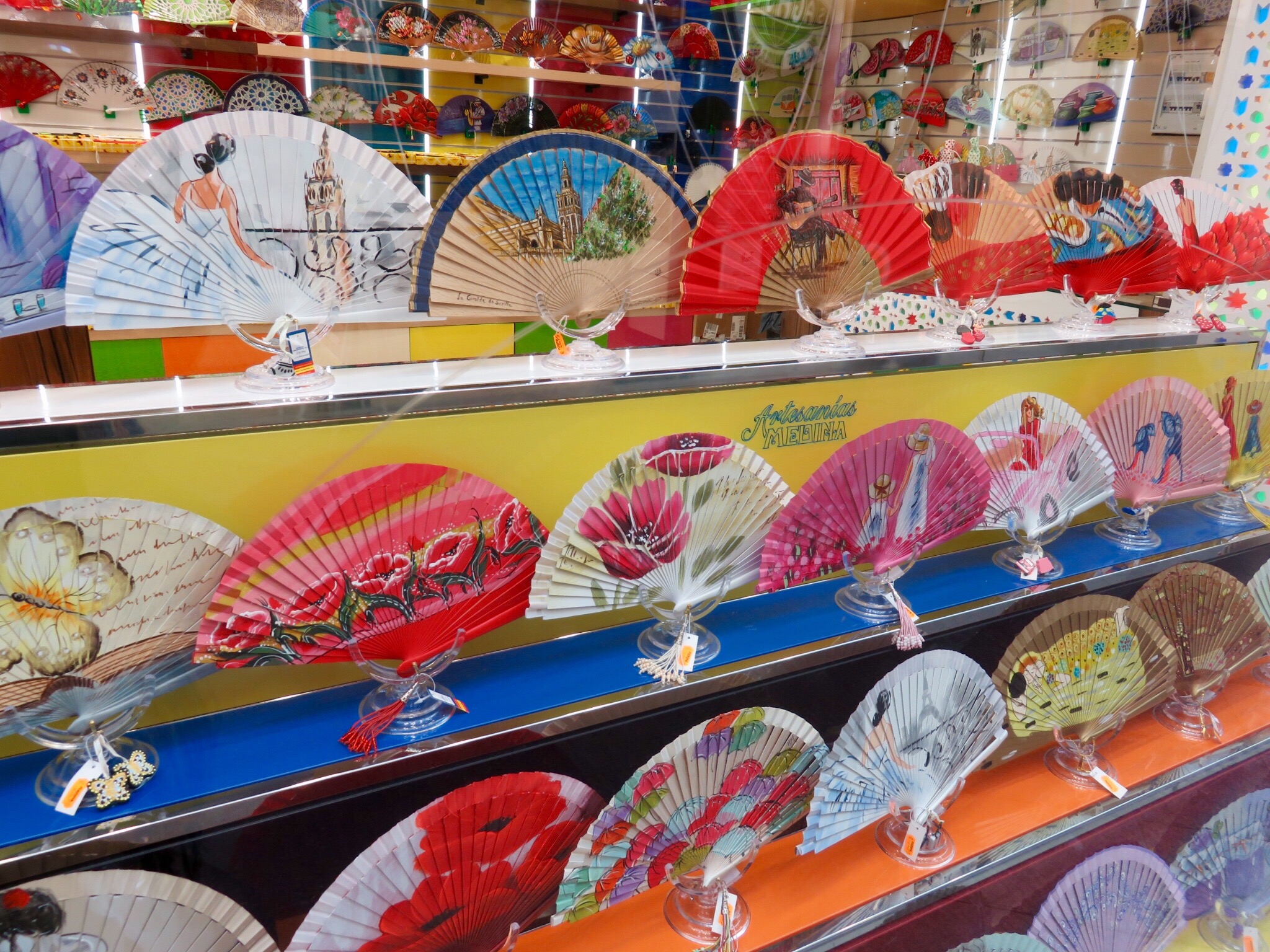
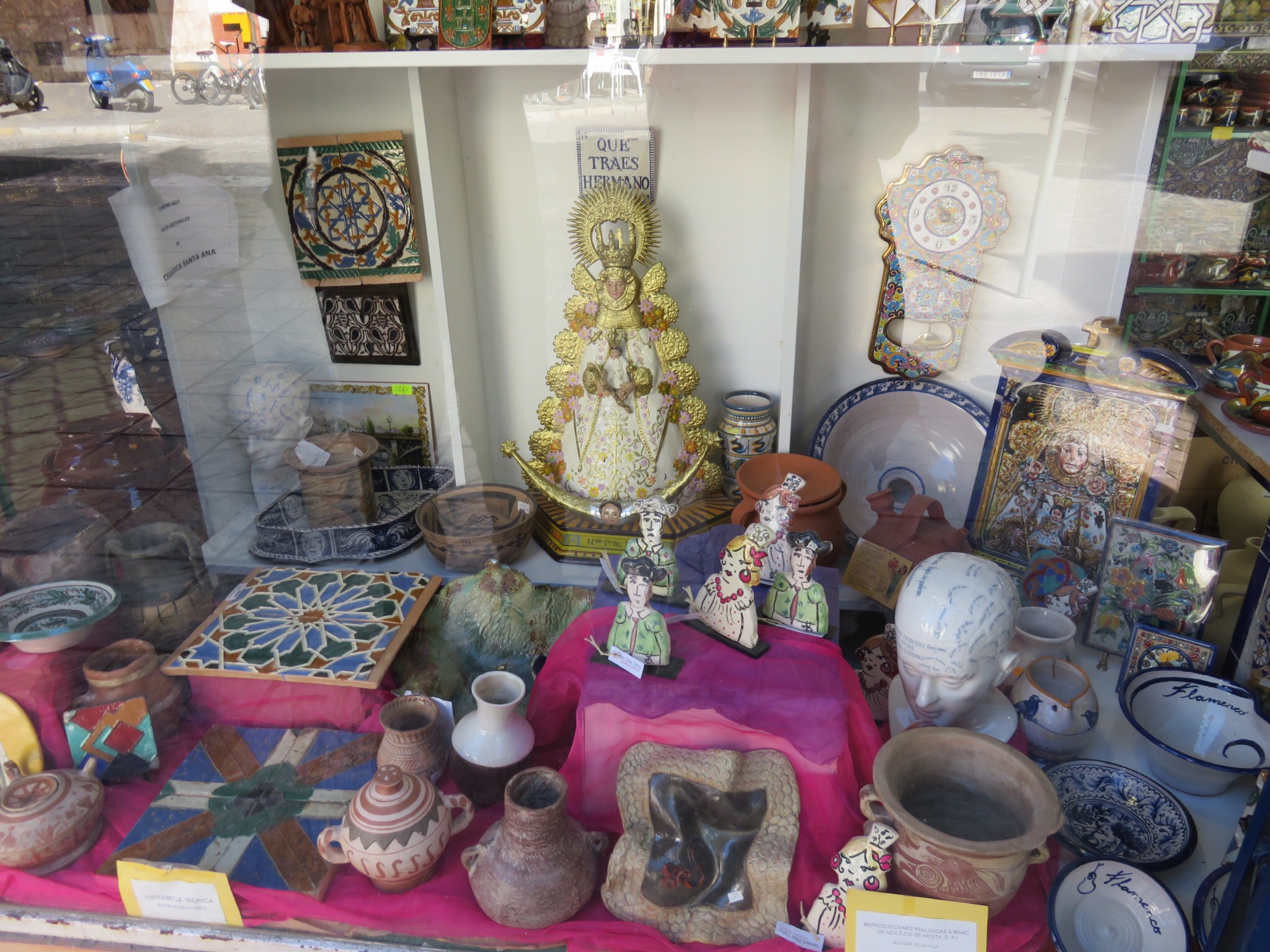
Sevilla is known as the home of Flamenco, so the tourist souvenirs run to flouncy dresses and fans, as well as ceramics.  There is a bull ring here, but no bullfights scheduled this week.  Not sure if we would go to a bullfight if one was offered.  Would you?

We are here at an exciting time, as Sevilla celebrates Easter in a big way, and we are seeing lots of preparations for tomorrow’s celebration of Palm Sunday.  Stay tuned!

On the Road Again

Apr 5 2017 – It’s time for Jim and me to get back to Spain and walk another Camino.  We left home on Wednesday with a flight plan to go through Chicago and London to Madrid.  Unfortunately, our flight from Chicago was canceled after two hours on the tarmac, due to mechanical problems.  We overnighted in a nice hotel courtesy of American Airlines, and rebooked to go to Boston, then Madrid.  When we packed for Spain, we did not foresee being out in the cold and rainy weather of Chicago and Boston.  We were so happy to get to Madrid and warm our bones!  Then we hustled through Customs to our separately booked flight to Sevilla, where we will spend four days seeing the sights and recovering from jet lag before starting our Camino.

We walked our first Camino across northern Spain in 2011, then the Camiñho Portugues in 2014, and part of the Jakobusweg in Germany last summer.  This time, we’re going to try the Via de la Plata, which runs 621 miles (1000 km) from Sevilla to Campostela de Santiago.  Come walk with us!

The guide we are using gives mileage, elevation, and suggests places to stay and eat.

Another Day in Barcelona – Gaudi and Park Güell


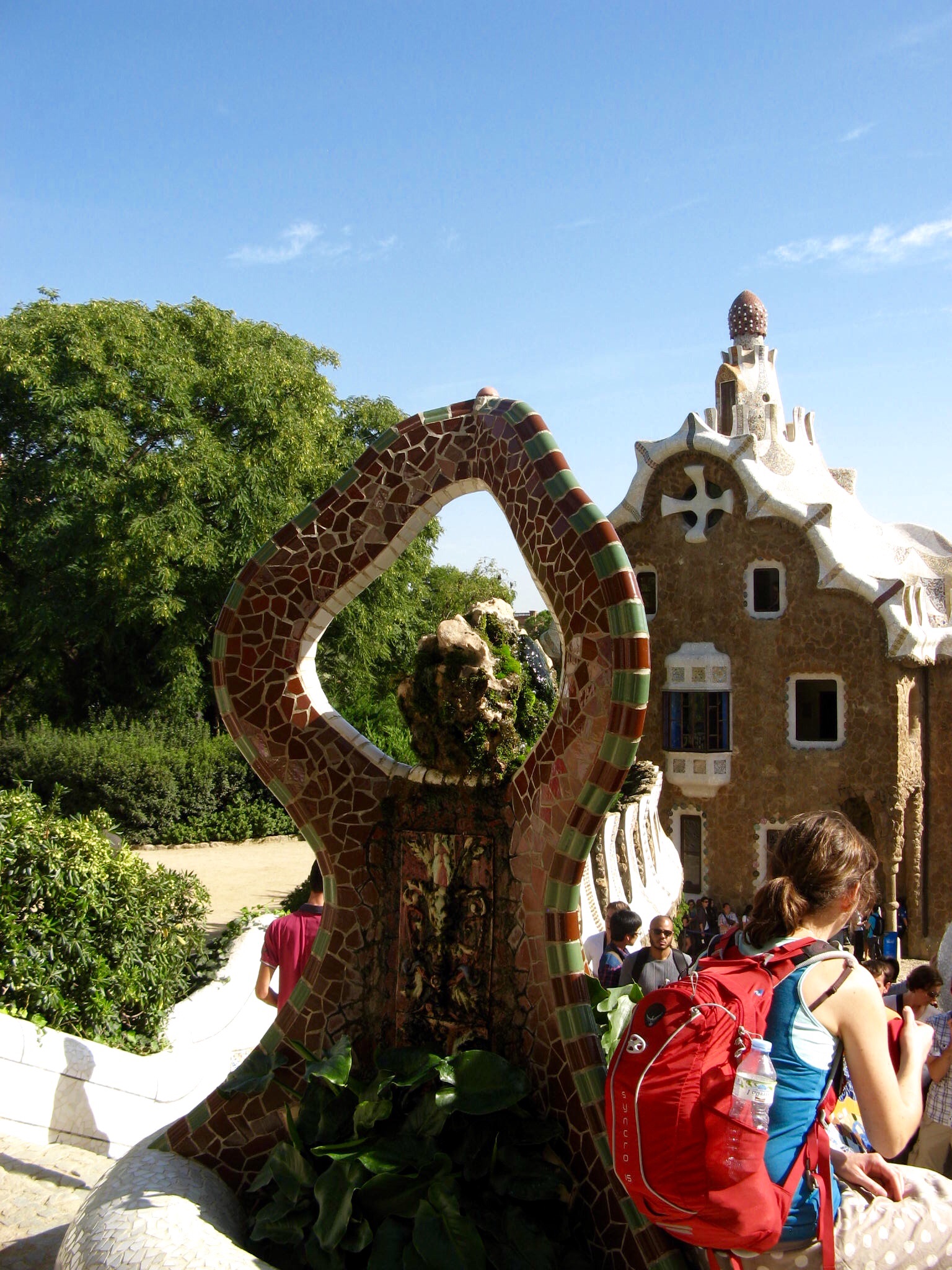
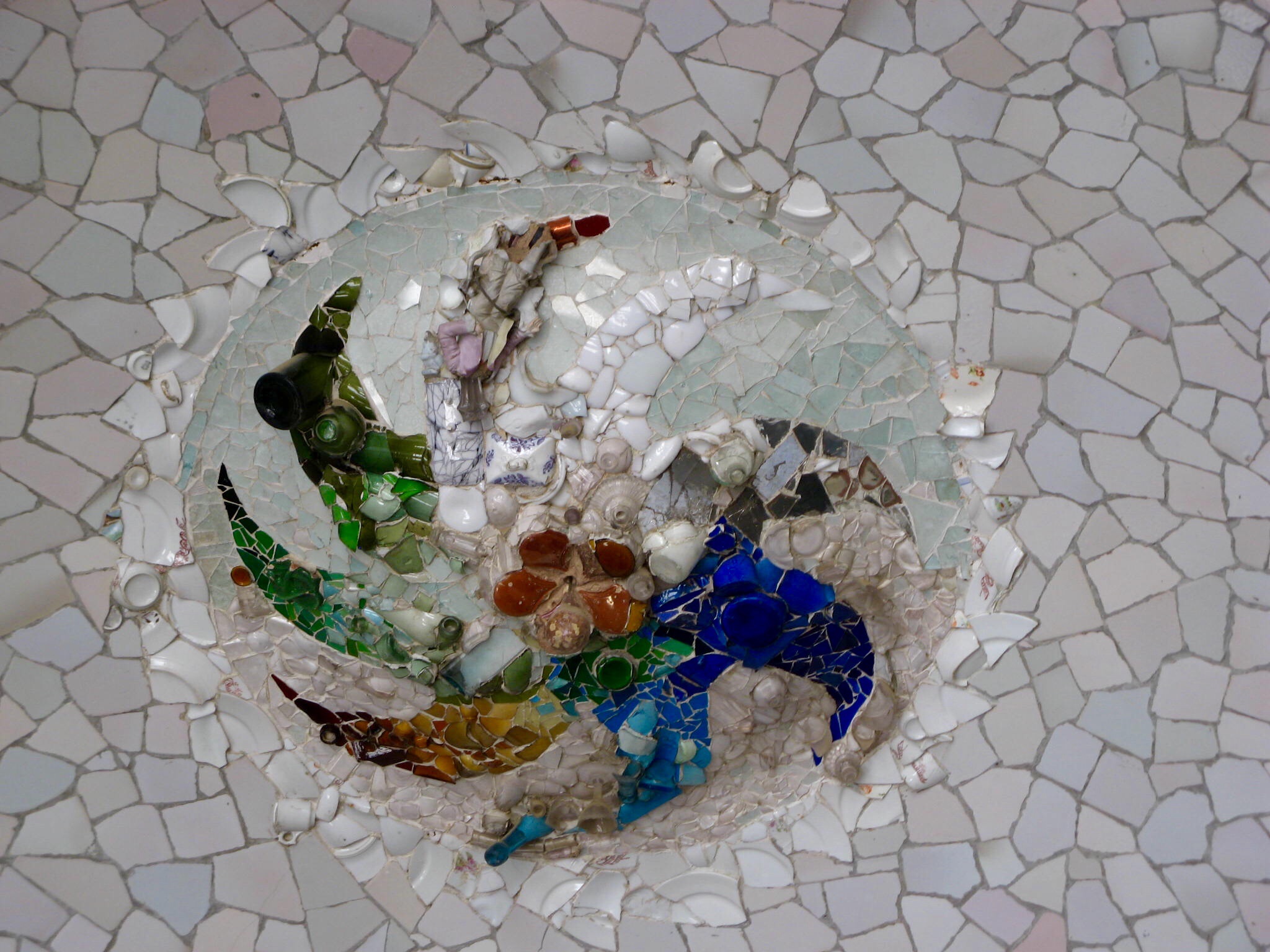
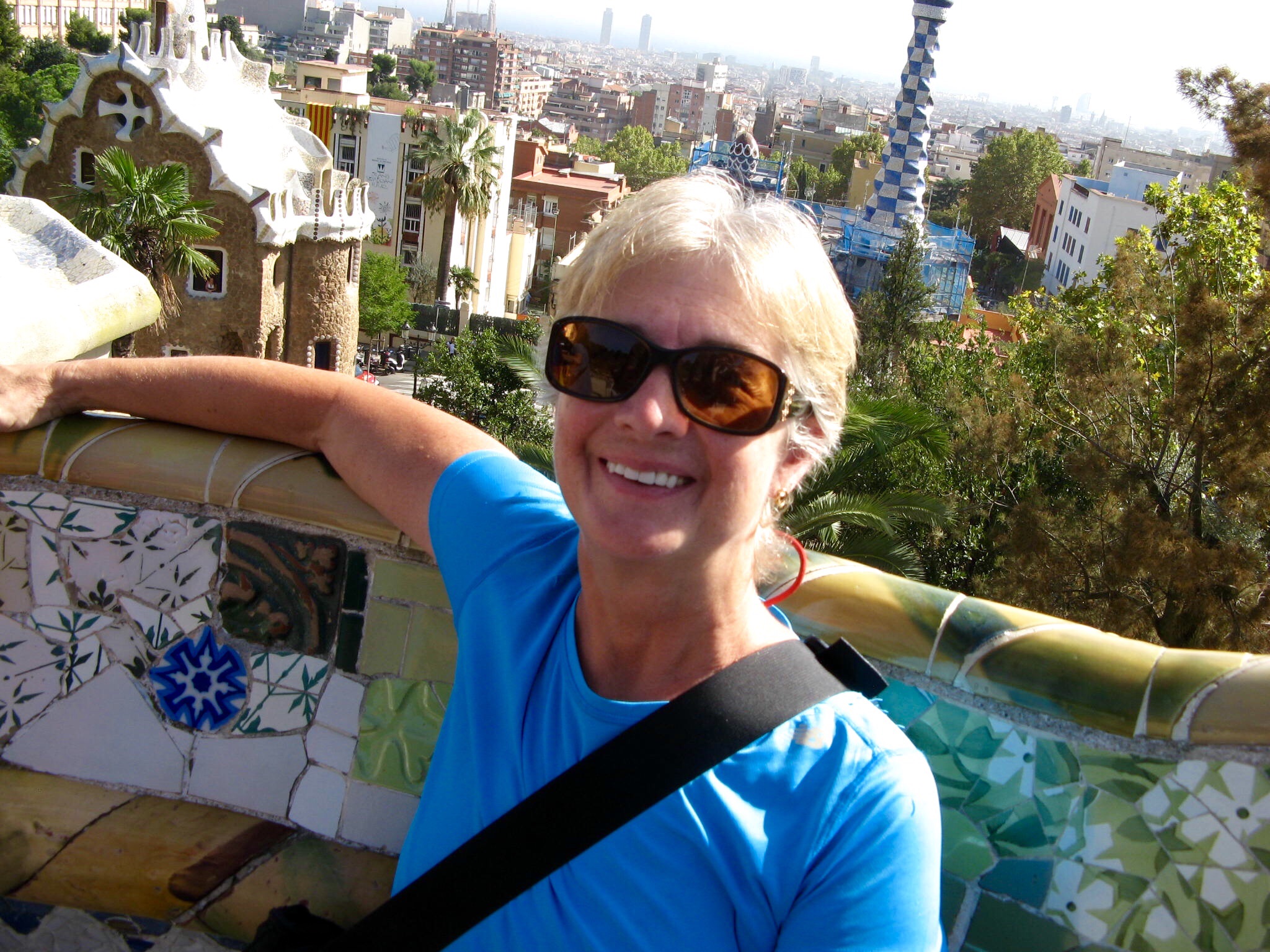
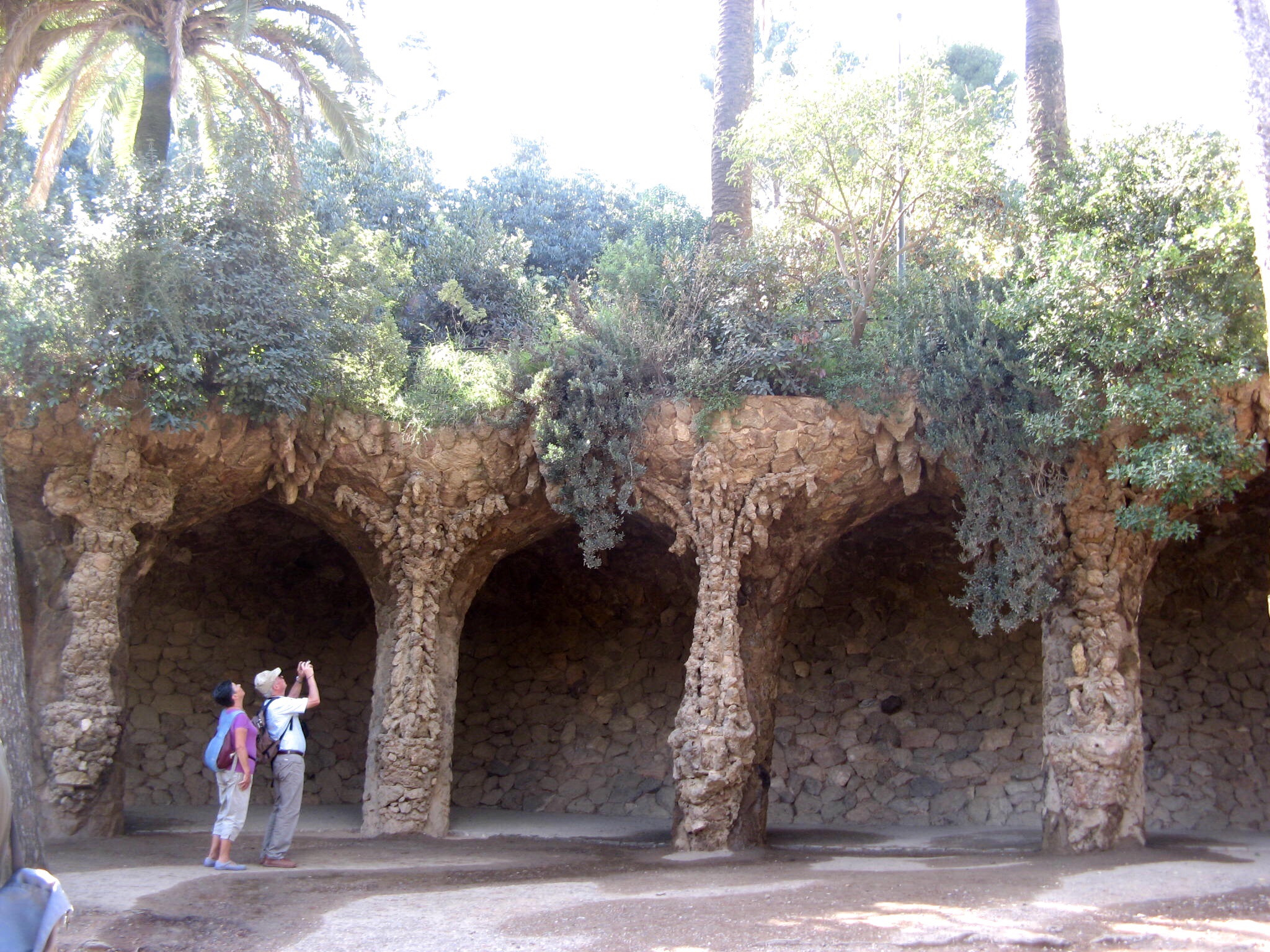
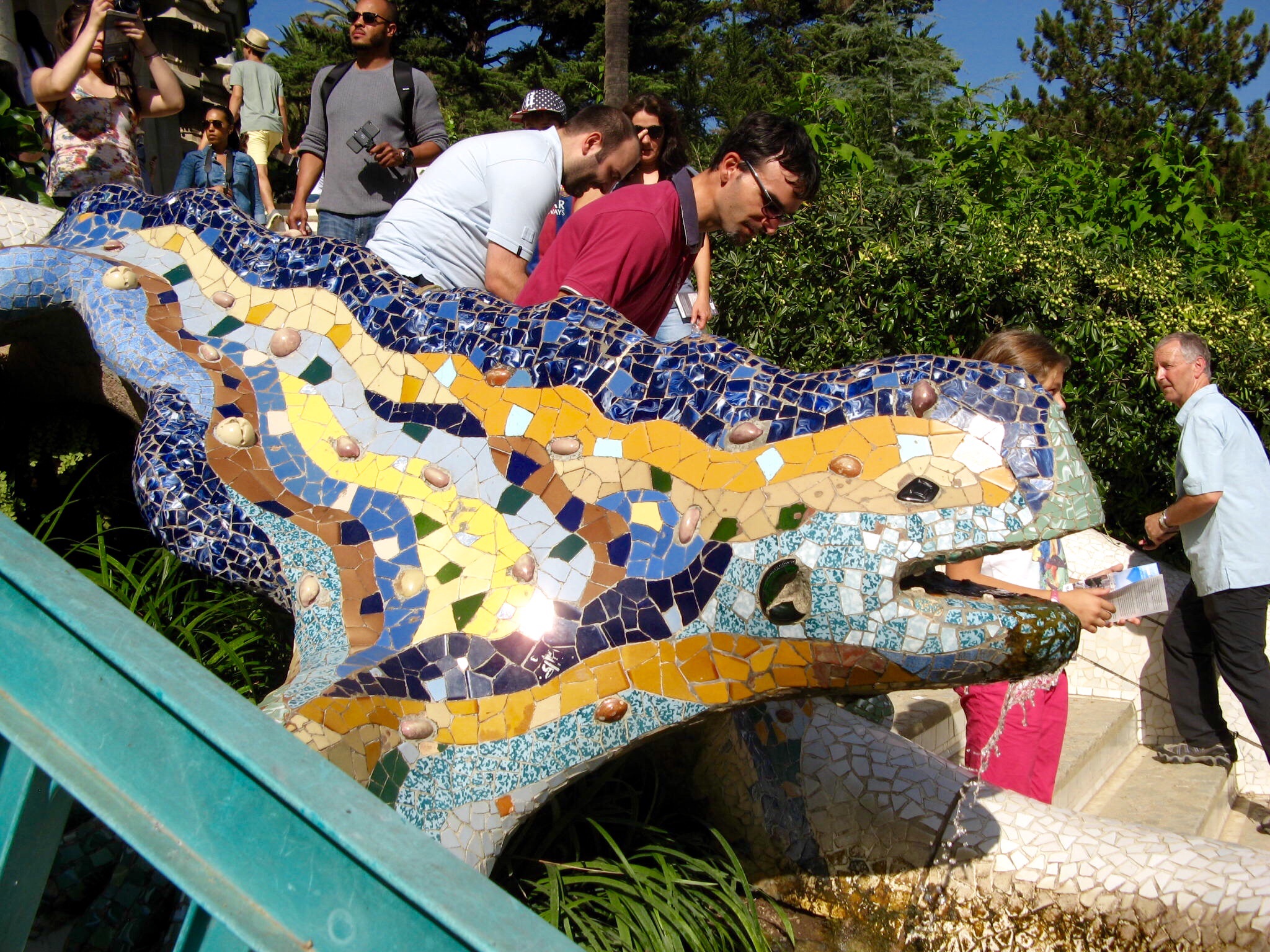
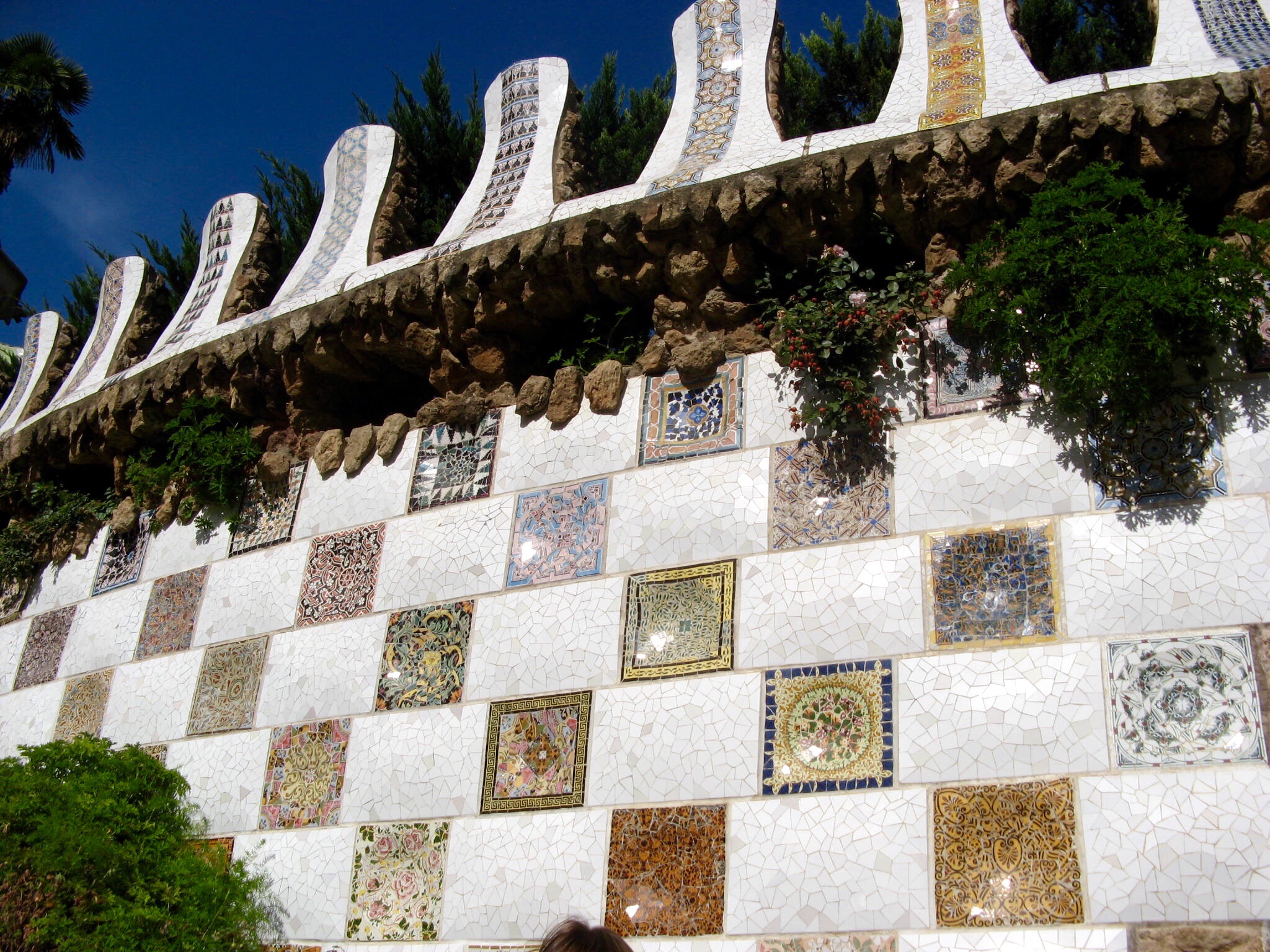
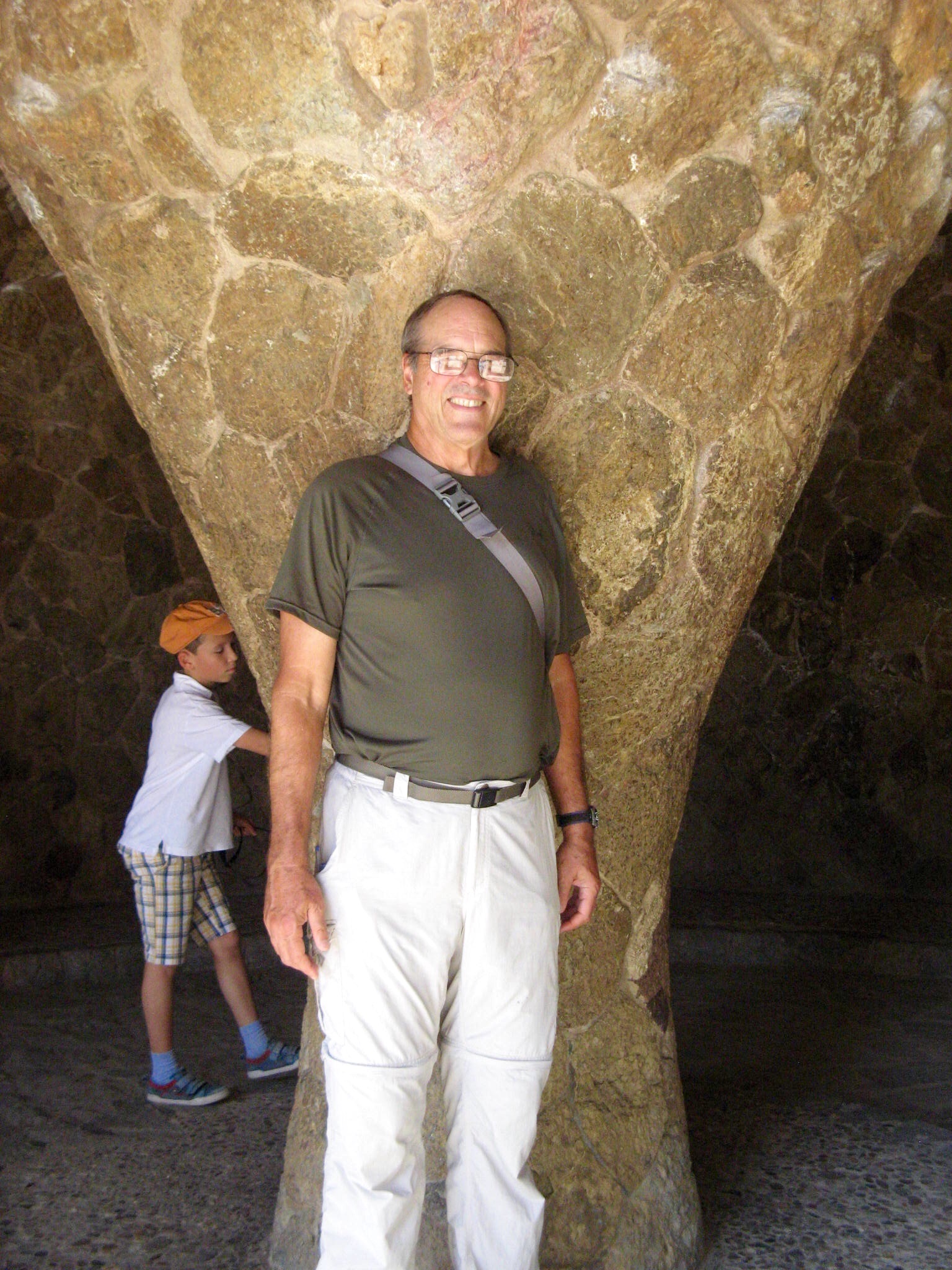
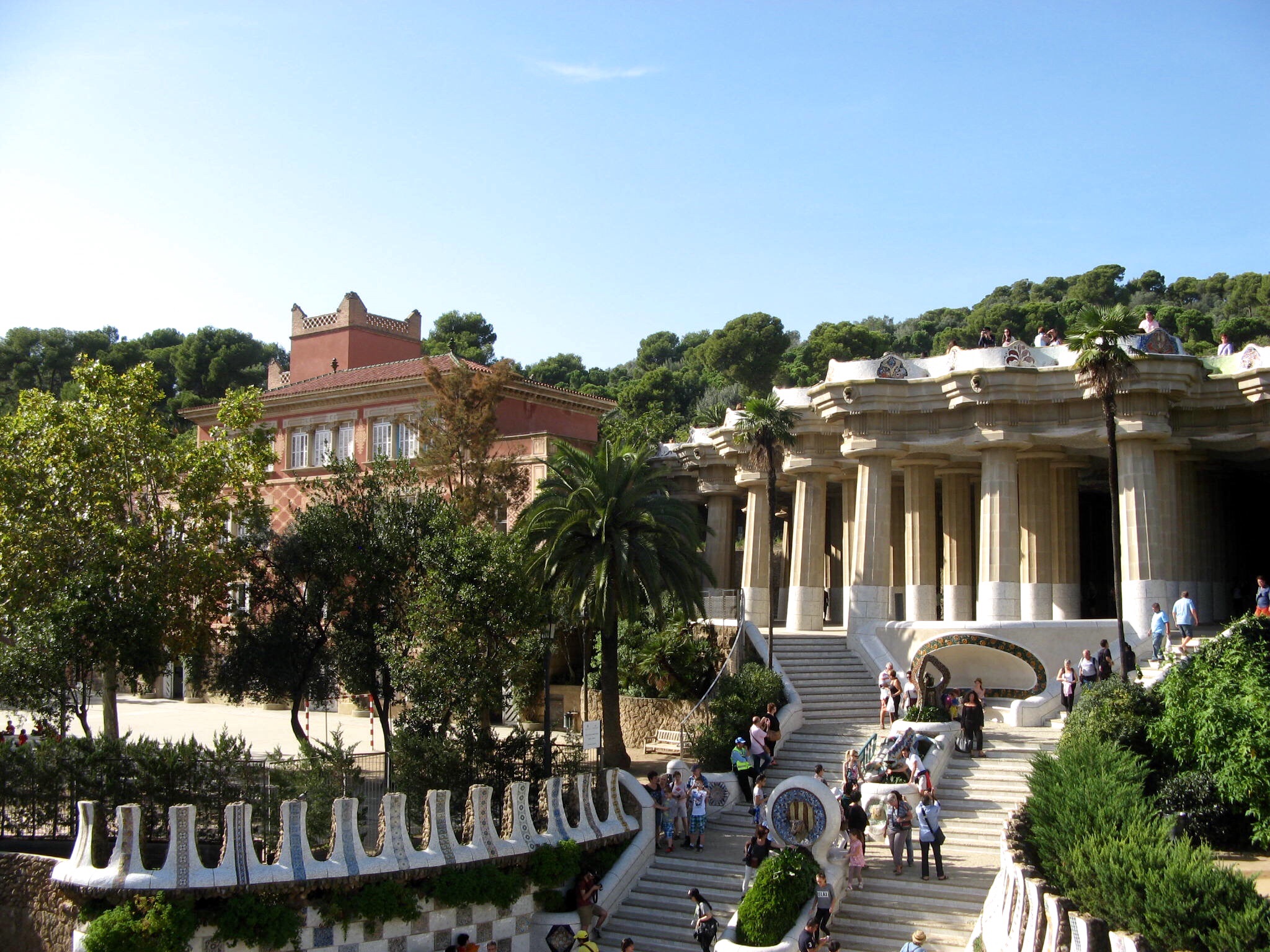
10/20 – today we dedicated ourselves to seeing Park Güell, designed by Antoni Gaudi at the turn of the last century. Gaudi’s unique architectural style looks like a cross between Willy Wonka’s Chocolate Factory, and a soft-serve ice cream cone (my architect brother-in-law Paul would probably cringe at that description). He designed with curves instead of lines and edges, and wanted buildings to look like they grew in place.

We navigated the Metro and a city bus to get to the outskirts of the city. After standing in line for 45 minutes to purchase tickets, we were the proud holders of passes that would let us enter the Monument Area in an additional 90 minutes. We used the time to stroll the paths and wooded area, where musicians played for spare change and vendors hawked trinkets and bottles of cold water:

IMG_2874.JPG

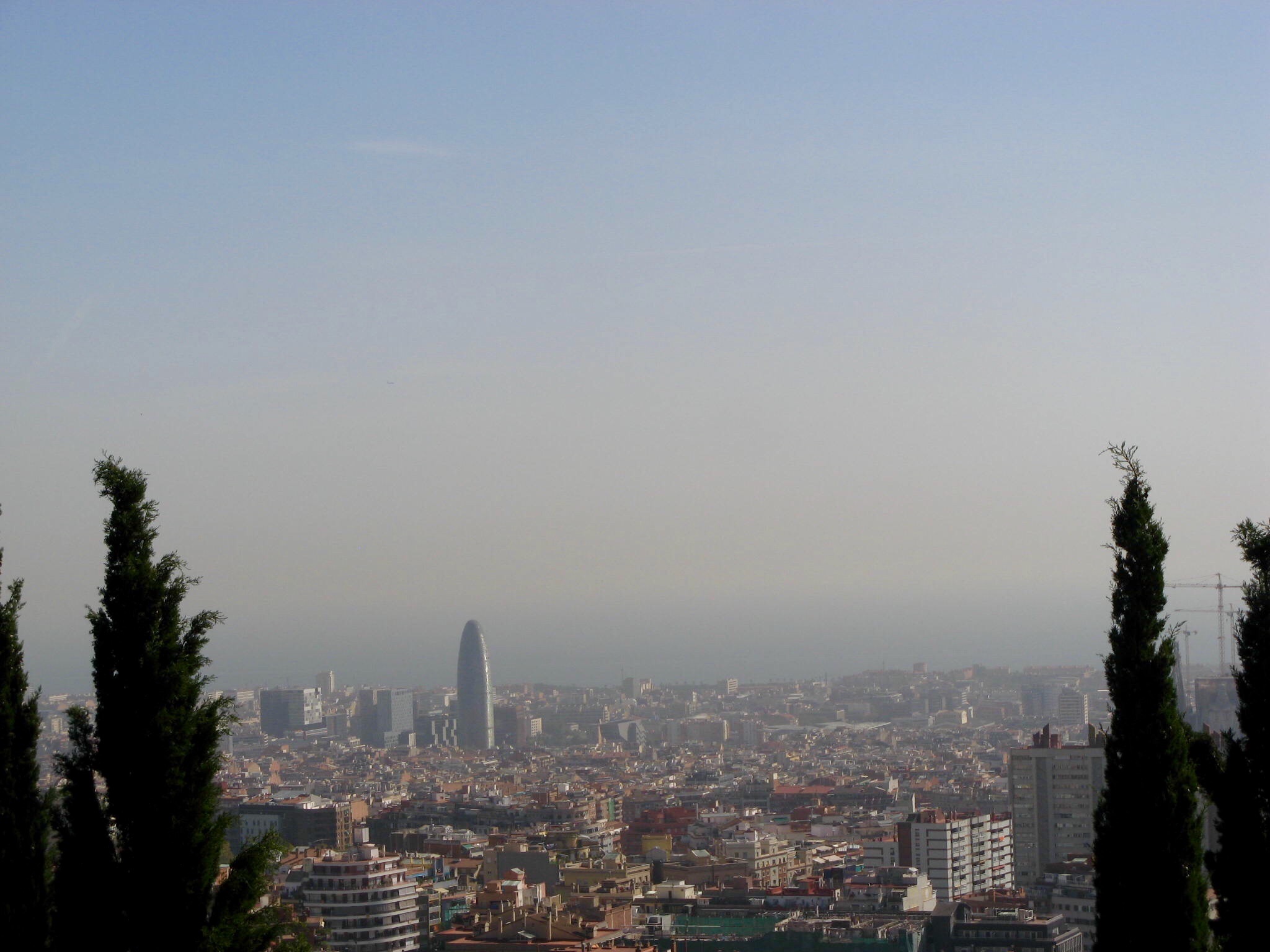
We had a nice view of the city and could make out the Mediterranean Ocean in the distance:image

The park was originally supposed to be a real estate project to provide country estates to Barcelona’s well-to-do, but the project failed, as it was too far from the city (in 1900).

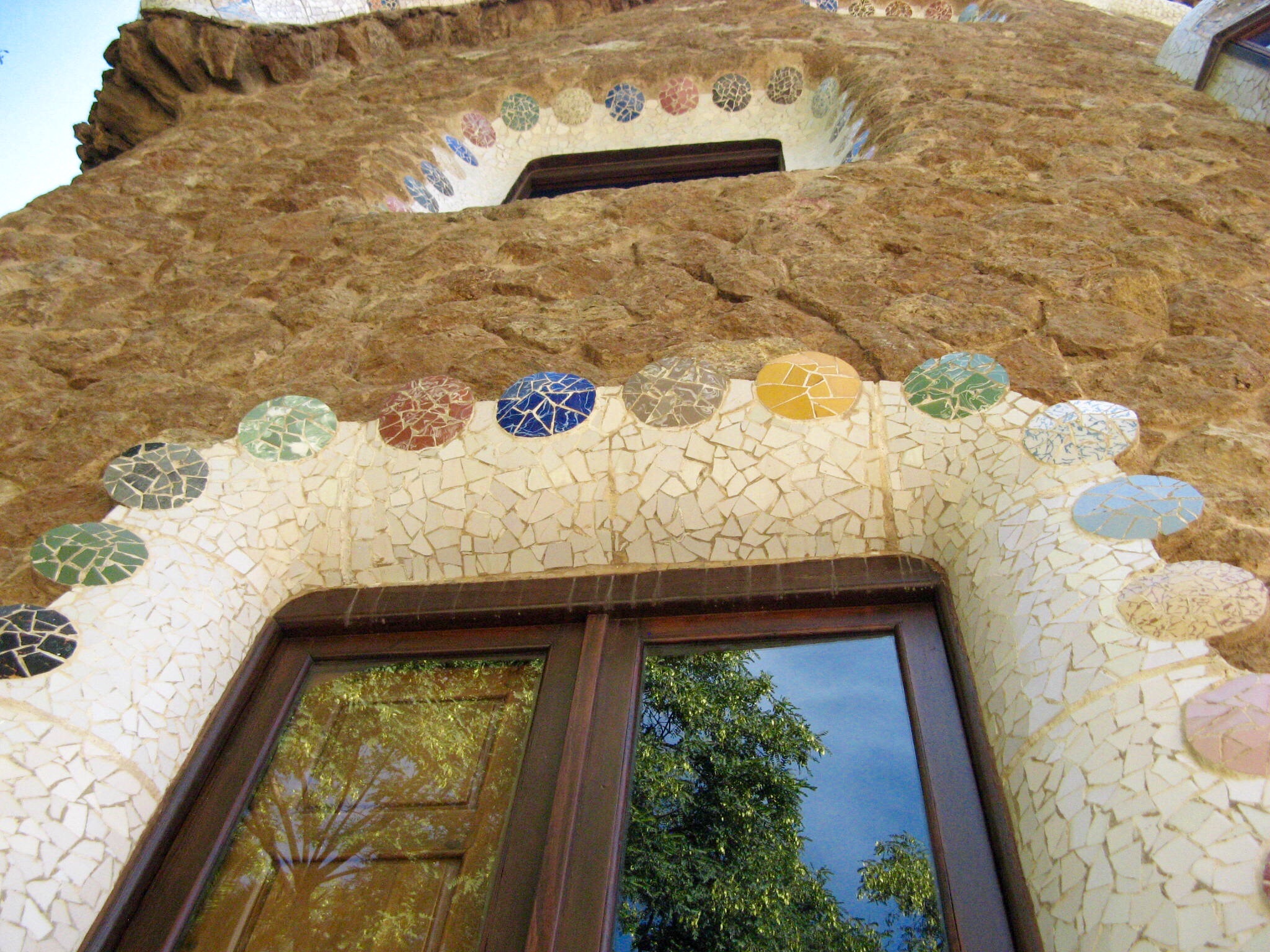
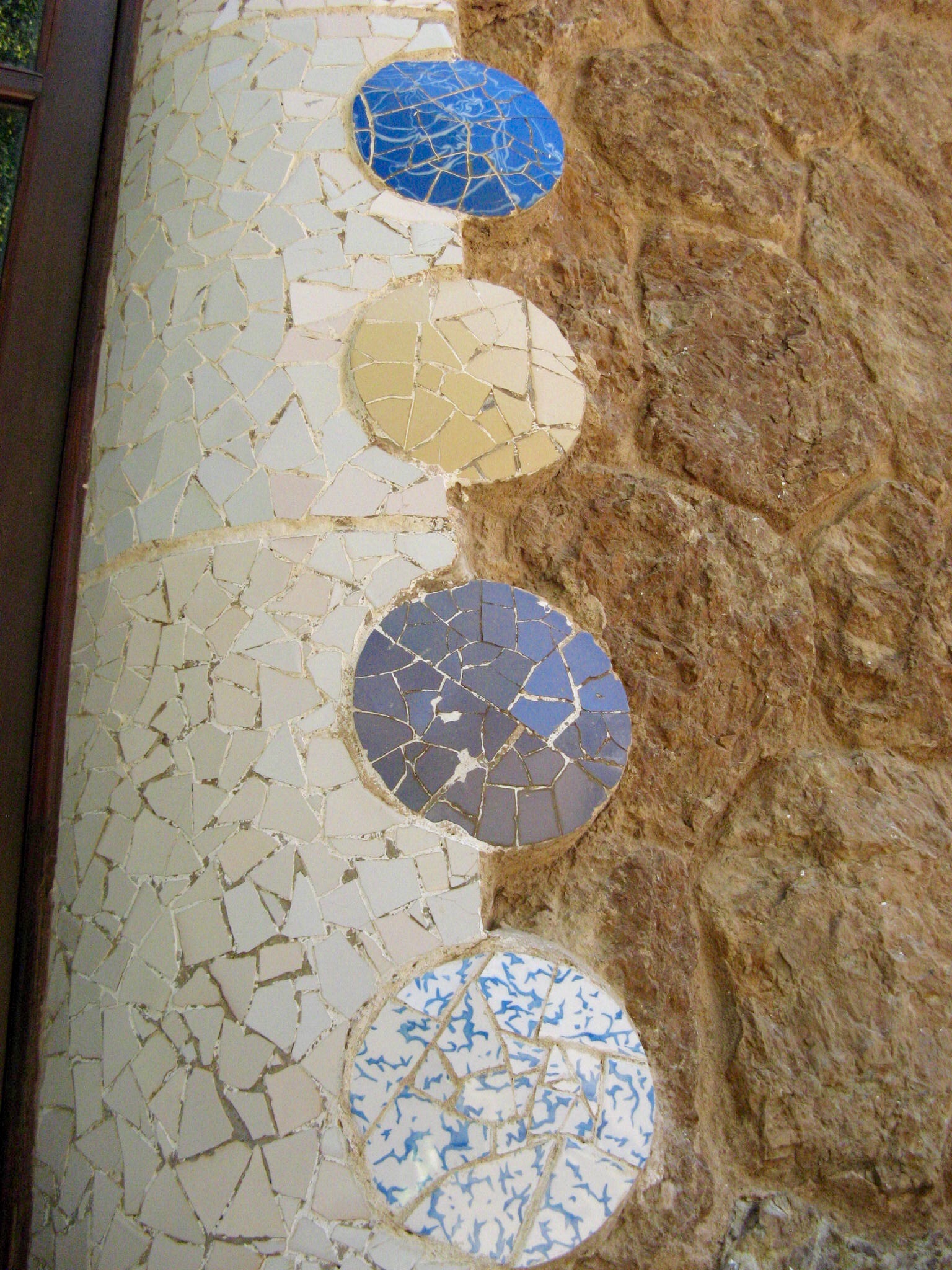
At exactly 14:30, we were permitted to enter the Monument Area, along with 398 of our closest friends. The park allows 400 people in each half hour, to prevent excessive wear on the monuments. The porter’s lodge, located at the entrance, looks like a gingerbread house, with fanciful window casings and curved ceilings inside: image

image

image

image

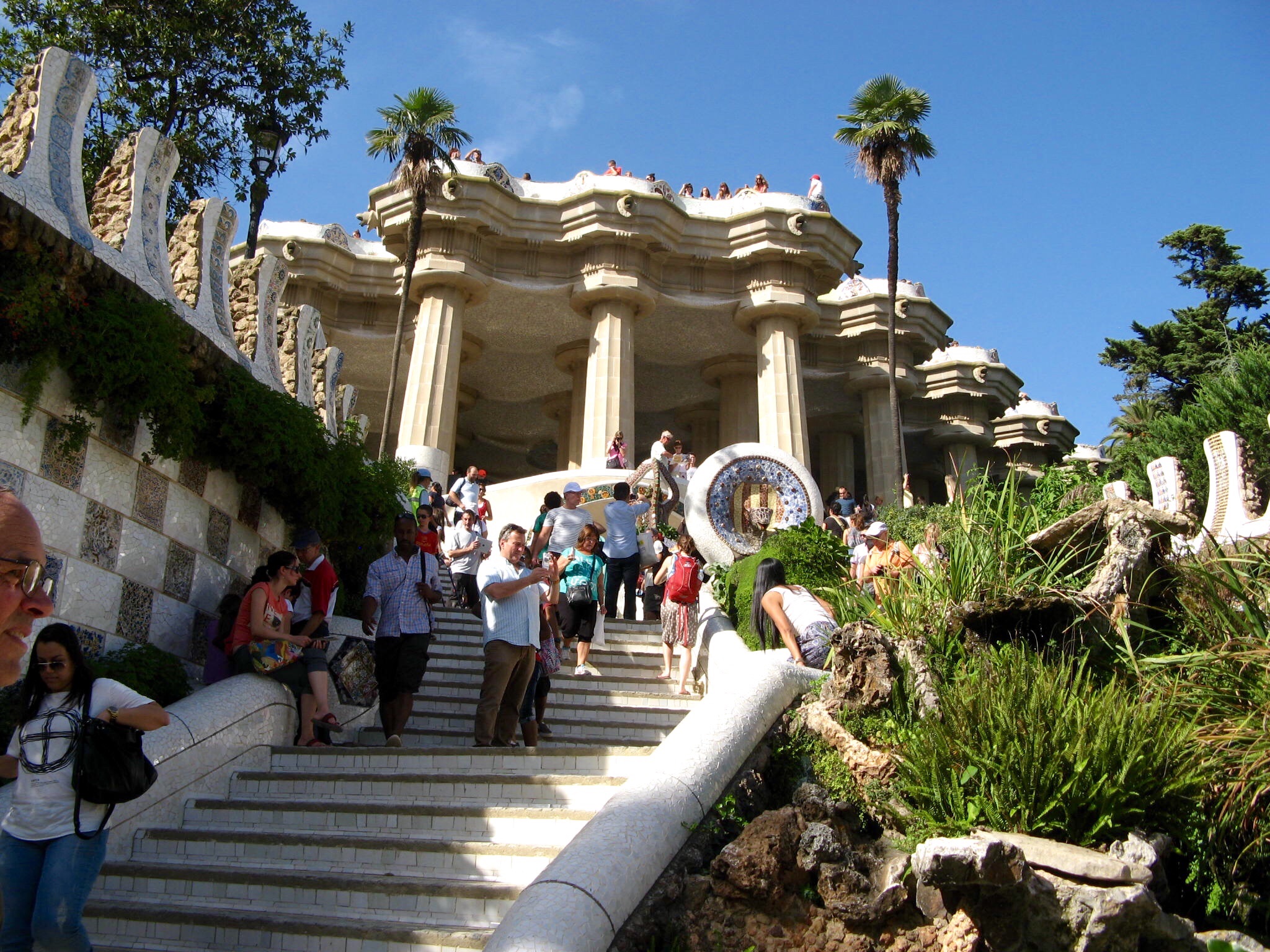
Right across from the entrance is an ornate flight of steps: image

image

image

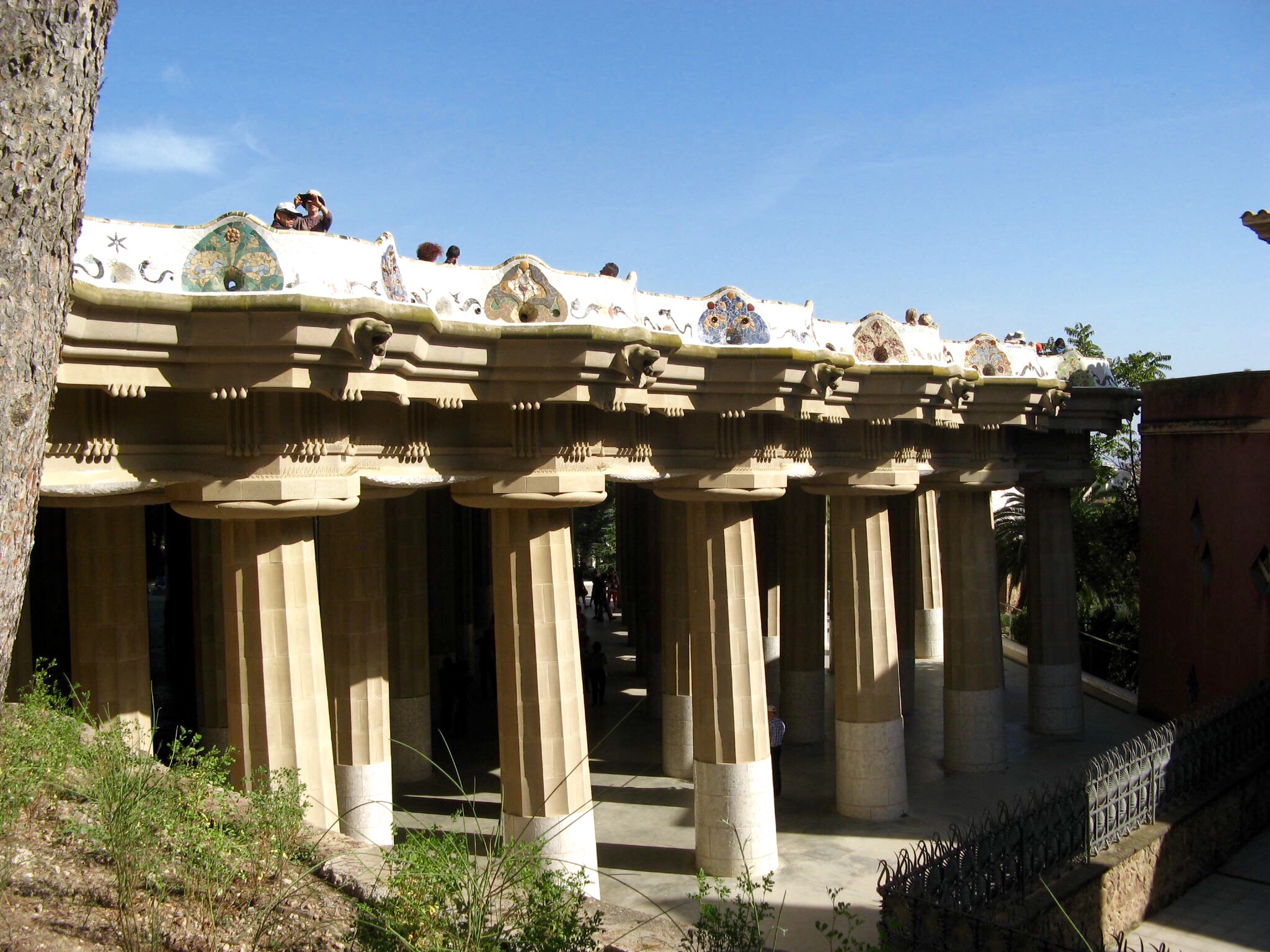
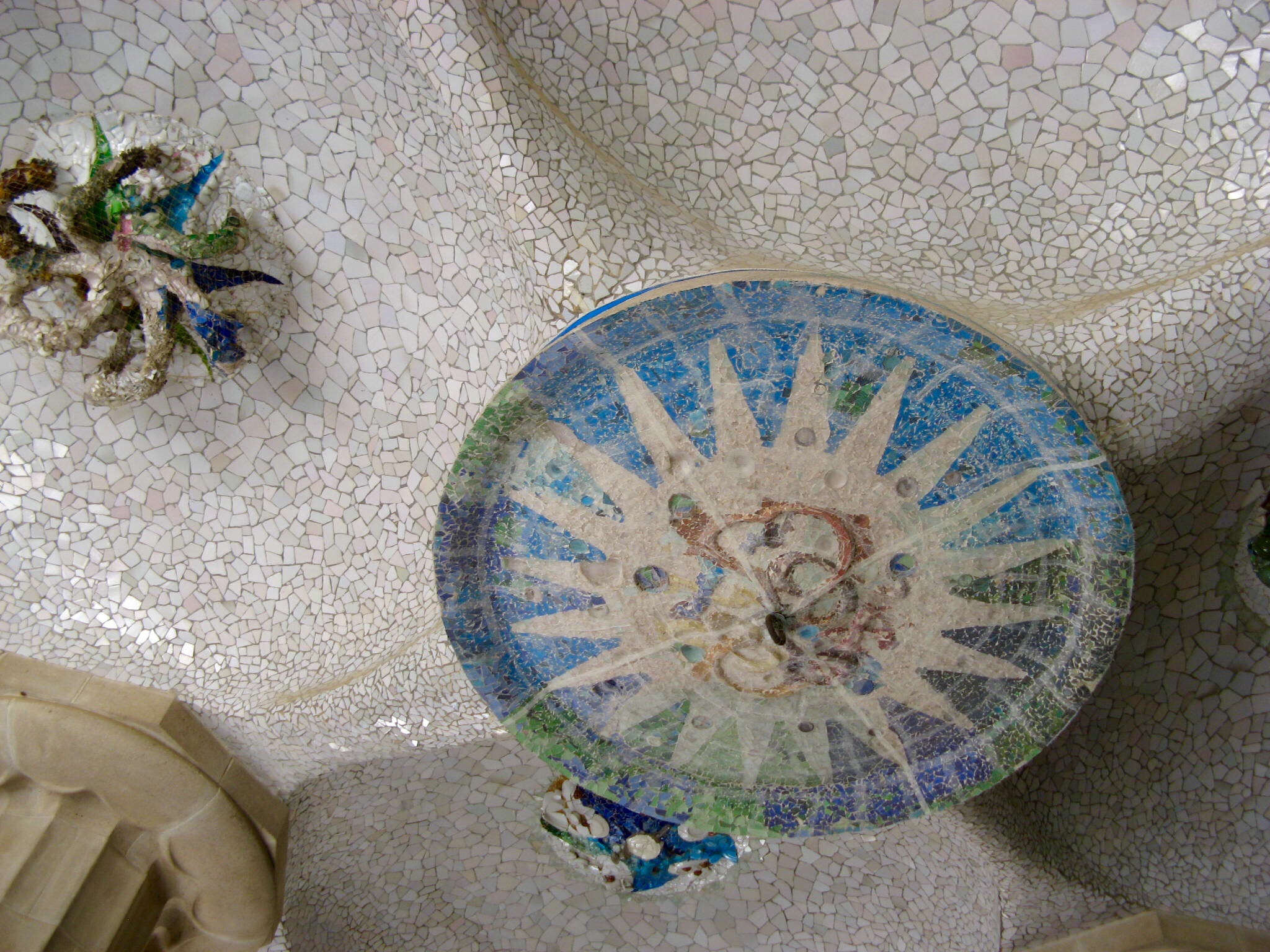
The steps lead to the hypostyle room, which is 86 columns topped by a multi-domed ceiling, originally meant to serve as an open-air market: image

image

image

I appreciated the opportunity to see Gaudi’s work up close, and we identified several more of his buildings in the city on the bus ride home. Fanciful, fun frippery!
image

image

image

image

image

image

image

It is inexhaustible

From Jim…

beinghere2014's avatarBeinghere


We took the morning bus from Finesterre to Santiago and got a room close to the train station. I hung up our clothes and looked at the rain from our window.

The next day, we took the train to Barcelona. We went to the cathedral and saw the 13 geese who live within the cathedral walls. I heard that no one knows how the geese arrived and that it was miraculous that there were 13 of them. This may be incorrect. We overheard a tour guide say that there were originally 13 doves but the doves flew away.The number 13 corresponds with the age at martyrdom of the patron Saint Eulalia. The Romans put her in a knife studded barrel and rolled her down the street. Apparently this was one of 13 tortures that she experienced for refusing to reject Christianity in the year 303.We went into the cathedral, moving…

View original post 582 more words