Category Archives: Hiking

Kyoto, Japan to Tanabe, Japan – the Kumano Kodo

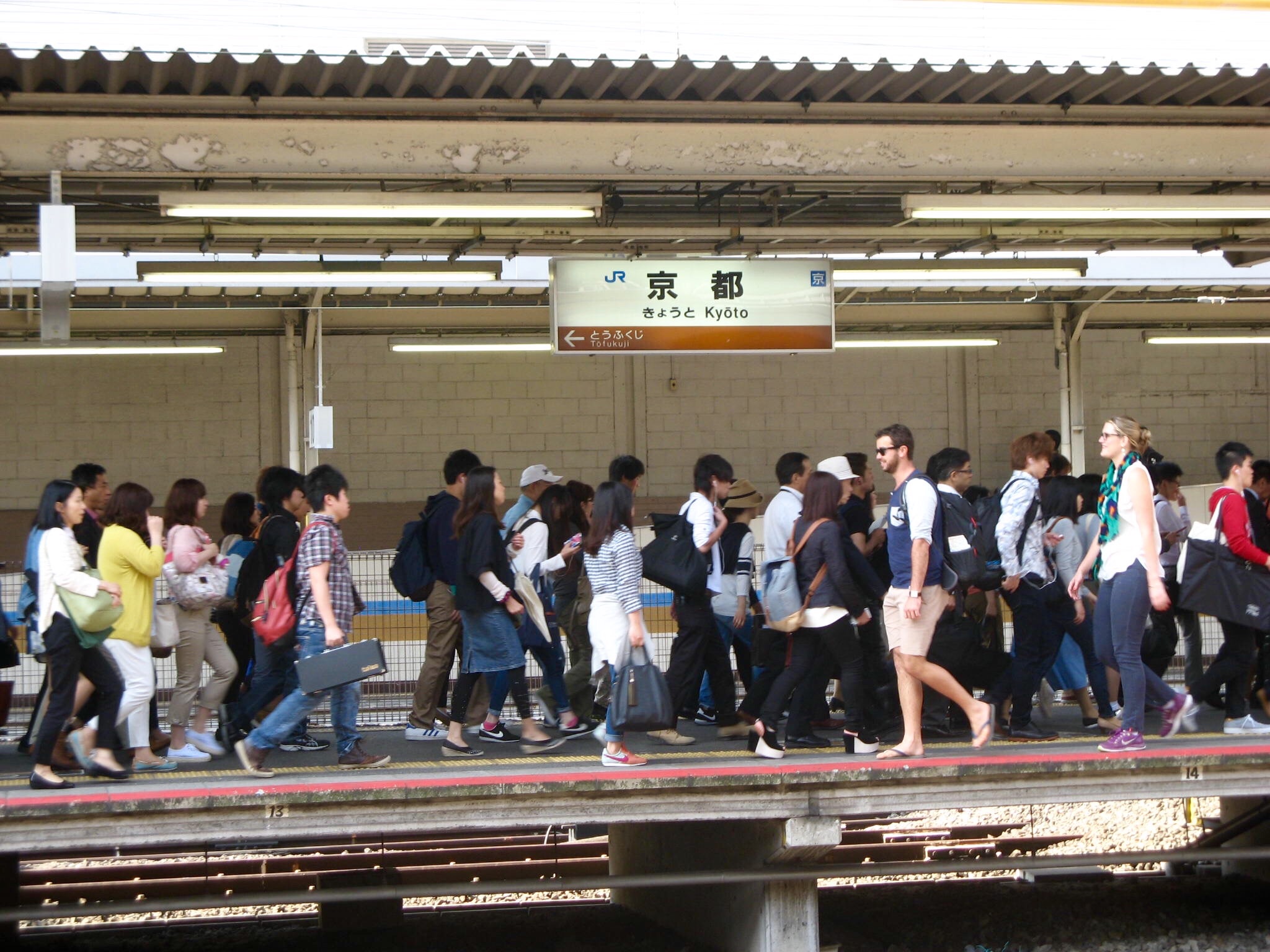
5/13 – Got an early start this morning to catch the 8:36 train to Kii-Tanabe. The Kyoto train station was busy on a weekday morning. image
image

When our train was called, everyone lined up in two rows, just like it said on the sign. The Japanese are an orderly people. I felt badly for the businessmen, dressed in their identical black suits and white shirts. With the glum looks on their faces, it was easy to imagine they were all on their way to an undertakers convention!

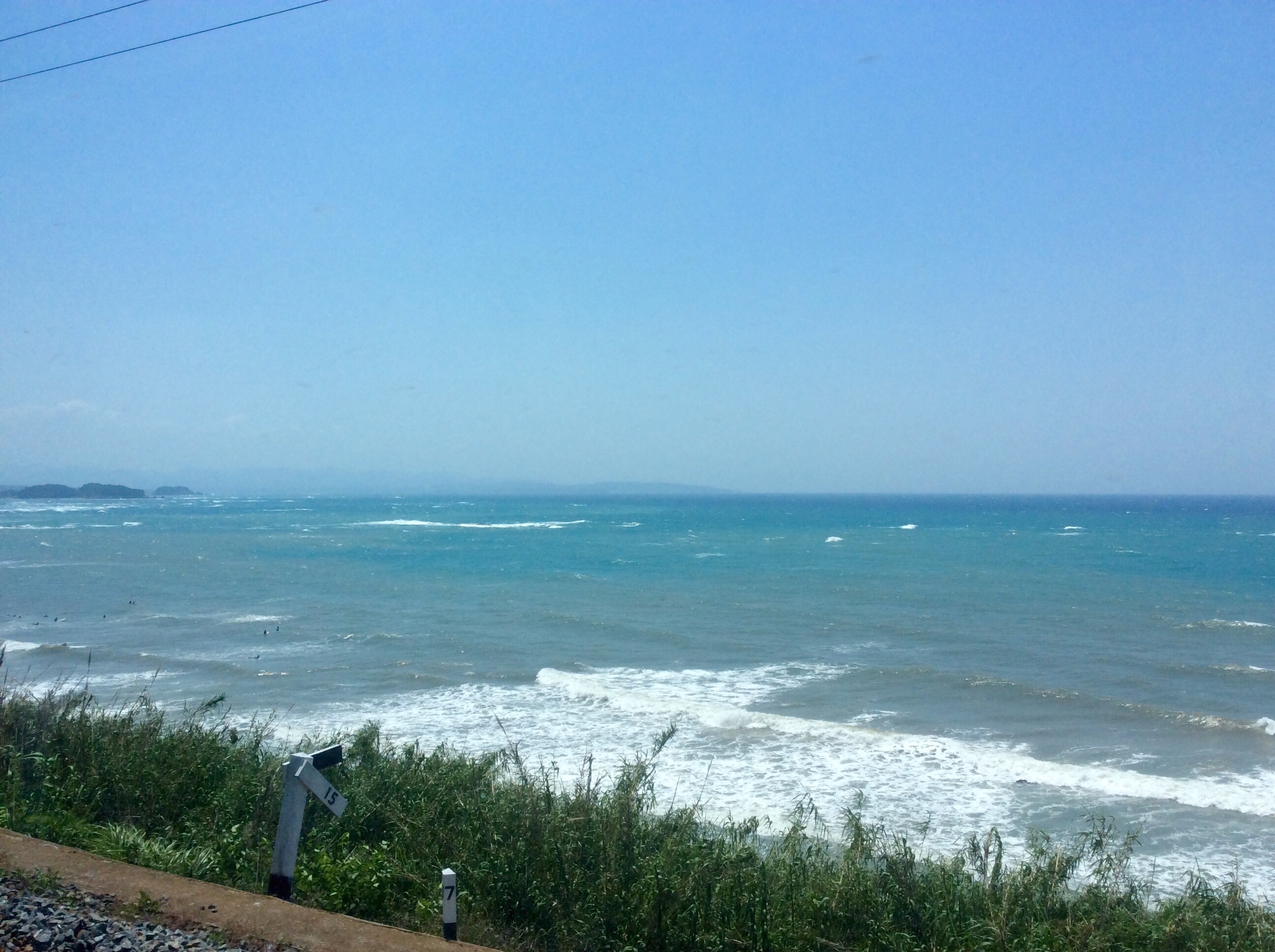
We passed some beautiful beaches on the way, with swimmers and surfers.image
image

image

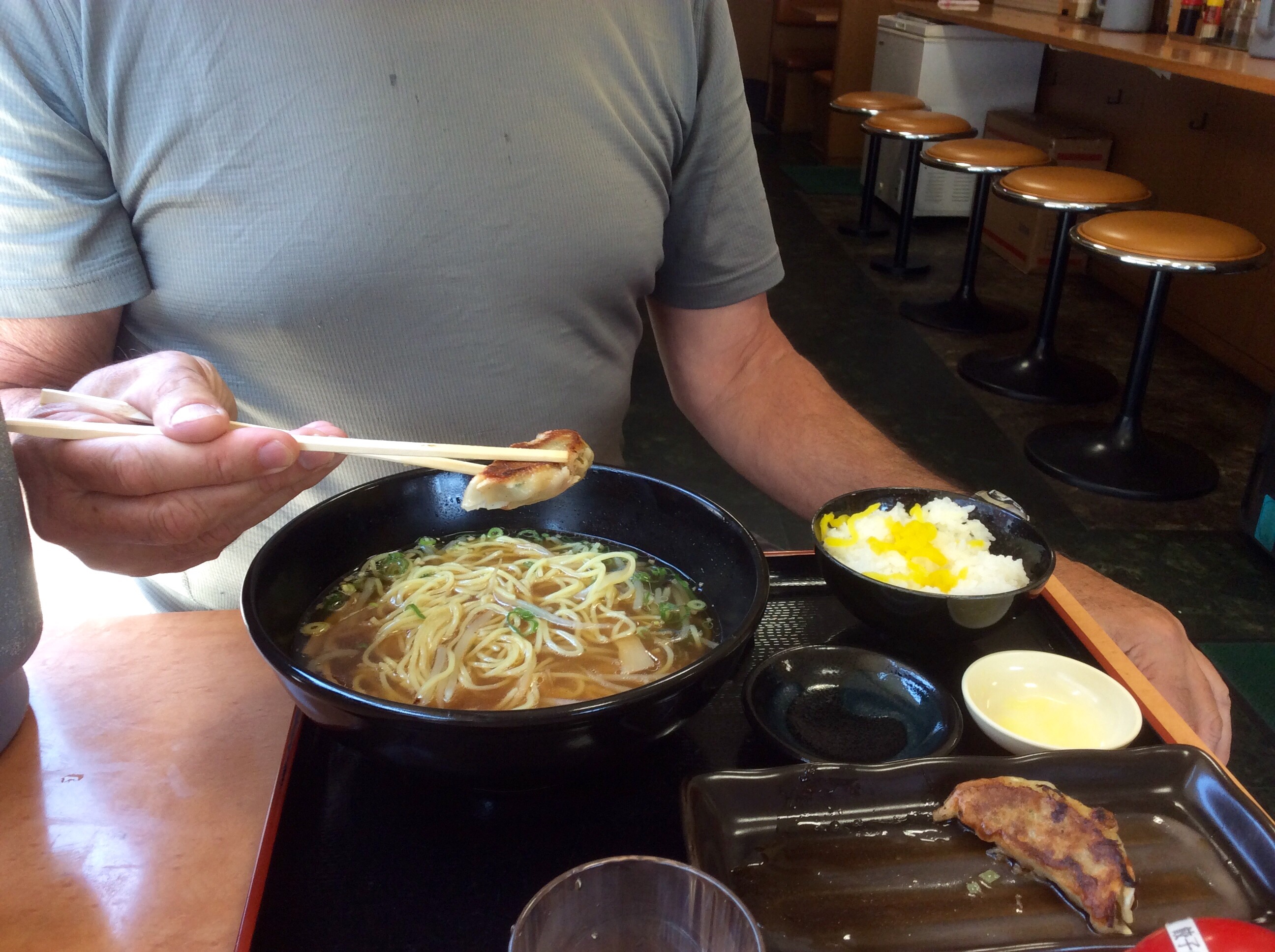
Two and a half hours later, we arrived at Kii-Tanabe, had a yummy pork and noodle soup lunch, and waited for a bus to Takijiri, where our Kumano Kodo hike began.imageimage
Here’s what you do while waiting for the bus.

It was already mid-afternoon by the time we arrived, so it was nice that the day’s hike was planned for only 3.7km/ 2.3mi. Here is the entrance to the trail. We will walk to visit three major Shinto shrines this week.image
image

Pilgrims ritually wash themselves at the beginning of the walk.image

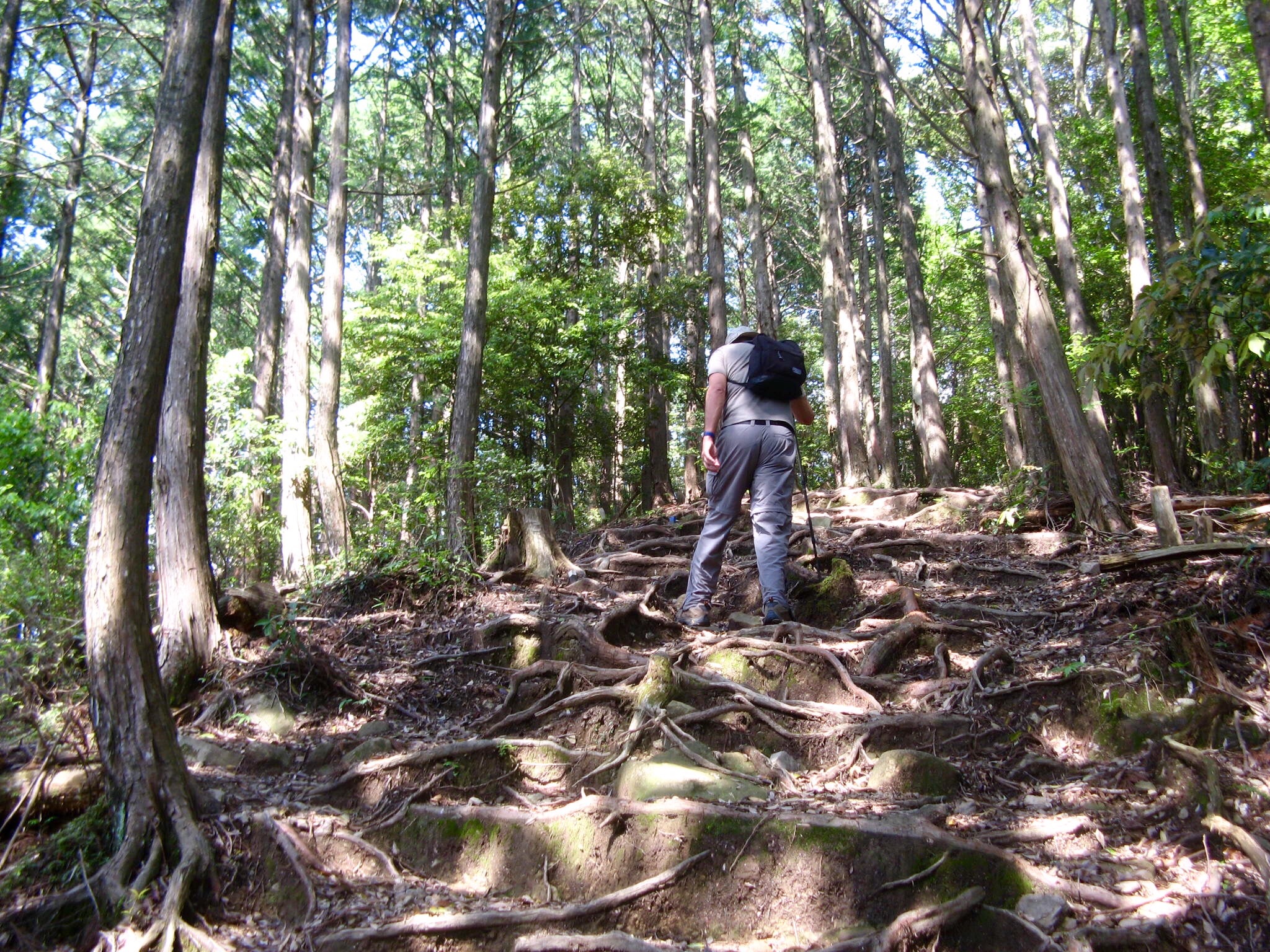
The first part of the hike was totally uphill – climbing, climbing, then climbing some more! image

image

image

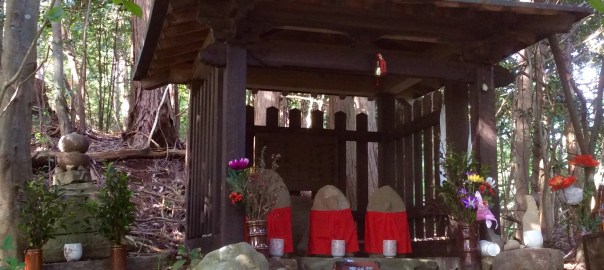
We saw several small shrines in the forest,which is what the Kumano Kodo pilgrimage is all about.  Several were Jizo, or Buddhist bodhisattva, which help travelers to attain enlightenment.  The mixture of Buddhist and Shinto symbols is common in Japan.

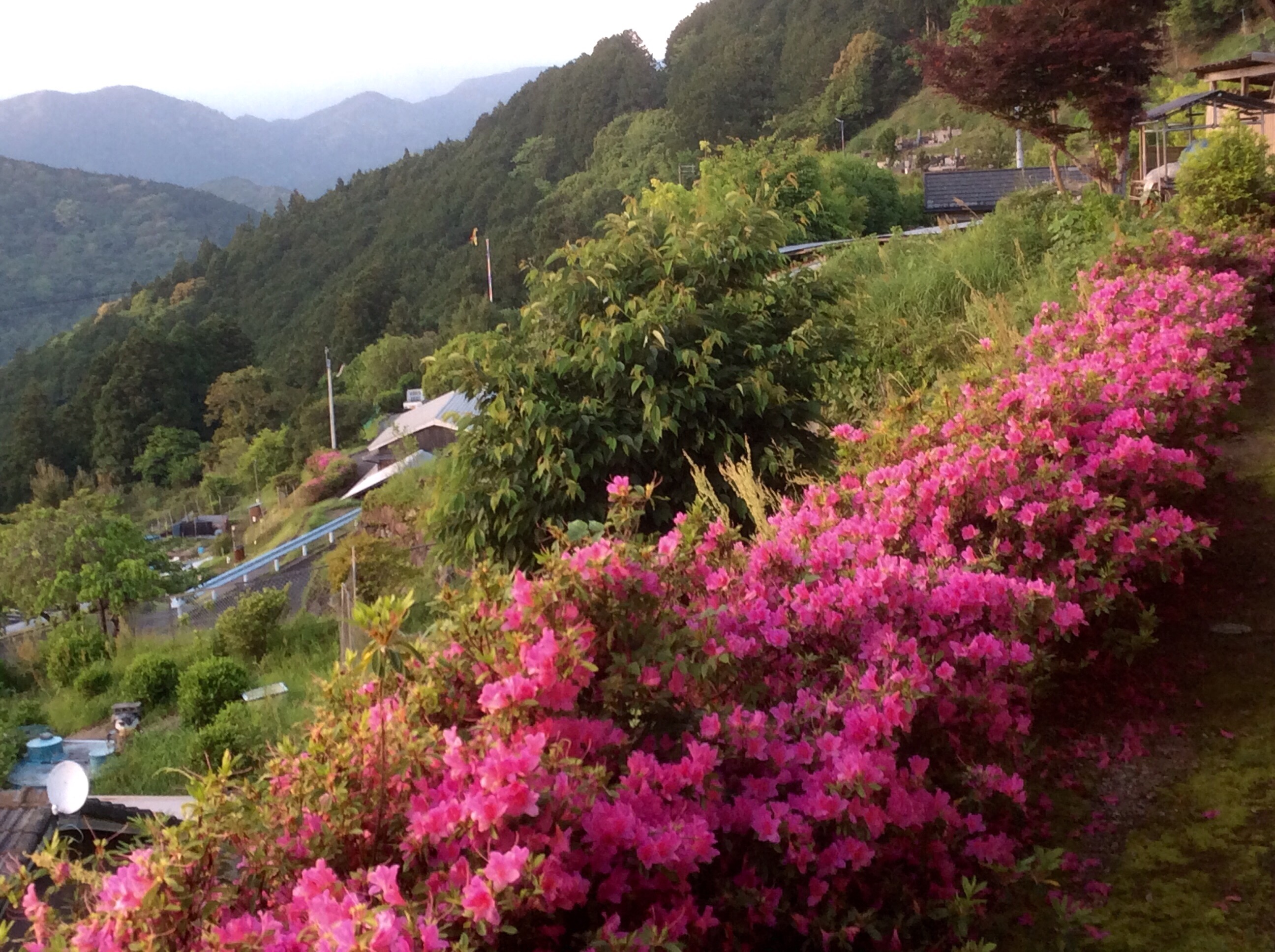
We arrived at the Takahara Lodge at 4:30pm and were welcomed by the delightful owner. I had my very first Japanese communal bath – men and women bathe separately here. After sitting down on a little stool to shampoo and wash, we climbed into a deep pool, lined with stones, for a hot soak. It was lovely!image

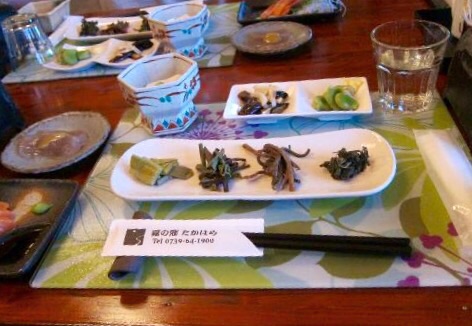
We went down to supper freshly washed and wearing our kimonos. The meal was amazing, with little bites of different vegetables, sashimi, grilled fish and Kobe beef cooked at the table, so tender it just melted in your mouth. Fruit sorbet for dessert. So delicious!image
We met two couples from Australia who will be walking our route tomorrow. We retired to our room with the beautiful view of the mountainside. Tomorrow is a hiking day! 


Pai to Chiang Mai to Bangkok, Thailand

5/4 – Our do-nothing vacation in Pai comes to an end tomorrow. As we enjoy one more swim in the pool and one more climb to see the sunset, here are a few things we opted not to do in Pai:

Seeing the Long Neck Karen tribe: as tempting as this was for a short-necked Karen like me, we read too much about the exploitation of these Burmese refugees, who are paid to disfigure their women with neck rings to be ogled by tourists. I remember reading about them in Ripley’s Believe It or Not as a child (a long, LONG time ago!). Really didn’t want to view humans the way we view zoo animals, and the tribe does not benefit from the admission prices charged by the tour promoters. Here are pix off the advertising poster in town:

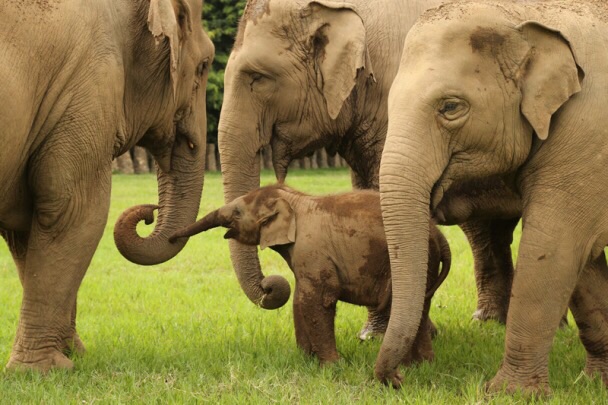
Riding an Elephant: there are lots of places in Thailand offering to let you ride/bathe/train elephants. Most of these places use bull hooks to jab the elephants, torturing them repeatedly to make them docile enough for tourists. We decided not to be part of that exploitation. The exception is the Elephant Nature Park in Chiang Mai, where abused elephants are rehabilitated and never ridden. We tried to book a trip there when we were in Chiang Mai, but the waiting list was several weeks long, and we were not able to go. If you really want to see elephants, book early and support ElephantNaturePark.org. image

I’ve been keeping my sister AJ in mind as we tour Thailand, as she and her husband would like to travel here some day. They are vegetarians. Don’t know how they would feel about the vegetarian restaurants here, which all seem to serve meat, like the House of Pork Vegetarian Cafe:image

Same problem at the grocery store, offering vegetarian shredded meat:image

Don’t worry AJ and Bob – you can always eat rice!
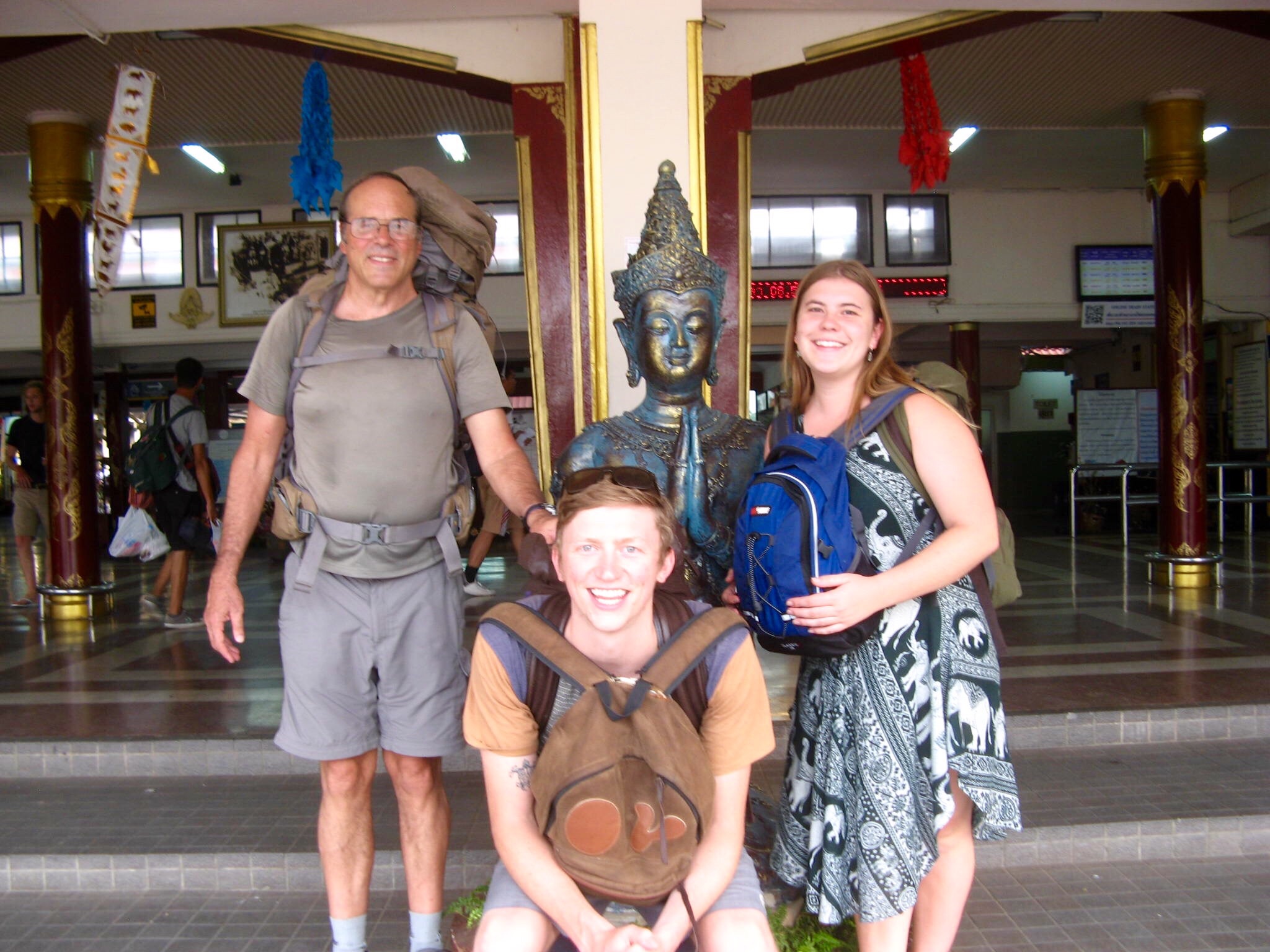
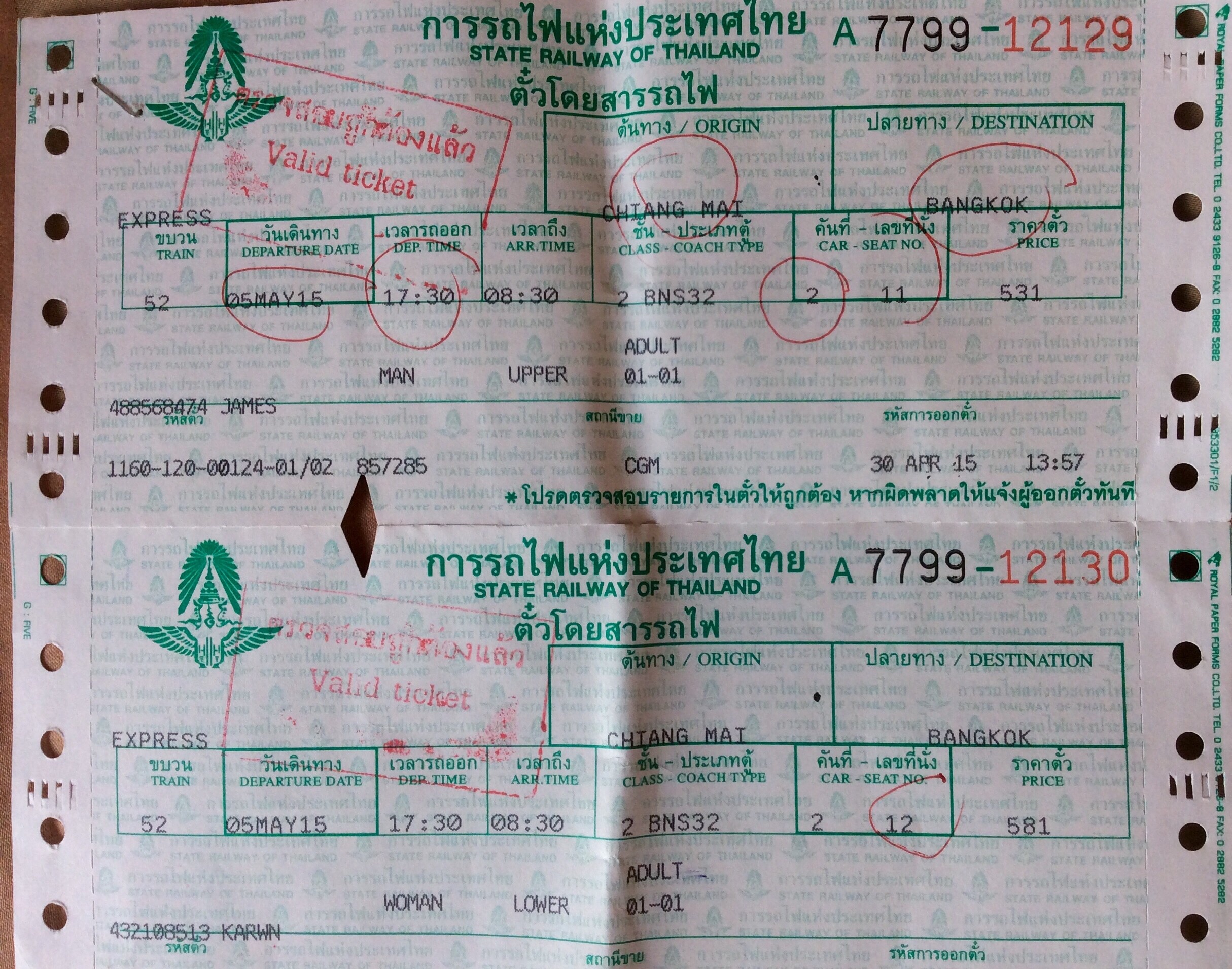
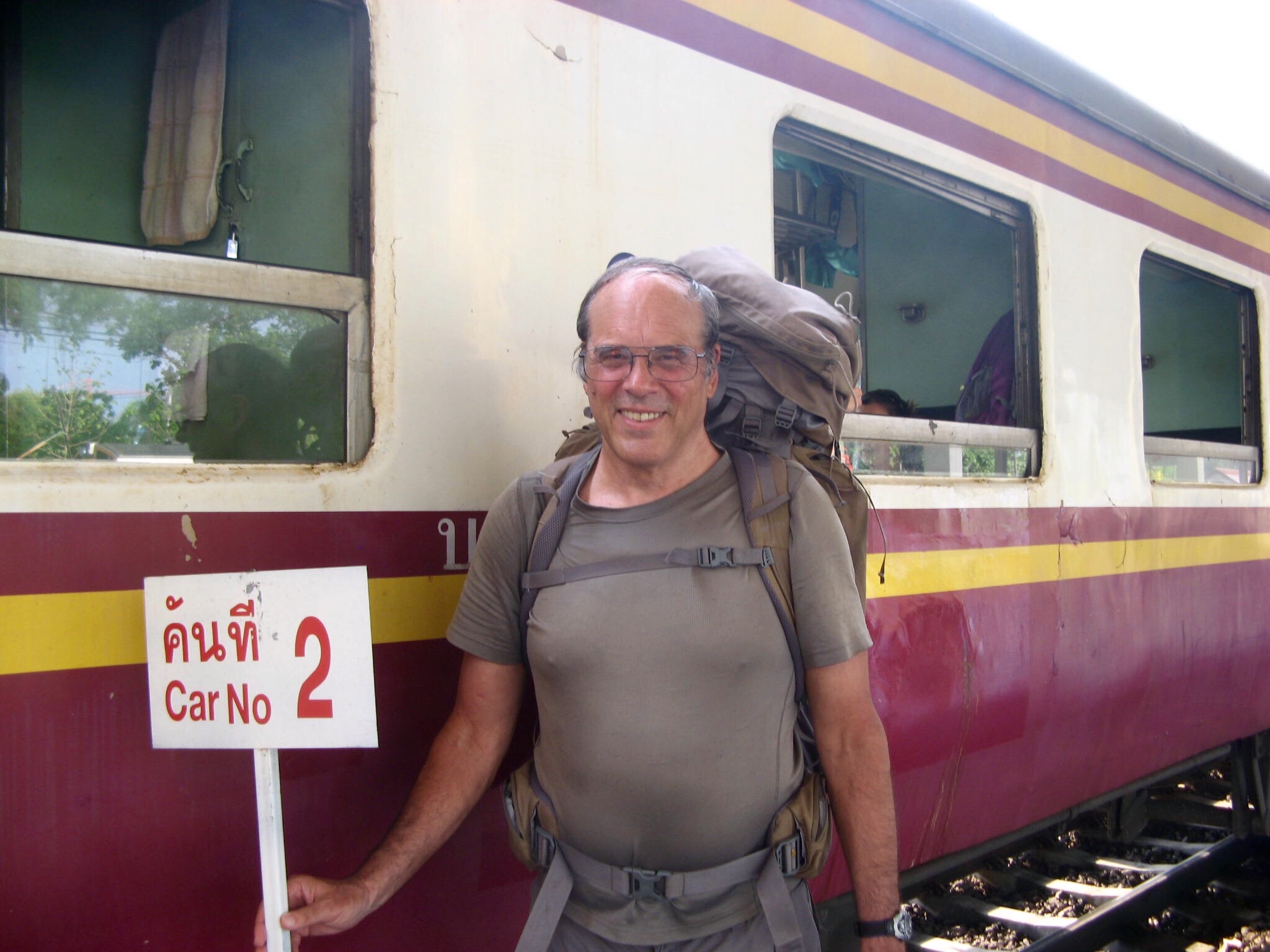
5/5 – Back to the bus station this morning for our 3 hour mini- bus ride back to Chiang Mai. Met John while we waited, a Vietnam vet. He and Jim traded old war stories – Bangkok was the place Vietnam vets went for R&R, and its proximity brought back lots of memories for them both. Arrived at Chiang Mai with three hours before our train to Bangkok, so we has a leisurely lunch and chatted with two young Aussies from Melbourne. Turns out they were taking the same train.image


image

We were not able to book air conditioned berths on the overnight sleeper to Bangkok, so we are anticipating a steamy night. The windows on the train are all wide open – hope there is a breeze! image

This is the first long distance train we’ve been on that does not have compartments. The seats convert to upper and lower berths on both sides of the car, with curtains in front, like in old movies (Some Like It Hot comes to mind!) Here’s the sunset out the open train window. image

image

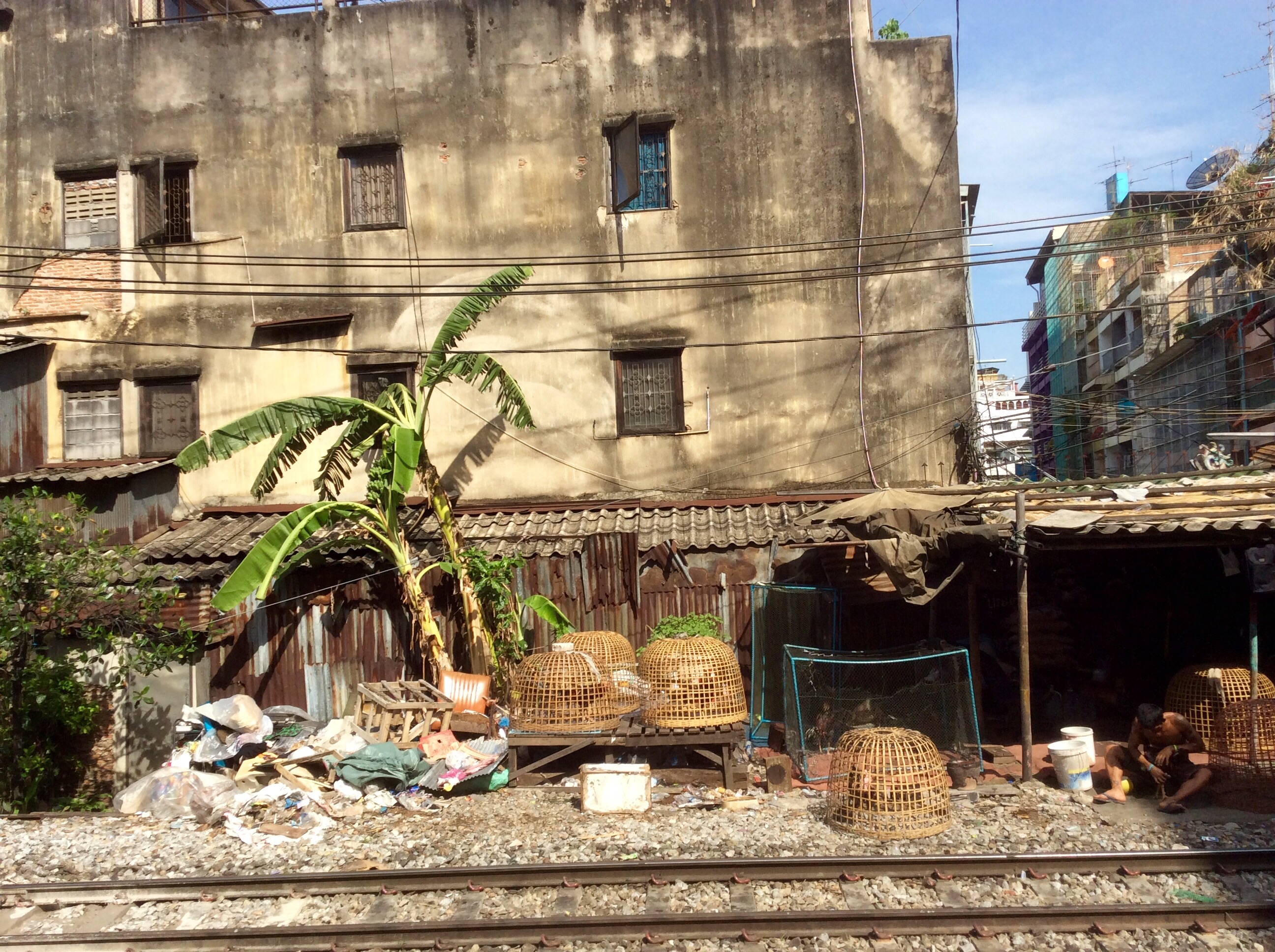
5/6 – After a long, sticky night, we approached Bangkok, as the scenery changed from rural to urban.image

image

image

Pai, we miss you!

Pai, Thailand – the Buddha on the Hill

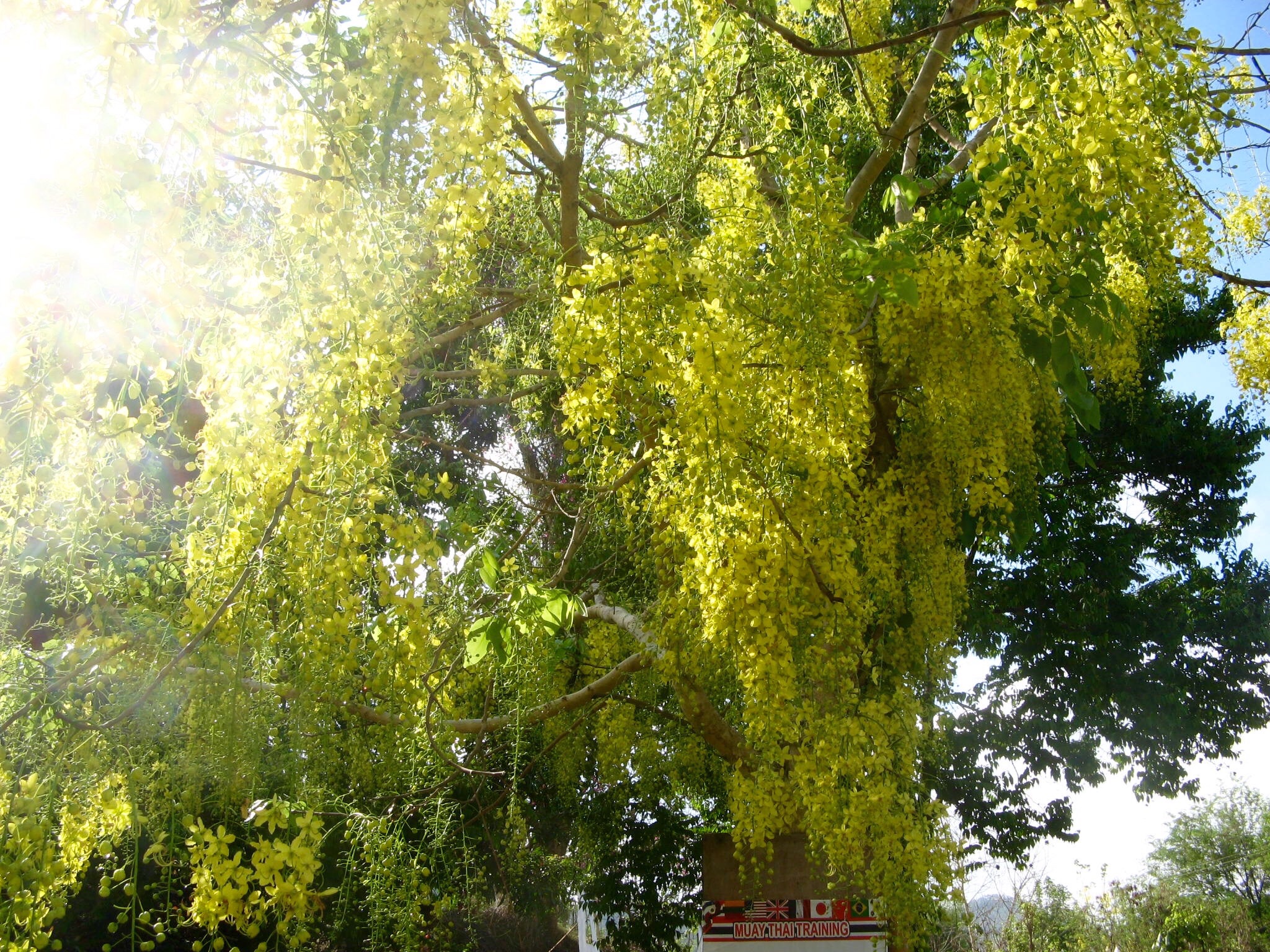
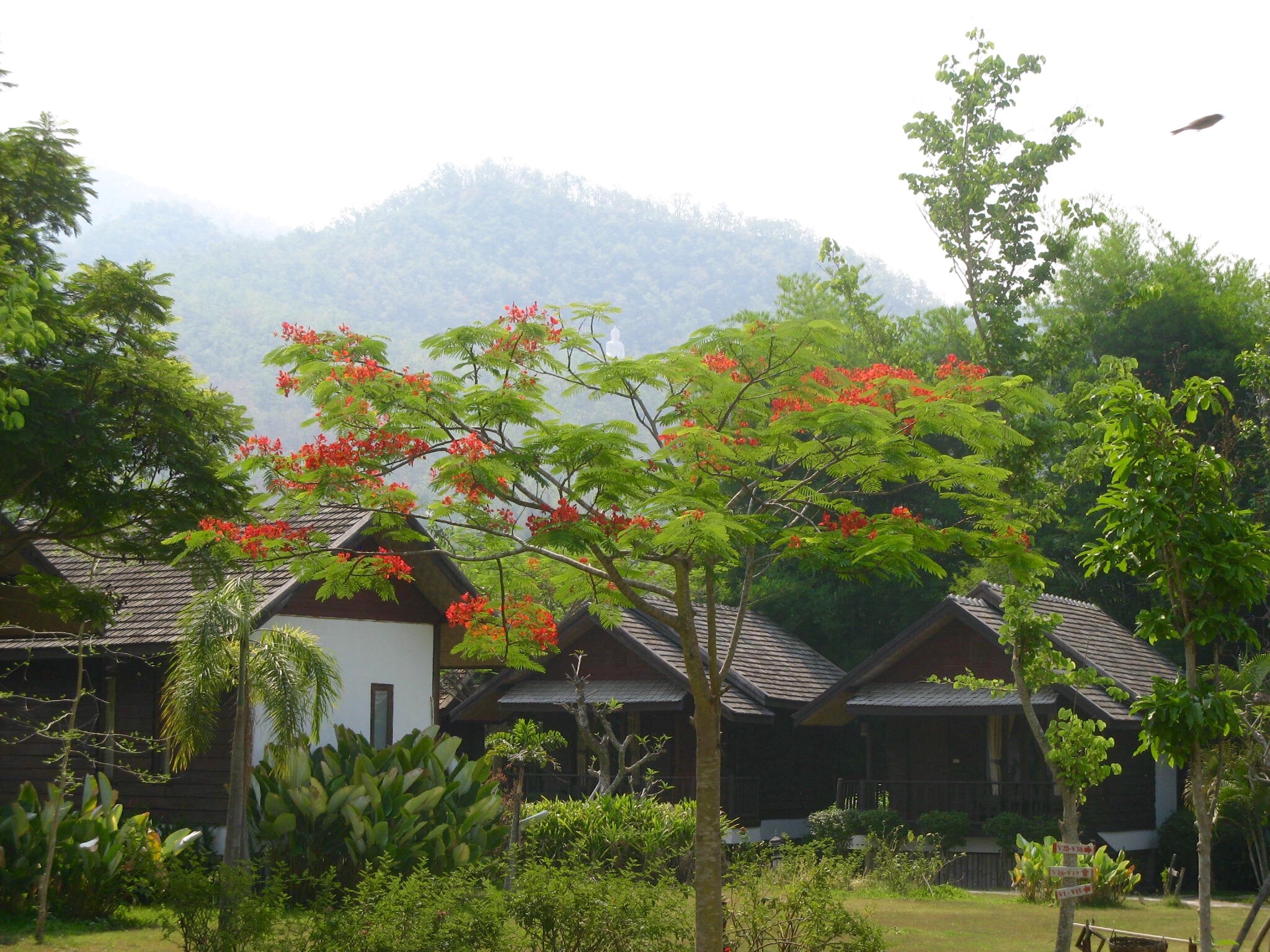
4/27 – Since moving across town to the Pai Do See resort, our days have fallen into a comfortable pattern. The morning temperatures are in the 70s, sunny every day, with highs in the upper 90s by mid afternoon.  Birdsong and gecko calls are our constant companions.  The flowering trees are a daily delight.image

image

We eat breakfast at the resort restaurant (two eggs any style, toast with margarine and strawberry jam, two franks that they call sausage, sliced tomato and cucumber, Tang and coffee). We take a walk; some days into town, some days into the mountains to explore.image

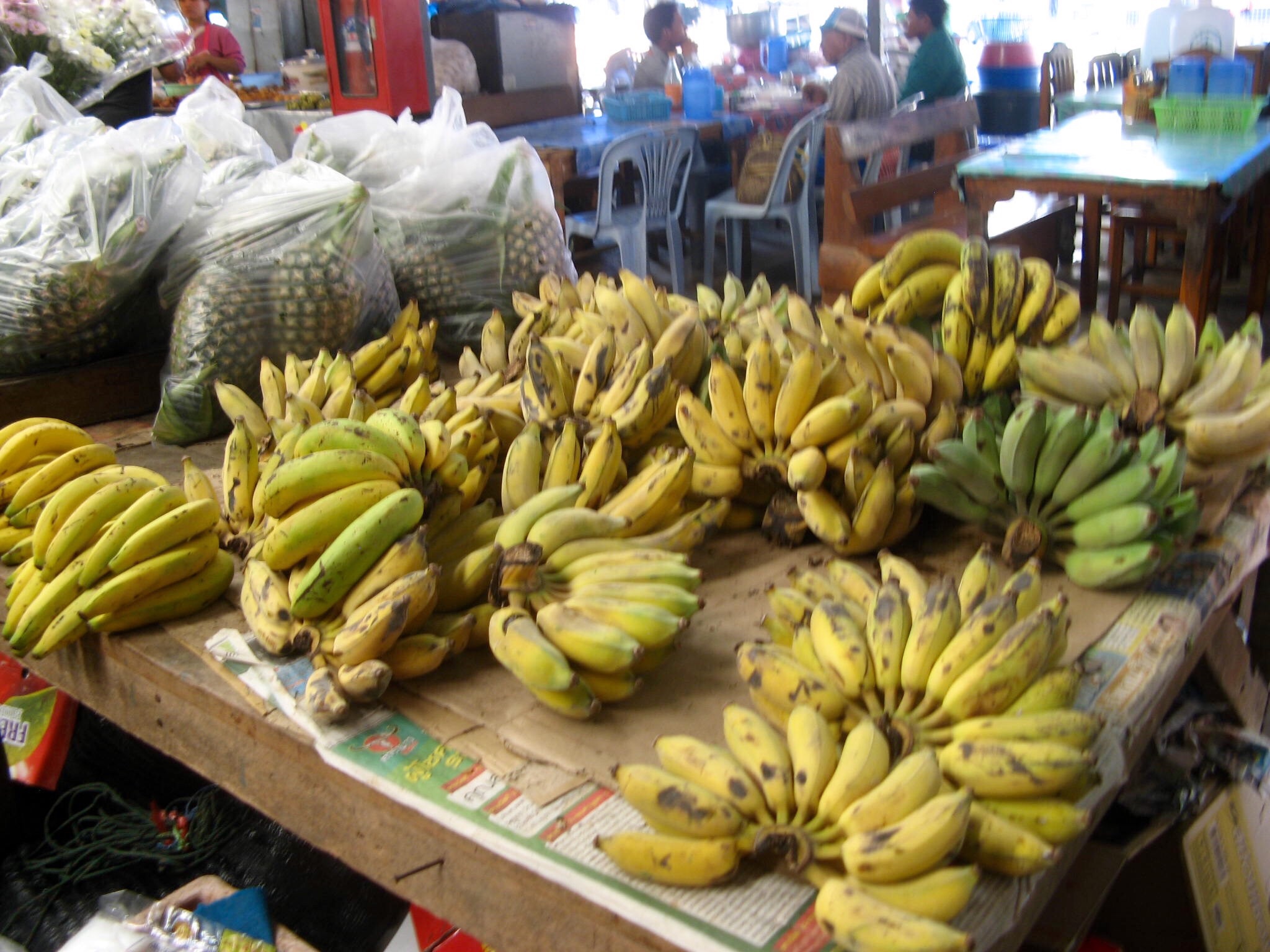
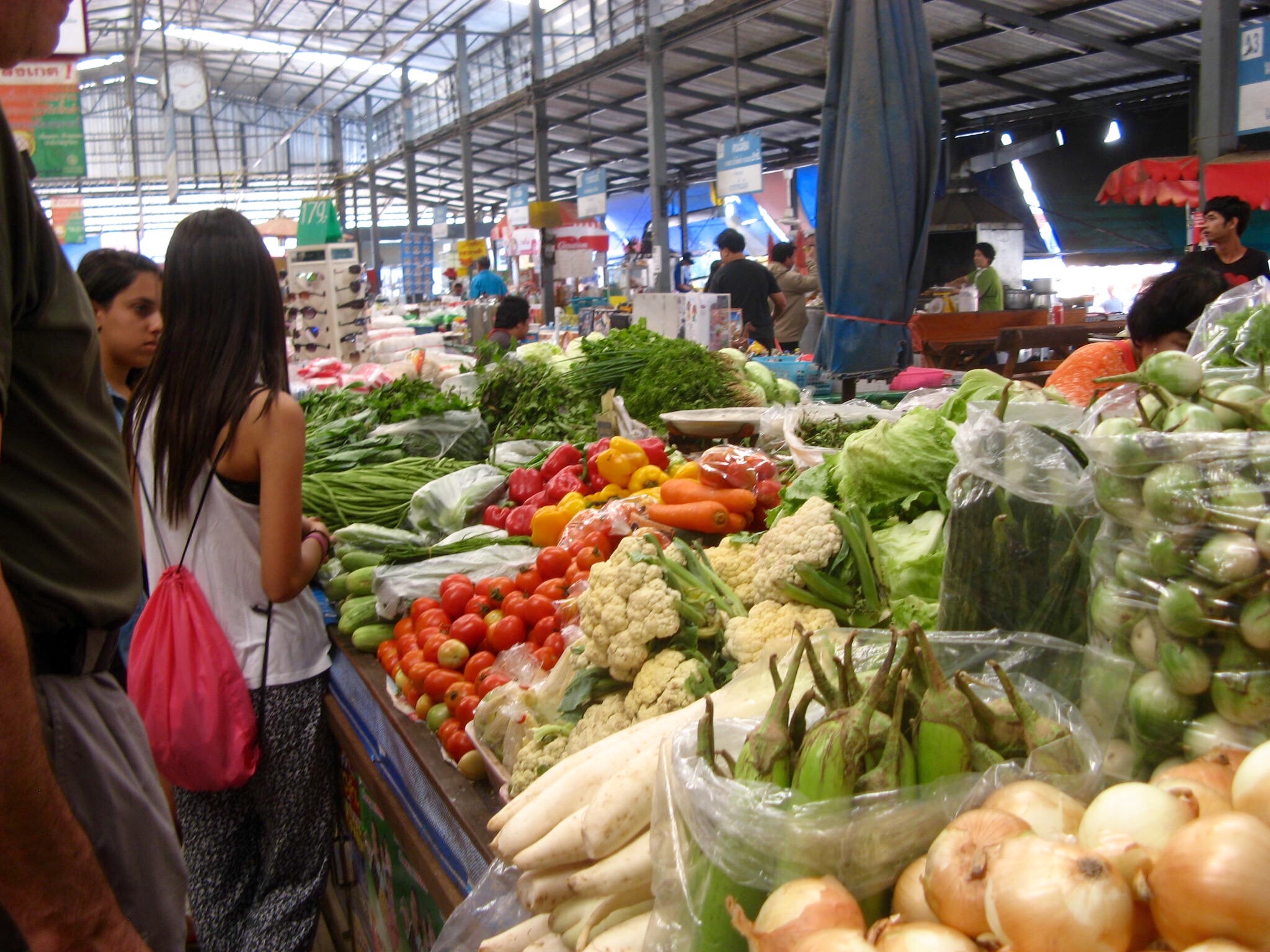
We’ve found the market where the locals shop, and stock up on fresh bananas, mango, and pineapple every few days. The market ladies know us and anticipate what we want. image

image

Bananas are little here, just the size of a finger, but very sweet.

image

Jim prepares lunch in our room by boiling water for instant noodles or rice, adding meat or shrimp dumplings and pineapple, followed by fruit salad. We eat on our shady terrace, and swim in the pool every afternoon. Some days we have the pool to ourselves; other days we have met travelers from Portugal, Taiwan, Israel, China and the U.S.

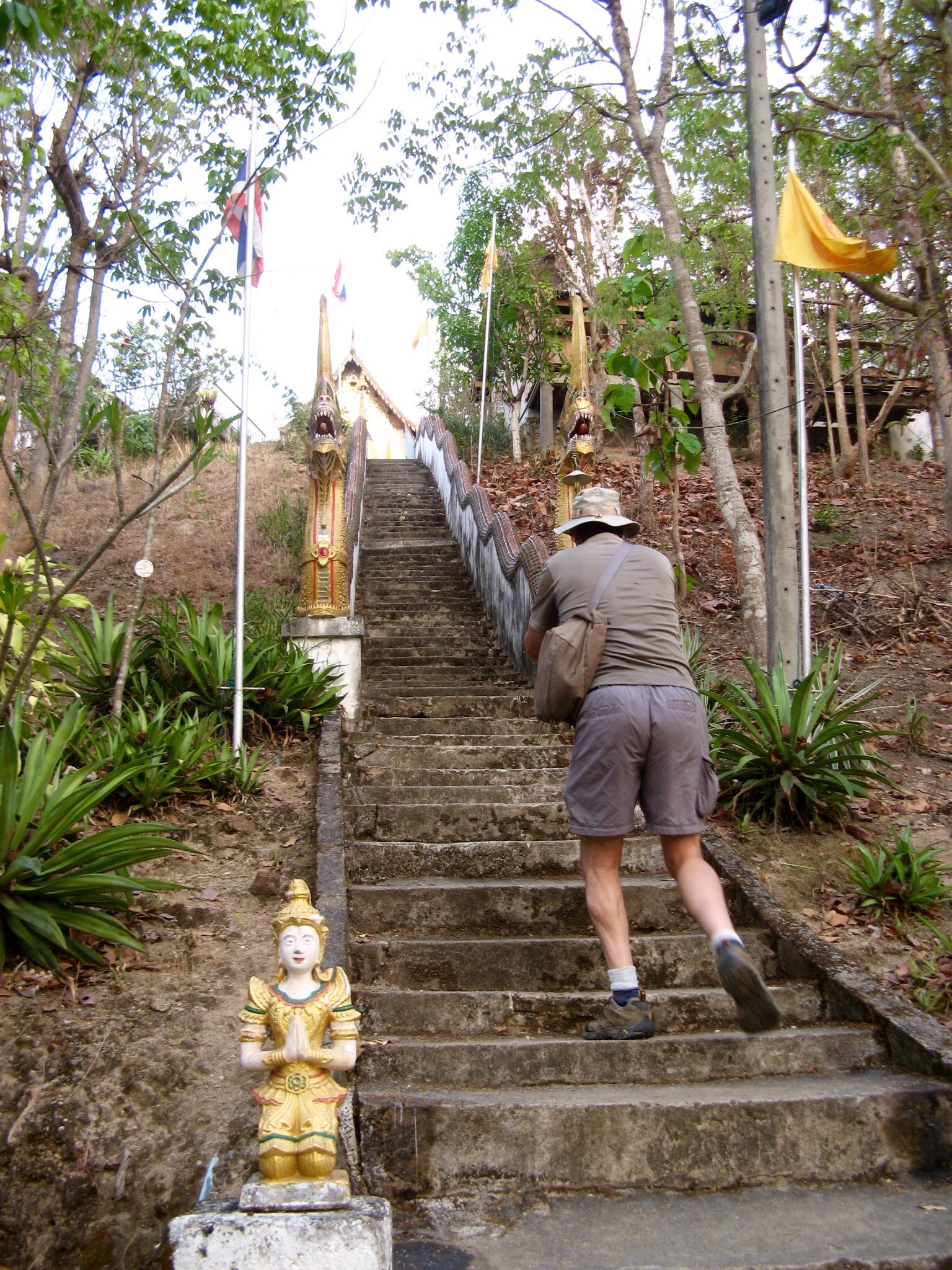
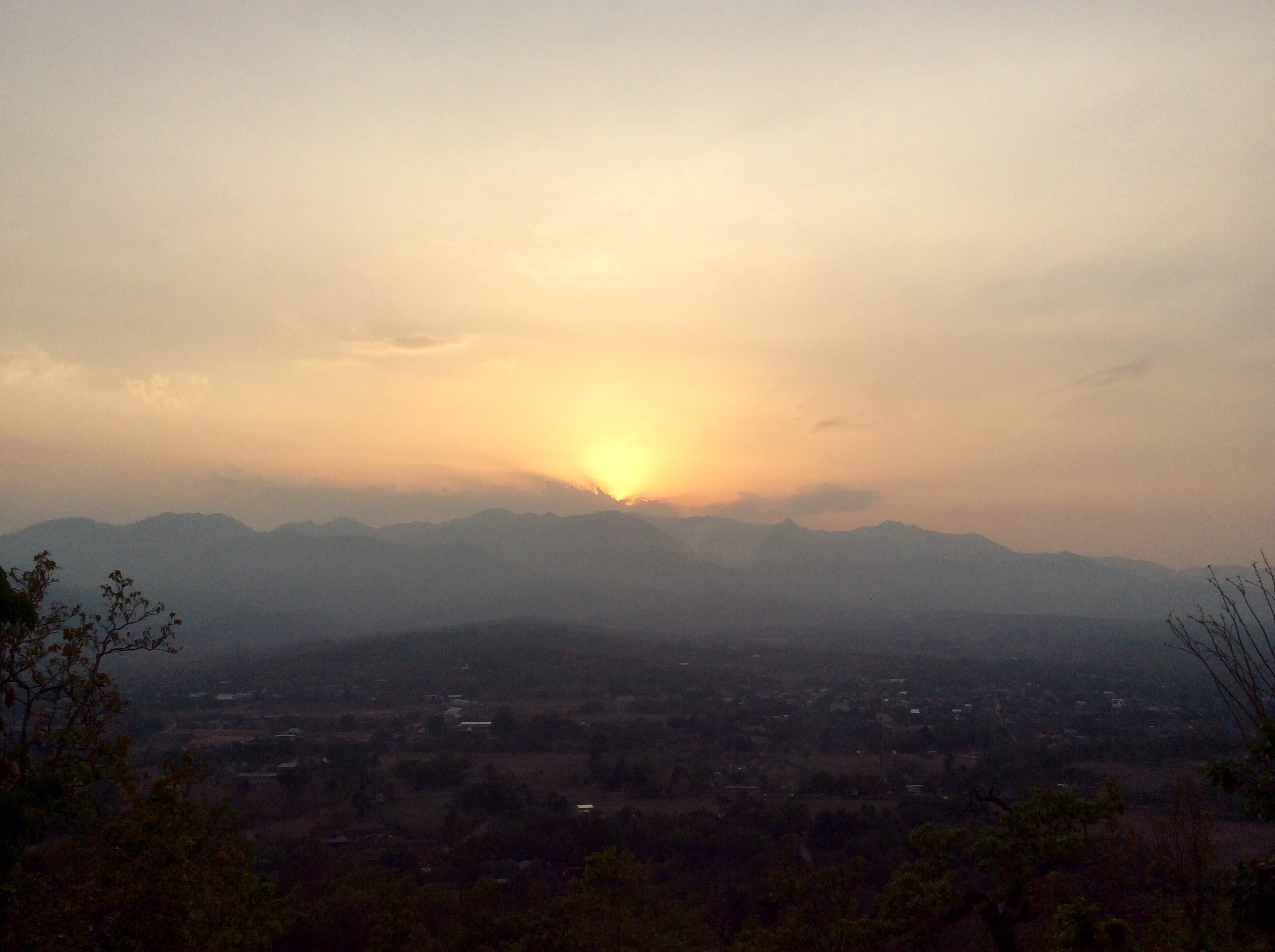
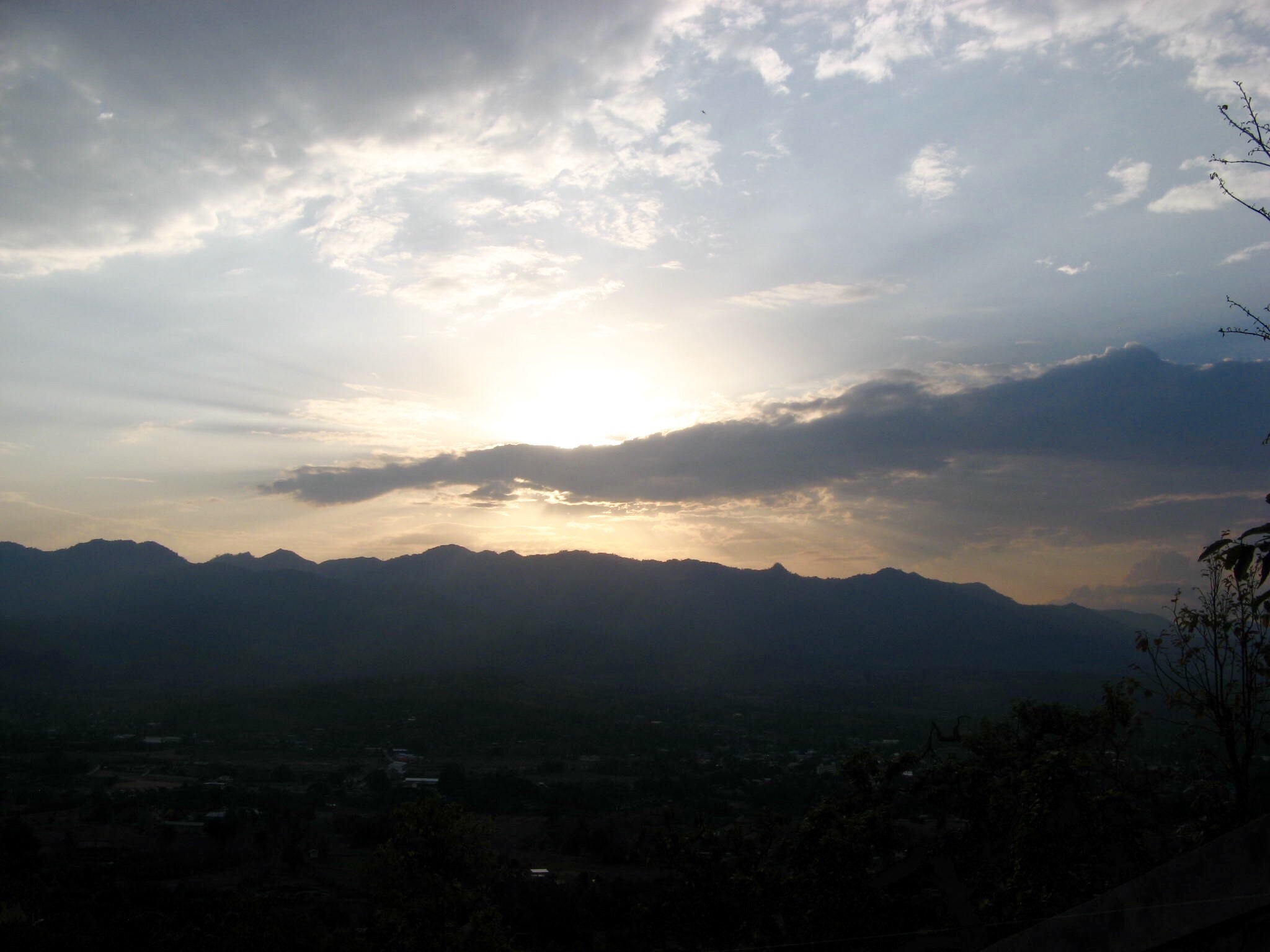
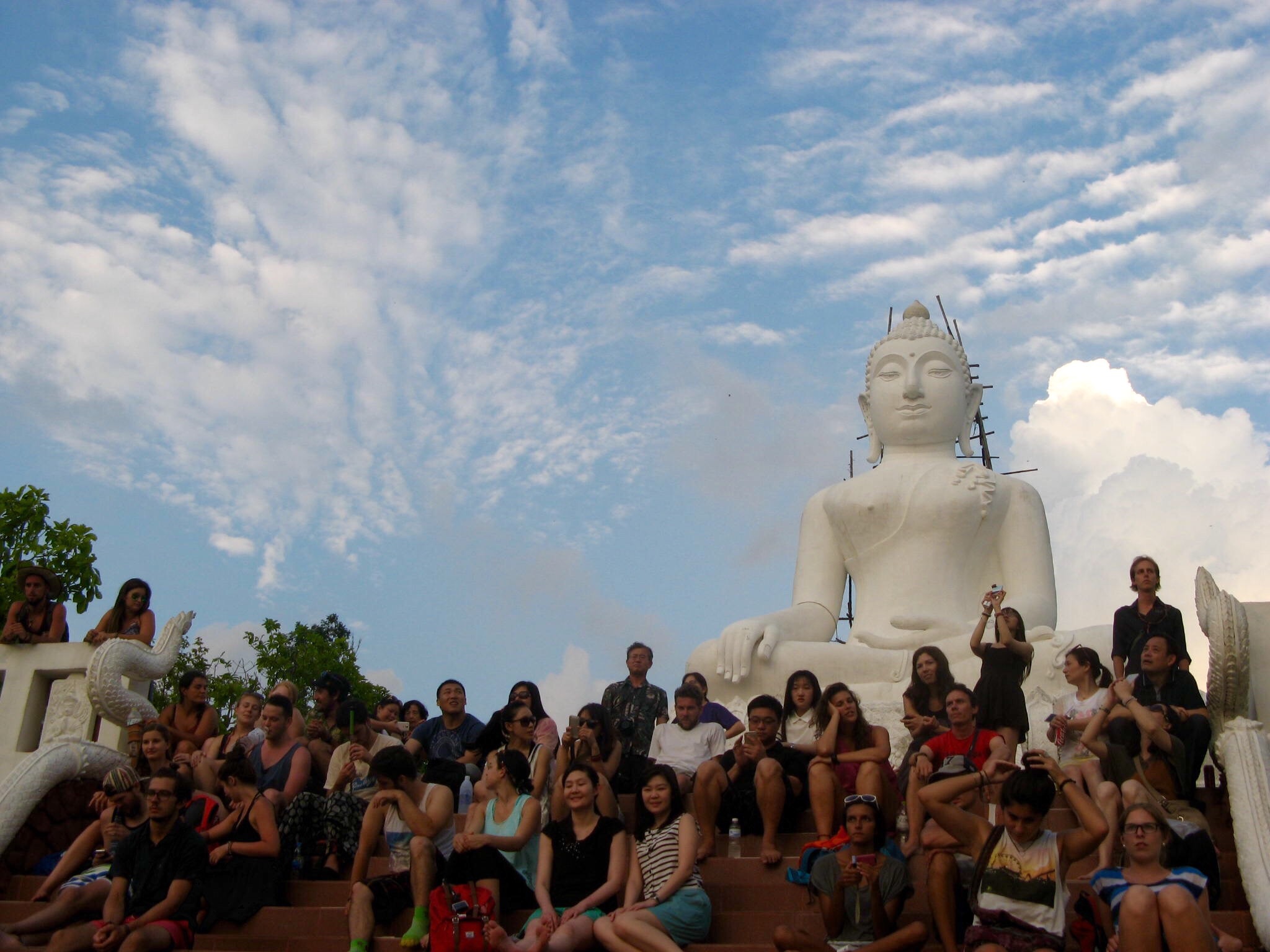
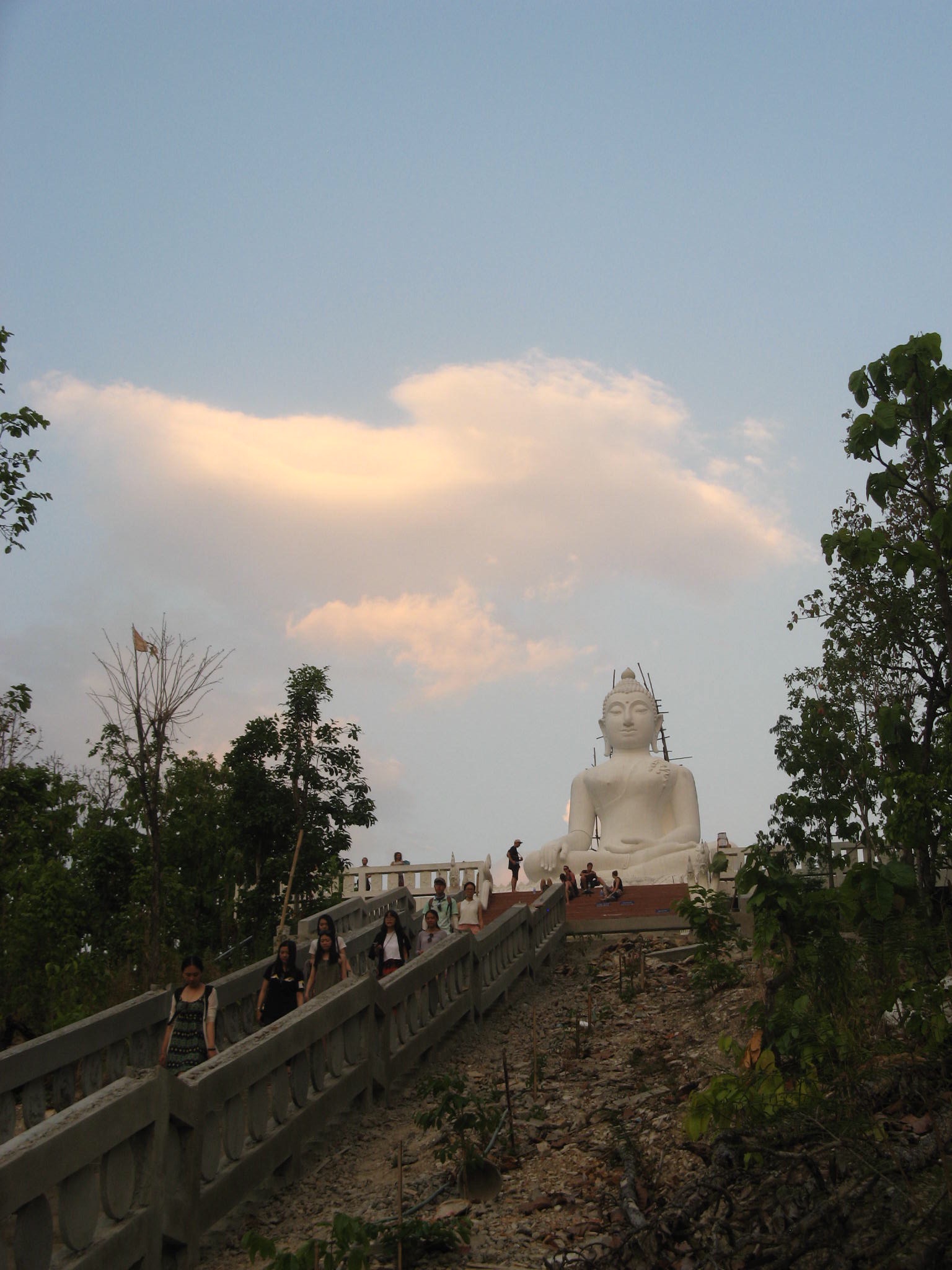
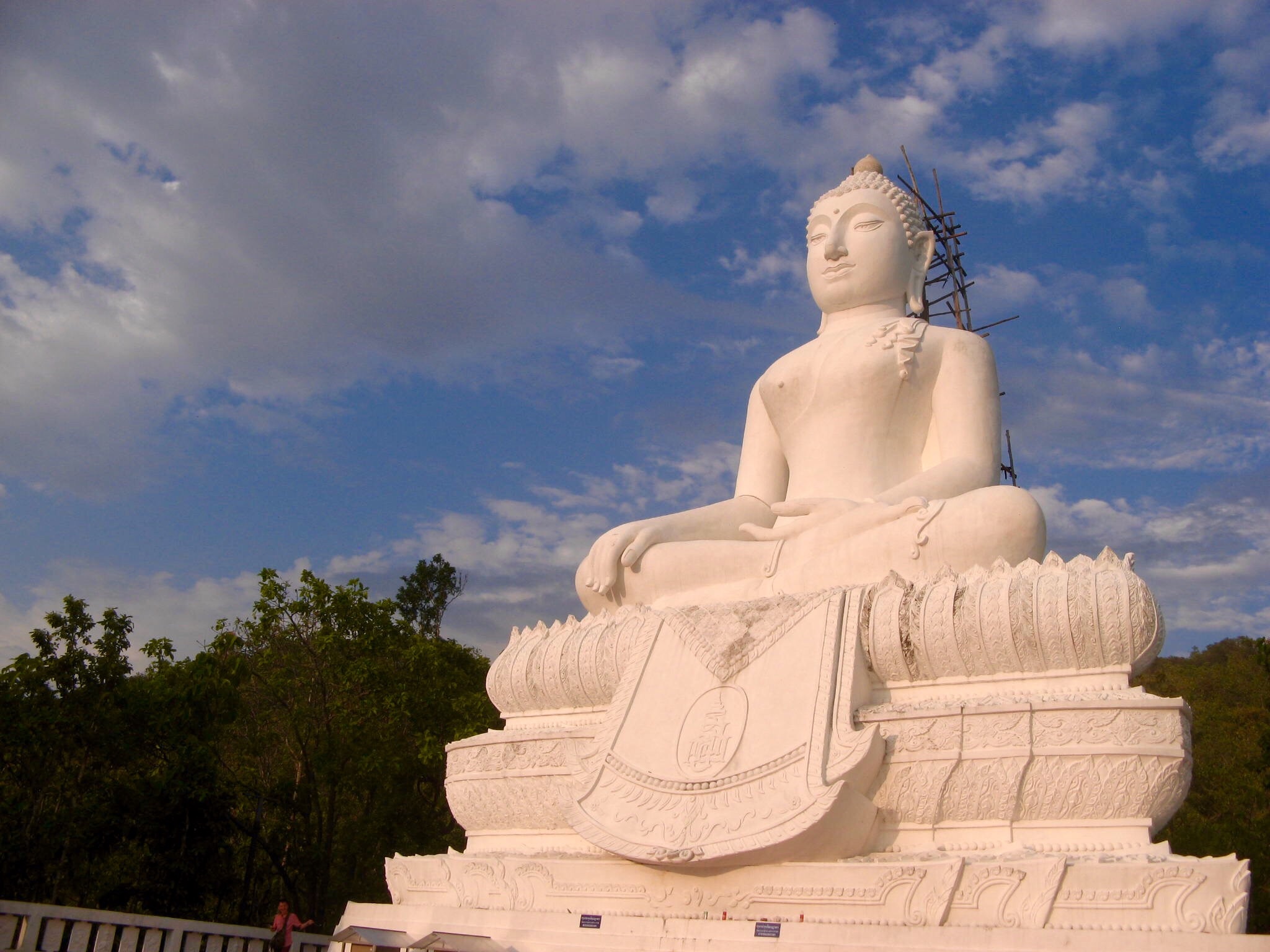
At 5pm we hike up to the big Buddha statue at the Wat Phra That Mae Yen – 400 steps up to the best place in town to see the sunset.image

image

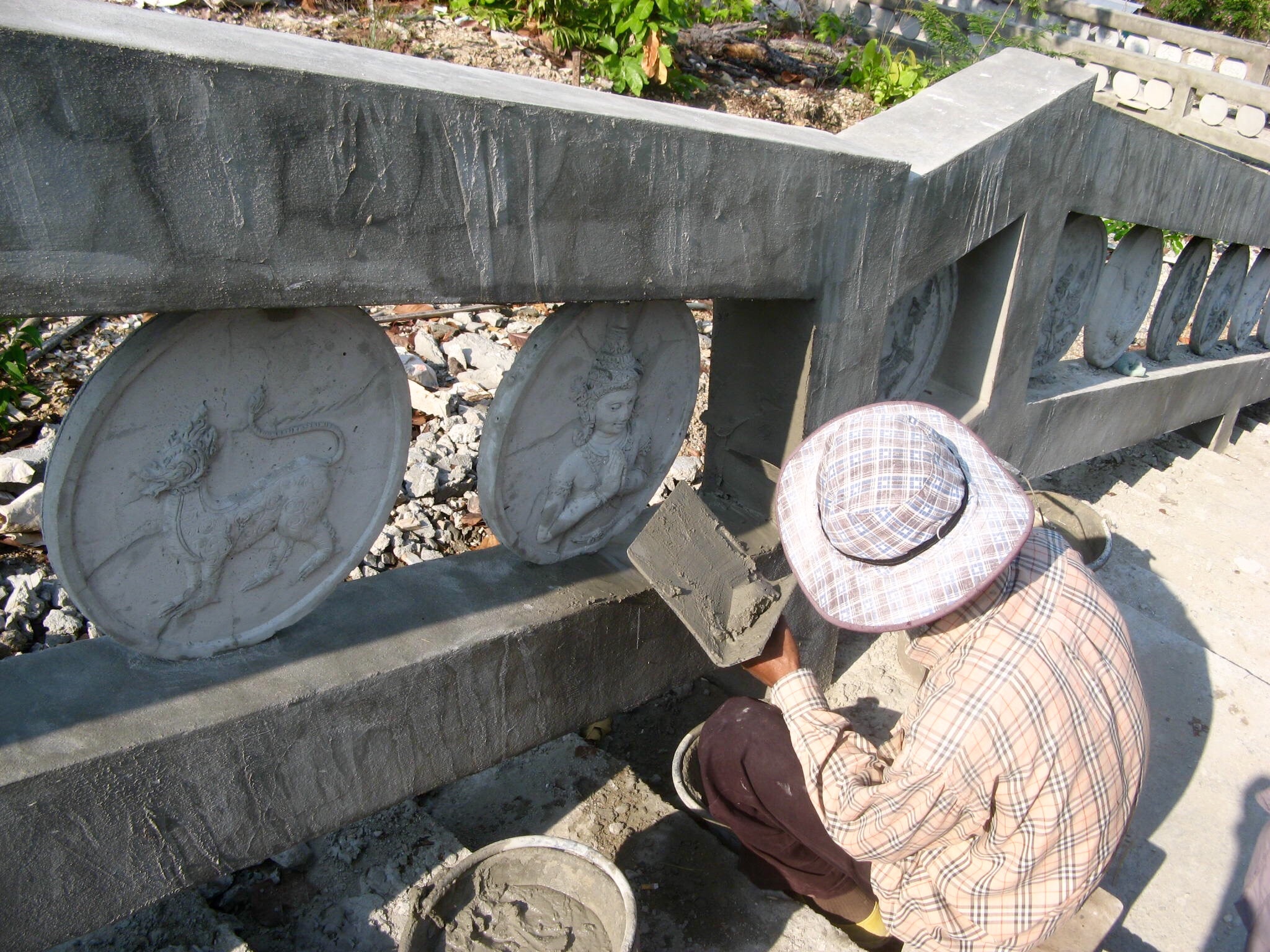
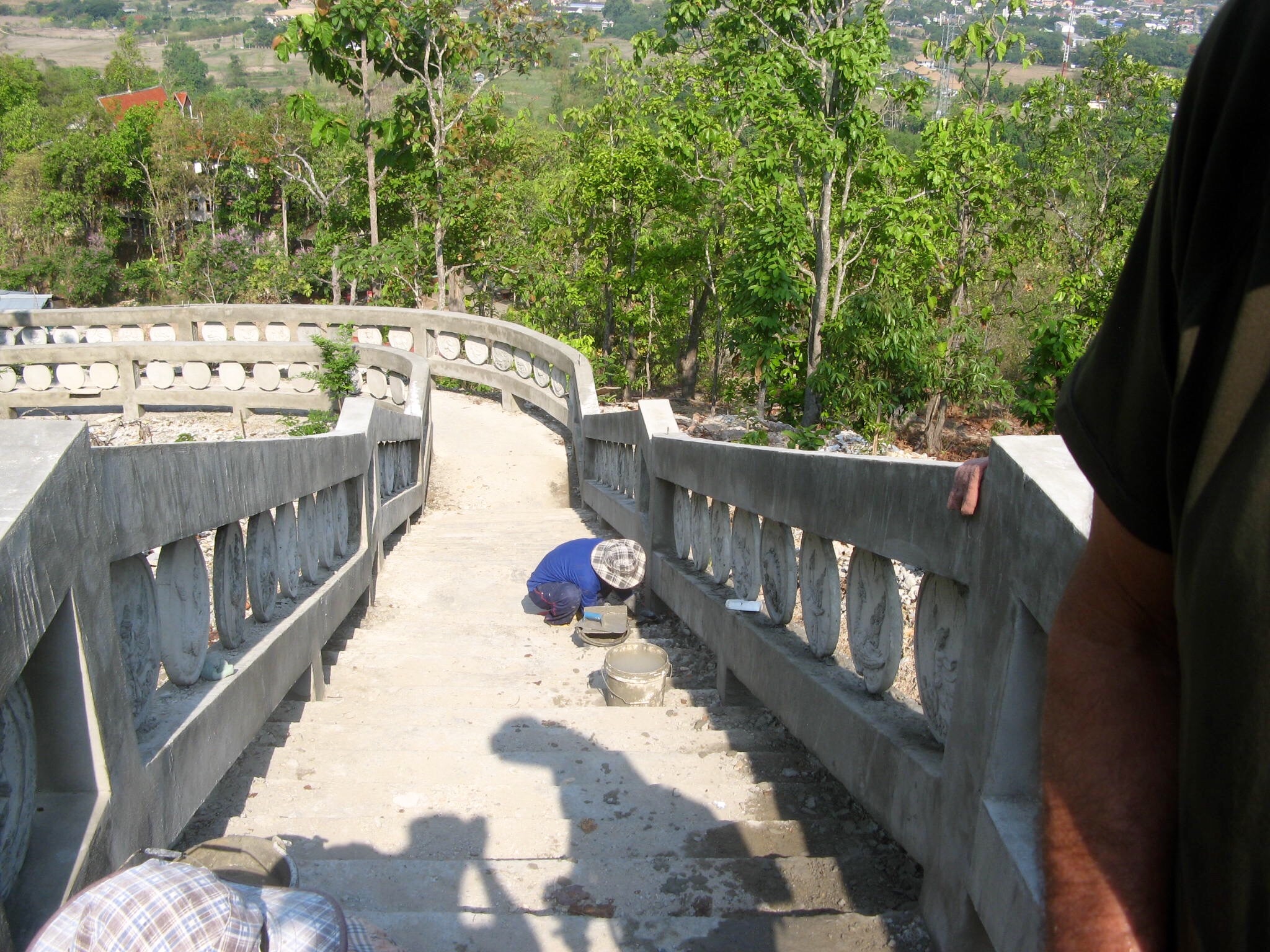
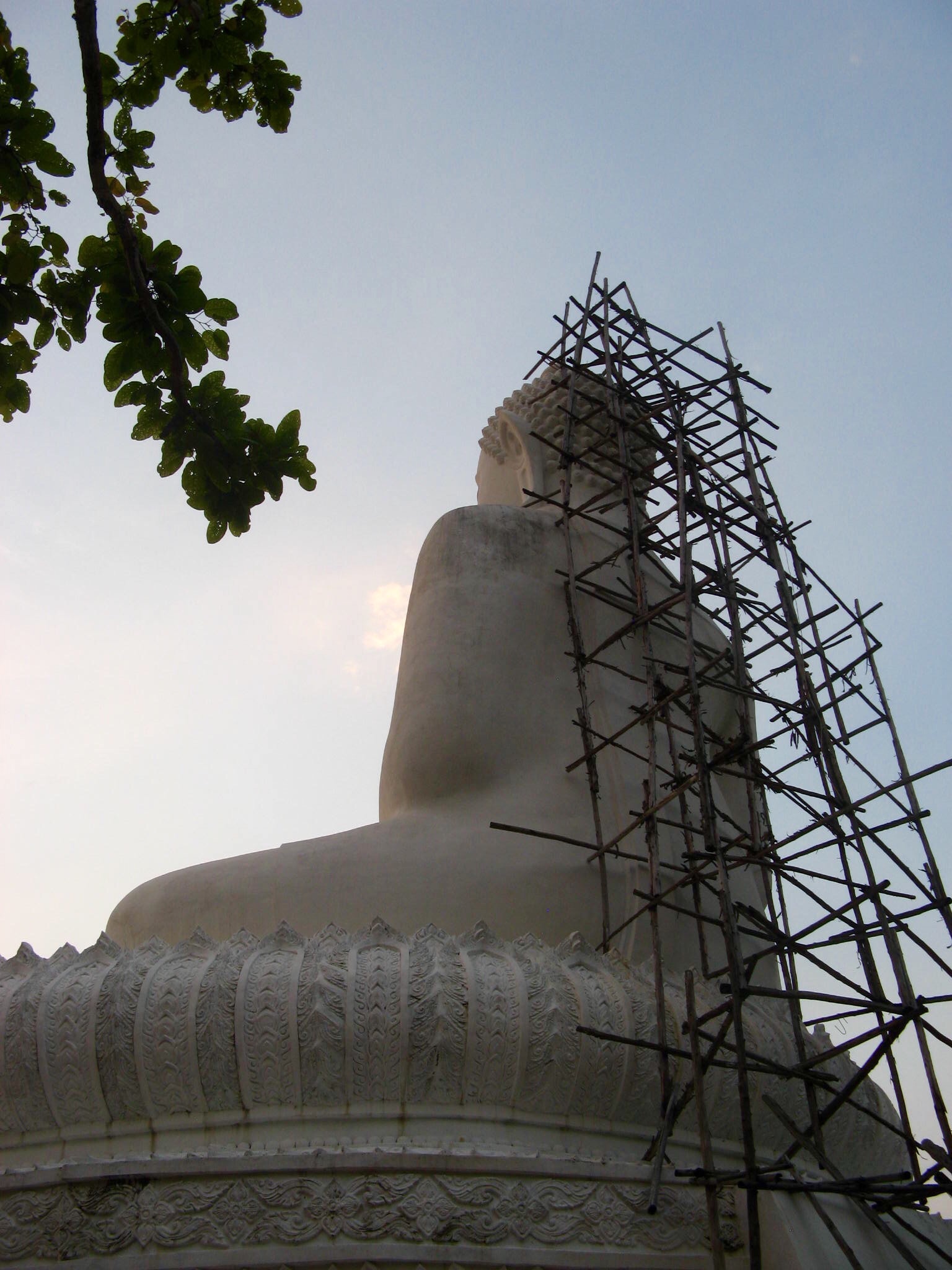
This temple is still under construction.image

image

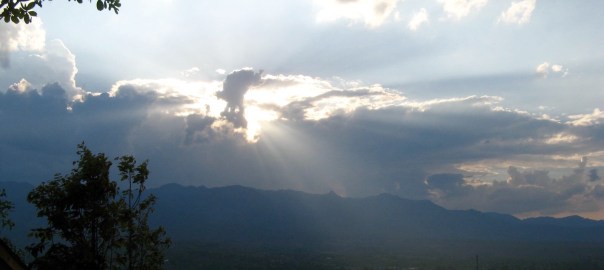
As 6pm approaches, we are joined by backpackers and bikers from around the world. We’ve had some great conversations as we sit on the steps waiting for the sun to drop behind the mountain – a different event every evening!image

image

image

image

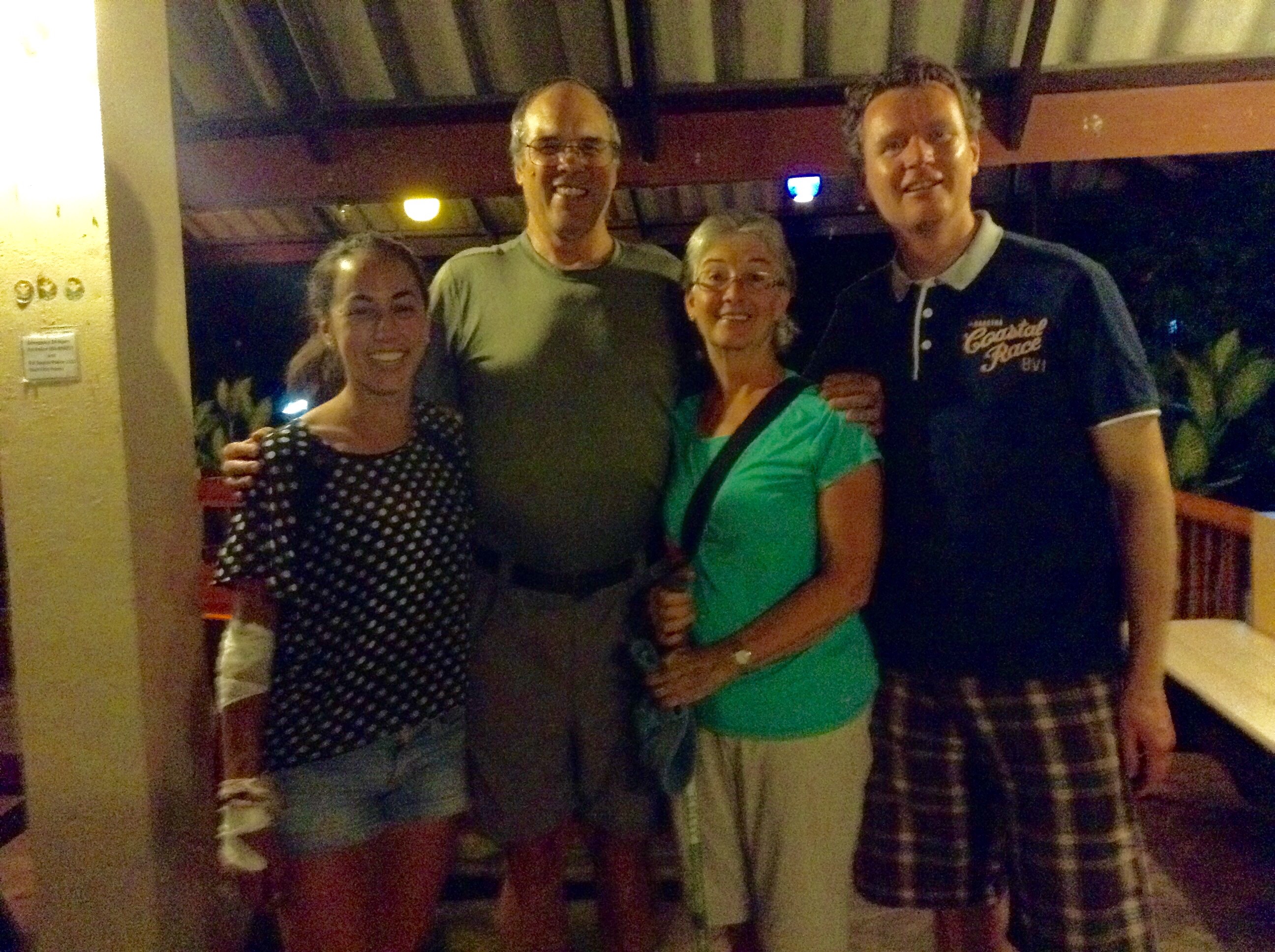
One evening we met Jessica, a nurse from Queens, NY, who had just taken a spill off her moped, and Sander, a businessman from the Netherlands. We talked the sun down, exchanging travel stories, then shared supper at the Sunset View restaurant. A lovely evening! image

The big Buddha on the hill, still under construction.image

image

image

After the sunset, we go out for supper, either choosing a restaurant near our resort, or walking back to town. Plenty of cuisine choices, or we just purchase food from the food sellers that line the walking street – cold noodle salad, barbecued chicken or sausage, spring rolls, and fruit shakes. We’ve made friends at two restaurants, where the proprietors know us and offer us their best. Life is good. 


Pai, Thailand

There was nowhere to go but everywhere, so just keep on rolling under the stars. – Jack Kerouac

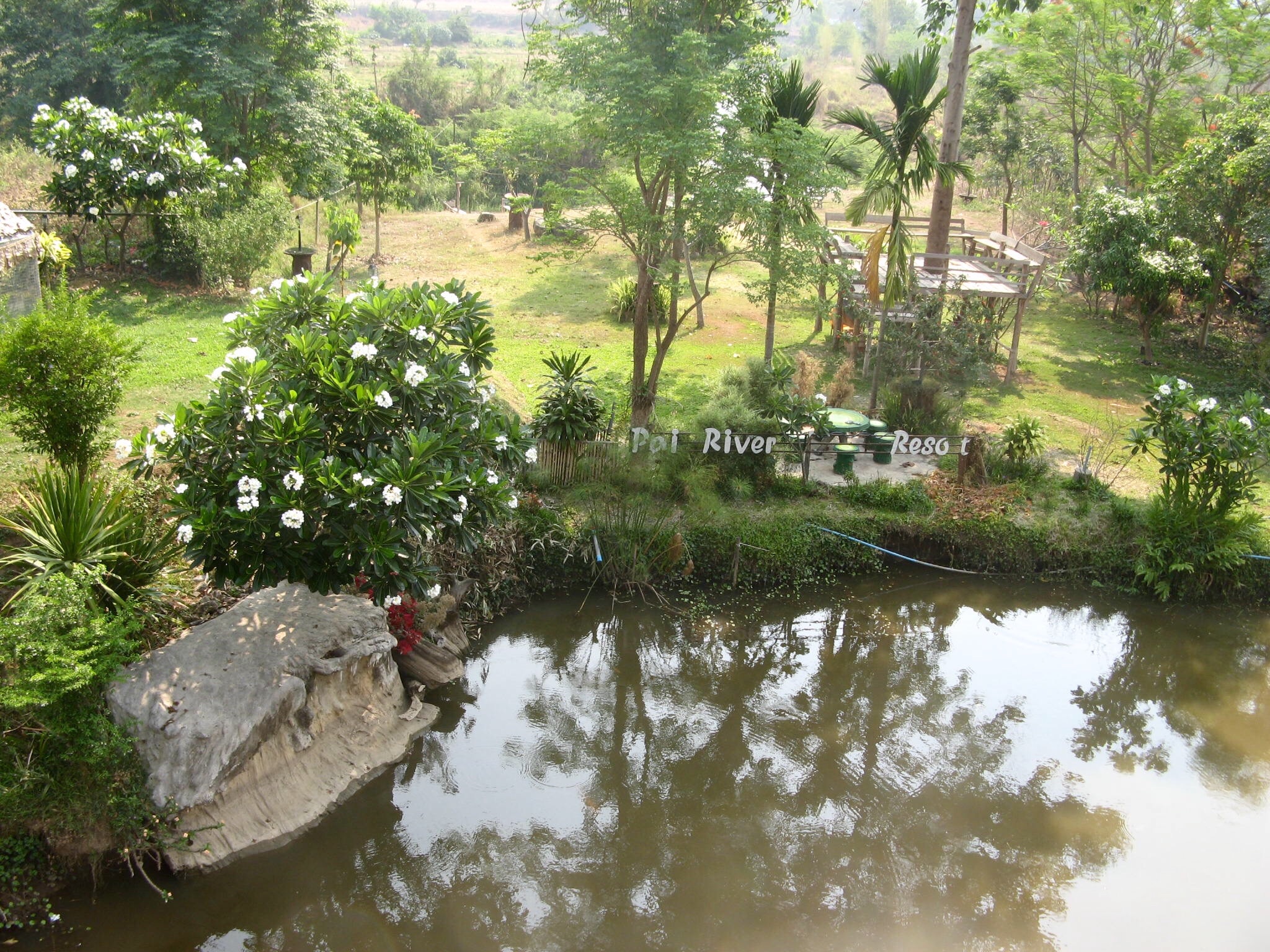
4/22 – We stayed four nights at the Hotel Pailifornia.  It was very nice, but at the wrong end of town for us – near the bars and the ticky-tacky tourist walking / motorbike street.  This town is full of young folks looking to have a good time and live on the cheap.  Room?  $9.00 a night (cheaper in a hostel dorm).  Supper?  $1.50.  Beer is more expensive here than in Laos, but $2.50 for a bottle in a restaurant isn’t bad, and $1.50 if you buy your beer at the 7 Eleven.  You can live pretty well for a long time in Pai.  We met kids from Finland, UK, US, Spain, Portugal and Germany, who just don’t see any reason to go home.  Right now, neither do we!

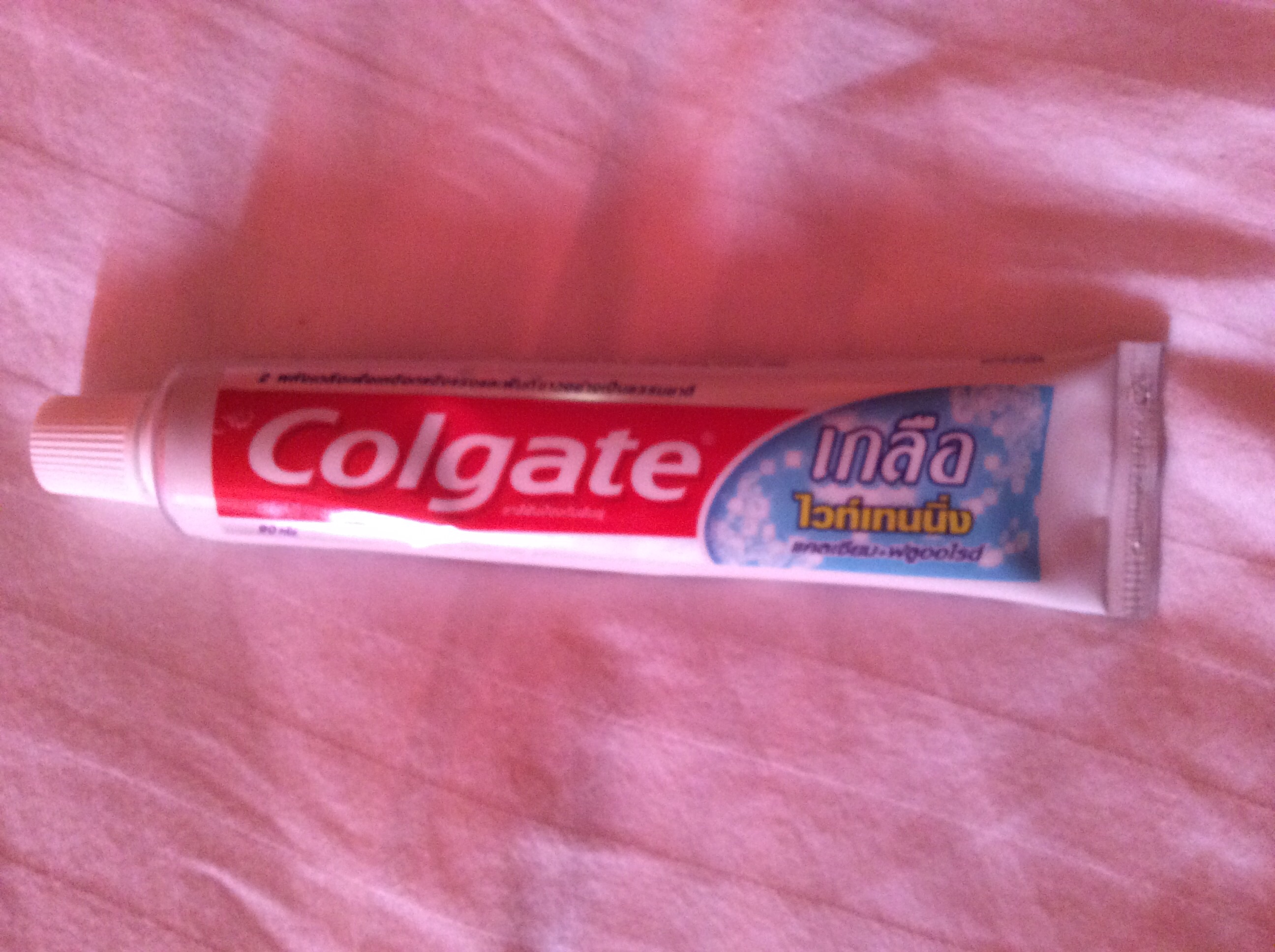
Speaking of the 7 Eleven, we have the opportunity to stock up on some provisions while we are here. The tube of toothpaste we’ve been carrying since Bulgaria finally ran out, and we were happy to see the familiar Colgate brand on the shelf. Little did we know that Colgate makes Salty Seaweed flavored toothpaste to please the Thai palate! Yuck is all I can say, but I’m sure we’ll get used to the taste…image

We also got some salty rice porridge flavored with fish or pork, which is what’s for breakfast around here. It’s pretty good once you get used to it.image

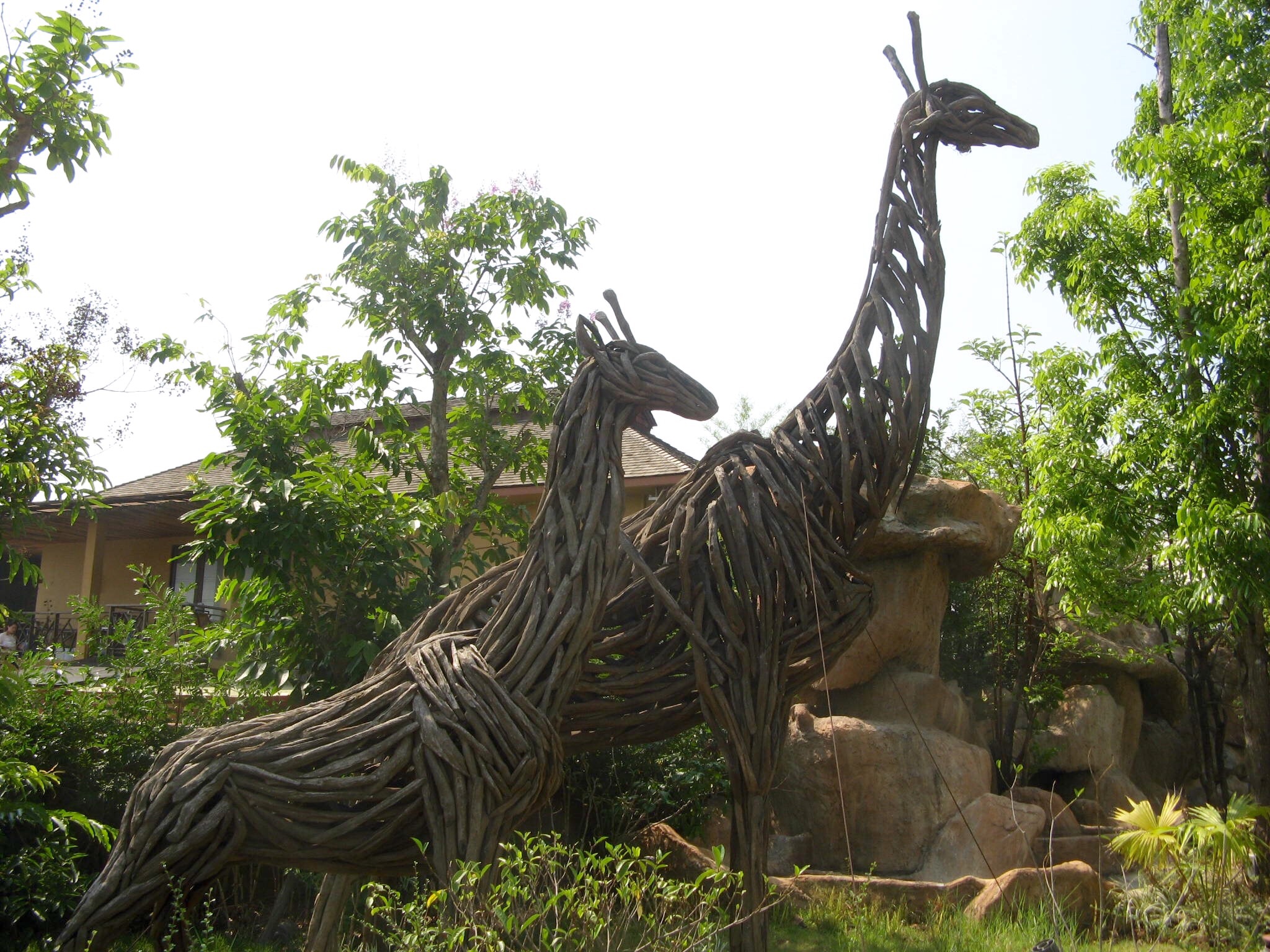
While staying at the Hotel Pailifornia, we hiked in different directions each day, to see what was beyond the tourist streets. Up the road was the yummy Canteen Restaurant, where we lounged on concrete couches under the trees, and found some unusual giraffes.
image

image
image

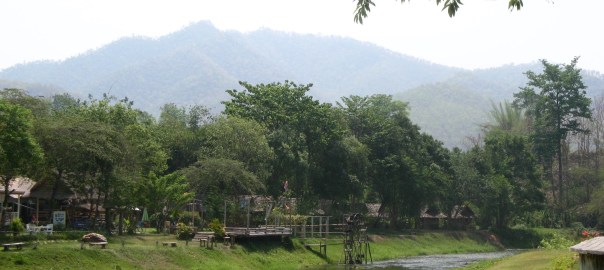
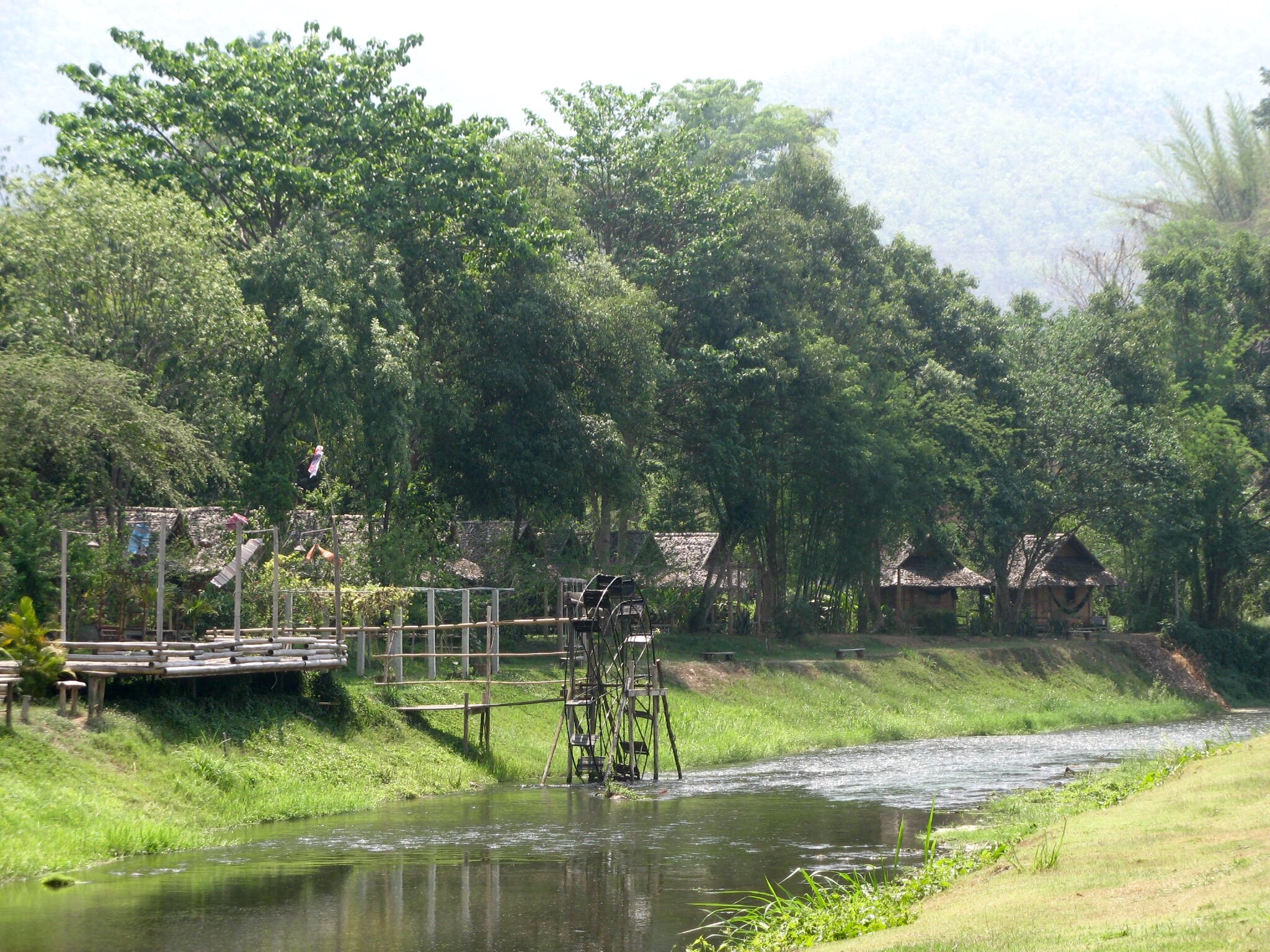
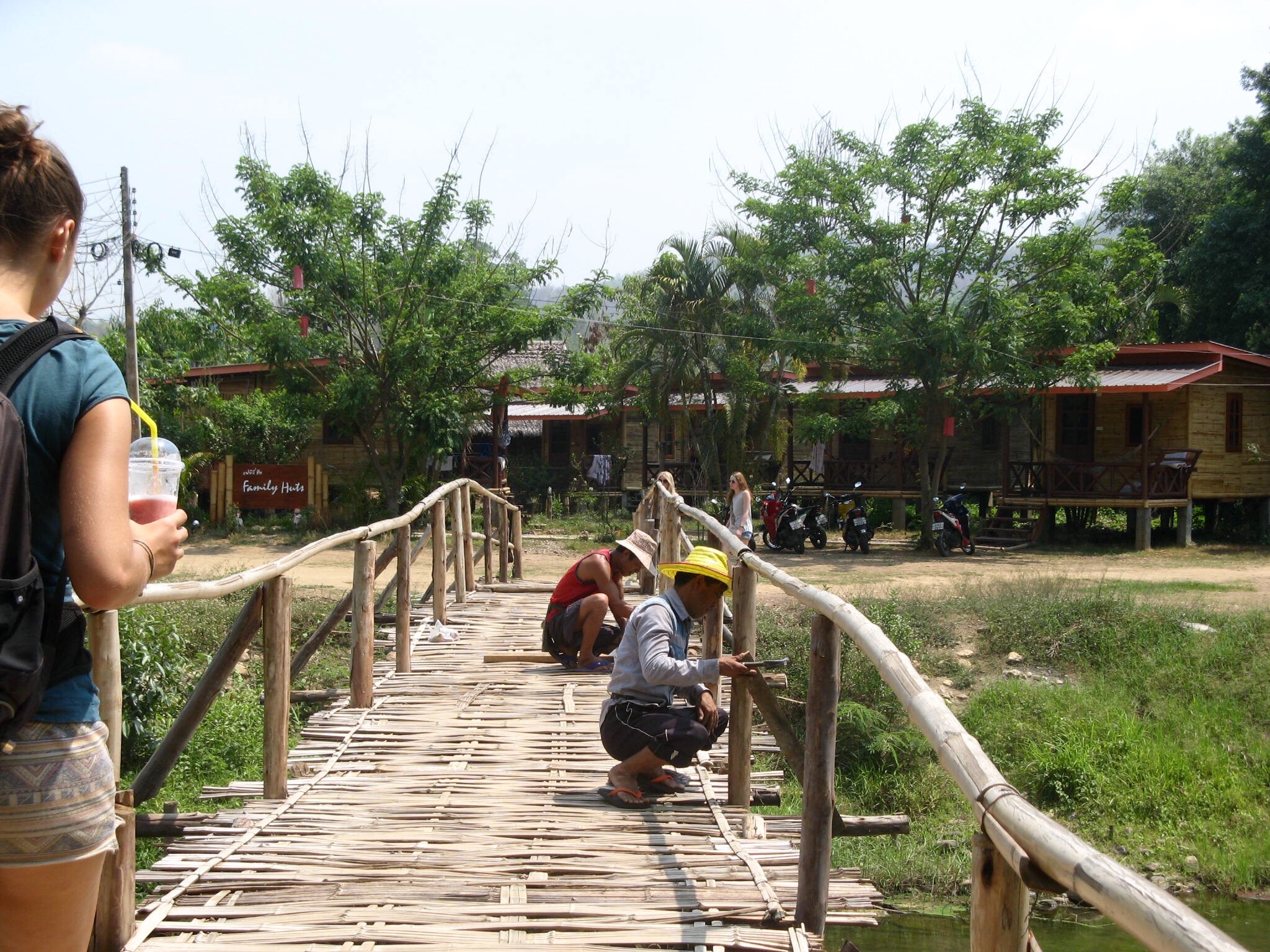
In the opposite direction we found the Pai River and crossed over the bamboo bridge. (Wasn’t that a movie? Bridge over the River Pai?) Yes, motorbikes drive over this bridge.image

image

Here there were fewer motorbikes and riverfront scenery.image

image

image

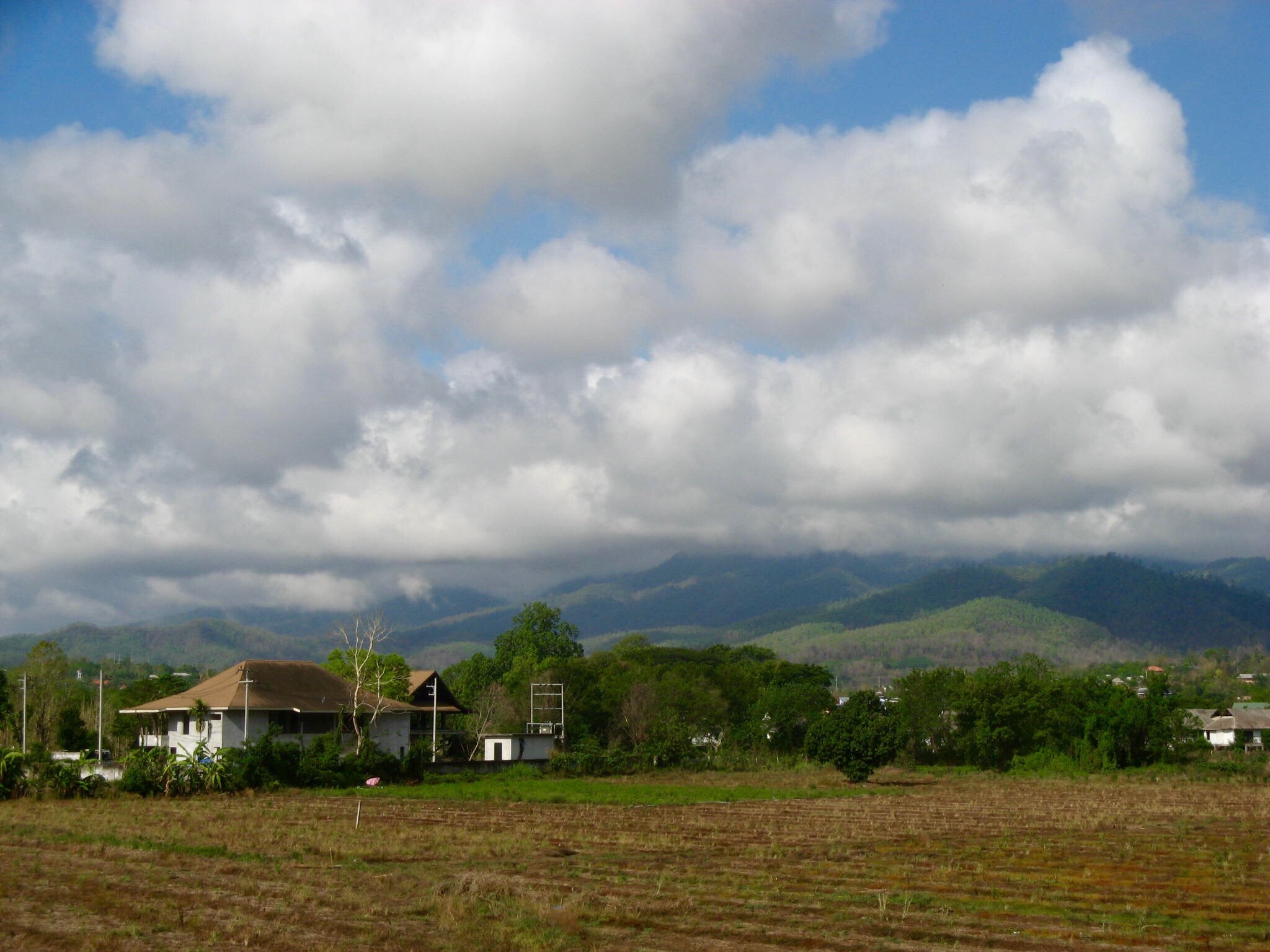
The next day we walked across town toward the mountains, where we could see a huge Buddha statue on a hill in the distance. image

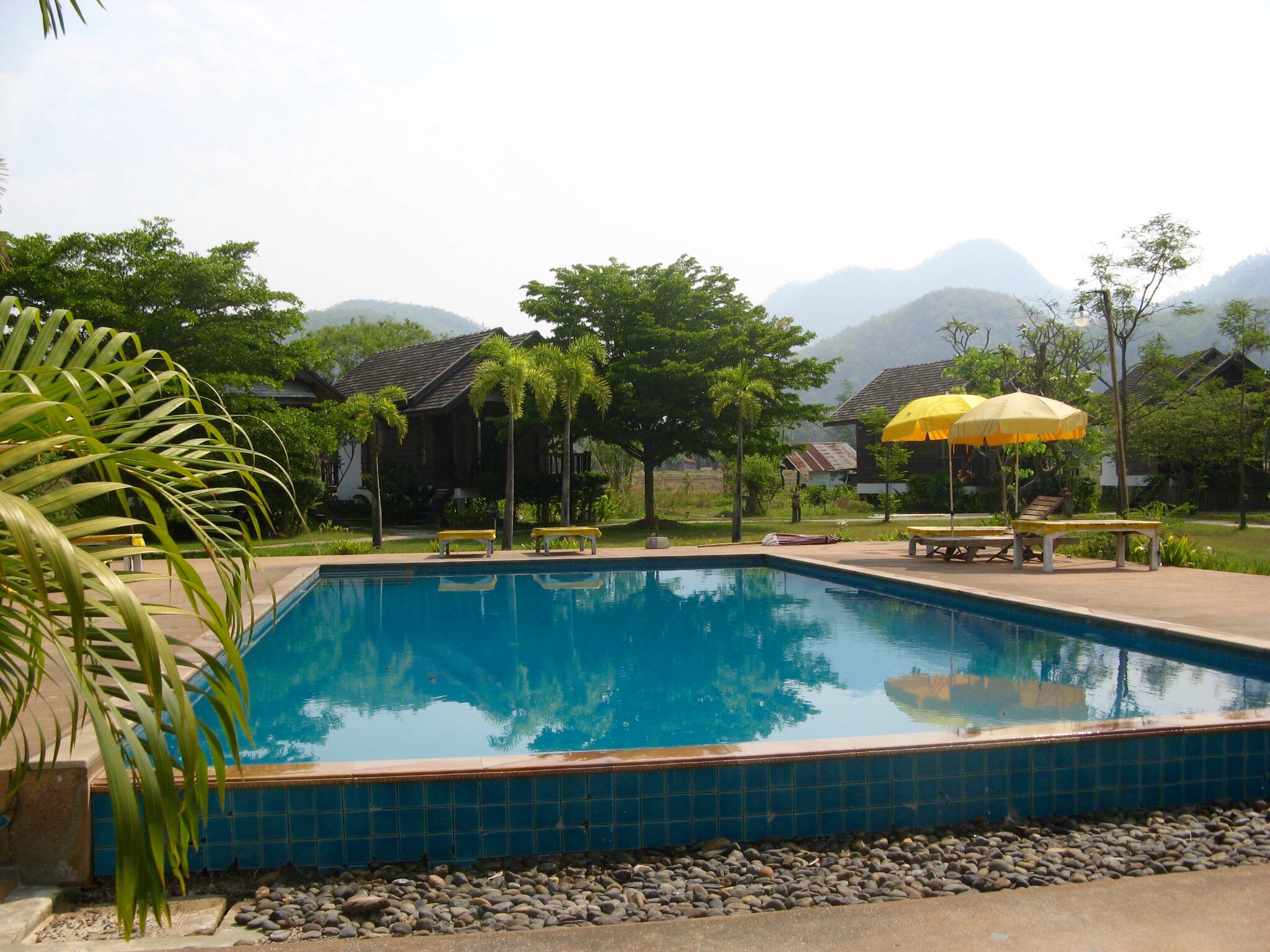
Here we found the Pai we were looking for – quiet, beautiful scenery, lots of restaurants within walking distance, and a resort with air conditioned cabins, and a gorgeous pool for $24.00 a night, including a full American breakfast! Guess where we will be moving tomorrow?image

image

image

Vang Vieng, Laos – Hike to Lusi Cave

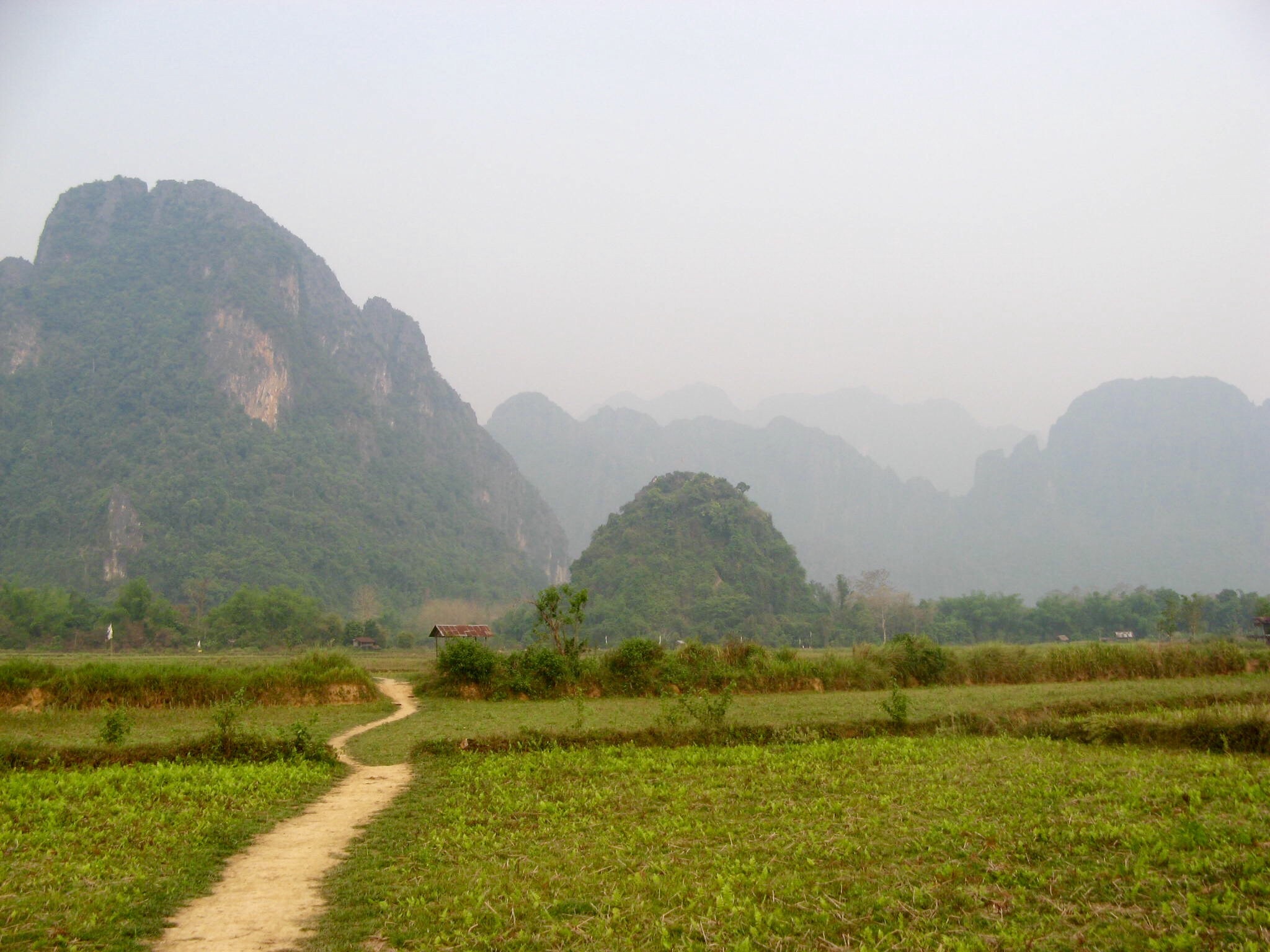
4/6 – Happy Easter to those celebrating far away – no sign of bunnies or jelly beans in this town! Today we are hiking to Lusi Cave, which, according to the sign, is just a kilometer out of town. It promised to be another 100 degree day, so we left right after breakfast before it got too hot. The mornings here are very pleasant – in the 70s.

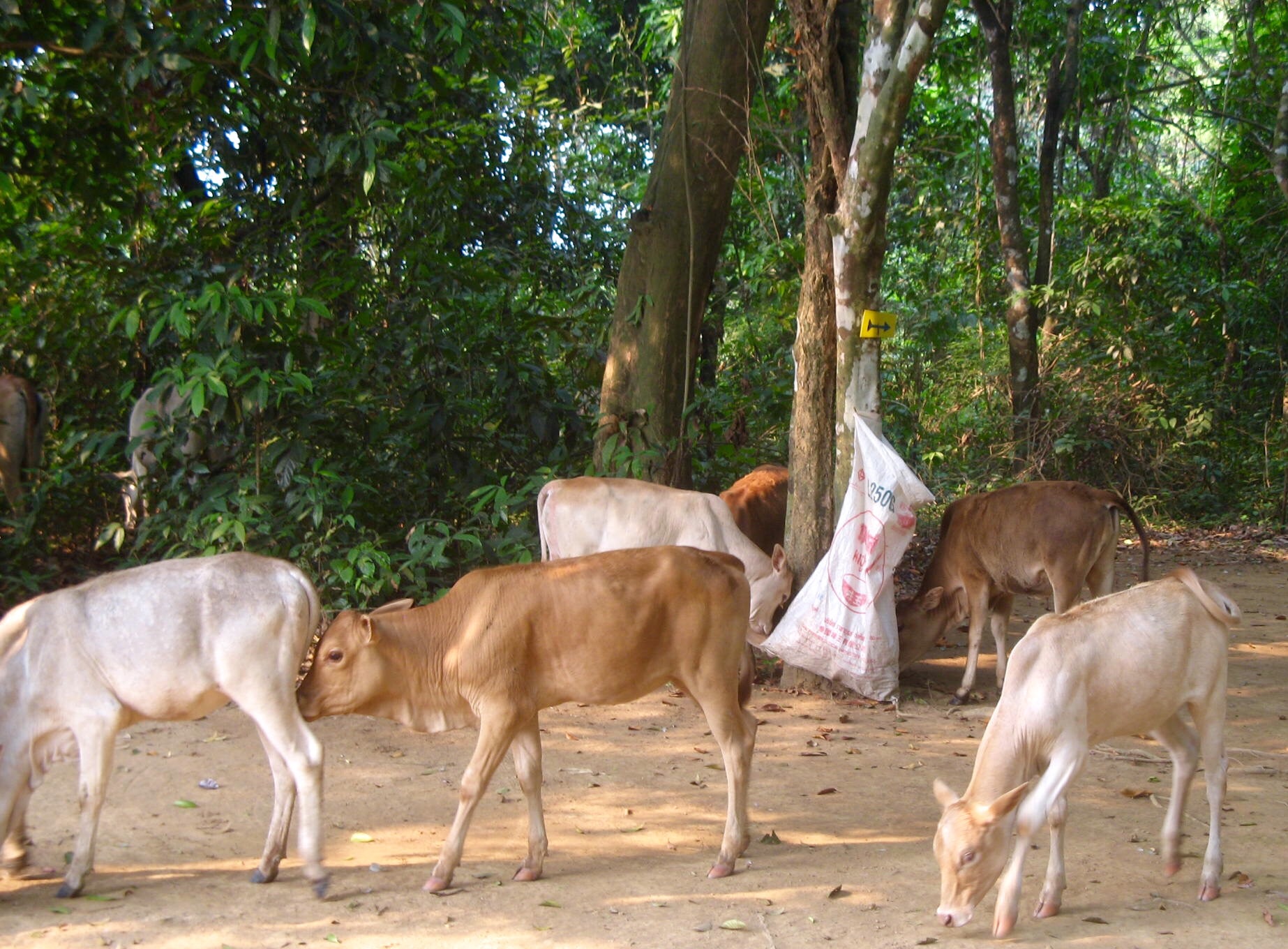
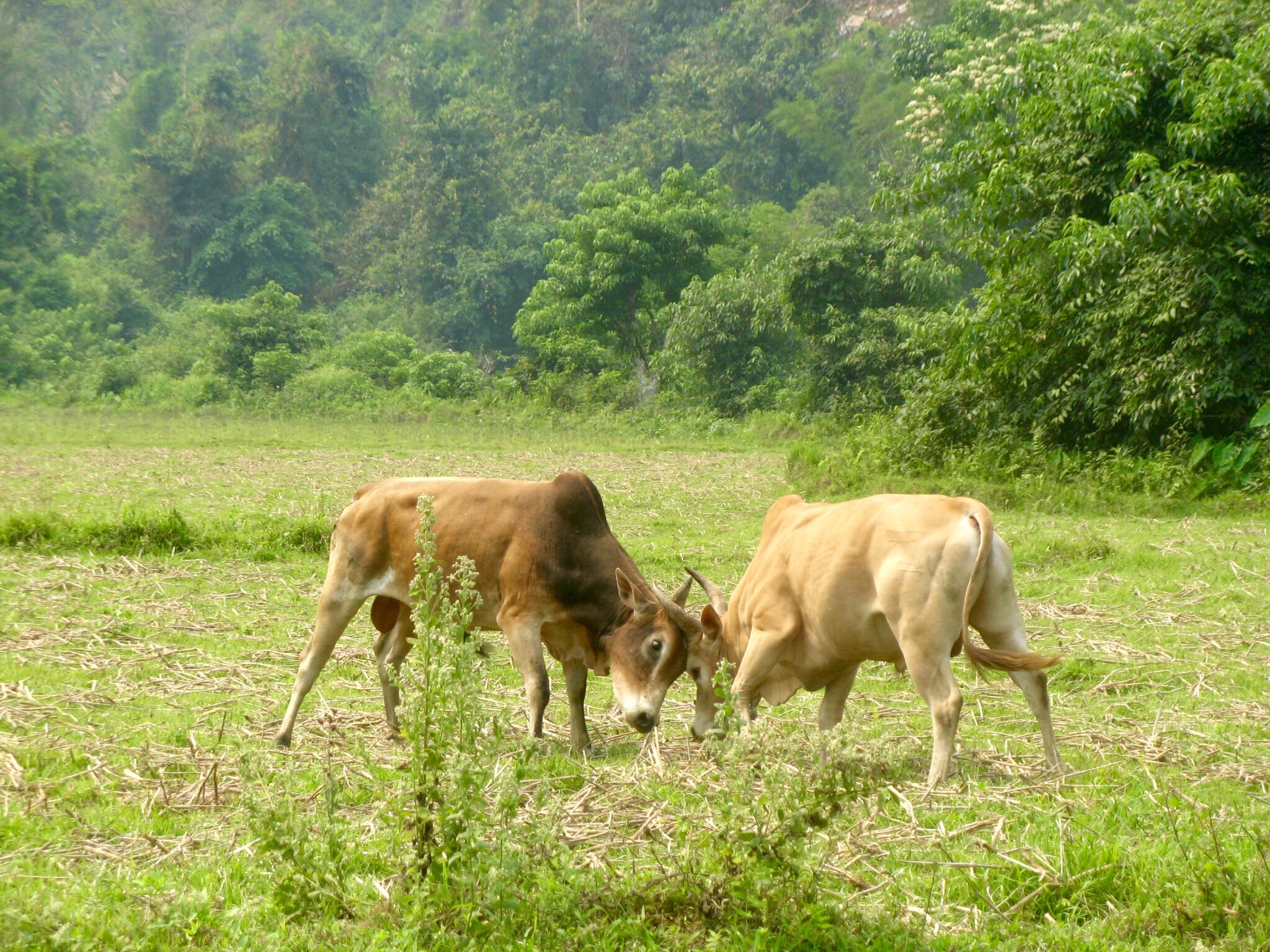
We followed handwritten signs with arrows pointing down a trail through some farmers’ fields and unplanted rice paddies. We met a herd of young cows, grazing free, and a couple of young bulls butting horns to show off for the ladies.image image

Soon the fields turned to a shady wooded path, with signs that continued to say that the cave was 1 km away. Must be the longest kilometer ever! We got to a hill with a flag on top, with a shack and a sign that promised that we could climb the hill for a great view for only 10,000 kip. There was no attendant here, and the gate to the first ladder was locked, so we hiked on.image

Jim is never quite as happy as when he is hiking a trail through the woods.image

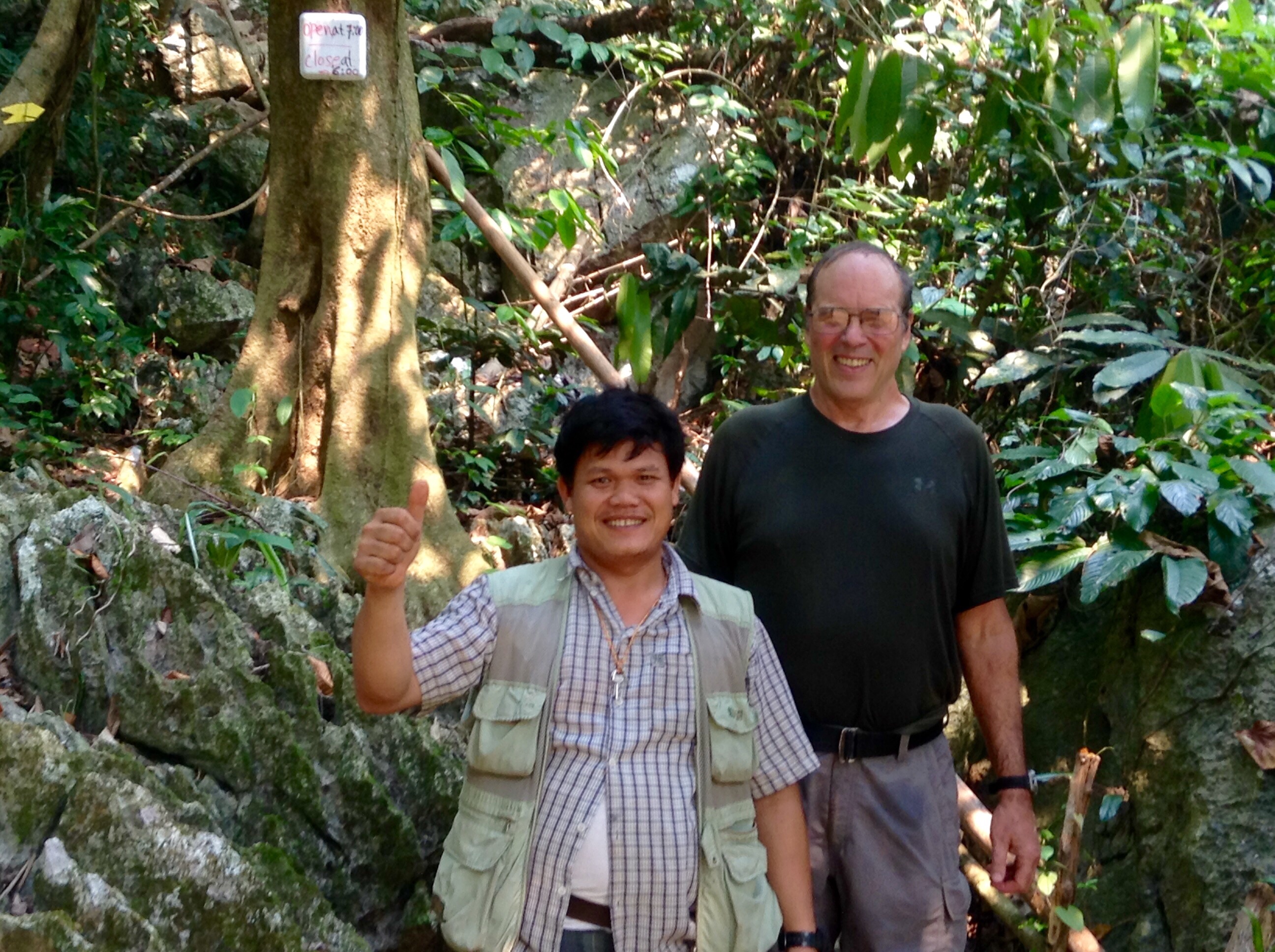
45 minutes later, we arrived at another shack and another sign. The cave was straight up from here, but again there was no attendant. We saw a steep ascent and a ladder, which my arm was not ready for, so I told Jim to go up, and I waited in the shade below. In a minute, he called down that there is a locked gate here too, but he was going to try to climb over it.image

Just then, we heard a motorbike, and a young man pulled up! He was the attendant, and he grabbed a flashlight and motioned for me to follow him up. I declined, but called out to Jim, and when he heard Jim’s voice above, he understood that his customer was up at the gate.

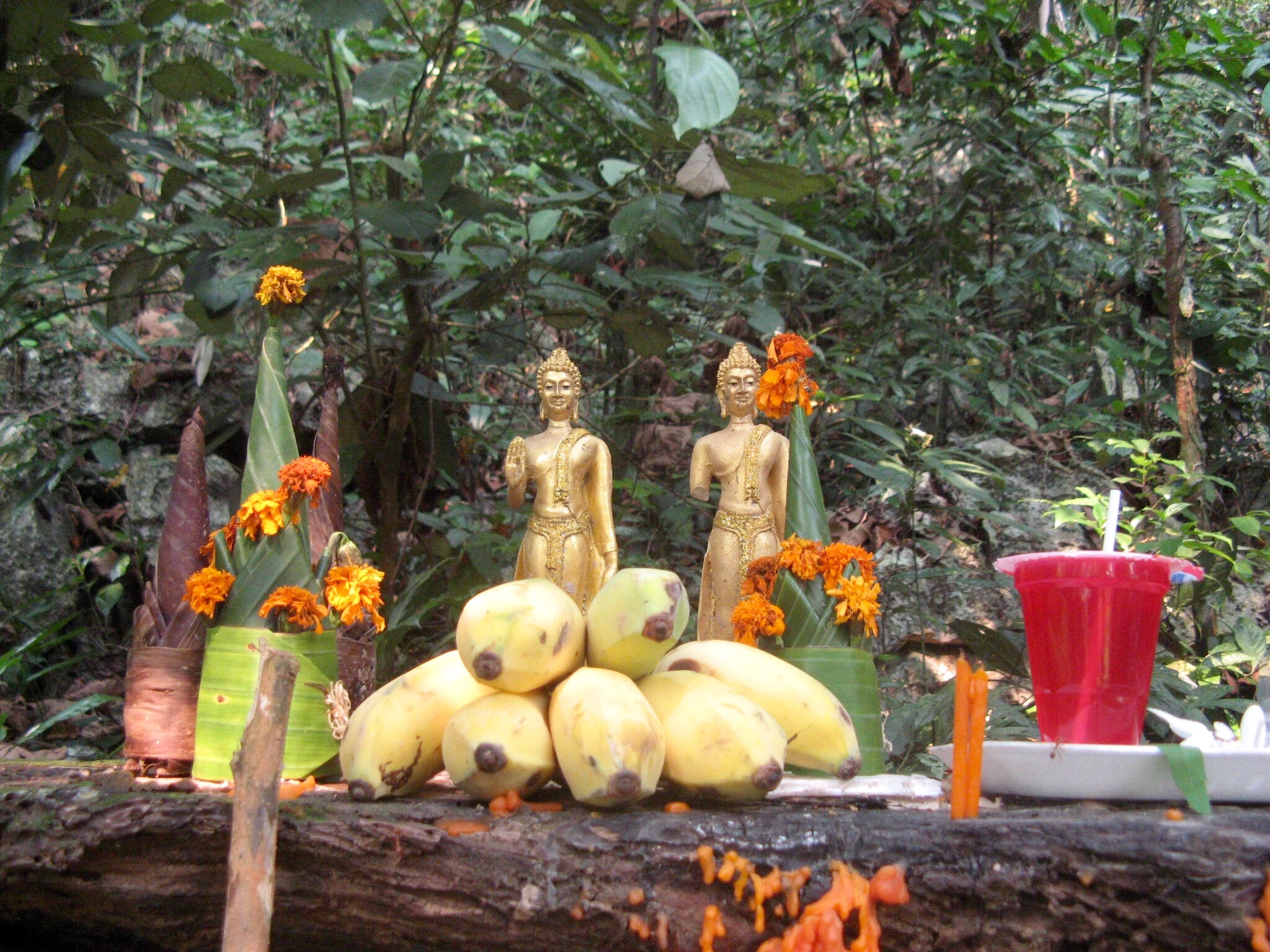
I passed the time swatting flies and admiring the little altar erected at the base of the climb up to the cave, with offerings of food and flowers. Those are little 3 inch bananas, to give you an idea of how small the Buddhas are.image

Half an hour later, Jim returned, triumphant, having climbed up to the cave and experienced the dark and the cool, the stalactites and stalagmites. Unfortunately, it was too dark in the cave for pix, but it sure sounded like fun.image

Walking back in the heat of noon was not so much fun, and reminded me of the old song that only “mad dogs and Englishmen go out in the midday sun”.

Here’s an interesting note about Vang Vieng: did you know that they have bars/cafes here that play episodes of Friends 24/7? Now that is something you can’t get everywhere… Book your tickets for Vang Vieng today!image

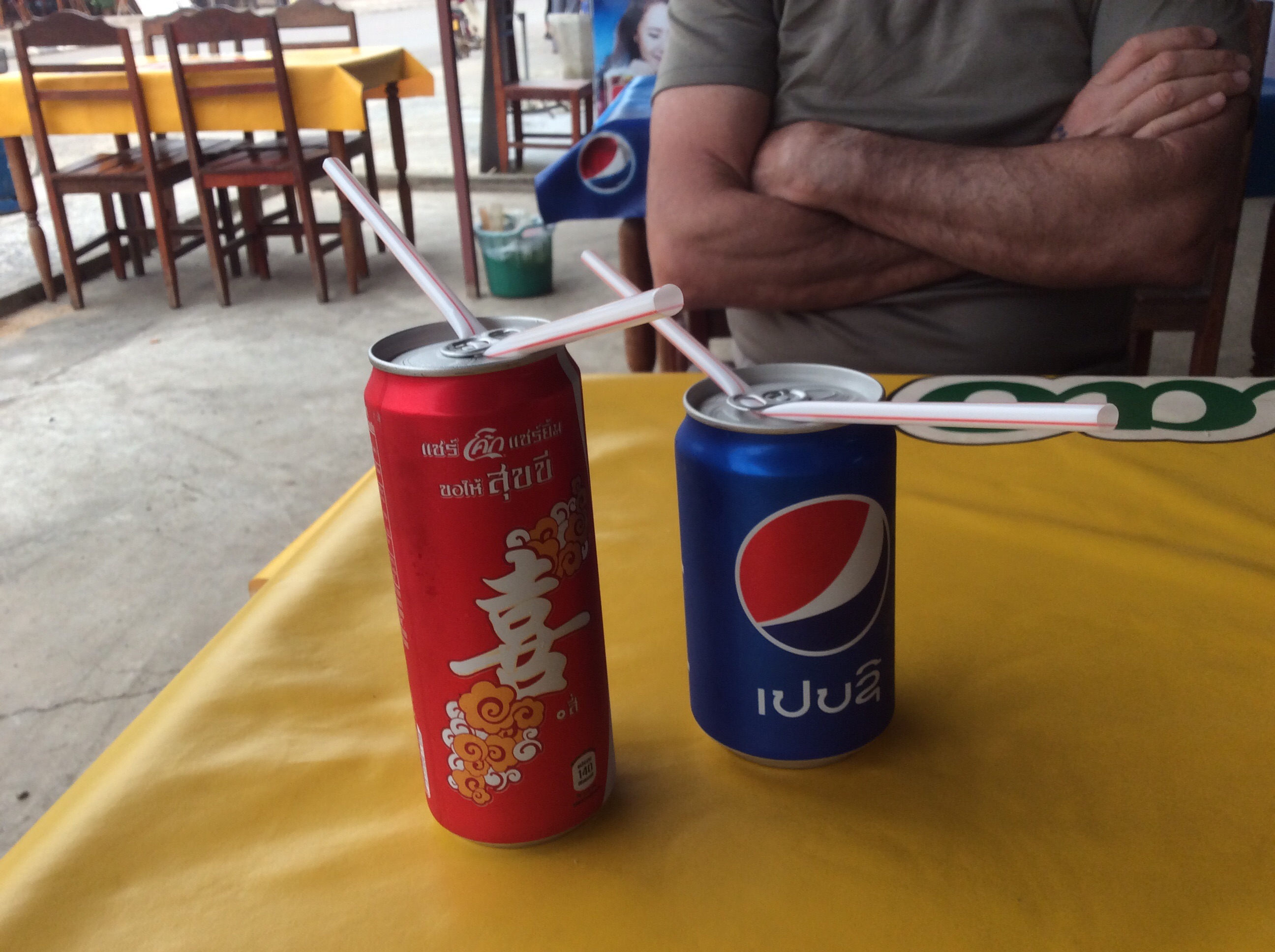
And in case you were wondering, here’s what Coke and Pepsi look like in Laotian!image

Sheesh – slow news day. Must be time to move on!

Capernaum to Jerusalem, Israel

1/27 – We checked out of our room at Karei Desche, took a taxi to Tiberias, and caught the 10am bus to Jerusalem, a three hour ride.

IMG_6963

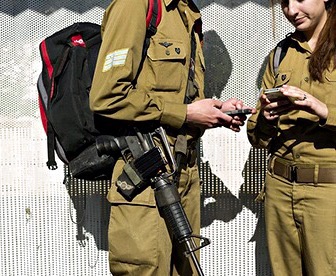
We shared the bus with many young Israeli soldiers in uniform, who ride for free. All 18 year olds serve in the military here; the girls for two years, and boys for three. It was a little unsettling to see kids with semi-automatic rifles slung over their shoulders on the bus.

IMG_6974

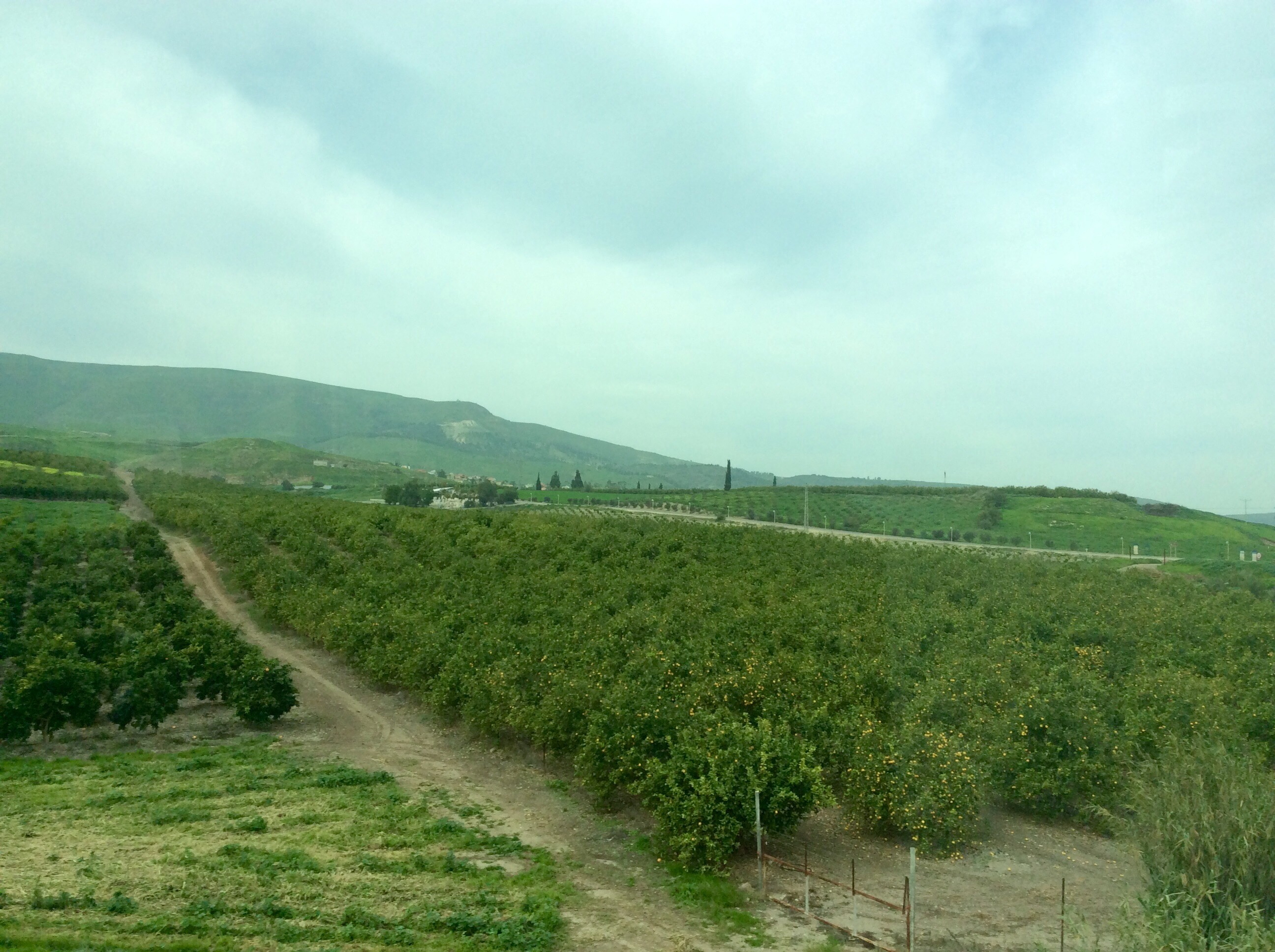
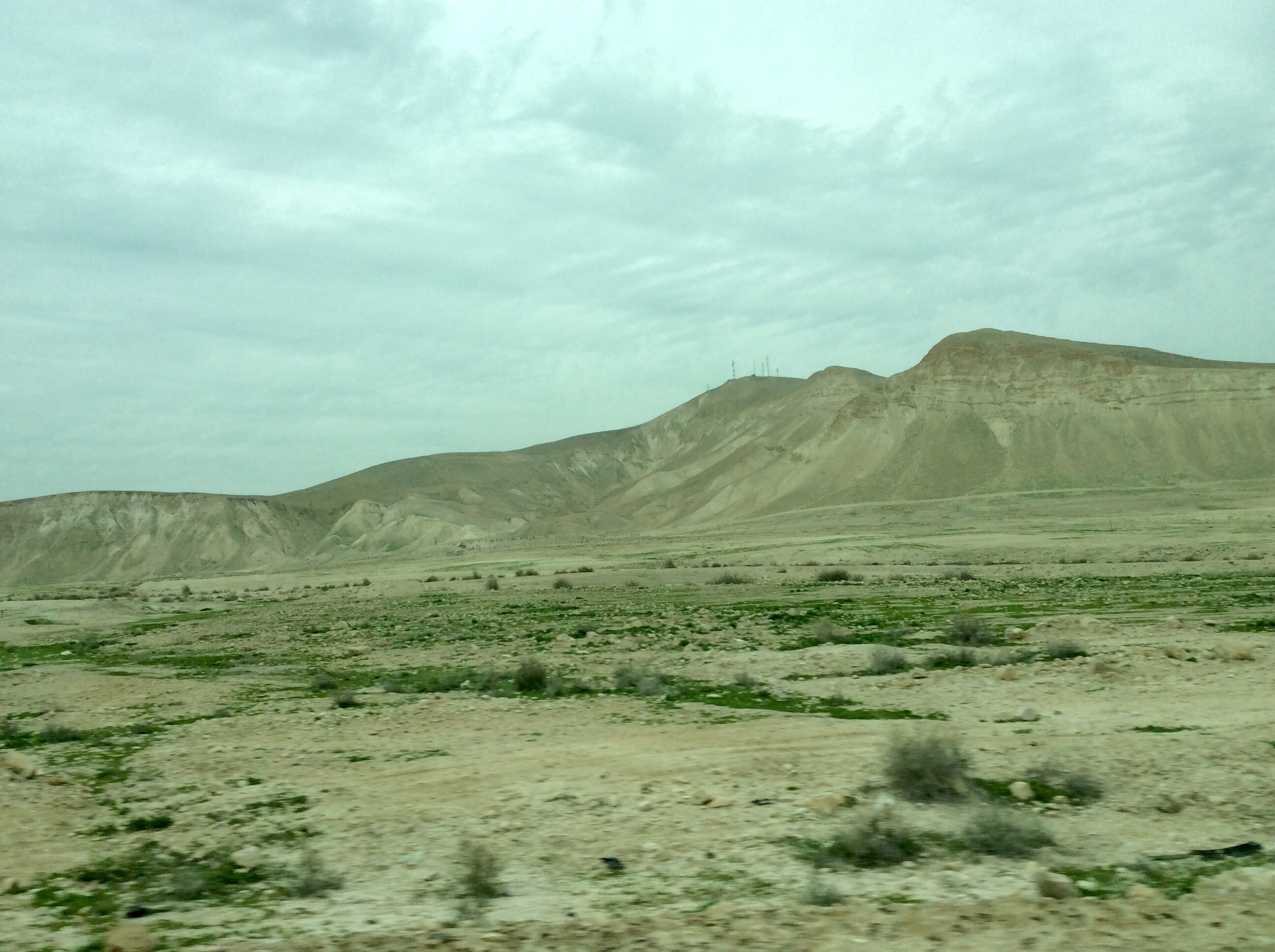
As we approached Jerusalem, the scenery turned from lush green to arid brown. (The bus windows were tinted blue.)

IMG_6842

IMG_6843

IMG_6845

We also saw our first camel by the side of the highway (sorry, not quick enough for a pic – you’ll have to take my word!)

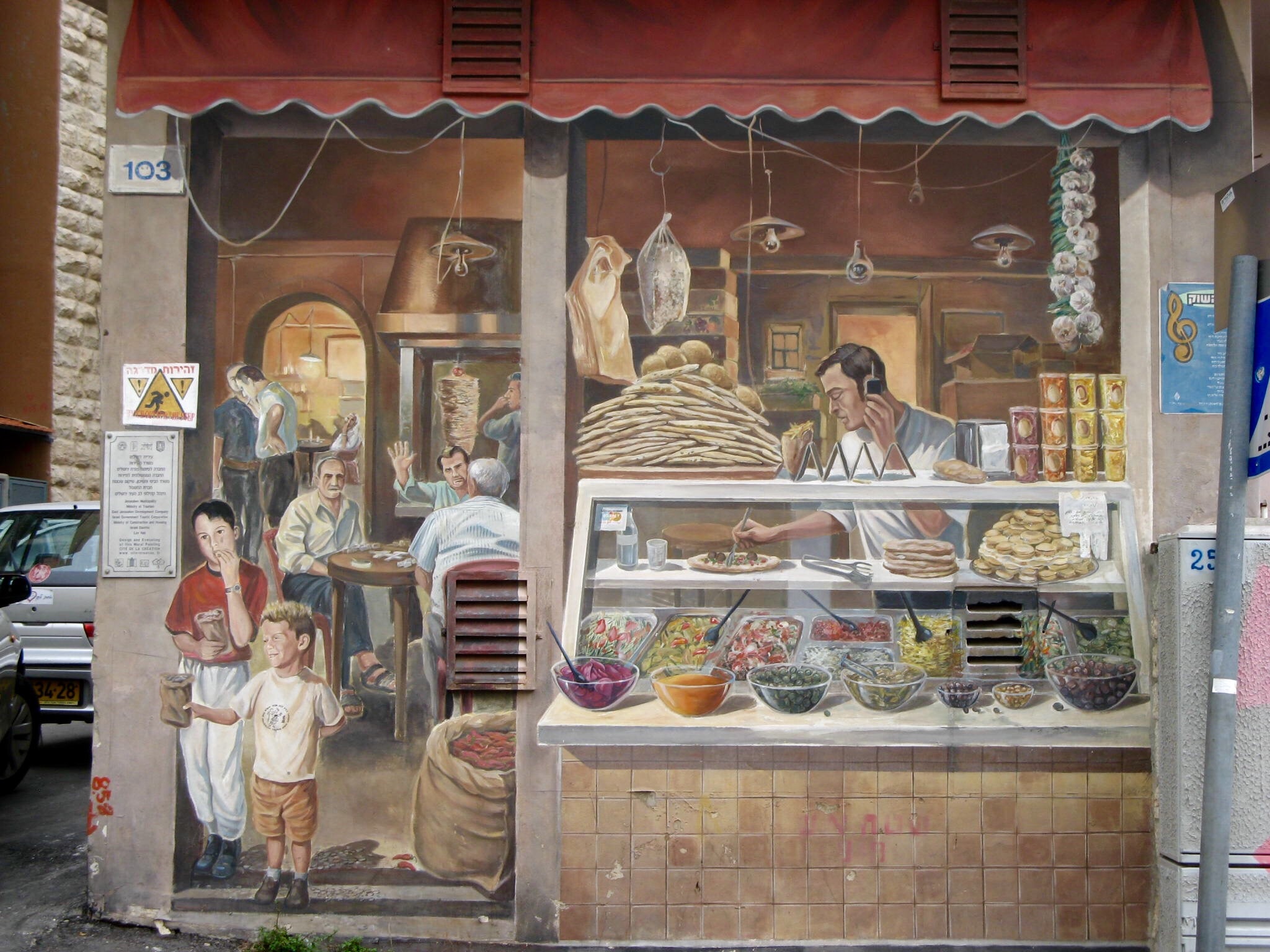
We walked down the bustling, modern, and very clean streets, and I came across something I haven’t seen since Wisconsin. Wall art!imageimage

We are staying at a cozy flat advertised as A Cozy Flat in Jerusalem. The owner left us the key in a lockbox, and asked us to leave our payment on the kitchen table when we left. Very relaxed arrangement. Our flat is at Jaffa Center, a very upscale shopping district not far from the walls of the Old City. Although we were surrounded by shops, we couldn’t find a market to buy provisions for supper. When we finally asked, we were directed up the main street about 15 minutes walk, where we found a bustling open-air market.

Jim fixed us the best chicken soup ever.

Trust

More from Jim…

beinghere2014's avatarBeinghere

image

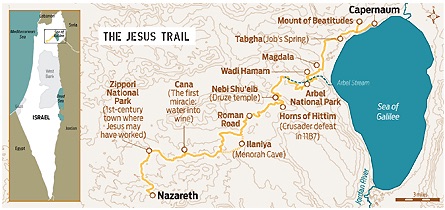
We are walking the Jesus Trail in Israel — from Nazareth to Capernaum.

image

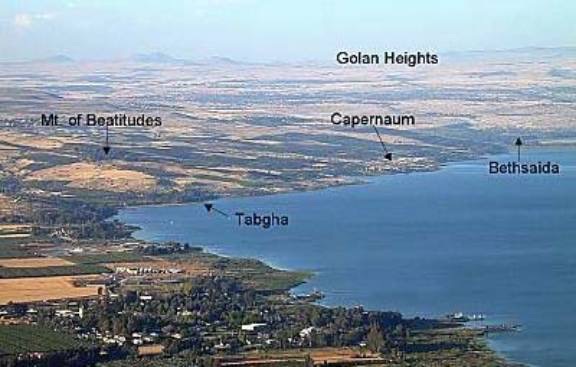
We arrive in Tabgha, where many important events occurred: (1) Jesus called his first apostles (Mark 1:16-20) (2) Jesus gave the Sermon on the Mount (Mark 5:1) (3) Jesus healed a leper (Mark 8:1-4)(4) Miracle of the multiplication of the loaves and fishes (Mark 6:30-44) (5) Jesus walked on water (Mark 6: 45-57) (6) Jesus met his disciples after his resurrection (John 21: 1-14) (7) Jesus’ appearance to 500 (1 Cor. 15:6)

In Tabgha, we see the first sign for Capernaum, our ultimate destination, the location of St. Peter’s house and the Orthodox Church of Capernaum.

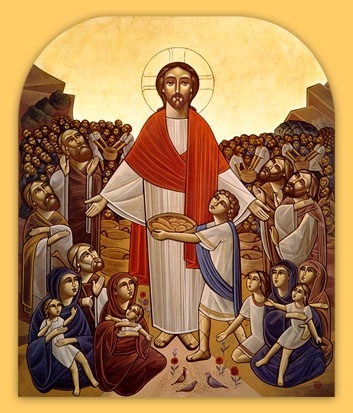
There were probably two separate events where Jesus fed a large crowd with a small amount of food. In Tabgha, the miracle is termed the “Feeding of the 5000.”

image

Jesus was teaching a large crowd in a place where there was…

View original post 833 more words

Tabgha to Capernaum, Israel

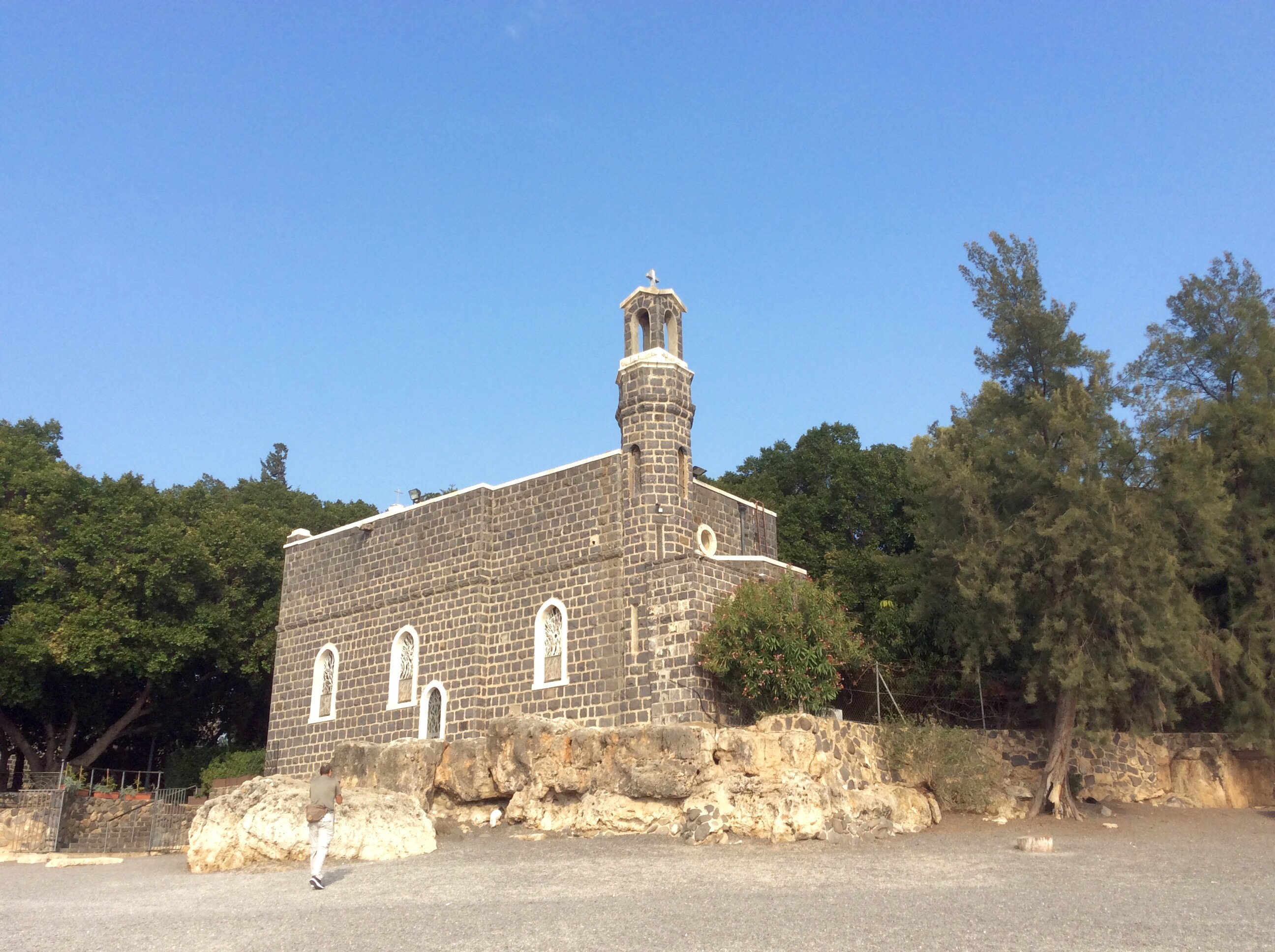
1/26 – Down the road from the Church of the Multiplication, is the Church of the Primacy of St. Peter.

IMG_6737

Here, The Franciscans built a church in 1933 to mark the place where Jesus told Peter to “feed my sheep.”

IMG_6743

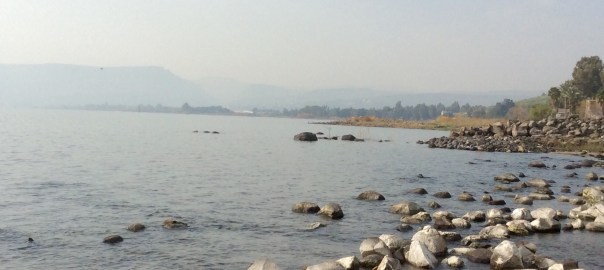
It is right on the Galilean shore.

IMG_6735

This church also has a big rock where Jesus is thought to have blessed the loaves and fishes.

IMG_6726

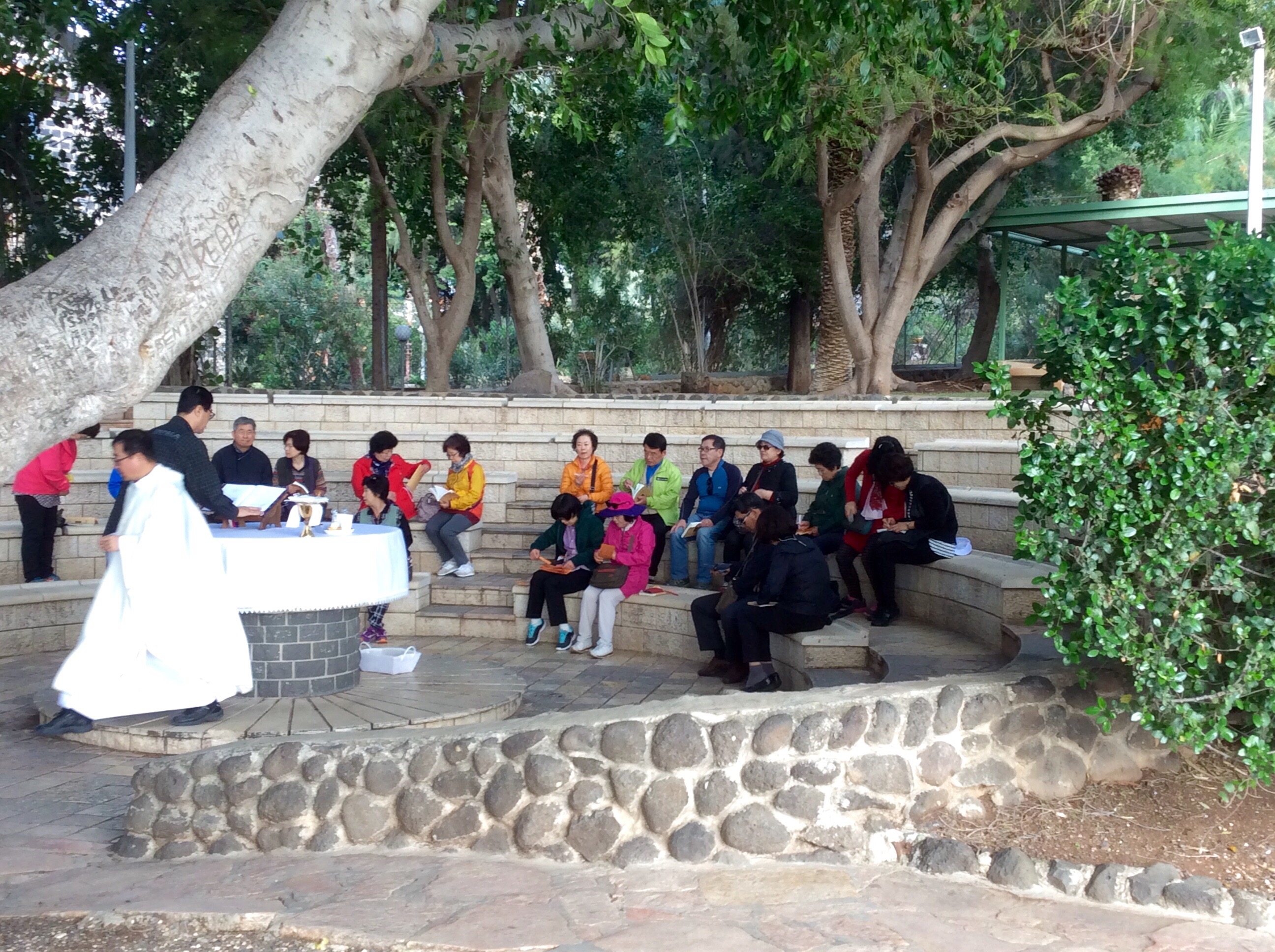
There was an Asian group conducting a mass in one of the outdoor chapels. We listened to them sing as we gazed at the shore.

IMG_6740
image

From here we hiked up a big hill to reach the Church of the Beatitudes, where Jesus delivered his Sermon on the Mount. We could imagine the hill filled with people as we climbed in the morning sun.

This was very small church jam-packed with tour groups, surrounded by a contemplative garden. The nuns also run a guest house here.

We tramped back down the hill, cutting through farmers fields and hopping over a barbed wire fence to get back to the main road. Now to walk to Capernaum.

Capernaum, pronounced Cap-har-NAY-um by the locals, is not a town, but another ruin with monuments.image

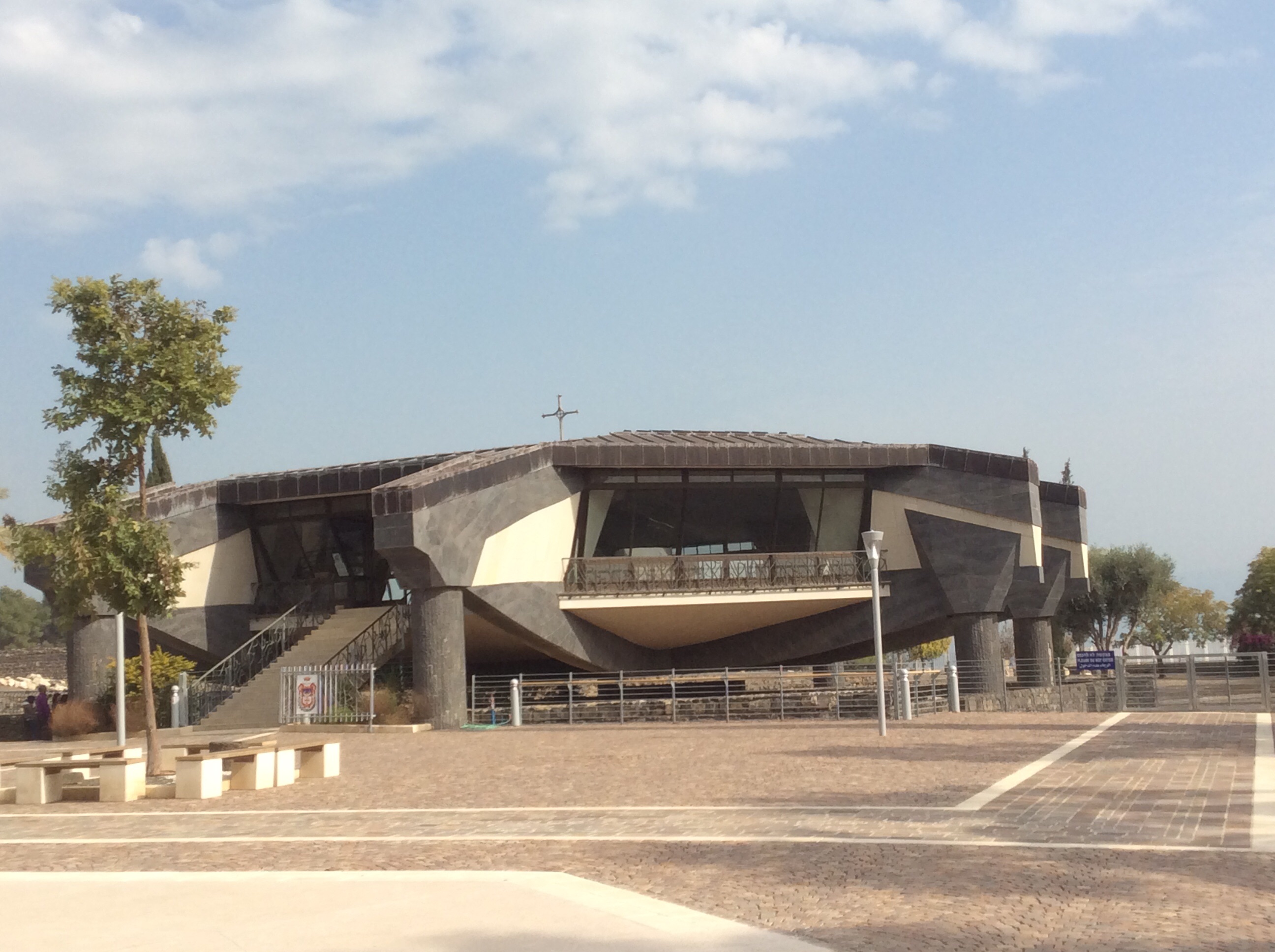
Here, a house believed to belong to Peter is preserved under a very modern church that looks like a UFO.image

image

You can see the excavation under the glass floor of the church, and from the outside. This particular house was maintained much longer than the other houses nearby, and had many oil lamps, which could mean it was used as a meeting or worship space instead of a dwelling. That’s why it is believed to be Peter’s house.

There is also a reconstruction of a large ancient synagogue here, where Jesus is said to have preached.

Our last hike of the day is to the pink-domed Greek Orthodox Church of the Twelve Apostles. image

There are peacocks in the yard, and beautiful old trees.

Inside, a repeating chorus of Hallelujahs surround us as we took in the frescos on the walls and ceilings.

A fitting end to a wonderful day.

Nothing to hold

From Jim…

beinghere2014's avatarBeinghere

We leave the Arbel Guesthouse to walk to Tabgha, Israel, continuing our hike on the 40 mile Jesus Trail.

image

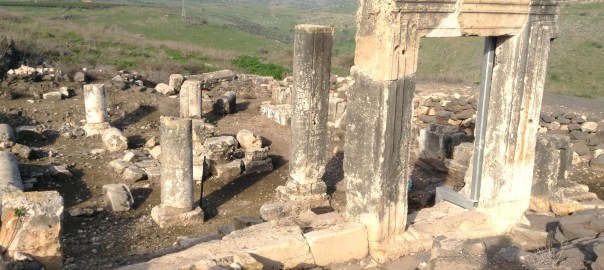
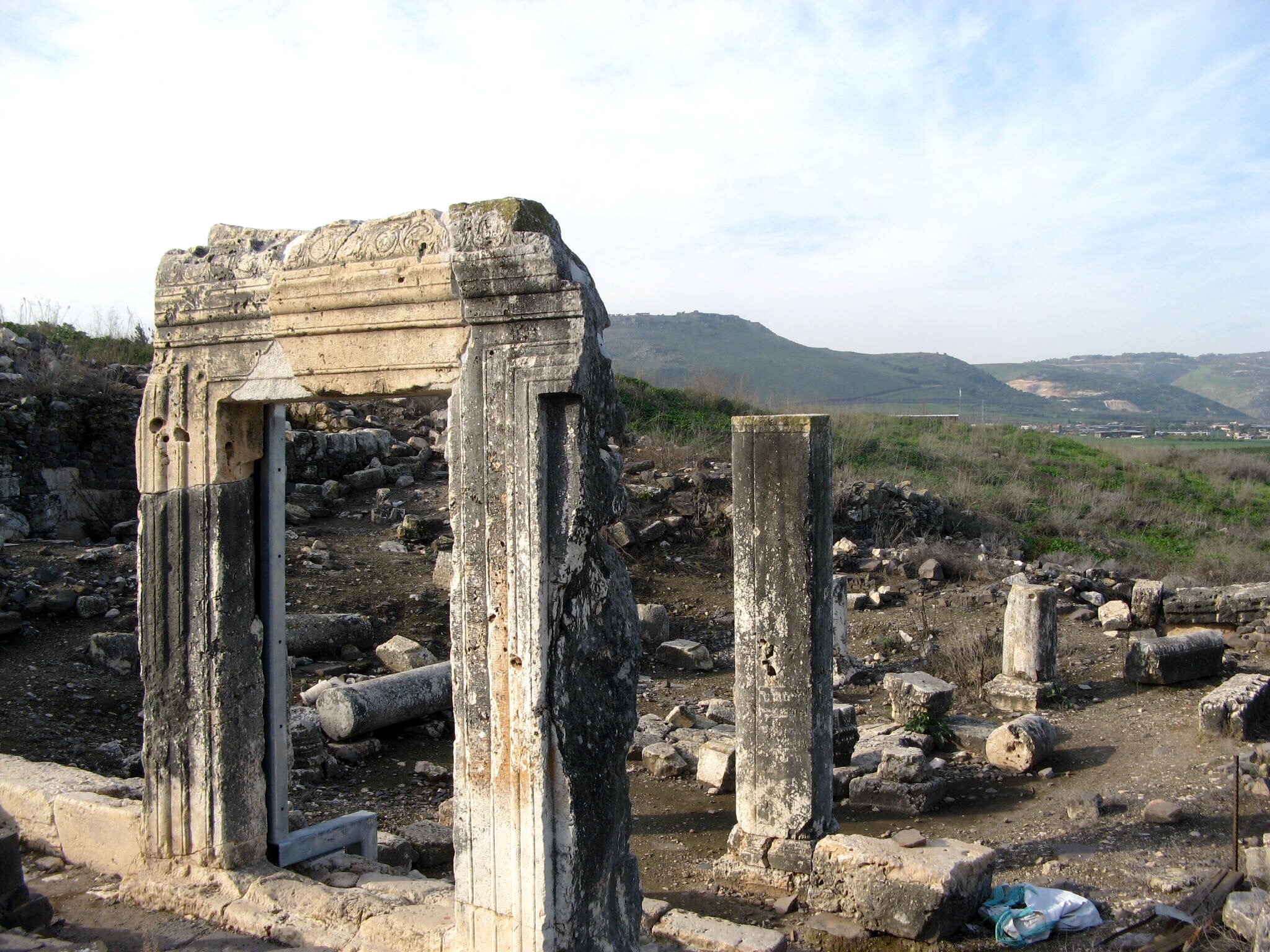
We pass the ruins of the Roman/Byzantine Synagogue of Ancient Arbel, one of the oldest synagogues in the world. The synagogue door, carved from a massive natural limestone outcropping, still stands.

image

The synagogue has a view of the Arbel Valley, where, according to one Jewish tradition, the Messiah will appear.

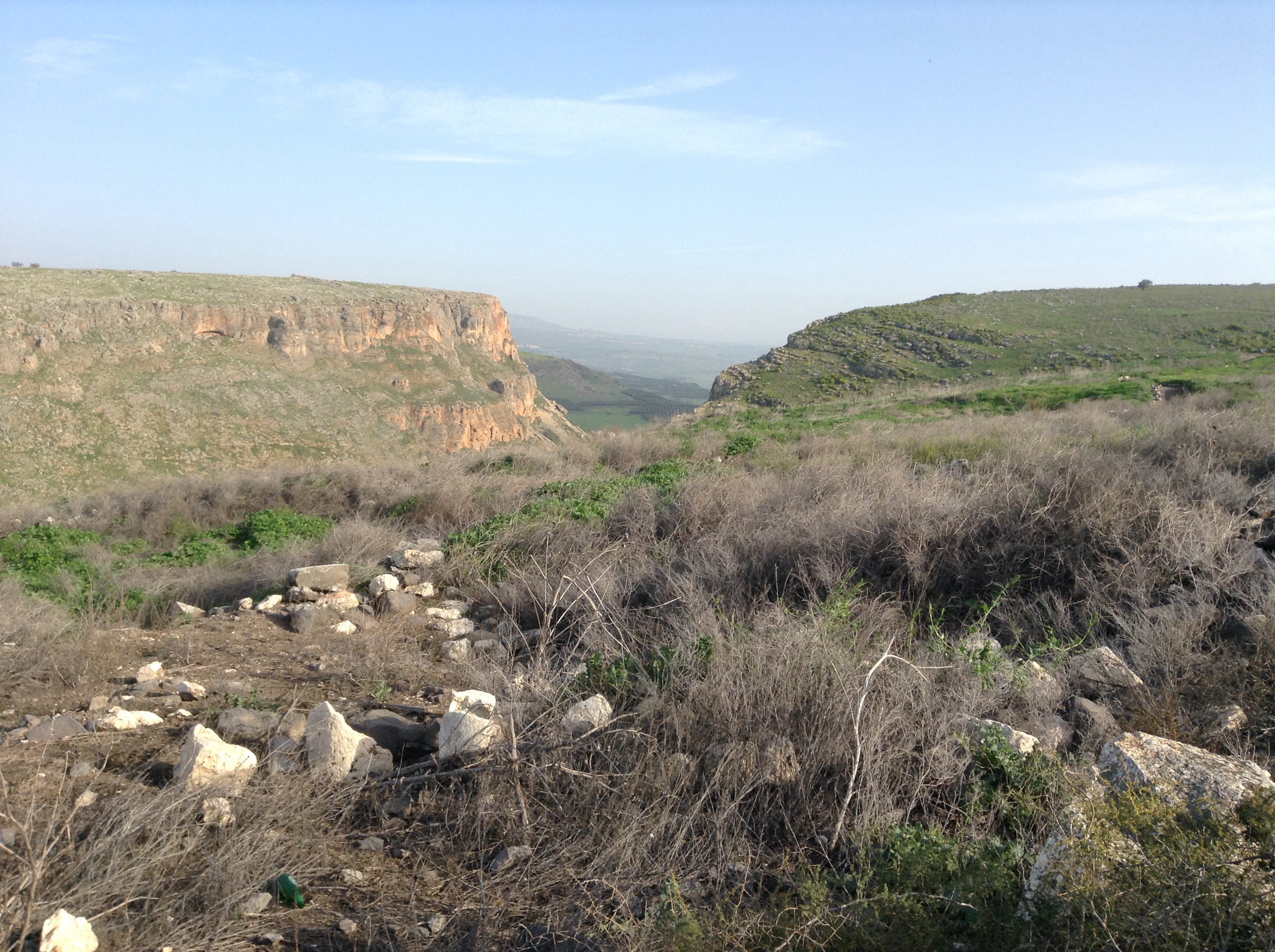
We take the Gospel Trail through the valley rather than walk down the steep Arbel cliffs.

We encounter many cows along the trail.

There are caves in the hillsides. The ancient historian Josephus (39/40 BC) tells of Herod the Great rooting out Hasmonian rebels from these caves by lowering soldiers in baskets, killing resisters, and building fires in the cave openings. Although Herod offered terms of surrender, the rebels chose suicide. Josephus tells of one old man, father of seven children…

View original post 255 more words

Moshav Arbel to Tabgha, Israel

1/25 – So sorry I didn’t get a pic of our wonderful supper last night – we were too busy eating. Here’s a small part of what we were served for breakfast, including a baked tomato omelette, fruit, cheese, homemade bread, warm marmalade, muffins, avocado, tomatoes, peppers, cucumbers, olives, candied citrus, a fruit smoothie, herbal tea and coffee with whipped cream. Ate ’til we were stuffed again, and then made sandwiches for lunch. Bravo Israel!

2015/01/img_6676.jpg

Back on the trail, we came upon the ruins of an ancient synagogue, discovered in 1905.

2015/01/img_6679.jpg

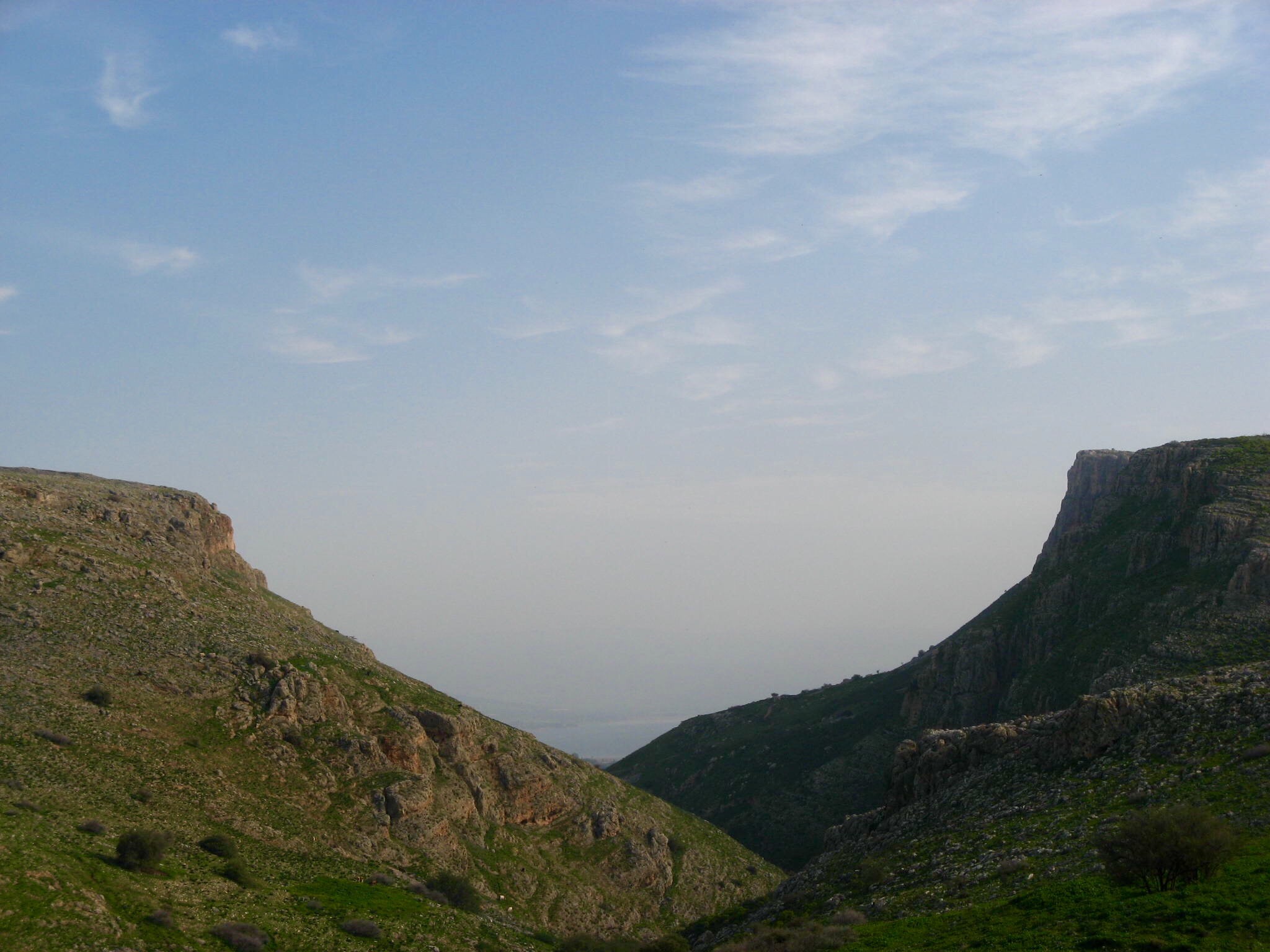
We walk near the cliffs of Arbel, and can see the Sea of Galilee in the distance.

IMG_6681

There are caves in the cliffs where bandits lived in Jesus’ time. King Herod had to send troops to get them out of the caves, so travelers could proceed unmolested.

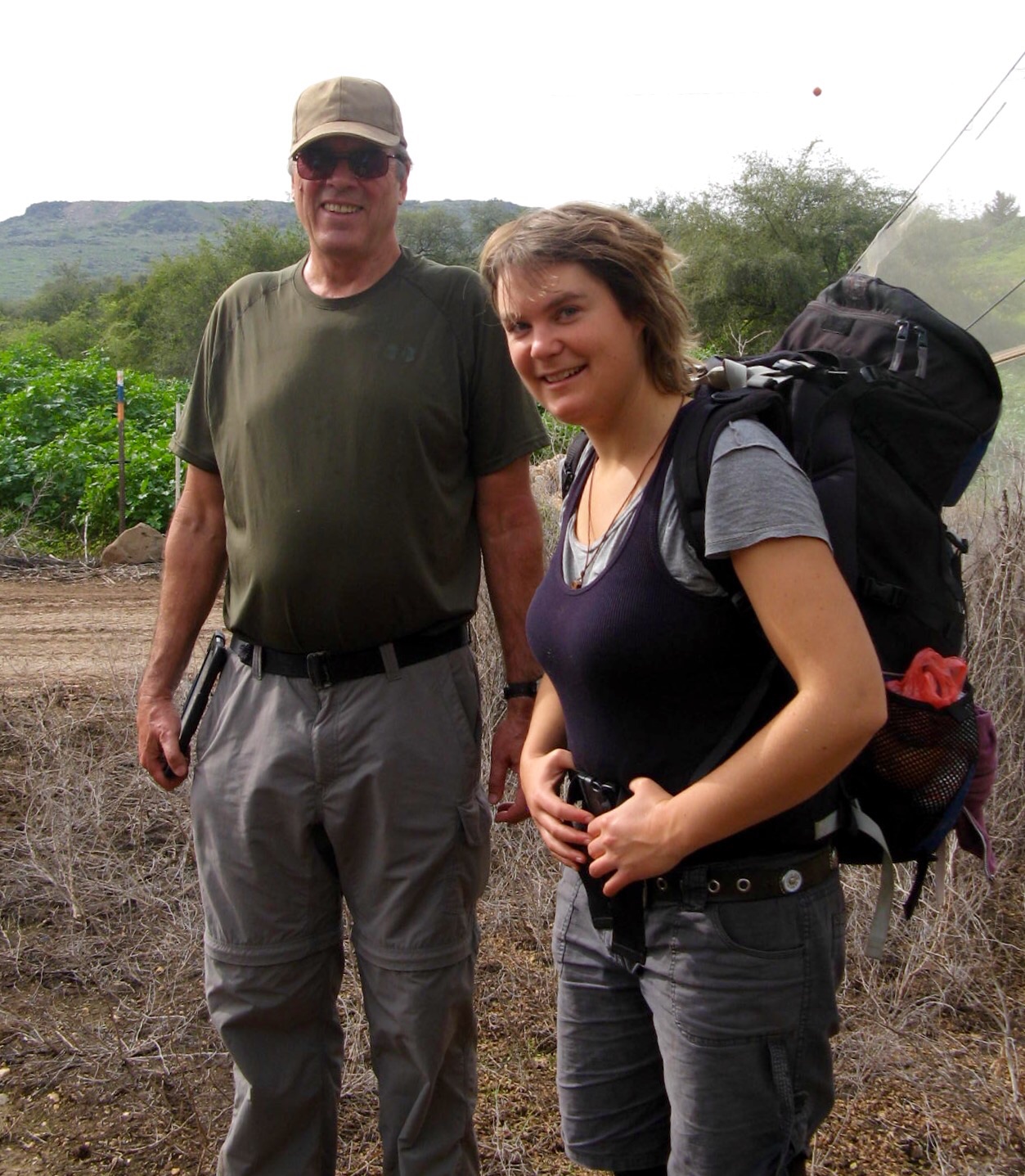
We met a young German girl named Mieke, who was also following the Jesus Trail. She became our companion for the day.image

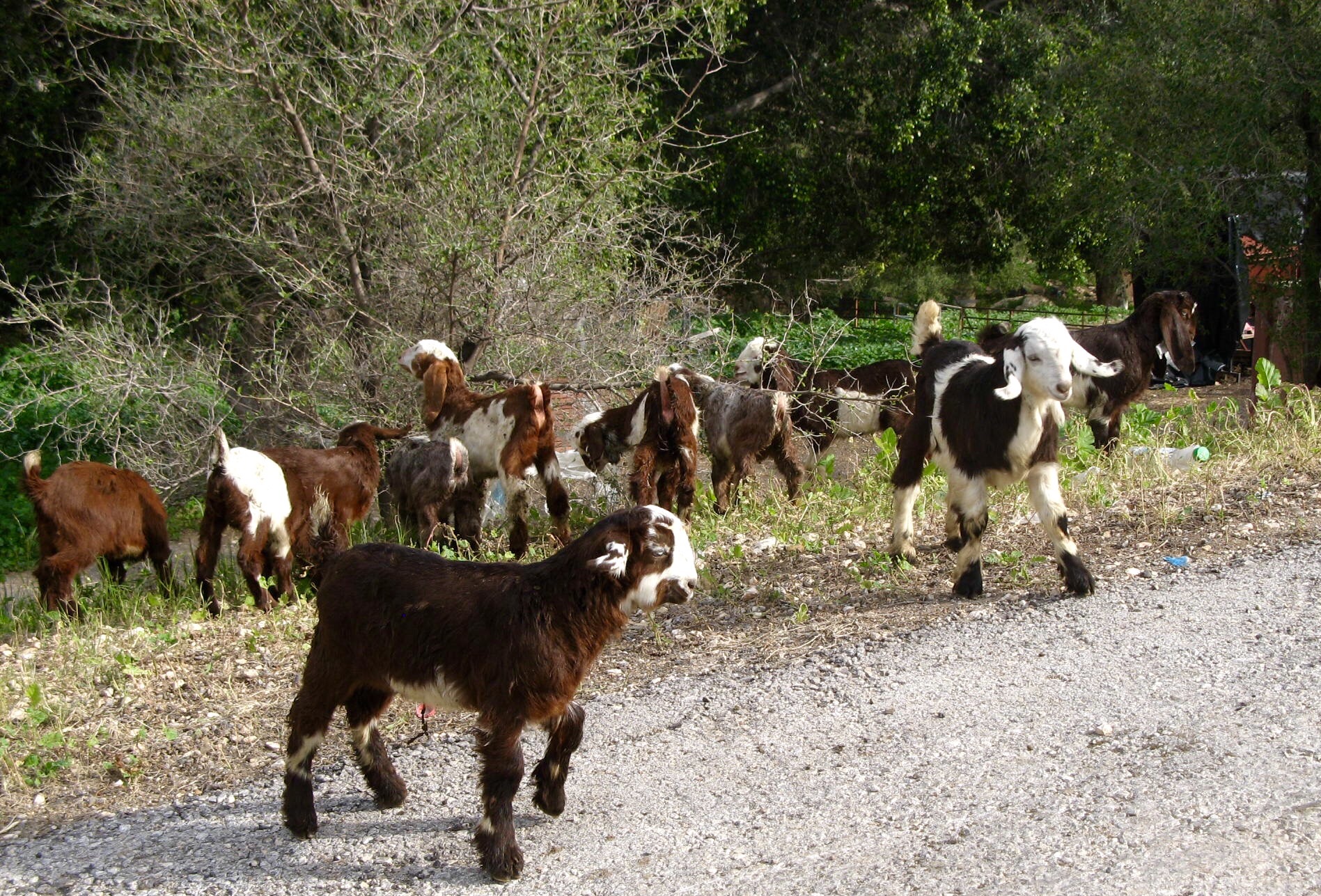
We also met some baby goats, out for a stroll with no one to mind them.

IMG_6700

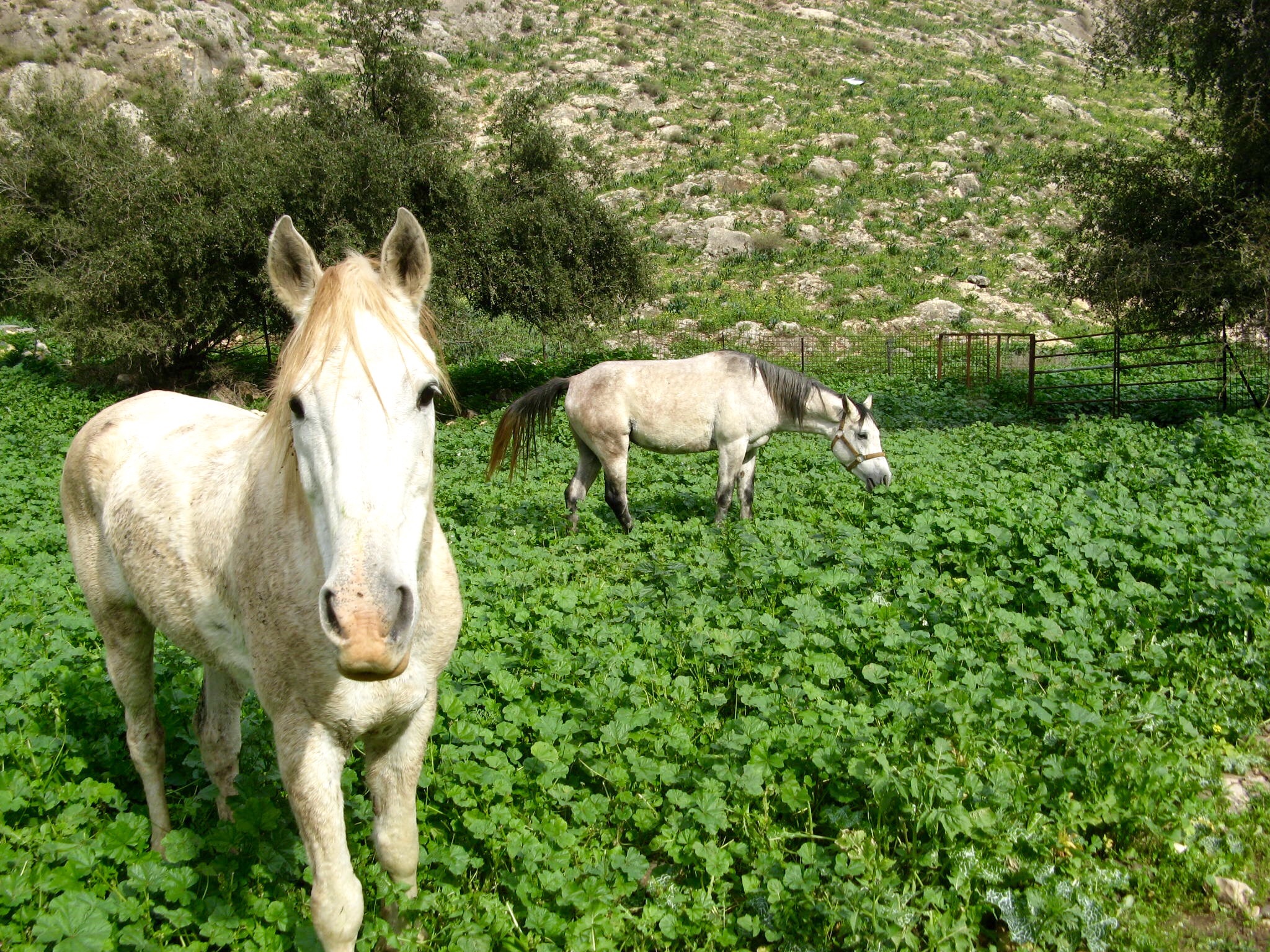
…some horses, up close and personal.

IMG_6702

And, of course, some mama cows and baby cows.

We walked through groves of citrus (the grapefruit was yummy), carob, olives and bananas.

IMG_6703

IMG_6704

By mid-afternoon we arrived at Tabgha, which is a variation of the Greek name Heptapegon, meaning Seven Springs. We are staying at the Karei Desche Guest house and Youth Hostel, right on the northern shore of the Sea of Galilee, which is not actually a sea, but a lake. There are teenagers everywhere.

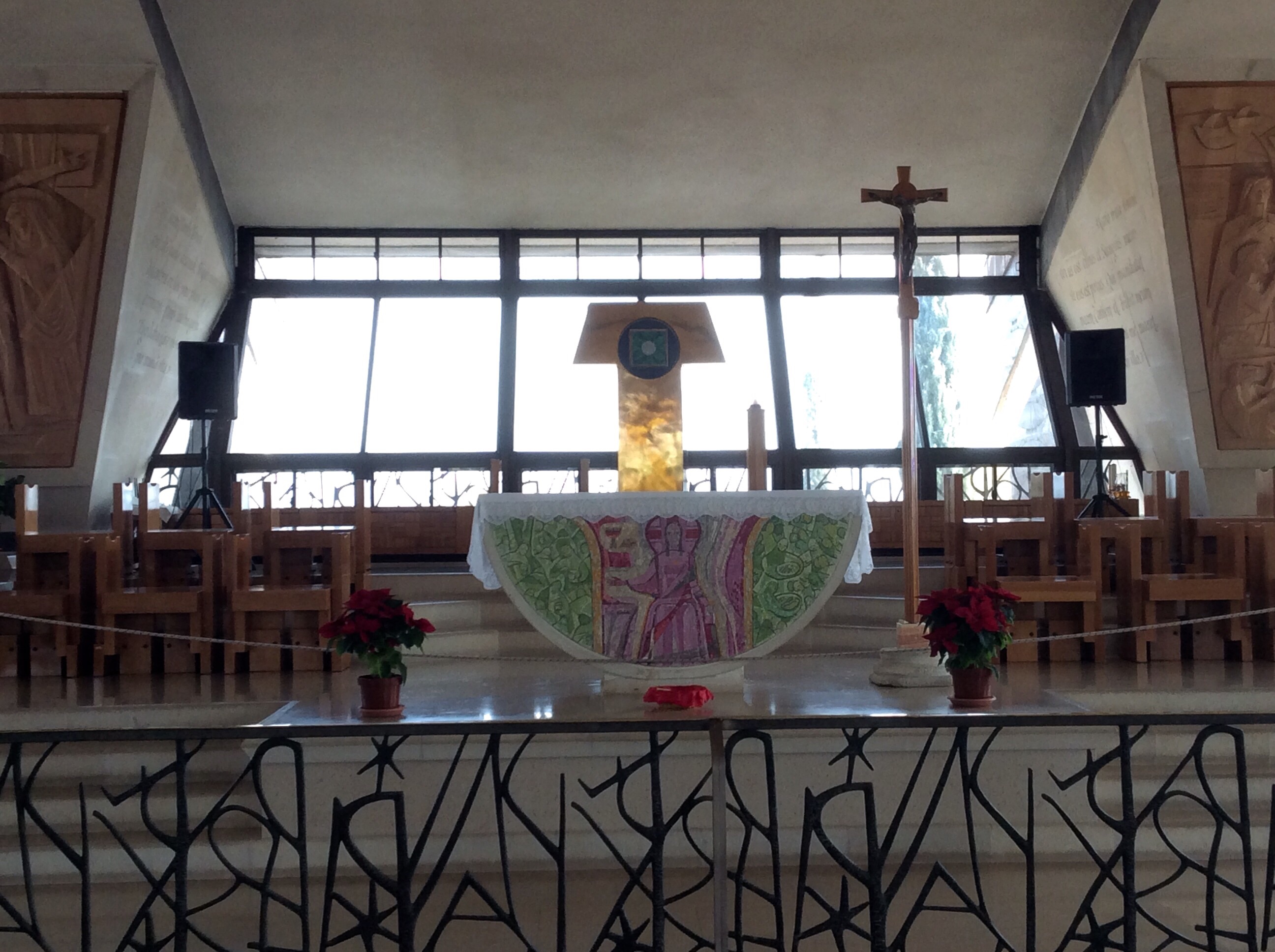
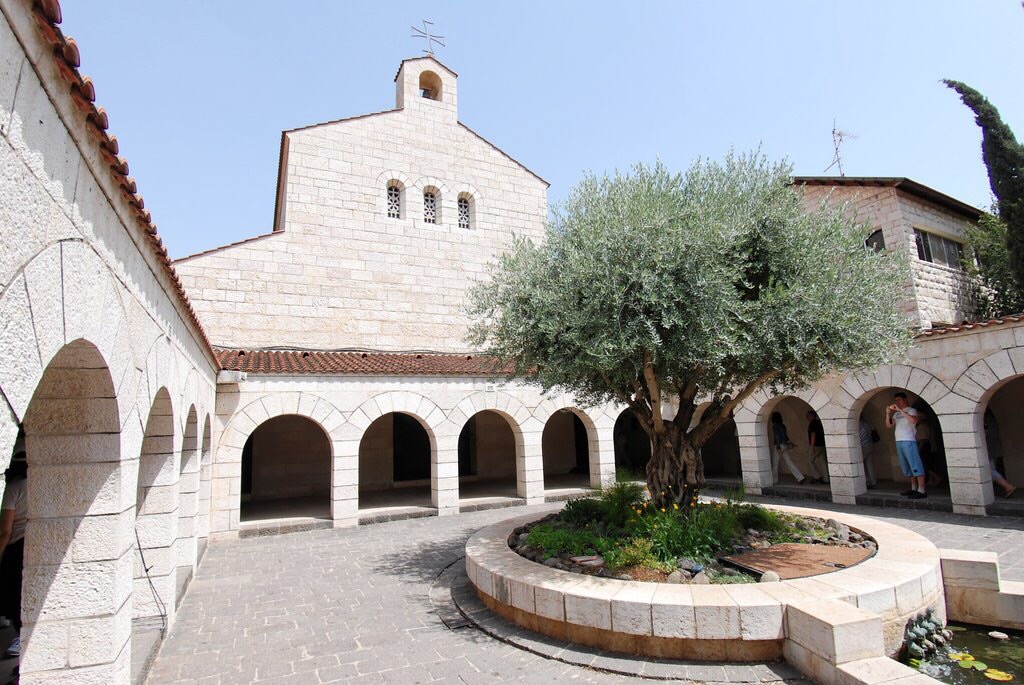
There is no actual town here, just the historical sites and ruins. This is the place where Jesus fed 5000 with five loaves of bread and two fish. A church was built at the site in the 3rd century. The church was destroyed in the 5th century, and the remains excavated in the 1930s. This new church was built over the site in 1982.
image

image

image

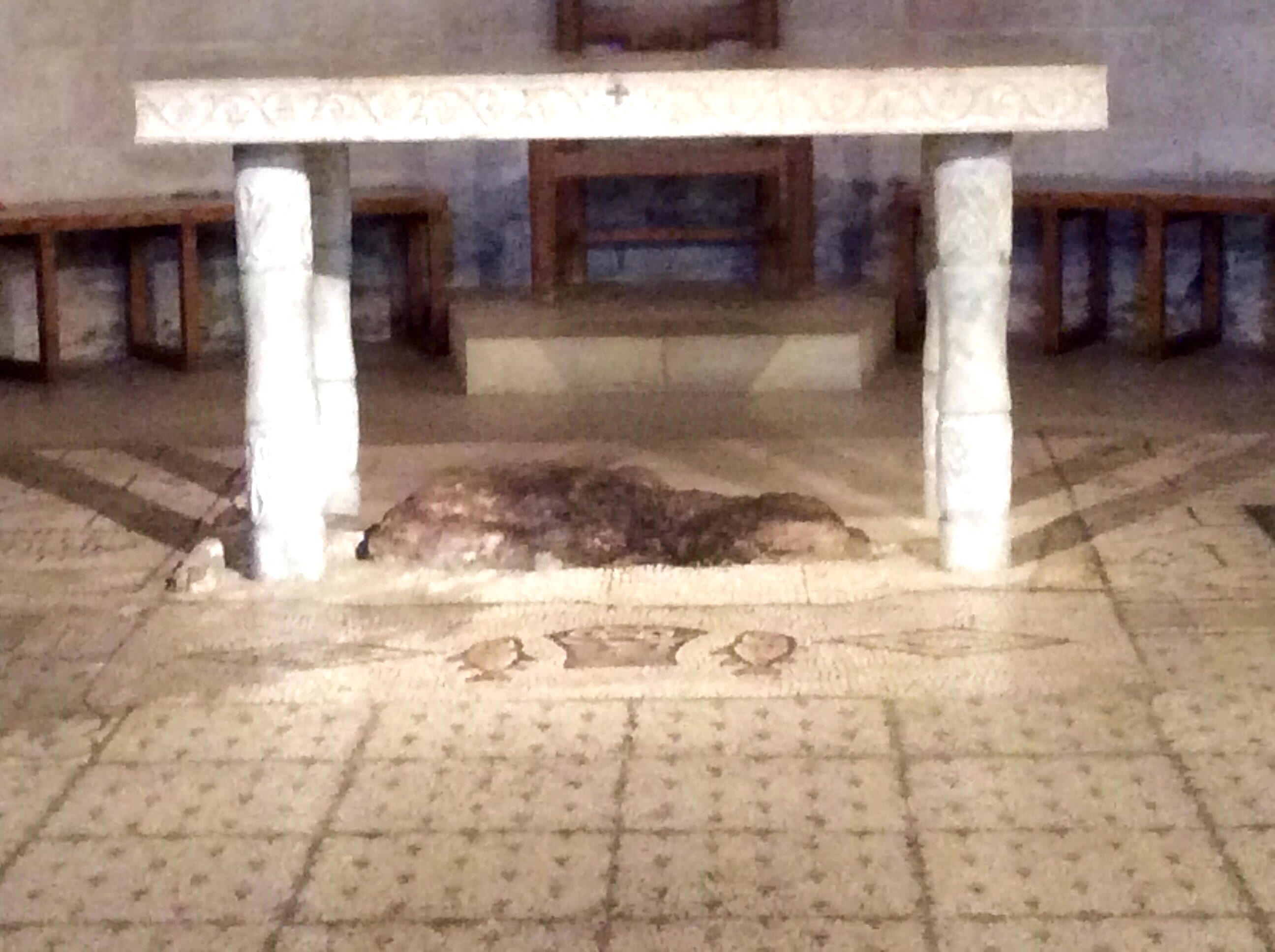
A mosaic of loaves and fishes was excavated next to a large rock, believed to be the place where Jesus blessed the food. You can see the top of the exposed rock and the mosaic under the altar. image

Here’s more mosaic from the original church floor. Lots of bird images. I’m partial to mosaics…

Nearby we found Job’s Spring, a sulfuric spring of warm water that cascades into the Galilee. Job was said to live in a nearby cave and bathed in the waters of the spring to soothe his sores.
image

To be continued…