All posts by karenfranza

Árbol del Tule

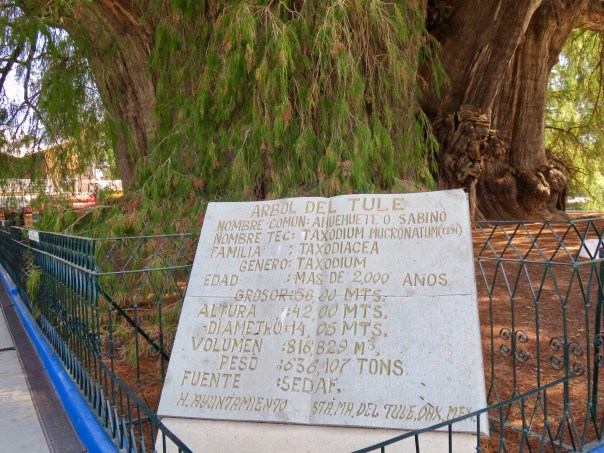
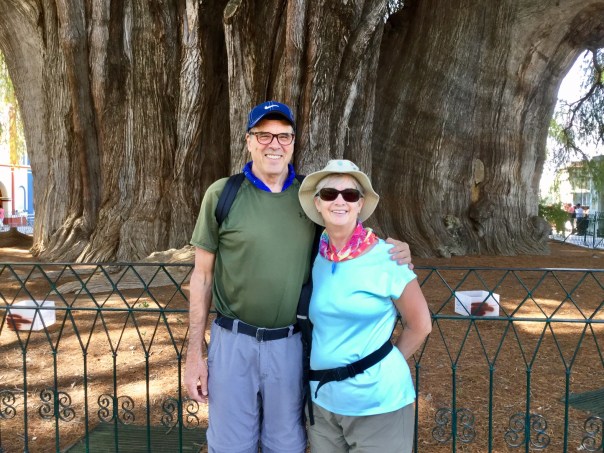
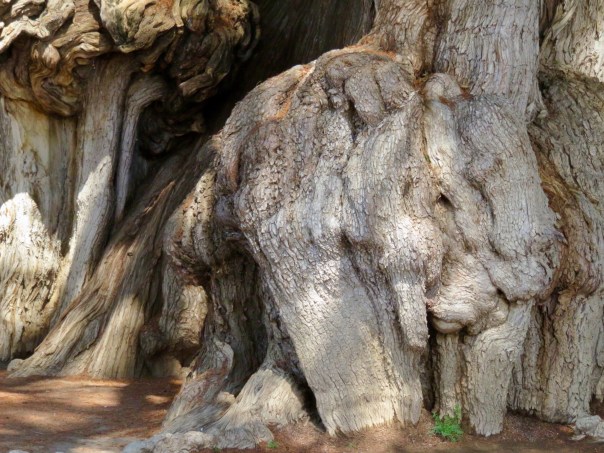
Mar 11 – You are going to be so jealous when I tell you where we went today! El Árbol del Tule! What is that? Well, it’s not the tallest tree in the world (that would be the General Sherman, a sequoia in California), nor the oldest tree in the world (that would be the Great Basin bristlecone pine, also in California, over 5000 years old). No friends, today we visited the world’s stoutest tree! A really, really wide cypress tree, over 2000 years old!

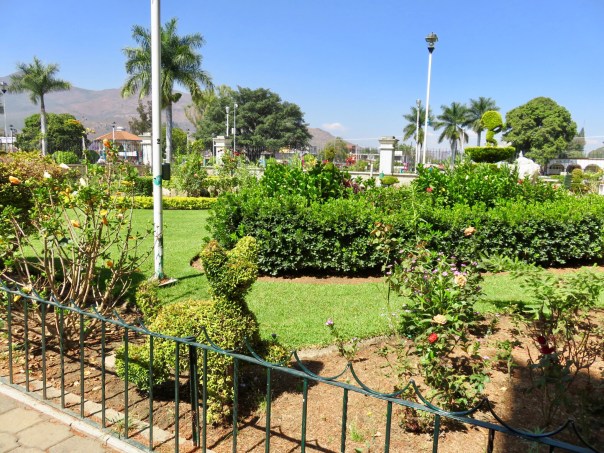
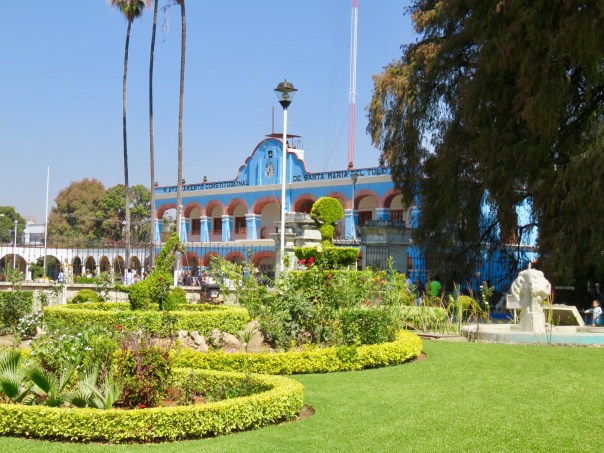
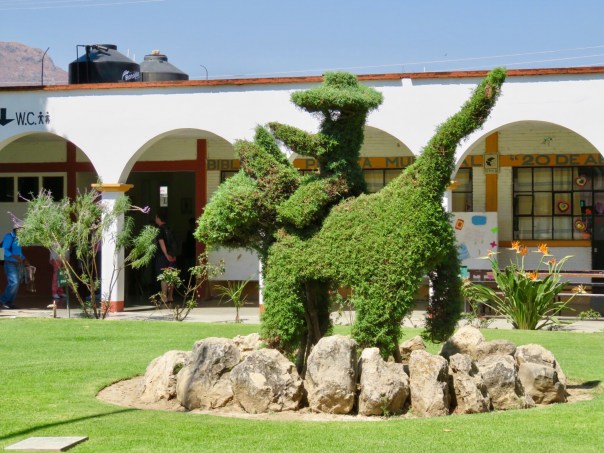
A half hour’s bus ride from Oaxaca city, the little town of Santa Maria del Tule exists for the sole purpose of taking care of this tree! A lovely park surrounds the tree, with fountains and topiary animals.

For 10 pesos (50 cents), you can walk inside the gate and see the tree up close and personal. Folks say they see faces and animals in the tree’s bark. What do you see?

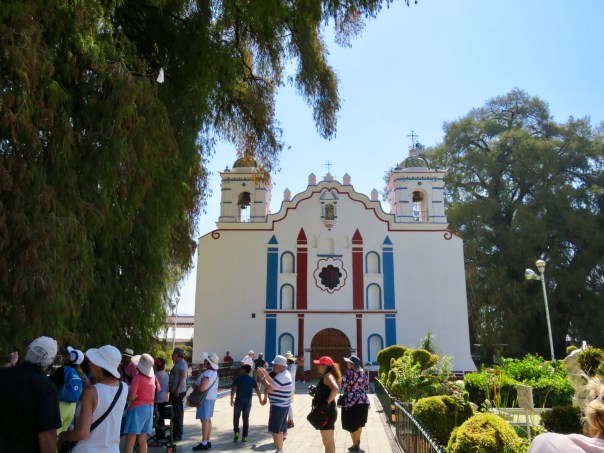
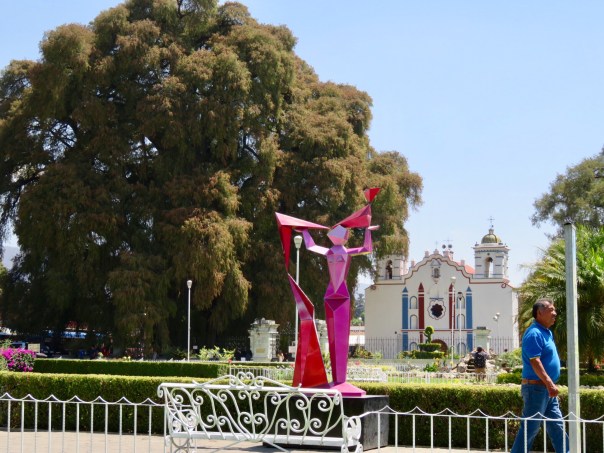
There is a pretty church here, unfortunately closed.

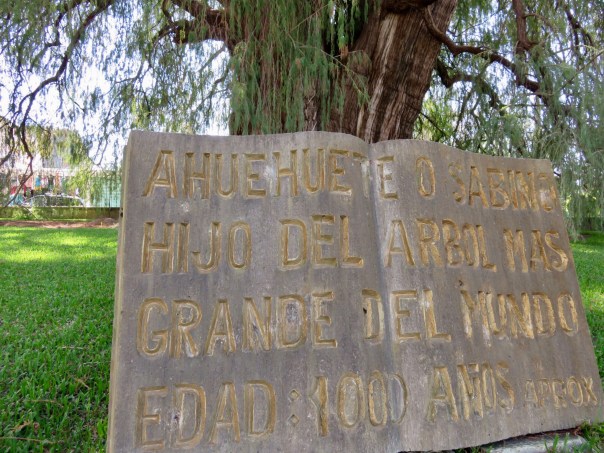
On the other side of the church is the Son of Tule, only a thousand years old. If the original tree ever kicks the bucket, the townspeople are prepared with a replacement!

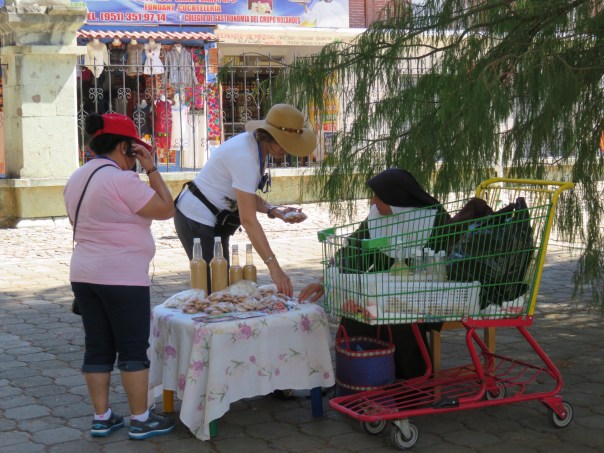
A nun sells souvenirs:

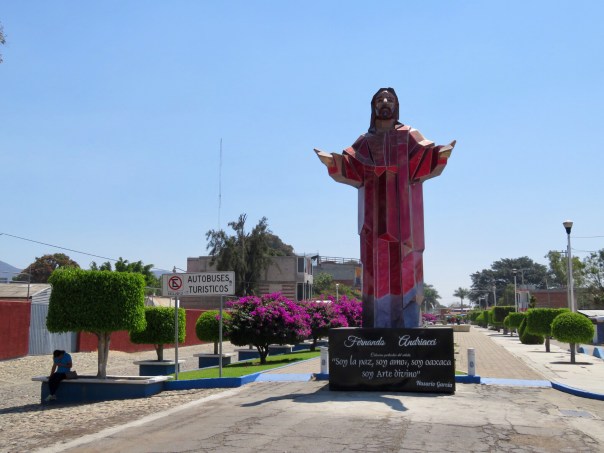
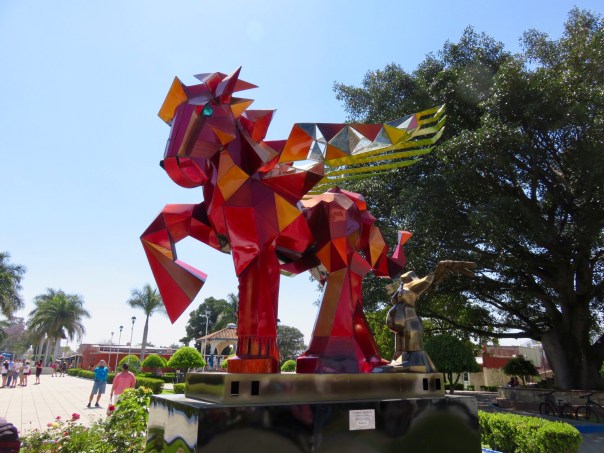
There are some lovely metal sculptures here:

We spent a few hours wandering about, then found the bus to take us back to the city. A great way to spend a sunny Sunday!

More from Oaxaca – the Markets

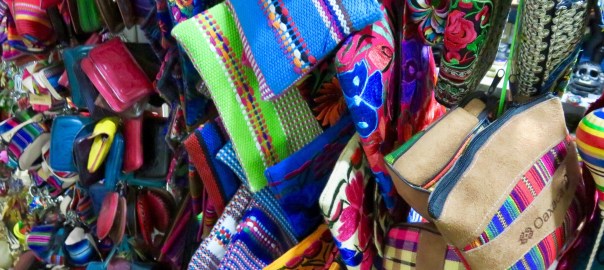
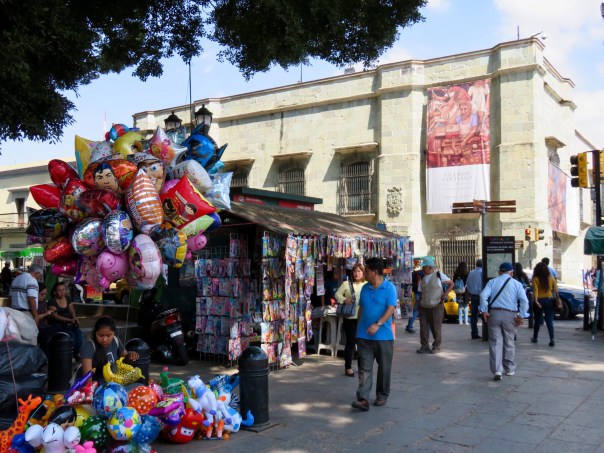
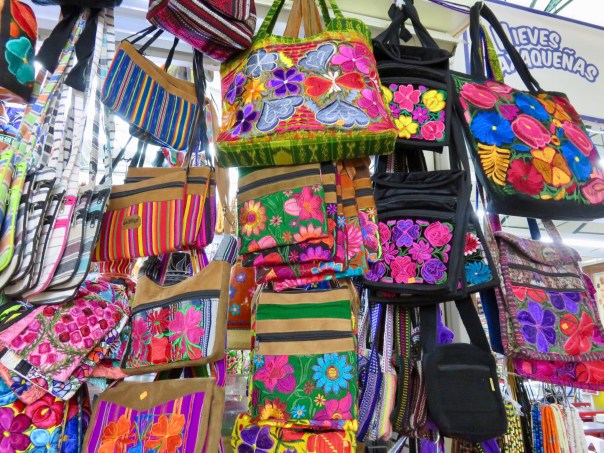
Mar 9 – Oaxaca is known for textiles, but there is a lot of variety on offer from the local street markets. The central square is called the Zócalo.

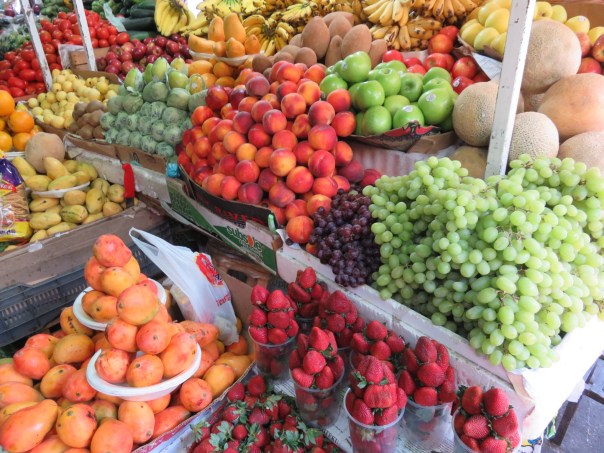
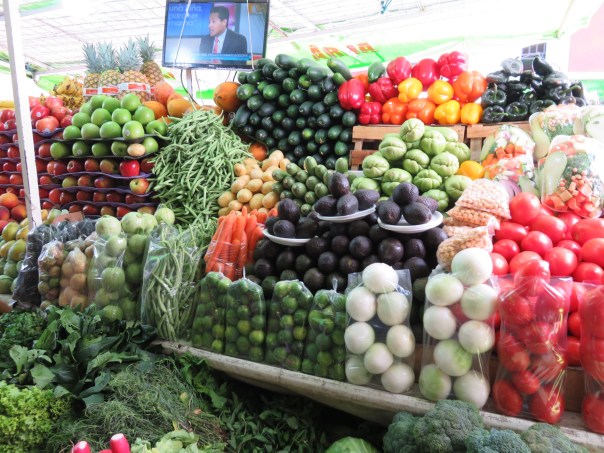
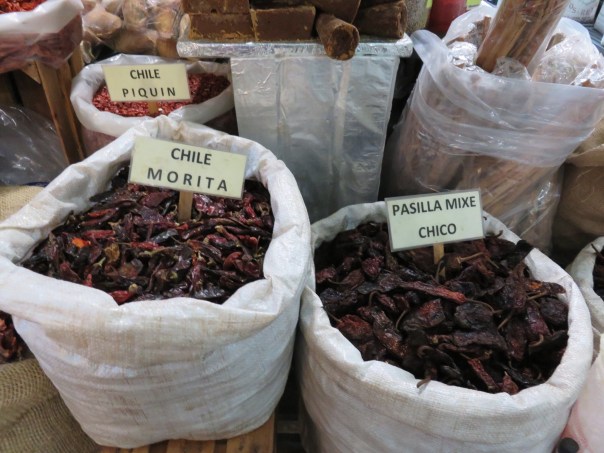
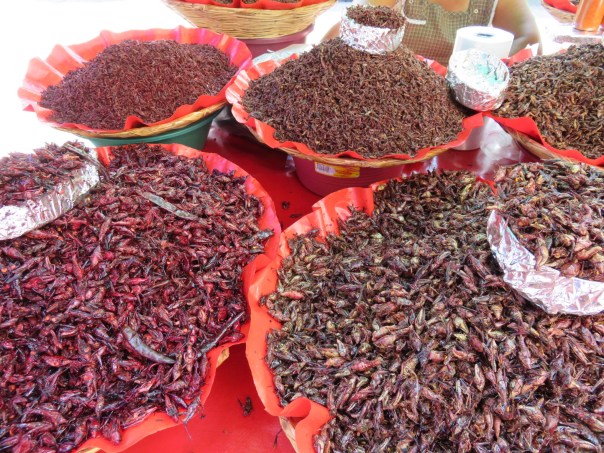
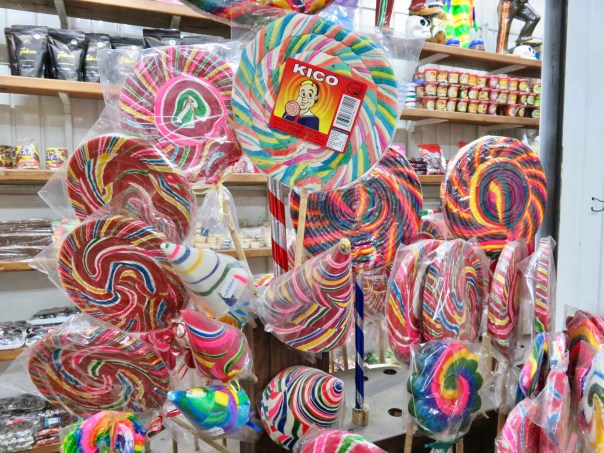
Usually when we travel we are backpackers, so we do not shop for anything that would add weight to our packs. On this trip, we are tourists, and looking for presents for our grandchildren. We meandered through huge indoor markets. Do you think the kids would like some spicy fried insects?

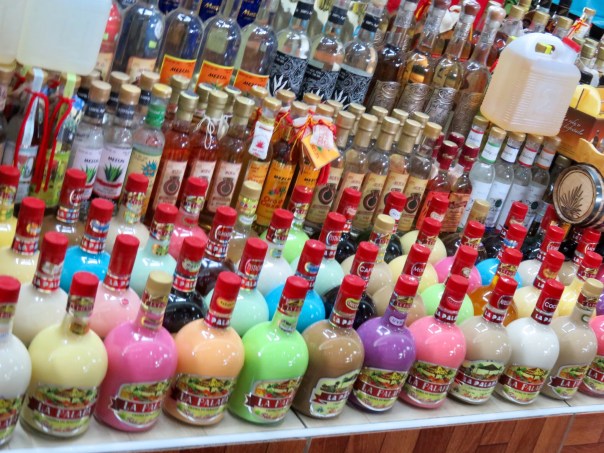
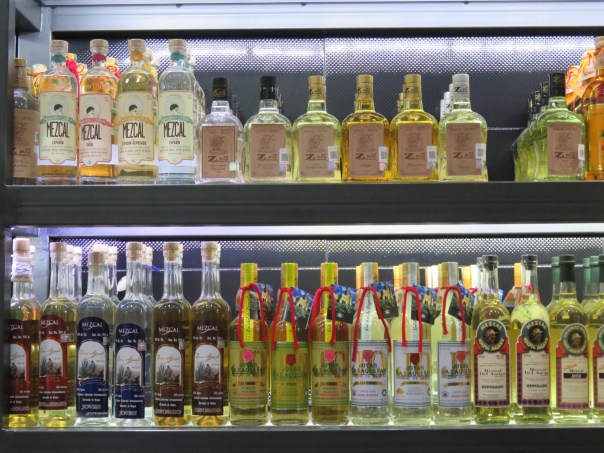
How about some mezcal?

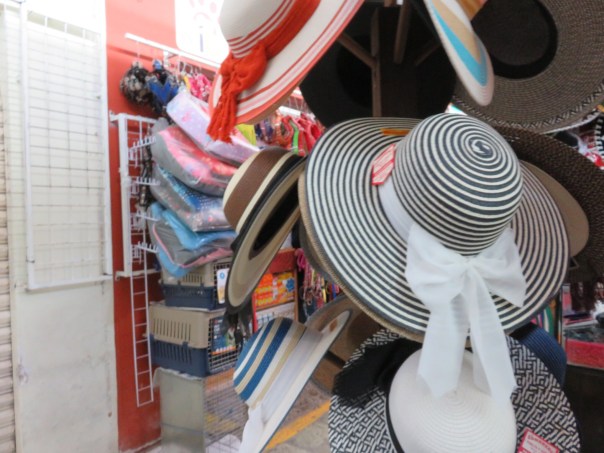
Maybe a hat?

Just kidding! Plenty of stuff to choose from!

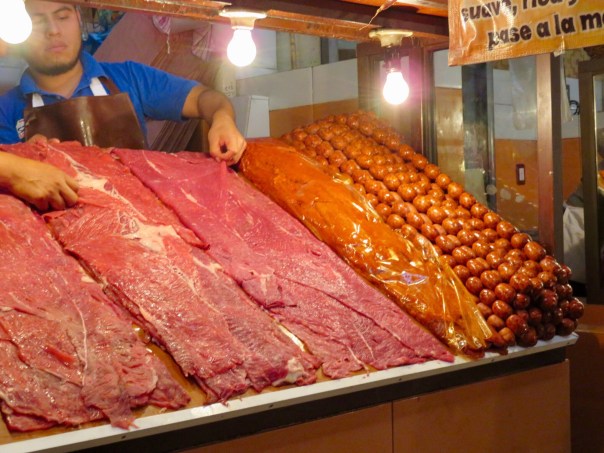
There was one area called the Aisle of Meat, where hawkers entice you in with stall after stall of sliced raw meat. Point to what you want, and they grill and serve it to you right there! This was a very popular place at lunchtime.

As we walked back toward home, we noticed free drinks being passed out by a variety of shops and hotels. When we got back to our hotel, we asked the significance, and were told that today is the day that Oaxacans honor the Samaritan woman at the well who gave water to Jesus, by giving free drinks to strangers. I got fig juice, and Jim got something white that smelled of cinnamon. Thank you, Samaritan woman!

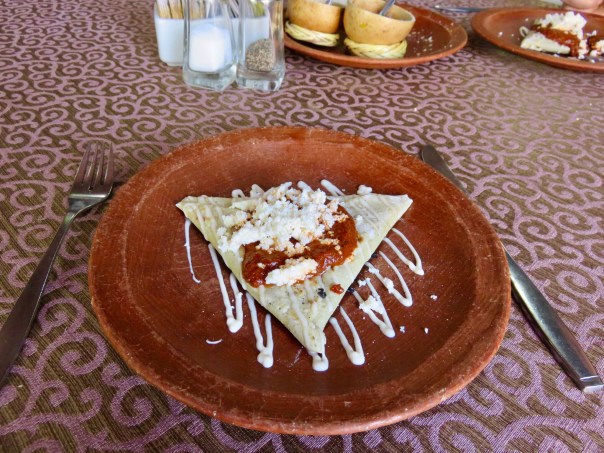
Today, as part of our menu al dia, we tried another Oaxacan food delight, the tétela, which is a corn tortilla filled with black beans (or other things), covered with salsa and Oaxacan cheese and served warm. Muy delicioso!

We have been experimenting with the different brands of Mexican beer that we don’t usually see in the US. Tonight we tried one called Sol, without reading the fine print… Aieee! Beer with lime, salt and hot sauce! Let’s not get that one again!

Monte Albán

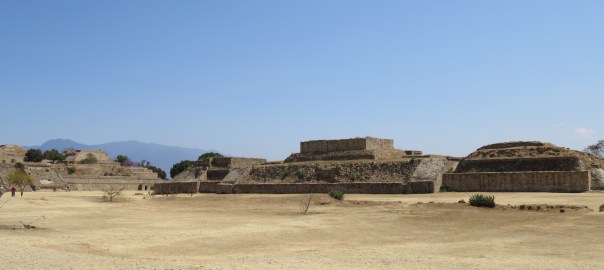
Mar 8 – One of the many reasons to visit Oaxaca is its proximity to the ruins of Monte Albán, which was the largest city known in Mesoamerica, inhabited by up to 20,000 people, that thrived over a period from 500BCE to 1000CE. We took a taxi across town to catch the bus that drives up the mountain once an hour. You can explore at your leisure, then get back on a return bus when you’ve seen all there is to see.

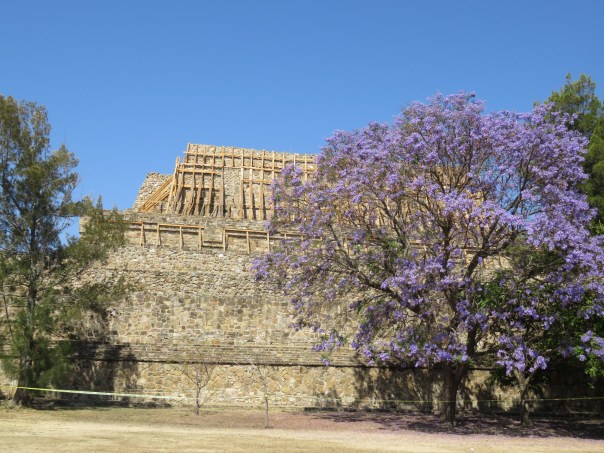
Not much is known about the Zapotec and other peoples who used to live here, or why they abandoned their city. The site was known to archeologists in the 19th century, but excavation didn’t start until the 1930s. The work is still in progress:

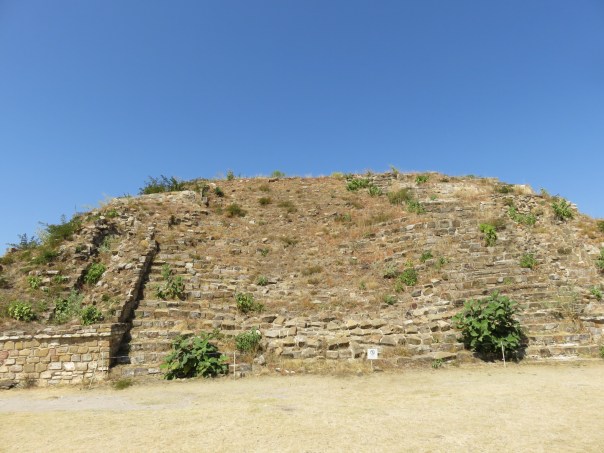
The structures just looked like hills…

…until they started to dig and uncovered the bricks and stones beneath. This is the other side of the hill above:

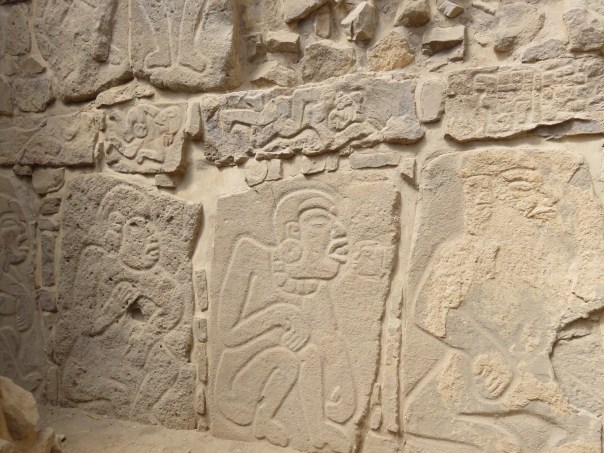
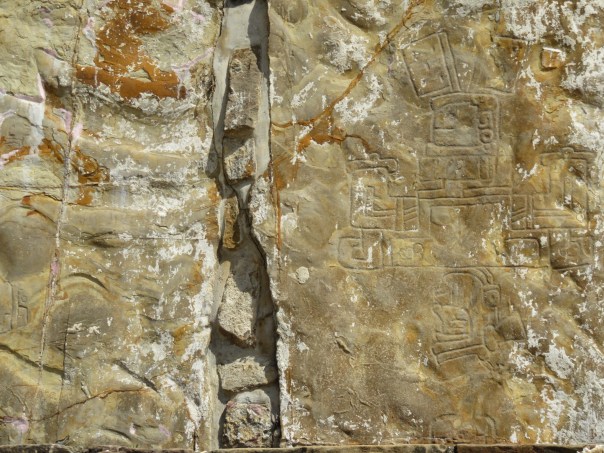
Archaeologists have had a fine time guessing what the buildings were for, what type of religions may have been practiced, and the culture of the peoples who lived here. They uncovered monuments drawn with figures, called Danzantes, as the initial theory was that they depicted dancers due to their weird leg positions. Now the theory is that they represent captives being castrated and readied for sacrifice. What do you think?

There are other figures, wearing armor, carved upside down. These are believed to represent tribes that were conquered.

Still others were originally called the Swimmers, but are now believed to represent human sacrifices.

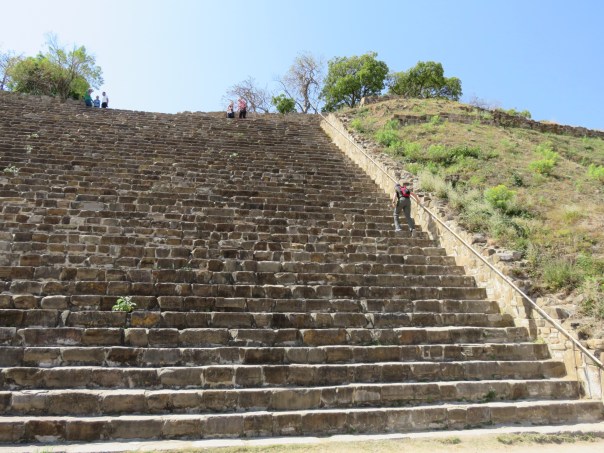
The buildings are huge. Here is a stairway up one of them. Look at how small the people are at the top. See Jim jogging up with his red backpack?

View from the top – see how tiny the people are on the far side of the plaza?

This was believed to be a stadium where some sort of ball game was played competitively.

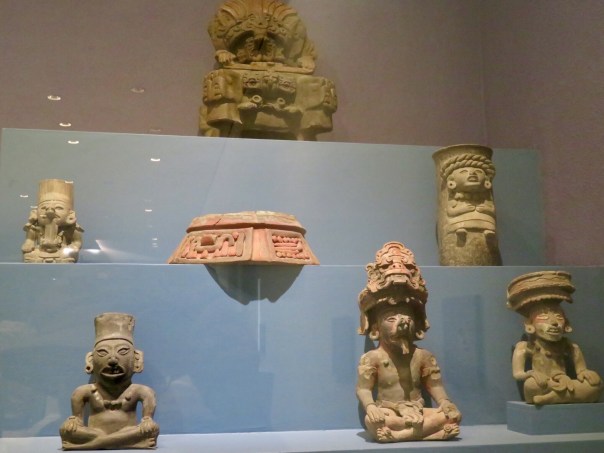
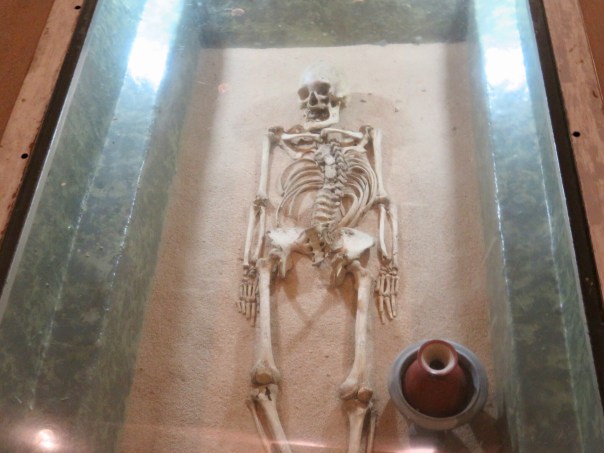
There is also a museum that showed some of the neat stuff they found in the buildings:

If you go, bring a hat, drinking water and sunscreen – there is not much shade! Definitely a worthwhile way to spend a day!

Oaxaca

Mar 7 – This Mexican trip is a result of my wanting to go to Oaxaca (pronounced wa HOCK a). Jim has been after me to go to Mexico for years, but I didn’t want to go until I read about Oaxaca in The NY Times. I put down the article and said, let’s go to Oaxaca!

Although we hated to leave the beach, Oaxaca was calling our name. We took a 15 passenger minibus that went north up through twisty narrow mountain roads, and got us to Oaxaca in about six hours. Other travelers said it was a scary and / or nauseating ride, but compared to other bus rides we have taken, it really wasn’t bad!

We walked from the bus station to our Hotel Parador del Dominico in our beach duds, then realized we were back in the city and should be wearing long pants. Easy to fix – we just zipped our pant legs back on! Lovely big room with a private patio, great air con and hot water! Jim does it again!

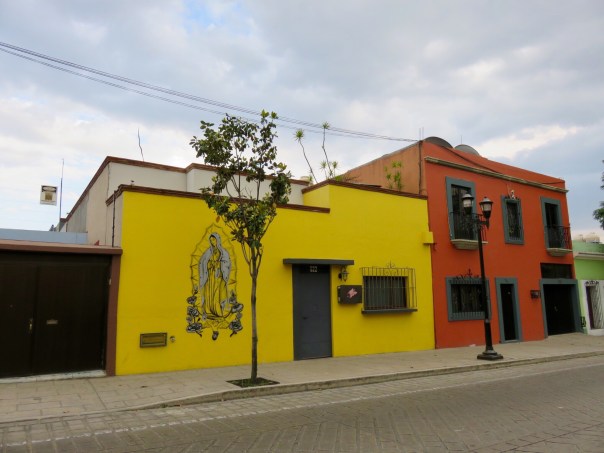
There are colorful buildings and unusual things to see here:

This man appears to be made of meat. I wonder what he is advertising?

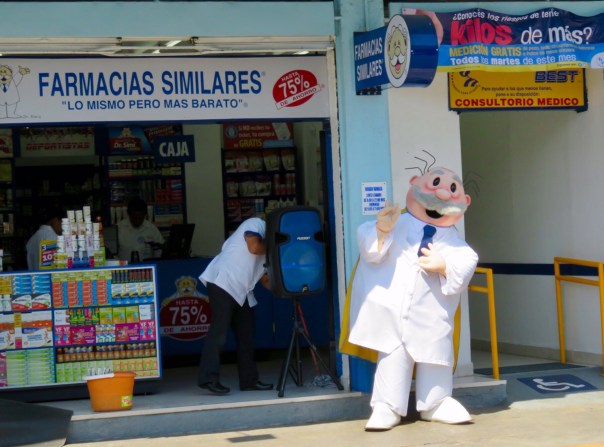
All over Mexico, there are Farmacias Similares, where you can bring in your prescription and have it filled at a much lower price than in the US. This was the first time we saw a dancing pharmacist!

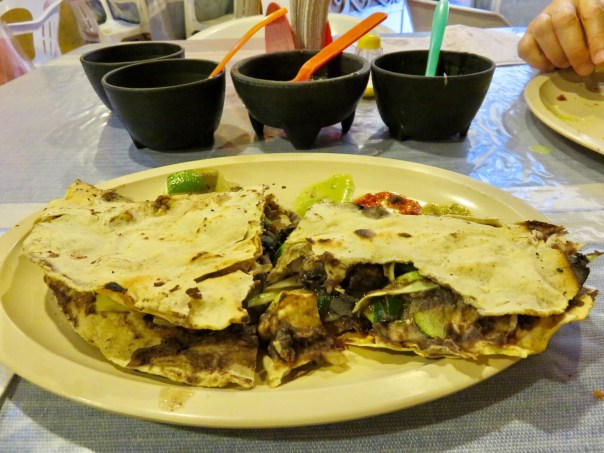
For our first evening in town, we wanted to try tlayudas, a very popular regional food. Two grilled tortillas filled with meat or vegetables as you choose, in brown sauce, sprinkled with Oaxacan white cheese, and served with a variety of salsas to suit your taste. Yum!

We’ll have a few days to explore this pretty city. Stay tuned!

More from Puerto Ángel – mostly beach and food

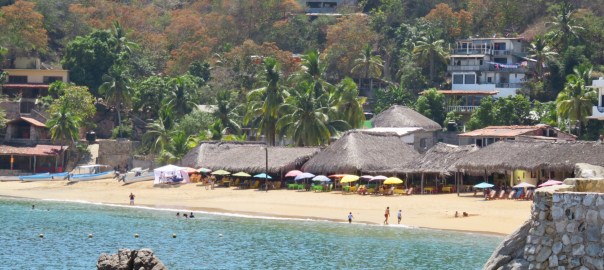
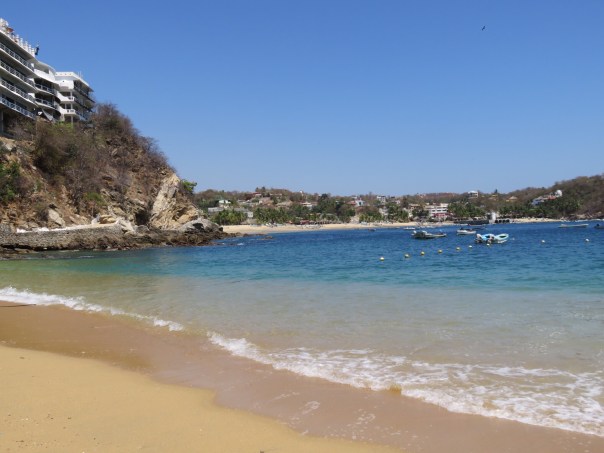
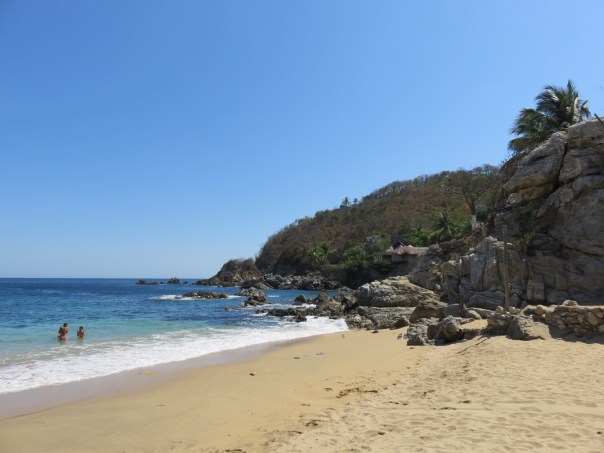
Mar 4 – So here is our typical day at the beach: coffee in our room courtesy of the hotel, leisurely yogurt, cheese and tortilla breakfast in bed, courtesy of yesterday’s walk to the store. Down to the beach to alternately swim in the crystal clear water and sit in the shade of a restaurant umbrella.

Back to the room to shower and change for lunch, which is our main meal of the day.

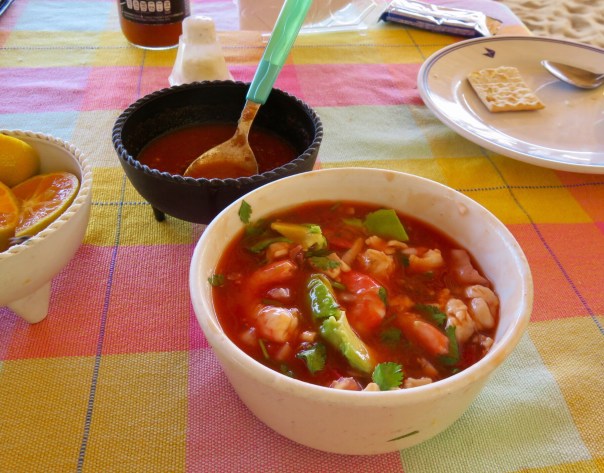
Sometimes we eat at a beachfront restaurant with other tourists. This is a cold seafood and avocado concoction called vuelve a la vida, or “come back to life”. It is just about the most delicious food I have ever eaten.

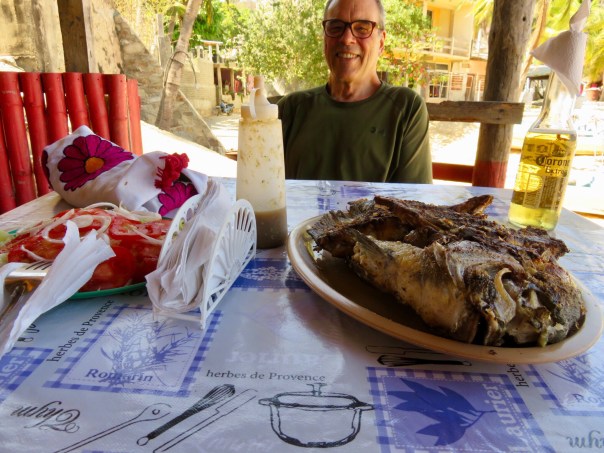
Sometimes we walk down a little street to where the native fishermen get their meals. Incredibly fresh seafood, cooked just for us by a native lady who makes breakfast for the fishermen in the morning, but is not busy in the middle of the day. One day she grilled us a whole fish, freshly caught, the next day she offered us shrimp with garlic. No choice here, just whatever she has on hand.

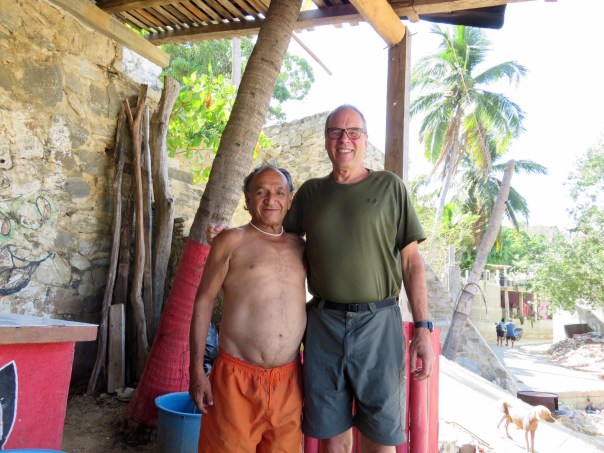
A leisurely talk with Edgar, an 80 year old with excellent English from working in the US, and few remaining teeth, about politics and the state of Mexico and the world.

After an afternoon siesta, we swim in the pool, then walk up the street to the food store to buy anything we need for tonight’s dinner or tomorrow’s breakfast. Here they have canned or refrigerated processed food and drinks, and packaged tortillas, but no fresh bread or fruits or vegetables. In the states, this would be described as a fresh food desert.

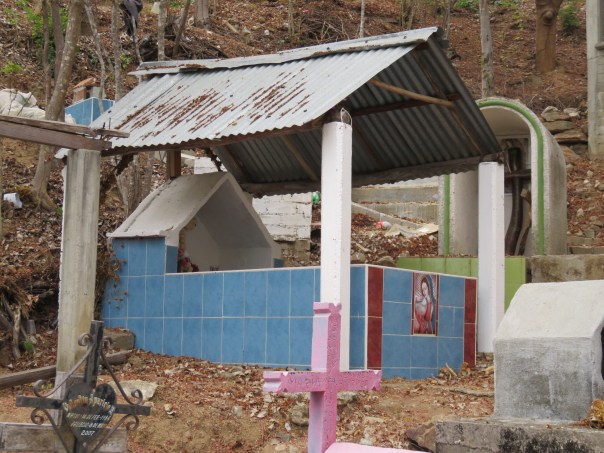
On Sunday evening as we walked to the store, we met a funeral procession coming down the hill to the cemetery. About 50 people, dressed in tee shirts and flip flops or barefoot, some carrying flowers and some singing. A red casket carried on the shoulders of four men. We stood quietly until the procession passed. Later we walked into the cemetery, but couldn’t find where they had placed the new addition.

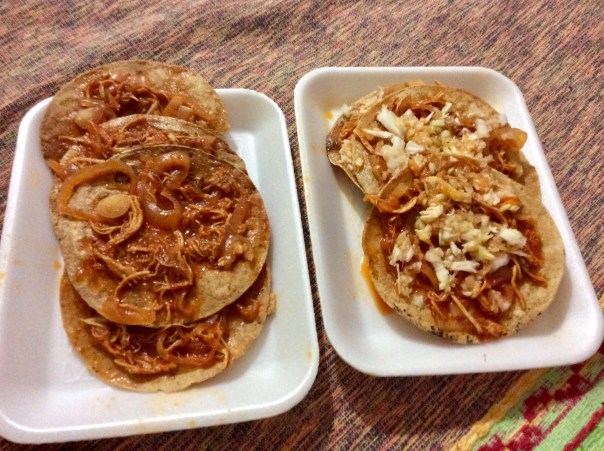
A block from the store is a woman sitting with her small children in front of her house, selling stringy bits of chicken and onion swimming in picante sauce on a corn tortilla – four for a dollar. When Jim asked her for eight of them, she warned, “they are spicy”, and gave him a taste before she wrapped them up. Every day, well-meaning people warn us that food here is spicy, but it’s not really – on a Taco Bell scale, it would be considered mild.

We eat whatever we have purchased for dinner, share a beer and read or watch tv in the evenings. Tv is how folks learn English to the extent that they learn it here – foreign languages are not taught in school.

That’s our week in Puerto Ángel! Hope you enjoyed traveling with us!

Puerto Ángel

Mar 1 – This morning we bid adios to Huatulco, and took the bus to Puerto Ángel. Unlike Huatulco, cruise ships don’t stop here, and Jim remembered it fondly as “real Mexico” when he traveled here in his youth.

It was a one hour ride on a big air conditioned bus, which in my little mind went right along the coast, so I wasn’t prepared for the rocking, rolling mountainous route we took. Whee! Who needs roller coasters when you can ride buses in Mexico?

The chatty taxi driver who took us from the bus station to our hotel asked if we knew about the earthquake that Oaxaca had experienced last week. He wondered if we had heard about it in Virginia, and we told him that we had. He said the houses shook “like paper” and it was very scary, but no damage.

When we got to our “hotel”, La Casita de Marlen, I got a bad feeling. Although it had gotten some high reviews on Booking.com, we stood out in a courtyard while the lady told us that the apartment with kitchen we had booked was not available, and instead she offered us a sad, bare room with a flimsy metal screen door, one lightbulb, no air con, no warm water, two sad flat pillows… Whoops, I just used the word “sad” twice in the same sentence. This was a sad place. We walked down a steep hill to check out the beach, past shacks and shanties, with people cooking out in the yard, and places that appeared to have no electricity. Poor and sad.

Although the beach was beautiful, we had to walk back up the steep hill to arrive, breathless and sweaty, to our poor, sad room.

Jim got back on Booking.com and was able to cancel our reservation without penalty. As “real” as it was, I just couldn’t picture us spending a week there.

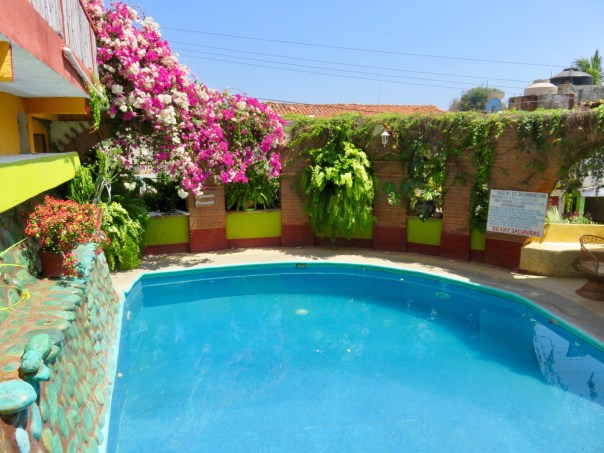
So now we are on the other side of the same cove, in a happier hotel, La Cabaña. (Look at the guy photobombing Jim! He was very pleased that he got in our picture.)

Air con! Hot water! A pool!

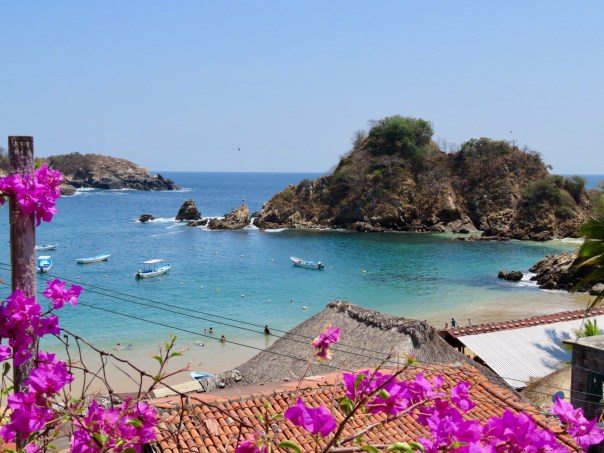
Just across the street from the beach!

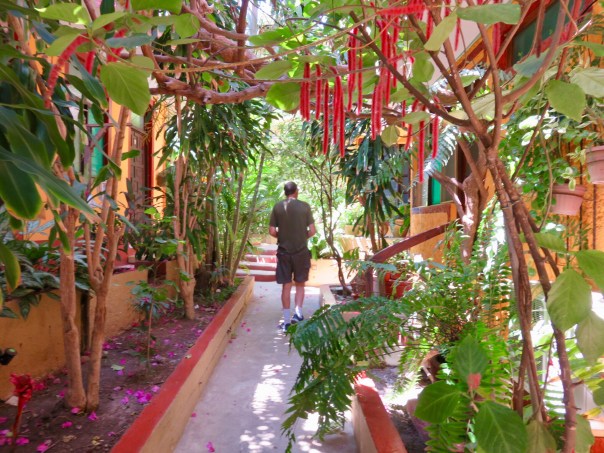
The walkway to our room!

Now we are in a happy place, with lots of fluffy pillows, although we won’t have a kitchen or fridge here.

Don’t expect much news this week – we’ll be swimming and sunning!

Another Day in Huatulco

Feb 28 – We got up early today, so we could walk into the Huatulco National Forest before the sun got too high in the sky. The official entrance to the park is miles away, where cruise ships stop to let people experience the beach. We are not near that entrance, nor do we want to get anywhere near the cruisers, so we will be satisfied with a morning walk.

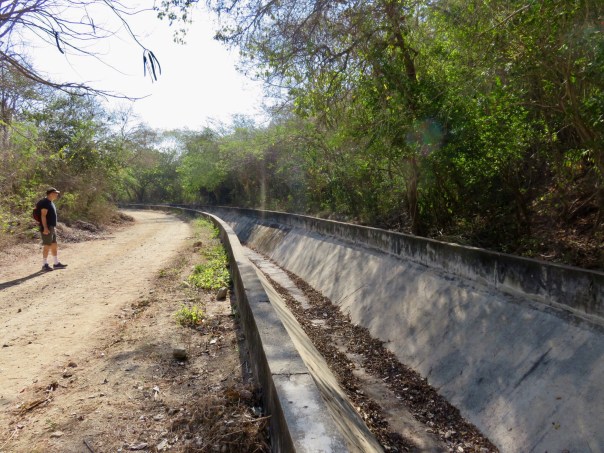
This is the dry season, and the road was arid and dusty.

I’m sure this culvert will have water in it after the spring rains.

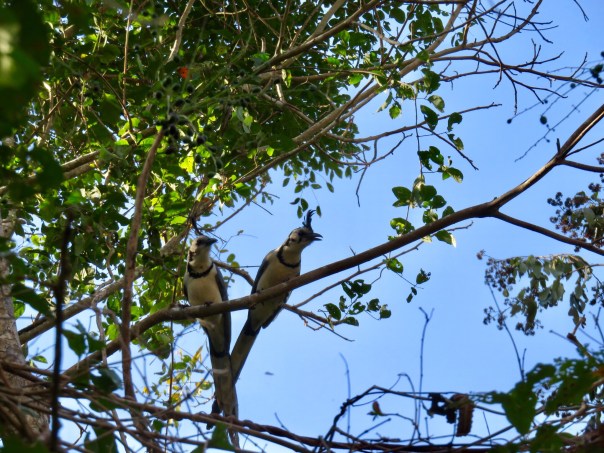
There sure are a lot of noisy birds here. We are not birders, so I can’t tell you the names of the birds we saw, but they are unlike any we’ve seen at home.

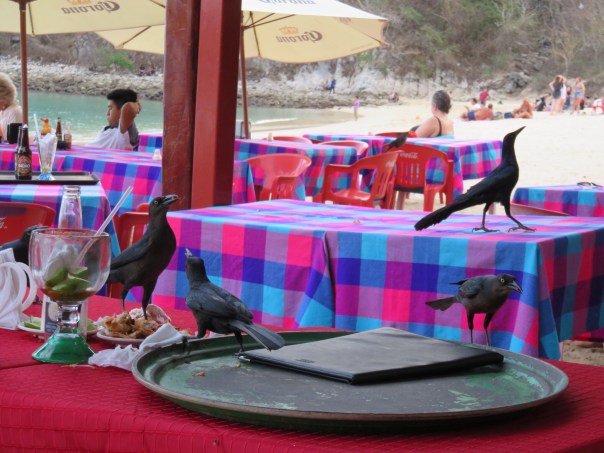
We’ve settled into a lazy pattern here: a Jim-cooked omelet and coffee for breakfast on the veranda, a morning walk, a Jim-cooked lunch in the shade, an afternoon swim, then supper down on the beach. Seafood prices here are very reasonable. Folks get a table, order food, take a dip in the water and let their children play, then get out to eat. The evening temperature is ideal, though if you are not alert, scavenger birds swoop right down and help themselves to your food!

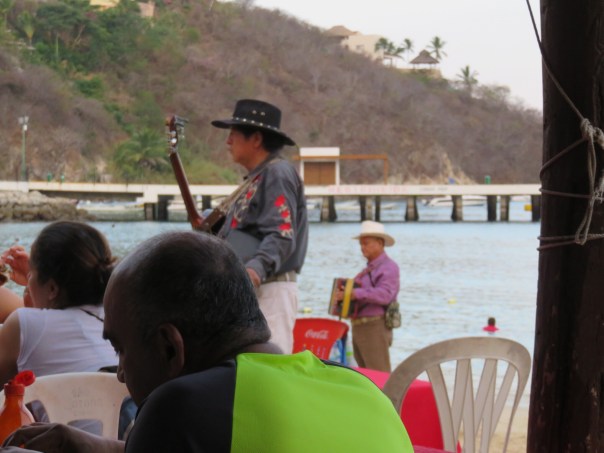
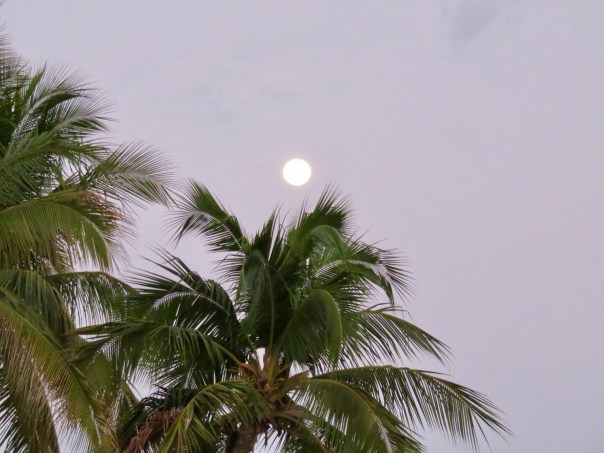
A full moon, a warm breeze, native music and a margarita- what could be better?

Bahía de Santa Cruz, Huatulco

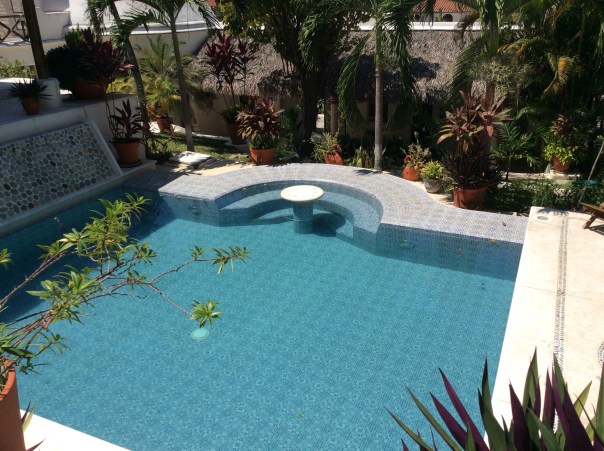
Feb 27 – So here we are, in a sleepy little town right on the Pacific Ocean, at the edge of Huatulco National Park. We are staying at the Hotel Casa Blanca del Sol, in a big round room with thick plastered walls near a crystal blue pool. Serene. They have a kitchen that guests can use, which makes Jim very happy. Air con? Si! Hot water? Not so much, but it turns out that when you are hot, hot, hot, a cool shower is kind of nice!

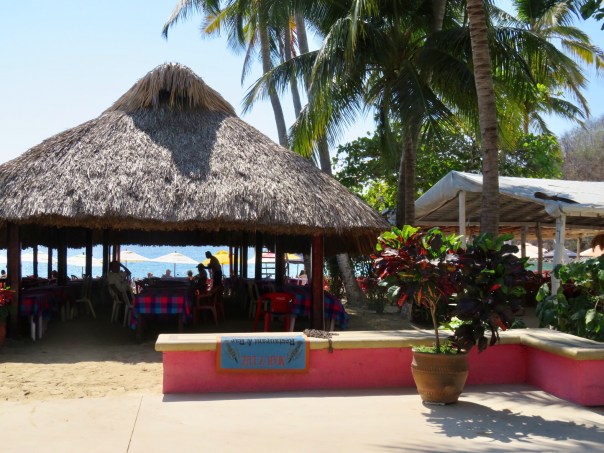
A short walk to the waterfront, and we are inundated with offers to go out on fishing boats and eat in seafood restaurants. The restaurants have hundreds of tables, an indication that cruise ships stop here. But there is no ship today, so everyone is competing for our pesos!

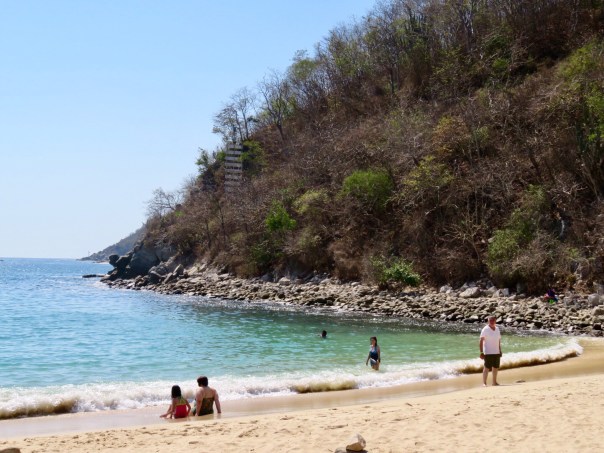
The cove is very pretty.

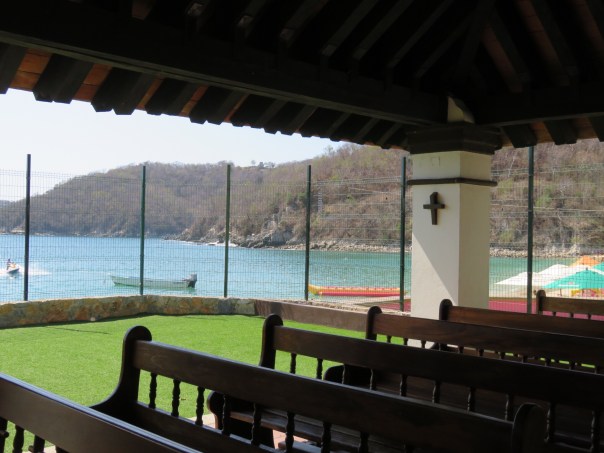
The chapel is outdoors too:

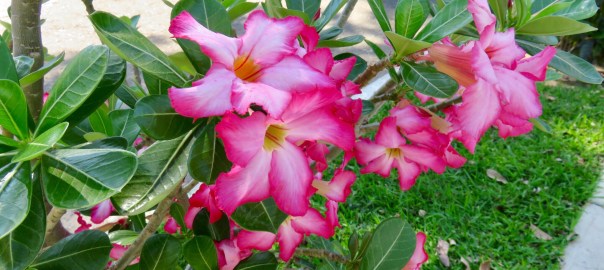
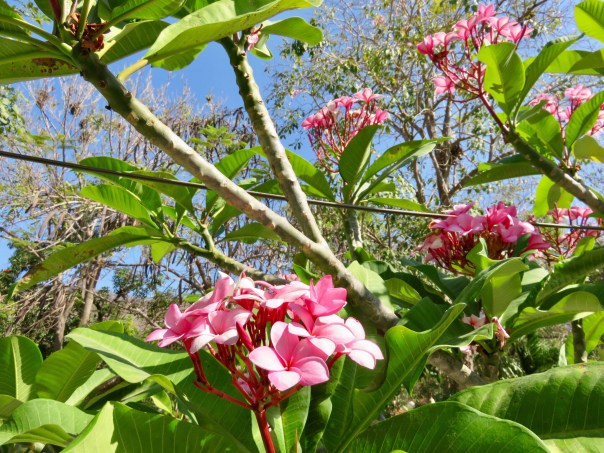
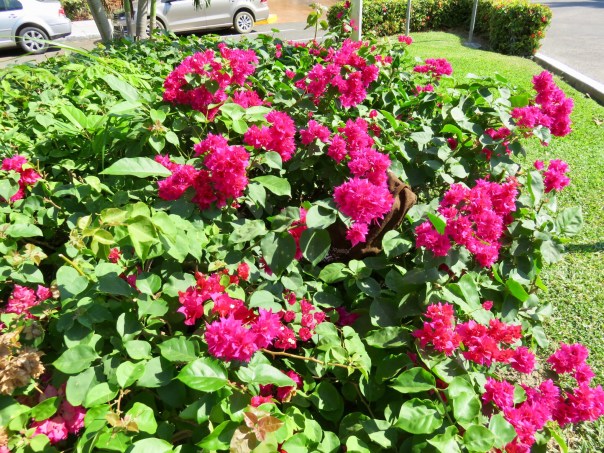
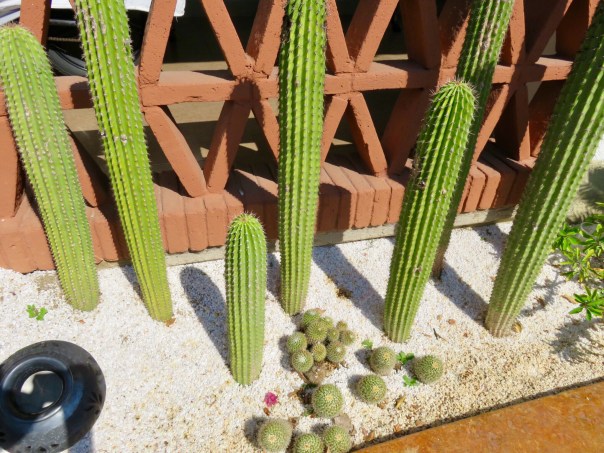
I don’t have an exciting story to tell today, so I will share some of the tropical flora we saw on our morning walk. Lots of reds:

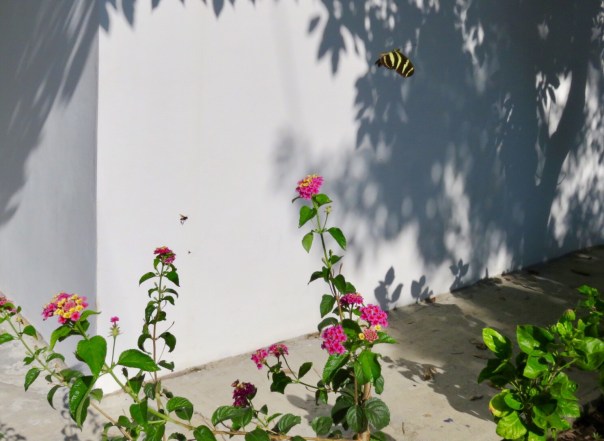
Lantana and a mariposa:

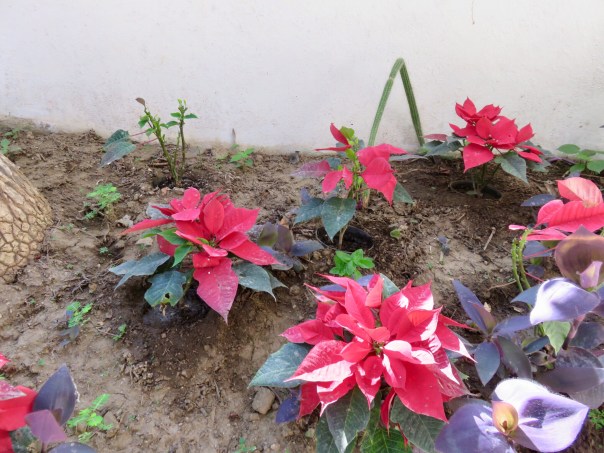
Poinsettias in their natural habitat:

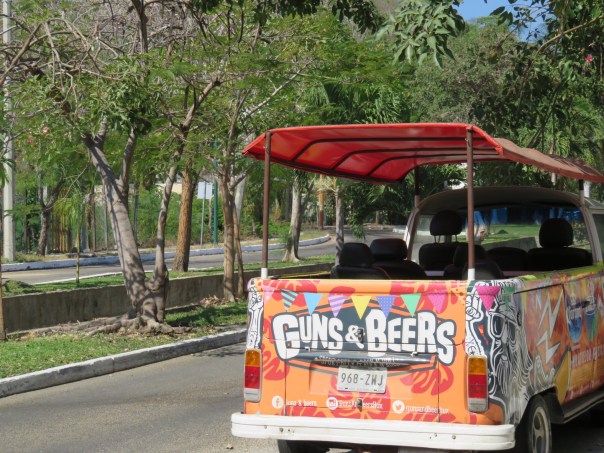
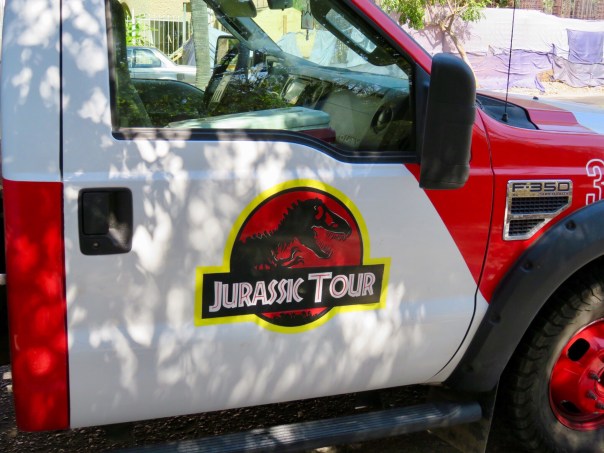
They have Guns and Beers here.

Maybe they have dinosaurs too?

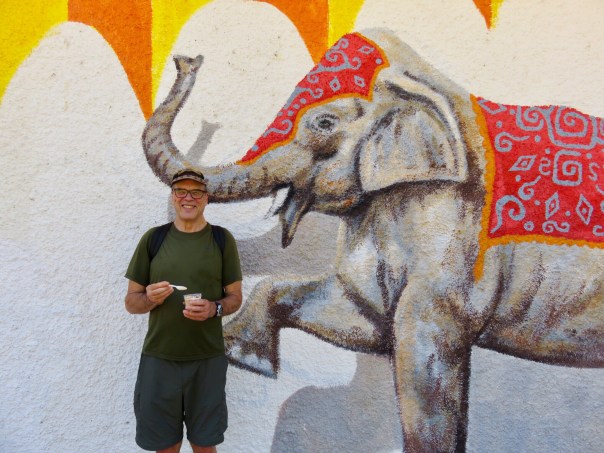
Tell Emma we saw an elephant!

More from Mexico City

Feb 25 – We left the Basilica and picked out a place to eat lunch from a row of sidewalk shops. Here the meal included noodle soup, a plate of warm tortilla, a plate of red rice, beans and a choice of chicken or pork. We ordered one of each, and I got the chicken, which was covered in molé sauce. Let’s just say that molé is an acquired taste that I have not yet acquired. Its basis is cocoa; it is dark brown, bitter, and smells like paint thinner. After a few bites, Jim noticed my distress and switched plates. The pork, in red sauce, was spicy, tender and delicious! I know I have to keep trying with the molé, as it is very popular in southern Mexico. Wish me luck!

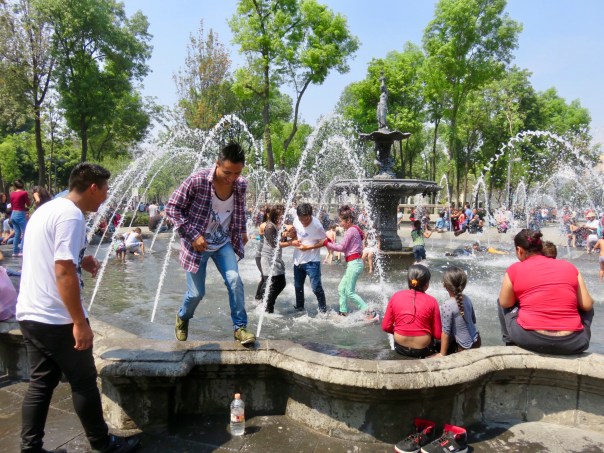
The Metro let us off at a huge park, where lots of folks were enjoying a warm Sunday afternoon. The fountains were repurposed a wading pools for kids and teens.

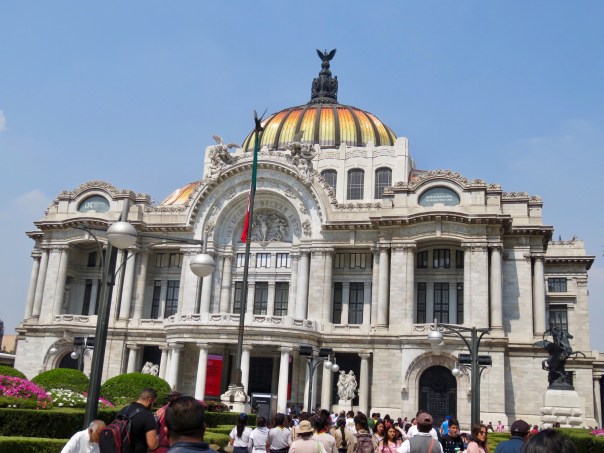
On the other side of the part was the Palacio de Belles Artes, with it’s beautiful multi-colored dome shimmering in the sun. As a Sunday bonus, admission to the museum was free!

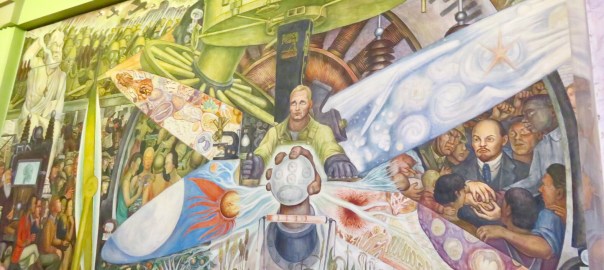
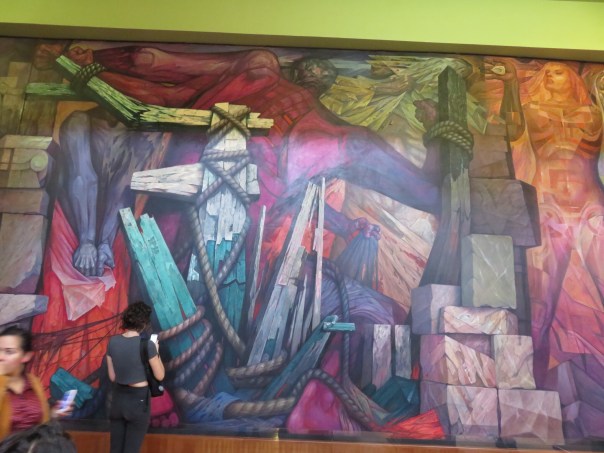
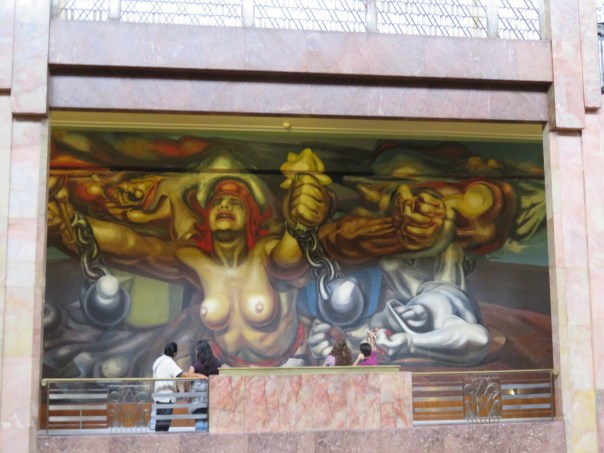
There rooms full of pots and bones and museum-y stuff, but the big attraction was the top floor, which was covered with murals by Diego Rivera and other famous artists.

I laughed to watch a mom photographing her young daughter beside a huge boob – sorry I didn’t catch that pic!

Feb 26 – Want to know what Rosario served for breakfast this morning? Chilaquiles, which is a corn tortilla covered with tomato sauce, sour cream and a little cheese, a traditional Mexican breakfast. For all the cheese we are subjected to in US Mexican restaurants, this is the first cheese we’ve seen here. Muy delicioso!

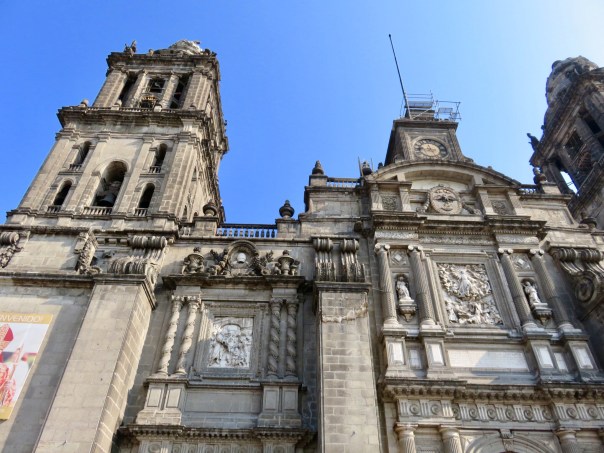
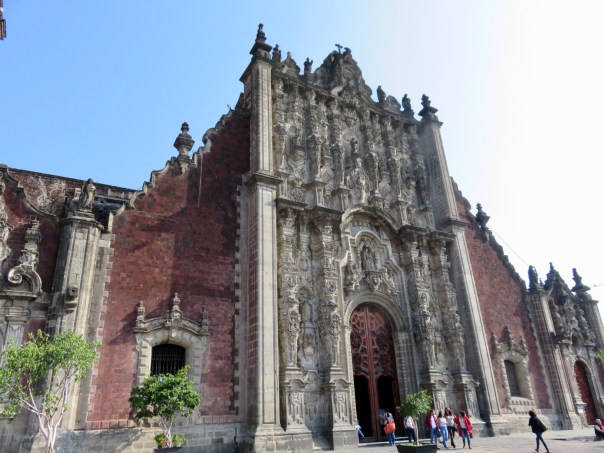
It is Monday and most things are closed, so we walked over to the Metropolitan Cathedral, which is the largest cathedral in the Americas. It has 16 side chapels which were gated and dark, and two main altars.

The statue called the Poison Jesus resides here. Do you know this story? Once there were two rich men. The first was generous and devout, going to mass every day, humbly kissing the foot of Jesus and depositing a gold coin in the alms box. The second rich man was jealous of the first. He had a cake laced with slow acting poison delivered to the generous man in the name of a grateful townsperson. The generous man ate a big slice with his morning cocoa, then walked to mass. The jealous man followed him to see when the poison would take effect. After mass, the generous man bent to kiss the foot of Jesus, and the statue turned black from foot to crown. The jealous man understood that Jesus had taken the poison from the man’s body, and he confessed and begged forgiveness, which the generous man immediately granted.

That is where the story should end, but here’s the postscript. A few years after this miracle, one of the altar candles fell over and set the altar ablaze, incinerating the statue. As the statue was a popular place to pray and request healing, the Church had a replacement statue made, of course already black…

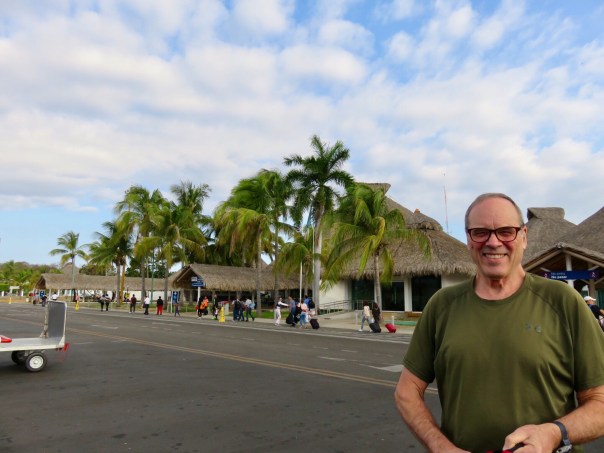
In the afternoon we made our way back to the bus stop and returned to the Aeropuerto to catch our flight to Huatulco (Wa-TOOL-co). One hour later, we disembarked in a place as different from Mexico City as a place can be. Yes, this is the Huatulco Airport.

Let the relaxation begin!

Sunday with Our Lady of Guadalupe

Feb 25 – After another scrumptious breakfast (with spicy scrambled eggs and papaya juice), we set out to conquer the Metro. We walked to the station, which was so surrounded by sidewalk vendors that the entrance was hard to see! We charged our card with the proper fare (easy peasy) and stepped inside to study the big map of the M3 line. A young woman immediately came over and asked if we needed help – Nice Person of Mexico! She confirmed that we were headed in the right direction, and let me know that if I was traveling alone, the Metro provides Ladies Only cars for females and kids under 12 to try to mitigate sexual harassment on the trains. Found out via Google that many countries provide this service. Sad that it is needed…

The train was crowded, but not like in Japan where they have to push you in to get the doors closed! In a blink we were at our stop, and walked upstairs into another plethora of sidewalk stalls selling food, clothing, shoes, bags and religious trinkets. We could see the Basilica straight ahead.
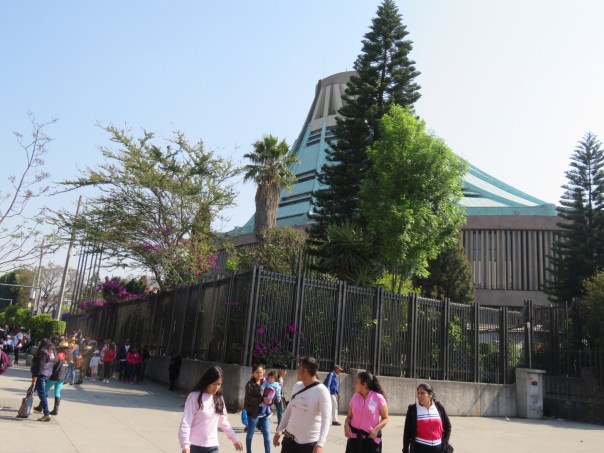
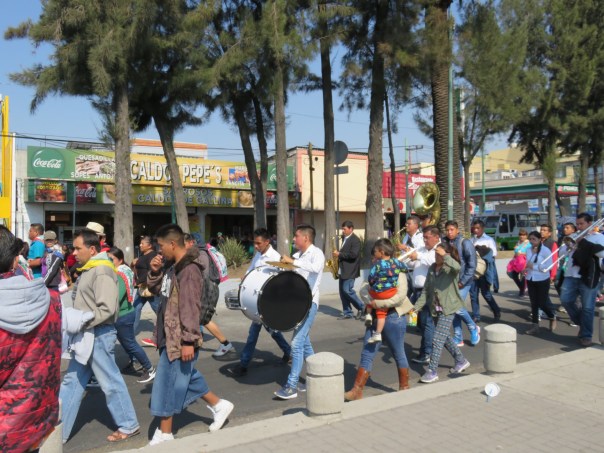
As we crossed the street, a parade with flags and a brass band marched by! I wonder how often this happens?
In our travels, we have visited other sites of Marian visions: Lourdes in France, Fatima in Portugal, Medjugorje in Bosnia-Herzegovina. Our Lady of Guadalupe is the #1 most visited Christian pilgrimage site in the world, hosting over 20 million people each year. Here’s the story in case you are not familiar.

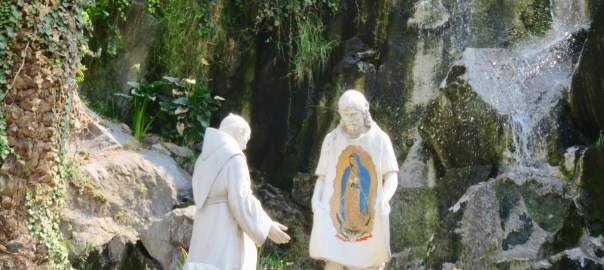
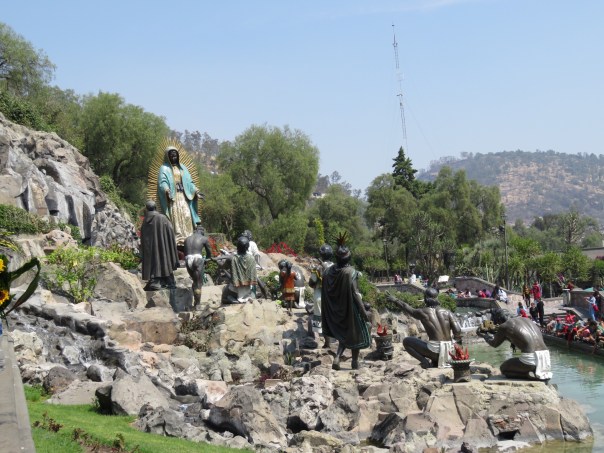
In 1531, a poor Aztec peasant named Juan Diego was visited by a Lady who instructed him to have a church built on the place where he stood.

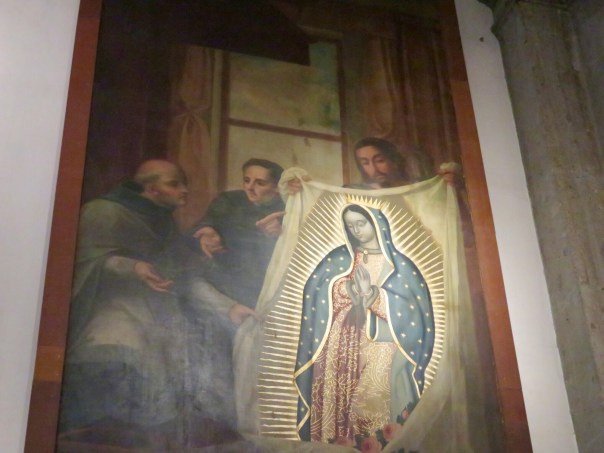
He told the local Spanish bishop, who did not believe him. He reported this back to the Lady, who told him to go ask again. This time the bishop told him not to return unless he could bring back miraculous proof. When he told this to the Lady, she sent him up the hill to gather Spanish Castilian roses, which were not native to Mexico and definitely would not be blooming in December. He gathered the flowers in his cloak, and when he opened his cloak in front of the bishop, the Lady’s image was miraculously imprinted on the cloak.
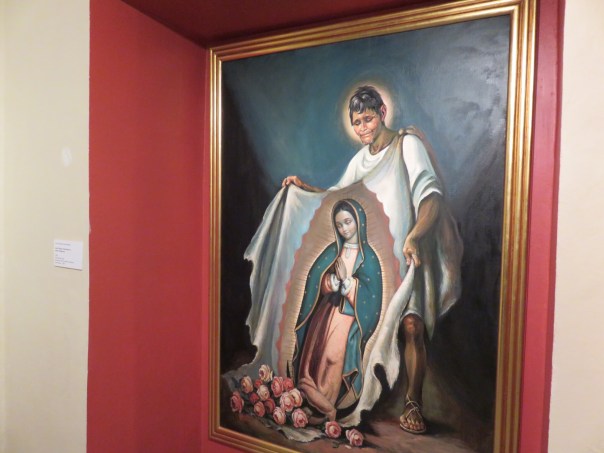
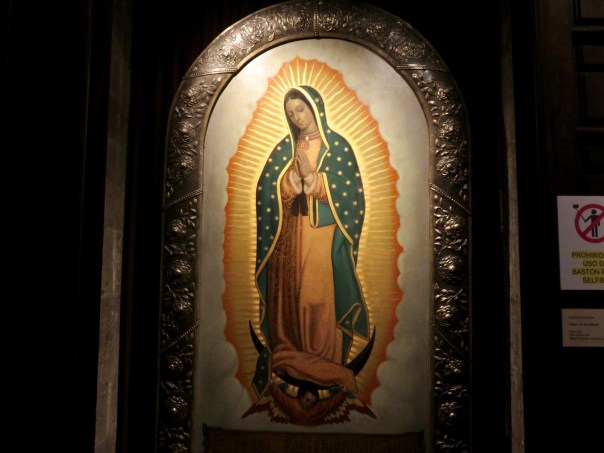
The image of the Lady with dark skin and black hair, wearing an Aztec gown and black maternity belt and speaking the local Aztec language really wowed the natives, and millions converted to Catholicism in the next decade. The cloak, made of rough hemp, has not degraded despite being handled for 500 years.

We took a moving walkway past the cloak, which is mounted high up on the wall of the new sanctuary, where mass is said 24 hours a day.
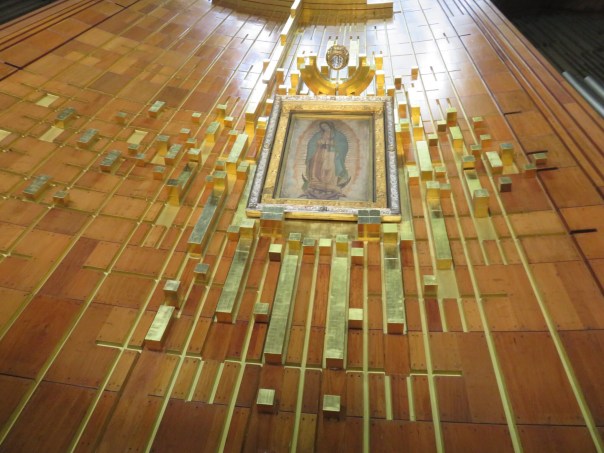
The new sanctuary is huge, and was totally packed with worshipers kneeling and singing.

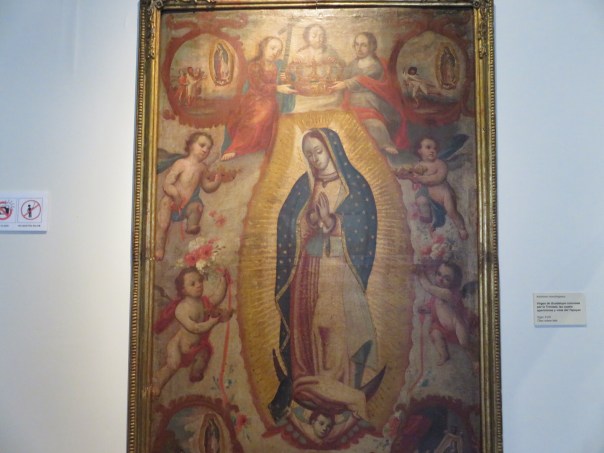
In the museum, there were lots of other images of the Lady.

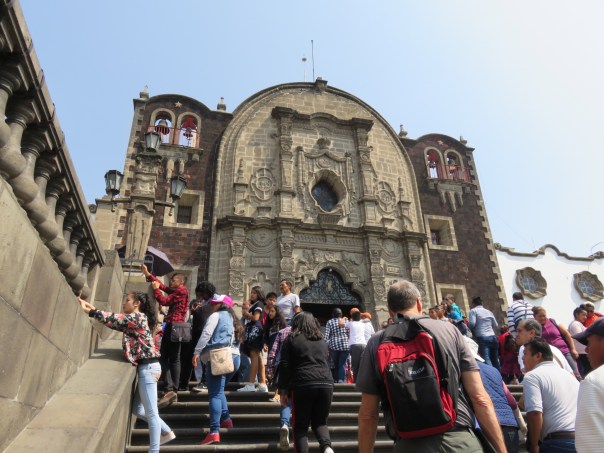
We walked up the hill to the old sanctuary, where natives were chanting and dancing.
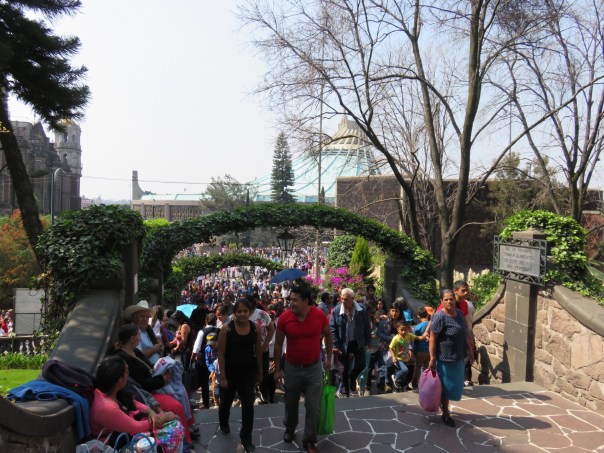
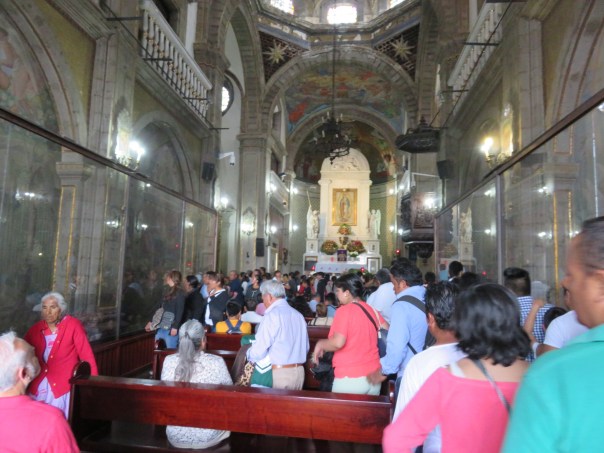
The old church was small and crowded with people just walking through.
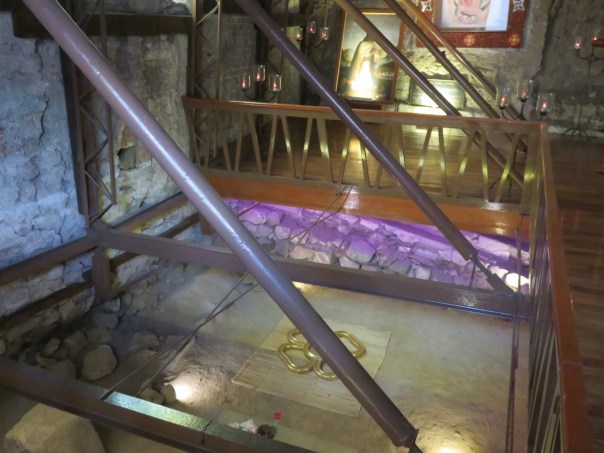
We saw the exact spot where Juan saw the Lady. We
Unlike other Marian pilgrimage sites that welcome visitors from all over, all the signage and the masses here are in Spanish. With the exception of one Korean group, we saw few foreigners. We did see many babies and young children dressed in white, brought here to be baptized.
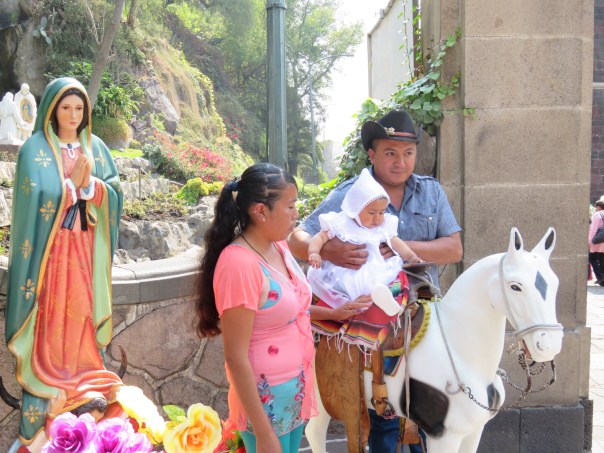
The walk down the hill.
The Words of the Lady inscribed above the door, “Am I not here, I who am your Mother?”