Antigua

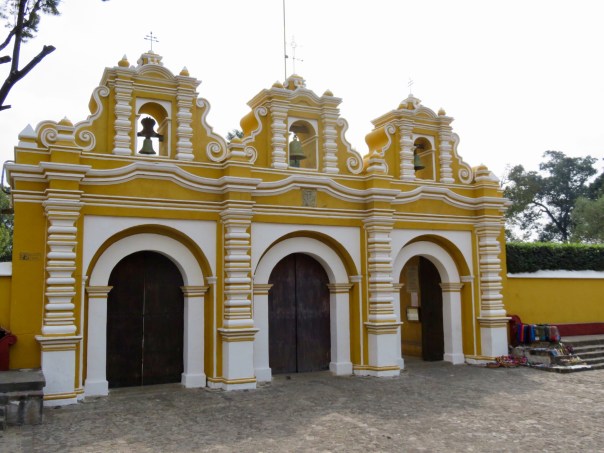
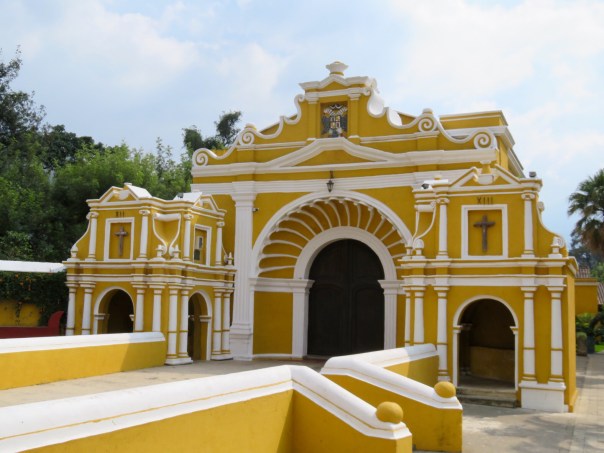
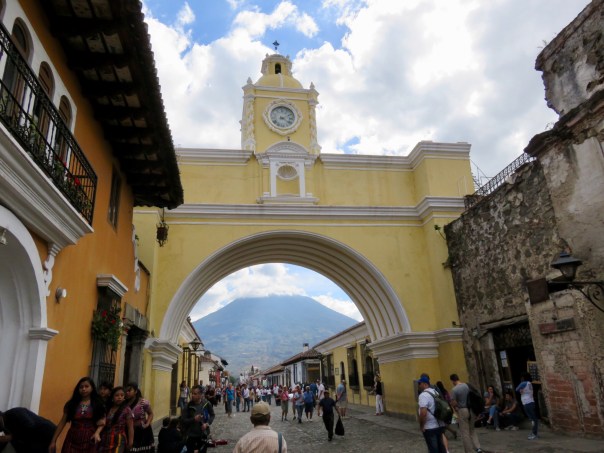
Jan 30 – After breakfast, we packed up our packs, and got ready for the 90 minute ride to Antigua. (Note: we are not talking about Antigua the Caribbean island, but Antigua the colonial former capital of Guatemala.) Our original plan was to hike back to the airport and catch a shuttle bus, but it turns out that the Uber fare was comparable, so we just tapped the app and David pulled up to our door. This really is too easy – we may never walk again!

It took an hour of driving to reach the edge of Guatemala City, which looked just like any other big crowded city, then a half hour of ear-popping altitude climb to reach the quaint little town of Antigua. We are staying at the Casa Gitana guest house, which has great reviews thanks to its very personable host, Carlos. Carlos spent about a half hour marking up the town map, showing us which places were tourist traps and which were worthwhile.
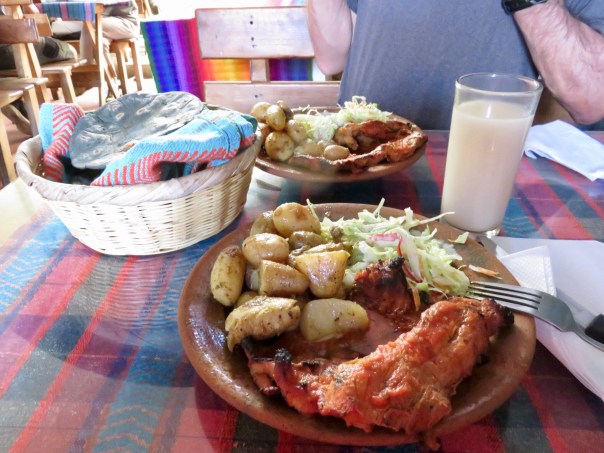
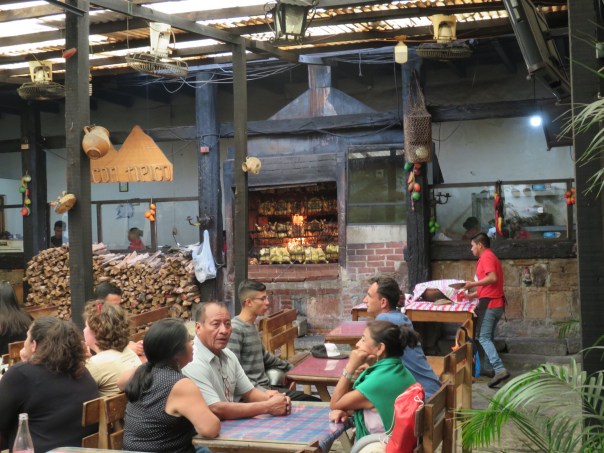
Our first order of business was to find some lunch, so we took Carlos’ suggestion to check out Rincón Tipico for some typical Guatemalan food. There was a huge wood-fired rotisserie and two little ladies slapping out fresh tortillas. The meals were super yummy, and I don’t think we’ll need much dinner tonight.

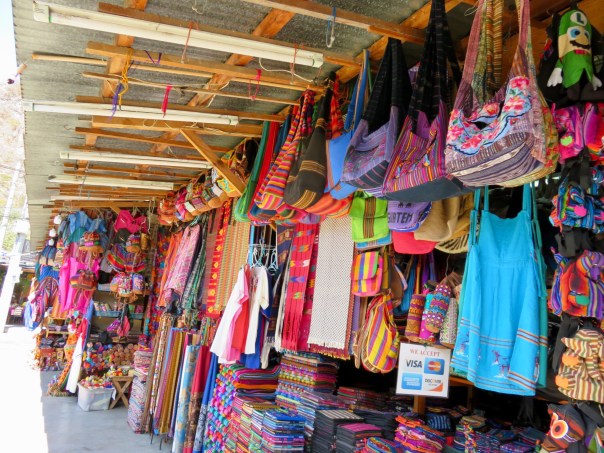
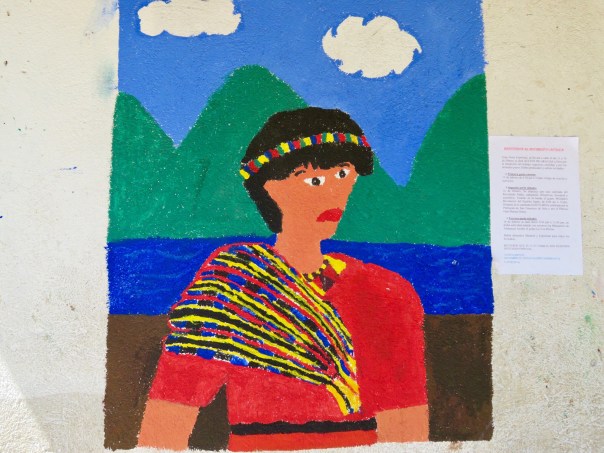
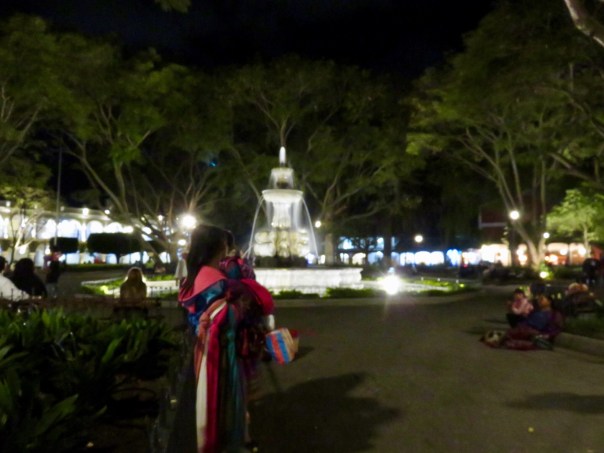
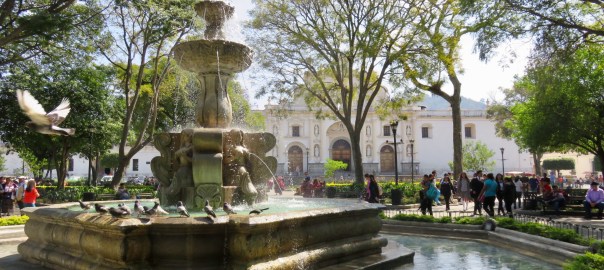
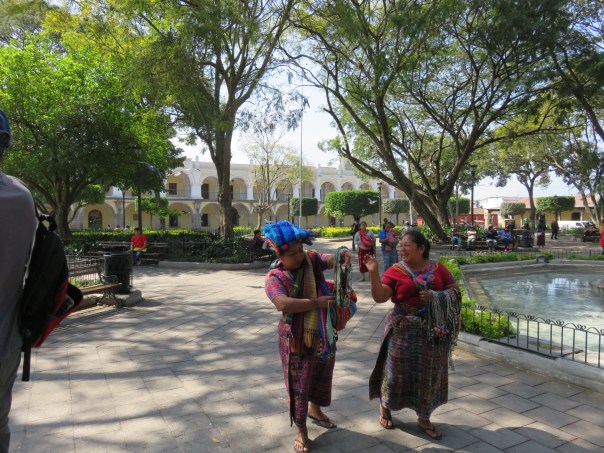
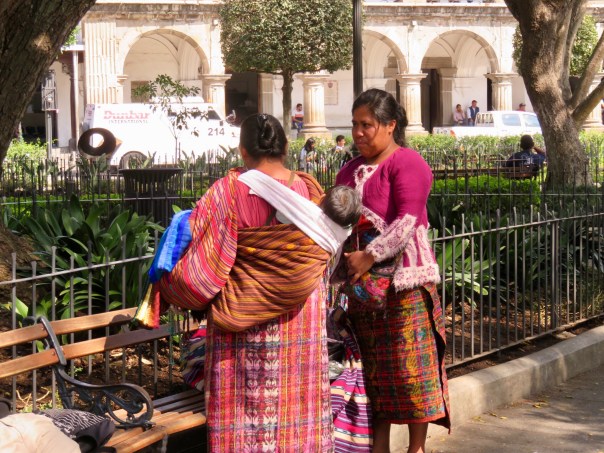
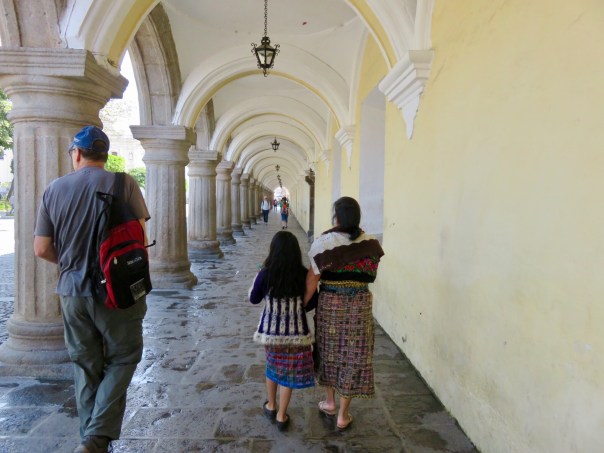
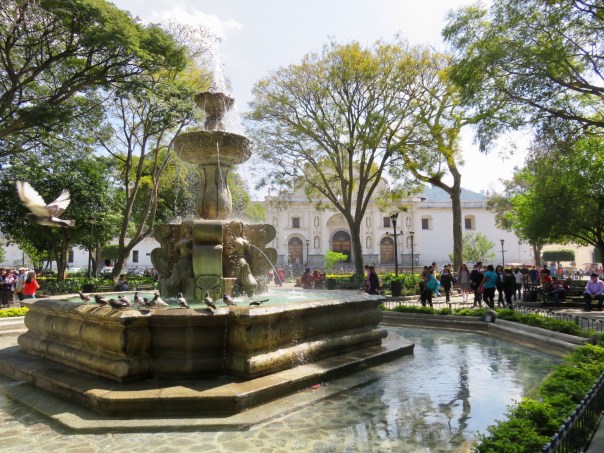
We checked out the town square, where local women sold woven goods and jewelry.

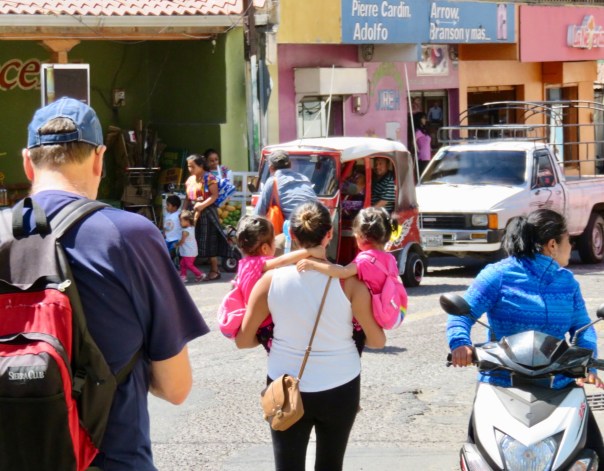
Folks are definitely short statured here!

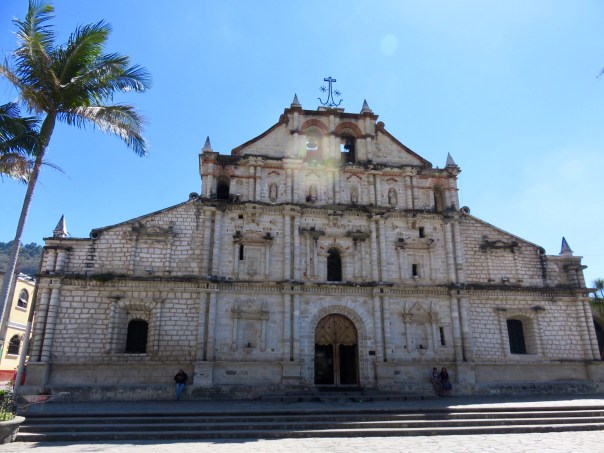
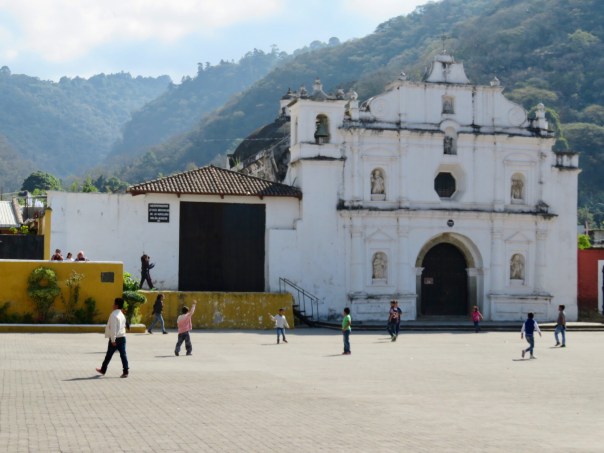
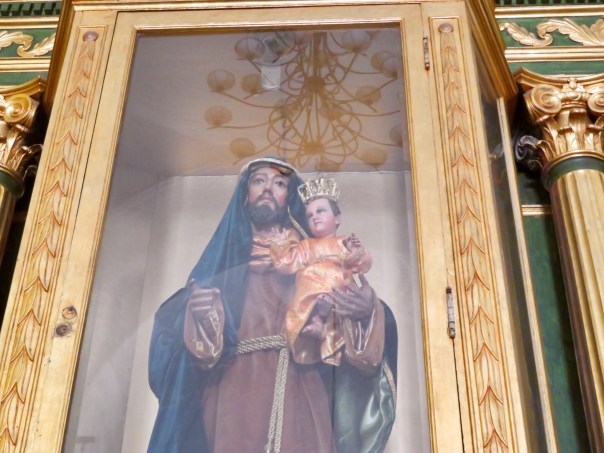
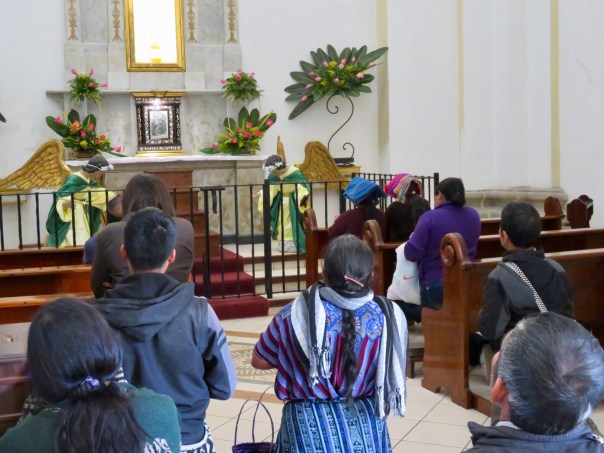
Jan 31 – Next to the central square is the Antigua Cathedral.

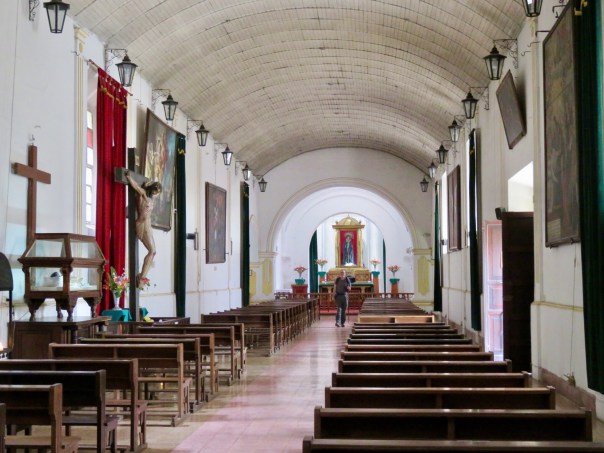
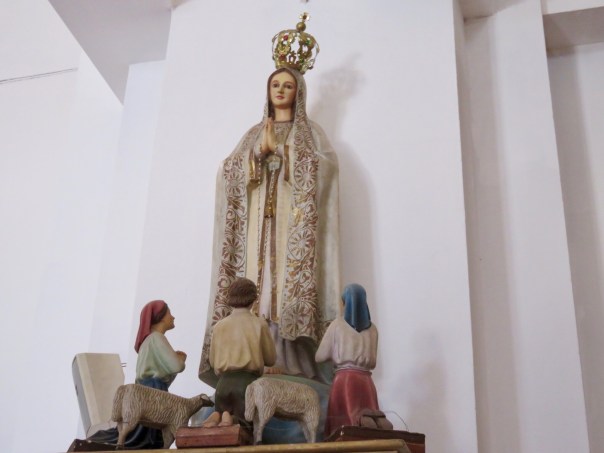
Our Lady of Fatima

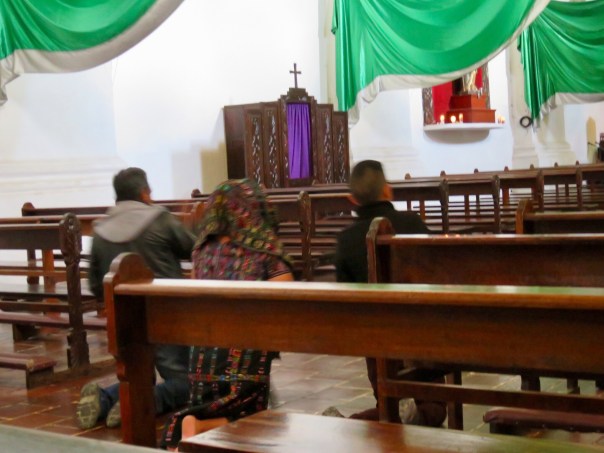
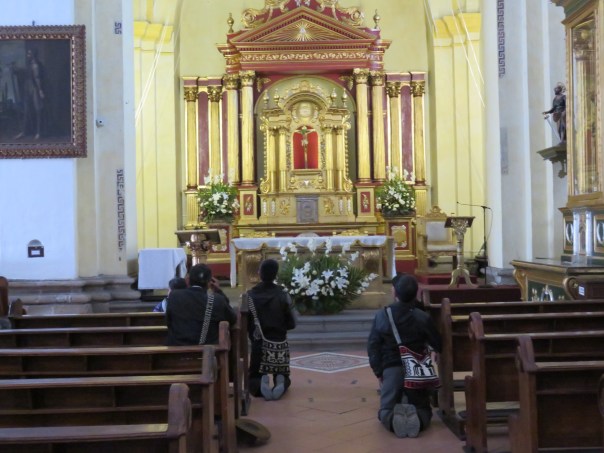
What was notable here was the number of people on their knees in prayer- something we don’t often see in the churches we visit.

We stopped into a coffee shop, in one of the few old buildings not devastated by earthquakes, and Jim thought he ordered a potato-filled pastry. Not even close! Pan tres leches, or three milk cake is soaked in heavy cream and topped with whipped cream. A happy accident, as this is something we would never order. It sure was good…

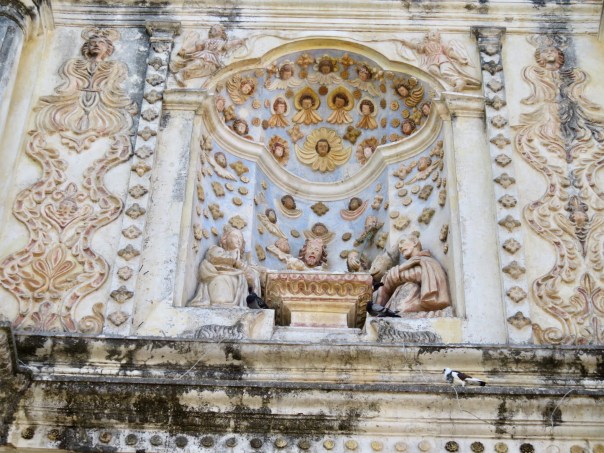
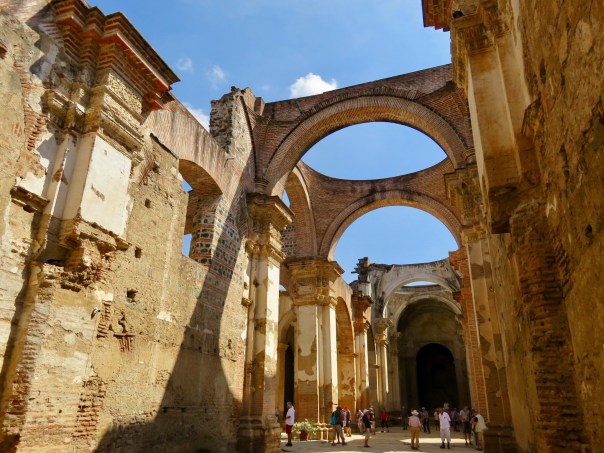
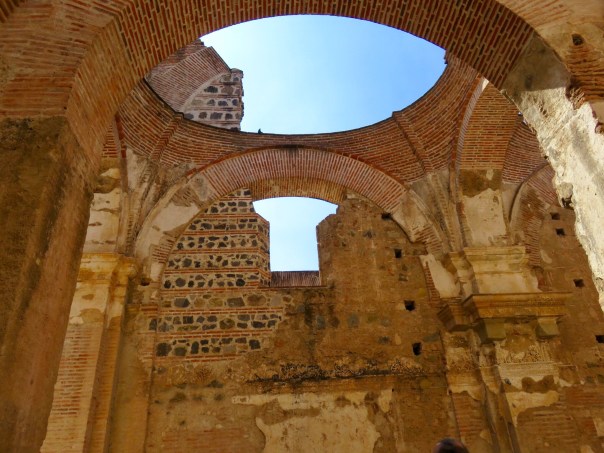
Further down the road is the ruins of Antigua’s original cathedral of San José. Devastated by three different earthquakes in the 1700s, it was not rebuilt.

Intricate stone carvings can still be seen where exposure to the weather has not eroded them.

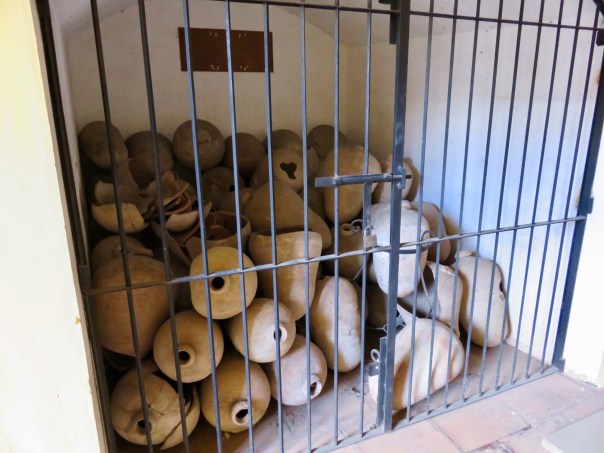
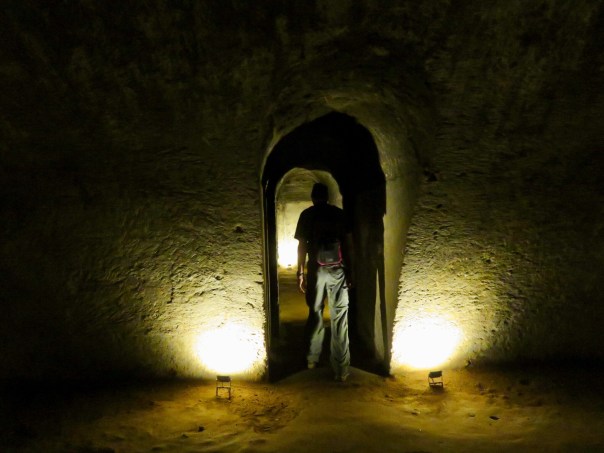
Below the ruins are catacombs that once held the important dead.

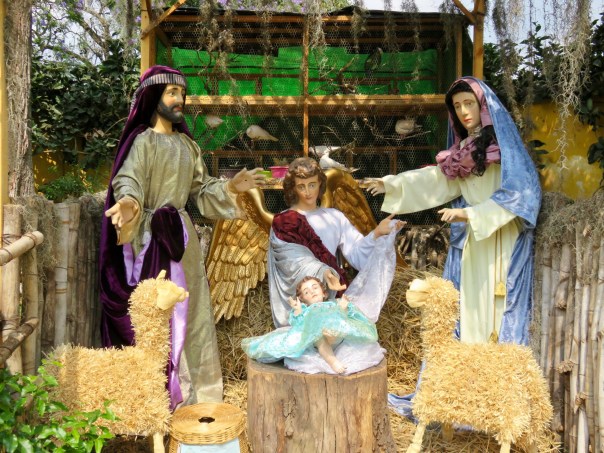
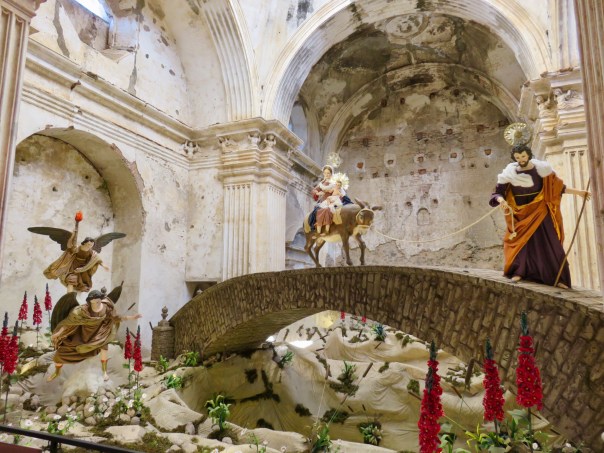
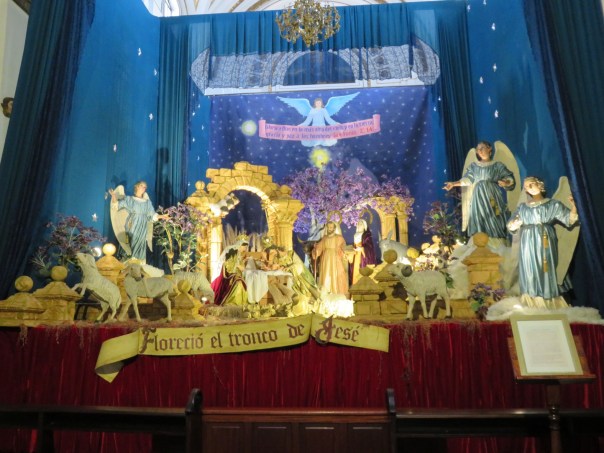
In the midst of the ruins, orchestral music played and we were ushered into a tableau of the Holy Family’s escape to Egypt. The figures are life sized.

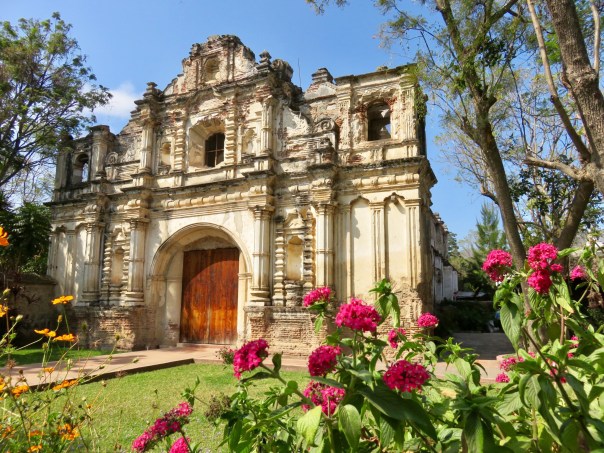
Isn’t this a pretty building? It is San José el Viejo, a ruin used as a wedding venue!

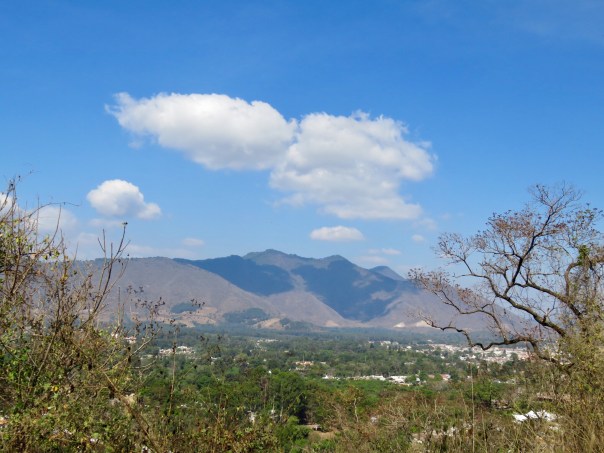
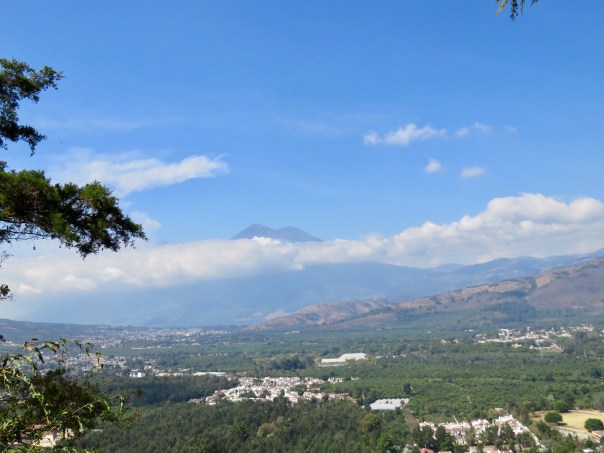
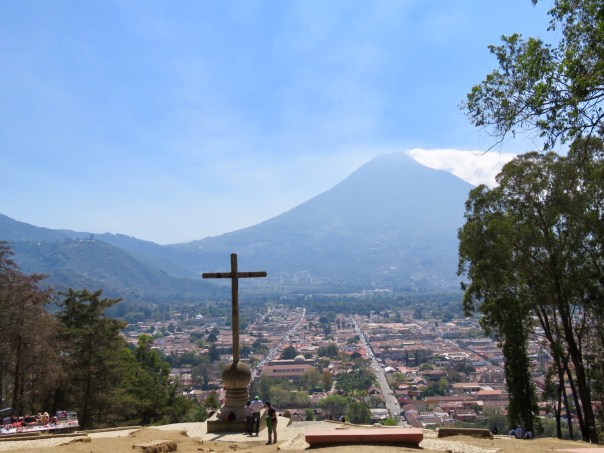
In the afternoon, we walked up to the scenic overlook called Cerro de la Cruz, or Hill of the Cross. It gives a view of Antigua and Volcan de Agua beyond. This particular volcano has not been active since the 1500s. I was not happy with my ability to climb this hill – my heart kept pounding in my ears as we ascended. Maybe the altitude? Jim has many more walks planned to get me back in shape!

Thank you to the young man from Perth for offering to take our photo!

Antigua is laid out in a nine by nine block grid with numbered streets and avenues, so it is very easy to navigate and very walkable from one end to the other on foot. The streets are all cobblestones, many of them loose, so sturdy walking shoes are recommended. Tomorrow, more from Antigua!

Guatemala!

Jan 28, 2019 – It’s been a little too cold in Virginia lately, so we’ve been planning to warm our old bones with a little Central American sunshine. Thanks to the government shutdown ending just in time, we hopped a very pleasant flight to Atlanta and then one to Guatemala City with nary a hitch. Neither flight was filled, and we actually got to spread out a bit and felt like humans instead of packages in transit to a hub!

So, where is Guatemala? No, friends, we are not in, or anywhere near Venezuela where the current politics are a bit dicey, nor are we in Brazil where the dam just burst. There are no caravans forming here headed for US borders. Heaven knows we are not in Guam, despite the spelling similarity, nor in Guadalupe (see Mexico 2018)!

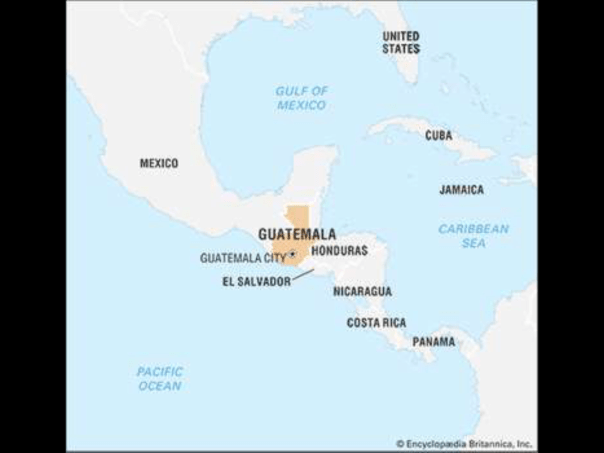
Guatemala (pronounced like What-emala) is just south of Mexico, with volcanos to climb and jungle ruins to explore. We only jumped one time zone, so no jet lag. We are currently at about 5000 feet elevation, similar to Denver. We are in the dry season, and the weather is temperate, with daily highs expected in the mid 70s.

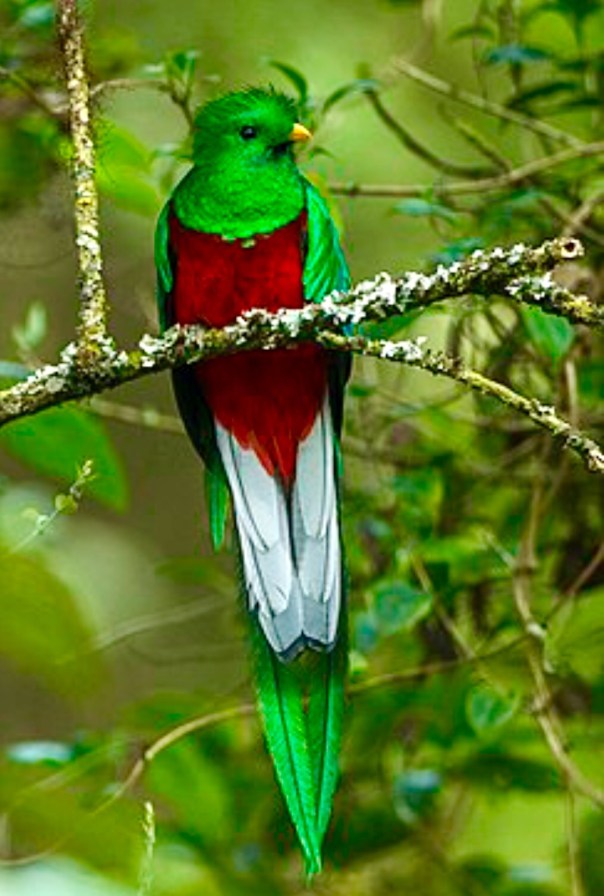
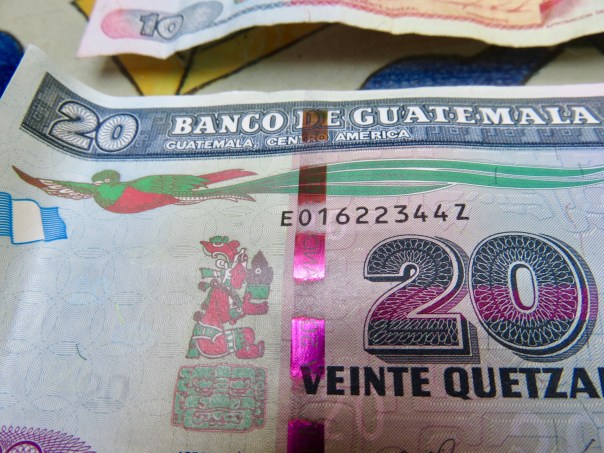
The money here is the Quetzal, which is also the national bird. As a bird, it is long-tailed and resplendent. As money, it takes between 7 and 8 of them to equal a dollar. Now you know everything I learned about Guatemala online.

We found an ATM deep in the darkened airport with the assistance of a friendly taxi driver (who didn’t even ask for a tip), then called our B&B for a pickup. Ten minutes later, we walked in to Hostal Guatefriends, a very nice place indeed, with a private toilet and hot water shower. We don’t expect this level of luxury everywhere in this country.
Jan 29 – After a nice hot breakfast (eggs, black beans and good strong coffee ) we set out to see what there is to see in Guatemala City. There’s not much, and most guidebooks suggest not to bother, but we are here, so we will see. Our hostal is about 4 miles from the city center – too far to walk, and taxis depend on haggling, so we decided to Uber. Oswaldo picked us up in two minutes flat. Uber (pronounced Oovair) rocks!

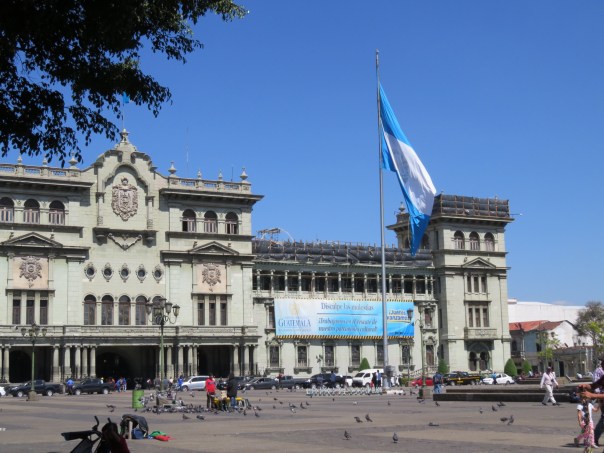
Our first destination was the Palacio Nacional, which has a museum inside.

We tried to walk in, but were stopped at the door. Although Guatemalans may enter for free, foreigners must pay $6 US each, and stand outside until the next tour starts (on the hour). A guided tour for foreigners – how nice! Will the tour be in English or any other foreign language? No, solamente Español. Oh well. With 50 minutes until the next tour, we decided to move on.

Next door to the Palacio is the Catedral Metropolitana. The Cathedral sustained damage from several earthquakes, and has been rebuilt.

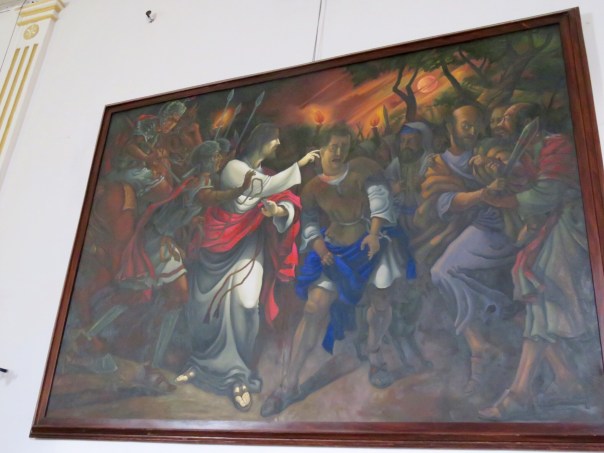
The Cathedral has small chapels dedicated to various saints, and paintings of the life of Christ all done by Pedro Ramirez in the 1600s.

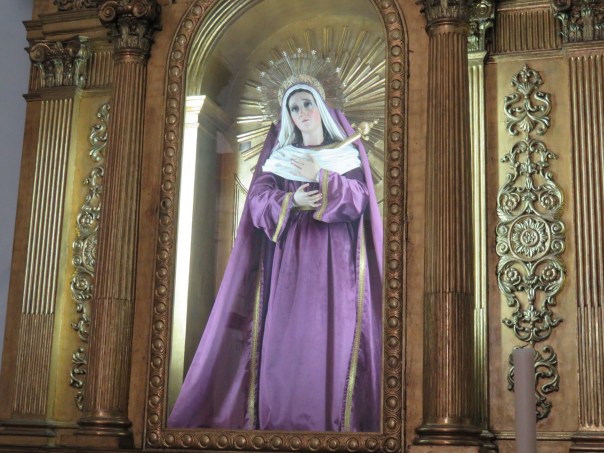
A sad Madonna
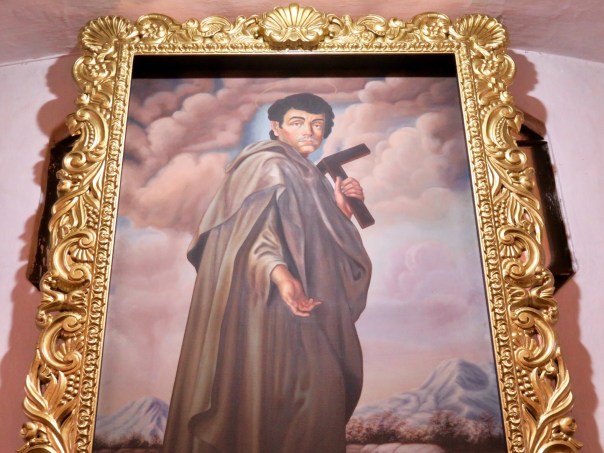
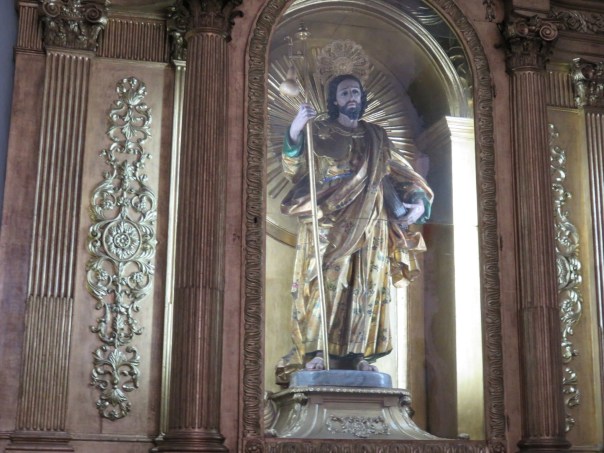
Our favorite Apostle, St. James, with his walking stick and drinking gourd
The angel telling Mary she has been chosen

There’s also a life size Nativity tableau.

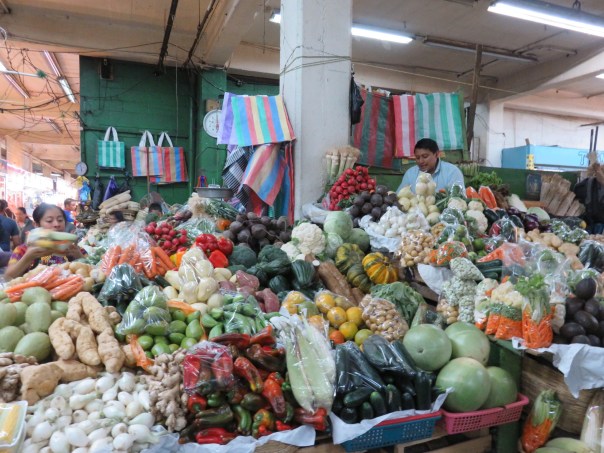
Then we walked over to the Mercado Central, where everything you can imagine is on offer. The market, formerly three stories tall, was also devastated by earthquake, and is now mostly underground.

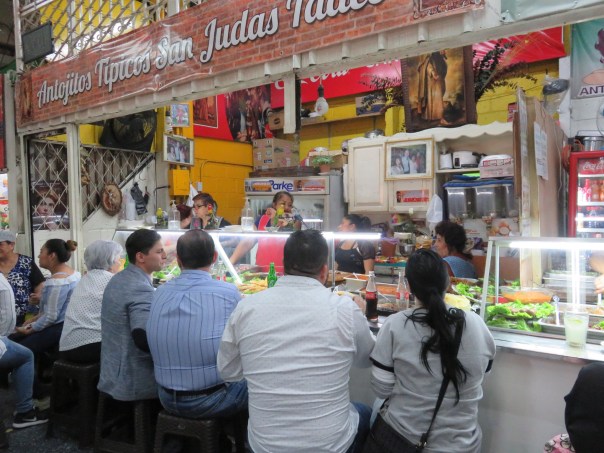
A big part of the market is selling fresh hot food, and we picked the busiest booth, on the theory that the best food was there. Don’t know what we ate, but it was delicious!

A great first day. Tomorrow, we’re off to Antigua!

A Trip to Salisbury and Stonehenge

July 23 – We have time for one more adventure before we leave England, so this morning we took the train for a one hour ride south from Bath to Salisbury.

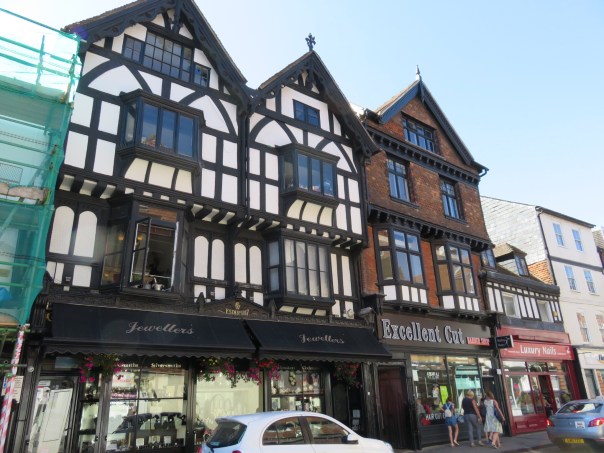
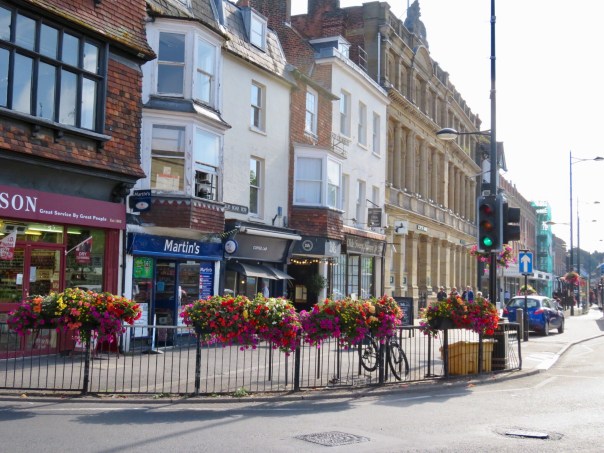
Salisbury is a busy town, full of shops and pedestrians.

An old covered marketplace.

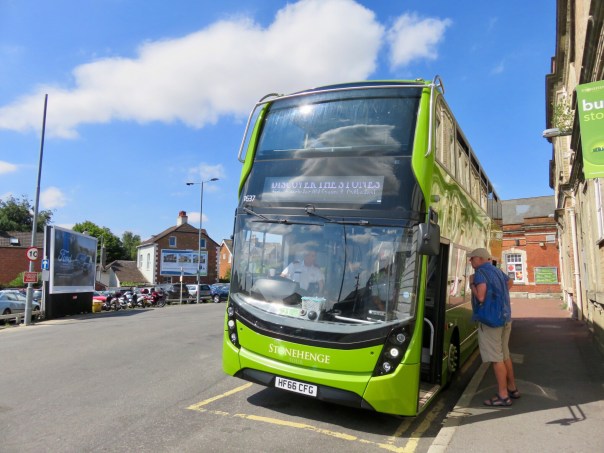
We dropped our packs at our hotel, and went off to find the big green bus to Stonehenge.

It takes about 30 minutes to get to the visitor center, which was mobbed with tourists of all nations on this Monday, the hottest day of the year (so far). Just like Disneyland, only with stones. It’s interesting that the visitor center is full of info about everything except what the heck Stonehenge was actually for. A mystery.
Here’s a skeleton found buried here, one of many, and what he may have looked like. I was impressed to learn that 4000 years ago, the diet of these dwellers included bread, beer and yogurt as well as meat, fruits and vegetables.

The Stonehenge stones are not local, and had to be moved here either by being dragged overland on logs or floated down the River Avon. No easy feat either way.

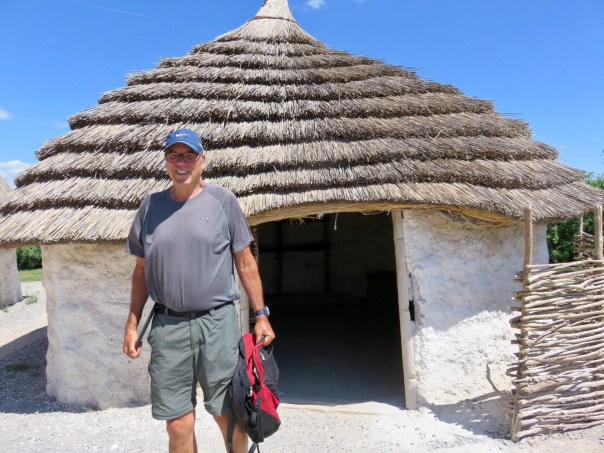
Here are what the dwellers huts may have looked like. Jim would have been a bit too tall to live here comfortably.

Then it was time to queue for another bus to go to the actual site. Lucky the Brits are good at queuing.

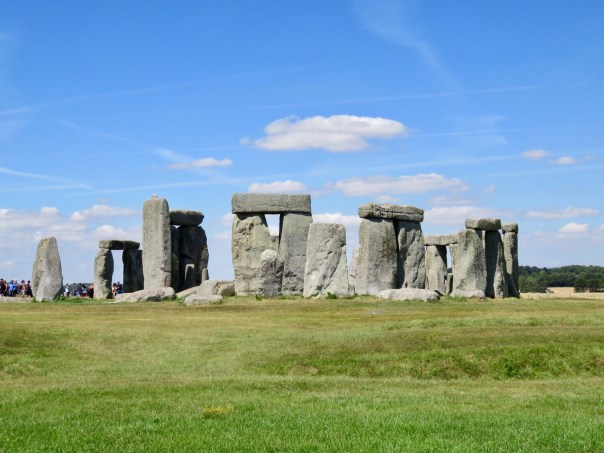
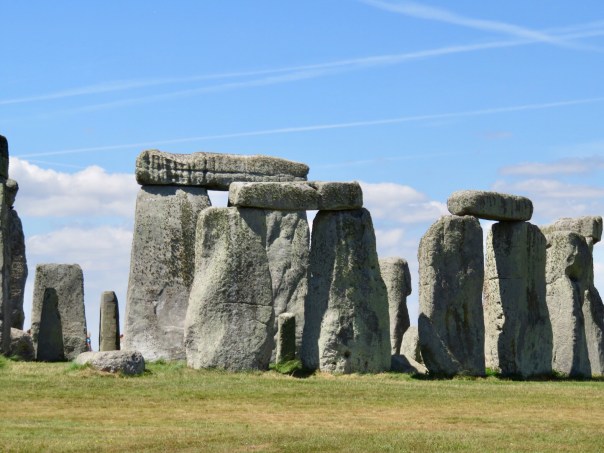
And here it is!

And here we are!

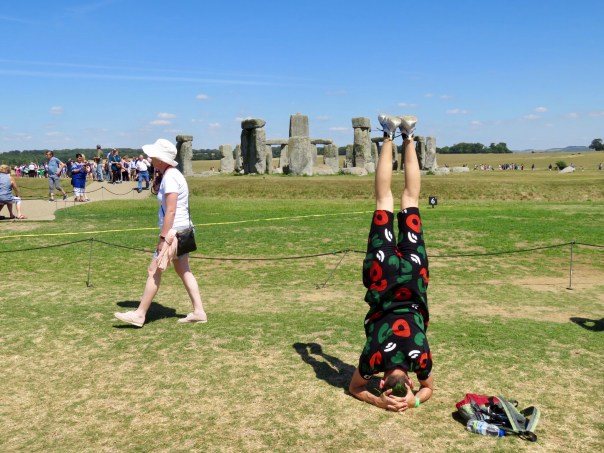
A Japanese man felt the need to stand on his head here.

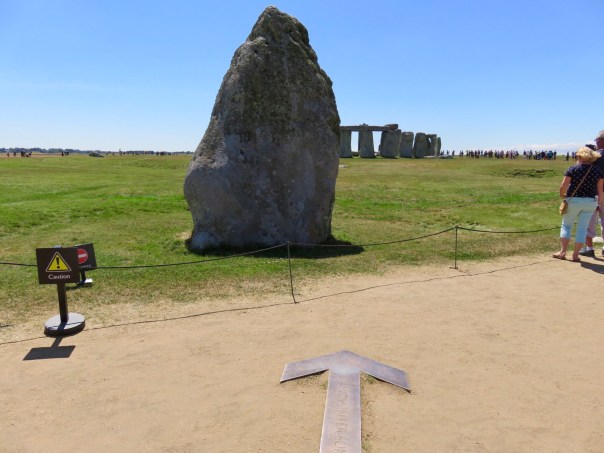
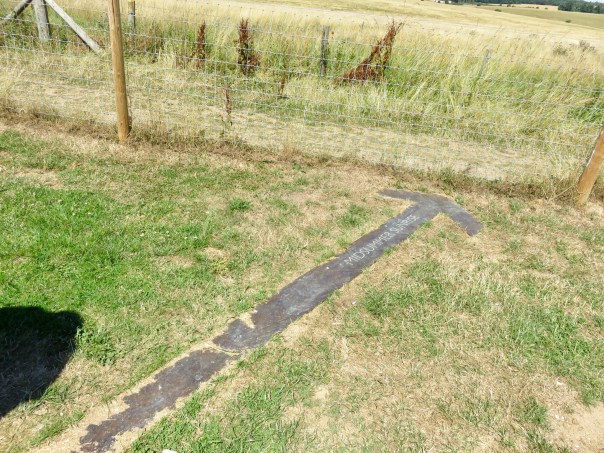
Here’s where the sun shines through the rocks on Midsummer’s sunrise and Midwinter’s sunset. The round rock in front is called the heel stone, and was probably there before the other rocks were moved in.

You can’t touch the stones, but can walk all the way around them.

Burial barrows (tumuli) nearby.

Then we reversed the process, queuing for the shuttle bus and then again for the bus back to town. I wondered how I’d get a blog post out of a bunch of rocks, but there you have it. Glad we went!

July 24 – The other must do in Salisbury is the Salisbury Cathedral, an early English Gothic built in 1220. It has the tallest spire in Britain.

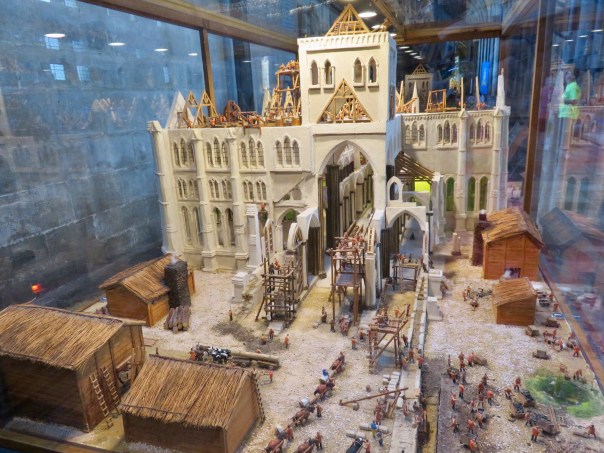
Here’s a model of the cathedral under construction, which only took 38 years.

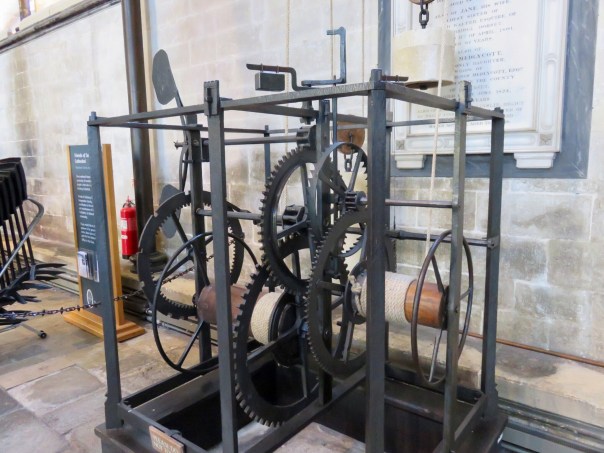
The world’s oldest working medieval clock, built in 1386. Can you tell what time it is? Me neither.

An absolutely gorgeous font, with fluttering doves overhead. The doves were being taken down for shipment to Grace Cathedral in San Francisco.

The Prisoners of Conscience window, added in 1980 as a reminder of all who suffer for their beliefs.

The 106 stall quire.

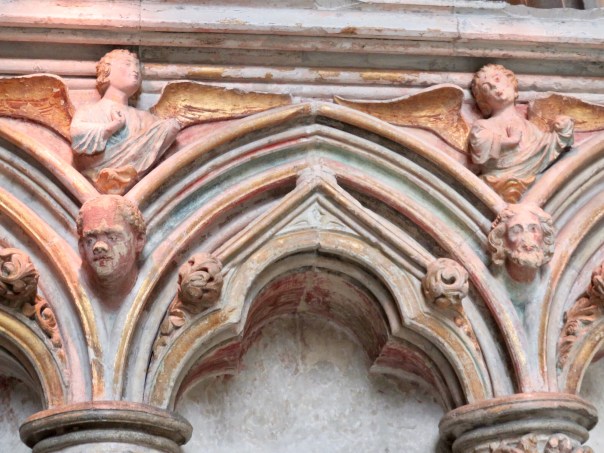
I like the little faces that seem to be a counterpoint to the somber statues.

Lots of old dead white guys. The knight and his dog are from 1389. Only one wife that I could find.

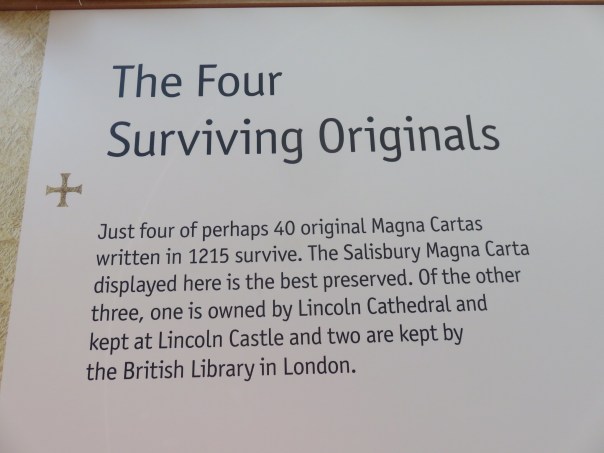
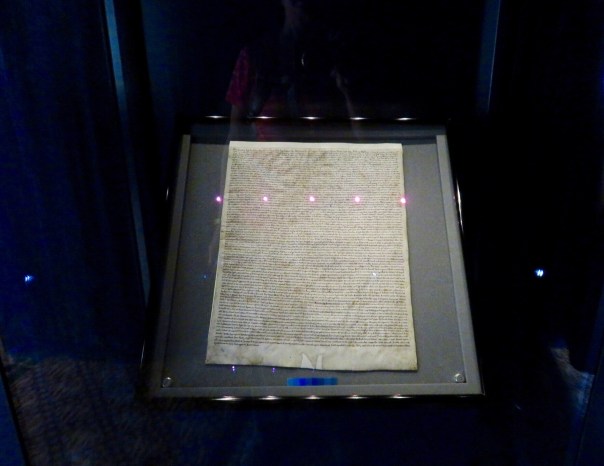
Then we got to the Chapter House, which has housed one of the four remaining copies of the Magna Carta since 1215. It has never left Salisbury, and is in really remarkable condition. Written in Latin on treated lambskin, it was the first charter to decree that no one was above the law. King John was forced to issue it by his barons, who were unhappy with the way he was ruling England.

The actual parchment is kept in a darkened room, and you aren’t supposed to photograph it. You know I did anyway. The mark on the bottom is where the King’s wax seal was originally affixed.

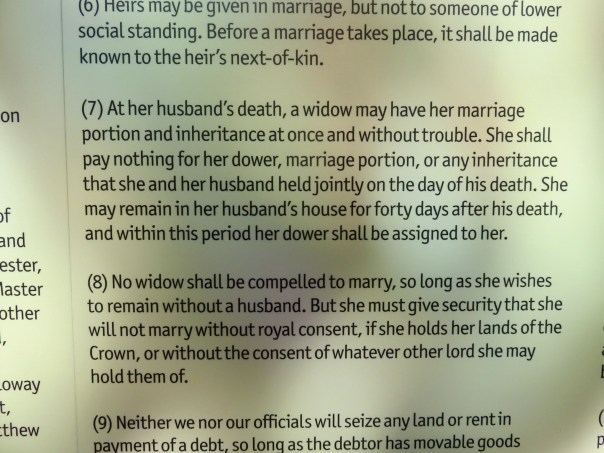
The Magna Carta was the first document to establish rights for women and children! Here are the clauses I found:

On our way back to our hotel, we stopped to enjoy a Peruvian flute player doing an awesome rendition of House of the Rising Sun.

So! A successful trip! Unbelievably great weather, no injuries, lots of fish and chips eaten, and 400 miles walked. Back to Heathrow, then home to Virginia, where everything is air conditioned, the cars drive on the proper side of the road, and it is assumed that you want ketchup for your fries, not Brown Sauce. Until next time!

A Day in Bath, England

July 22 – What do hikers do on their rest day? You already know the answer to that question. Here is some of what we saw in Bath.

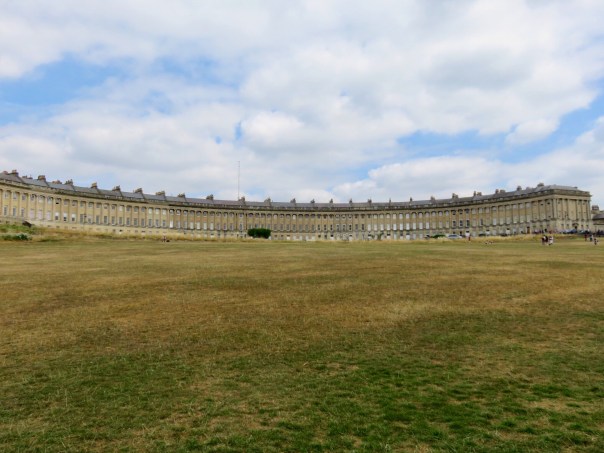
The Royal Crescent, once home to a wealthy Georgian family:

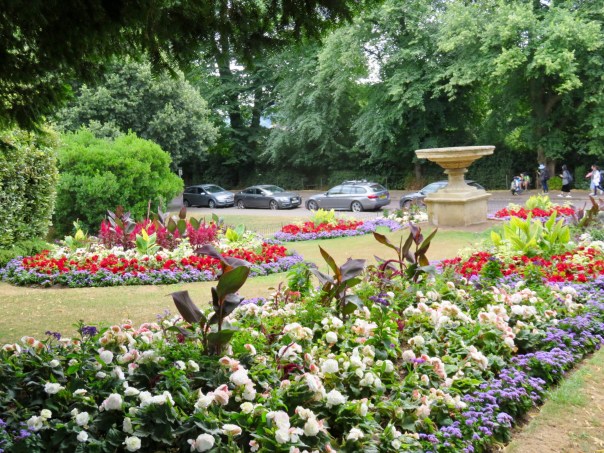
Royal Victoria Park, opened by Princess Victoria at age 11, before she became Queen (I hope you’ve seen The Young Victoria!)

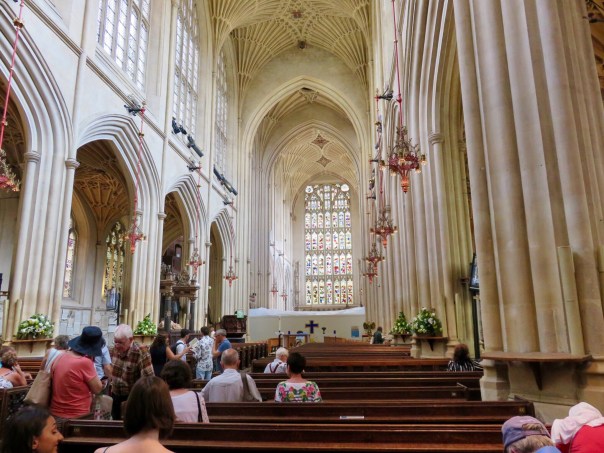
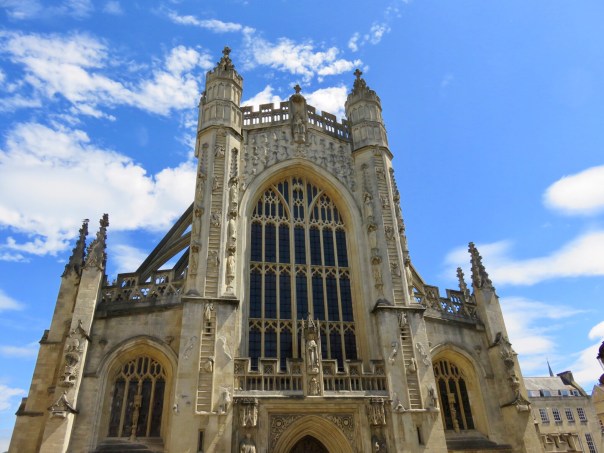
The Bath Abbey:

Here lies James Montagu, Bishop of Bath, who was guilted into fixing the leaky roof of the Abbey when asked, “if the Church does not keep us safe from the waters above, how shall it save others from the fire below?”

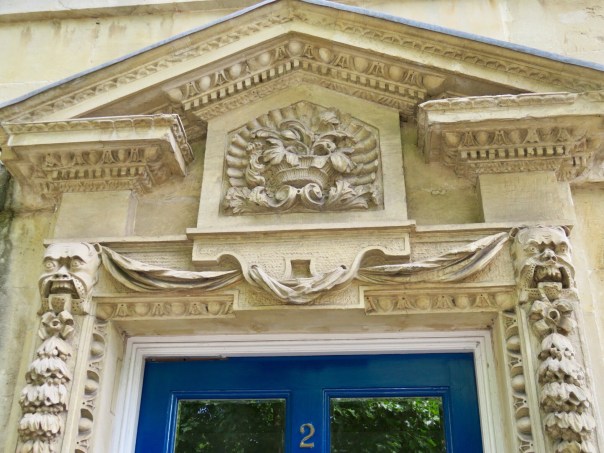
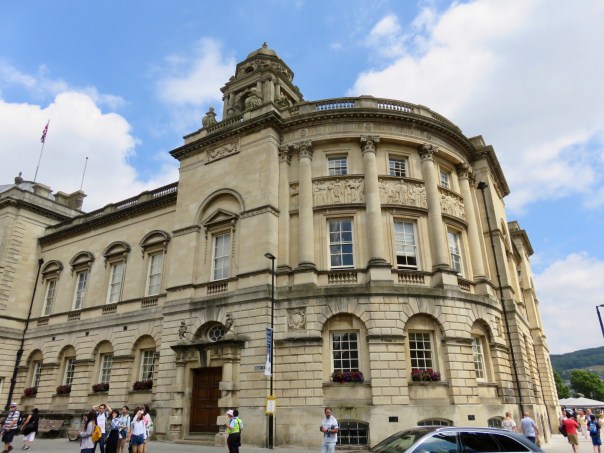
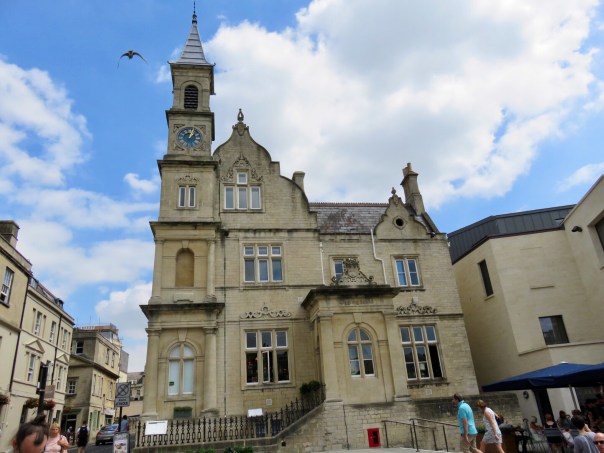
More interesting architecture:

The reason people historically came to Bath was to visit the Roman Baths or Bath Spa. The line for this experience wrapped around the block, but we did not partake.

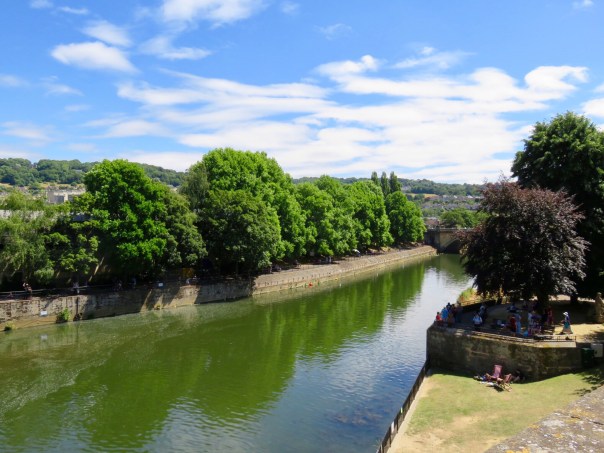
The Pulteney Bridge over the River Avon.

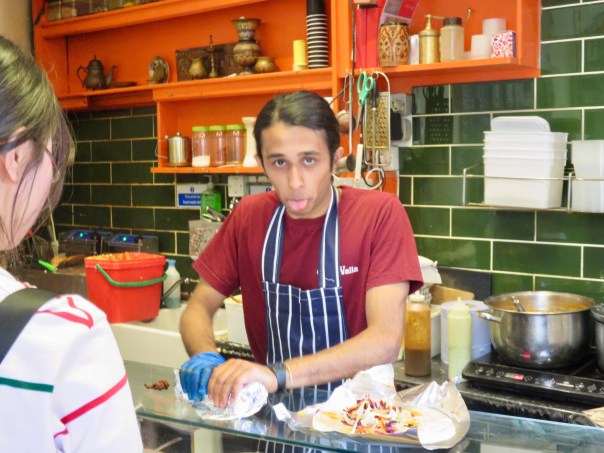
Inside Chaiwalla, the best Indian street food in Bath! The line runs out the door, and this guy does everything single-handedly while keeping up a running conversation with his customers. We ate there twice.

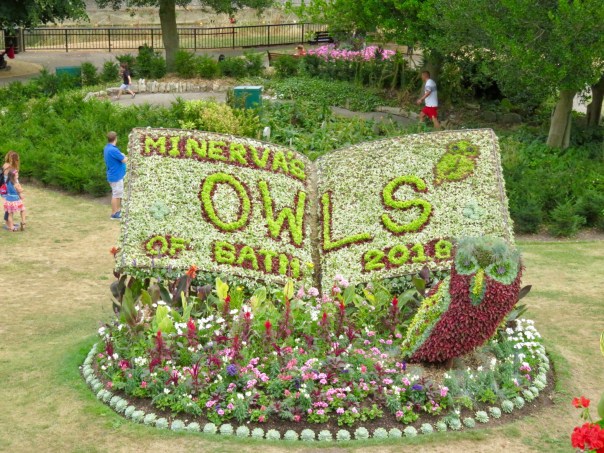
Bath is filled with artistically decorated owls. We saw a few.

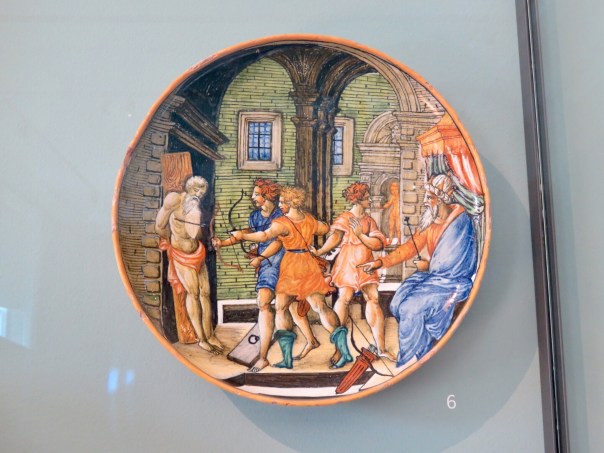
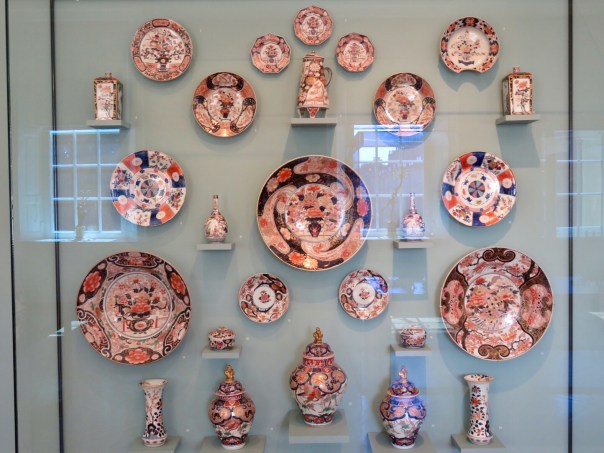
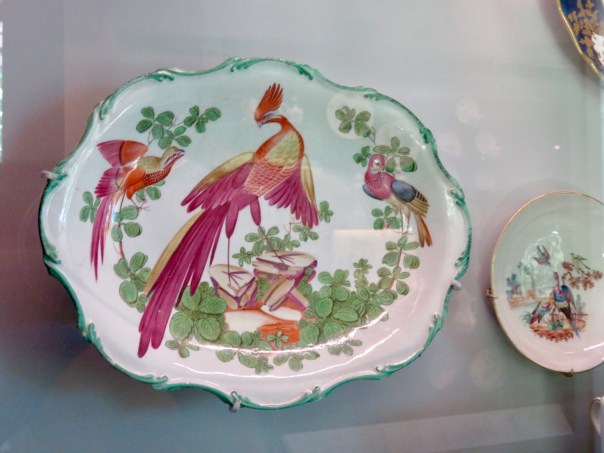
The Holcombe Museum – a wealthy family who collected exotic stuff. While in England, I’ve looked for porcelain plates to add to my collection, and have been frustrated by their lack. This museum had plenty of plates, but not for sale.

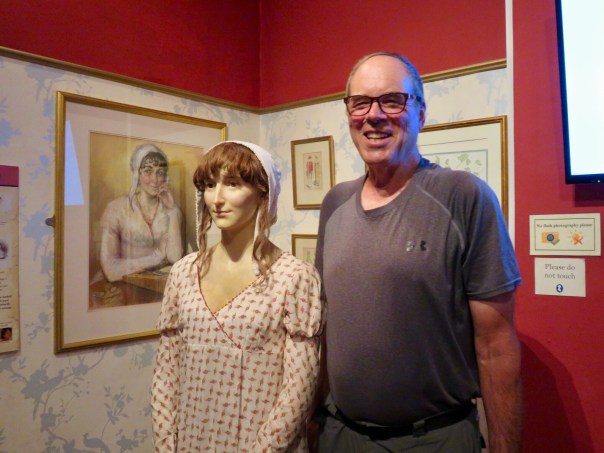
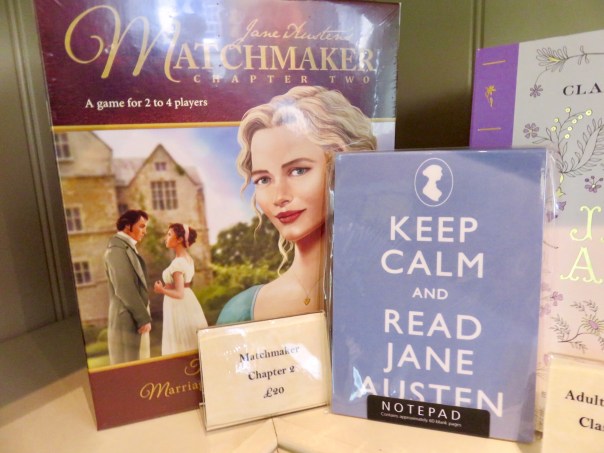
The whole reason we came to England, the Cotswolds, and Bath, is that Jim is a huge fan of Jane Austen, and he’s been talking for several years about walking where Jane Austen walked. So our visit could not be complete without a visit to the Jane Austen center. Jim and Jane:

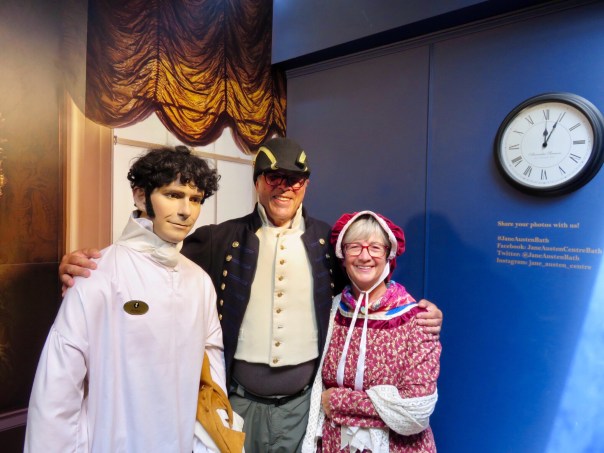
Dressed up in Georgian era clothes with Mr. Darcy:

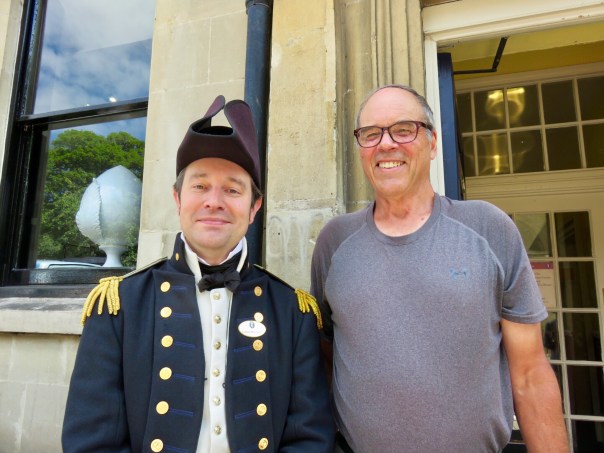
Speaking with Captain Wentworth of Persuasion:DB5BDEBD-7D4C-432C-9960-39ACBFAC91B3

The Cotswold Way – Cold Ashton to Bath

July 21 – This is it! Last Cotswold walking day! I must say, I was eager to move on from that shepherds hut this morning. Jim made us a lovely breakfast with the meager provisions provided by our host, with me staying in bed to keep out of his way.

Then Jim moved outside so I could wash the dishes! (Yes, there is a tiny cold water sink behind the stove.) I know tiny houses are the rage these days, but I don’t think I’m a suitable candidate for one…

Nine miles gets us into the city today. A hill to climb, some woods, some farmer’s fields. Here is the ultimate cow.

We walked through the battlefield of the Battle of Lansdown 1643. The Royalists beat the Parliamentarians as far as we could tell.

The ultimate golf course. Have I mentioned that everyone walks with their own cat here? We haven’t seen electric carts at any of the courses.

Ready for one last word? On our maps, areas of “tumuli” are indicated. We thought it was some kind of plant that we had never heard of. Turns out, it’s another word for burial mounds or barrows. Tumuli, (TOOM you lee) plural of tumulus. I learn something new every day.

Before we knew it, there was Bath below!

We walked to Bath Abbey, the official end of the 102 mile Cotswold Way. More about Bath tomorrow!

The Cotswold Way – Chipping Sodbury to Cold Ashton

July 20 – Didn’t want to leave our cool and spacious room over the gastro-pub this morning. We lingered over a fantastic breakfast chatting with the chef before beginning our penultimate hiking day. The chef spends his summers here, then travels to Japan in the winter to teach snowboarding. He reminded us of Christopher. Nice life! Eleven miles today, still sunny and warm.
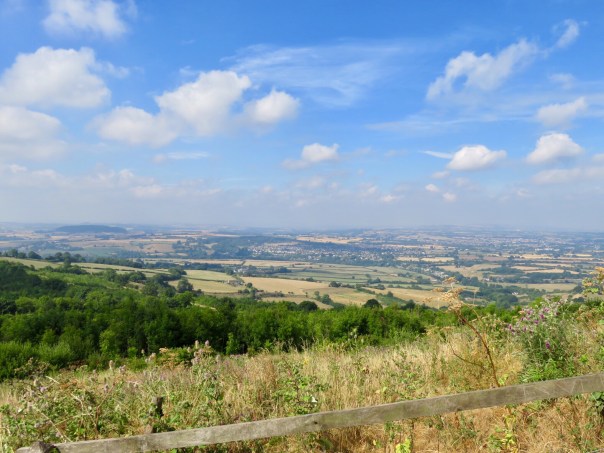
We stopped into the church of St. Mary Magdalene, and I was thrilled to see memorial poems on the walls. Usually, I love finding interesting tombstones, but with the sandstone used universally here, any writing over a hundred years or so is no longer legible.

The church had a sign about the Ceysell Brass from 1493, and we looked high and low but could not find it.

I looked down and lifted a corner of the rug and voila! There it was!
We approached another little town at lunchtime, that had a similar church, St. Peters, and a similar brass. This one was open for all to see.

We ate our lunch in the church cemetery – cool and shady. There were formal gardens below, with lots of tourists strolling about.

I promised myself to stop showing hillsides and pastorals, but this is our penultimate day, so here are some penultimate cows.

By mid afternoon we arrived at Hill Farm B&B, where we had been warned by our travel agent that there were no rooms available, so we would be sleeping in “the shepherd’s hut.” It sounded quaint, but turned out to be a teeny tiny trailer with a corrugated metal roof out in the hot sun. It was REALLY hot inside, with no fan or way to make a cross-breeze. The host was not home, but left us a note to make ourselves comfortable. Ha!

We showered in the tiny bathroom, but started to sweat as soon as we emerged. Our host had left us one bottle of water, with instructions not to drink the water that came from the tap. We were dehydrated and overheated. We’re gonna die!

I went outside looking for any shady place, and found a lovely covered patio with a cool breeze at the top of the hill. We retired there with our books and waited for our host to return. When she did, she assured us that the hut would cool down in the evening, and she was right. This is a self catering B&B, so we heated our lasagna dinners in our tiny microwave, and ate outside at our tiny table.

Here’s to the Cotswold Way!

The Cotswold Way – Wotton-under-Edge to Chipping Sodbury

July 19 – I’m really not making up the names of these places. Walked out of Wotton (pronounced Wooton) this morning without ever learning what it was under the edge of! 13 miles planned for today.

At breakfast this morning, we overheard two ladies discussing their walk, complaining that the architecture here just wasn’t as quaint as they expected. We agree. The cool houses were back in Chipping Campden, but the flowers here are still are very nice.

Every town should have a Pansy Appreciation Club, don’t you think?

Here’s a company that’s adapted to local tastes:

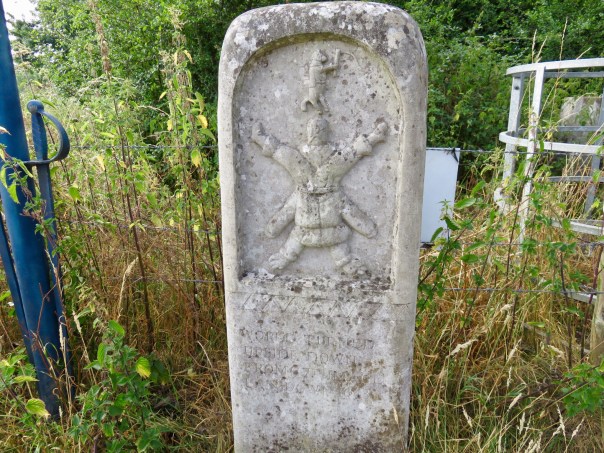
What kind of a headstone is that?

A sign we haven’t seen before:

Oh, that explains it!

Into the woods again. A little waterfall.

A tree with a French braid.

Passing through a little town with ducks and geese.

Who wants to guess what this is? A shaggy dog? A bear?

Nope, guess it’s some kind of bovine.

Another monument – didn’t we climb that yesterday?

This one was for General Lord Somerset for whatever he did at the Battle of Waterloo. And no, we didn’t climb this one.

A little folly, built to encourage endangered birds to nest in safety:

And now we are in Chipping Sodbury, in a room over a really nice gastro-pub with gourmet food. Looking forward to a relaxing evening. No crises today!

The Cotswold Way – King’s Stanley to Wotton-under-Edge

July 18 – Although I don’t usually talk much about our B&B hosts, today is my exception. Rosie Reeves has been running her B&B for thirty years, named one of the best hosts in England, honored at a tea with the Queen, and participated on the English reality show Three in a Bed, where B&B hosts vie for top hospitality honors by critiquing one another’s establishments (she was first runner up). She is full of life and energy, despite recently breaking a leg and hip. She also serves an excellent Full English breakfast. It was a pleasure to meet her.

As part of her service, Rosie drove us to the edge of town, shaving a mile off our 15 mile day. Great start! Up the hill…

…and into the woods.

At the top of Coaley Peak, there is Nympsfield Long Barrow, a Neolithic tomb built over 5500 years ago. Remains of 20 men, women and children were found in the tomb.

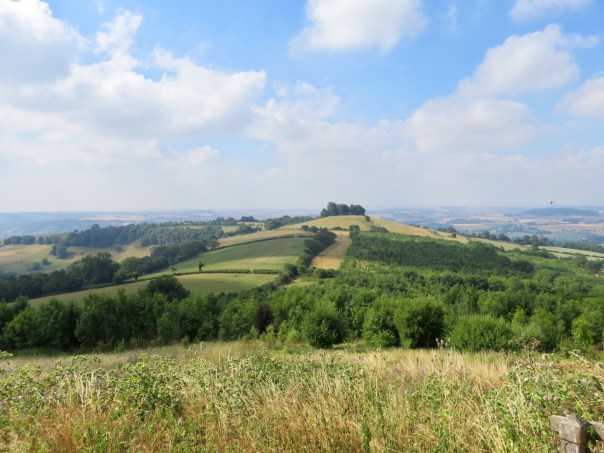
View from Coaley Peak.

At lunchtime we reached the town of Dursley, where I expected to see Muggles everywhere, (Harry Potter’s Muggle relatives were the Dursleys) but it was just a town.

I do like a butcher who thinks very very large is just right. Not sure what home made faggots are?

Up another hill, and before too long we could see the Tyndale Memorial Tower, erected for William Tyndale, who first translated the Bible into English in the early 1500s.

Do you think we climbed the tower? Of course we did!

Now all we had to do was get to Wotton-under-Edge. As we walked through the forest, we encountered two signposts that had been ripped out. Uh oh! Which way do we go? There was no clear path. Just at that moment, my phone signaled low battery. Soon we would have no back up navigation. We kept walking, getting deeper into the forest and not seeing any more trail signs. I started walking faster and breathing harder. This might be what they call a panic attack.

What did Jim do? He spoke calmly, gave me a Snicker bar and assured me that all would be well. Of course he was right – the phone lasted long enough to get us back on the trail, and died just as we reached the town. From that point, we just kept asking for the Swan Hotel until it came into view. Jim is my hero!

The Cotswold Way – Painswick to King’s Stanley

July 17 – Spent too long over breakfast at the B&B this morning, swapping tales with three Aussies about times things went wrong on the trail. The screwups make the best memories! Ten miles planned for today.

Unbelievably, the weather continues clear and sunny, although this morning was a bit cooler.

A sculpture in the middle of a field – a memorial to a local “rambler.”

Through a green tunnel and into the woods.29980176_unknown-129980256_unknown

We reached the marker for the halfway point of the Cotswold Way, although it is not technically in the middle. 47 miles down, 55 more to Bath!29980304_unknown29980272_unknown

Pretty moss and ferns.

We came to a stone commemorating Oliver Cromwell’s successful battle in the civil war in 1643. Seems odd to fight a battle in the woods, but I guess there was a lot more woods back then!

We climbed the Haresfield Beacon, giving us 360 degree views of the countryside. Nice clouds.

As we walked down, we could see an image in the barn loft. What was that?

Oh! Thanks, zoom lens!

A downed tree trunk filled with coins.

Trees covered with ivy.

Our first grape arbor, with tiny green grapes.

Over the railroad trestle, and before too long, we were in King’s Stanley. Tonight we are staying at Grey Cottage. More about this tomorrow!

The Cotswold Way – Birdlip to Painswick

July 16 – Another continental breakfast this morning – I’m beginning to crave my full English! Eight and a half miles of shady woodland walking planned for today.

In an hour we reached Cooper’s Hill, home of the infamous annual cheese rolling competition. We saw this notice at the foot of the hill:

It’s hard to capture the steepness of a hill in a photo, but trust me, we are way high up and the hill is very steep. You can tell how hard we worked to climb the hill by the sweat that accumulated under Jim’s backpack, reminiscent of the silhouette of a Playboy bunny.

Every May holiday weekend, hundreds of people from all over the world congregate on Cooper’s Hill. A nine pound wheel of local cheese in a wooden container is rolled from the hilltop, and everyone scrambles down after it. The person who captures the cheese, wins! Ambulances wait at the foot of the hill to carry the many injured off to hospital. There were so many injuries that the local government demanded the contest cease several years ago, and refused any responsibility, but the annual contest goes on! Sort of like the running of the bulls in Pamplona, only with cheese.

Flowers blooming in the shade.

In Japan, this would be called a kami tree, with spaces for the spirits to live. Here it’s just an interesting tree.

After a while, we found ourselves on another golf course, also home to a Neolithic fort. You can’t fool me twice – it was just dirt.

Back into the woods. A pretty butterfly.

Then into Painswick, another Gloucestershire village that became prosperous in the wool trade. Walking into town, we came upon the Painswick Rococo Garden; a re-creation of a garden that occupied this very site in the 1740s. Built on six acres, the garden was a place to invite guests to schmooze and canoodle, with little cottages and secluded arbors.

There was also an extensive kitchen garden for fruits, vegetables and herbs.

The garden was abandoned and became overgrown, but is now being restored, using a painting of the original garden, and only plants that were available in England in the 1740s.

They recently added a maze to celebrate the 250th anniversary of the garden. We slogged around it for a while, but never found the center.

In town we found a stunning St. Mary’s Church. I’m still surprised that the C of E church is the fanciest one in town, and that all the churches are open to visit.

Also, the public stocks that were used to punish miscreants in the 1800s.

A pub supper, and we were off to bed. A lovely day.