Category Archives: Turkey

Free from ideas

I love Jim’s perspective!

beinghere2014's avatarBeinghere

We visit the ruins at Ephesus and the Ephesus Museum in Selcuk, Turkey. We see images and objects dated from the 9th century BC.

The earliest deities were goddesses among hunting/gatherer societies. Scholars note that male deities became more prevalent with the domestication of animals and agriculture. Farming includes defending your land if attacked. Large animals and warfare require upper body strength, making men feel valued — by male gods.
image

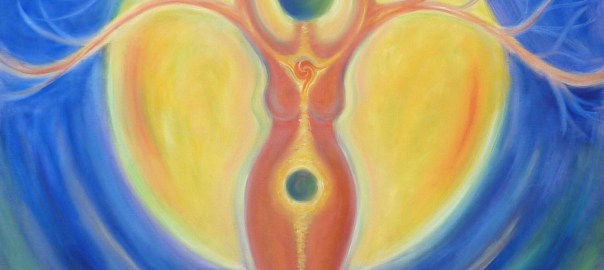
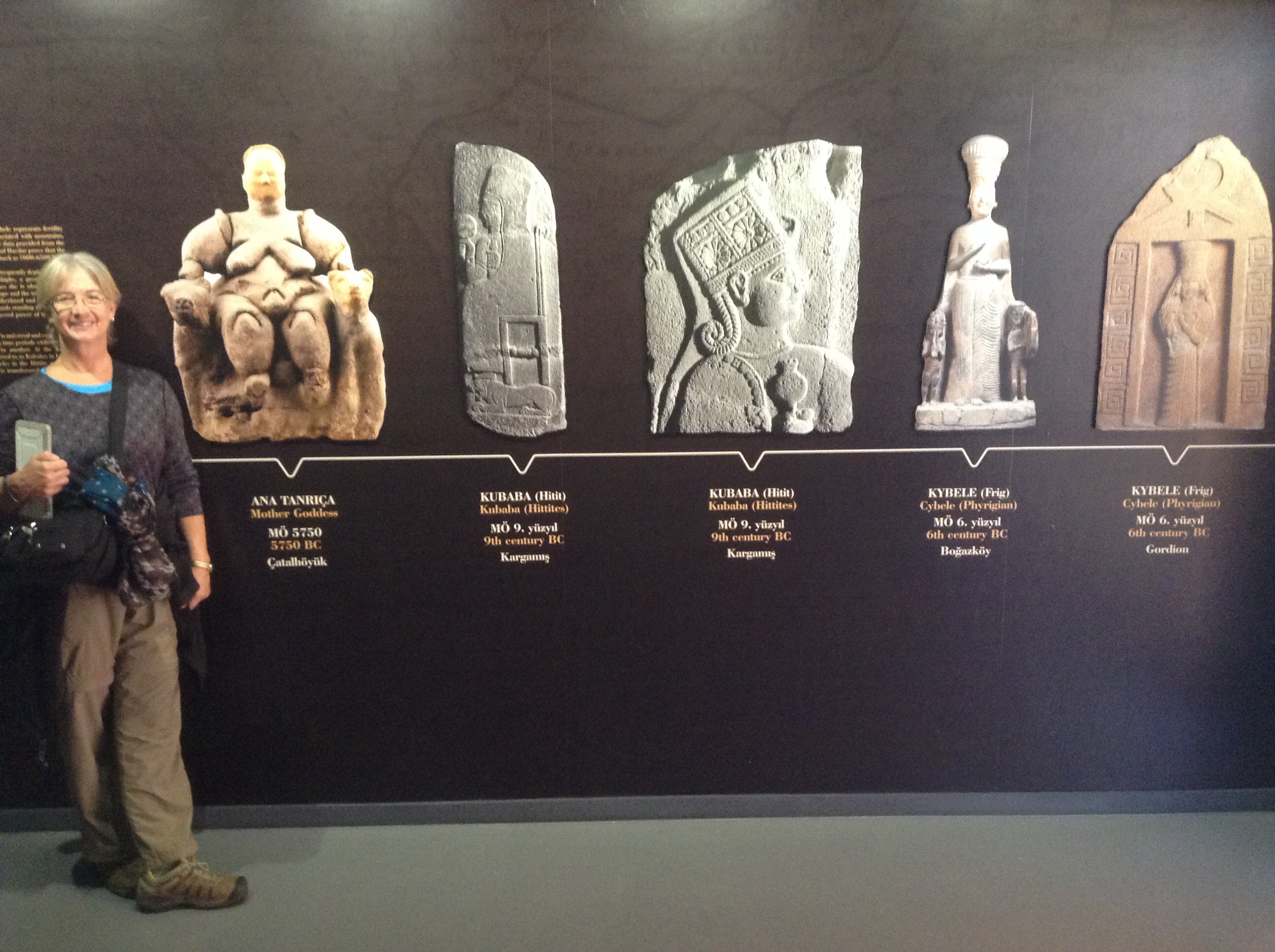
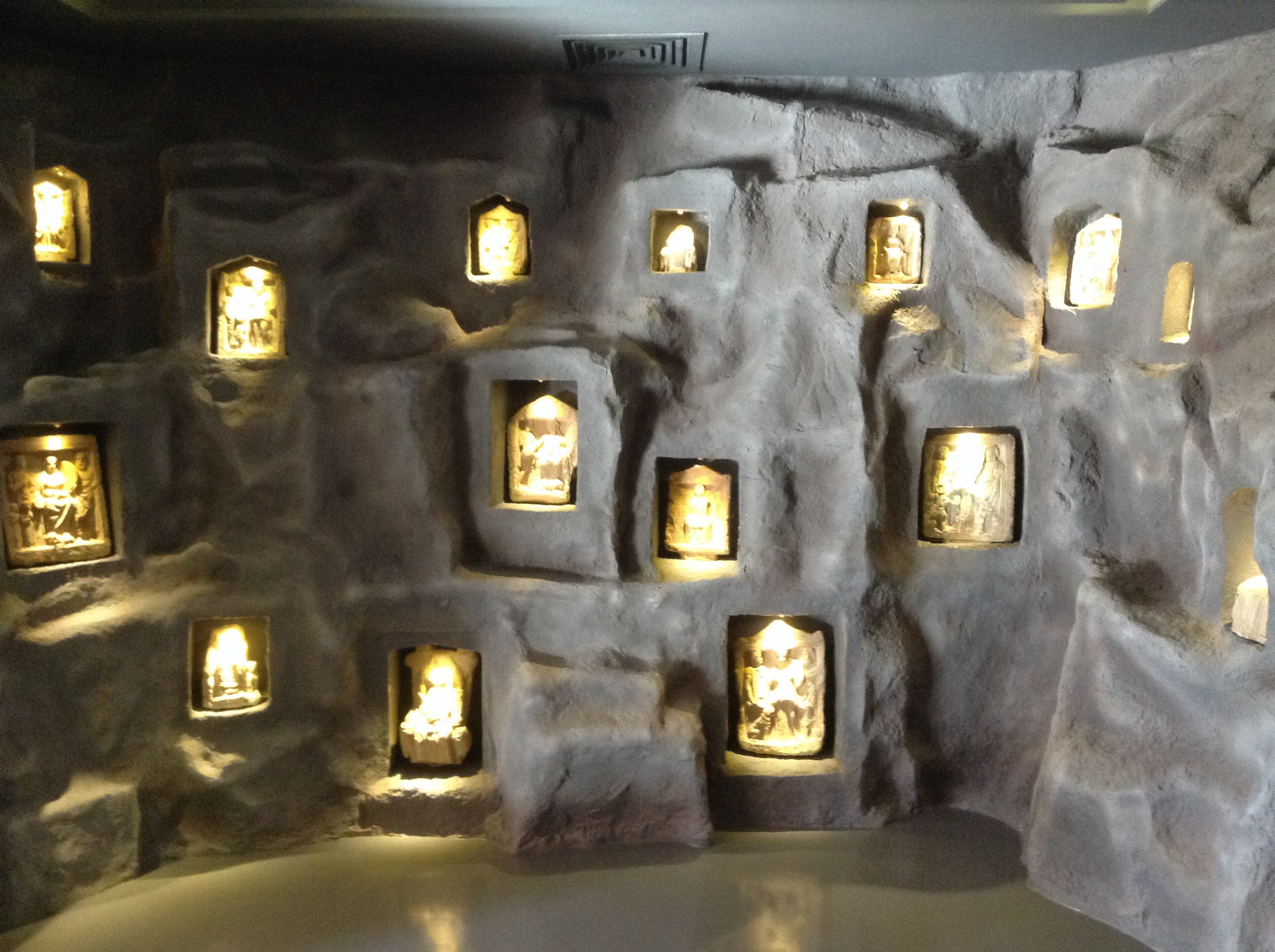
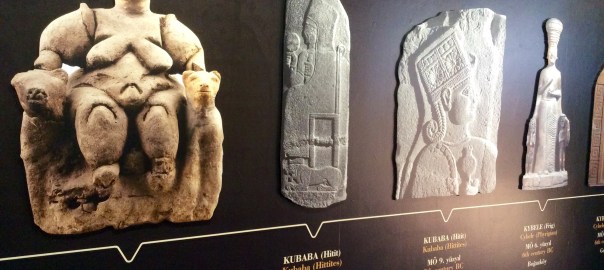
An exibit portrays three goddesses: Ana Tanrica (mother goddess — Paleolithic), Kubaba (9th cen. BC), and Kybele (6th cen. BC). There are universal features within goddess worship — woman magic, earth magic, fertility, childbirth.

image

We see examples and I gather information from the internet. One story describes Kubaba as a woman who brewed ale to sell commercially (such women existed.) The Sumarian King Marduk favored her and put her in charge of his empire. She did well. When she died…

View original post 976 more words

Selçuk to Pamukkale

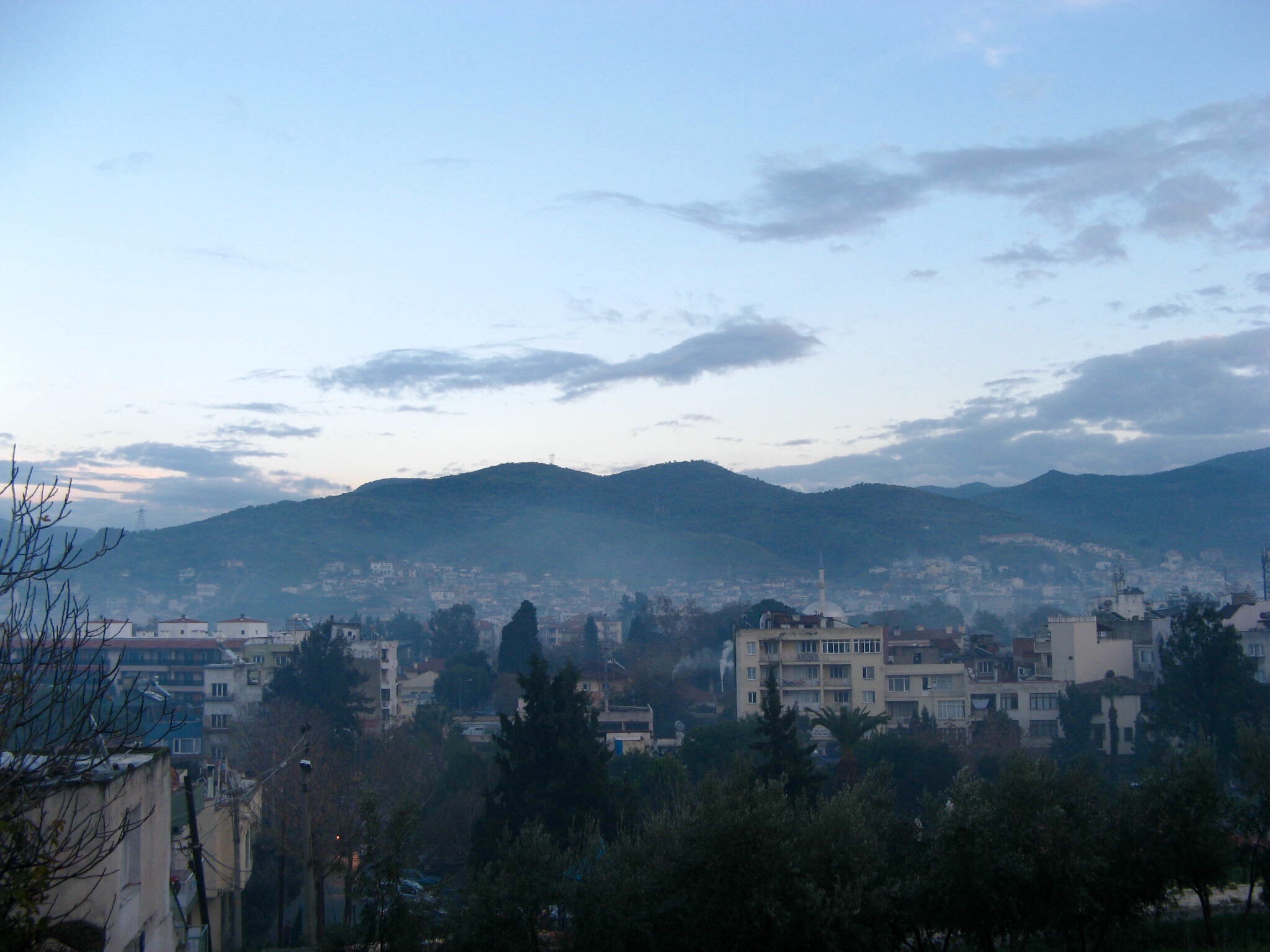
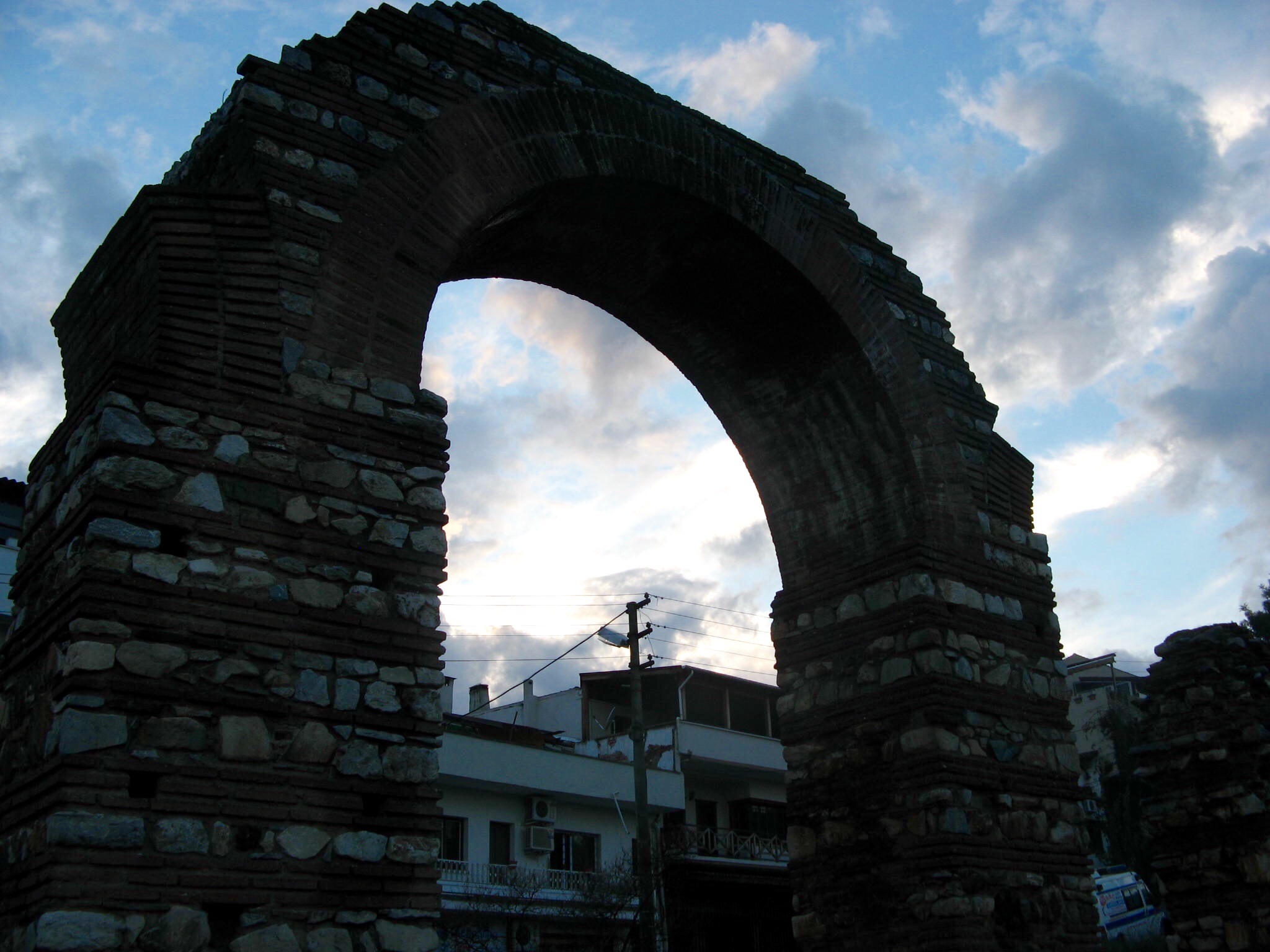
12/11 – So long, Selçuk! We loved your ruins and your Roman aquaduct still standing in the middle of town.

IMG_5389.JPG

IMG_5380.JPG

IMG_5381.JPGimage

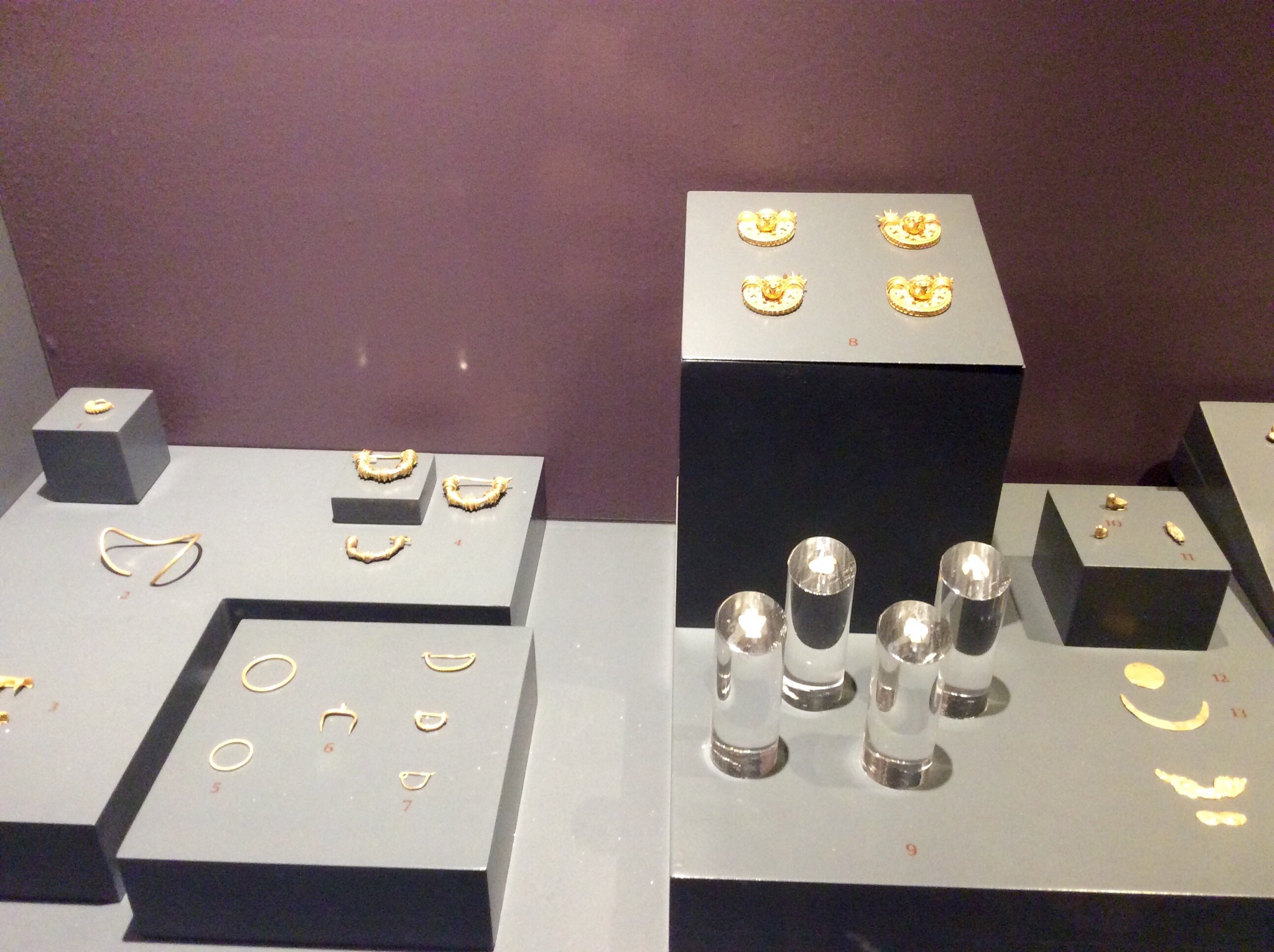
We loved your little museum that showed what Ephesus looked like in its prime, and that jewelry hasn’t changed much in 4000 years.

IMG_5375.JPG

We loved your town square filled with old men sipping tea and playing cards and Okey from morning ’til night.image

We weren’t so crazy about your pension with spotty wifi and no hot water…

This morning we walked down to the bus station to catch the 9am dolmus to
Pamukkale. There are several different bus companies in competition – one offers free wifi, one offers a free cup of tea enroute. We got a quote of 30 lira from one, and 35 from another, and haggling commenced. We were entering one ticket office when a guy swooped in and said he was a friend of the guy in the office, who really wanted us to take his bus instead.

We eventually got on a mini bus with a small tour group on their way to Pamukkale. We got to hear the tour guide’s patter for free during the three hour ride. Did you know there is no such thing as a green olive tree and a black olive tree? Pick in September to get green olives, and in December to get black! The first press of the olives gives you the virgin olive oil, the second press gives you oil to make soaps and hand creams, then you gather up the pits and sell them for fuel – they burn cleaner than charcoal. Who knew?

By afternoon, we were in Pamukkale, eating kebabs with shoes off, Turkish style, in a local restaurant, with a local cat to keep us company.

Sorry to say, we did not order the lamb chomps!image

Pamukkale is where tourists flock in the warmer months to bathe in the hot springs and walk on the calcium carbonate travertine. We will certainly do some of that, but are here for another reason as well. In 2011, the martyrion and tomb of the Apostle Philip was uncovered here in the excavations of the ancient city of Hierapolis. Now (you may be saying) didn’t we already see the tomb of Philip in Rome? Well, yes we did. The Church of the Apostles claims to host the remains of both Philip and James the Just, and commemorates them both in a single tomb. But if the original tomb of Philip is here, we intend to see it tomorrow!

Ephesus

12/9 – Guess what? When St. Paul wrote a letter to the Ephesians, where do you think it was delivered? Right here to Ephesus! Today we took a minibus (dolmus) about 4km down the road to see the ruins at Ephesus. This is why most visitors come to Selçuk.

Ephesus was a huge, bustling harbor city back in the eighth century BCE, the capital of Asia Minor. Emperors had temples built to honor themselves here. The rich and famous lived here, and invested lots of marble and silver coins into making this a showplace. Then the harbor silted up and big ships no longer stopped here. Over time, and with the assistance of several earthquakes, the city was abandoned. For the last century, archeologists have been trying to reconstruct Ephesus, while hauling away any good bits back to museums in their own countries. The British built railroads and the Germans built highways in exchange for hauling away the best stuff. Modern Turkey is trying to get some of their stuff back, but not having much luck.

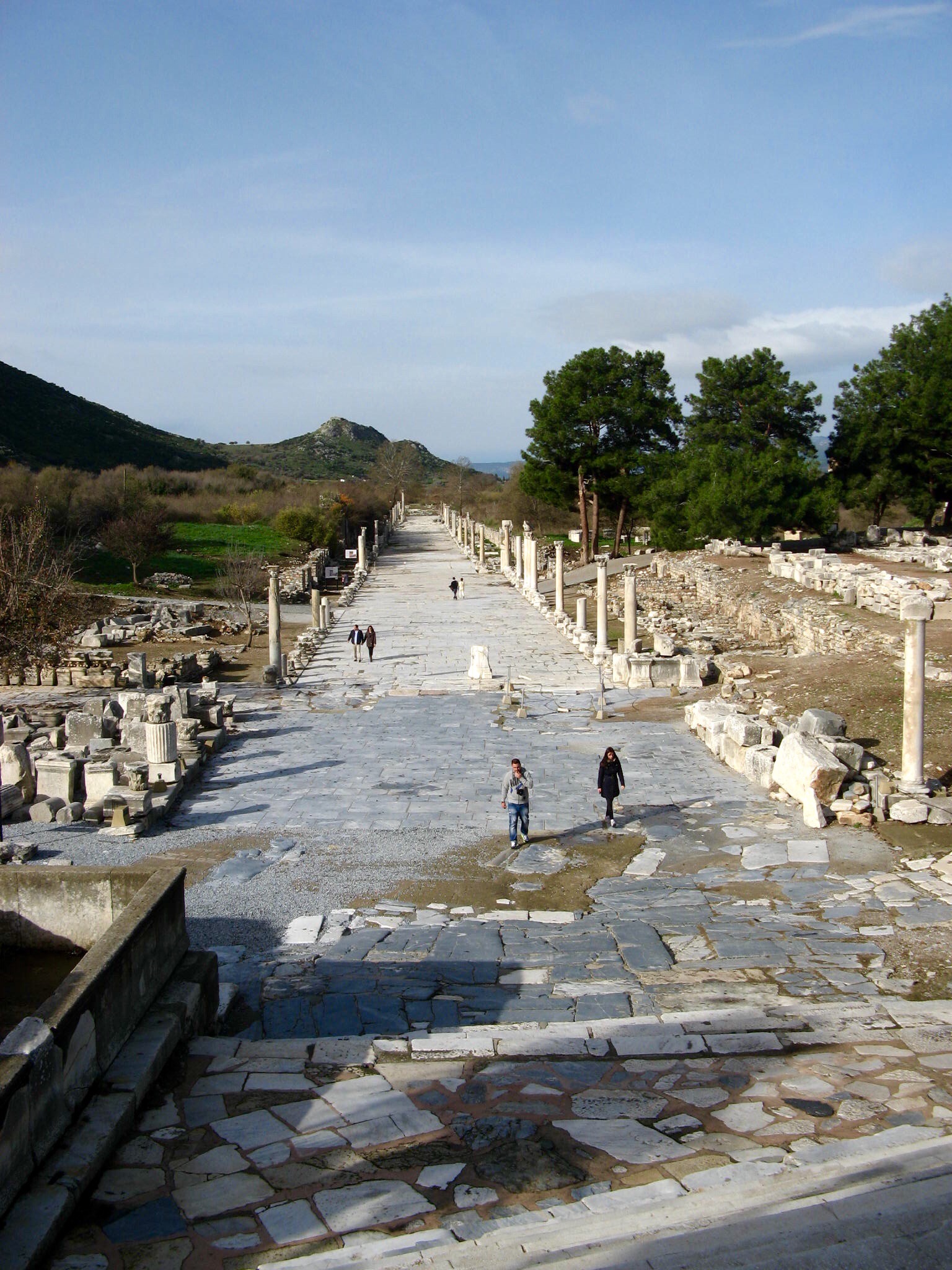
Here’s what’s left of the main street heading down toward the harbor:

IMG_5357.JPG

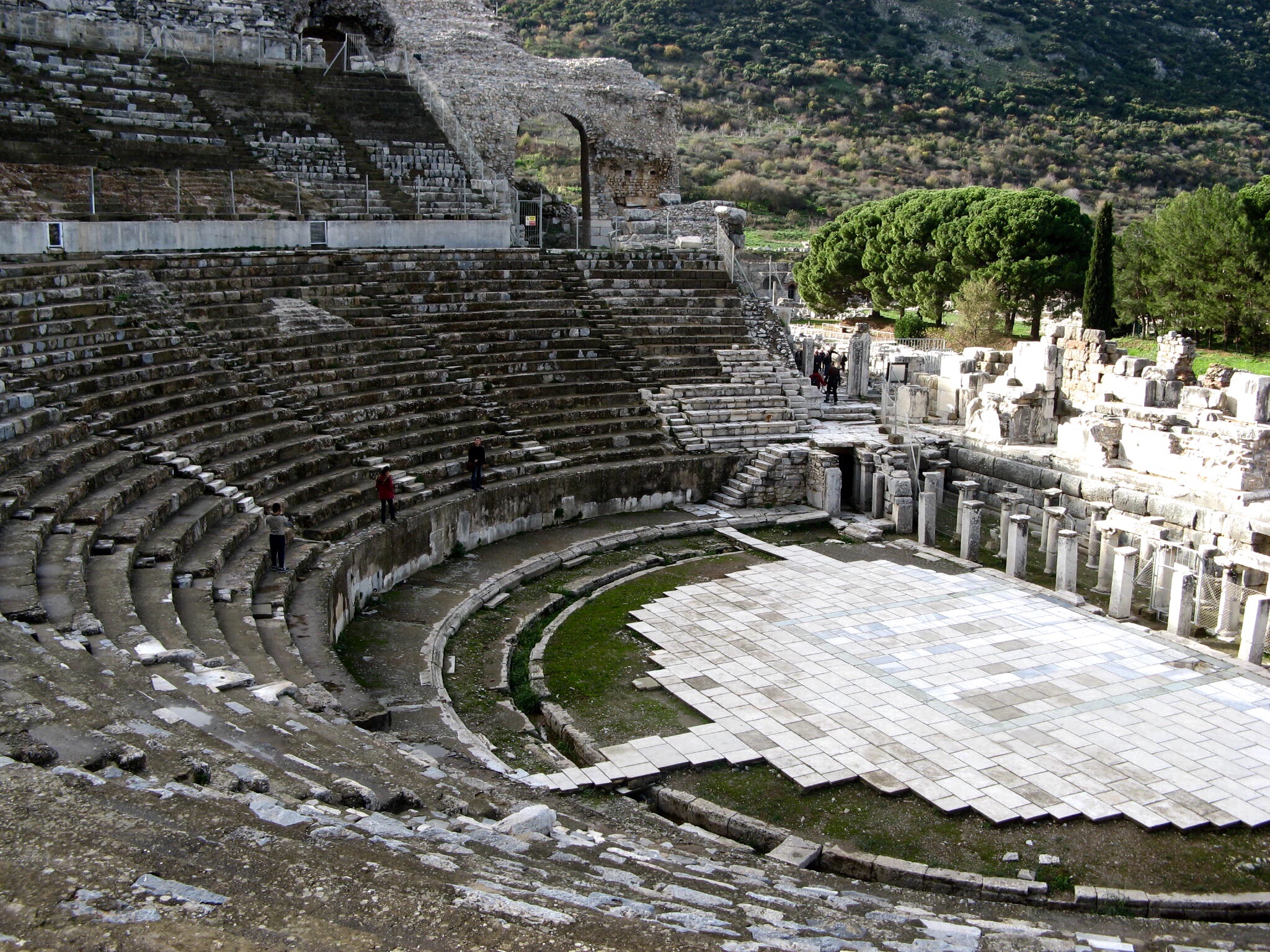
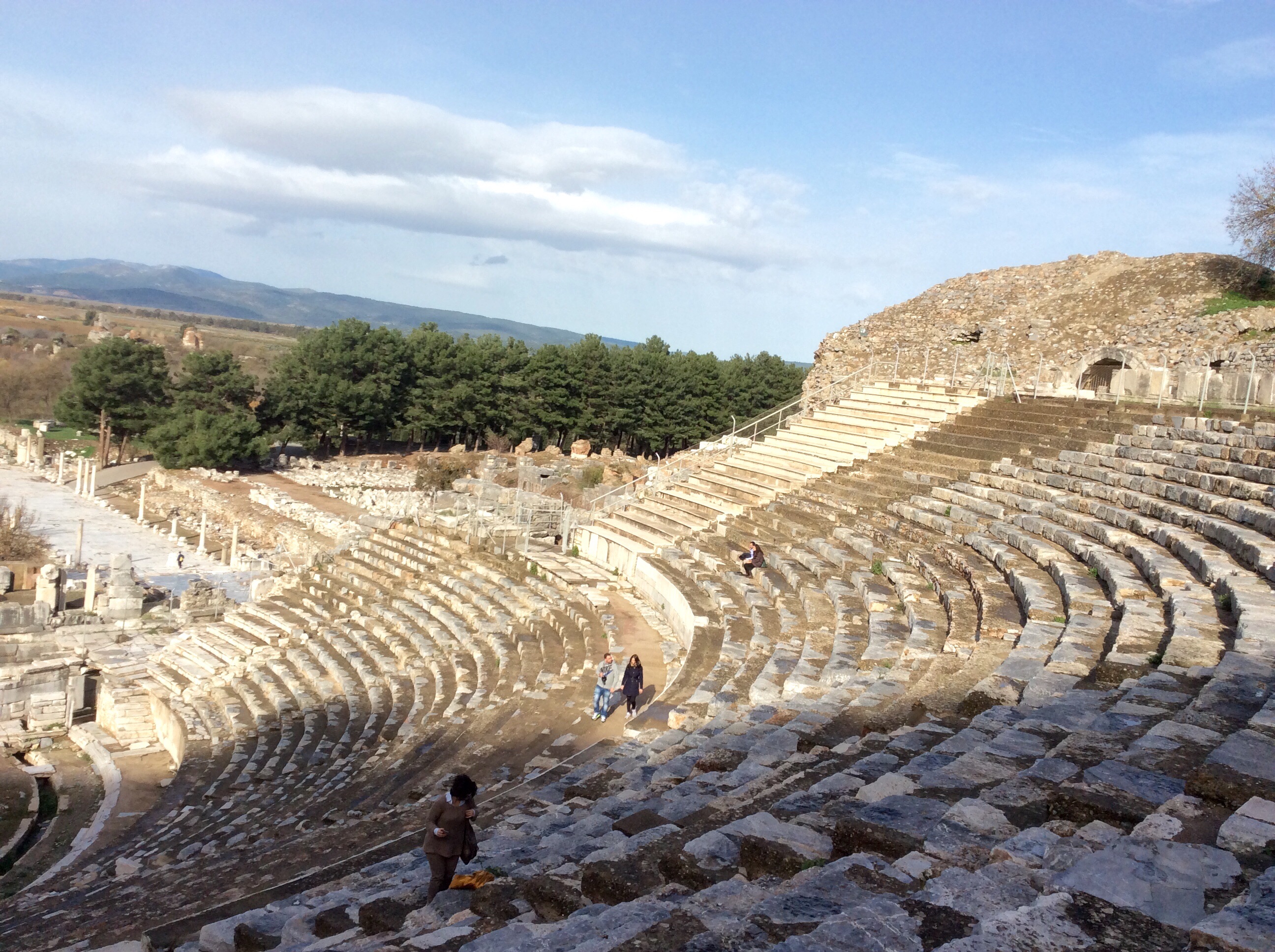
There was a huge theatre that held 20,000 people for dramatic performances and community meetings. The acoustics are still very good, as demonstrated by members of several tour groups who couldn’t resist bursting into song. Here, the decision to exile the Apostle John was announced.imageimage

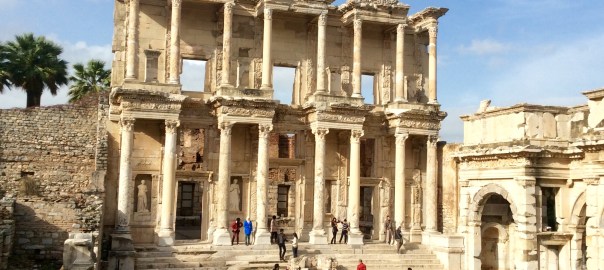
The showpiece of the ruins is the Celsus Library, erected in the year 110, and re-erected in the 1970s, thanks to the Austrians. It has more than one story intact, and four statues on the ground level depicting Wisdom, Knowledge, Thought, and Virtue. (Actually, these are copies of the statues – the originals were hauled off to Vienna.) The library once held 12,000 scrolls, and the walls behind the shelves were hollow to reduce moisture.imageimageimage

Lots of buildings and gates being pieced back together:

Here is the Goddess Nike. We overheard a tour guide calling her the Goddess of Shoes.image

Any ancient metropolis worth its salt had a good plumbing and aquaduct system. We stopped by the public latrines – marble seats, but not much privacy!image

The Church of Mary, with its cruciform baptistery and large fountain:

As we’ve seen everywhere in Turkey, lots of cats live here. Jim and I both got scratched by cuddly felines who thought they should have some of our lunch.

A brilliant day!

Selçuk – the Castle and the Goddess

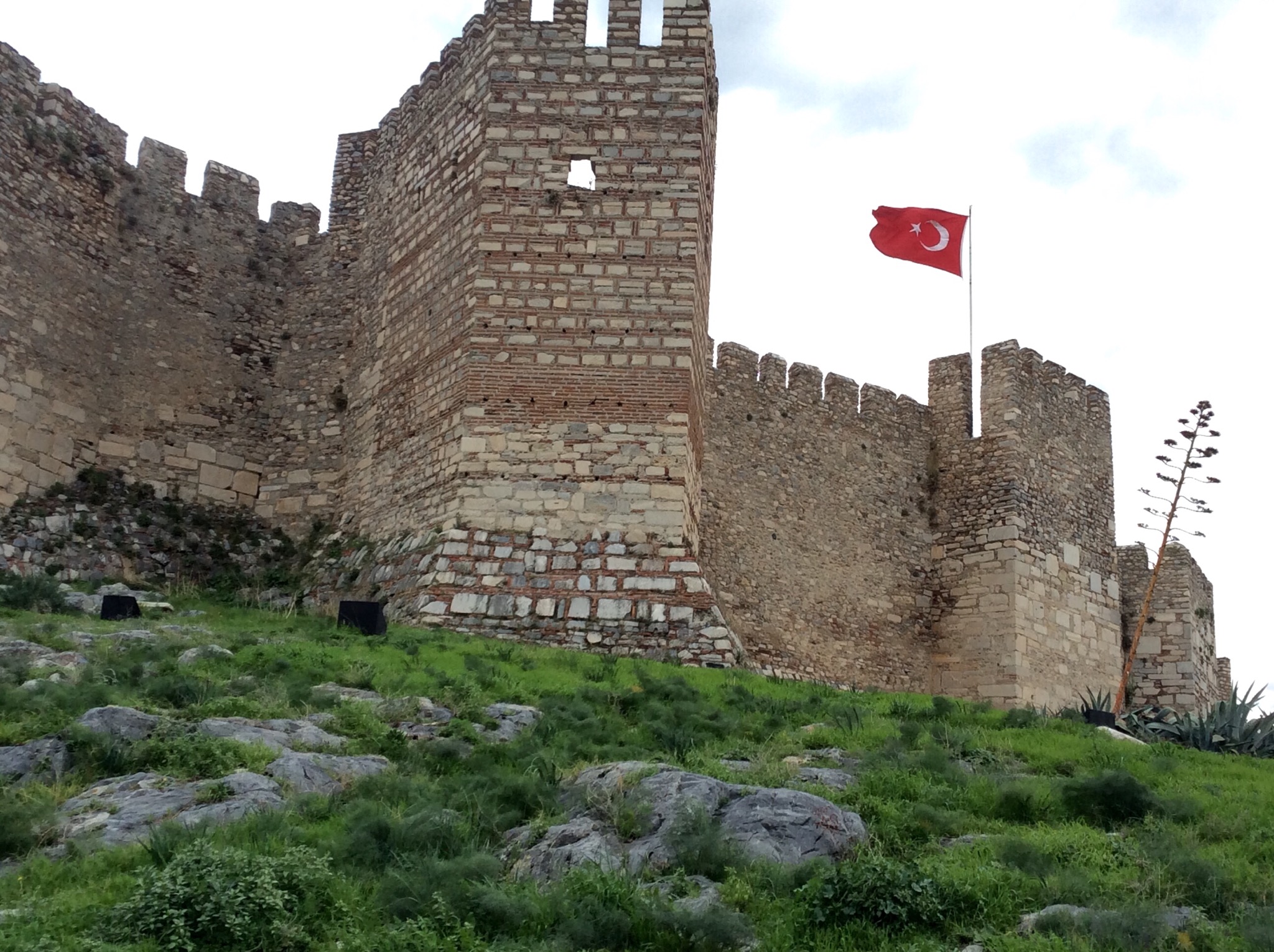
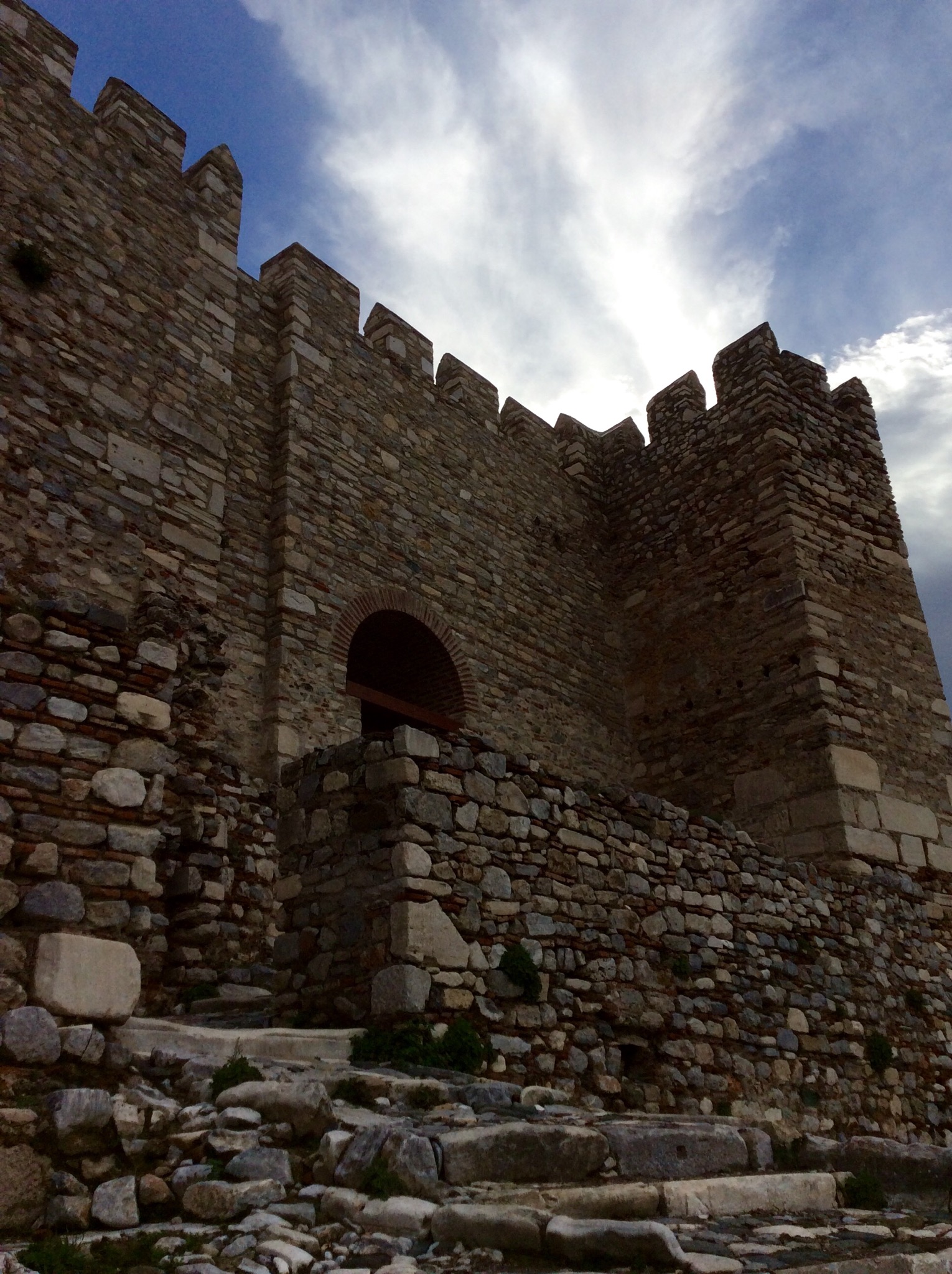
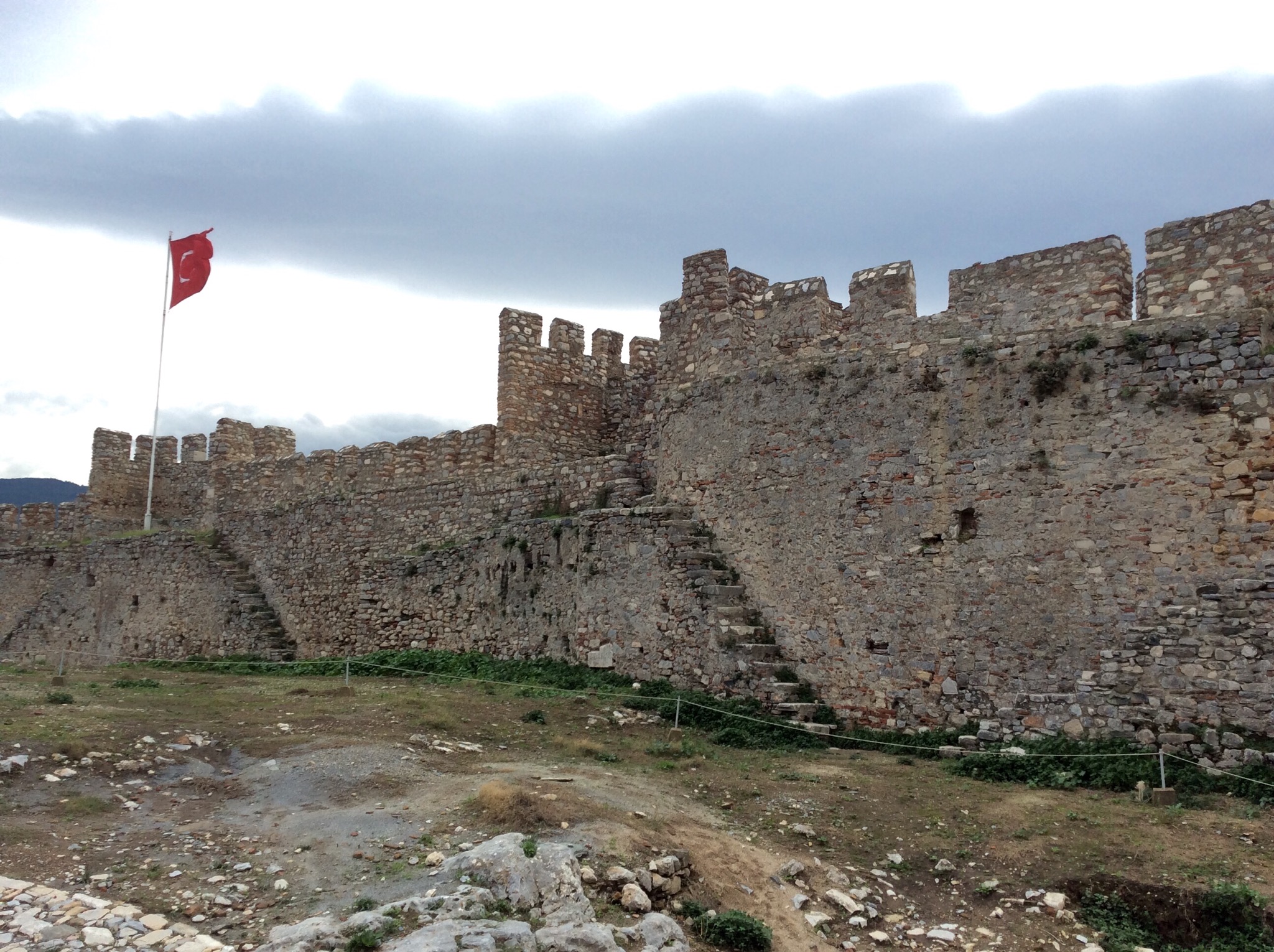
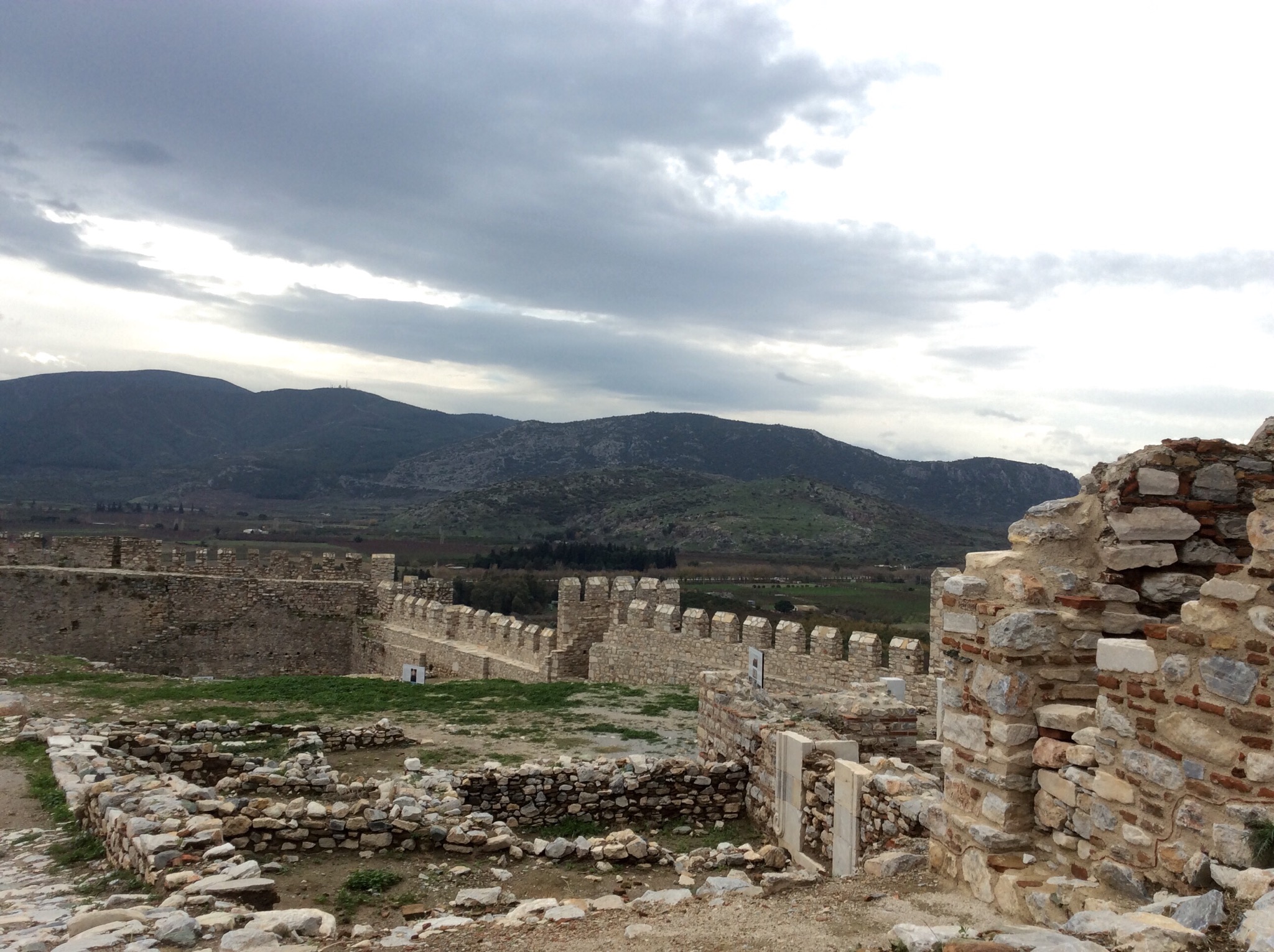
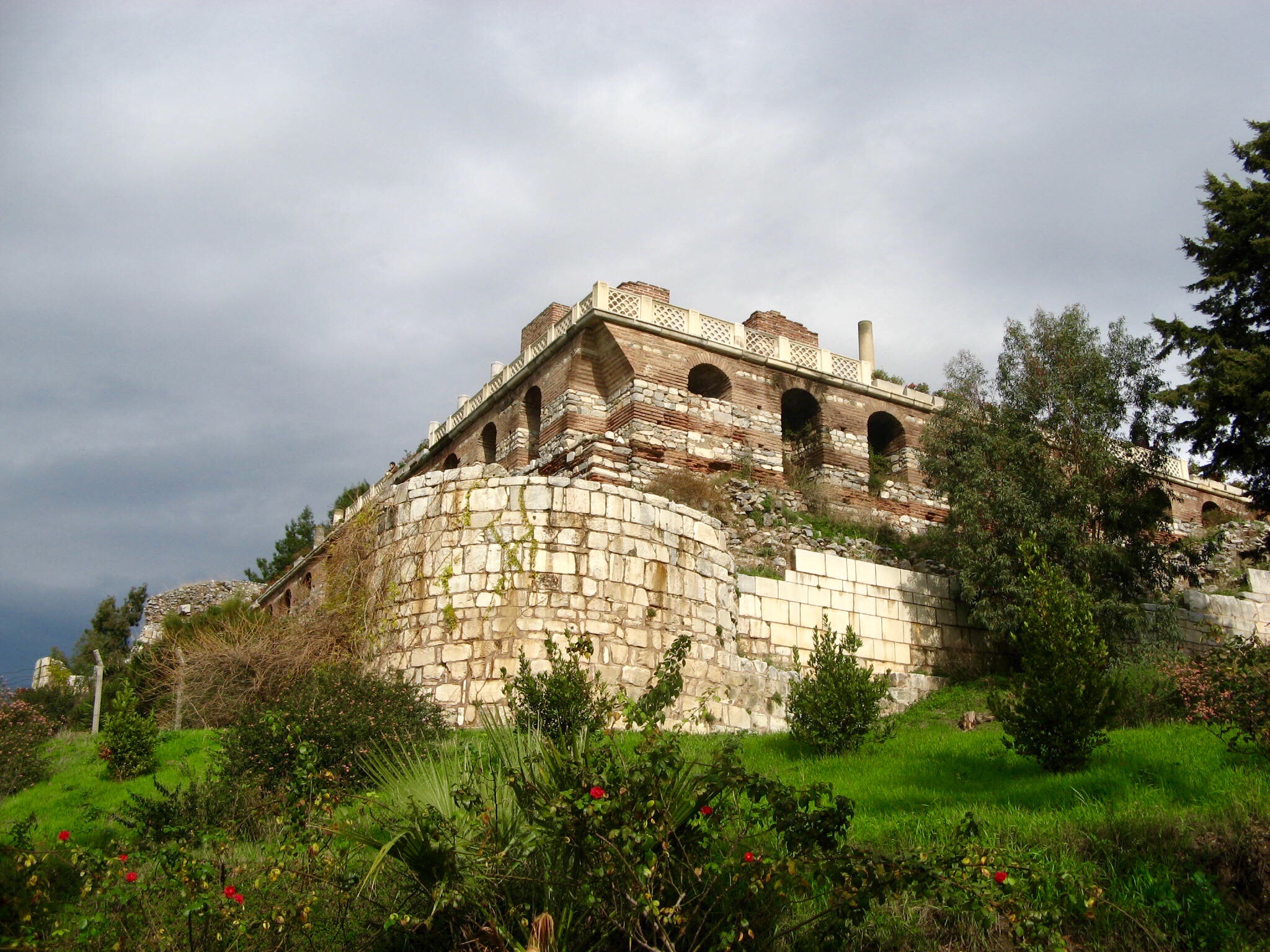
12/8 – Selçuk is a small town with a lot of history. Just past St John’s Church is a castle fortress at the top of the hill, built in the 6th century, also being restored.

IMG_5178.JPG

IMG_5186.JPG

IMG_5188.JPG

IMG_5189.JPG

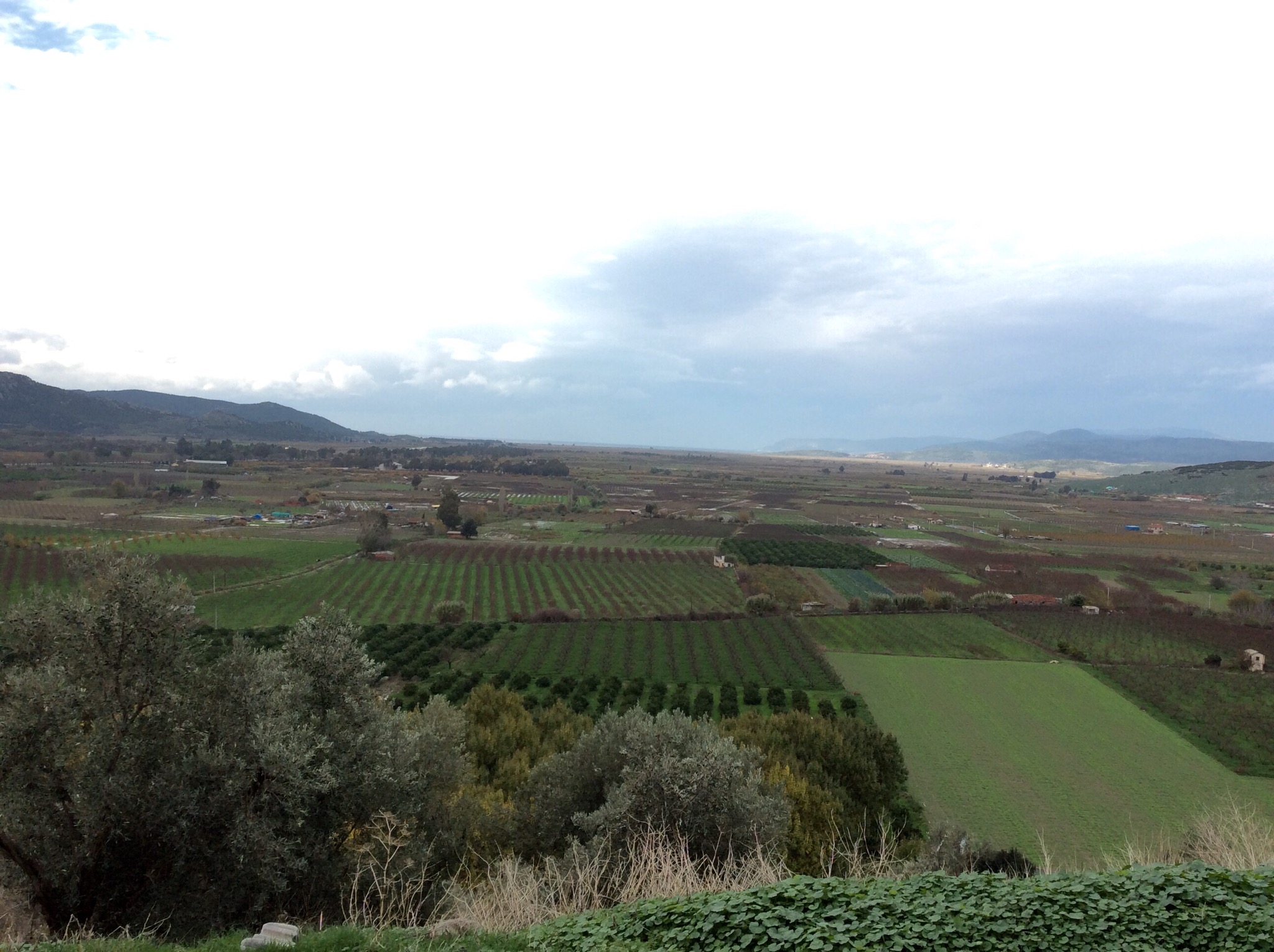
The views down the mountainside were beautiful.

IMG_5184.JPG

IMG_5185.JPG

IMG_5210.JPG</a

IMG_5205.JPG

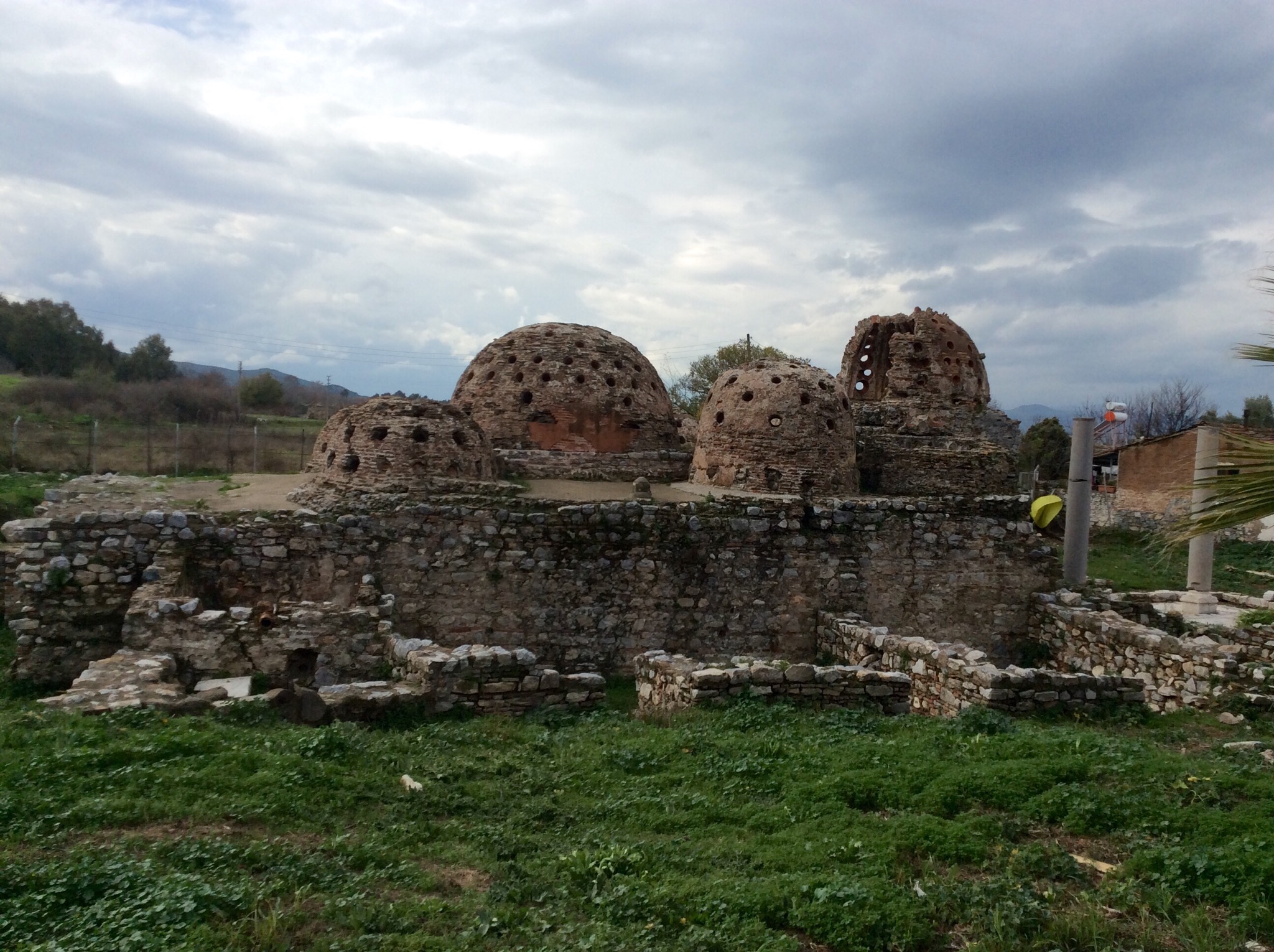
Walking down the hill, we came across the ancient Isa Bey Public Baths .

IMG_5247.JPG

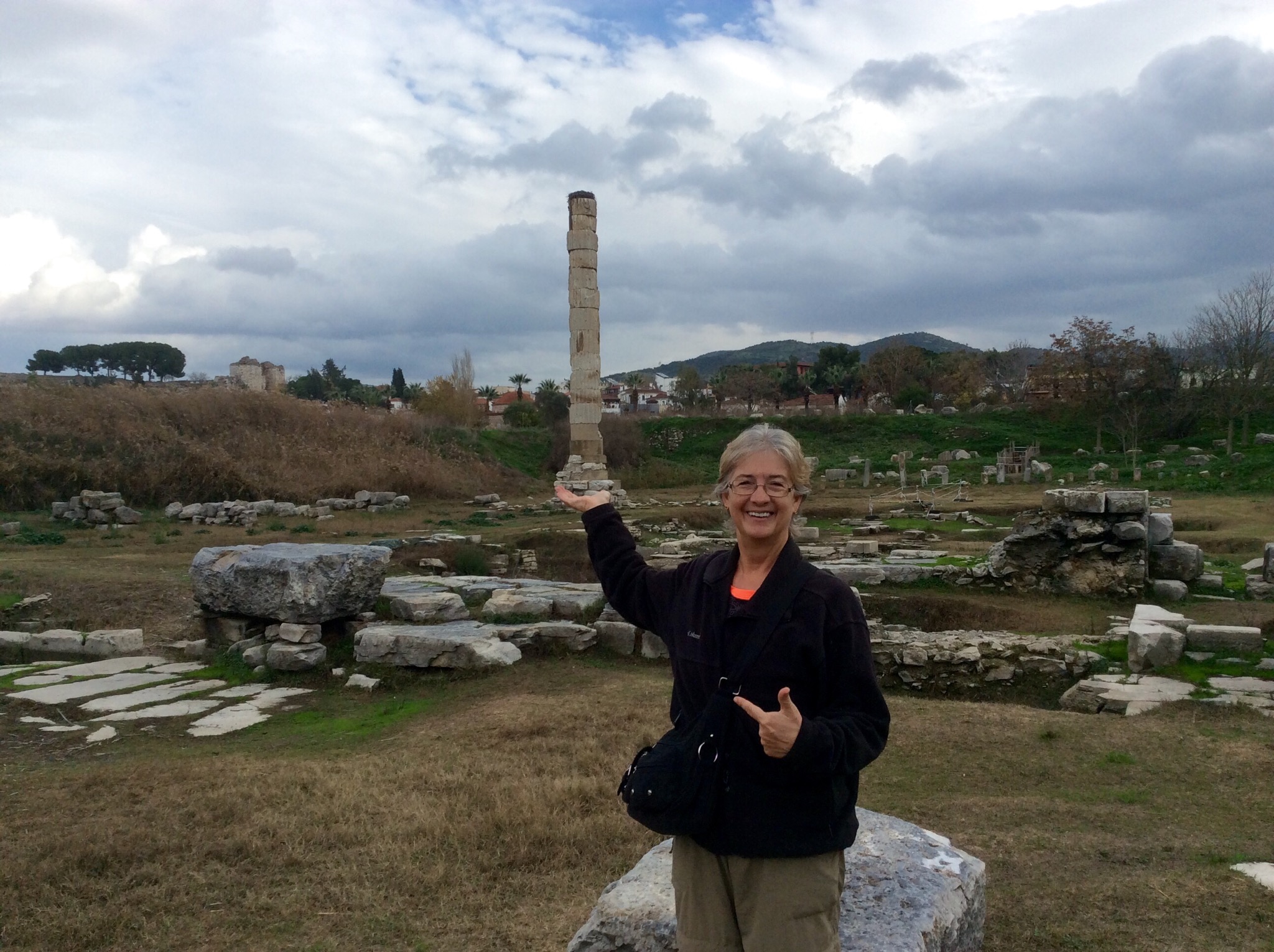
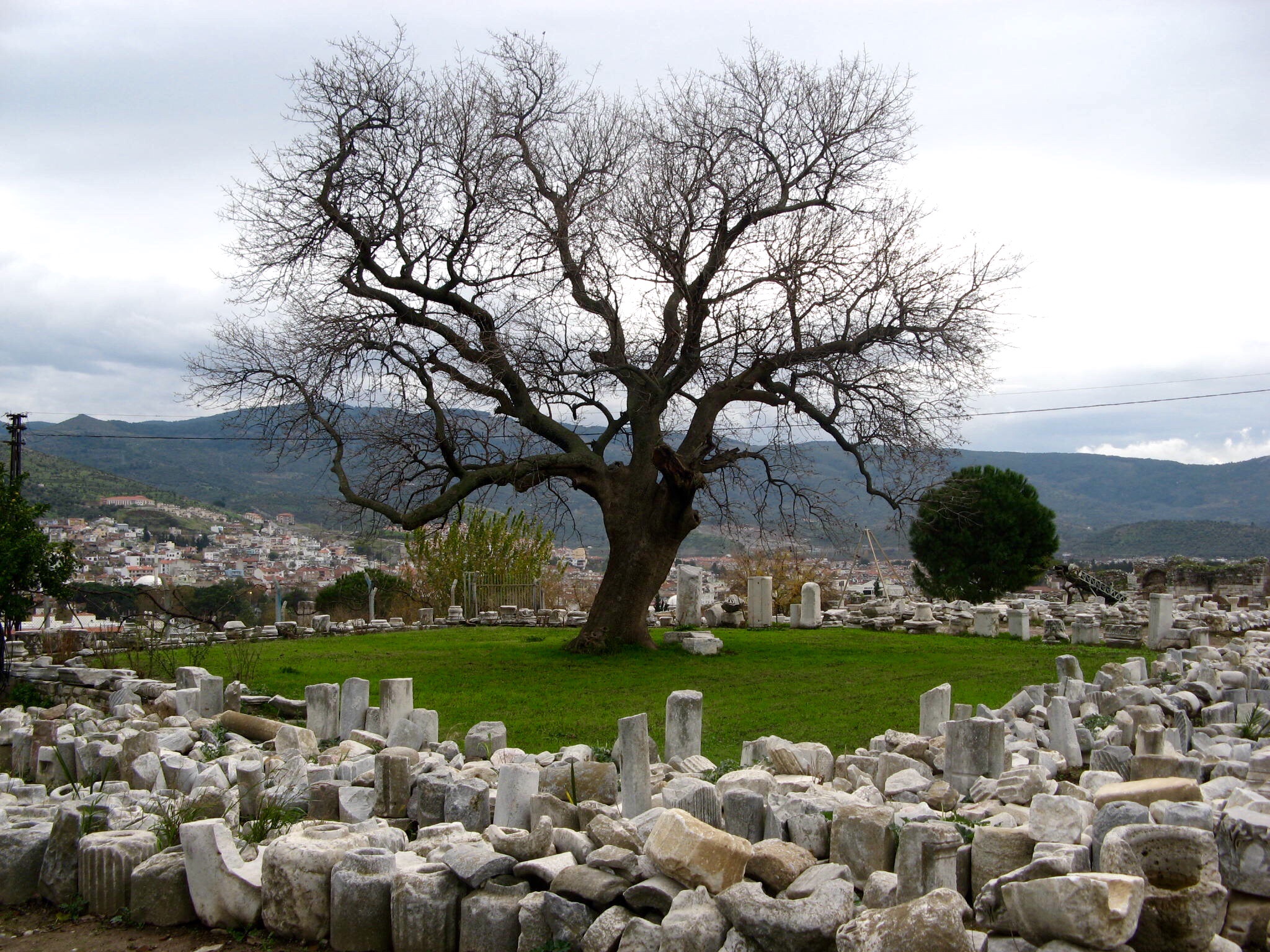
We were on our way to see the one standing column of the Temple of Artemis, one of the Seven Wonders of the Ancient World. This site is where artifacts were found from the 14th century BCE. Sure enough, there is only one column standing from this Ancient Greek temple, and the column has been reassembled from bits that don’t look like they really belong together:

IMG_5252.JPG
Behind the column, you can see the Isa Bey Mosque, the Church of St. John, and the Castle, all in one shot.

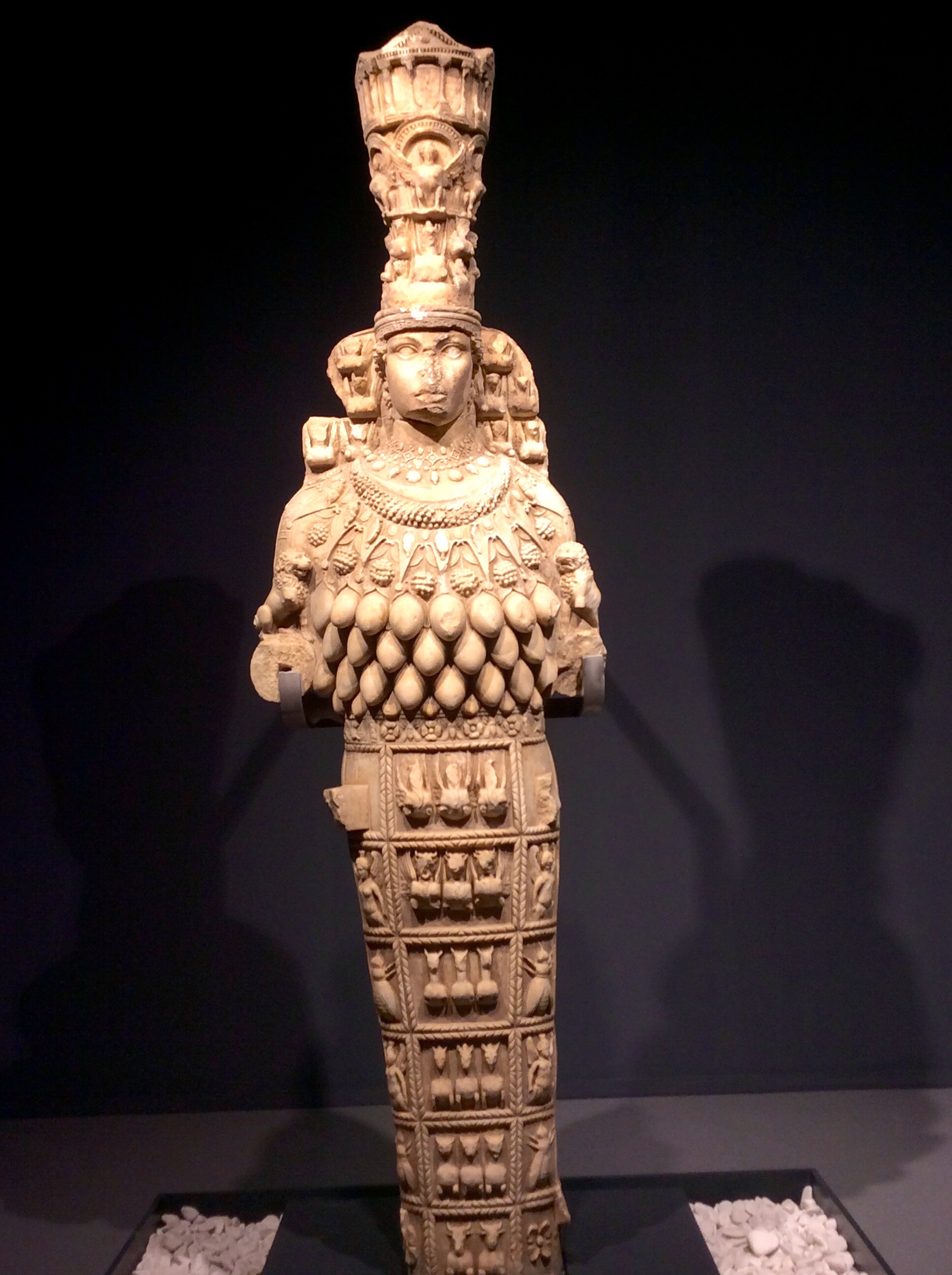
Here are two statues of Artemis from the Selçuk Museum. Those are bull testicles hanging around her neck:image

image

Couldn’t resist the classic tourist snap!
IMG_5260

Monday in Selçuk – St. John’s Church

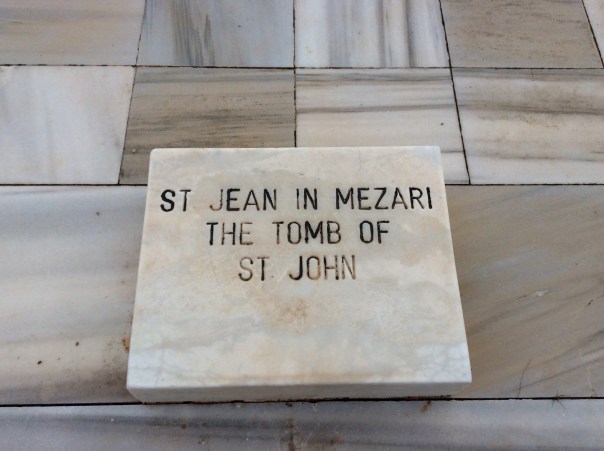
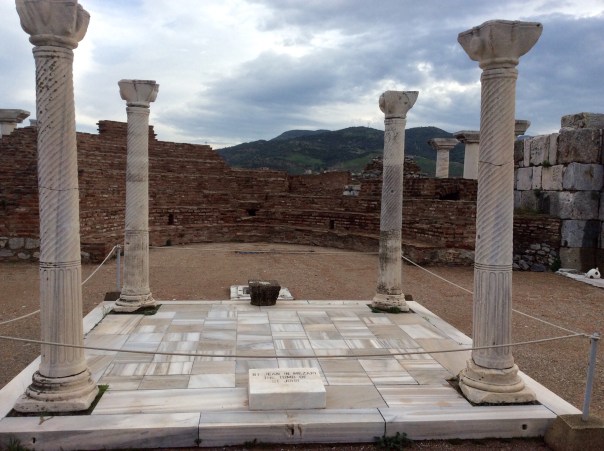
12/8 – Today we saw the tomb of St. John, the one whom Jesus loved, the purported author of the Gospel of John and the Book of Revelation, the caretaker of Mary after the death of Jesus, and the last Apostle on our list!

If you recall, we have been seeking out the tombs of the 12 Apostles of Jesus, or at least some of their relics. We found:

Thomas – Chennai, India, 2008
James the Greater – Santiago de Campostela, Spain, 2011
Matthias (replaced Judas) – Rome, Maria Maggiore Church, Oct. 2014
Philip – Rome, Church of Holy Apostles, Oct. 2014
James the Just / Less – Rome, Church of Holy Apostles, Oct. 2014
Bartholomew – Rome, Church of San Bartolemeo, Tiberia, Oct. 2014
Paul and Peter’s Skulls – Rome, St. John Lateran Church, Oct. 2014
Peter – Vatican, St. Peter’s Basilica, Oct. 2014
Jude (Thaddeus) – Vatican, St. Peter’s Basilica, Oct. 2014
Simon the Zealot – Vatican, St. Peter’s Basilica, Oct. 2014
Matthew, Apostle and Evangelist – Salerno, Italy, Salerno Cathedral,Oct. 2014
Andrew – Amalfi, Italy, Basilica of the Crucifix, Nov. 2014
Mark the Evangelist – Venice, Italy, Basilica San Marco, Nov. 2014
John, Apostle and Evangelist – Selçuk, Turkey, Church of St. John, Dec. 2014

If you’re counting, that is more than 12, as some consider Paul to be Judas’s replacement instead of Matthias, and we included Mark the Evangelist as we also had Matthew and John. Luke the Evangelist wasn’t on our original list – with his remains divided between Prague, Padua and Thebes, we’ll have to catch up with him on another trip…

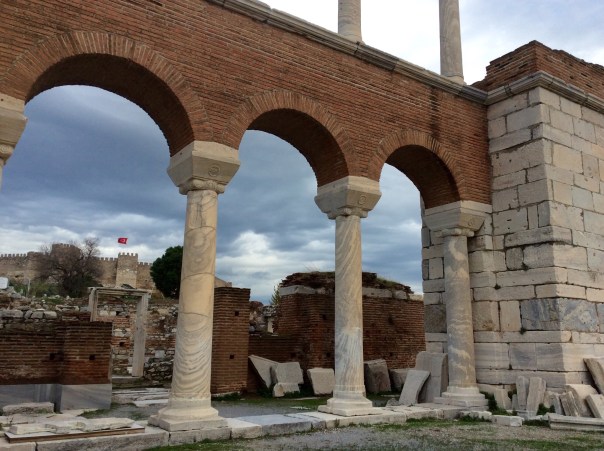
So today we walked across the street from our pension to the Ruins of the Church of St. John.
IMG_5125.JPG

IMG_5112.JPG

IMG_5111.JPG

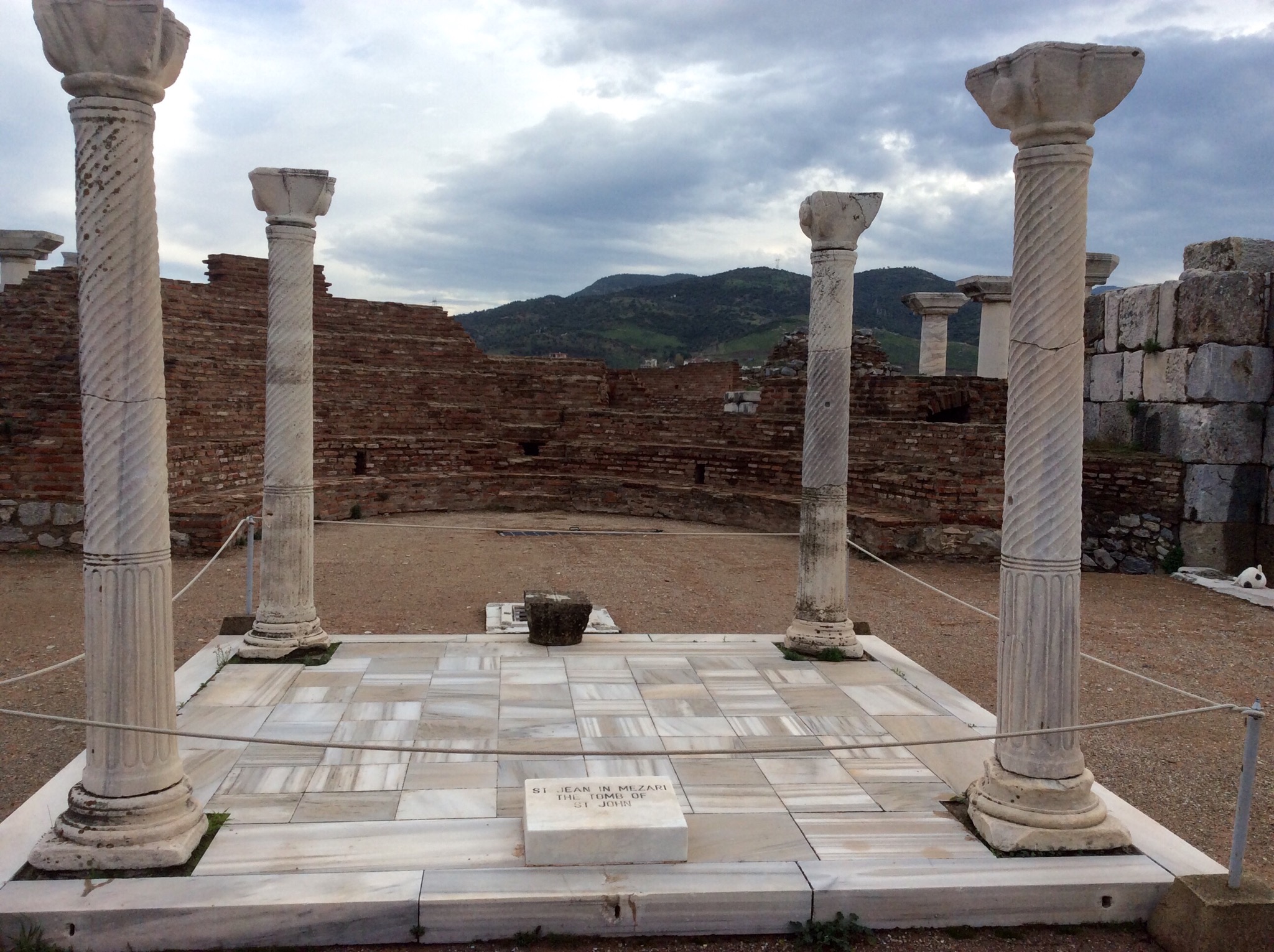
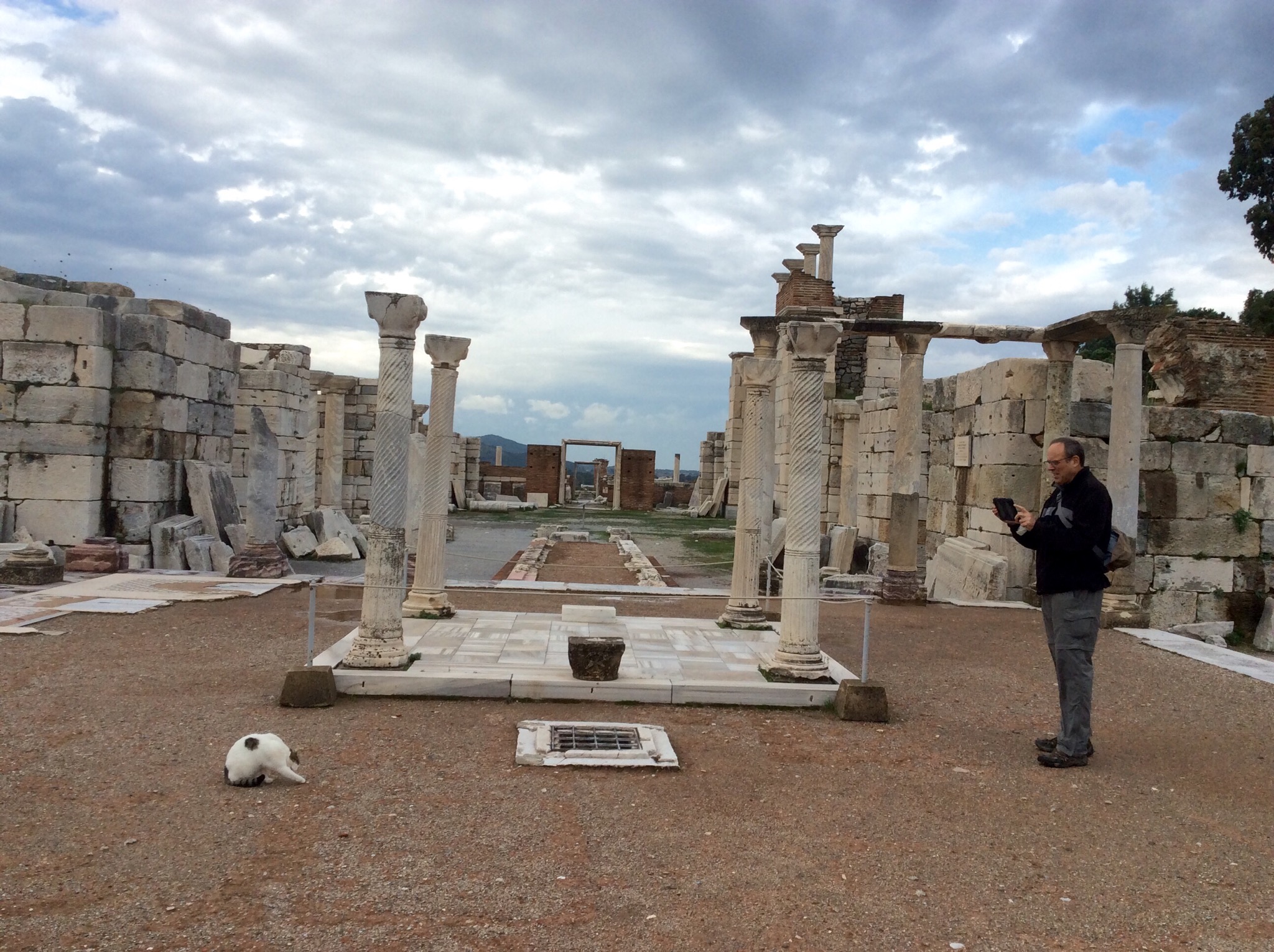
John was buried in a cave. The four pillars show the place of the tomb in the original church that was built over the cave.

IMG_5119.JPG

IMG_5118.JPG

The locked grate covers the tunnel dug to exhume the body of John during the reign of Justinian in the 500s, purportedly to distribute his relics. No bones were found, only dust. John is the only Apostle who does not have relics scattered around Christendom. The dust, also called manna, was gathered for many years, and was said to cause miracles.

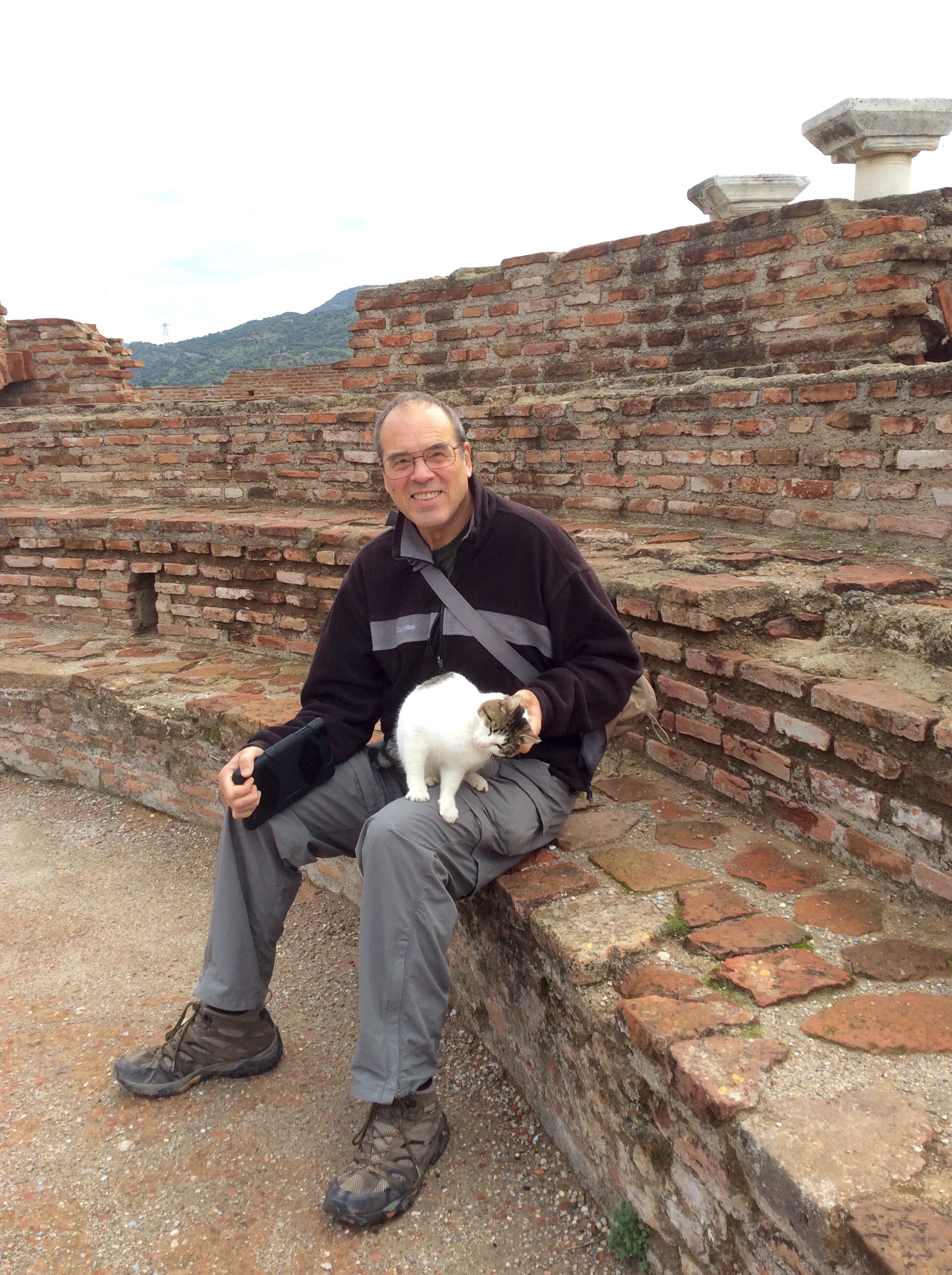
Jim made friends with St. John’s cat.image

The baptistery had three steps down on either side to allow for total immersion. We watched several tour guides explain this at length to tourists unfamiliar with the concept.
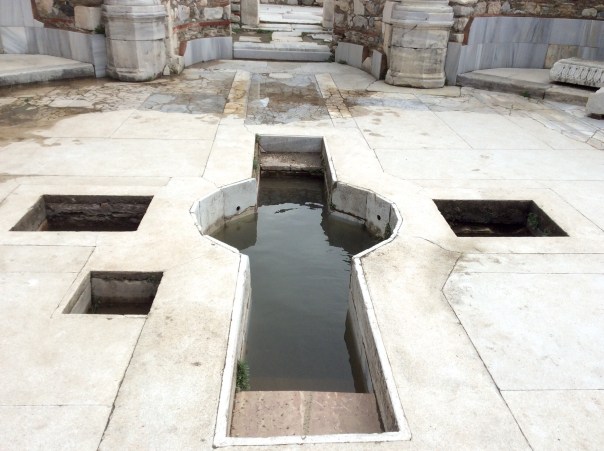
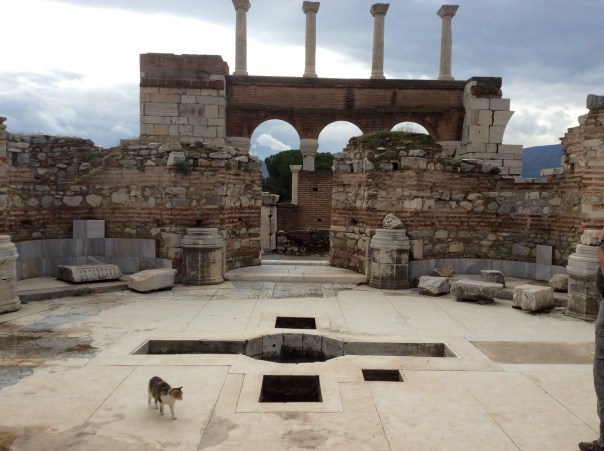
image

image

At the entrance to the baptistery, part of the original mosaic floor was visible.
image

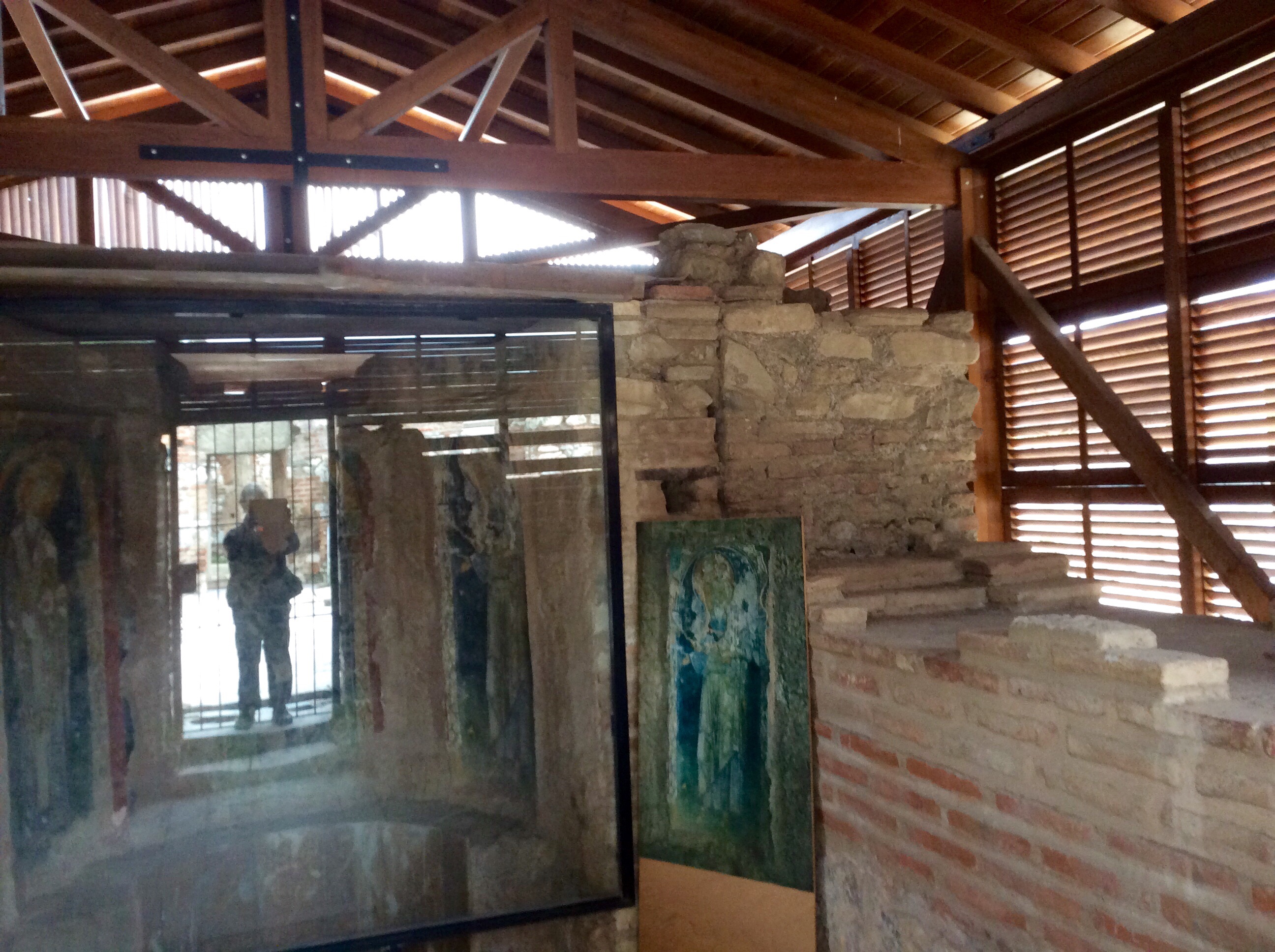
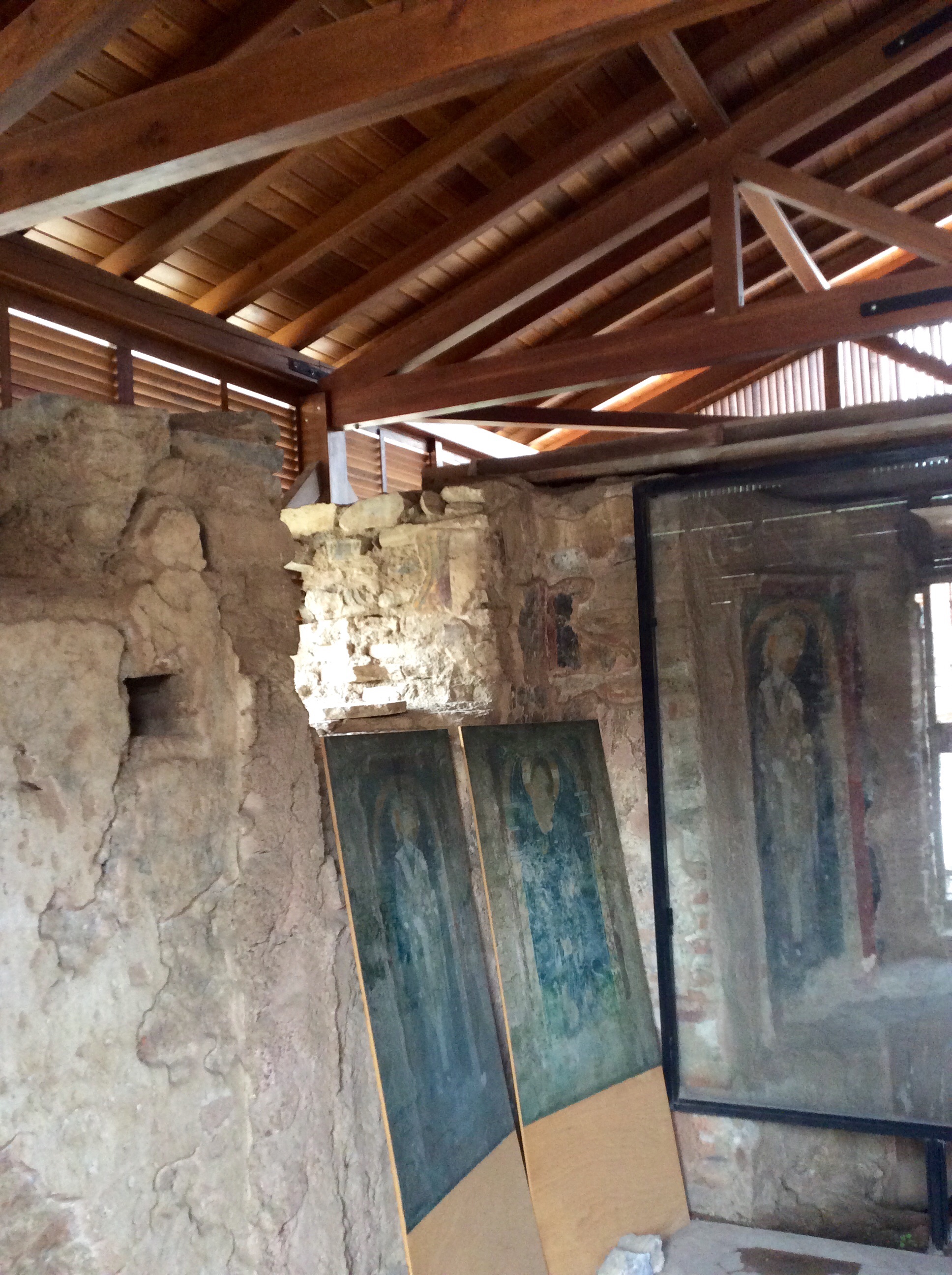
Three original frescoes, of Jesus, Mary, and an unidentified holy person are being restored in the Treasury, which also has its original floor. The frescoes are behind glass, so please excuse my reflection.
image

image

image

St. John’s Church was built here twice, with Justinian’s huge construction in the 500s the biggest church of its time. It covers the entire hillside. image
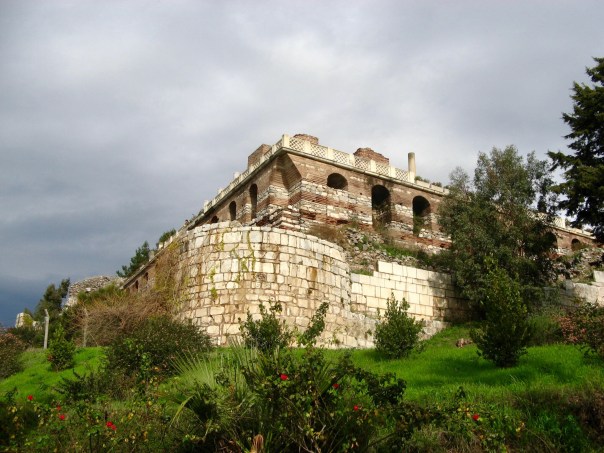
Here is a model of what it once looked like:image
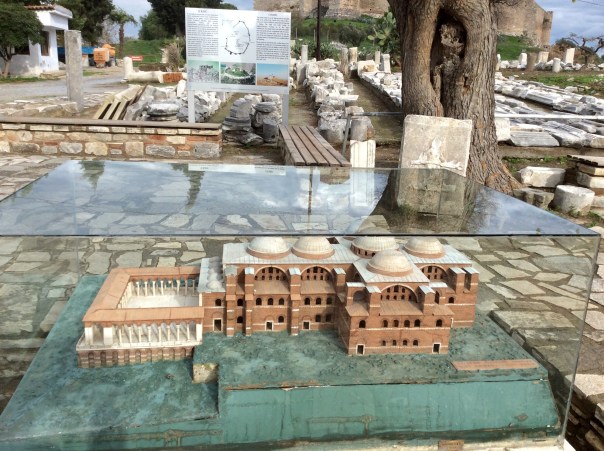
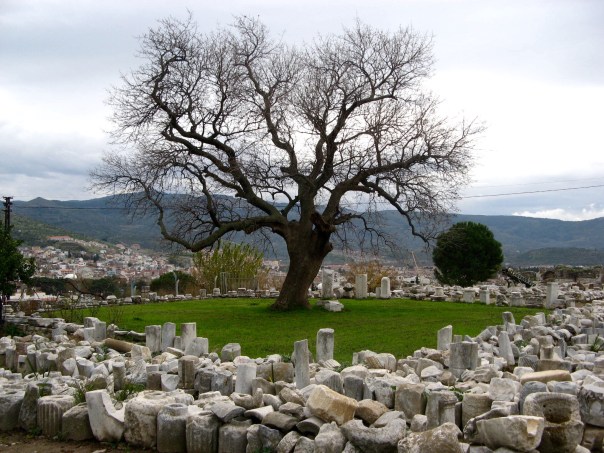
When destroyed by an earthquake in the 1400s, the church was not rebuilt. Archeological reconstruction began in the 1920s and is still going on today. So many pieces to put back together!
image

Istanbul to Selçuk

12/6 – With heavy hearts, we packed up this morning for our last day in Istanbul. We ate one final lunch at our favorite hole-in-the-wall restaurant, and bade farewell to our pension hosts. We gazed at the Blue Mosque and Hagia Sophia one more time, on our way north to the ferry terminal. When we step onto the ferry at Eminönü, we will officially be leaving Europe. IMG_5094

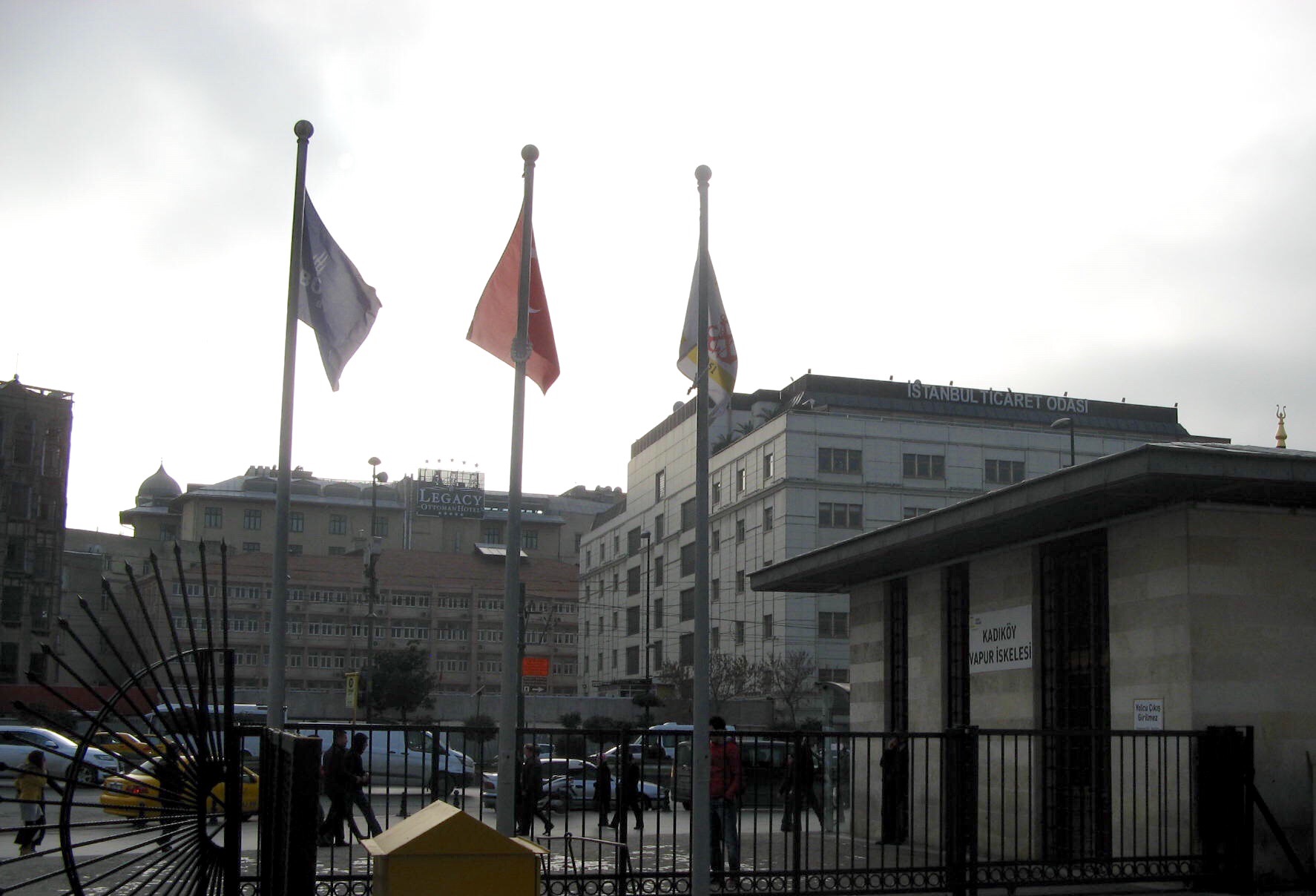
The ferry took just 15 minutes to cross the Bosphorus, and when we stepped off the gangplank in Kadikoy, we were in Asia. It was still Istanbul, but it is the start of the next chapter in our journey.IMG_5110

It took us a little while to find the 16D bus that would take us to the Pendik station 25 Kms east of Istanbul. We had originally planned to take the Metro until the end, then a short bus ride to the train station, but two Information Desk folks suggested that this one bus would get us all the way there.

This info was correct, but it was a two and a half hour ordeal in a double decker local bus that stopped on every corner, and tested human ability to squeeze together in tight spaces. I was trying to see the names of the bus stops, a futile effort, so we would know where to get off. Eventually, I asked a young girl if she would let us know when we reached the right stop. Although she had no English, and my Turkish is not improving, she understood and agreed.

We reached Pendik around dusk and went in search of food. A chicken donar sandwich that cost 5 tl in Istanbul only costs 2 tl here, and comes with a complimentary container of Ayran, the salty yogurt drink so popular here. I’m slowly developing a taste for Ayran… We ate and bought fruit and snacks for tomorrow.

The Pendik to Eskisehir train was a new, high speed deal that only made a few stops. We left at 19:20 and arrived at 21:50. We waited on the platform for our next train, which was due at 22:25. We met an American couple from Maine and their lovely 9 year old daughter Florence, who were visiting Turkey for six weeks.

This sleeper train was a real step up – the compartment was just for the two of us, and contained a table, a sink, real towels, and a fridge with water, sour cherry juice, pretzels and chocolate bars. Our upper and lower bunks (Jim took the upper) were already made up and ready. We gratefully collapsed into bed and got a pretty good night’s sleep.

After our fruit and chocolate breakfast, we reached Izmir at 10am. We then took a local train to the Havalimani Airport stop, where we bought a ticket for the 11:45 Dinizili train that will take us to Selçuk. That train took about an hour, and was another testament to people’s ability to squeeze together. We had to stand cheek to jowl the whole way, and fight our way off the train.

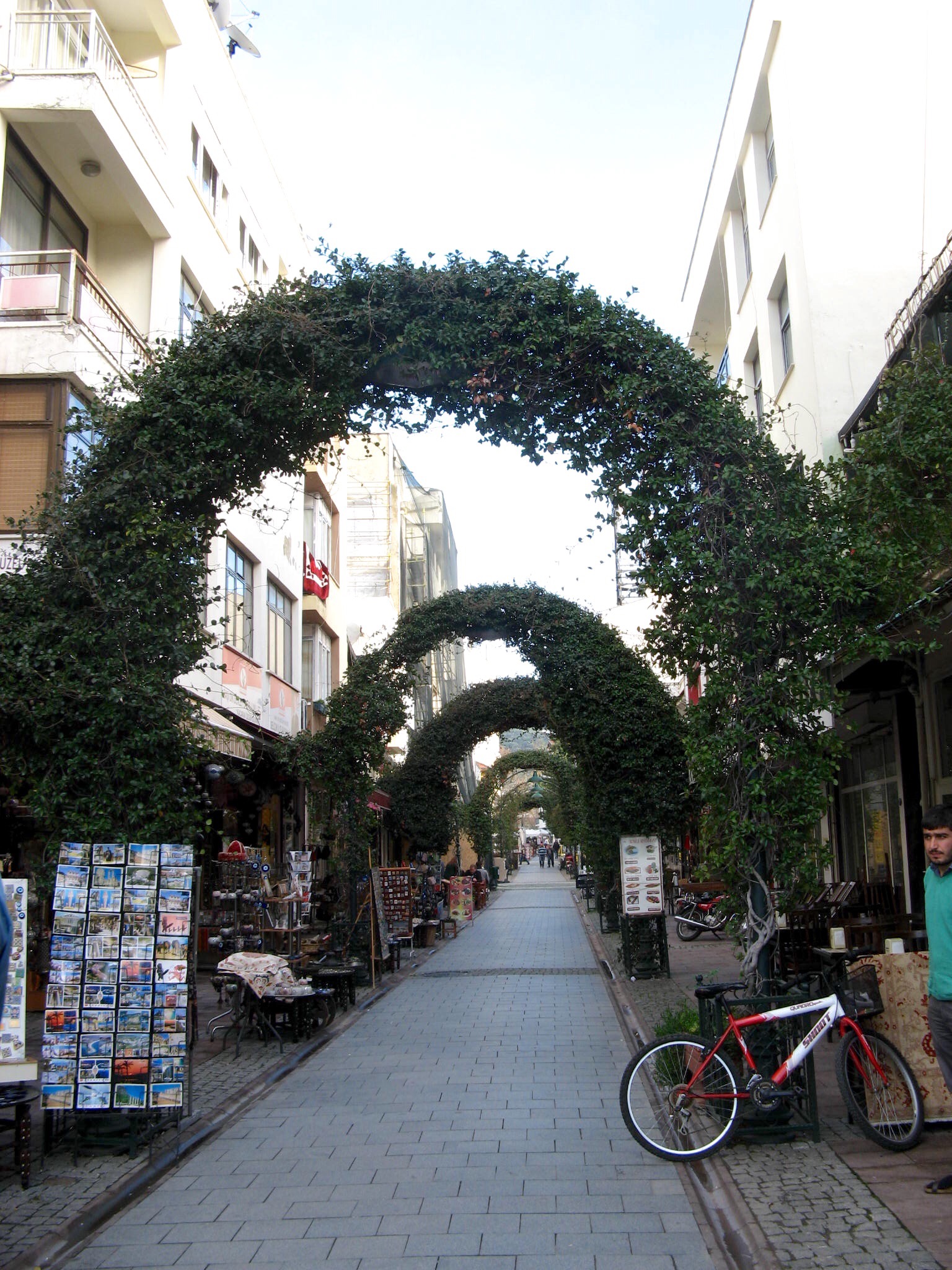
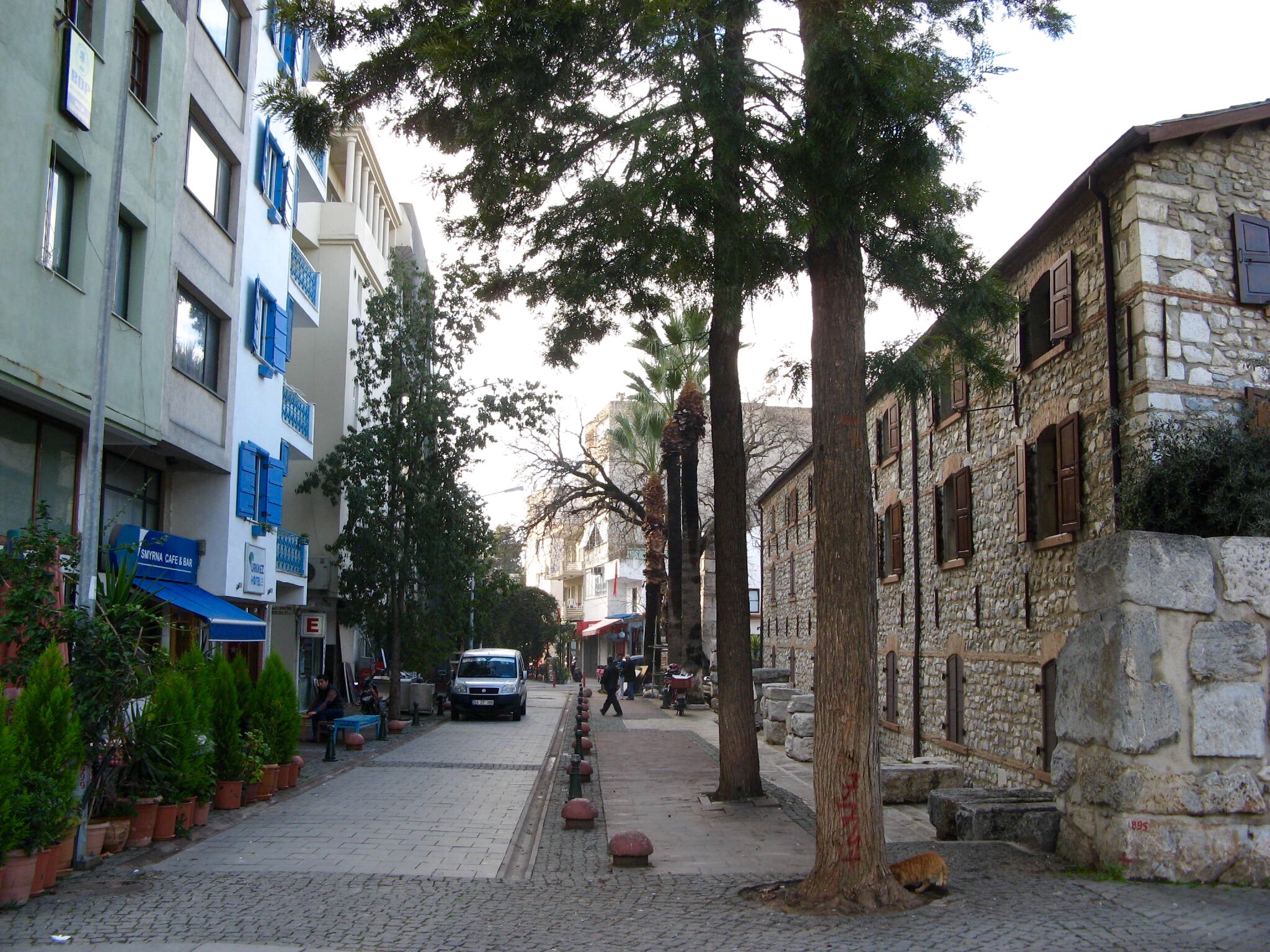
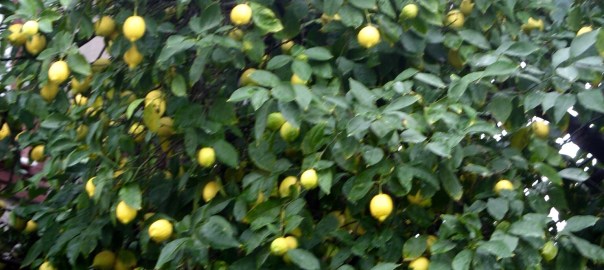
But we made it! So, after 24 hours of traveling, we are here, a stone’s throw from the ruins of Ephesus, some dating back to fourteen centuries BCE. The temperature is back in the 60s, and citrus and olive trees grow on the Main Street. Life is good!imageimageimage

Istanbul – Chinese Visa Update

12/5 – Today was our fourth and final (we dearly hoped) two hour journey to the Chinese Consulate, to pick up our passports and new Chinese visas. While walking to the Metro, we encountered a harrowing scene – a beggar woman being dragged down the street by men in black, while her two young daughters were dragged away in the opposite direction, screaming for their mother. We’ll never know the story, but it shook me to the core, and I found myself sobbing as I walked. The crowd bustled on, as if nothing had happened. We got on the train.

We had instructions to first go to a certain bank and deposit $280 in the Chinese Consulate account. We took a taxi to the specified bank, and waited patiently until our number was called. We handed over the form the Consulate had given us. We were asked for our Turkish Tax Number. What the what??

We explained that we were Americans and had no Turkish tax number. They politely told us they could not take our money without a tax number. Perhaps we should take a bus to another town where we could obtain a tax number. Not acceptable. We talked to several people with varying degrees of English and arm-waving. We marched upstairs to speak with the manager. There was nothing they could do. The Consulate was called. Someone from the Consulate instructed us to come to the Consulate right away. We caught a taxi and arrived at the Consulate within minutes. The guard told us no one was there and the office would not reopen until 3pm. We waited outdoors in the grey and rainy afternoon. There are lots of cats here, as we have noticed throughout Istanbul, independent and seemingly well fed.

When we were finally admitted to the Consulate we found the young woman we had met on the first day. We explained the current situation, and she went Back Behind the Door. She emerged with a solution – we could give her the money directly. Great! We had the cash, in Turkish lira. Not acceptable – they needed US dollars. She told us to go back to town and change the money. We explained that we couldn’t change money, as they were holding our passports! Eventually, the young woman understood our Catch 22 situation. She gave us one passport, and held the other. We caught a cab back to town, found the HSBC bank where money could be changed, got burned with a terrible exchange rate (what choice did we have?), took another cab back up to the Consulate and retrieved our second passport a half hour before the Consulate closed for the weekend. Whew! Success!

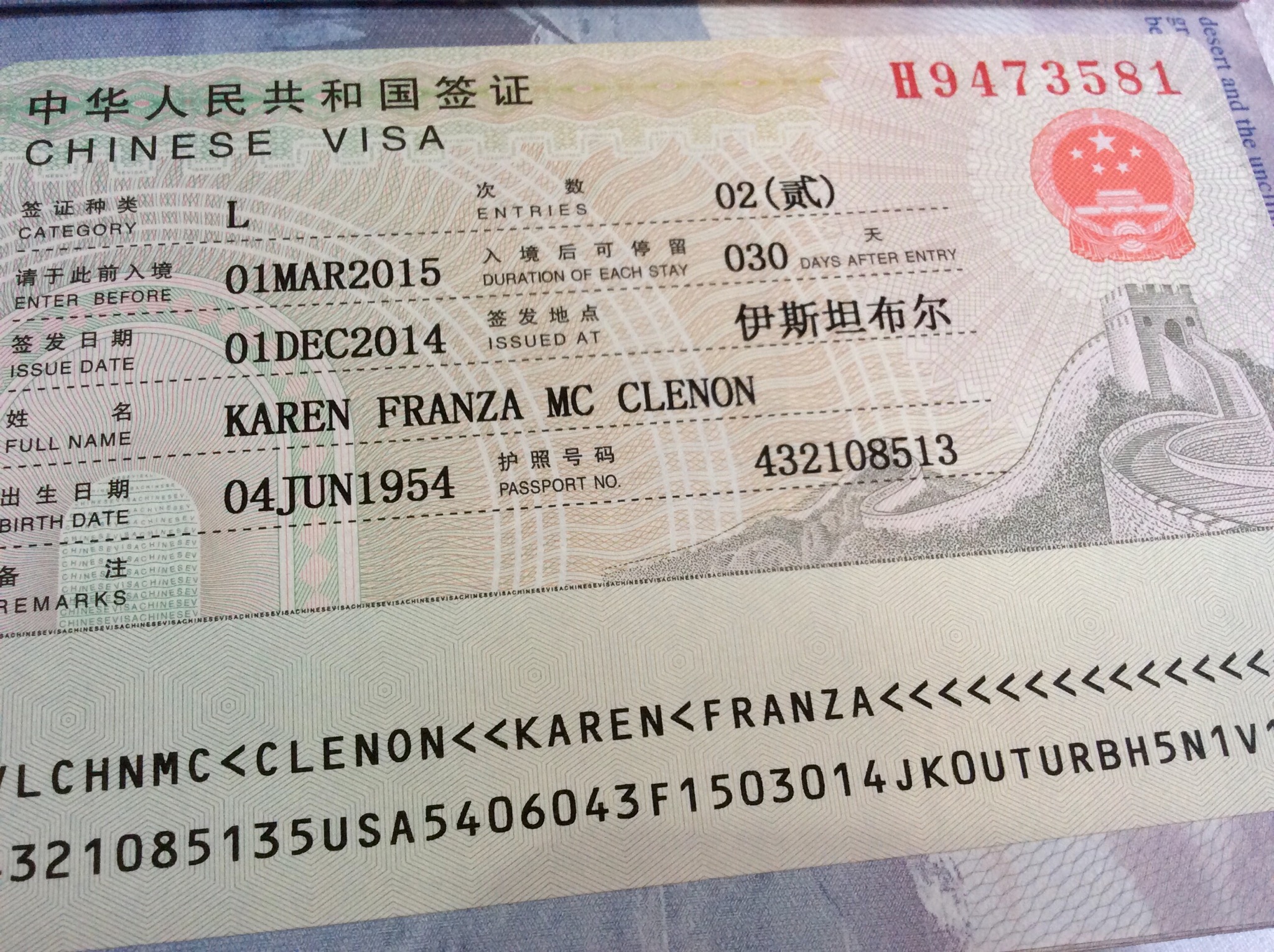
Then we looked at our new visas. We had furnished an itinerary that said we planned to be in China for three months. Our visa was good for two entries of 30 days each. Our itinerary said we would get to China by mid March. The visa said we had to be in country before March 1. Sigh. What doesn’t kill us, makes us stronger. Time to rework our plan. IMG_5082.JPG

I let go

beinghere2014's avatarBeinghere

image

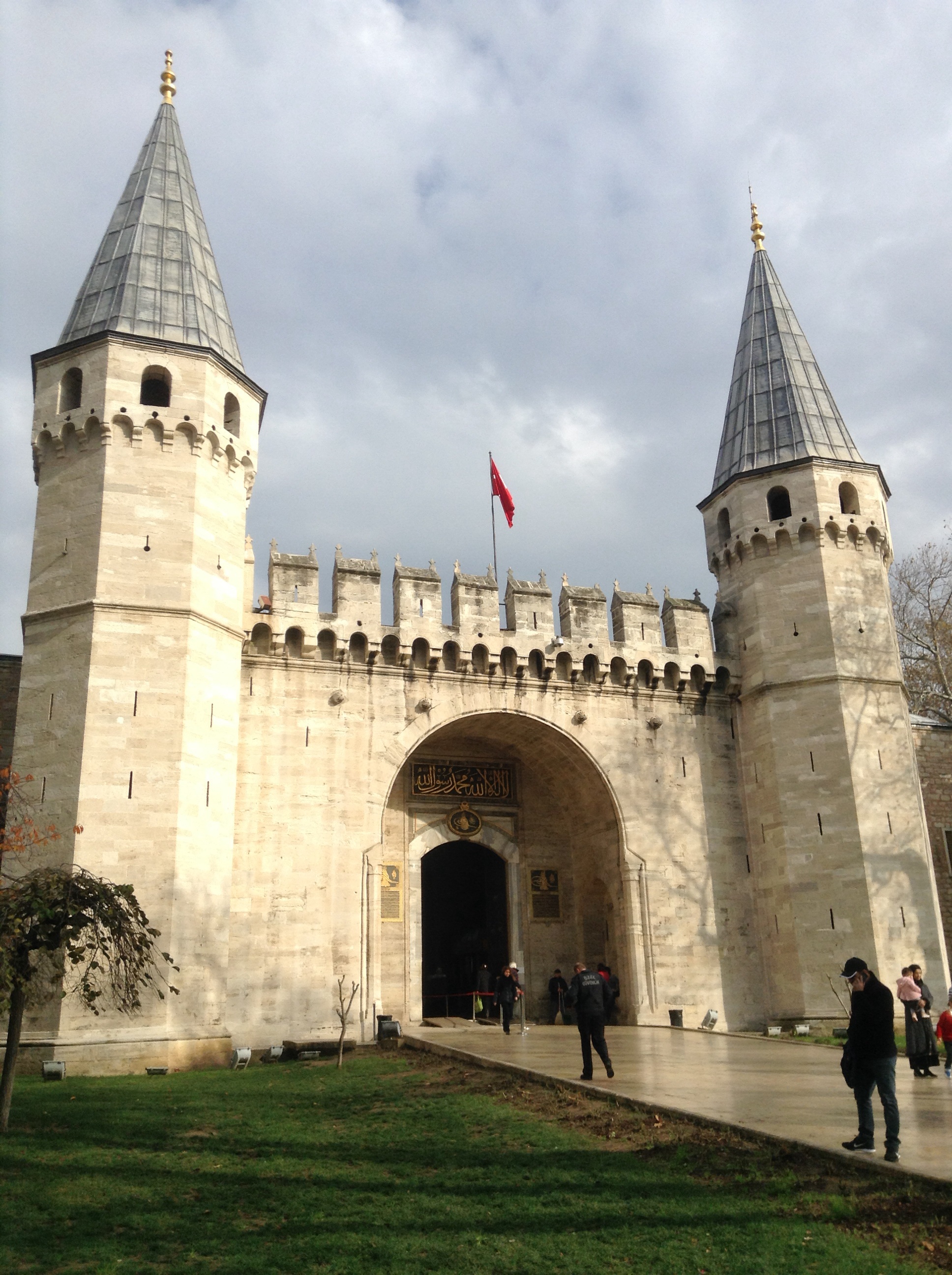
We visit Topkapi Palace, entering the Gate of Salutation. The Topkapi Palace was primary residence of the Ottoman Sultans for about 400 years (1465-1856) of their 624 year reign.

I looking for an image that will touch you in the place that connects you to the unseen world. Most objects in this tourist attraction are mundane (porcelain, clothing, historical artifacts, kitchenware) but the “holy relics” are spiritually powerful. I learn that photography is prohibited.

Security is tight. There was a robbery in 1999 and a terrorist attack in 2011. Guards keep watch in every room, prohibiting photographs. They are extremely vigilant, putting their hands in front of people’s cameras and shouting loudly whenever a tourist attempts to take a photograph.

Karen is extremely clever and takes various photos when the guards are not watching but I decide to merely observe. The photos I include have been downloaded off the internet…

View original post 803 more words

Istanbul – Trains and Whirling Dervishes

12/4 – We have only a few more days in Istanbul. Friday we will pick up our passports from the Chinese Consulate, and Saturday we head south to see other parts of Türkiye. We walked north today to get our train tickets to Izmir, which will get us close to Selçuk and the ruins at Ephesus. On the way, we passed a restaurant advertising a Whirling Dervish demonstration, not too far from our pension. Jim said, “I think this is something you would like to see.” So, we are going tonight!

When we arrived at the train station, the ticket seller had no English, and seemed to be telling us there was no train to where we wanted to go. I had spent a lot of time researching on line, and knew we had to take a ferry to a Metro to a bus to catch the train 20 miles east of Istanbul (there are no trains running directly into or out of Istanbul until their rail upgrade is completed sometime next year). We had one more travel day on our EuRail pass, and this would be our last chance to use it.

We went next door to Tourist Information, and asked again. No, the man said firmly, we would have to take a bus. Remembering our nightmare entry into the country, we allowed that this might be true. He directed us to a travel agency two blocks away. This didn’t feel right… We’ve always dealt directly with the train company, not a private agency. The travel agent said we could take a 10 hour bus ride, but why not fly and get there in an hour? And why not hire a shuttle to and from the airport? And better also arrange a tour, as people can’t get from Selçuk to the ruins of Ephesus on their own. Jim thanked the man for the information, and marched us out of there. It was too slick, and smelled fishy.

Back we went to the train station. This time we got another agent, and determined that there WAS a train after all, just like I had researched. Whew! 20 minutes later we had our tickets for the train from Pendik to Eskisehir, and the overnight sleeper to Izmir. We walked next door to the ferry terminal to make sure that wasn’t going to be any sort of a problem. Looks like our Metro Card will get us across the Bosphorus for 2 lira. Yay! We’re back in business.

While we were in the city, I wanted to see if I could get a refill on my allergy prescription. Unlike other countries we’ve visited, it is not clear what a pharmacy looks like here. We went into a likely looking shop that had a vitamin display in the window, and found a guy in a white coat behind the counter – a good sign. I showed the package to the pharmacist, and he brought out the exact same name brand med, no prescription needed, and charged $7 for a bottle that costs $120 back in the US of A. Don’t know what to say about that, except I’m glad to have my medicine. Maybe I should stock up?

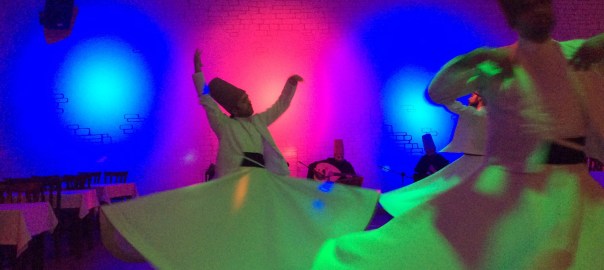
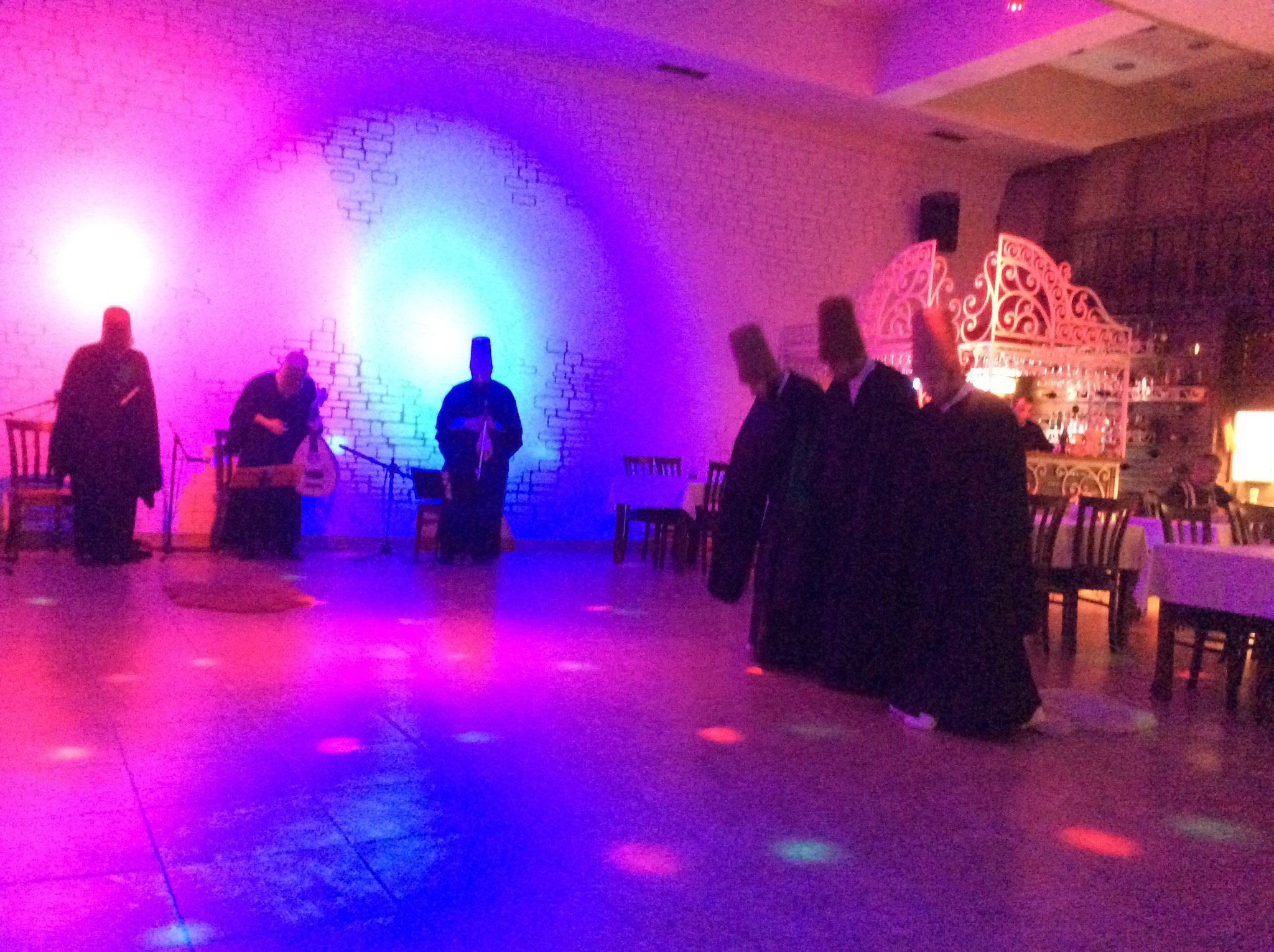
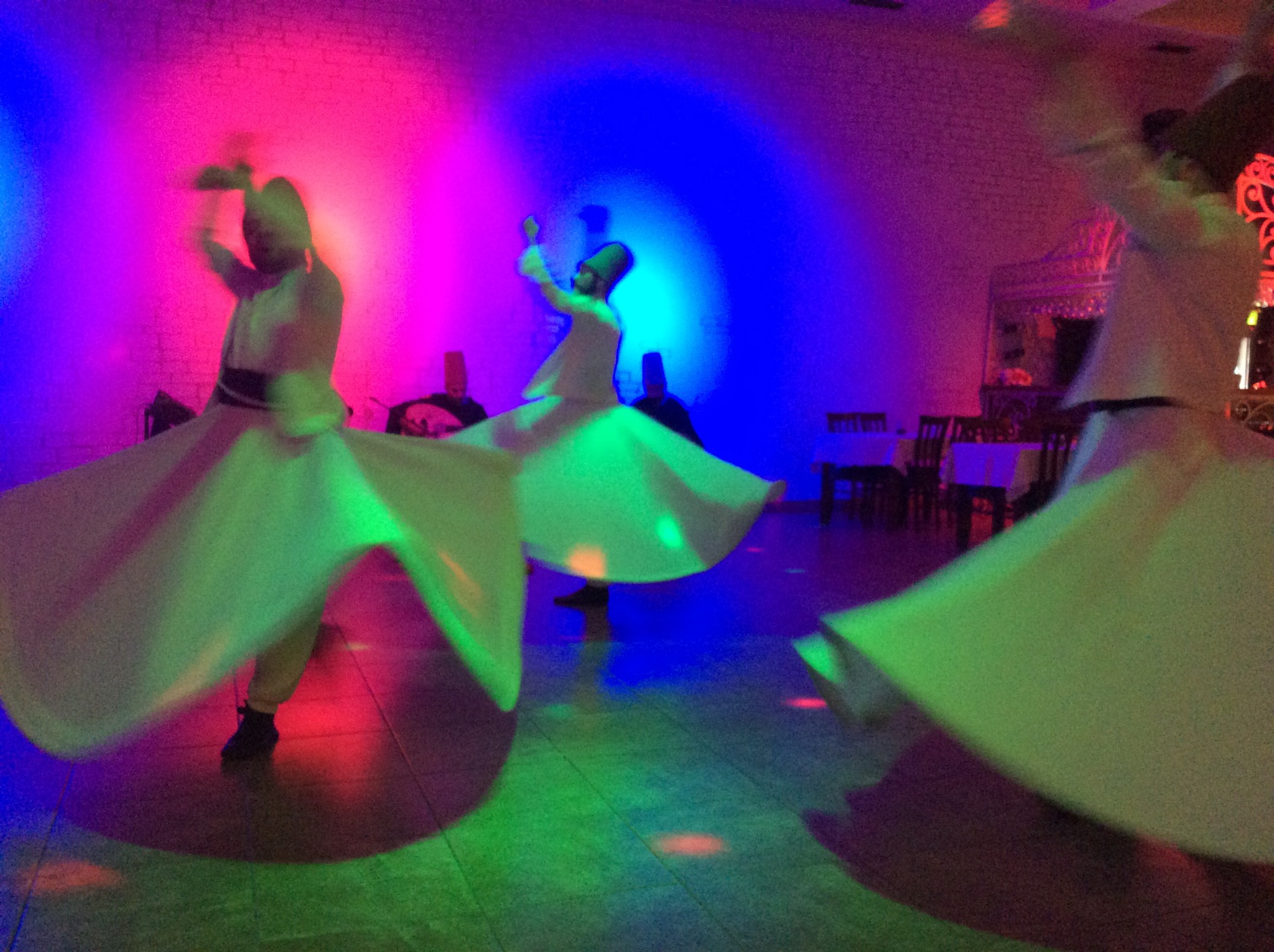
After supper we walked to the restaurant to see the Mevlevi, or Whirling Dervishes. The restaurant folks were disappointed that we were not eating in their establishment, but we figured the $40 cover charge was all they were going to get from us tonight. Lighting was provided by a very-80s disco ball, which gave the whole place a colorful, pulsating and surreal quality.

Followers of the poet Rumi, the Sufi whirl in ecstatic joy. First came three musicians – one playing a stringed instrument that sounded like a viola, one playing mandolin, and the third playing a bamboo flute, who was also the vocalist. image

After a while the three dervishes came out in black robes, bowed and knelt for a period of meditation while the music played.IMG_5011.JPGIMG_5012.JPG

Then the three cast off their black robes to reveal white costumes with wide skirts. One by one, they bowed, then started to whirl, arms raised, eyes closed, skirts creating a breeze like room full of ceiling fans. They rotated, and also revolved around the room. They were graceful and looked serene, never faltering, losing step or appearing dizzy. They whirled for a long time.

IMG_5016.JPG

IMG_5035.JPG

IMG_5053.JPG

IMG_5024.JPG

Jim introduced me to the poetry of Rumi years ago, and I can understand that whirling is another way that he and his followers expressed their joy. Here is a Rumi poem:

The Secret Turning

A secret turning in us
makes the universe turn.
Head unaware of feet,
and feet head. Neither cares.
They keep turning.

Istanbul – Topkapi Palace

12/3 – today dawned sunny and warm (63!), so we decided to take advantage of the nice weather by visiting the Topkapi Palace Museum and gardens, home of rich sultans and their harems since 1459. image

The entrance fee was steep, and after we paid the price, we were informed that no picture-taking was permitted in any of the display rooms. Drat! How’s a person to blog with no pix? I wasn’t the only one disappointed, and we tourists kept the guards hopping in each room as they ran to stick their hands in front of our lenses, yelling, “No photo, Madame!” Some rooms showed old china and silverware, and I snapped a few shots just because…

The item on the right is a sherbet dispenser, which I thought was kind of neat…

Other rooms held jewel-encrusted clothing, artifacts and weaponry:

The bottom pic is borrowed from the Internet.

The final rooms held religious relics, and I didn’t dare try to get a picture there, but what an inventory! Not only did they display many relics of The Prophet, including his beard, a tooth, his footprint, his sword and bow, but they also had:

  • The Saucepan of Abraham
  • The Staff of Moses
  • The Sword of David
  • The Turban of Joseph
  • The Hand of John
  • …and I thought Catholics cornered the market on relics!

    Photography was permitted in the outer buildings, including the Circumcision Room.

    The grounds were lovely, although probably more so when the roses bloom in summer.

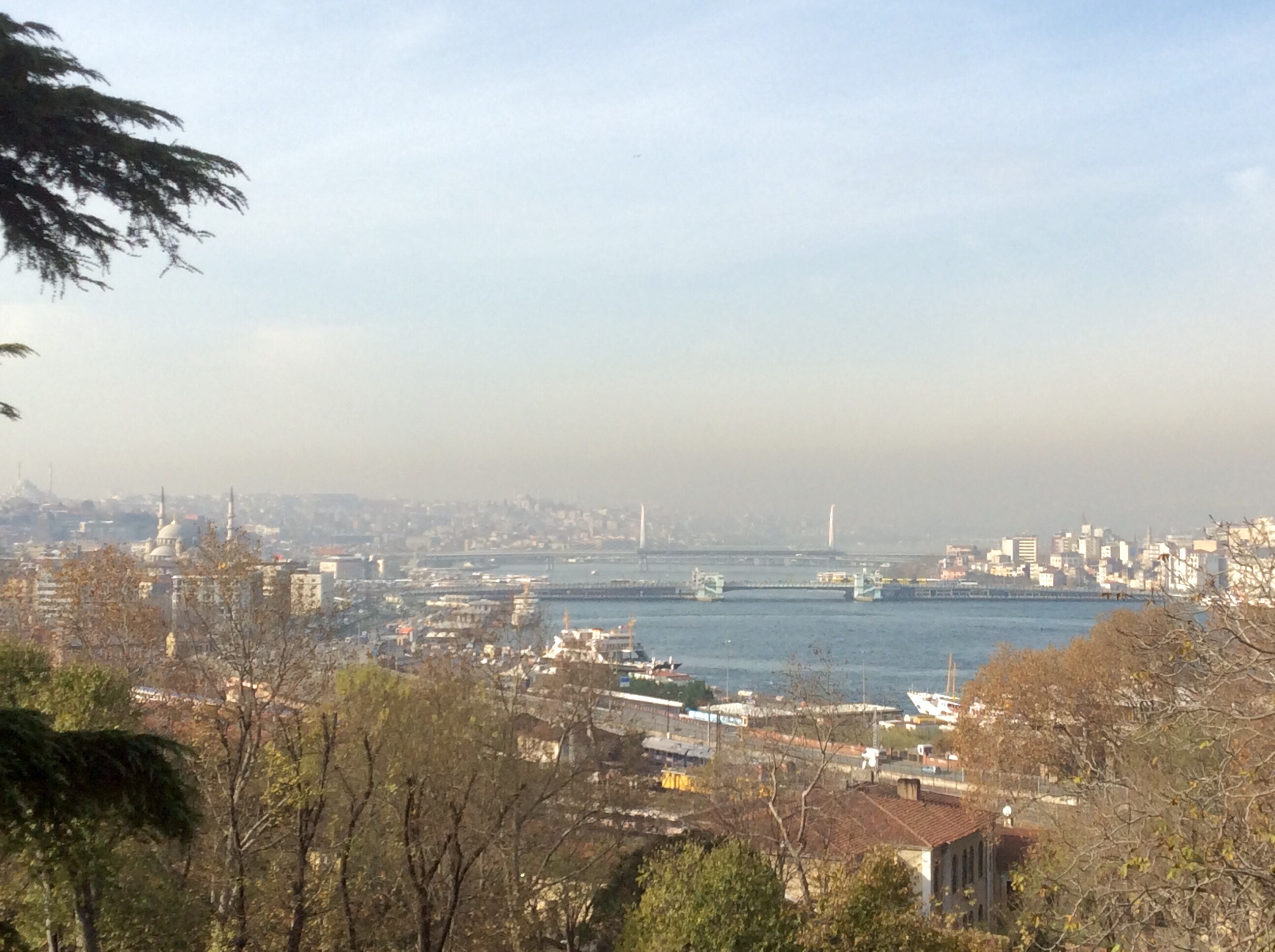
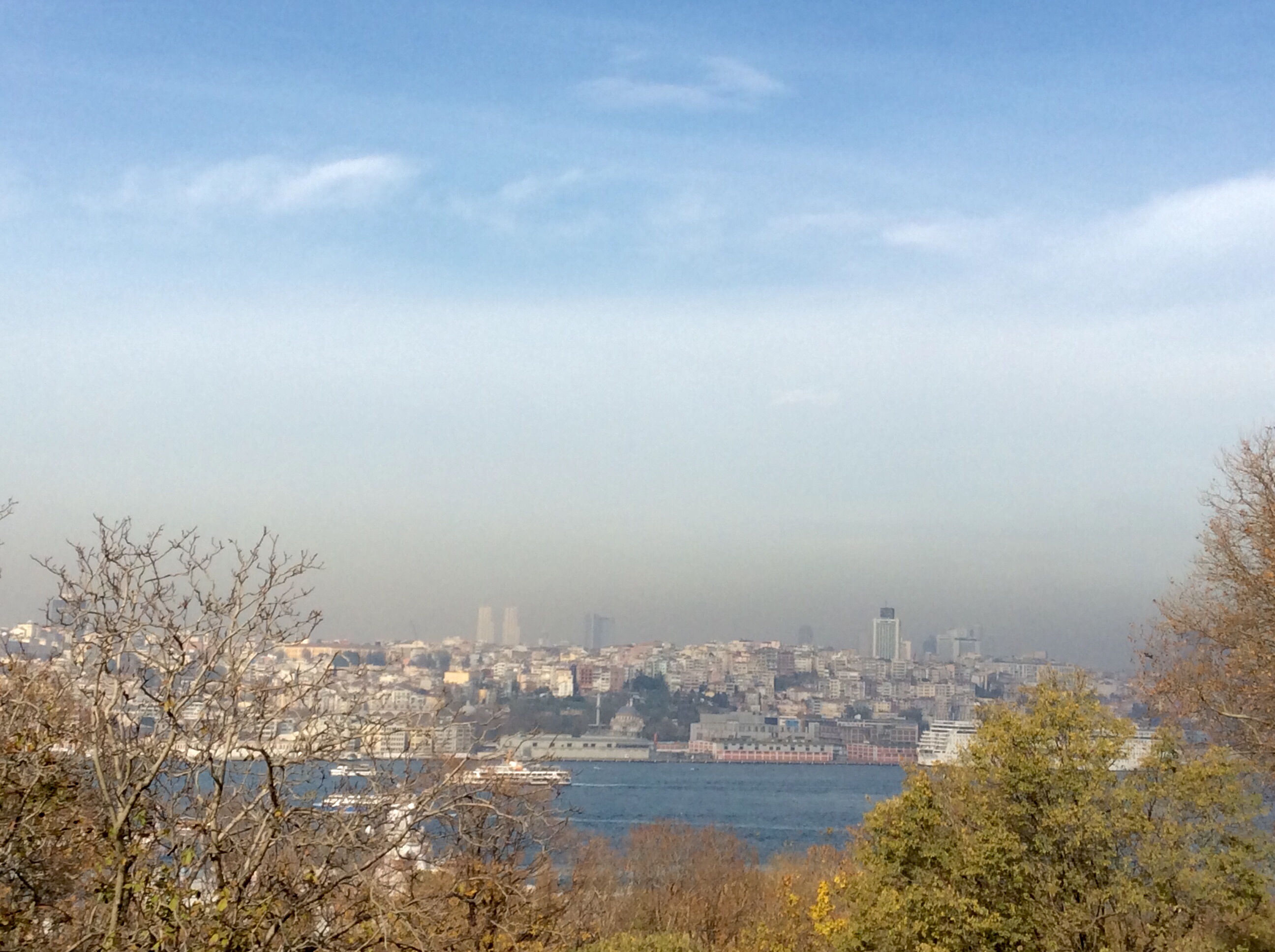
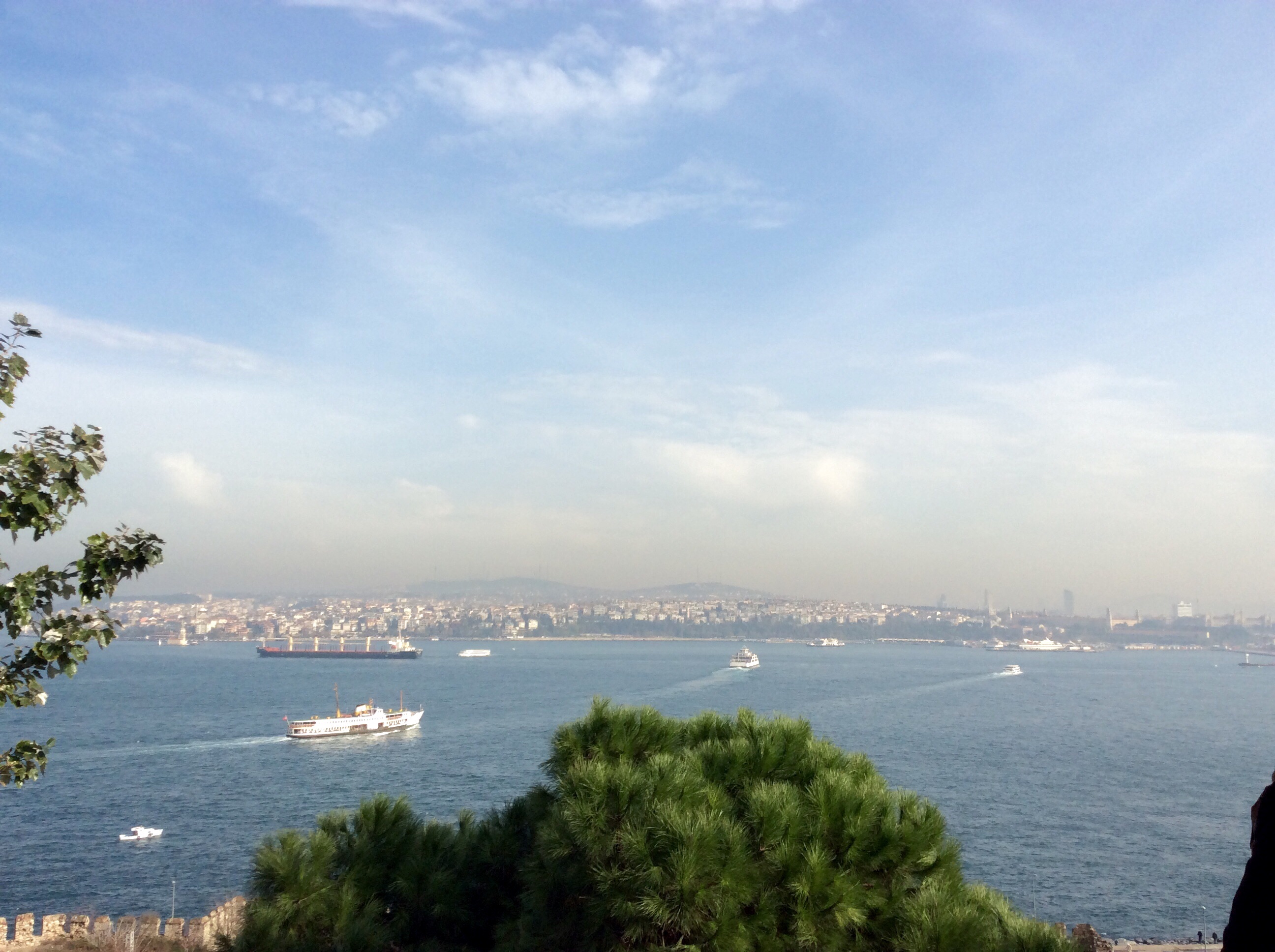
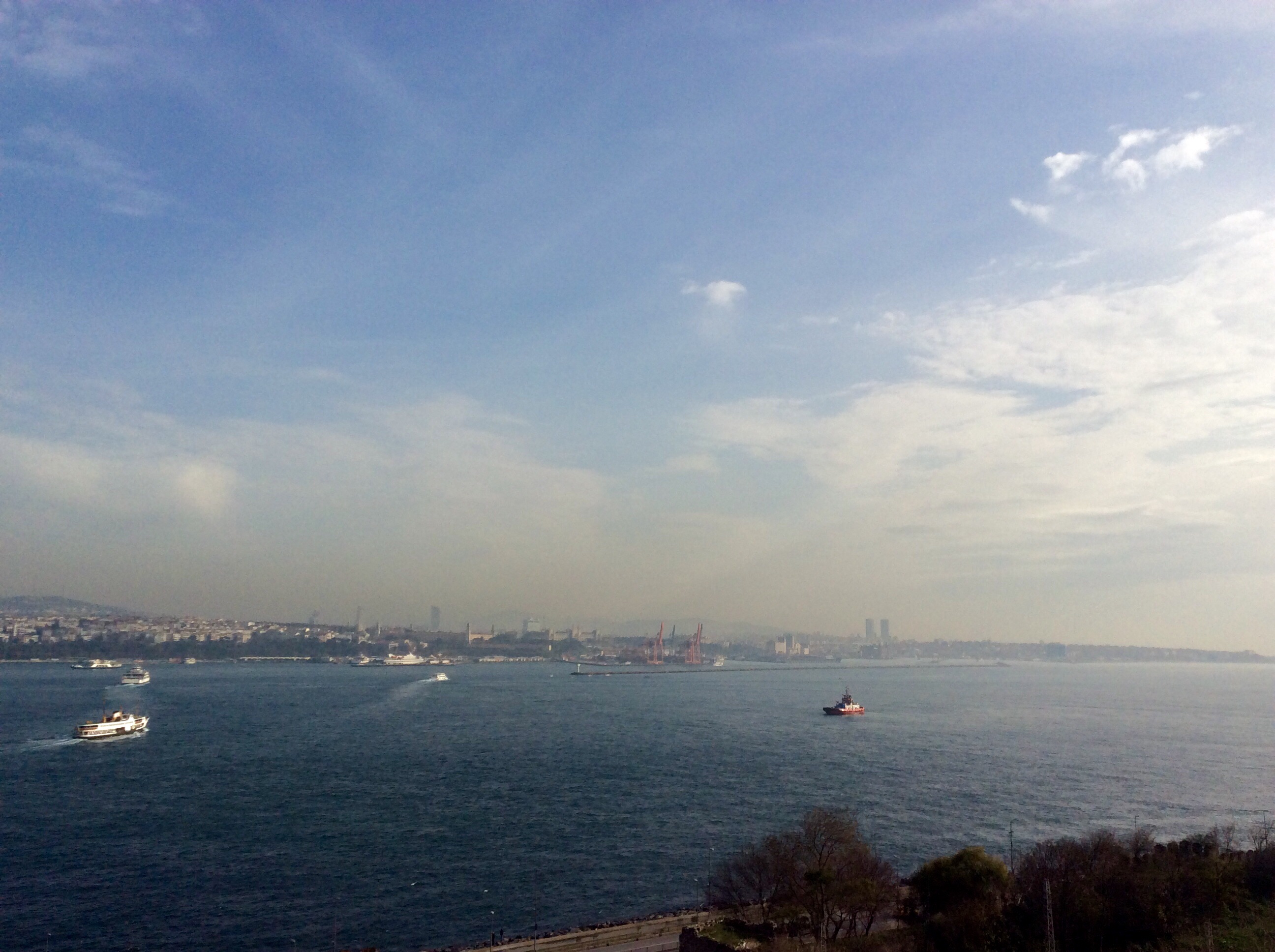
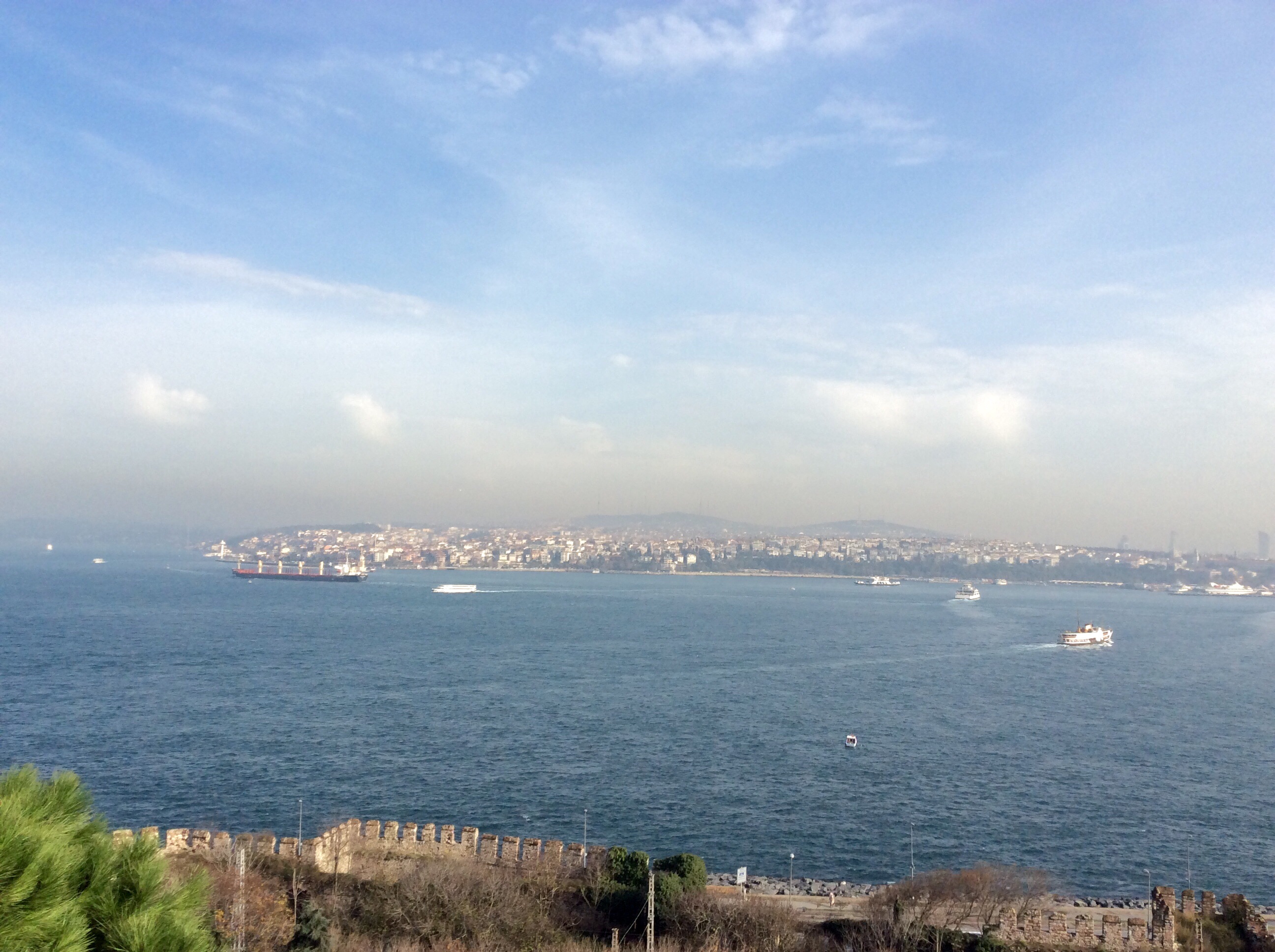
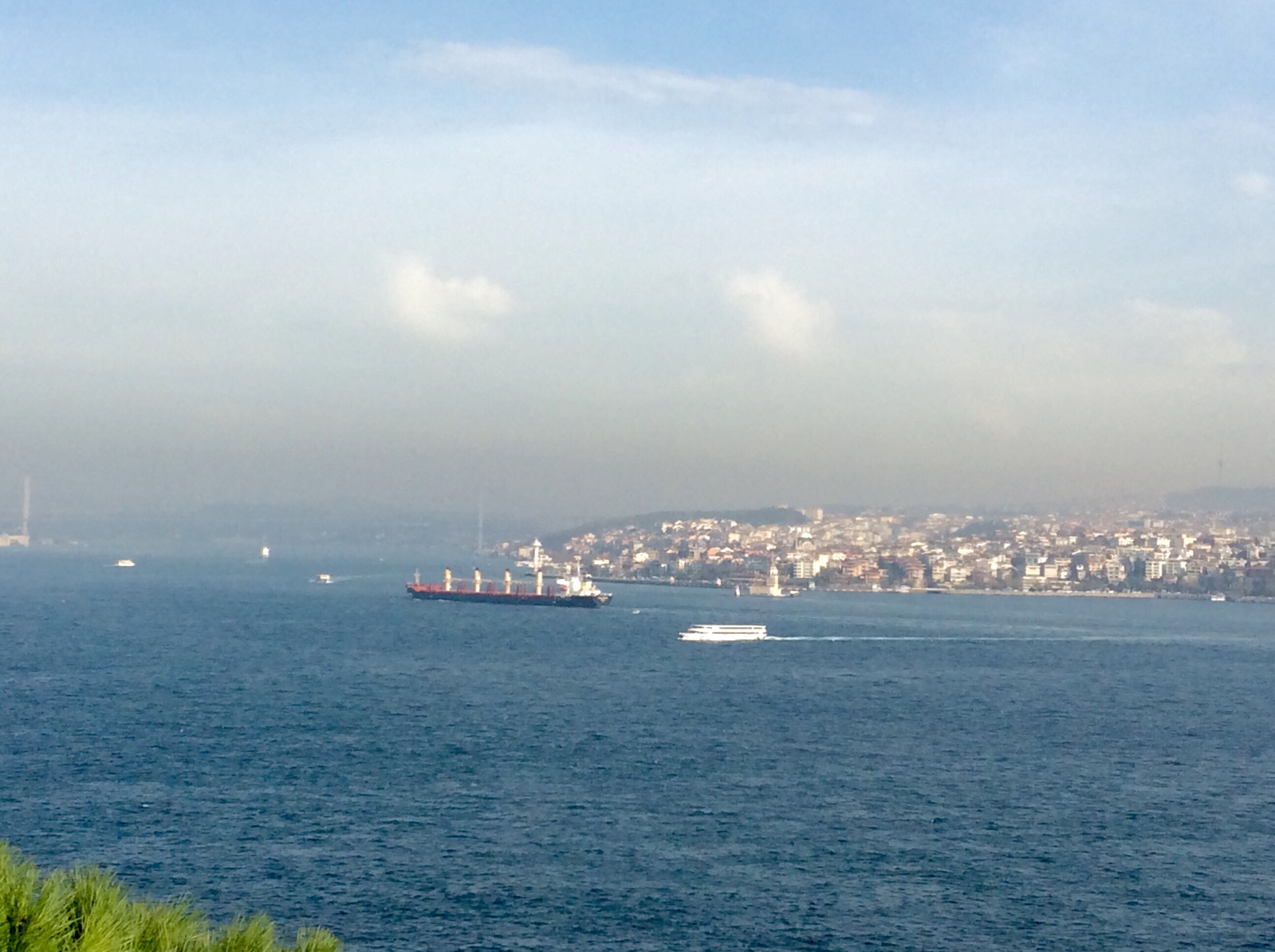
    The Palace is on the shore of the Bospherus, with some great (albeit slightly smoggy) views:image

    image

    image

    image

    image

    image

    An excellent day!