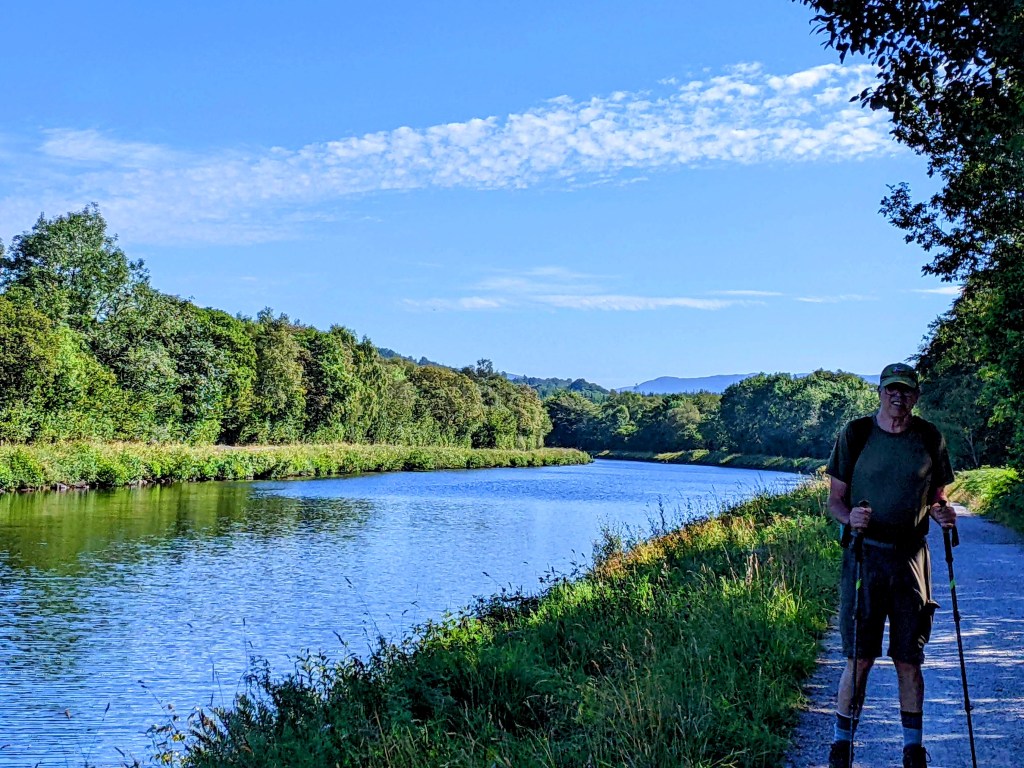
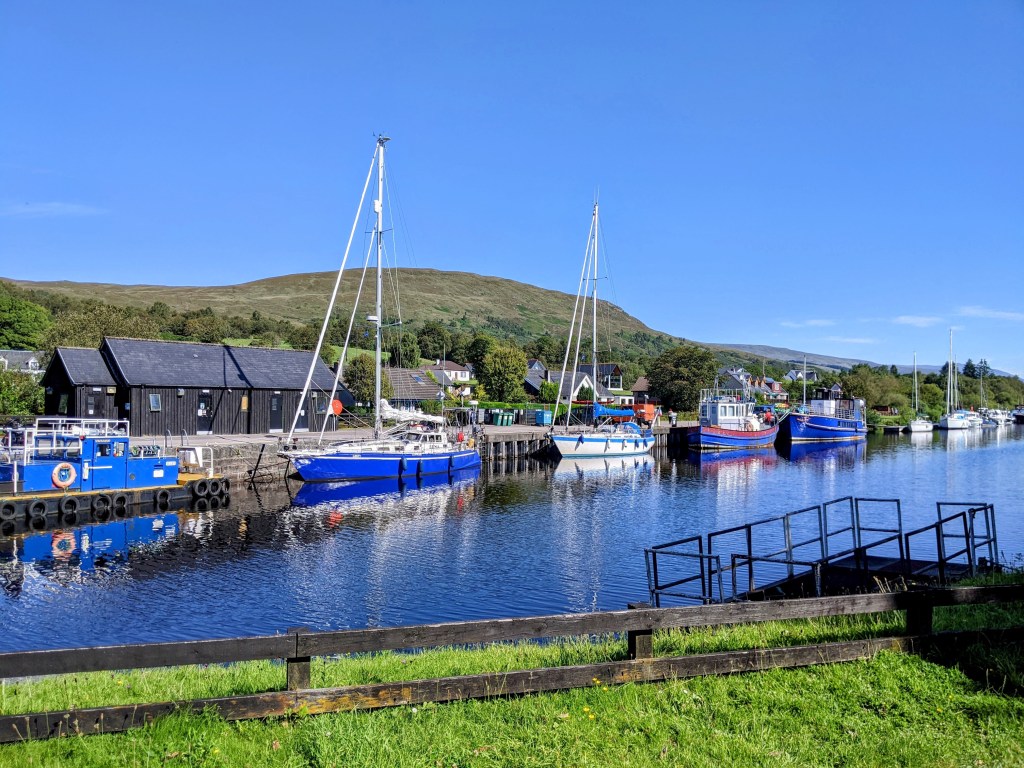
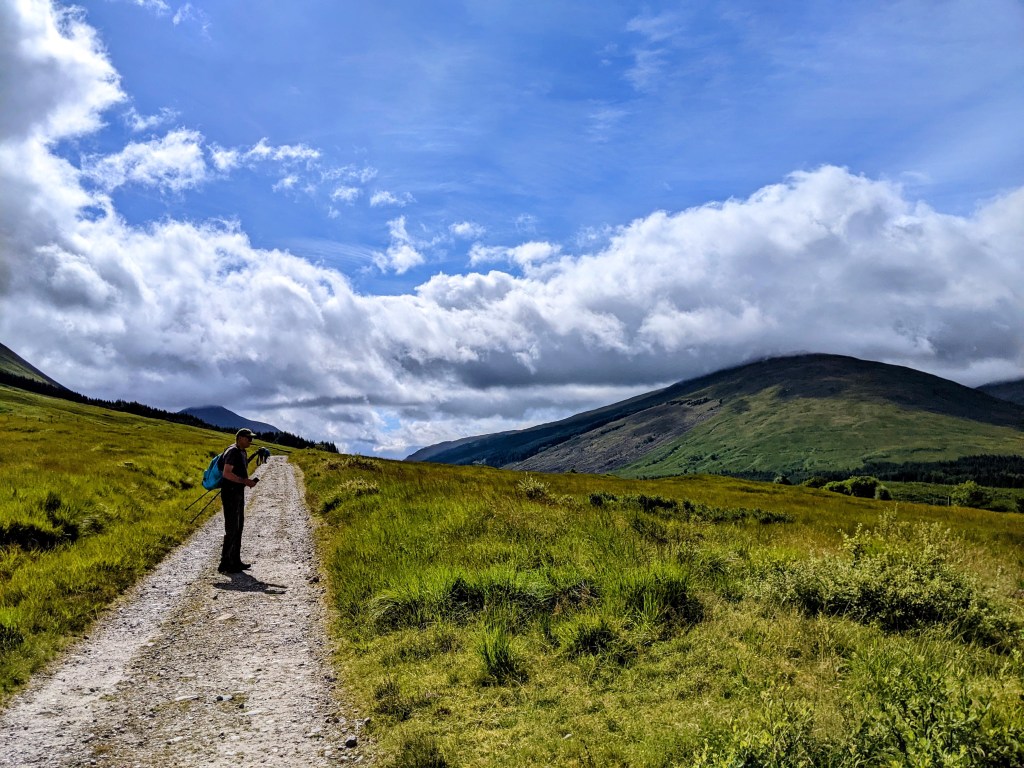
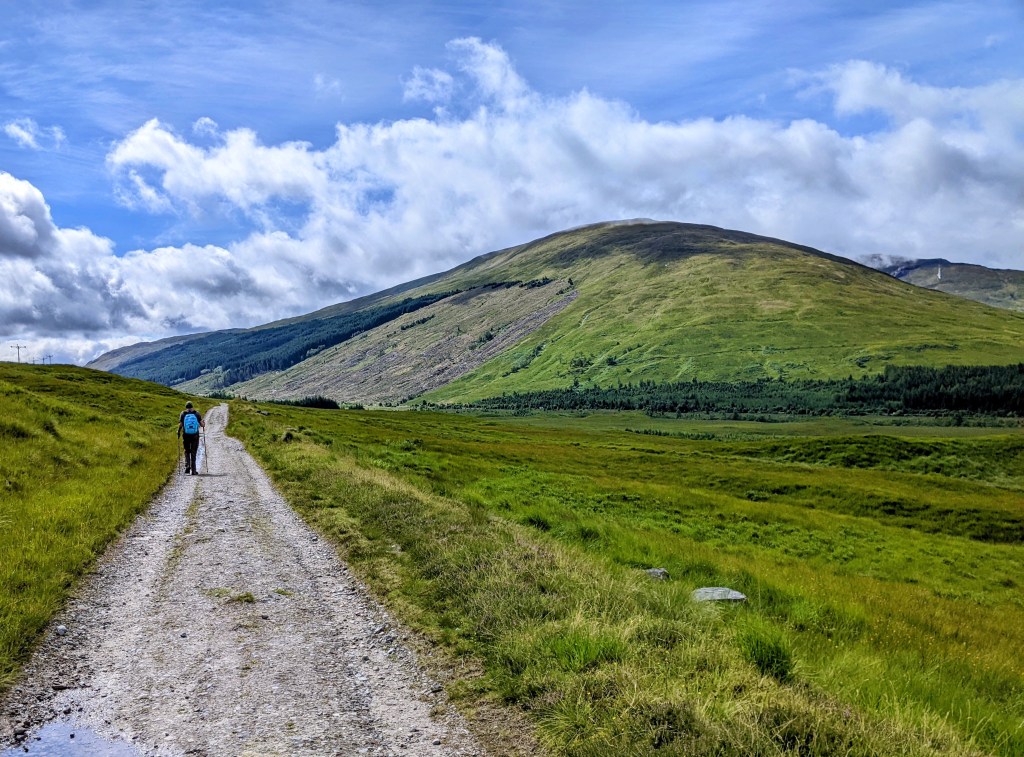
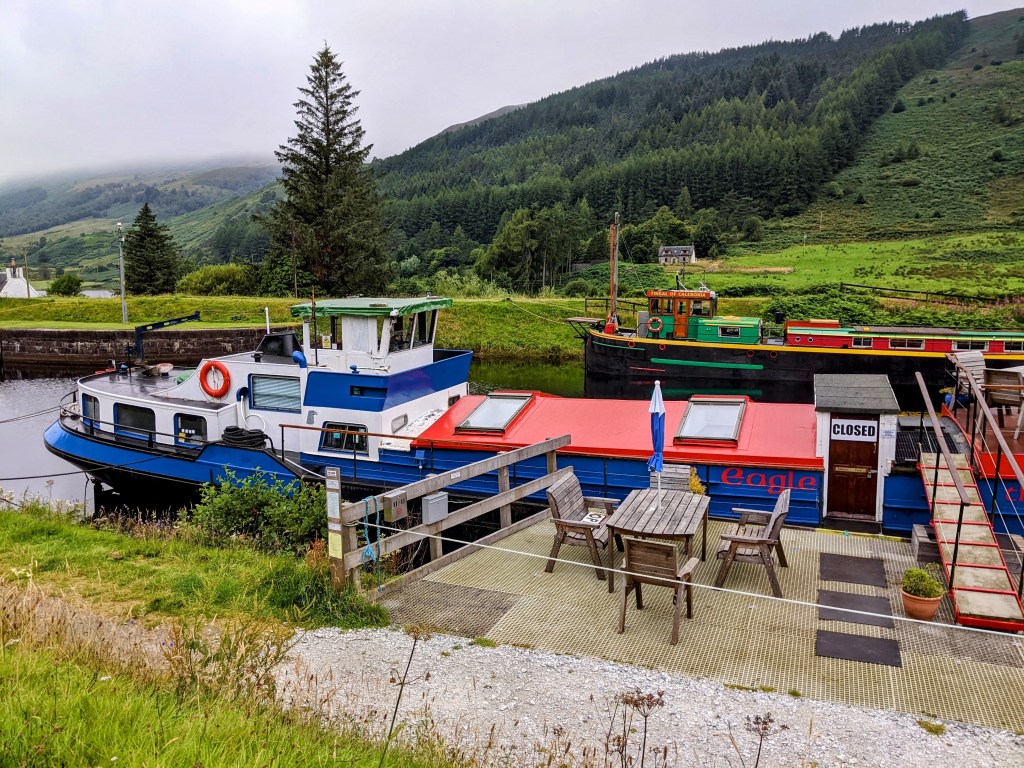
August 15 – The forecast today was for rain, so we got an early start for the 11 miles to Fort Augustus, which is the midpoint of this hike. We walked past the Eagle Barge, the only restaurant in Laggan. When we saw it online we didn’t realize it was actually a barge.

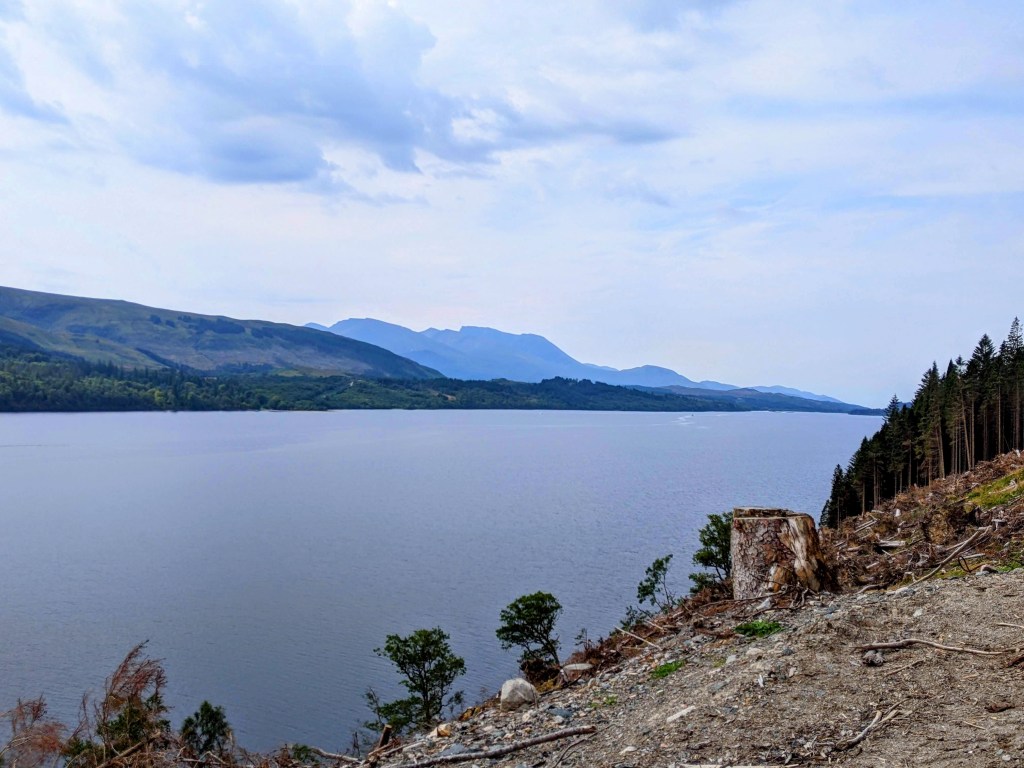
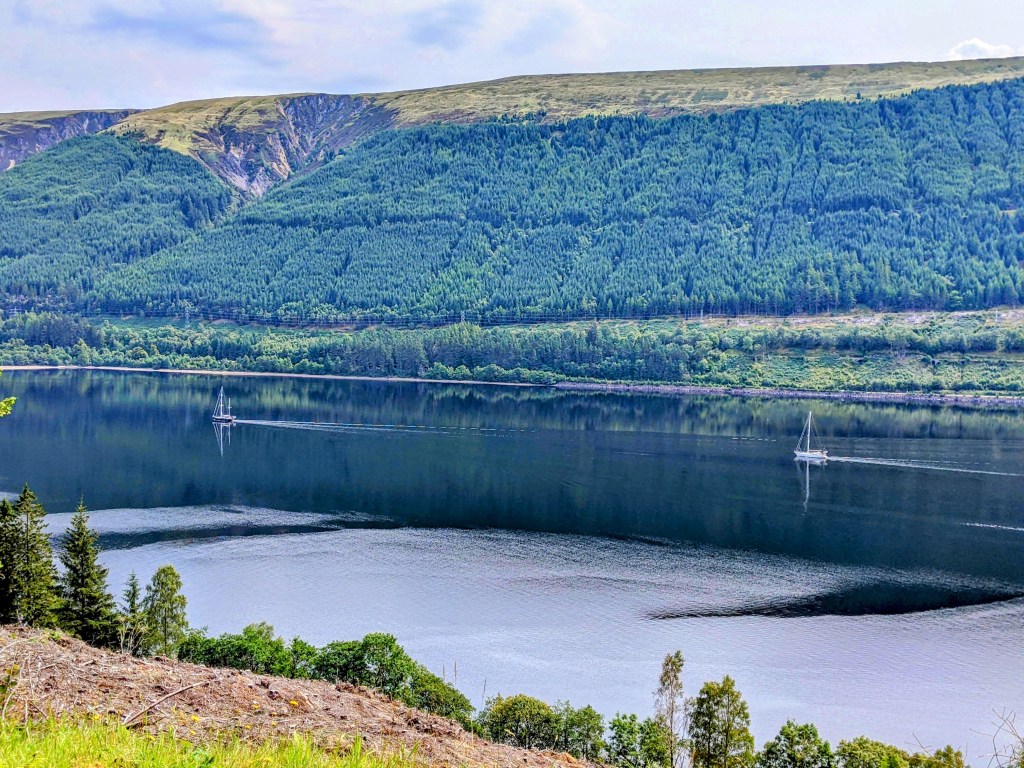
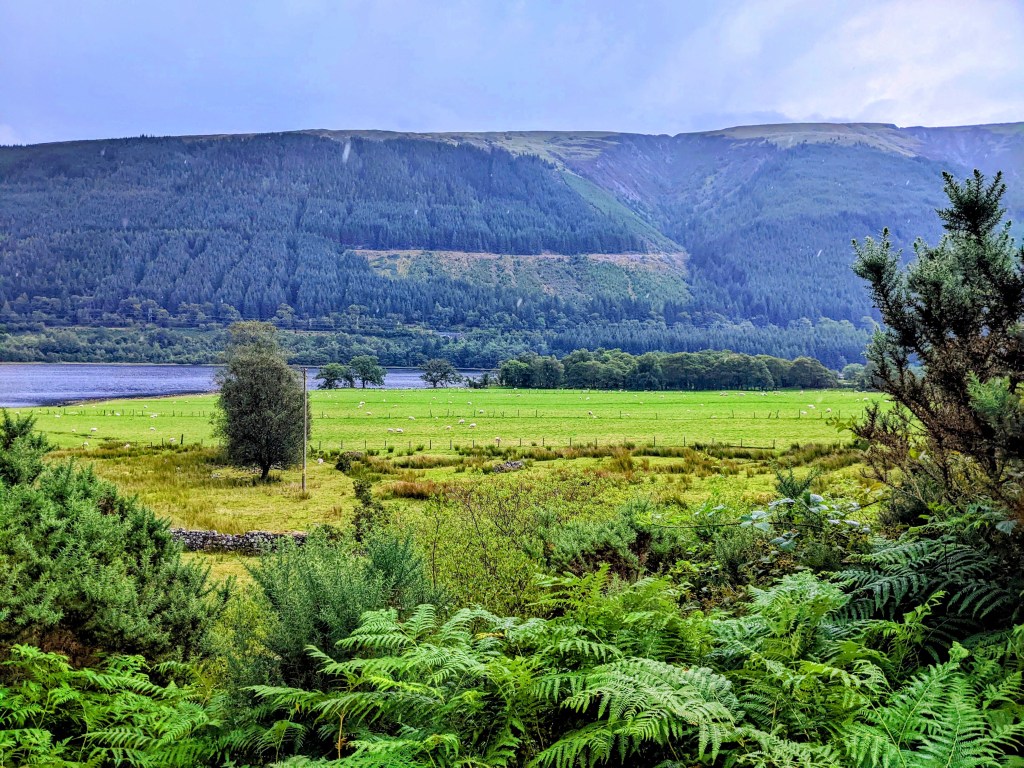
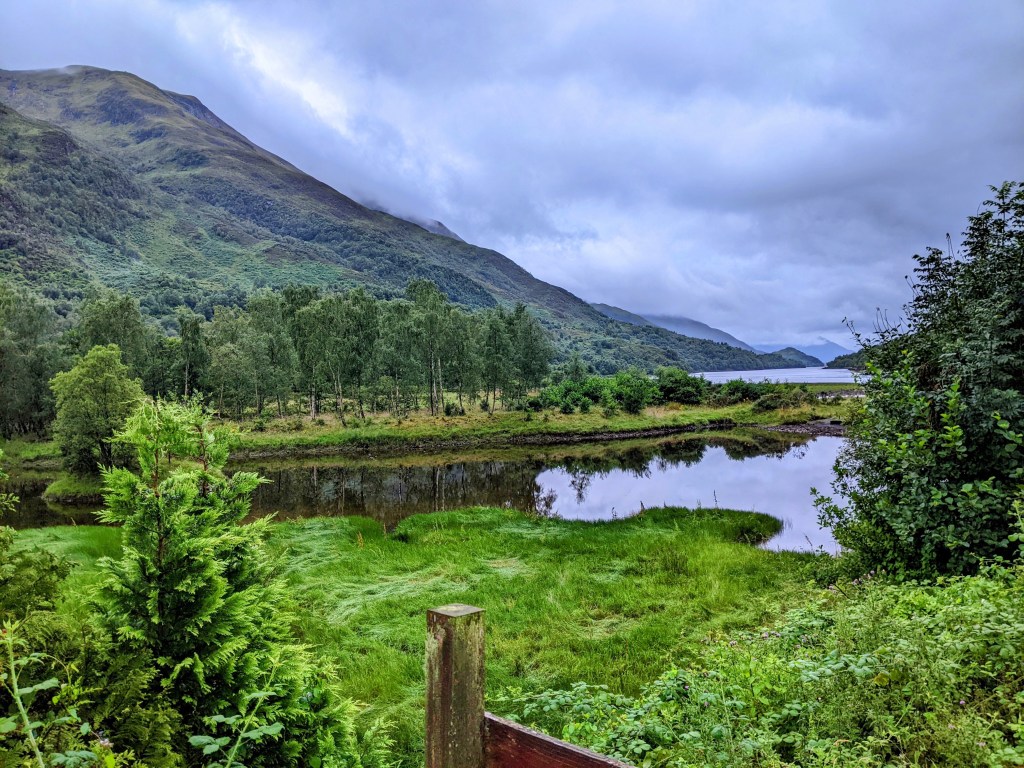
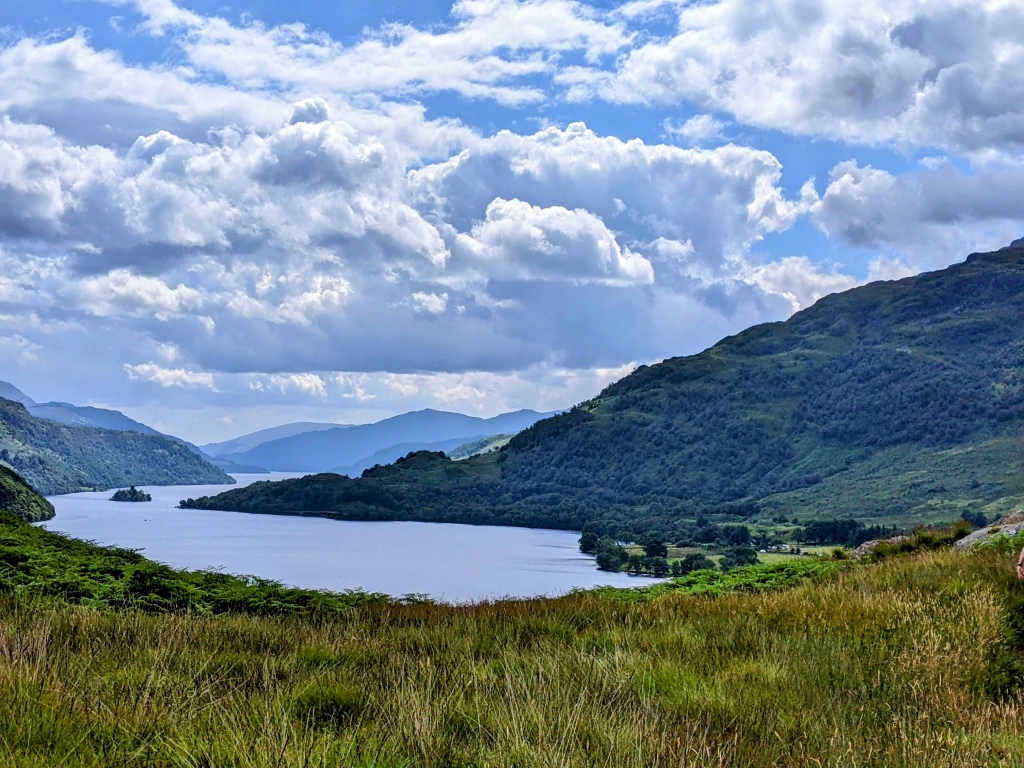
Today we are walking beside Loch Oich. I hope you’re keeping track of all these lochs.
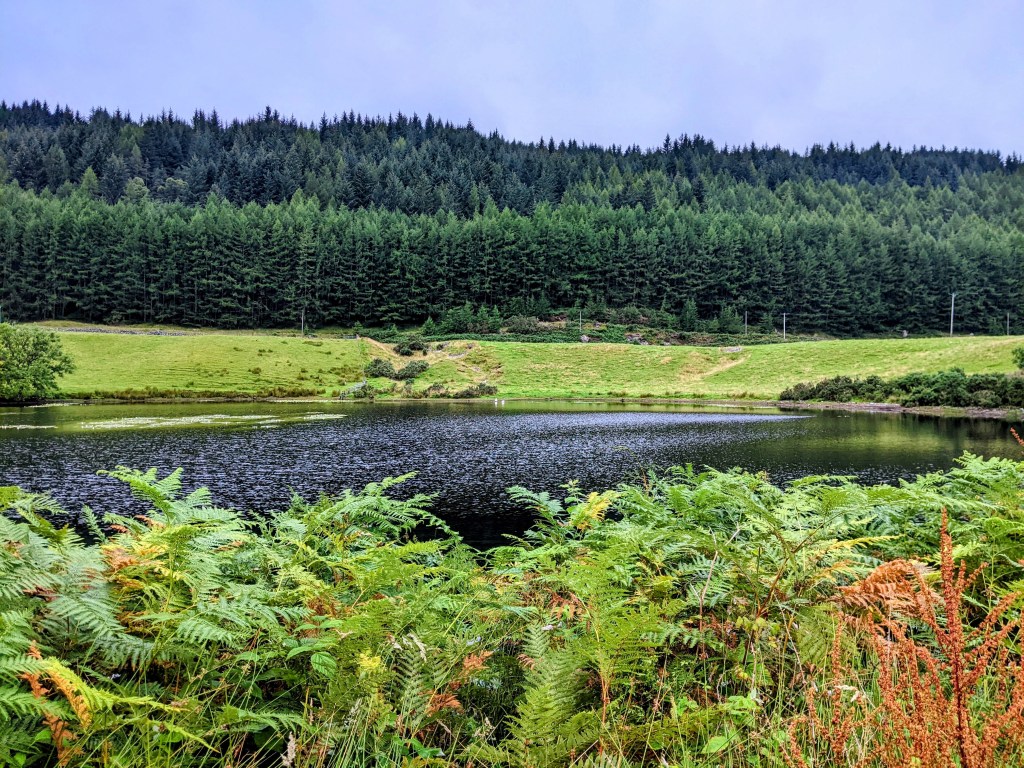
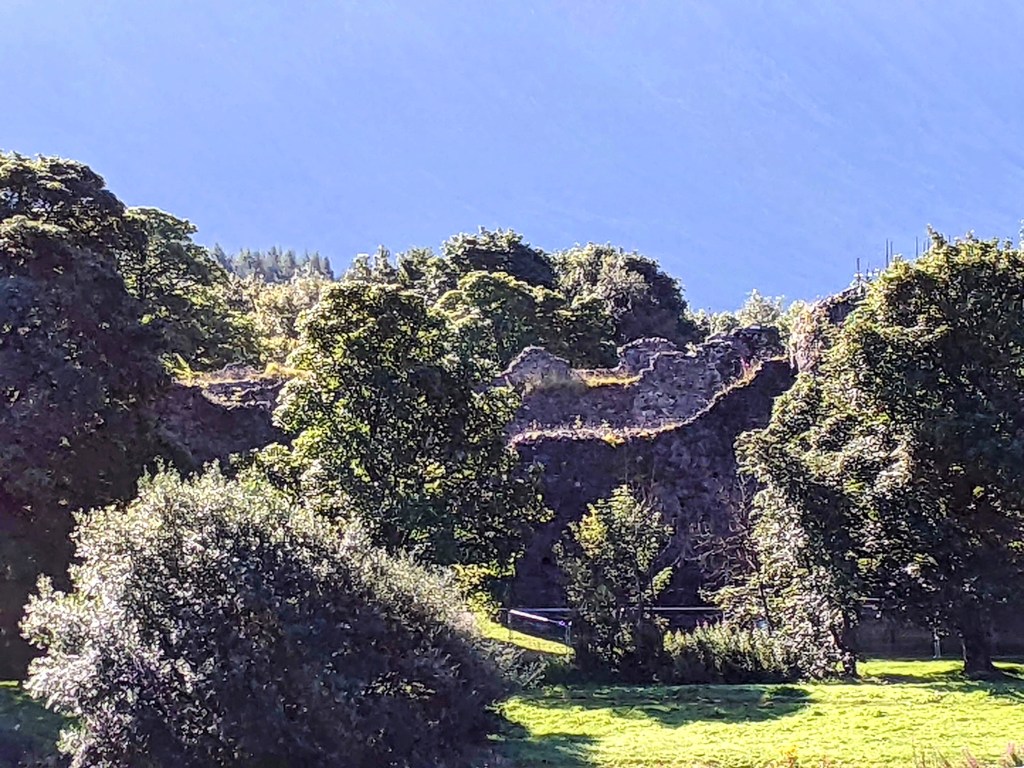
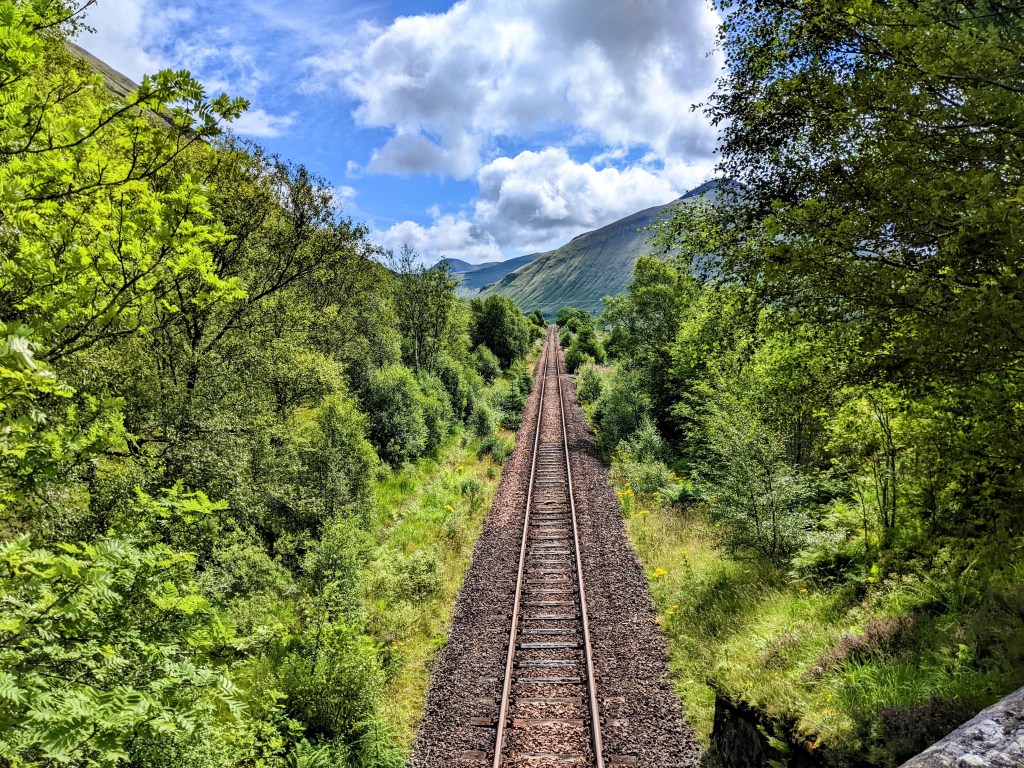
We pass by the old Invergarry station:


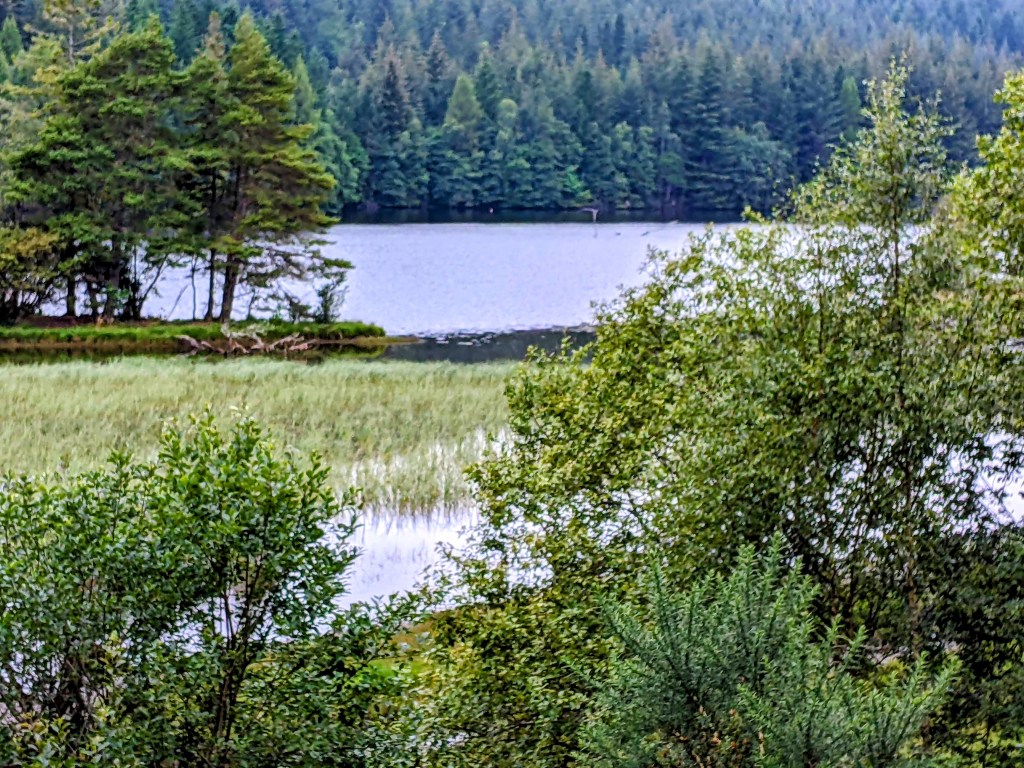
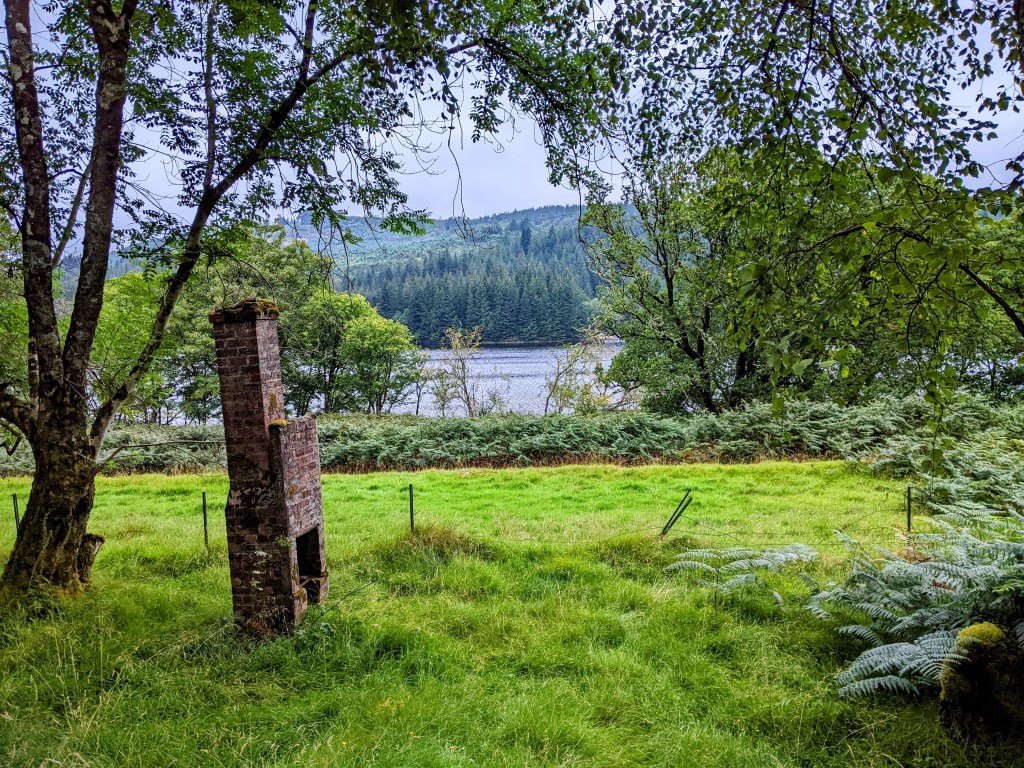

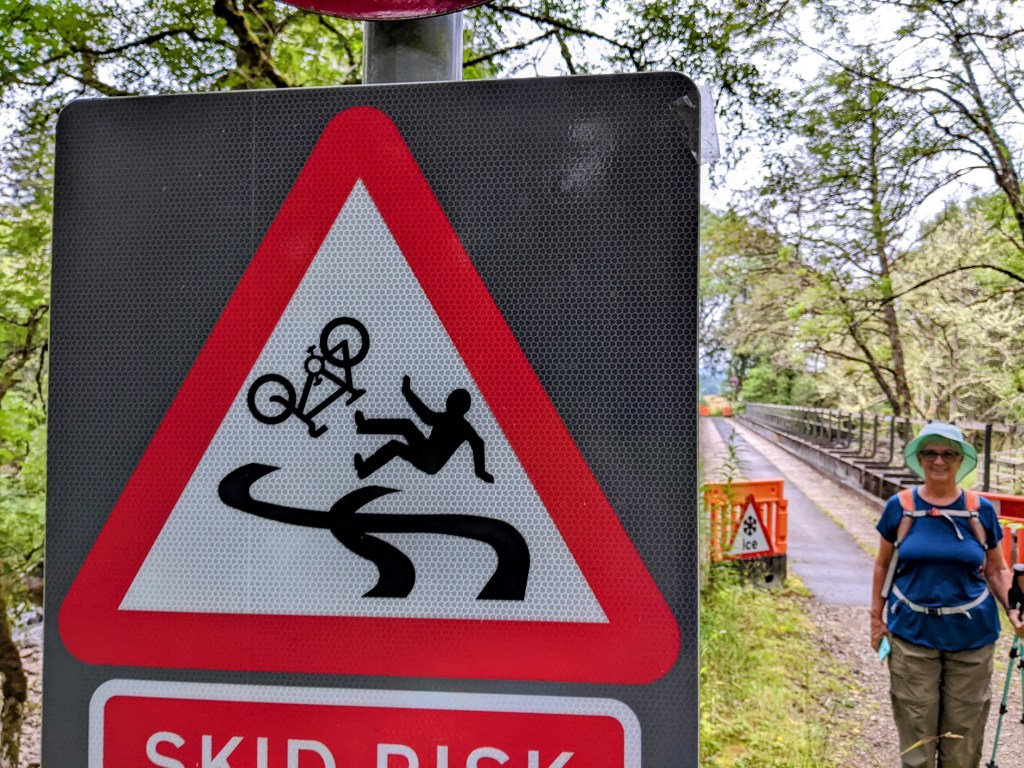
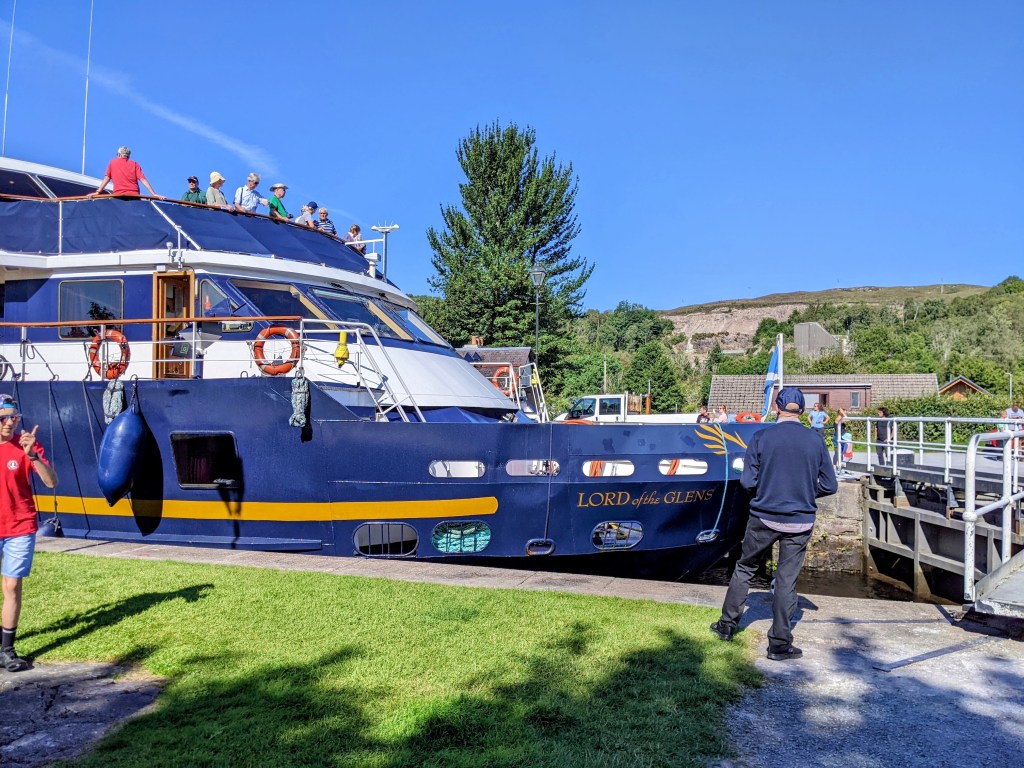
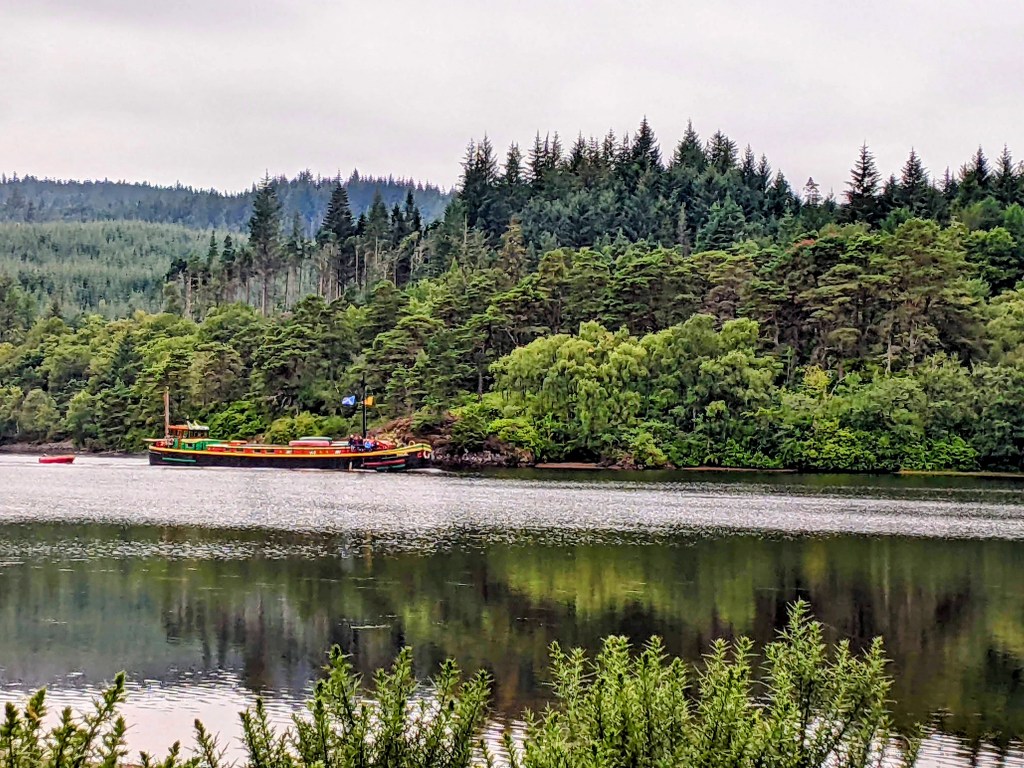
We watched the barge below pass through the lock, then discharge its passengers. They were retirees from Sweden, taking a three day cruise up the Caledonian Canal.


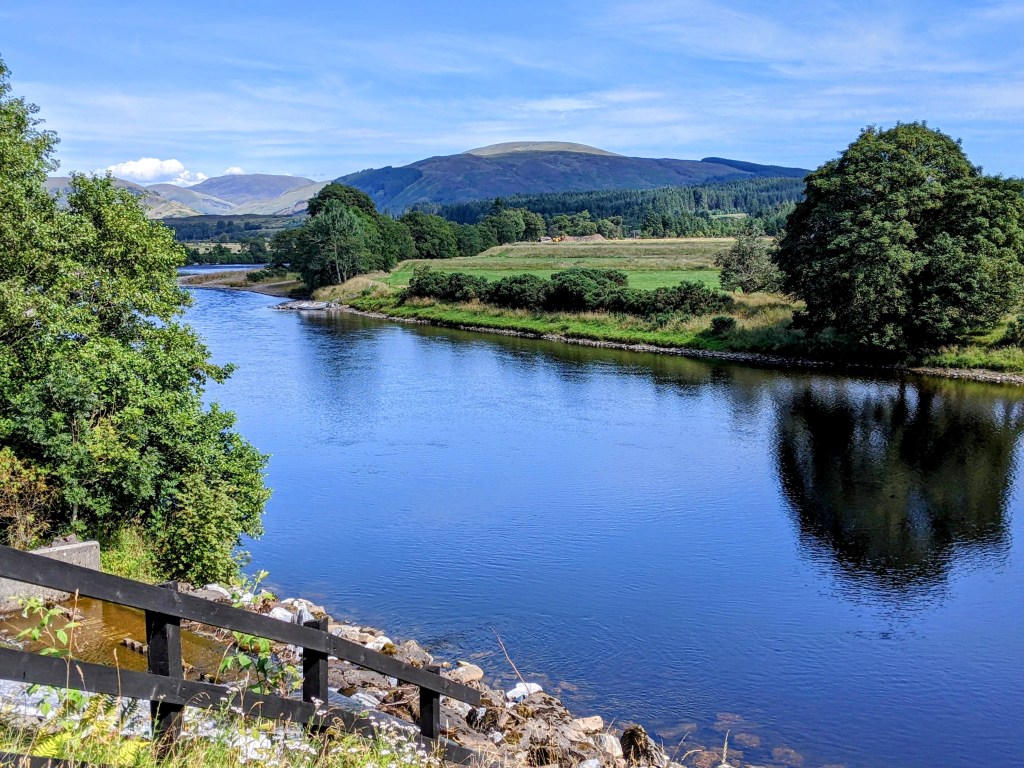
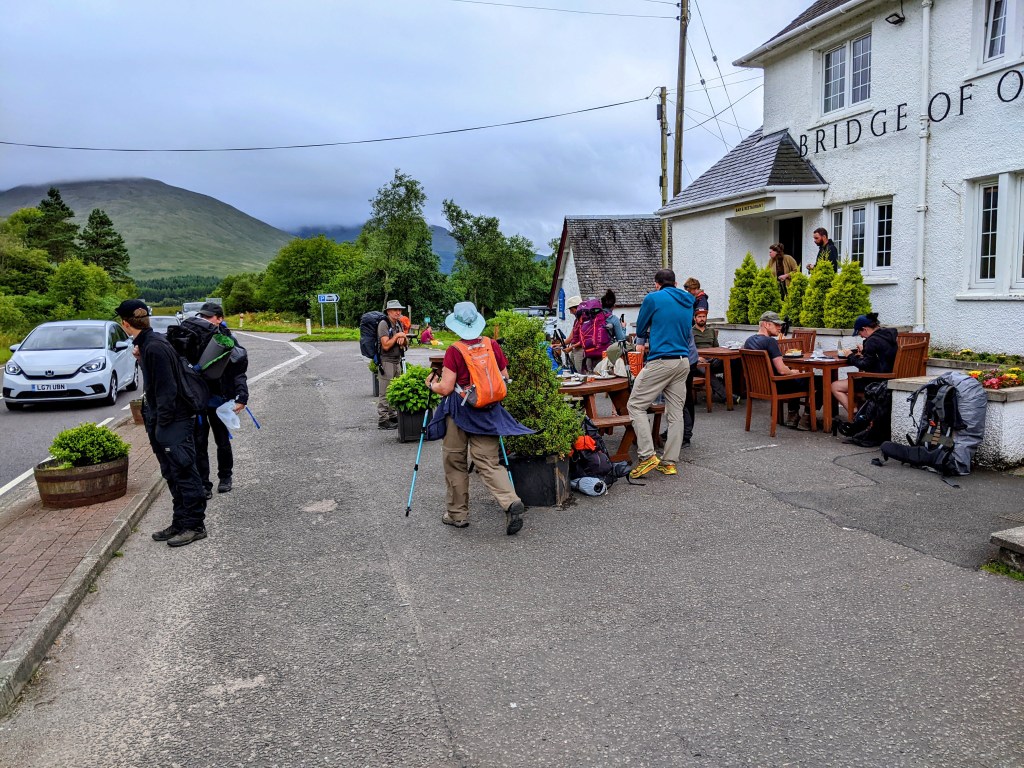
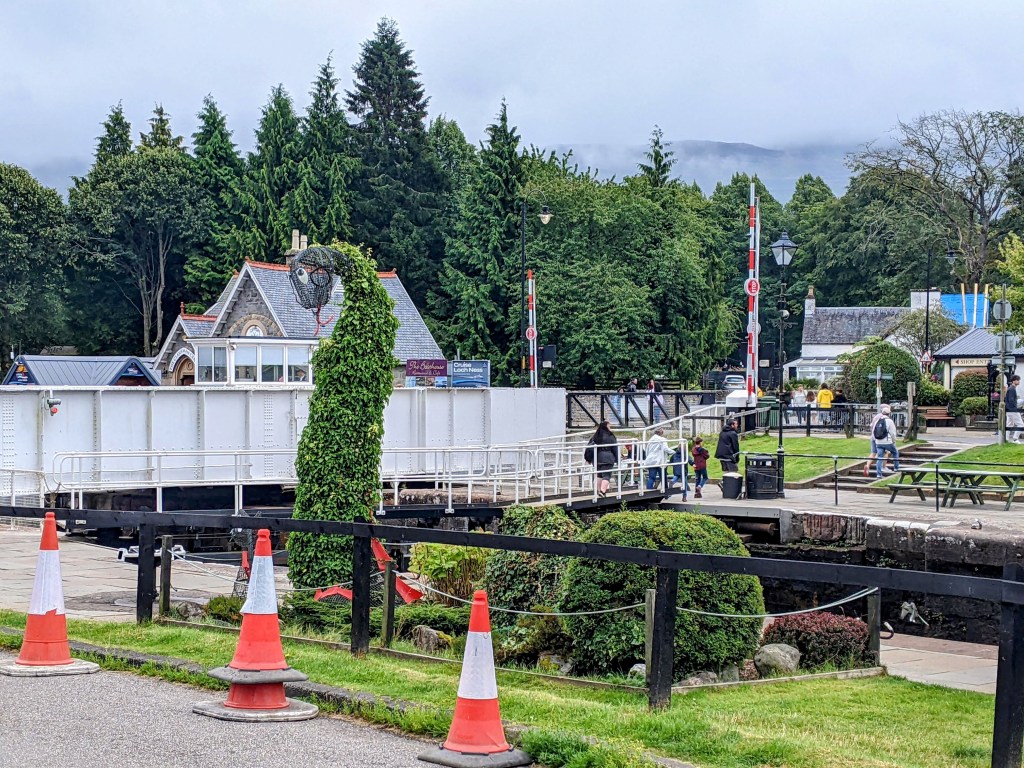
We stopped to see the famous Bridge of Oich, built in 1854 after the old stone bridge crumbled. It used a double cantilevered design so that even if the bridge broke in the middle, the sides would not fall down. We hikers learn stuff!

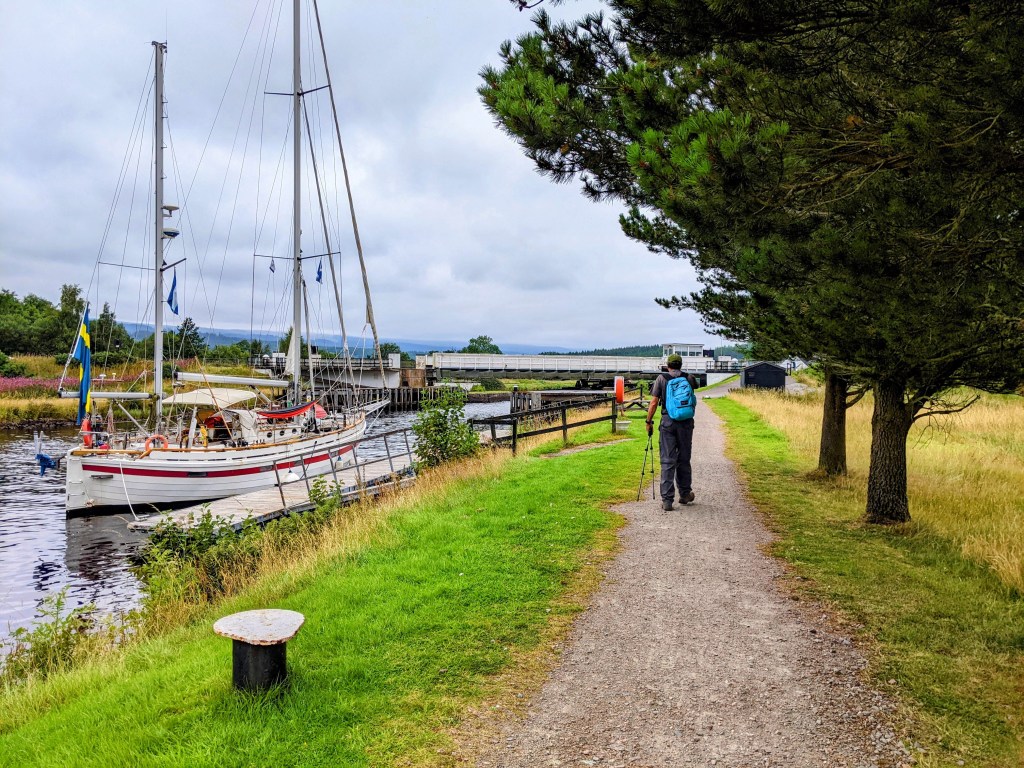
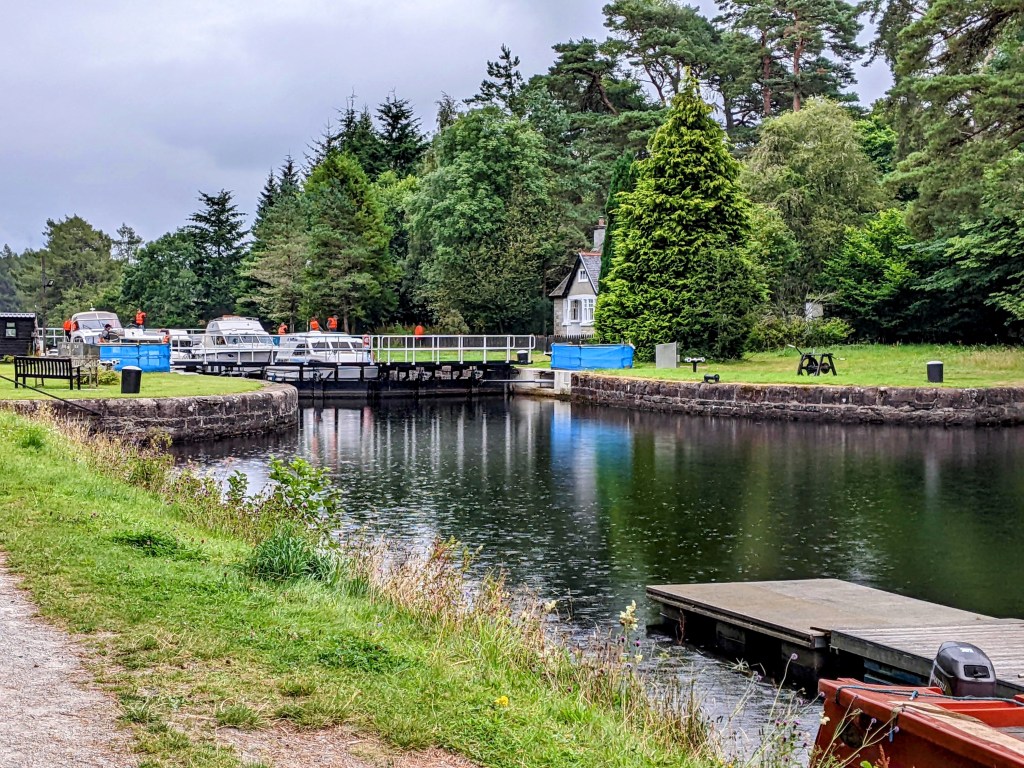



And, although it was a little misty from time to time, it never rained on us. Another good day.
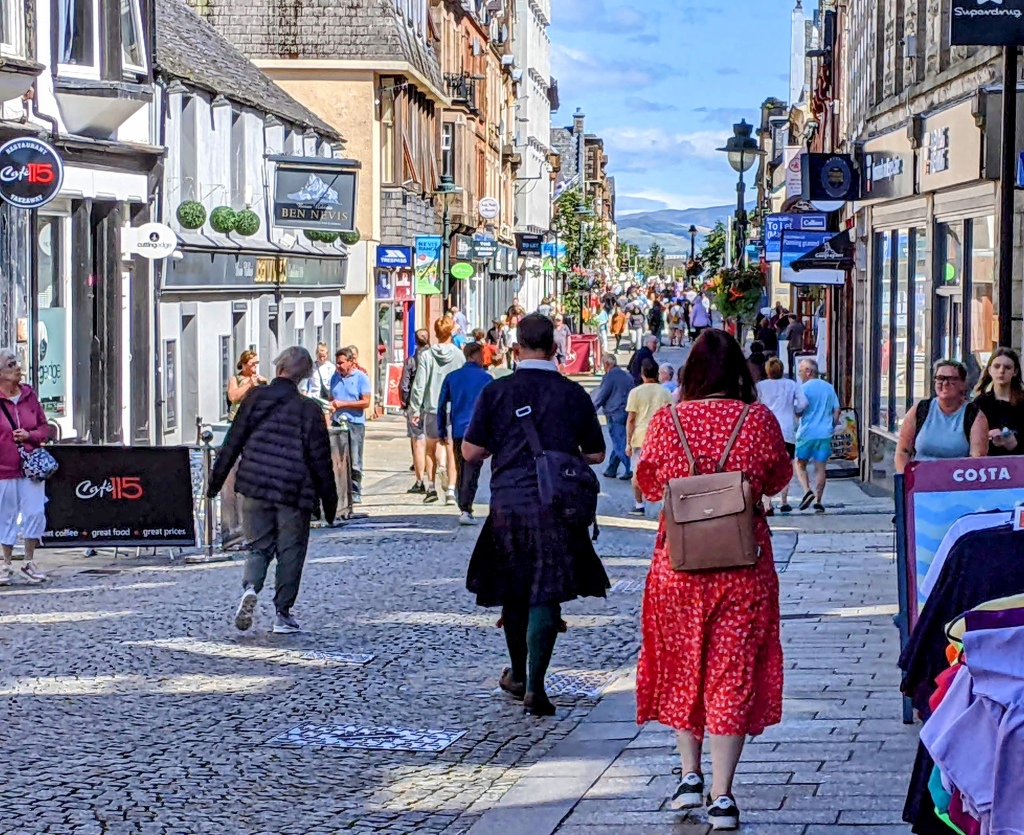
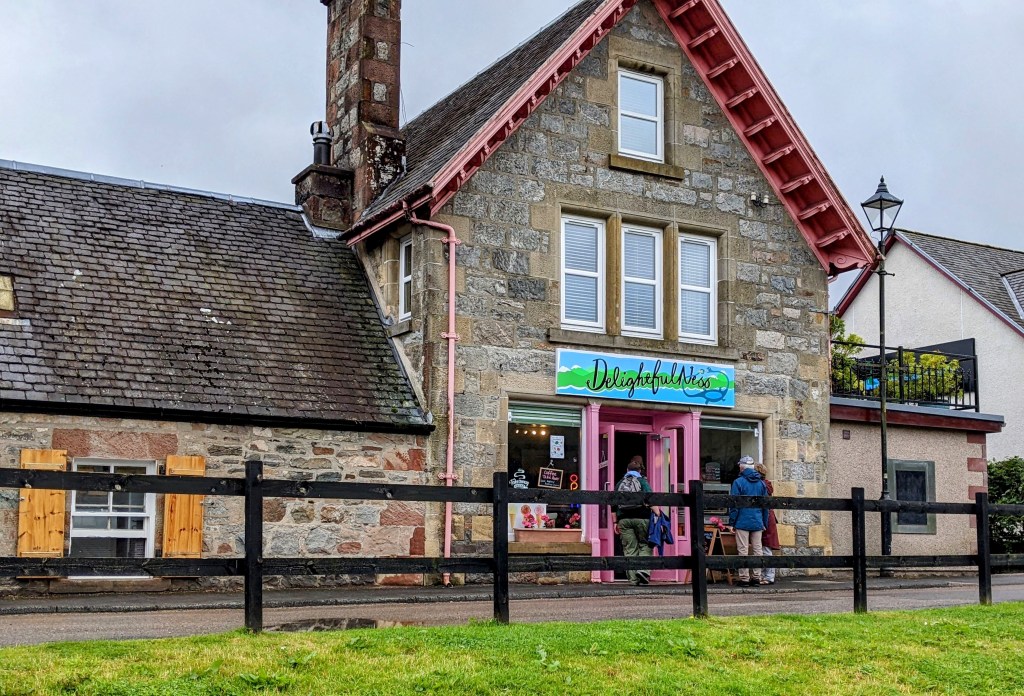
August 16 – We are taking a rest day today, at the midpoint of our hike. The village of Fort Augustus (population 600) is a one block cluster of restaurants and guesthouses catering to tourists who want to see Loch Ness and any monsters dwelling therein.
There are no remains of the actual fort, built by the British after the 1715 Jacobite uprising and named for Prince William Augustus, who was instrumental in the slaughter of the Scots.
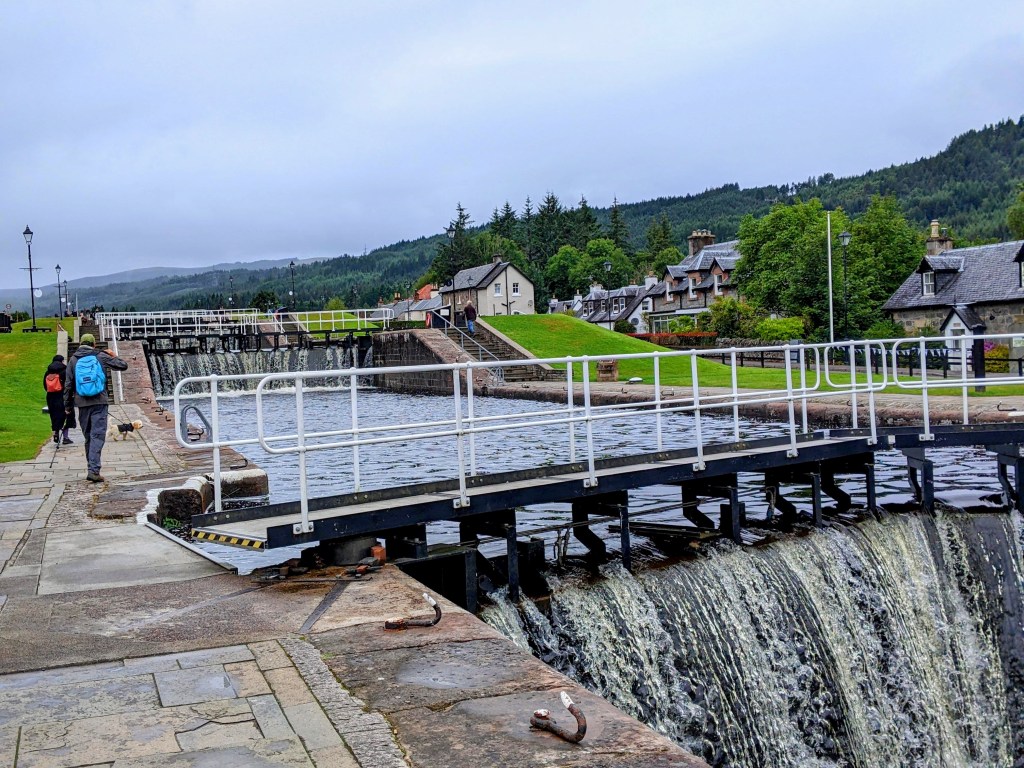
After the completion of the Caledonian Canal, Queen Victoria took a ride down it in a paddle steamer in 1873. She wrote in her journal, “The Caledonian Canal is a very wonderful thing, but rather tedious.” Her journey started a tourist trend, and steaming down the canal was dubbed ‘the Royal route.’ Shops and cafes popped up to give the tourists something to do while their boats negotiated the locks.

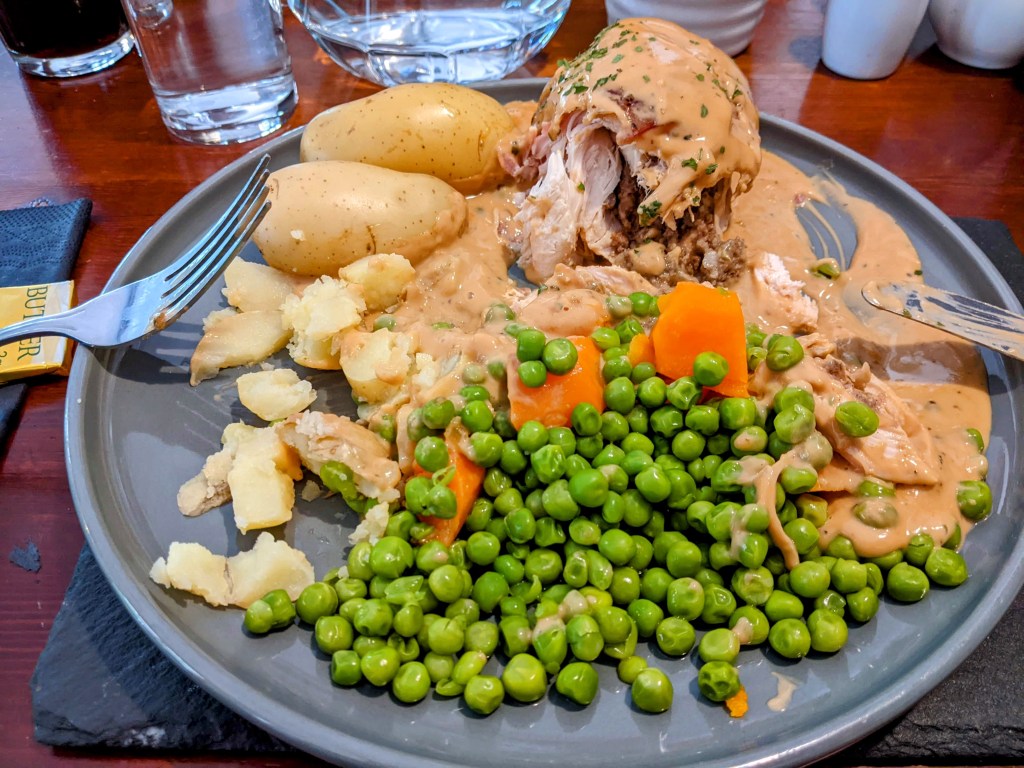
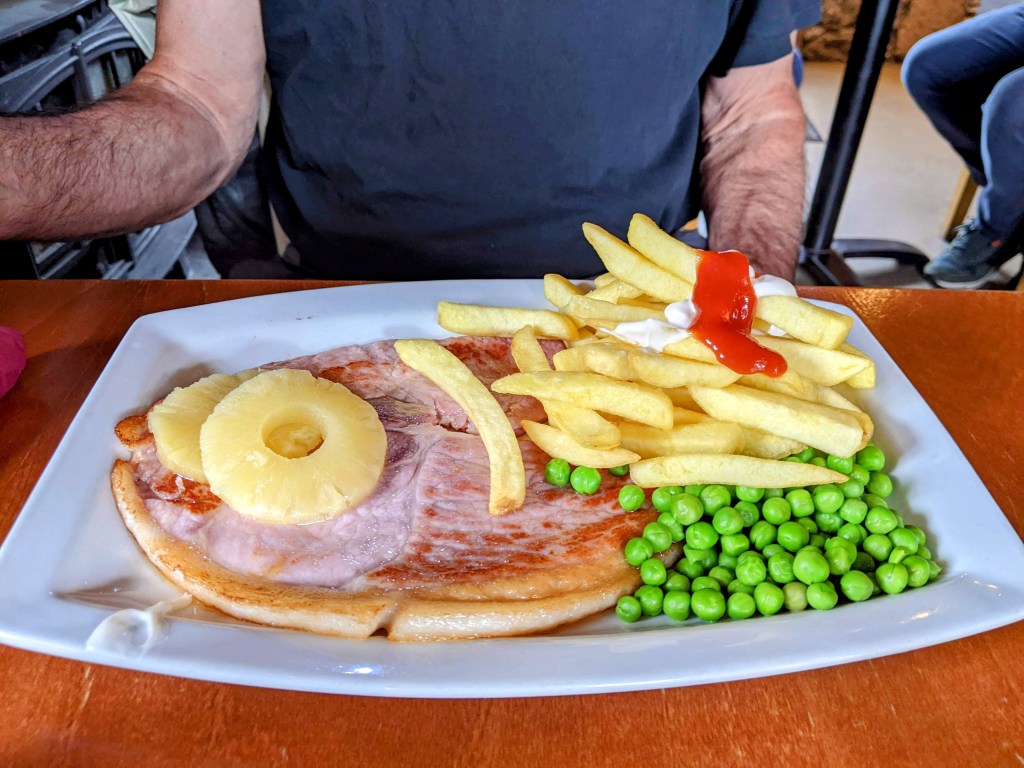
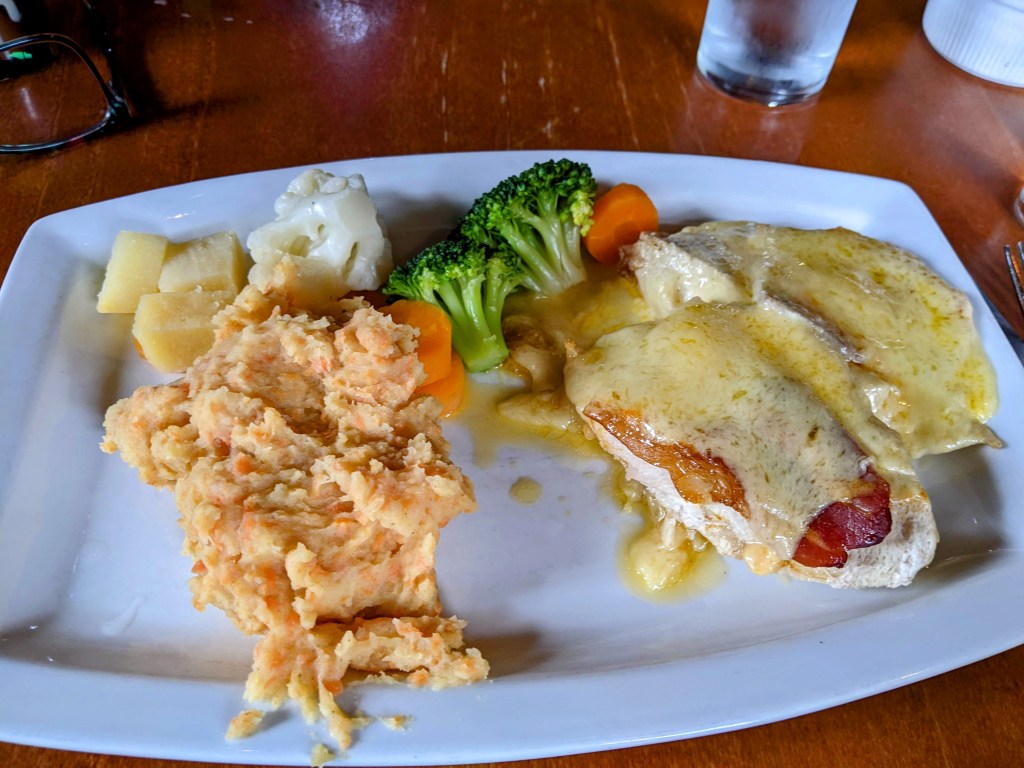
Happy to report another culinary first for us today. Jim had the gammon steak, which turned out to be ham, and I had the ‘neeps and tatties’ – turnips and potatoes. I found the turnips altogether palatable when mashed together with potatoes and carrots. On their own: no thanks.
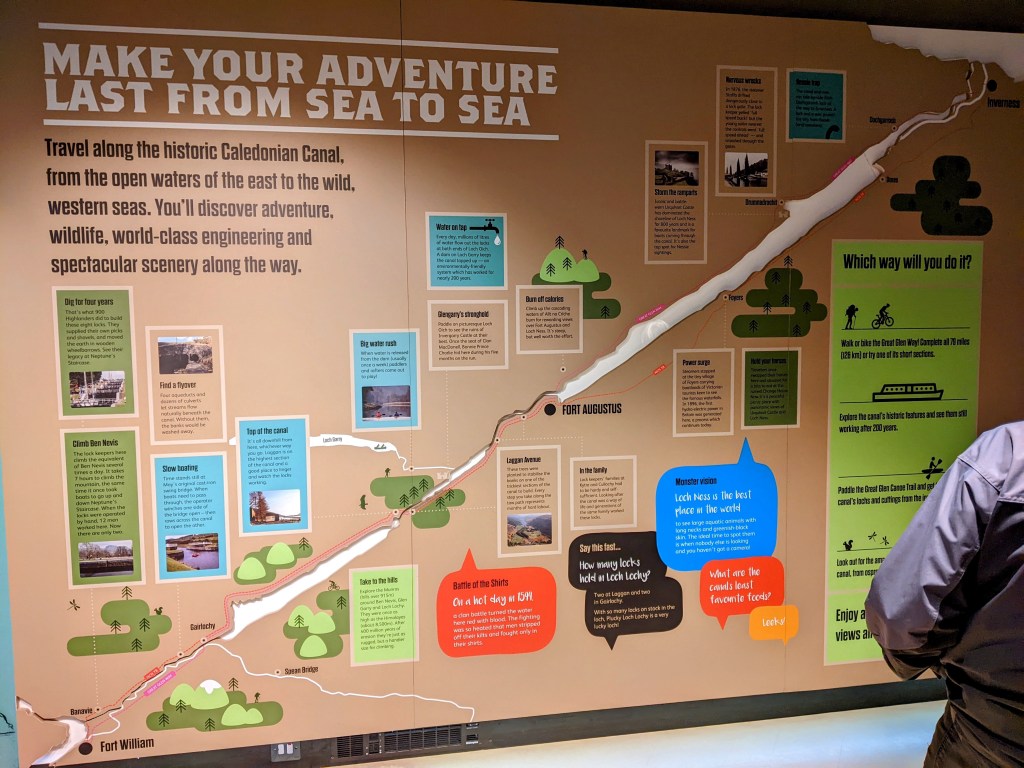
We visited the Caledonian Canal information center, which consisted of the signboard below in a cafe. The black dot in the middle is our location. The white body to the northeast is all Loch Ness. It’s a big one.
We sat down for an ice cream and watched the crowds waiting for their Loch Ness boat tours or queuing up to get into the restaurants. I still can’t get used to folks in down jackets and woolly hats and scarves in the middle of August.
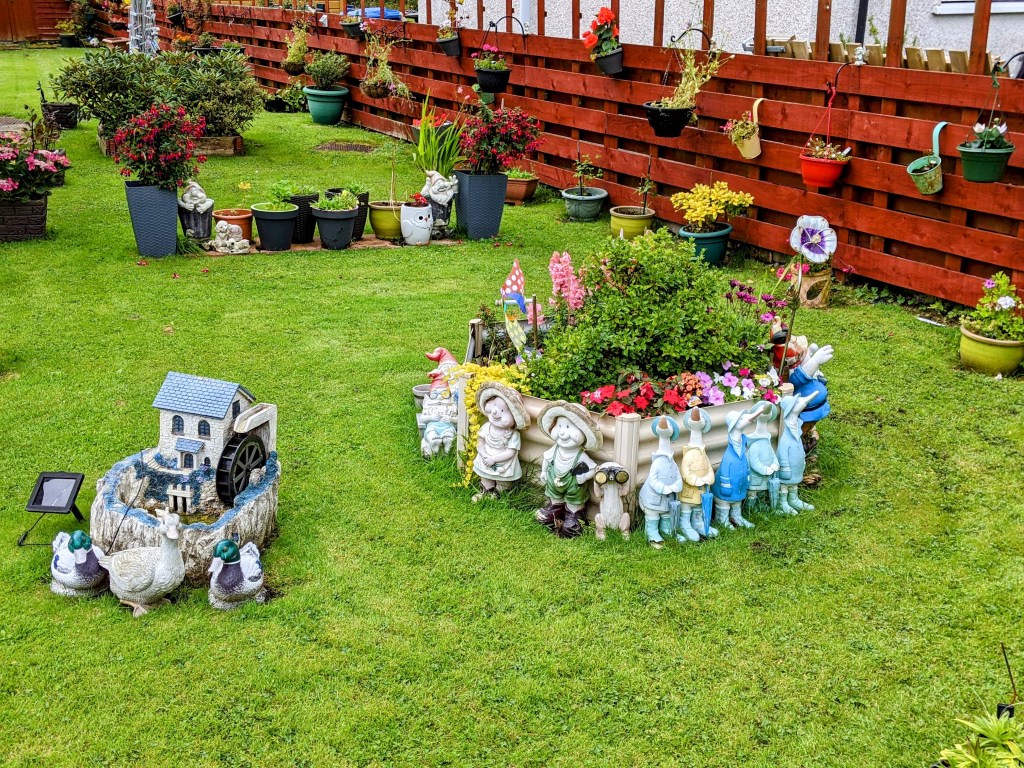
We bought a cold supper and carried it back to our room so we wouldn’t have to make the long trip uphill twice in one day. On the path up to our guesthouse is a respite for the weary traveler:

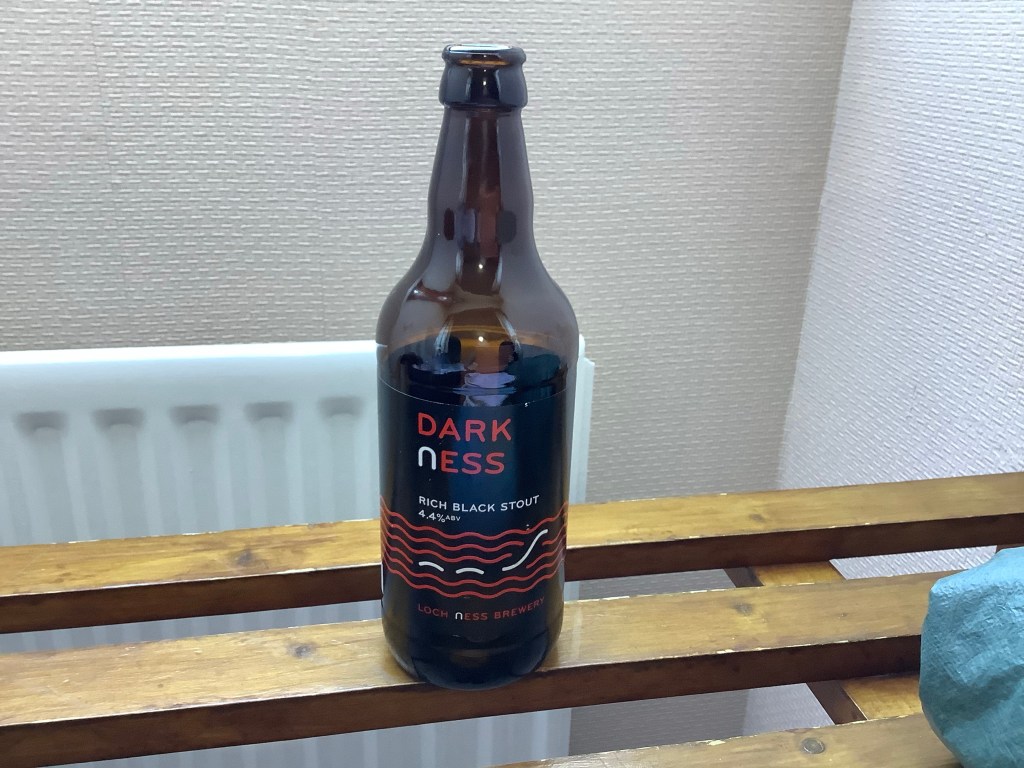
Our dinner included a selection of local brewery offerings:

A lovely day.